


My living room had nice furniture and decent lighting but it still felt like a waiting room. Took me embarrassingly long to figure out it was missing texture. Every surface was smooth, every color was flat, and nothing invited you to actually sit down. That same lesson saved my craft room. Small tactile swaps and one or two vintage scores made the space feel like mine, not like a boxed set.
These ideas lean cozy-vintage with a hint of industrial. Most items are under $60, with a few splurges around $100-150 for real antiques or heavy-duty lighting. They work in a dedicated craft room, a corner of the spare bedroom, or even a corner of a kitchen that needs personality and order.
Cozy Vintage Sewing Desk As Craft Workstation
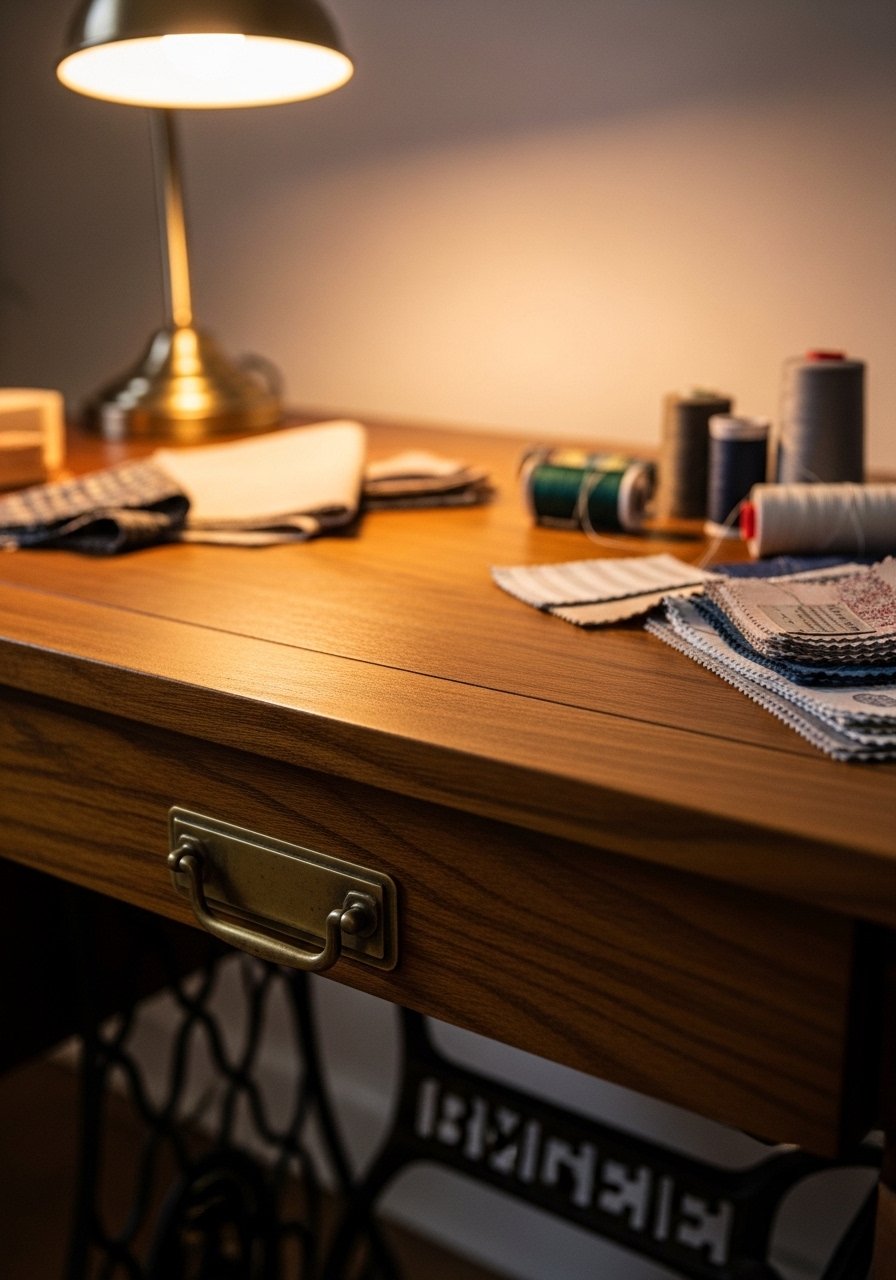
The moment I set my old Singer on a new wooden top, the entire room stopped feeling like a workshop and started feeling like a home studio. A vintage sewing table gives you a built-in drawer and the authentic patina that hides glue drips and ink stains. For depth, use a 30-inch wide tabletop and keep 18 inches of clear surface in front of your chair. I like pairing it with a heavy-duty adjustable lamp. Try an architect lamp in brass finish for task light and felt drawer liners to protect small tools. Common mistake is buying a table that is too shallow. Aim for at least 24 inches deep so rulers and mats sit flat. This works best in a dedicated craft room or a calm corner of a mixed-use space.
Apothecary Jars For Visible, Pretty Storage
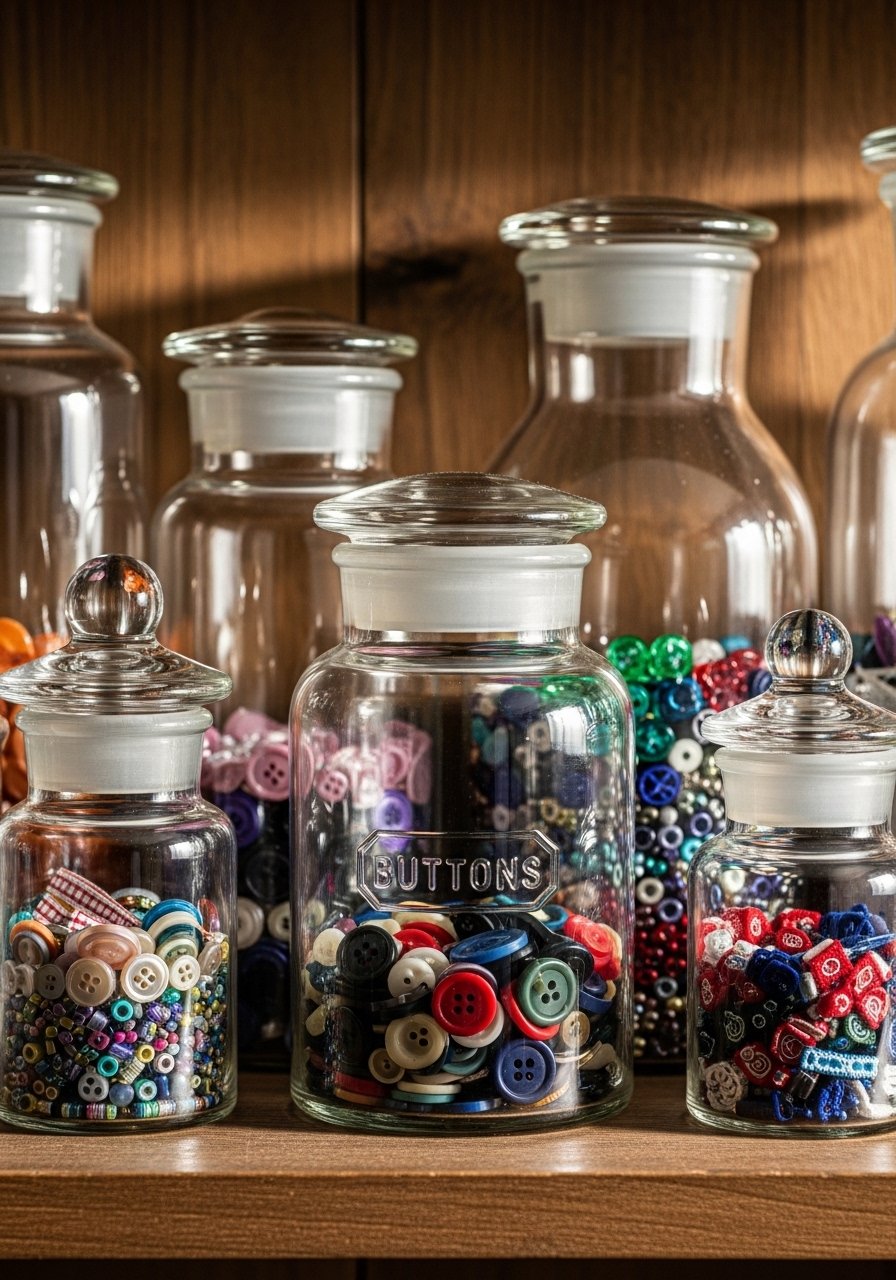
Clutter disappears when things look intentional. Clear apothecary jars let you see what you have and they read vintage even when new. I group three jars by height, following the rule of three, and keep commonly used items within arm reach. For lids that stay put, try glass jars with clamp lids. Budget is under $40 per set for decent sizes. A mistake people make is using jars that are too small for bulk supplies. Buy a mix: one large 1-liter jar for buttons and two 250-milliliter jars for trims. Pair the jars with a shallow shelf about 8 to 10 inches deep to avoid the awkward overhang.
Mismatched Wooden Shelves For Warmth And Depth
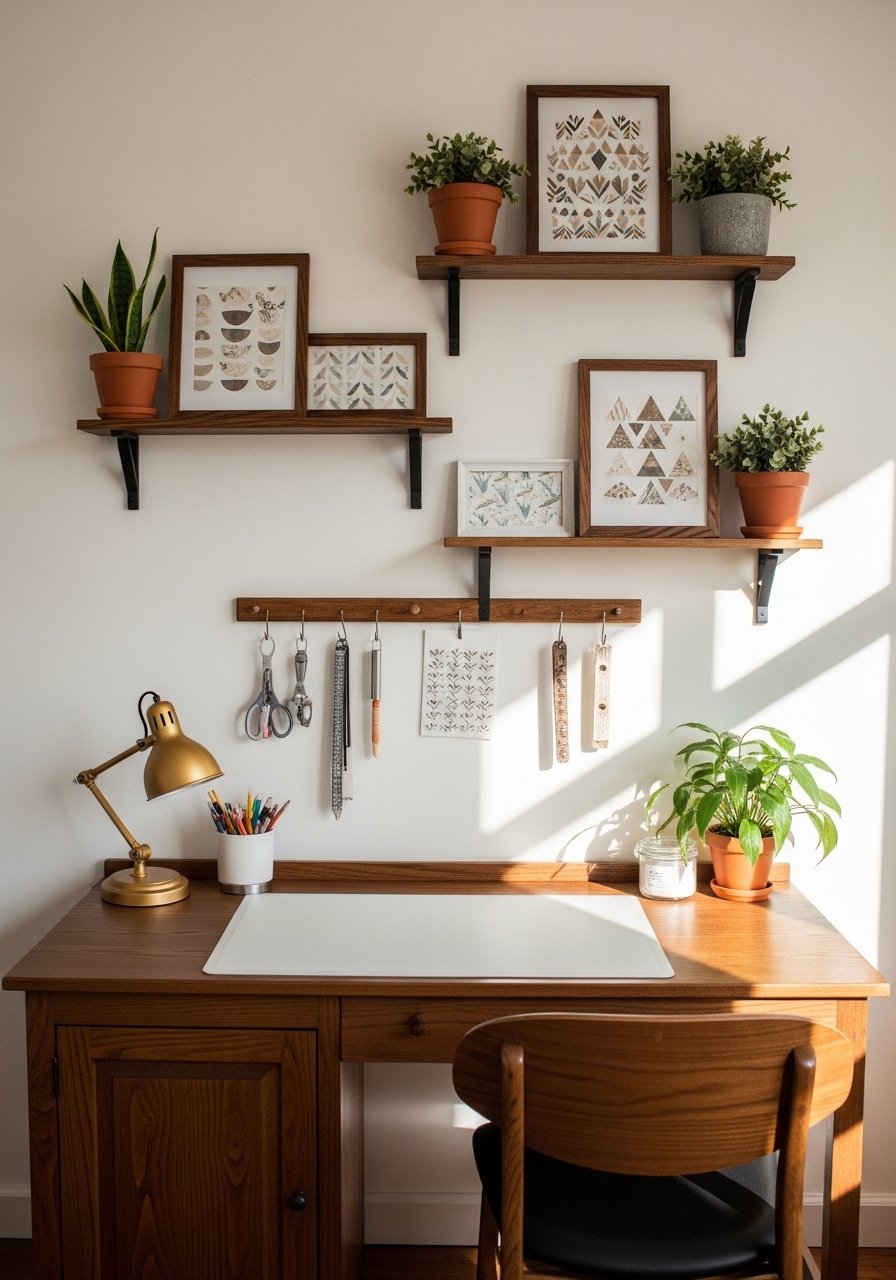
White floating shelves look neat but they can make a craft room feel sterile. I swapped one for a worn oak board and suddenly the whole wall had warmth. Mix two shallow 8-inch shelves with one deeper 12-inch shelf for boxes and baskets. Use vintage-style shelf brackets to reinforce the look. Budget runs $15-75 depending on the wood and brackets. One mistake is spacing shelves too close. Leave 12 to 14 inches between them for books and stacked fabric. This pairing works great next to the sewing desk idea above; the heavier shelf balances the table visually.
Layered Lighting For Task Work And Ambiance
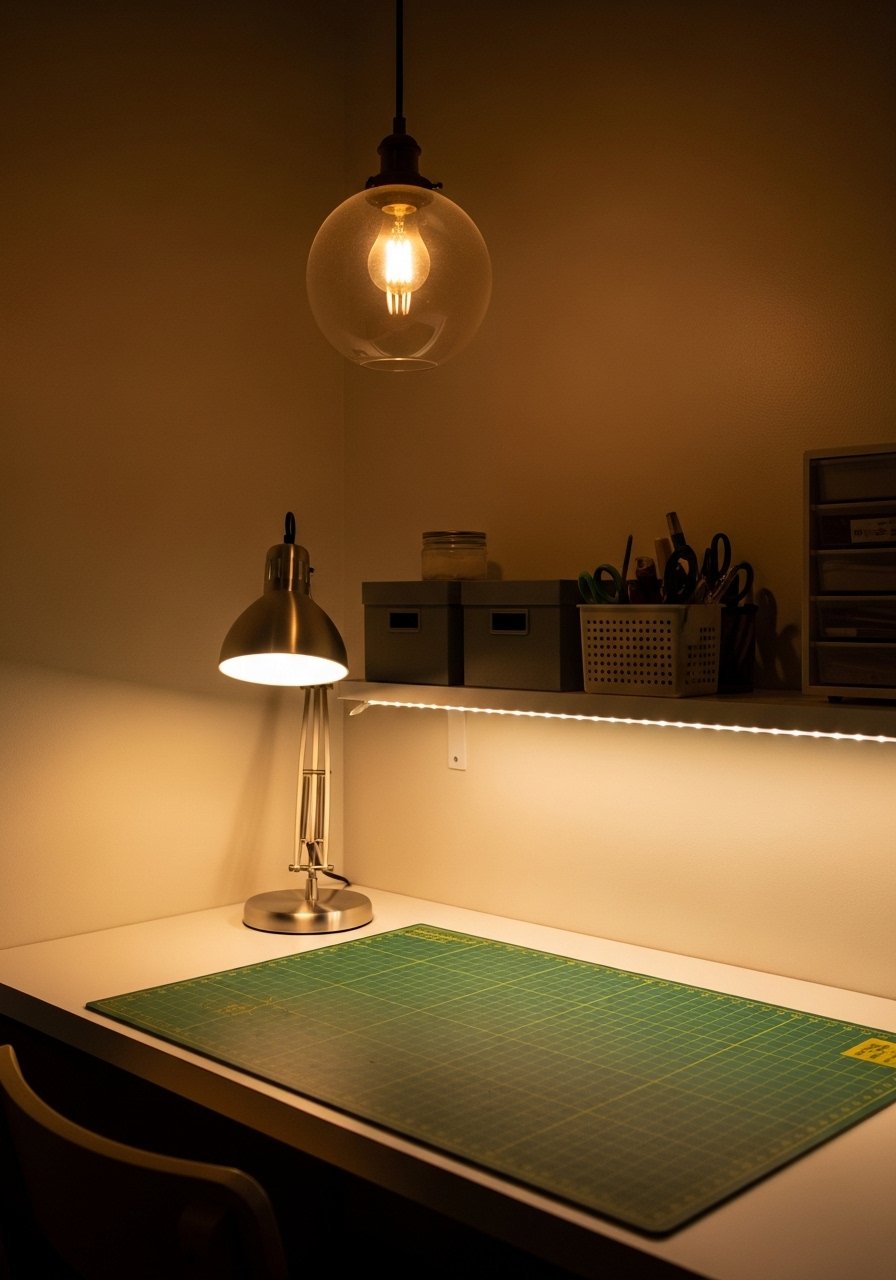
Good lighting saved my wrists and my projects. Task light over the table plus softer overhead light keeps you working longer without eye fatigue. I use a 5000K task lamp for cutting and a 2700K pendant for mood. Try LED strip lights with warm and cool settings for under-shelf illumination and a focused clamp lamp for detailed work. Expect to spend $20-120 total. A common error is relying only on ceiling light. Layer at least two sources and keep the brightest closest to your hands.
Pegboard Styled With Wooden Frames For Vintage Flair

Pegboard is practical but often looks industrial. Framing it in recycled wood and using brass hooks makes it read vintage. Hang your board so the center sits at about 57 inches from the floor for comfortable reach. Use wood-framed pegboard panels or grab plain pegboard and add a 1.5-inch frame. I mix hooks, small baskets, and a magnetic strip for needles. People stack too many tools on a single hook. Spread items out so each hook holds one type of tool. This looks particularly good behind a sewing desk or next to a cutting table.
Repurposed Tea Tins For Thread And Notions

Tea tins are one of my favorite cheap upgrades. Labels already give personality and they stack. I sort threads by color family and use one 3-inch high tin per skin tone palette. You can find repro tins new or score them at flea markets for $5-20 each. For a ready option try decorative metal tins with lids. Mistake people make is putting heavy items in thin tins. Use tins for light notions and keep bulk fabric in bins. These make great countertop storage and brighten a shelf.
Framed Embroidery Hoop Gallery For Pattern Inspiration

Stitch hoops on the wall are both decorative and functional. I treat them like a gallery wall and rotate one hoop each month to test new color mixes. Hang hoops so the center of the arrangement sits at eye level, roughly 57 inches. Use wooden embroidery hoops in various sizes and mount them with small picture hooks. Budget is under $30 for a starter set. A frequent mistake is installing hoops at random heights. Keep consistent spacing of 3 to 4 inches so the display reads intentional. Pair this with the apothecary jar idea for a useful, pretty wall.
Rolling Industrial Cart For Mobile Project Zones
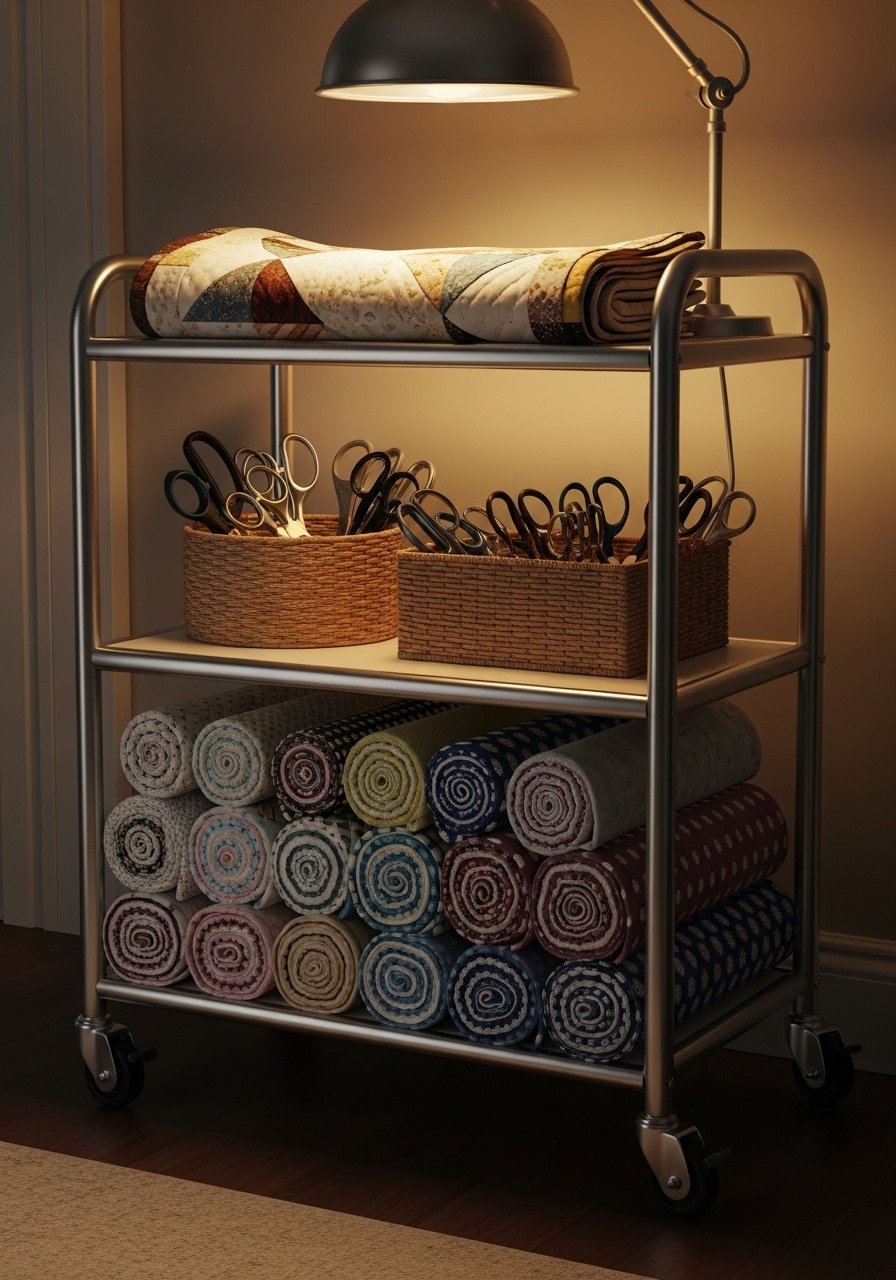
I made half my decision to keep projects controlled when I bought a narrow cart on casters. A rolling cart acts like a portable workbench. Pick one with at least 12 inches of usable shelf width and lockable wheels. Industrial rolling carts run $50-120. Use the top shelf for the current project, middle for tools, bottom for heavy supplies. People cram too many projects on the cart. Limit it to one active project plus tools. When you need surface space elsewhere, roll it out of the way.
Patterned Linoleum Mat For Protecting Work Surfaces

I used to dread cleaning dried glue from my tabletop. A patterned linoleum mat hides stains and adds vintage character. Choose a 24 by 36 inch mat for most tables. I recommend retro patterned linoleum sheets or a heavy-duty self-healing cutting mat layered on top. Budget $25-80 depending on size. The common error is a mat that is too small. It should extend at least 3 to 4 inches beyond your main cutting area. This trick keeps your table looking older and not abused.
Antique Linen Bins For Fabric Storage And Display

Fabric looks better folded than stuffed. Antique linen bins give you stackable storage and a soft look. I fold by width and stack by color family, using the 80/20 color ratio where 80 percent neutrals and 20 percent color keeps the room calm. Look for bins about 15 inches wide and 6 to 8 inches tall. Find linen storage baskets with rope handles for a similar feel. People hide everything in opaque boxes and then forget what they own. Label fronts and leave one bin open for current projects.
Swatch Board With Clips For Color Planning
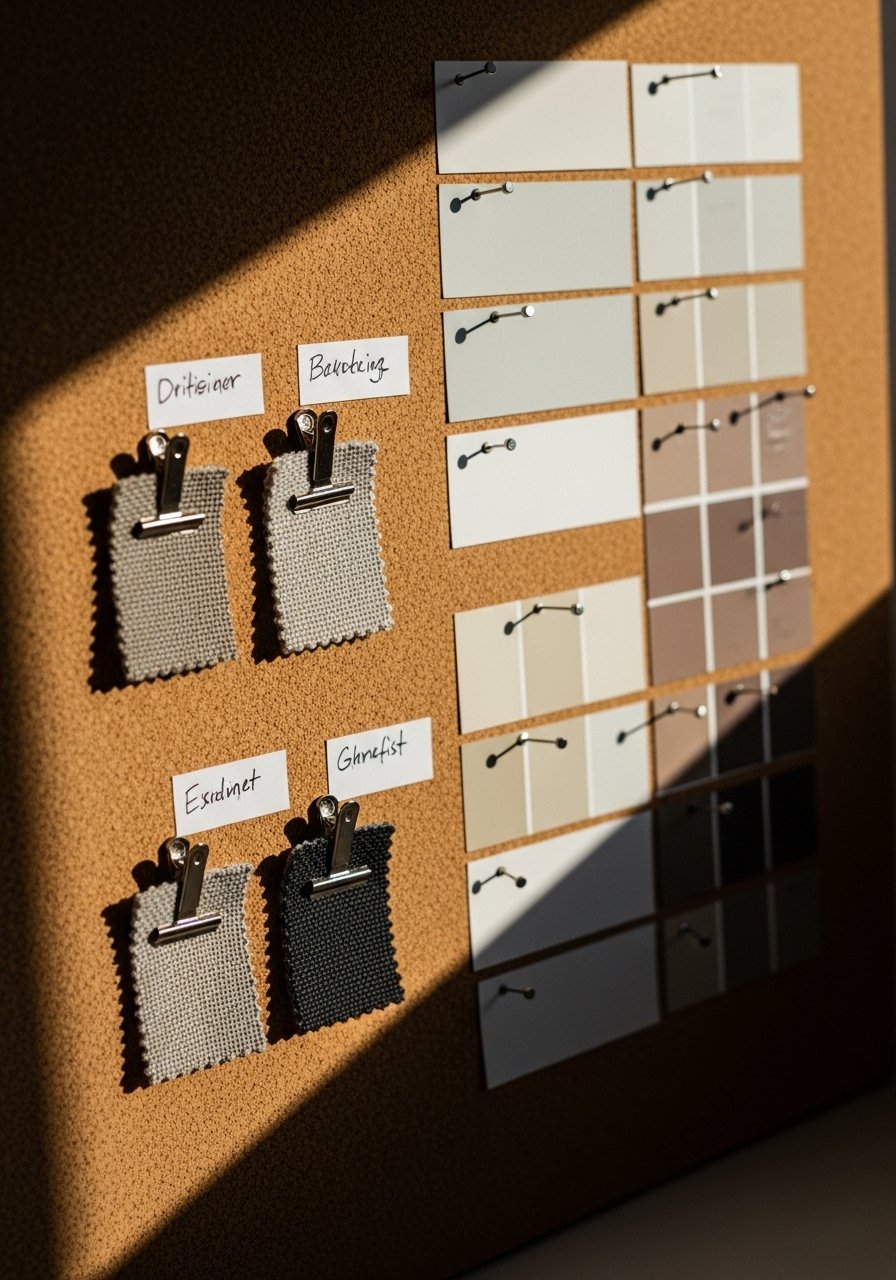
When I started clipping fabric samples on a board, my color choices stopped failing. A swatch board helps you see how trims, threads, and paints will look together in real light. Mount the board near the main window and keep samples 2 to 4 inches wide so they read from a distance. I use brass clips and a small clipboard for paint chips. Try cork boards with a natural wood frame. Budget under $30. The mistake is keeping swatches in a drawer. Put them on the wall so you can compare them quickly when inspiration strikes.
Your Decor Shopping List
Textiles
- Honestly the best $40 I have spent. Chunky knit throw in cream 50 by 60 inches, perfect for draping over a chair
- 22-inch linen pillow covers, down insert recommended in dove gray and rust
Wall Decor
- Wooden embroidery hoops set, assorted sizes for the gallery wall
- Cork board with natural wood frame, 24×36 inches for swatches
Lighting
Storage & Tools
- Glass apothecary jars with clamp lids set clear sizes for buttons and beads
- Industrial rolling cart with locking casters, three tiers narrow model for small rooms
Budget Finds (Similar at Target/HomeGoods)
- Decorative metal tins with lids, assorted set for thread and notions
- Felt drawer liners, customizable for vintage drawers
Shopping Tips
White oak beats dark wood in 2026. Design feeds have shifted completely. White oak floating shelves read current and let vintage pieces pop.
Grab vintage-style shelf brackets for $12 each. They make cheap pine look intentional, not unfinished.
Curtains should puddle or kiss the floor, never hang halfway up. 96-inch linen panels are right for standard 9-foot ceilings and make a craft nook feel dressier.
Lead with one big plant instead of five tiny succulents. Artificial fiddle leaf fig, 6-foot gives immediate height without maintenance.
Mix metal finishes, do not try to match everything. Mixed metal picture frames set is an easy way to start.
Frequently Asked Questions
Q: How do I make a small corner feel like a proper craft room?
A: Choose one focal piece, like a vintage sewing desk or a rolling cart, and build around it. Keep the color palette 80 percent neutrals and 20 percent accent color. Mount shelves 12 to 14 inches apart and use vertical storage so the floor stays clear.
Q: Can I mix modern storage with vintage pieces without it looking messy?
A: Yes. Balance is key. Pair a new industrial cart with worn wooden shelves and keep metals mixed. Use the rule of three in groupings and leave breathing room between objects so the eye rests.
Q: What measurements should I use for hanging a pegboard or gallery of hoops?
A: Hang the center of your main arrangement about 57 inches from the floor. For pegboard, leave 2 to 3 inches between hooks and 12 to 14 inches between shelves below it. For hoops keep spacing around 3 to 4 inches.
Q: How do I prevent my craft room from feeling chaotic when I have many small items?
A: Visible, labeled storage helps. Use apothecary jars for small items and shallow bins for fabric. A swatch board keeps your visual decisions visible. One practical tip is to limit open projects to one on the desk and one on the cart.
Q: Are faux plants okay in a craft room that lacks natural light?
A: Absolutely. A tall faux plant gives height and makes the space feel finished. Use a realistic artificial fiddle leaf fig where you need impact without upkeep.