


Spent $400 on a coffee table. Room still looked off. Spent $35 on a throw and three candles. Suddenly everything clicked. I want the kind of wall details that rescue a room the same way, not an expensive sofa or new paint.

Gallery walls feel like magic because they hide so much thrift chaos, if you do them right. I pack mine with 7 to 9 pieces and paint all frames matte black so the variety reads intentional. Use frames in sizes from 8×10 to 16×20, hang the largest in the center, and keep 2 to 4 inches between pieces. My common mistake was spacing them unevenly, which made everything look crowded. A can of matte black spray paint from Amazon fixed that for $8. Nearly half go eclectic because it fits real life better. If you rent, swap nails for command picture hanging strips so you do not wreck the wall.
Thrifted Art Collage For Boho Living Rooms

I used to shove single paintings above my sofa and nothing felt personal. Then I spent a weekend making a mixed-medium collage from flea market finds. Layer postcards and small oil studies on a plywood backing, tack them with brass tacks, and rotate pieces as you find new treasures. Budget was $15 to $50 for me, mostly because I found some prints for $2 each. One detail most articles skip is backing weight: use 1/4-inch plywood cut to size so the collage hangs flat. Avoid gluing things permanently. I swap pieces every few months. For easy hanging, I lean the finished panel on a narrow picture ledge like this brass picture ledge so the wall is renter-friendly and flexible.
Repurposed Drawer Shelves For Entryways And Small Walls

I turned two old dresser drawers into wall shelves and suddenly my entryway stopped being a drop zone. Pull drawers from a thrift store, sand the fronts, and mount with brackets or heavy-duty picture hangers. Space the shelves about 12 inches apart vertically so you can stack books and plants. My IKEA bracket clamps cost less than $10. The common mistake is using thin backing that sags. Reinforce the bottom with scrap pine and you can hold real weight. Most folks knock out a wall refresh for under 50 bucks. Renters, use heavy-duty picture hanging kits and lean a drawer shelf instead of screwing it into drywall.
China Plate Wall For Dining Rooms With Grandmillennial Flair
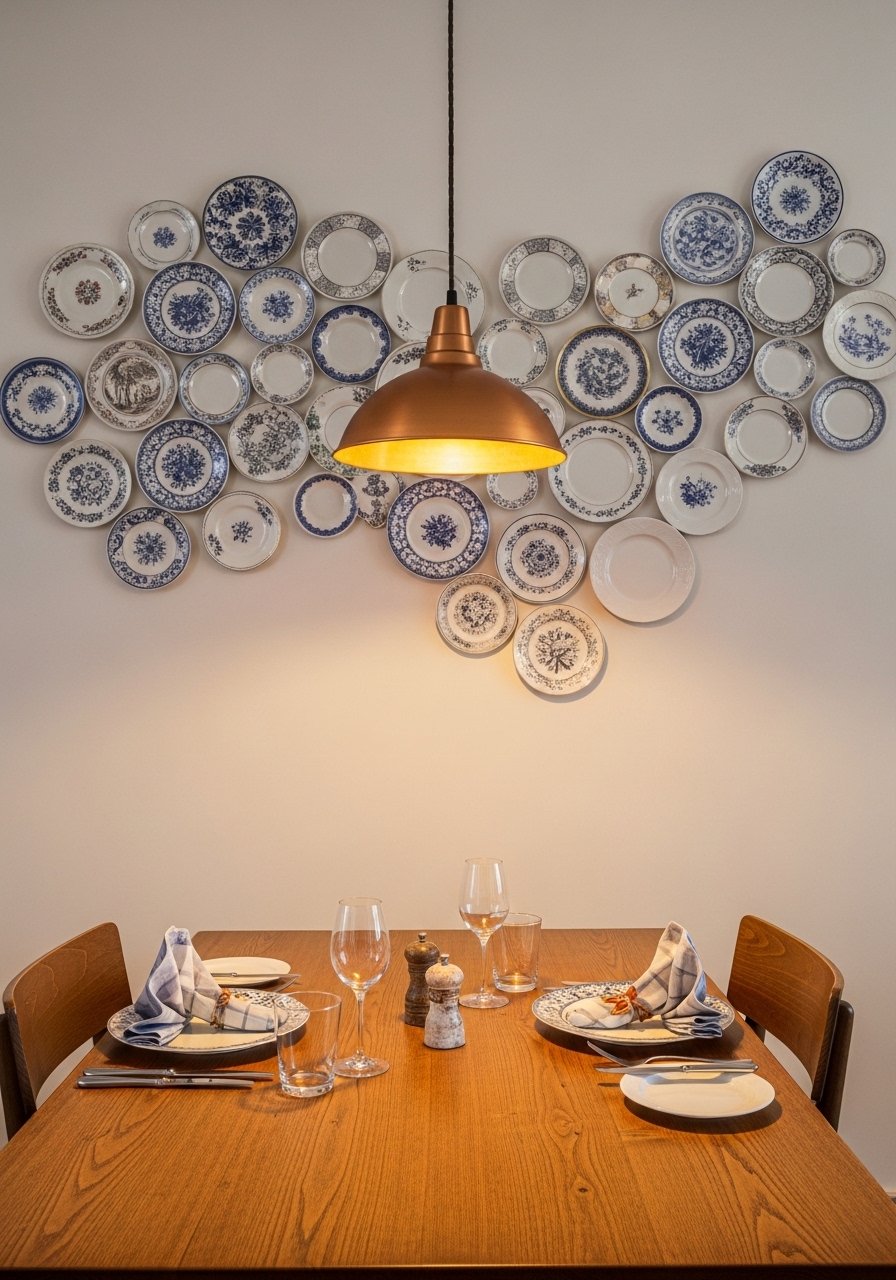
My aunt had a plate wall and it was oddly the most talked-about thing at dinner parties. Plates are great because they read like texture instead of trying to match color. Hunt for saucers in 8 to 12 inch sizes and hang them 2 to 4 inches apart in odd-number clusters. I mix 60 percent larger plates and 40 percent smaller ones to avoid a lopsided look. A mistake I made early was using cheap wire hangers that scratched glaze. Swap those for padded plate hangers. If you have pets, hang plates higher than bite height. Over half of renters hunt stuff that won't wreck security deposits, and this can be done with command hooks if you choose lightweight plates.
Upcycled Window Pane Mirror For Narrow Entryways

I found a thrifted sash window and turned it into a mirror because my narrow entryway needed depth. Pull out the panes and have mirror sheets cut to fit, or use mirror film for a budget option. A 24×36 inch mirror pane works well for standard walls, and I stained the frame a soft cream to keep it modern. The rookie mistake is trying to hang it by the original hardware. For safety, use two wall anchors or simply lean it on the console. I paid about $30 for mirror sheets and chalk painted the frame afterward. Pair this with the gallery wall idea if you need a second focal point in the same room.
Botanical Prints Flanking Windows For Taller Rooms

I framed two thrifted botanical prints and hung them on either side of a tall window to balance vertical space. It makes ceilings feel higher without custom art. Go for prints at least 18×24 inches and keep frames the same finish so the pair reads cohesive. A mistake is choosing frames that are too busy. Pick simple wood or cream frames and you will avoid visual clutter. I spent about $10 on each print and stained thrift frames for another $12. Pair with linen panels for a soft look. If direct sun fades paper, swap in a UV-protective acrylic backing so frames do not yellow after a few months.
Leaned Art On Shelves For Instant Depth
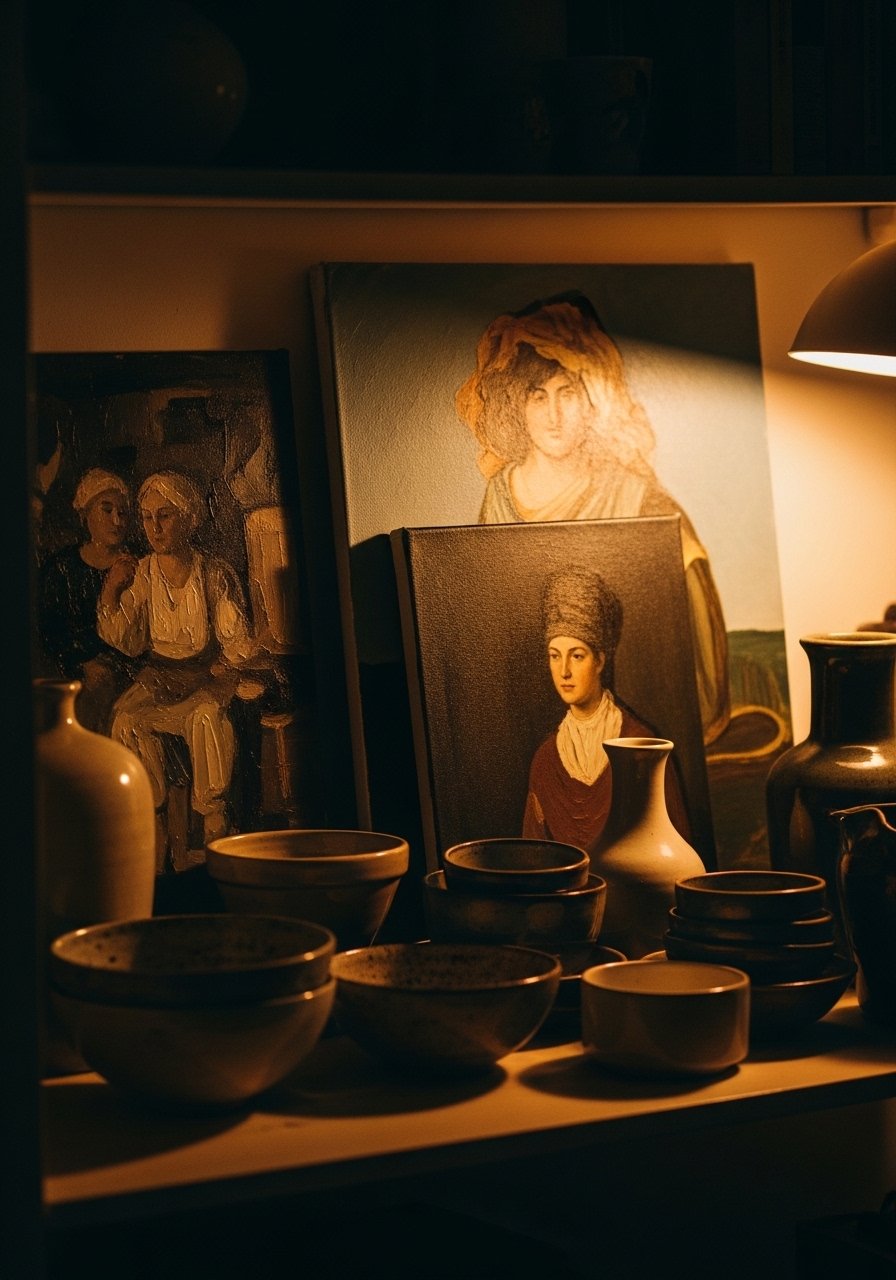
Leaning art at about a 15 degree tilt behind objects softens open shelves in a way hanging never does. I stack one larger print behind two smaller ones and place ceramics in front for depth. The rule that saves me every time is to lean larger pieces behind and smaller ones in front with 15 degrees of tilt. The mistake is leaning everything perfectly vertical which looks staged. Use felt pads on the back to prevent slips. For quick swaps, I use picture ledges so I can change the vignette without new holes.
Fabric Panel Texture For Modern Farmhouse Walls

I wrapped an old tea towel around a foam core, added a slim wood frame, and hung it above my console. Texture panels are cheap and you can layer them with frames or mirrors. Use foam core or 1/4-inch plywood cut to size and glue fabric with a staple gun. One detail other guides miss is edge binding. Glue a narrow strip of scrap wood or trim around the edge to make the panel read finished. Mine cost under $20. If your walls look too glossy after thrift paint, use a matte fabric to mute it. This also pairs nicely next to the mismatched frame gallery wall for contrast.
Large Floral With Vintage Sides For Living Rooms
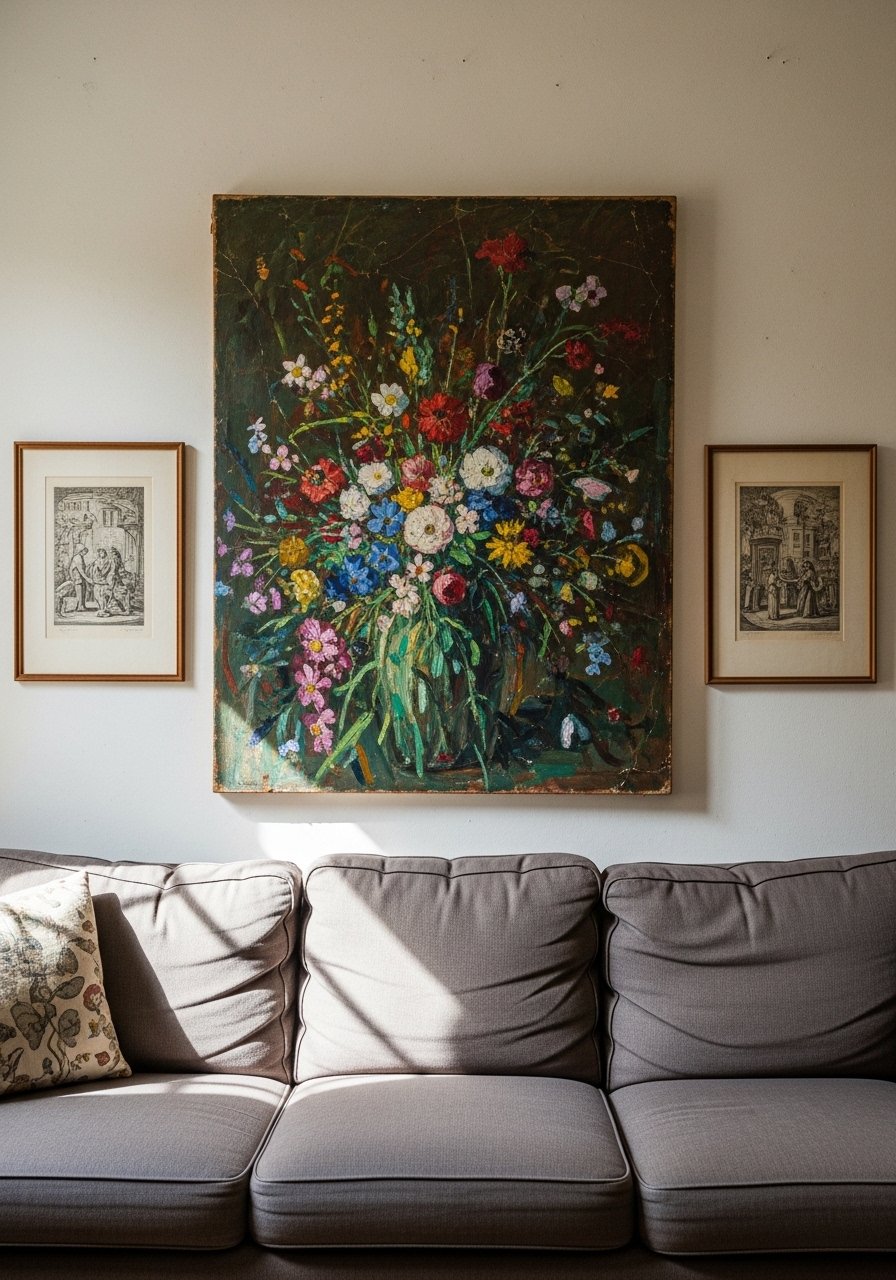
I bought a large floral for $15 and felt like I finally had permission to stop buying tiny prints. One big print anchors the room and two small vintage pieces on either side balance it. The 60/40 rule applies here, with the large piece taking about 60 percent of the visual weight. A common error is framing the large floral in an ornate frame that fights the art. Keep the large frame simple and let the small vintage pieces carry detail. I spent $8 on each side piece and used thrift frames repainted in matte cream. Pair this with a textured throw from the shopping list to pull the palette together.
Distressed Mirror Frame For Light In Dim Rooms
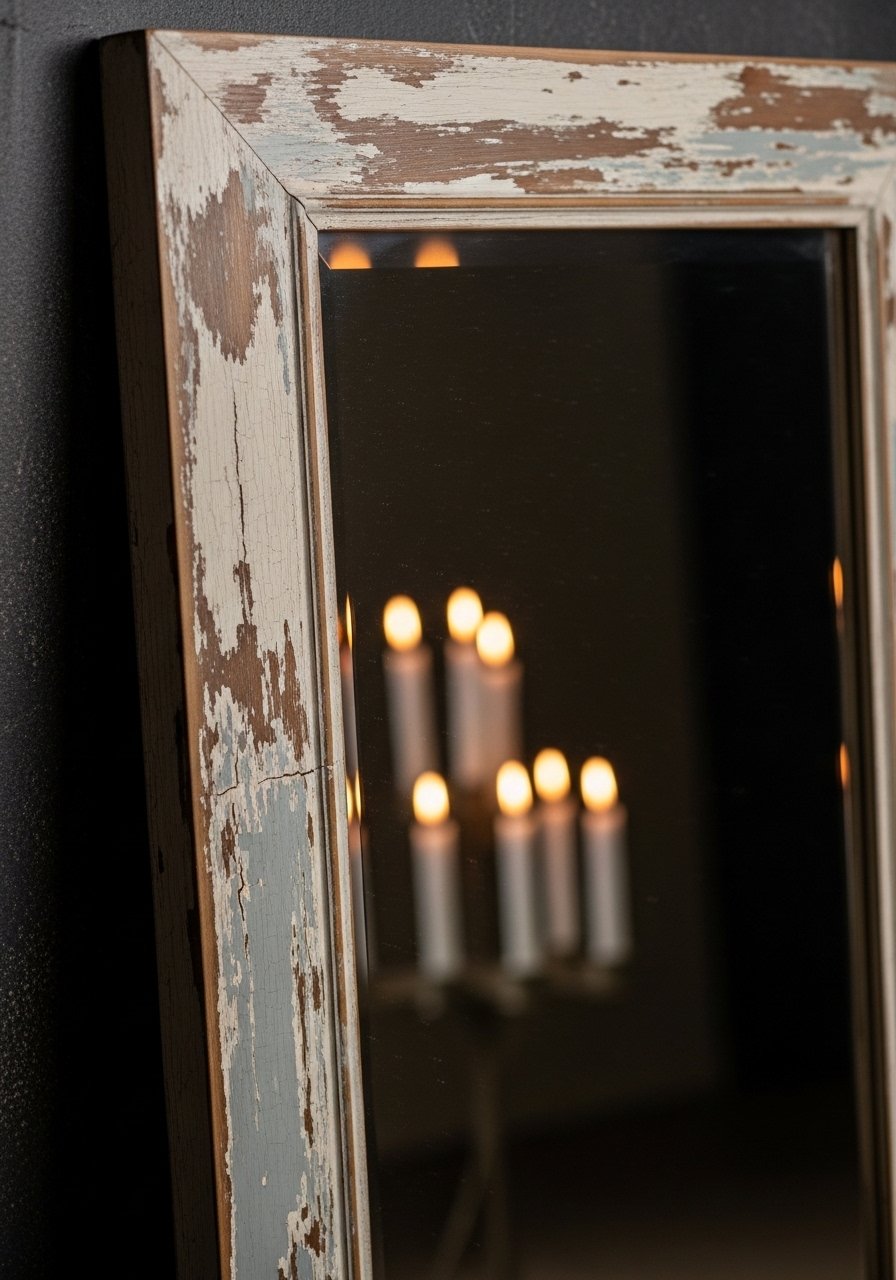
My north-facing bedroom was dim until I rescued a thrifted mirror and distressed the frame. Light bounces more when frames are lighter in tone. I sanded glossy paint, rubbed on dark wax in corners, and it suddenly read vintage instead of battered. A 30-minute project can brighten corners that no lamp will touch. The mistake is using the wrong finish. Matte frames hide wear better than gloss. For hanging without nails, use heavy-duty mirror hanging hardware or lean the mirror safely behind a low console. Pets will love to nose-check shiny surfaces, so place mirrors slightly out of reach.
Plate And Cup Cluster For Quirky Kitchen Corners

I glued thrift teacups onto a painted plywood disc and hung it over my coffee station. It reads playful instead of cluttered. Use lightweight cups and secure them with epoxy to plywood discs for stability. Keep clusters to odd numbers like three or five pieces so they read intentional. A rookie mistake is using heavy china on thin plywood which droops over time. I used 3/4-inch plywood and the whole piece has held up through dishwasher steam and morning bustle. For a renter-friendly version, mount the disc with a picture hanging kit and keep the cups removable for cleaning.
Your Decor Shopping List
- Honestly the best $40 I have spent. Chunky knit throw in cream 50×60 inches, layer over any sofa
- For the gallery wall, buy variety in sizes. Matte black spray paint (~$8) to unify frames, similar at Target
- For plate walls, get secure hangers. Padded plate hangers, pack of 4 suitable for 8-12 inch plates
- For leaned art and ledges, grab these. Brass picture ledges set 24 inches long, great for swapping prints
- For DIY panels, buy backing and trim. Foam core sheets 3-pack and wood trim strips for edge binding
- For renter-friendly hanging, get this kit. No-damage picture hanging strips, large pack ideal for lighter frames
- Light boosting option. Mirror sheet panels 24×36 inches cut to fit vintage sashes, splurge if you want glass
Shopping Tips
White oak beats dark wood in 2026. Design feeds have shifted completely. These white oak floating shelves look current, not dated.
Grab these velvet pillow covers for $12 each. Swap them every three months and the whole room feels different.
Curtains should puddle or kiss the floor, never hang halfway up. These 96-inch linen panels are right for standard 9-foot ceilings.
One large plant will beat five tiny ones. This artificial fiddle leaf fig 6ft adds height without maintenance.
Frequently Asked Questions
Q: How many pieces should I aim for in a gallery wall?
A: Aim for 7 to 9 pieces for a balanced gallery. Odd numbers give rhythm and the largest piece should sit near the center. Keep spacing to about 2 to 4 inches and paint frames the same color if thrift finds are too loud.
Q: Can I do these ideas in a small apartment?
A: Yes. Scale down clusters to three pieces and use narrow shelves or leaned art to avoid too many holes. Most folks knock out a wall refresh for under 50 bucks, so small projects are cheap and fast.
Q: What should I do if I am renting and cannot drill?
A: Use no-damage solutions like heavy-duty picture hanging strips and picture ledges that lean. Over half of renters hunt stuff that won't wreck security deposits, and those strips let you hang plates, small frames, and panels with care.
Q: How do I stop thrift frames from yellowing in sunlit rooms?
A: Swap glass for UV-protective acrylic and use lighter frame finishes because darker woods will show yellowing more. Also rotate art seasonally to limit long sun exposure on any one piece.
Q: Can I mix boho textiles with modern furniture without it looking messy?
A: Yes, mix textures and keep a limited palette. For example, a large neutral floral plus two small vintage sides will feel cohesive if you repeat one accent color in pillows or a throw. Pair textures like linen curtains and a chunky knit to bridge styles.
Q: Should I use real plants or faux for these displays?
A: Both work. Real plants like pothos or snake plants survive neglect and add life. For height without care, use a 6-foot artificial fiddle leaf fig where light is low or you travel often.