


My neighbor stopped me on our street and said my house finally looked like it belonged with the neighborhood. I had repainted years ago but never tested samples outside, so the color went flat in sun. After repainting one wall and swapping planters, the whole facade stopped feeling like a mismatched set of parts.

These ideas skew Mediterranean and transitional, with budgets that range from under $50 for renter-friendly swaps to $400 plus for full-brand lock-ins. They work for full facades, front porches, entryways, and even small urban row houses that need scale fixes.
Warm Terracotta Siding With White Trim For Curb Appeal
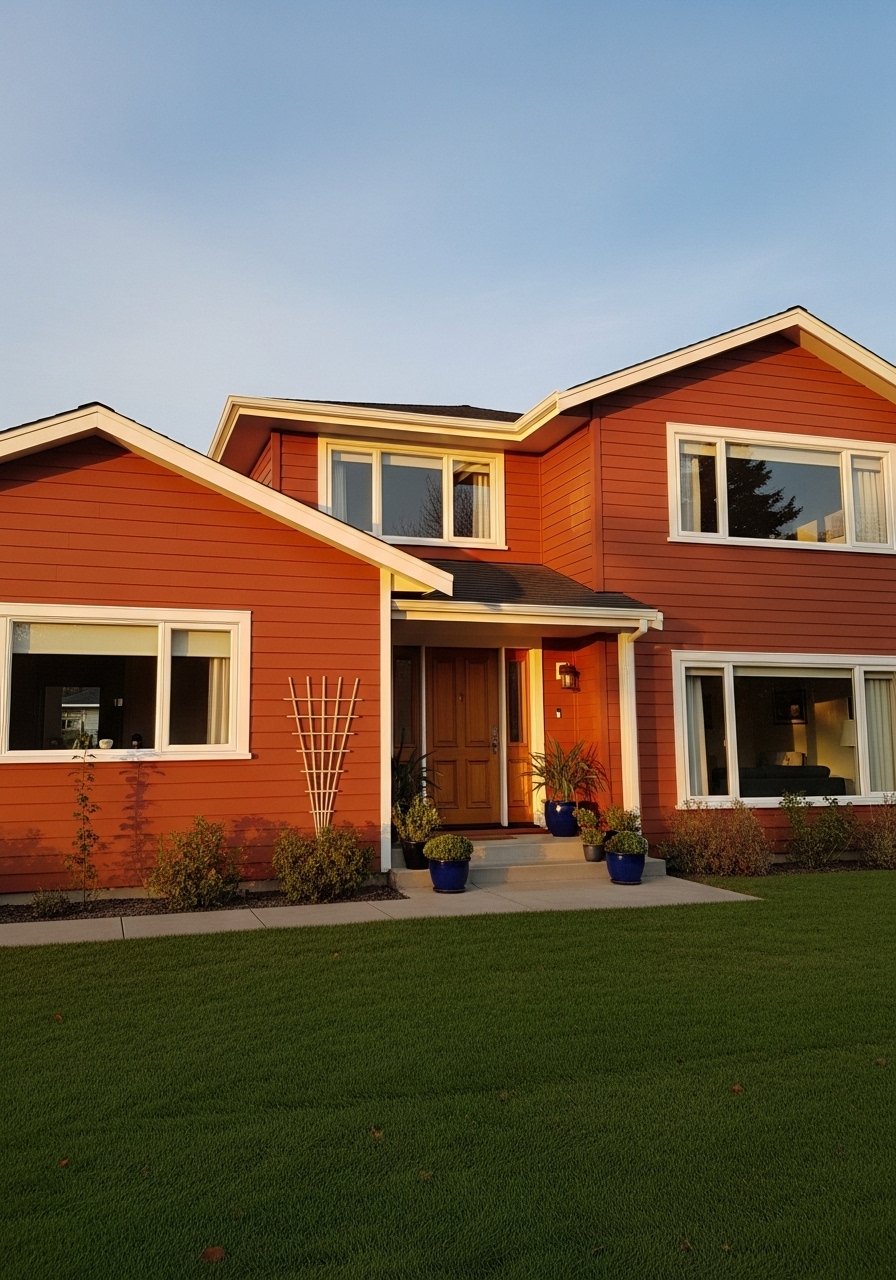
The easiest win I found was pairing warm terracotta siding with crisp white trim to stop the color from reading muddy. What makes this work visually is contrast plus a 80/20 visual rule where about 80 percent of the facade is the terracotta base and 20 percent is white trim, shutters, and fascia. For a reliable white I used a tester from a major brand and kept the sheen on trim semi-gloss so dirt wipes off. Most folks find 7 out of 10 paint matches flop once sunlight hits so test swatches on the actual wall. A common mistake is matching white under store lights. Bring a physical trim chip to the paint desk and try exterior white trim tester cans before buying gallons.
Scan-Matched Brick Facade Refresh For Rustic Entryway
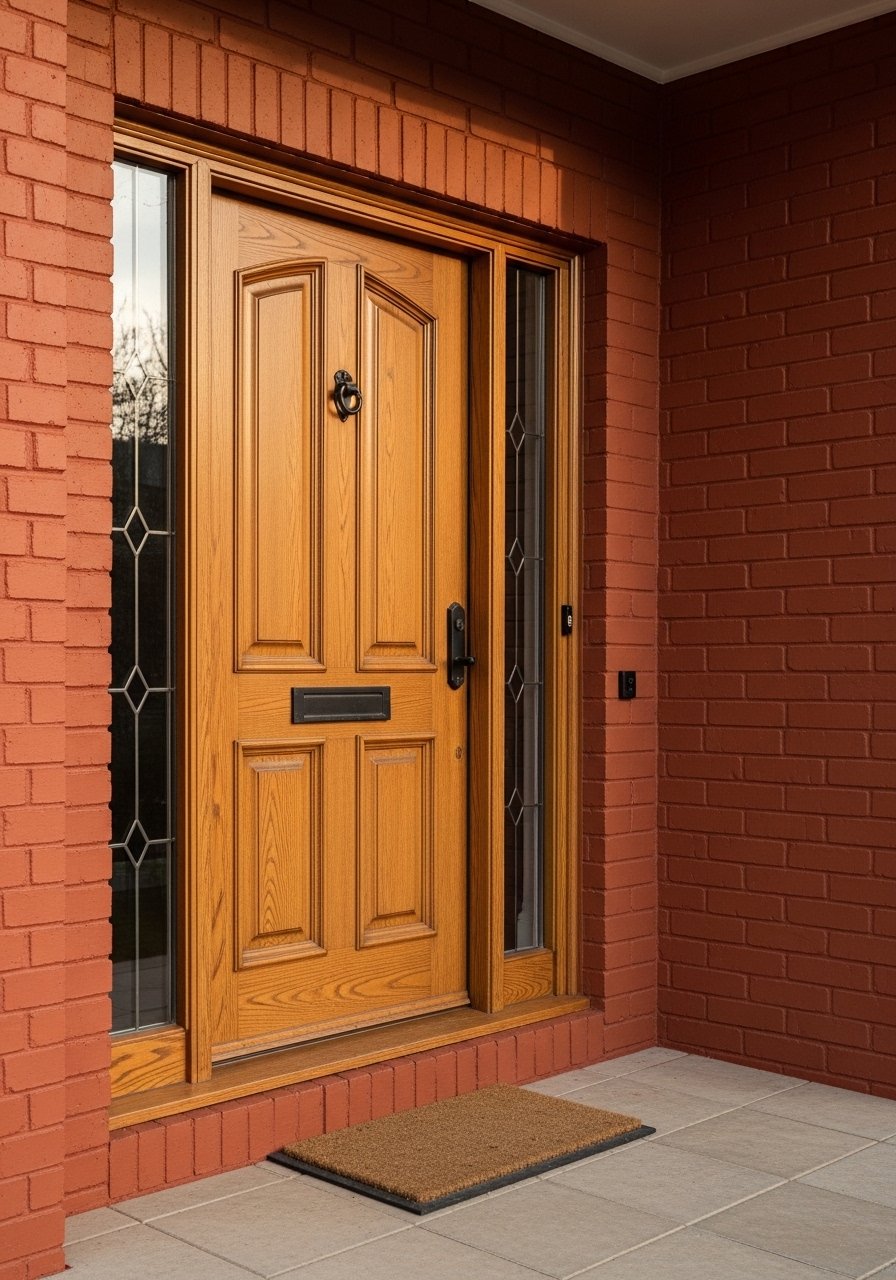
My cousin had faded brick that read pink at sunrise and orange by noon. We brought a 2-inch chip of clean brick to a paint counter and asked for a spectrophotometer scan. Good scanners nail exterior colors right 9 times out of 10, and the scan helped us tweak the mix for the brick texture. Brick soaks up differently than smooth siding so allow a 10 to 20 percent undertone shift in the formula. The trick I learned is to paint a 12-inch square test patch not just a strip. If you want to try it yourself grab a brick-friendly exterior paint sample like masonry exterior tester and plan on two coats at least. People often skip the absorption test and end up with patchy results.
Terracotta Accents On Neutral House Base For Subtle Warmth

If repainting the whole house feels scary, use terracotta accents. I painted only the door and matched a pair of terracotta planters to the tester. That small change fixed the "flat facade" feeling and added depth without commitment. A detail most guides miss is matching pot finish to door sheen. For a semi-gloss door, pick a semi-gloss pot or they read like different colors. Budget here is tiny, under $100 for tester paint and pots. A common mistake is eyeballing color on a phone photo. I used a 3-day outdoor test and moved swatches around the porch in morning, noon, and evening. Try terracotta door paint tester for a no-risk pop.
Multi-Surface Color Match For Shutters And Doors On Coastal Homes
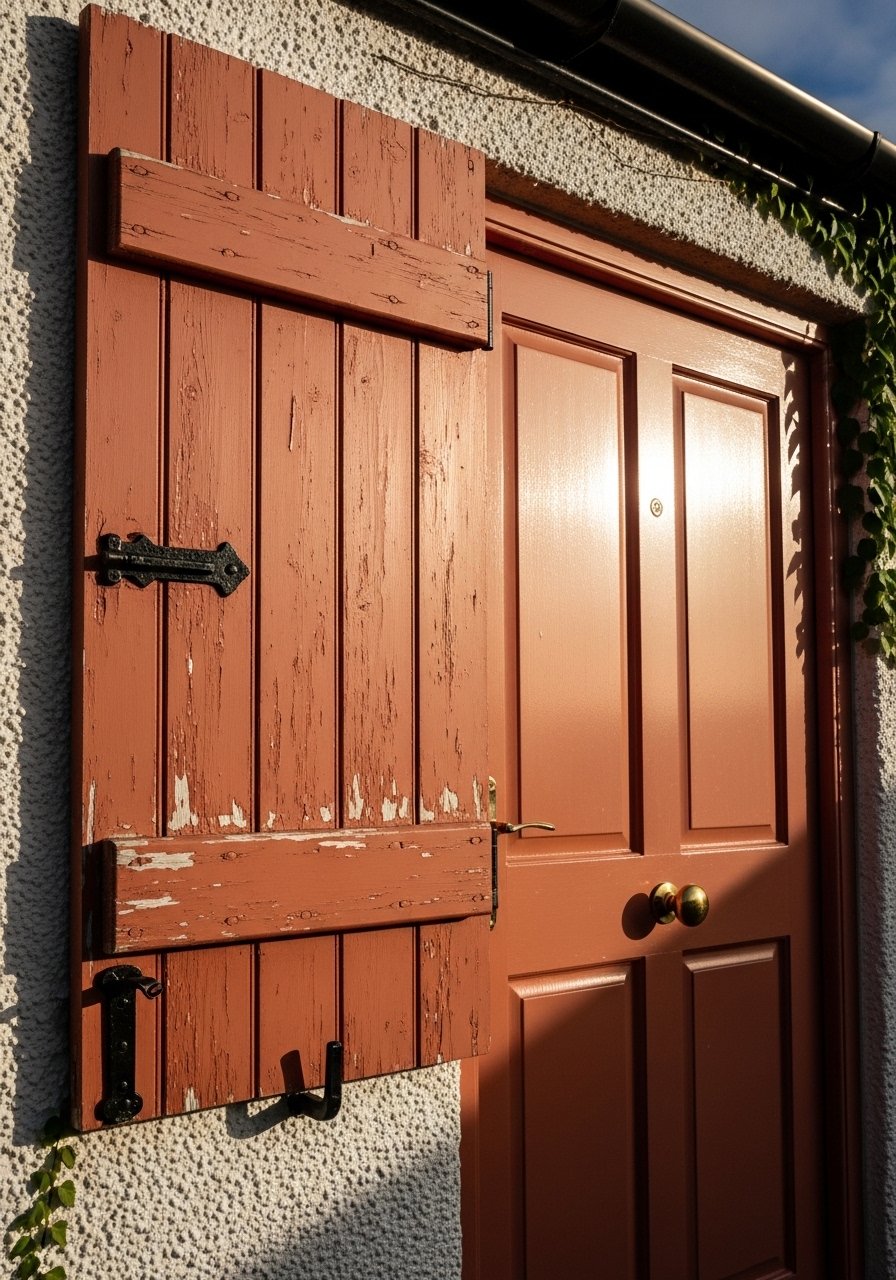
Matching the same terracotta across wood shutters and a glossy door is tougher than it sounds. You have to scan in transmitted light for glossy surfaces and in reflectance mode for rough wood. Bring both a shutter sample and a little door chip if you can. A detail I learned was to aim for the same pigment family but adjust sheen so the door reads one stop darker than the shutters. People make the mistake of using the same recipe without adjusting for texture and then blame the paint. If you are painting both, use a durable exterior semi-gloss for the door and a satin for shutters. For supplies, I recommend a tester for each surface like exterior semi-gloss door paint and a satin for shutters.
Budget Brand Swap For Designer Terracotta On Small Facades
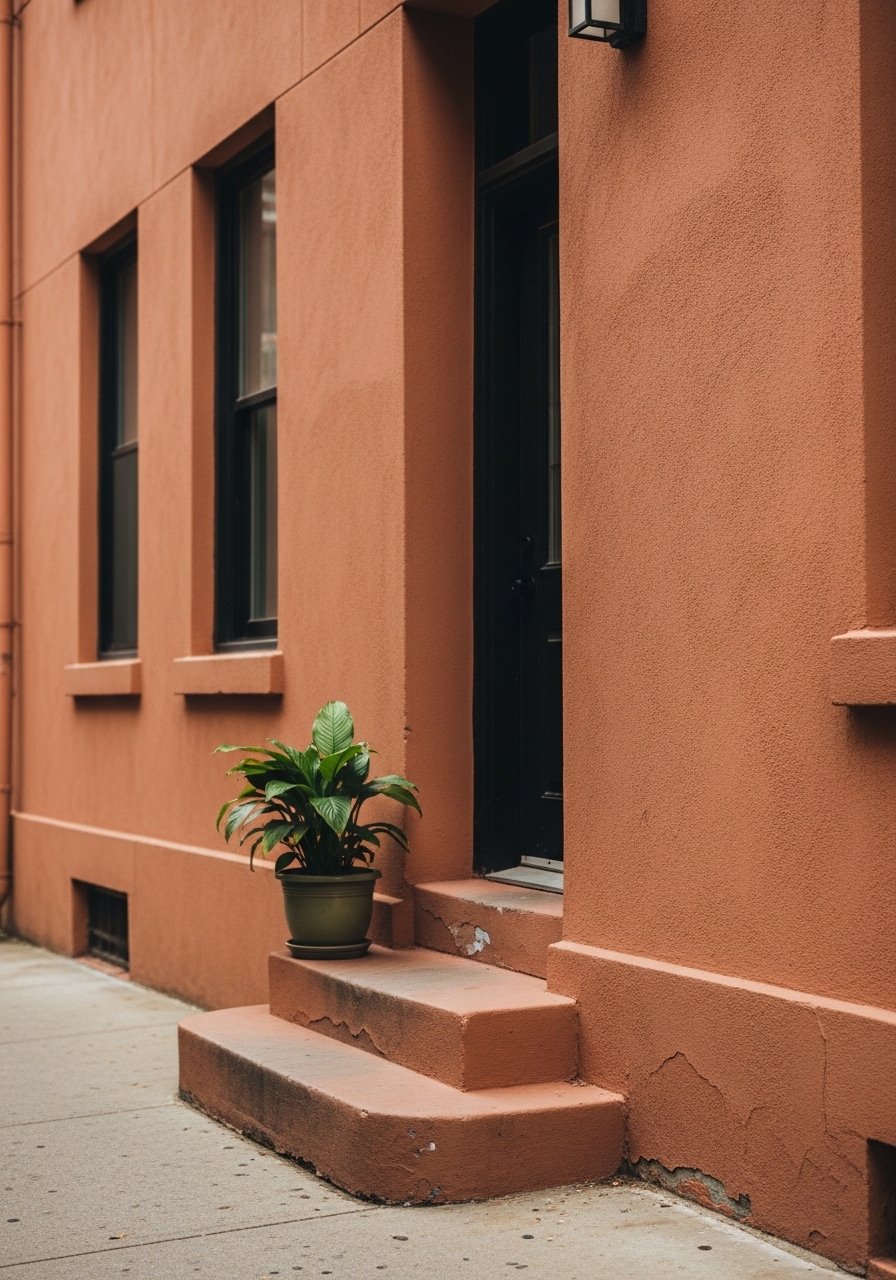
I once wanted a Farrow & Ball Red Earth vibe but not the price. The hack was bringing a physical card to the budget paint desk and asking for a scan-match. Six in ten stick with the original brand paint to avoid headaches, but a careful cross-brand recipe will get you close for a fraction of the cost. Important detail, match the original brand chip not the formula number. Expect to need a custom tint and a small visible tweak on the first coat so buy a 1-gallon to test. A mistake is assuming cheaper paint will have the same viscosity. Thicker formulas behave differently on vertical surfaces. For a wallet-friendly option try affordable terracotta external paint and do a full daylight test before repainting the whole house.
Lighting-Adjusted Terracotta Facade For True All-Day Color

Lighting is everything. I painted three small boards and moved them across the facade to watch the color change through the day. Test Paint 3 Days in Real Sun Before Committing. Most people skip evening checks and then stare at a porch light that makes the paint read incorrectly. For long-term satisfaction, place strips on north, east, and west-facing walls. A pro detail is noting that sun-facing walls can fade 15 to 20 percent faster, so pick a weatherproof, UV-resistant formula there. For testing tools I used a handheld spectrophotometer rental once, but a cheaper route is multiple tester cans to compare. Try UV-resistant exterior paint testers for the initial checks.
Texture-Matched Terracotta On Stucco For Mediterranean Curb

Stucco drinks paint differently than smooth siding. When I refreshed a stucco facade I learned you need at least 10 percent more pigment in the mix or the terracotta reads washed out. The specific detail most articles skip is adjusting the first coat concentration so the second coat sits right rather than filling every crevice unevenly. For stucco plan on three thin coats not two thick ones, and use 100 percent acrylic exterior formulated for masonry. People often assume the same gallon for siding and stucco will work. It does not. Pick up a masonry primer tester and a stucco-suitable topcoat like stucco exterior paint tester and plan extra dry time between coats to avoid tacky spots.
Discontinued Terracotta Revival For Historic Homes

I helped a friend revive her family home and the original terracotta was discontinued. The fastest route was to bring a clean chip to the store for a scan and then test a small area. A neat trick I used was scanning the paint chip and also photographing it under the porch light where the color used to live. Discontinued colors often need one extra tweak because files can be off. A common mistake is ordering 10 cans based on a formula alone. Instead buy a gallon to test, then order the rest. If you want to try it, pick up a small batch match like custom color match paint and test outdoors for 72 hours before committing.
Proprietary Shade Exterior Lock-In For Modern Facades

If you love a proprietary maker color, lock it in through their lab and insist on scanning a physical chip. Proprietary pigments are often mixed with unique binders so competitor formulas can be off in sheen and fade. A detail worth noting is to confirm viscosity and recommended application method with the brand so you do not get runs on vertical metal trim. This approach costs more, often $400 plus, but it keeps the shade consistent across tins and replacements. People assume a store recipe will match exactly. It rarely does for proprietary shades. For those committed to a brand try ordering a sample from the maker and pair it with high-hide exterior primer to ensure even coverage.
Quick Sample Match For Trim Pop On Renter-Friendly Porches

For renters who cannot repaint, I used peel-and-stick terracotta panels and matched planters to the panel finish. This saved paint drama and still gave the facade personality. A specific detail most guides miss is scaling panels to the trim width so they look intentional, not tacked-on. I cut 12 by 18 inch panels to mimic a shutter stripe and anchored pots to the step. Avoid using indoor-grade adhesive outdoors or the panels will peel in a season. Instead use exterior-rated removable tape. If you want this route try removable outdoor siding panels and test with a single panel overnight after rain. This is a cheap, renter-friendly trick that still moves the needle.
Scientific Match For Multi-Light Conditions On Large Estates

For big jobs I rented a spectrophotometer and scanned samples in both reflectance and transmittance modes. This gave me a reproducible recipe that held across north and south facades. A practical detail I use is saving a labeled photo of the scan location and the time of day so replacements match years later. Good scanners nail exterior colors right 9 times out of 10 but they do not replace the 3-day outdoor sample rule. A common error is thinking a single scan on a protected porch equals the whole wall. It does not. If you want to go pro, rent a device or ask the paint lab to share the scan, and pair it with outdoor color-scan service tools for consistency.
Your Decor Shopping List
Textiles
- Honestly the best $40 I have spent. 22-inch down-filled linen pillow covers, set of 2 in warm terracotta and cream for layered porch seating
Wall Decor and Trim
- Found these while looking for something else. Removable outdoor trim panels, 12×18 inches (~$25 each) to mimic shutters without painting
Paint and Tests
- For swatches and tests get exterior paint tester kit, 4-pack with both satin and semi-gloss options, buy one for each wall exposure
Planters and Pots
- Unglazed terracotta planters, 12-inch (~$20) match better if you pick slightly different sheens for door and pots
Tools and Tech
- For DIY color matching try handheld spectrophotometer rental or tool if you have a complex facade
Budget Finds
- Exterior-grade removable mounting tape for renter-friendly panels, similar at big box stores
Shopping Tips
White oak beats dark wood in 2026. Design feeds have shifted completely. White oak floating shelves look current and will not date quickly.
Grab these exterior paint tester cans for $10 each. Put one on each exposure and check morning, noon, and evening light.
Curtains or porch rugs should meet the ground, never hang halfway up. All-weather outdoor rug, 4×6 helps anchor porch seating and shows scale.
Everyone buys five small succulents. One 6-foot artificial fiddle leaf fig has ten times the visual impact when placed beside the door.
If you want a precision match, bring a physical paint chip to the paint desk not just a color name. Color card protection sleeves keep chips clean for scanning.
Frequently Asked Questions
Q: How long should I test paint samples outside?
A: Test samples for at least 72 hours across morning, noon, and evening. Drop a swatch on the wall at the same height where the final paint will be applied so you see how vertical exposure reads the color.
Q: Can renters get the terracotta look without painting?
A: Yes. Use removable panels, matched planters, and a terracotta front door mat to create cohesion. Removable outdoor trim panels are the fastest renter-friendly route.
Q: Why did my store-matched color dry darker than the sample?
A: Different brands use different binders and pigments so viscosity and sheen change the final read. The fix is scanning a physical chip and testing a small 12-inch square patch, then adjusting the formula.
Q: Should I mix metals on exterior hardware or match everything?
A: Mix them. It looks more intentional when you pick a primary metal for door hardware and accent with another for lighting. Start small by swapping a mailbox or house numbers first and see if the pairing feels balanced.
Q: How do I match terracotta paint to brick or stucco?
A: Scan a real material chip and expect a 10 to 20 percent undertone shift between smooth and rough surfaces. For stucco plan on extra pigment and one additional thin coat compared to siding.
Q: Is a spectrophotometer worth renting for a home project?
A: If you have multiple exposures or proprietary colors it helps. Good scanners nail exterior colors right 9 times out of 10 and they save rework. For most smaller jobs, careful 3-day swatches with tester cans will do.