

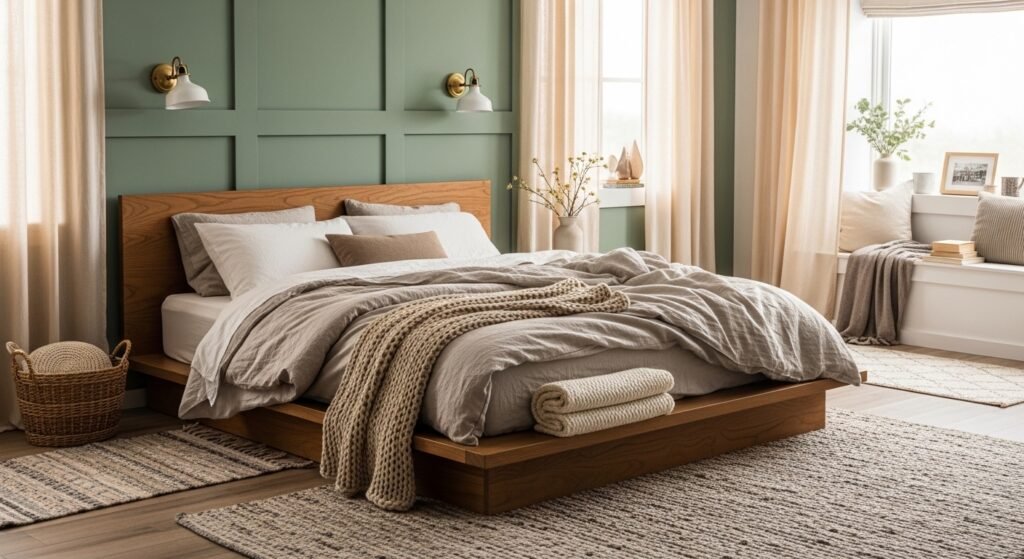
My living room had nice furniture and decent lighting but it still felt like a waiting room. Took me embarrassingly long to figure out it needed texture and height. Once I added a layered rug, a 96-inch curtain, and a single sage accent wall, people started saying the room felt lived in instead of staged.
These ideas lean modern farmhouse with a few Scandinavian and industrial twists. Most items are under $50, with a few splurges around $100 to $150. Works for bedrooms, living rooms, entryways, or any small space that feels off and you can not figure out why.
Cozy Bedroom Sage Accent Wall
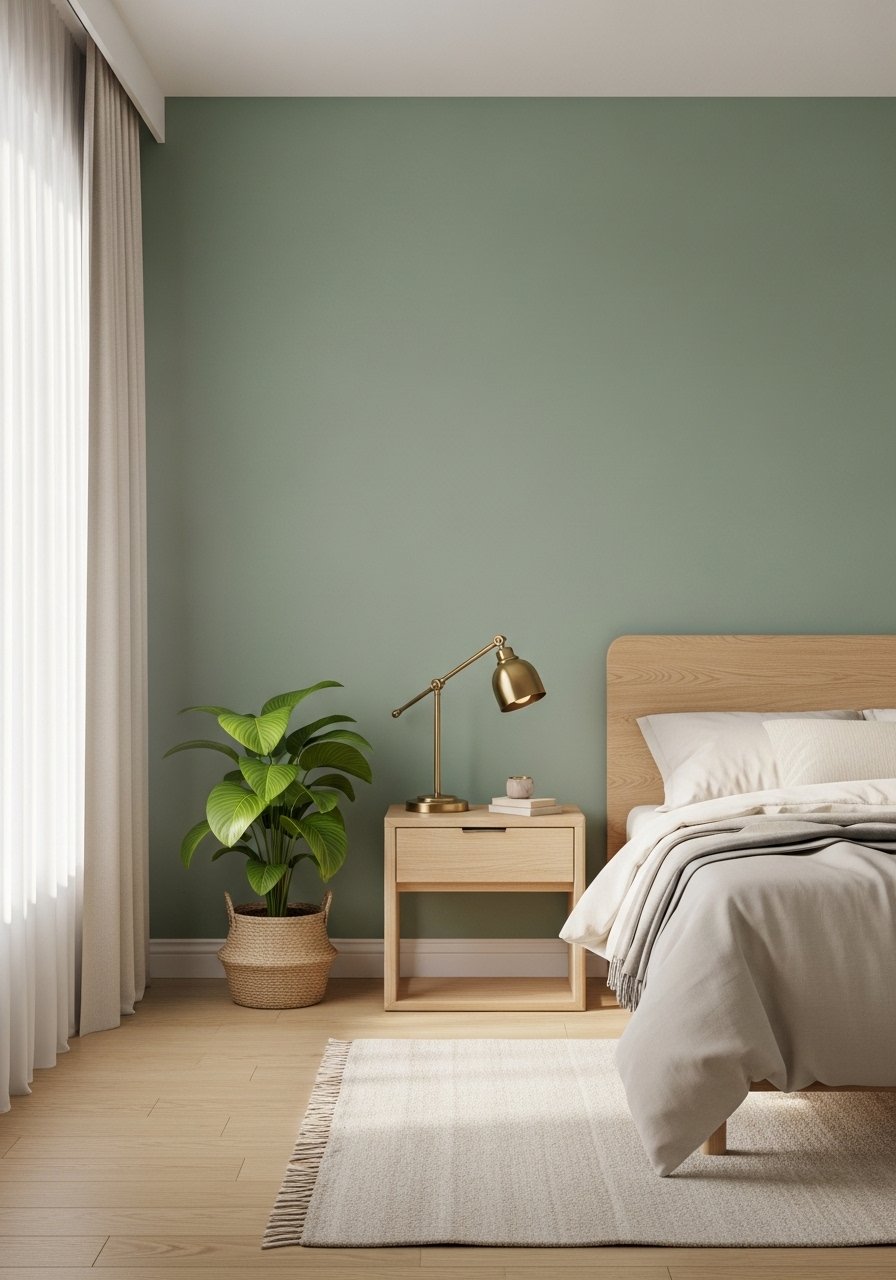
Painting one wall Saybrook Sage or a lighter October Mist shade pulls the eye to the bed without closing the room in. I painted just the wall behind my headboard and it made the whole room feel grounded. Budget wise, paint and a roller cost under $100. A common mistake is painting every wall the same color in a small room, which can feel flat. If you rent, try a peel-and-stick panel instead. For paint-adjacent shopping, I like this sage paint sample pack when I want to test undertones first. Front legs of furniture on a rug are important, so plan rug layout before you commit to paint. Most folks now pick sage over stark white for that chill bedroom feel.
Scandinavian Sage Headboard For Bedrooms

An upholstered sage headboard gives color without painting. I swapped my plain headboard for a linen-upholstered sage piece and the room finally felt finished. It works best with white or cream bedding to keep the look calm. Expect $200 to $400 for a good upholstered option. People often pick the wrong scale, buying a headboard too narrow for a king bed. Make sure the headboard is at least as wide as the mattress, and use 2 euro shams plus 3 smaller pillows for a layered look. If you need a renter-friendly fix, use a removable fabric cover in sage or a tall cushion that leans against the wall. I ordered this upholstered headboard cover while deciding if I wanted a permanent swap.
Modern Farmhouse Deep Sage Walls

Going dark on all walls can be dramatic and cozy, but warm wood is non negotiable. I painted my spare room a deep sage and added a walnut bed frame to avoid the room reading too cold. If you do full-room color, pick a yellow-hinted sage rather than a blue one so it reads warmer in evening light. Budget for paint and a midrange wood bed, expect $200 to $800 depending on the frame. A mistake I see is under-lighting the room. Add at least two sources of light, including a lamp with warm bulbs and an overhead dimmer. People drop around $500 when they redo their bedroom in greens, so plan your splurges wisely. For a bed that warms sage, check this solid wood bed frame.
Layered Sage Bedding For Instant Warmth
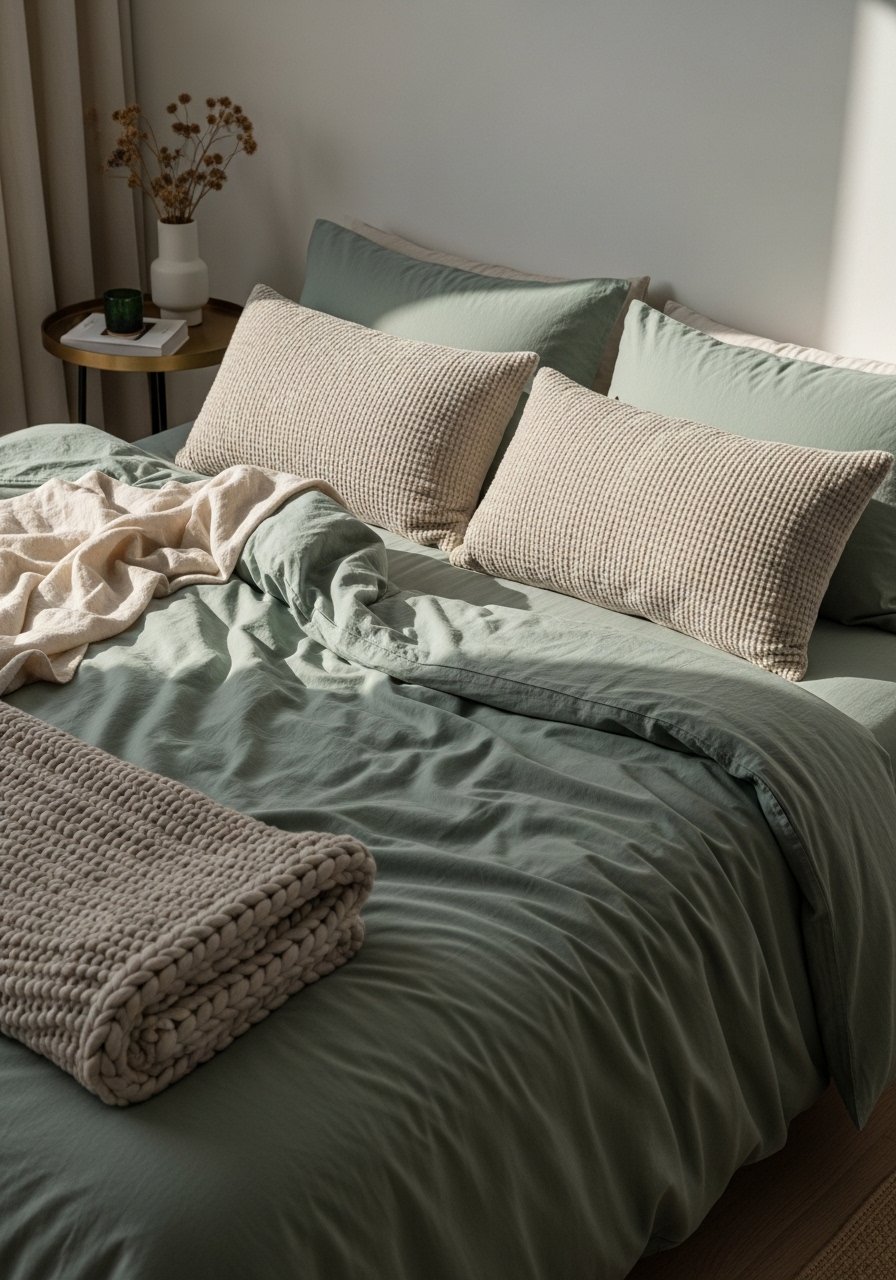
The moment I added a linen throw and three mismatched pillows to my duvet, the bed stopped looking like a showroom. Layer a sage duvet with a lighter throw, then add two 22-inch down-filled linen pillows and a 14-by-22 velvet lumbar for depth. Budget friendly options are under $150 total. People often buy matching bedding sets that look flat. Mix textures and keep pillow counts in odd numbers for a natural look. Pet owners: pick tighter weaves or washable cottons so hair wipes off easier, and avoid boucle if you have shedding pets. I picked up these 22-inch linen pillow covers to swap color without buying new inserts.
Floor-To-Ceiling Curtains For Bedrooms

Most people hang curtains at the window frame and the room looks shorter. Hang 96-inch panels just above the trim so the eye travels up. For standard 9-foot ceilings, 96-inch panels are right and they cost about $30 to $60 a panel. Curtains that kiss or puddle the floor add softness. A common mistake is picking heavy dark curtains with sage walls which can make the room feel heavy. Instead, use airy linen in a sage tone or neutral to frame the view. For renters, tension rods work in a pinch. I swapped to these 96-inch linen curtain panels and the ceiling instantly felt taller.
Grandmillennial Floral Accent Behind Bed
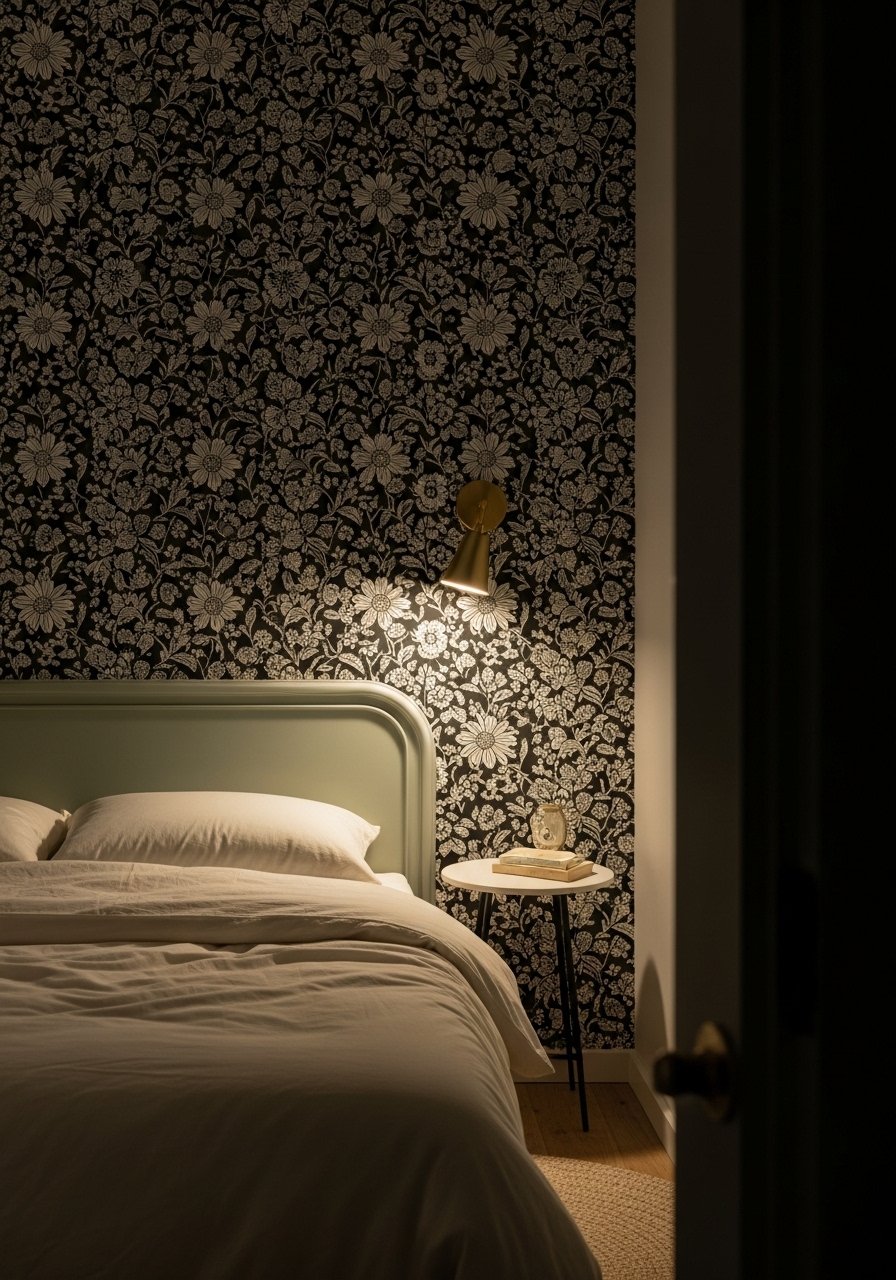
Pattern behind the bed makes sage sing. I used a black-and-white floral peel-and-stick behind my bed and then painted the nearby trim a matching sage to tie it together. Peel-and-stick keeps this renter friendly and costs about $80 to $150 for a feature wall. People overdo pattern across all walls which can overwhelm a small room. Do wallpaper on one wall and paint the rest neutral. A tip most guides miss is to match the wallpaper’s base tone to your sage undertone so they do not fight. If you want to try it, this floral peel-and-stick wallpaper is removable and forgiving for first-timers.
Transitional Sage Wainscoting For Dining Or Entry
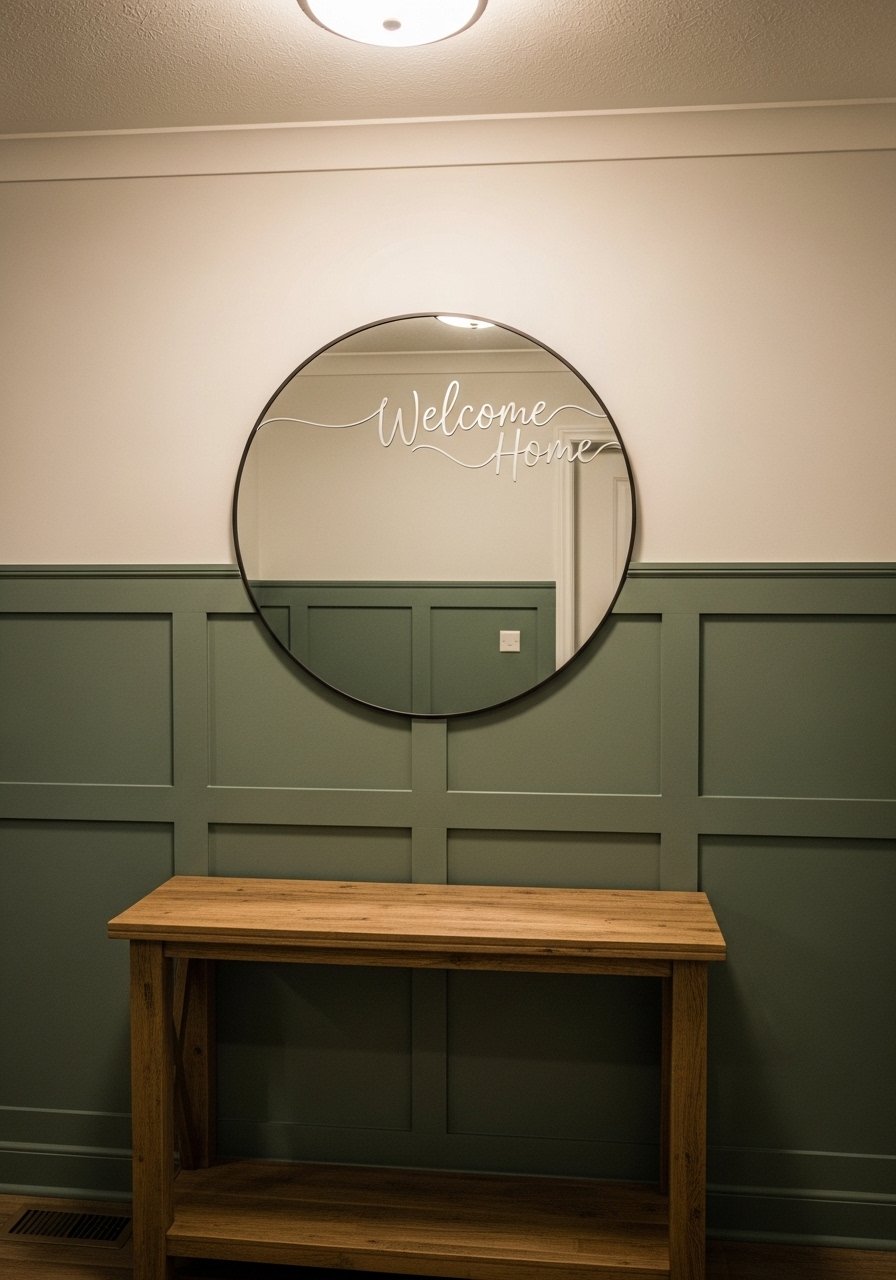
Wainscoting painted sage adds built-in character without committing to full-room color. I painted the lower third of my dining room wall sage and left the top neutral, which made furniture read more custom. Budget for materials and paint is roughly $300 to $500. A tricky part is panel height; I follow a rule of thirds and kept wainscot height at 36 inches to fit my 8-foot ceilings. Renters can achieve a similar look with removable beadboard panels or tall picture ledges. One gap most articles miss is maintenance: matte paints show scuffs, so use a washable satin finish where hands touch. For supplies, this wainscoting kit saved me hours.
Industrial Corner With Sage Leather Chair
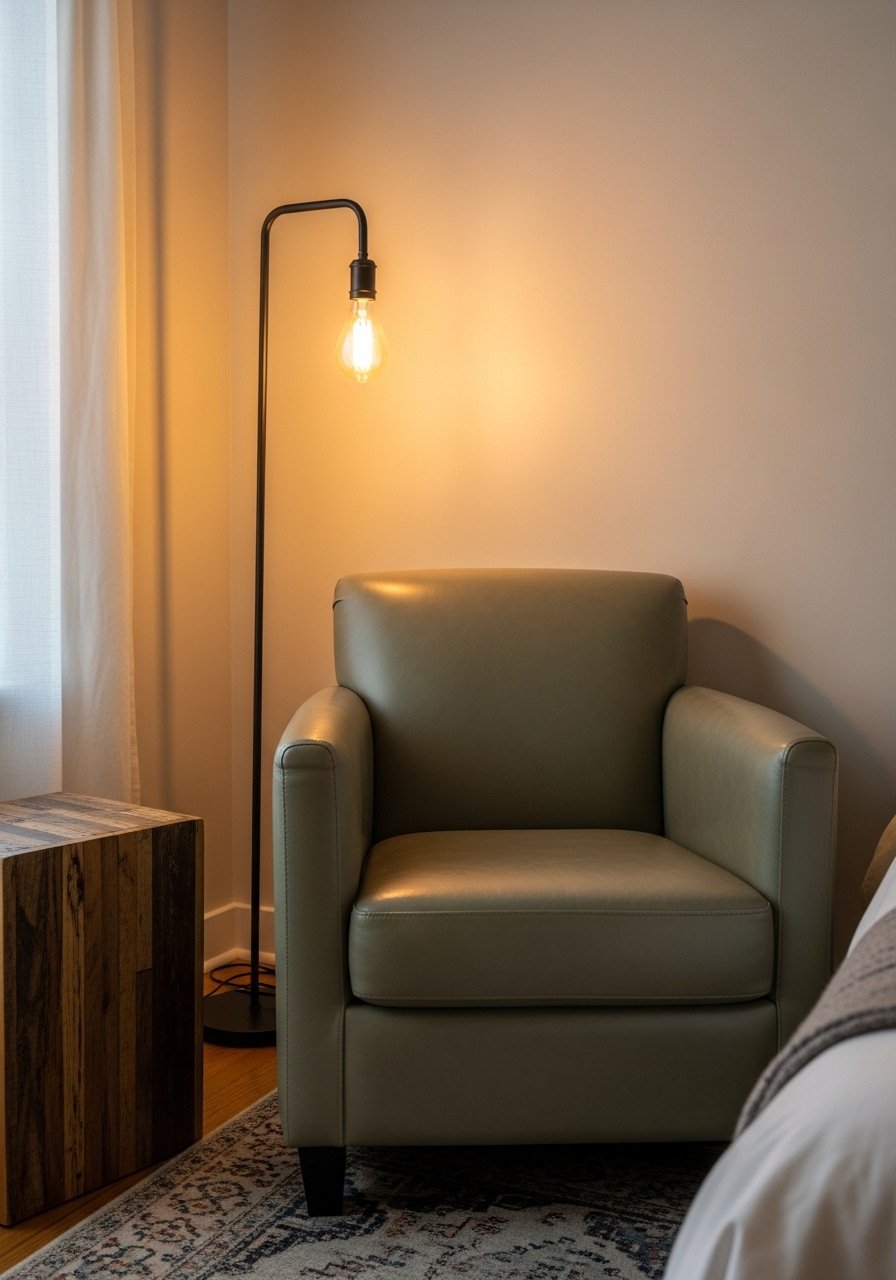
A leather chair in sage keeps a soft palette from feeling too saccharine. I added a compact sage leather armchair to a lonely corner and suddenly the room had an anchor for reading. Leather hides pet hair better than boucle and wipes clean, which is a bonus if you have dogs or kids. Budget is $200 to $400 for a decent piece. Watch scale; in small rooms pick a narrow chair with exposed legs so it does not overwhelm. Pair this with the curtain trick from earlier and a small floor lamp to make a true nook. I grabbed this sage leather accent chair after trying several faux options.
Layered Rugs To Anchor A Bed

Rug size matters more than people think. For a king bed, go 8×10 minimum and make sure the front legs sit on the rug so the bed does not look like it is floating. I layered an 8×10 neutral jute under a 5×8 patterned wool rug and that combo hides wear while adding warmth. Layering rugs is budget friendly if you pick one inexpensive base and one accent. A common mistake is two rugs that are too close in color; contrast texture not just hue. Also, layered rugs work great on hardwood that shows scratches because they protect traffic zones. Sage green is blowing up online lately so a neutral base rug will keep the look current longer. I used this 8×10 jute-area-rug under my patterned piece for durability.
Your Decor Shopping List
- Honestly the best $40 I have spent. Velvet pillow covers, set of 2, 22-inch in sage and cream for instant layering
- For the curtain trick in idea 5, you need length. Linen curtain panels, 96-inch pair (~$40-60 per pair)
- Found these while looking for something else. Brass picture ledges, set of 2, 24-inch (~$18-25) so you can swap art without new holes
- Upolstered headboard cover, queen size, sage (~$60) when you want color without installation
- Chunky knit throw in cream, 50×60 inches (~$35-55). Drape over the sofa arm for instant warmth
- For rugs, go neutral base then pattern. 8×10 jute area rug durable and cheap
- For renter-friendly wallpaper, try peel-and-stick floral wallpaper roll (~$30-90 per roll)
- If you want a plant that looks real without fuss, artificial fiddle leaf fig, 6-foot adds height and hides in corners
Shopping Tips
- White oak beats dark wood in 2026. Design feeds have shifted completely. White oak floating shelves look current, not dated.
- Grab velvet pillow covers for $12 each. Swap them every few months and the whole room feels different.
- Curtains should puddle or kiss the floor, never hang halfway up. 96-inch linen panels are right for standard 9-foot ceilings.
- One large plant beats five small succulents. Use a faux fiddle leaf fig, 6-foot where you need height without the maintenance.
- If you have pets, choose smooth weaves and washable fabrics. Cotton duvet covers, queen, sage clean easier than boucle or velvet
Frequently Asked Questions
Q: Can sage green make a small room feel smaller?
A: Yes if you paint every wall a deep sage. Try one accent wall or pick a yellow-hinted lighter sage. Using floor-to-ceiling curtains and keeping the ceiling trim light will avoid that boxed-in feeling.
Q: What rug size should I use under a king bed for the layered look?
A: Go 8×10 minimum and place the front legs of the bed on the rug. If you want extra layering, add a 5×8 over the larger piece so the edges peek out.
Q: My sage room feels cold. How do I warm it up?
A: Add warm woods, brass accents, and layered textiles like a chunky knit throw and velvet lumbar pillows. People often skip textiles and that is the quickest fix.
Q: I rent, how can I try these looks without painting?
A: Use an upholstered headboard or removable headboard cover, peel-and-stick wallpaper for an accent wall, and all-textile swaps like duvet covers and curtains. Peel-and-stick wallpaper is the easiest renter-friendly option.
Q: Should I choose cool or warm sage?
A: Pick based on lighting. South-facing rooms can handle cooler, bluer sages. North-facing or dim rooms do better with yellow-hinted sages. Test with samples in different light.
Q: Can I mix modern furniture with grandmillennial wallpaper?
A: Yes. Anchor the pattern with neutral bedding and a single modern wood piece. The contrast keeps the room intentional not busy.