


My friend walked into my kitchen last month and said, "This actually feels like a home." I had been rearranging plates and plants for weeks until the shelves stopped looking like a jumble and started to read like a little vignette. These ideas are the exact tweaks I used to get there.
These shelf looks lean modern farmhouse with a touch of Mediterranean warmth. Most setups are under $75, with a few splurges around $100-150 for statement pieces. They work on shallow floating shelves, deep pantry shelves, and above sinks or ranges.
Layered Neutrals With Sage Ceramic Accents

The trick I learned is to repeat one color in different finishes. I used matte sage ceramic canisters alongside glossy white plates and a small oak board, and suddenly the shelf felt intentional. Aim for an 80/20 color ratio, where 80 percent is neutral and 20 percent is your sage accent. On a 12-inch-deep shelf I leave 10-12 inches of vertical breathing room between items. My mistake at first was putting everything the same height. Swap in a sage green ceramic canister set and a white oak floating shelf to anchor the look.
Small Herb Garden for Fresh Flavor and Color
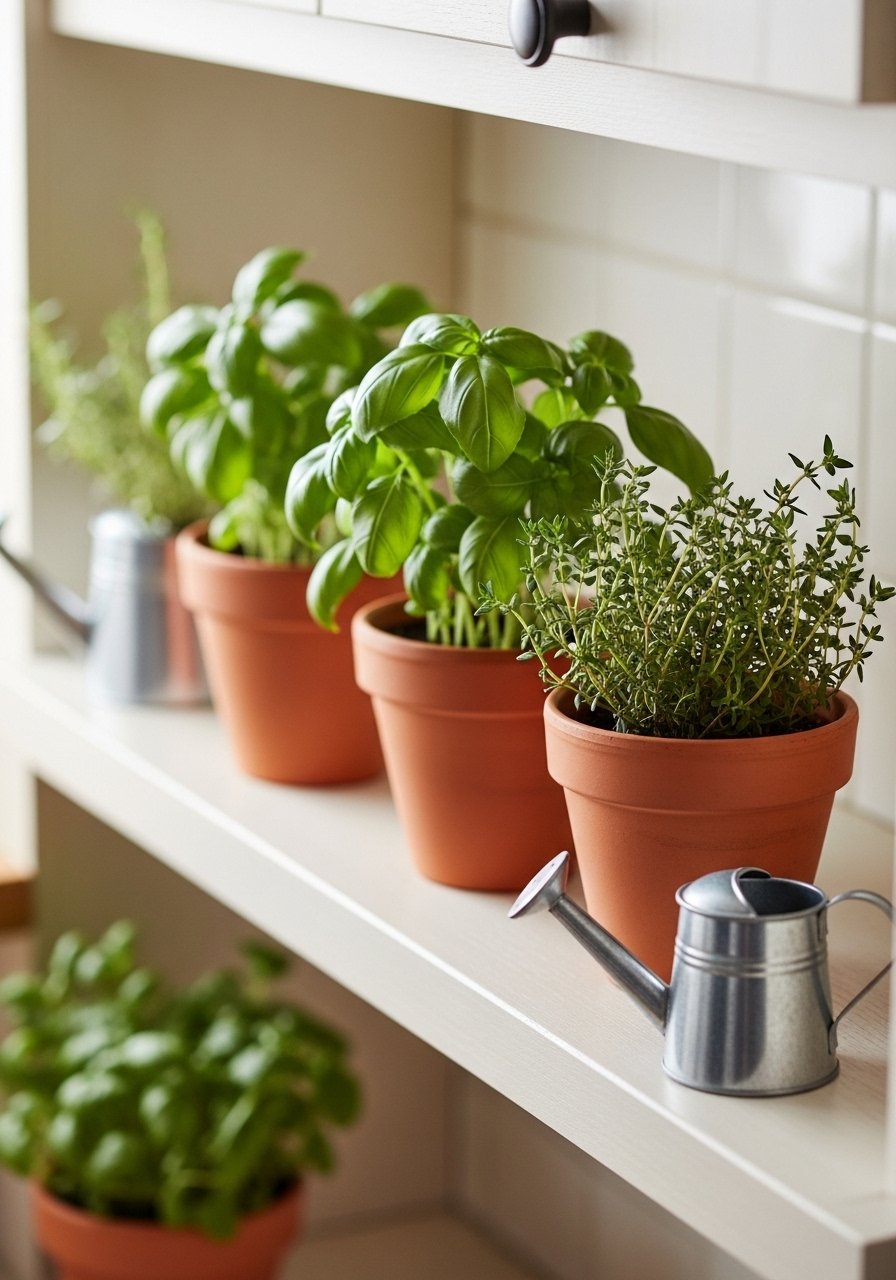
I keep three matching 4-6 inch pots with basil, parsley, and chives on a shelf near the window. Herbs add scent, color, and they are useful when cooking. Use self-watering pots if you forget to water on weekends. Space the pots about 3 inches apart so leaves can spread. People often cram plants with decorative items and end up with soggy soil on ceramics. Instead, put a small tray under the pots and use self-watering herb pots and tiny brass plant hooks for pruning scissors.
Collected Glass Bottles for Warm Shine
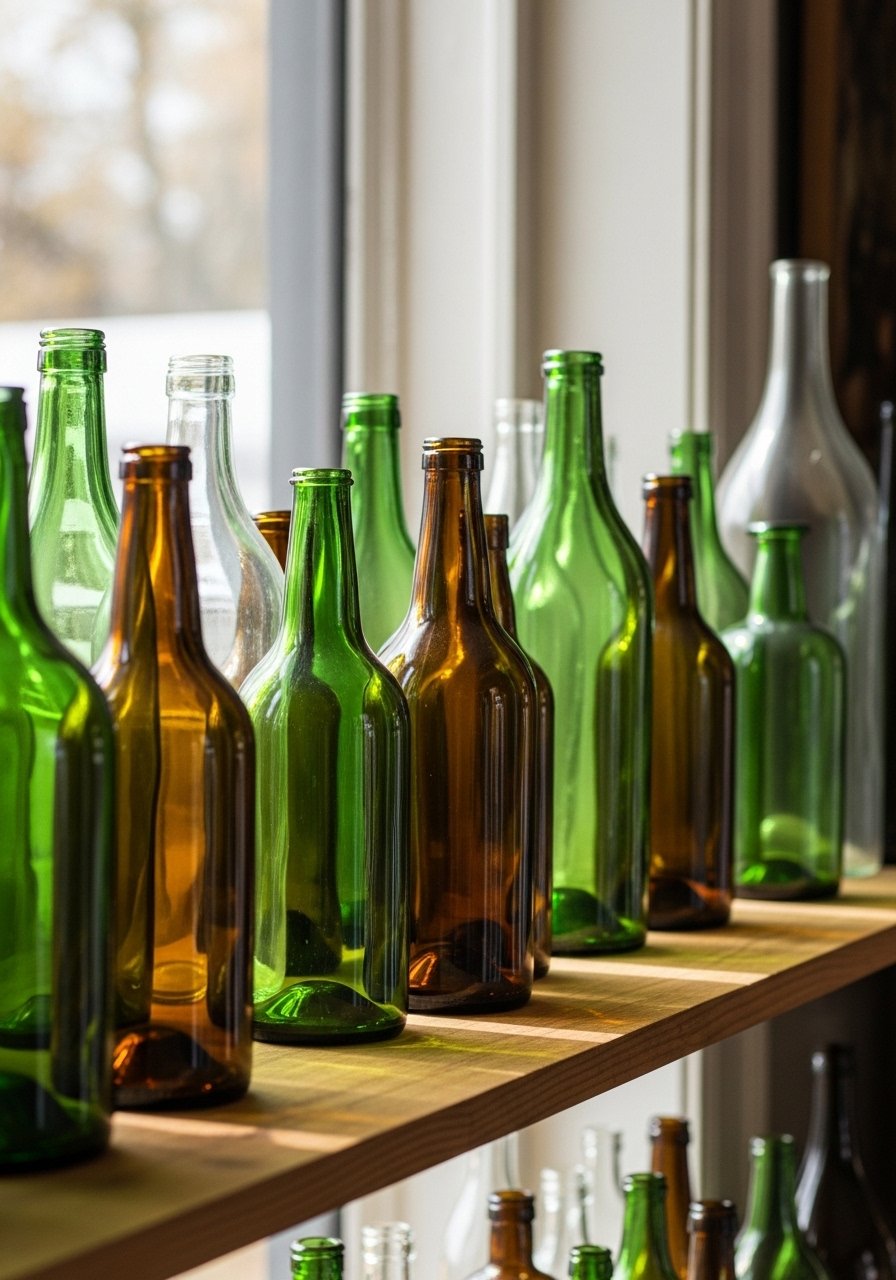
Years ago I grabbed a few recycled glass bottles at flea markets and lined them up on a top shelf. The green tones echo the sage and the glass catches light so the whole kitchen brightens. Group bottles in odd numbers and vary heights by at least 4 inches. A common mistake is putting bottles too close together. Give each one a little space so the light travels between them. Try a recycled green glass bottle set and tuck a single dried stem into the tallest bottle for texture.
Folded Textiles for Softness on Lower Shelves
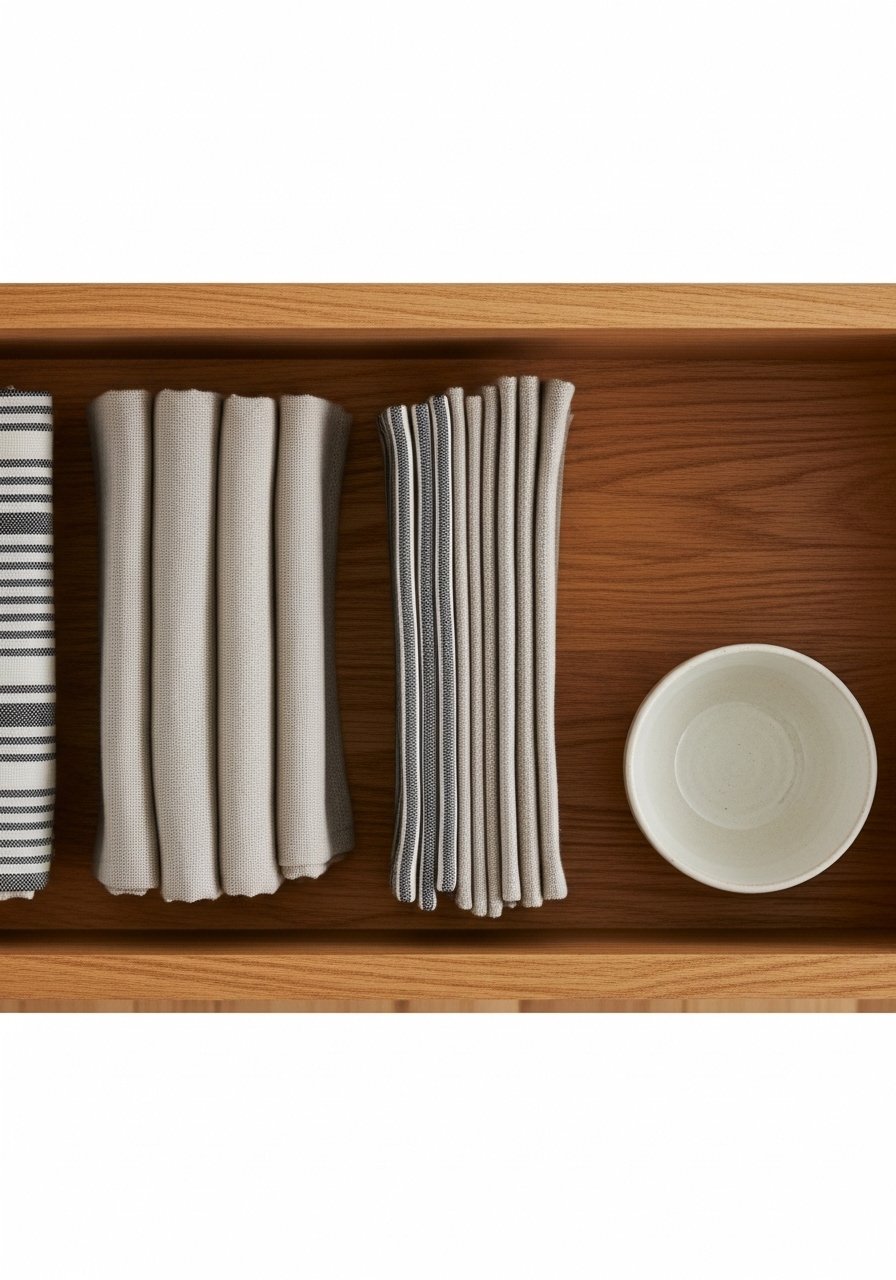
I used to think textiles belonged only on sofas. Then I started folding linen tea towels in neat stacks on the lower shelf and it made the whole kitchen feel softer. Keep stacks around 10-12 inches high so they read like a single object. Mix one patterned towel with two solids to avoid a busy look. The rookie move is cramming all textiles into a single color. I like these linen tea towels in sage and cream and a small stackable ceramic bowl for crumbs.
Matte Black Hardware With Painted Sage Backboard

Painting the shelf backboard the same sage as your accents pulls everything together and makes open storage look deliberate. I matched the paint to matte black hardware and it grounded the whole run. Install the top shelf 16-18 inches above the countertop for easy reach. People often choose small knobs that get lost. Swap to a 2.5-inch matte black pull and the contrast reads high-end. A sample pot of sage paint and matte black cabinet pulls made this trick simple.
Open Shelves Balanced With Closed Storage Below

Open shelves show personality but they also show clutter. My fix was pairing two shallow open shelves with a closed base of drawers and baskets. Use woven baskets about 12×10 inches to hide damp dish towels and extras. The visual rule I use is two thirds open, one third hidden in a cabinet or basket. People who only do open shelves end up with mismatched storage on display. Try wicker storage baskets 12×10 and a set of white subway plates for everyday use.
Mini Gallery Wall Leaning on a Shelf Ledge
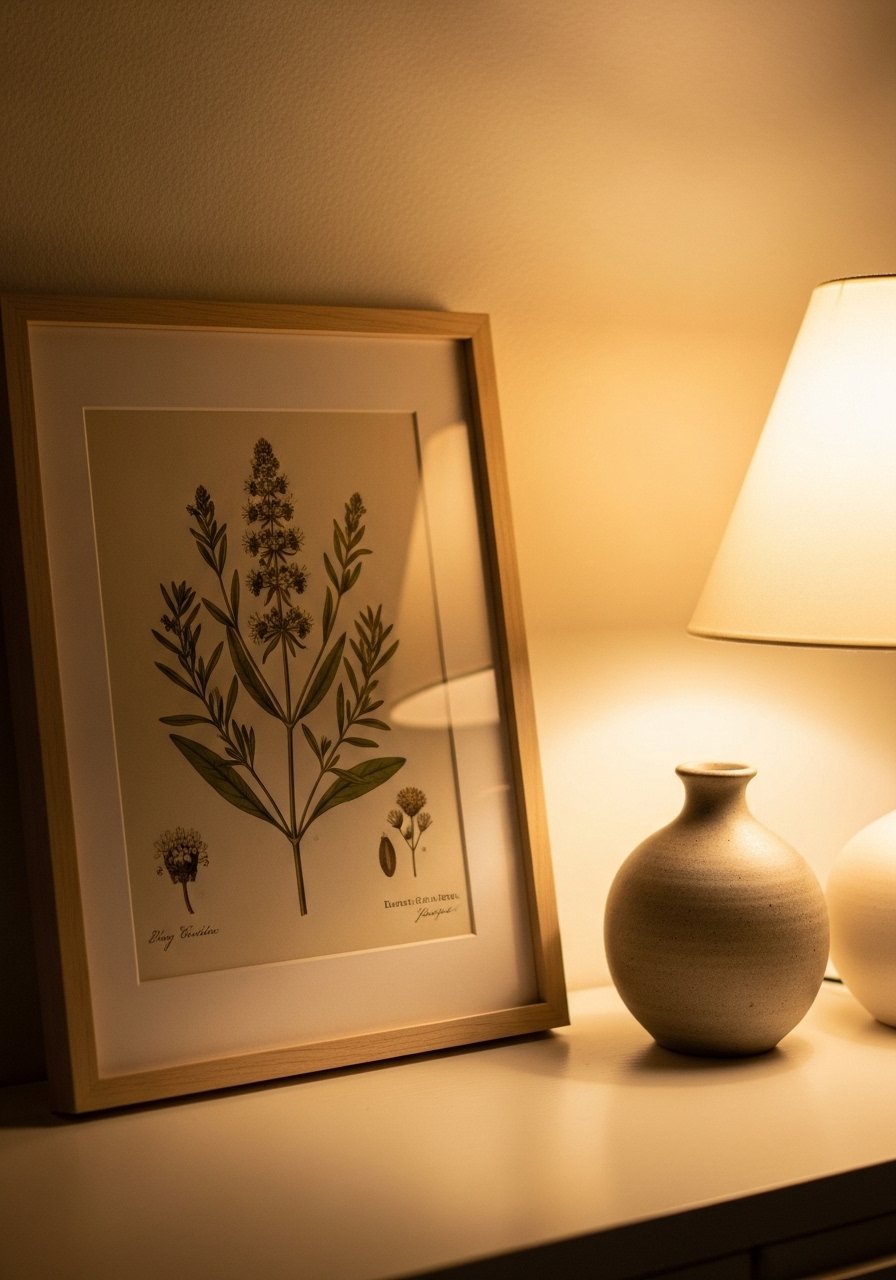
I avoid hammering into tile by leaning small framed prints on a picture ledge. Use grouped 8×10 frames with 1.5 to 2 inches between frames and stagger the heights. A common misstep is matching every frame finish. Mix warm wood, black, and brushed brass to look curated. These frames work especially well above a coffee station. Use 8×10 picture frames mixed finish and a low ceramic bud vase for balance.
Stackable Sage Mixing Bowls as Functional Display
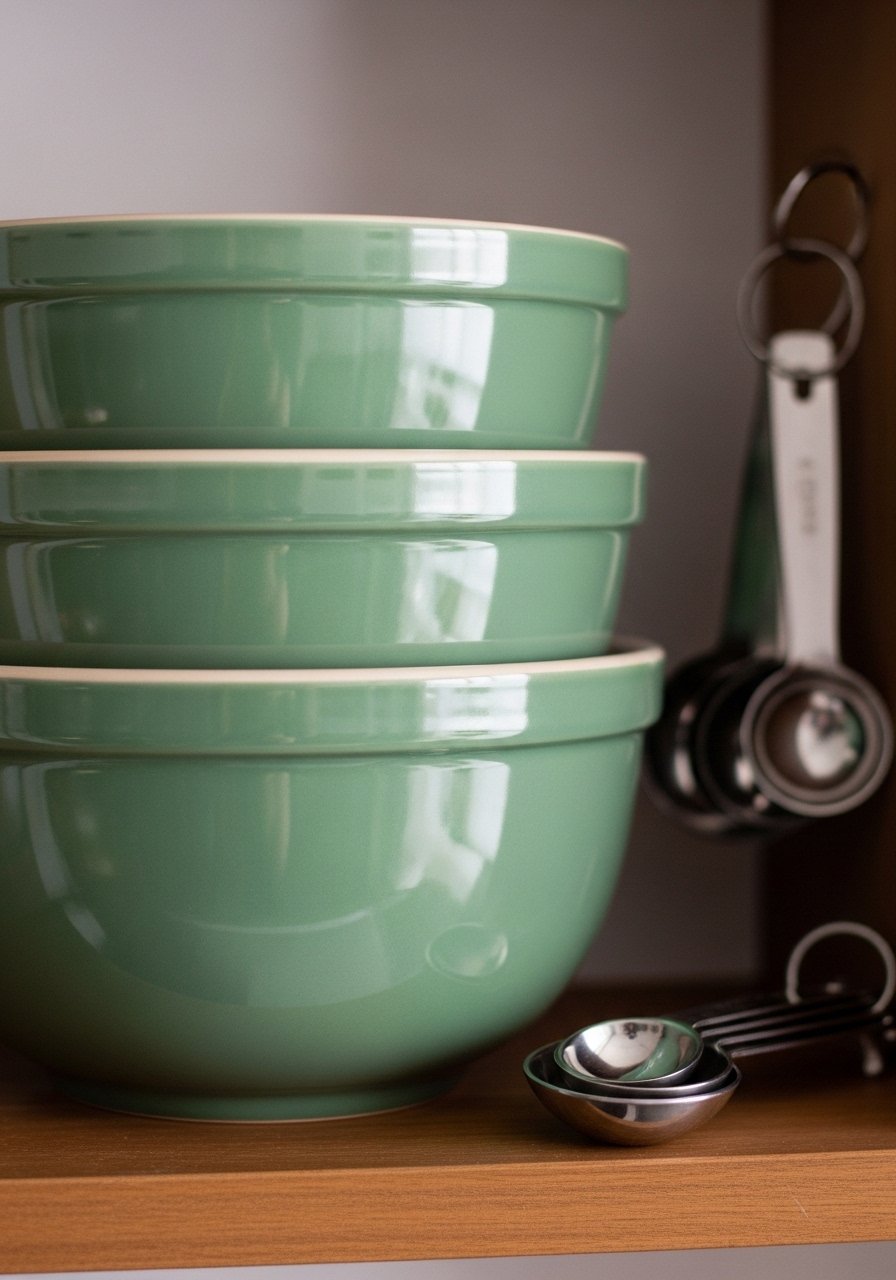
I bought a set of nesting bowls in sage and left them out. They are useful and pretty. Stack three bowls largest to smallest with handles or spoons visible to imply function. Keep the stack no taller than 9 inches on a 12-inch-deep shelf. People often stack too many pieces and the display looks unstable in photos. A stackable ceramic mixing bowl set in three sizes is a small investment that pays off every day.
Layered Lighting: Under-Shelf Pucks and a Small Lamp
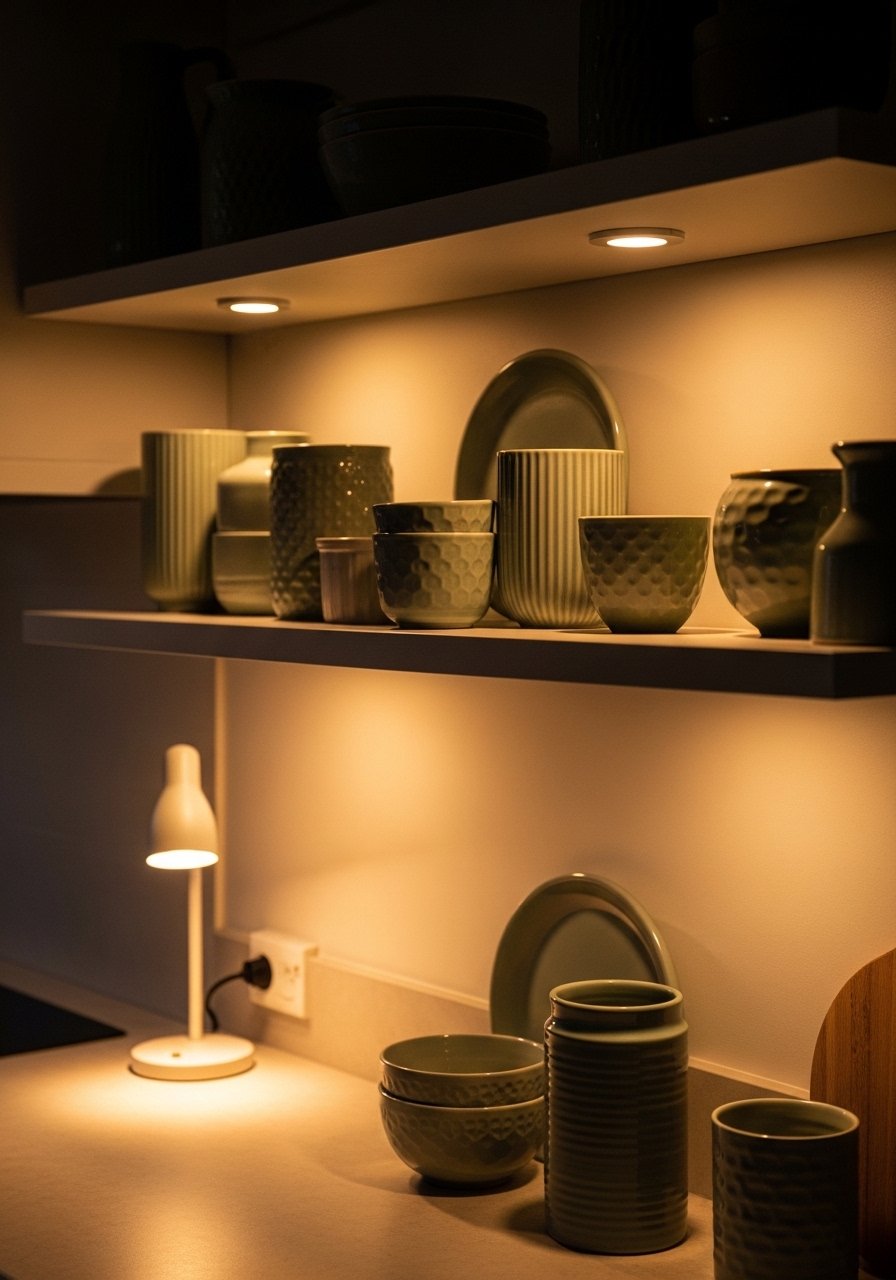
Shelves can look flat when the kitchen is dim. Adding warm 2700K under-shelf puck lights gives depth and highlights textures. I hide the cords behind the backboard and use a plug-in lamp for extra mood. People light only from the ceiling and wonder why shelves look dull. Use a low-watt lamp in a corner and match the puck lights to warm color temp. Battery-operated puck lights and a small plug-in amber lamp are budget friendly.
Leaning Wooden Cutting Boards for Rustic Warmth
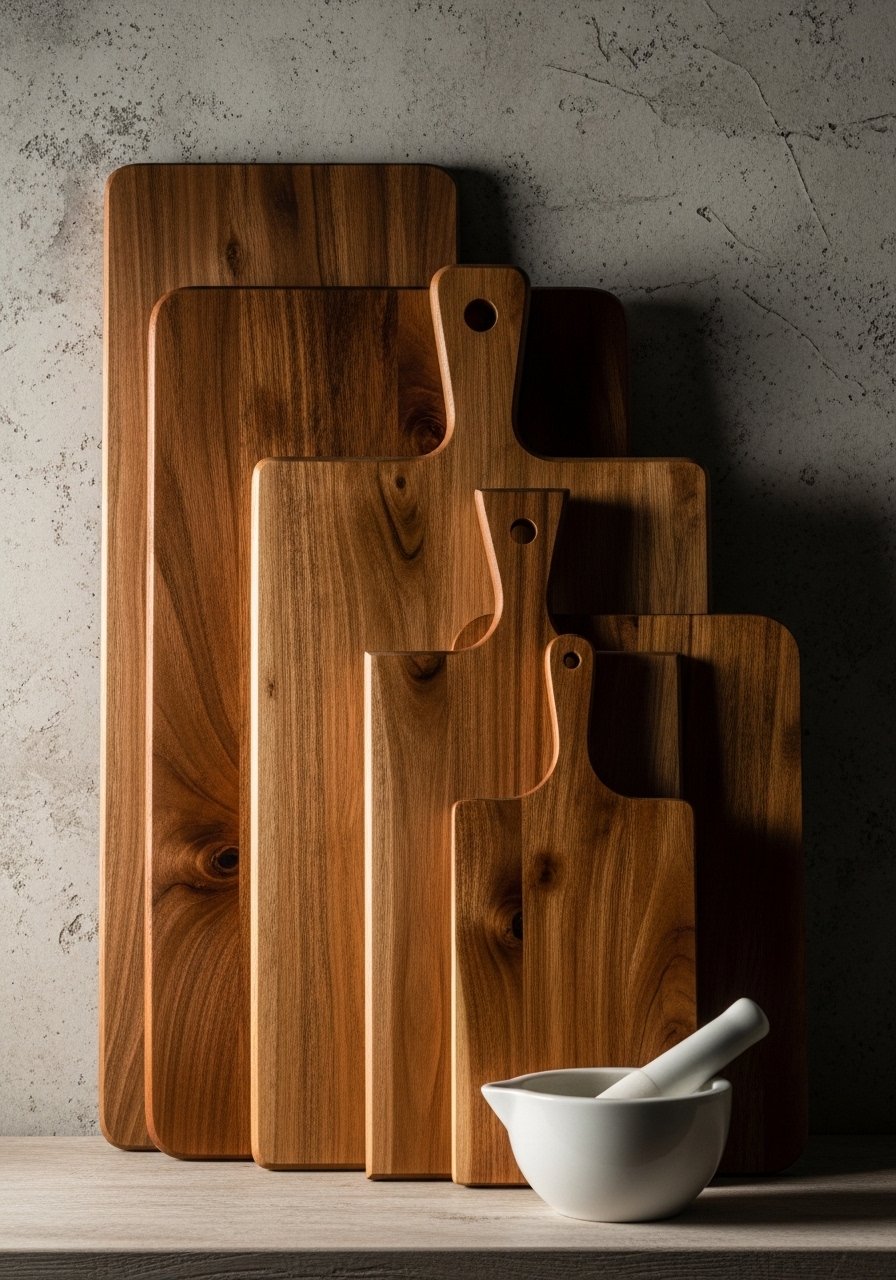
A stack of leaning cutting boards instantly reads cozy. I use a mix of thin boards for serving and thicker ones for chopping, and I stagger their heights to create movement. Keep roughly a 2:1 ratio of wood to ceramics for a warm look. Newbies often shove boards flat; leaning creates layers and catches light. Grab an acacia cutting board set and a marble mortar and pestle to anchor the group.
Everyday Items Styled for Real Life

I style shelves with things I actually use. Hang mugs on under-shelf hooks, front-display the daily plates, and keep wooden spoons in a jar. That balance of beauty and function makes the space stay tidy. A mistake is styling only brand-new items that never leave the shelf. Spacing hooks about 3 inches apart keeps handles from bumping. These under-shelf mug hooks are inexpensive and change how the shelf reads.
One Tall Statement Piece and Plenty of Negative Space

I learned to leave more empty space than I expected. One tall terracotta vase at the end of a shelf run reads more confident than ten small knickknacks. The rule I use is no more than one tall item per three-shelf run and at least 20-25 percent negative space. People fear emptiness and overfill shelves. Try a 24-inch terracotta floor vase and let it breathe next to lower stacks so the eye can rest.
Your Decor Shopping List
Textiles
- Honestly the best splurge under $50. Linen tea towels in sage and cream, 18×28 inches for folding and display
- Chunky woven kitchen rug 24×36 (~$45). Similar at Target
Wall Decor
- 8×10 mixed-finish picture frames, set of 4 for mini gallery walls
- White oak floating shelf 36-inch for a clean install
Lighting
- Battery-operated puck lights warm for under-shelf glow
- Plug-in amber table lamp for mood light
Plants & Containers
- Self-watering herb pots, set of 3, 4-6 inch diameter
- Faux fiddle leaf fig 6ft if you need height without the fuss
Functional Finds
- Under-shelf mug hooks, pack of 12 for easy hanging
- Wicker storage baskets 12×10 to hide overflow, similar at HomeGoods
Shopping Tips
White oak beats dark wood in current kitchens. White oak floating shelves look fresh and photograph well.
Grab linen tea towels for about $12 each. Swap them seasonally and the whole shelf vibe changes.
Curtains should kiss or puddle the floor, never hang halfway up. 96-inch linen panels are right for standard 9-foot ceilings.
One big plant beats five tiny ones. Try an artificial fiddle leaf fig 6ft for instant height without maintenance.
Mix metals, don’t match them all. A matte black pull set paired with brass frames looks curated.
If you have tile behind shelves, use adhesive-backed shelf hooks to avoid drilling.
Frequently Asked Questions
Q: How deep should kitchen shelves be for styling?
A: For plates and bowls, 12 inches is comfortable. For taller vases or bottles, 14-16 inches gives breathing room. I use 12-inch shelves for everyday dishes and one deeper shelf for decorative bottles.
Q: Can I mix sage green with other colors without it clashing?
A: Yes. Sage pairs well with warm wood, matte black, and cream. Keep the palette limited to three families and repeat one accent color in three places to make it feel cohesive.
Q: How do I stop open shelves from looking cluttered?
A: Use the rule two-thirds open, one-third hidden. Keep groups in odd numbers, vary heights by at least 4 inches, and tuck messy things in baskets. I rotate items monthly to keep it tidy.
Q: What size frames work best for a mini gallery on a shelf?
A: 8×10 frames are a safe bet for leaning photos and prints. Leave about 1.5 to 2 inches between frames and stagger heights so the eye moves.
Q: Should I use real plants or faux on kitchen shelves?
A: Both. Real herbs are great near a window. Use a faux fiddle leaf fig where you need height and low maintenance. Balance living greenery with easy-care faux options.
Q: How do I make a shelf look intentional on a small budget?
A: Repeat one color and one material, like sage ceramics and wood, and keep stacks no taller than 12 inches. Thrifted bottles, a small plant, and a woven basket can do a lot.
Q: What common mistakes should I avoid when styling kitchen shelves?
A: Don’t match every item, don’t fill every inch, and avoid repeating the same height across a shelf. Give items space and vary finishes for depth.