


Spent $400 on a new coffee table and still felt like the room was waiting for permission to be lived in. I fixed that with a $35 throw, three candles, and moving a plant from the window to the counter. Tiny changes on a countertop do the same thing for a kitchen. Below are simple, repeatable ideas I actually used or recommended to friends when they wanted their sage surfaces to look intentional, not accidental.
These ideas lean modern farmhouse and warm-modern. Most suggestions are under $50 with a few splurges around $100 to $200. They work for kitchens, breakfast nooks, and even open-plan living counters where you want the countertop to read like styled furniture rather than a tool bench. Sage green cabinets are blowing up lately.
White Marble Touches for a Light, Modern Kitchen

The easiest way to keep a sage counter from looking heavy is a bright white marble-look surface next to it. White marble bounces light so small kitchens stop feeling boxed in. I paired a Carrara-look quartz tile on the counter edge with sage cabinets and swapped in warm brass pulls. Most of this look is about contrast ratio. Aim for roughly 70 percent sage and wood, 30 percent white marble surfaces to keep the room grounded. Common mistake is choosing a marble veining that is too busy. Try a subtle vein and you get the glow without the pattern fight. For a quick sample order marble-look quartz tile samples to hold against your paint swatch.
Creamy Off-White Counters for a Softer Farmhouse Vibe

When bright white reads too clinical, creamy off-white granite or quartz makes the green feel lived-in. I used an off-white remnant on my island and the kitchen lost the sterile edge without going dark. This is a budget-friendly trick because remnants can be half the price of full slabs. Style is linen-farmhouse and it pairs with open shelving and wood stools. A common mistake is buying a cream with too much gold fleck. Look for warm cream with subtle gray veining. If you are renting, try a 12×12 sample of creamy quartz tile to test next to your sage paint before committing.
Brass Hardware That Warms Cold Sage Cabinets

Brass pulls change the personality of sage overnight. My friend hated her green until we swapped basic chrome for warm brass knobs and suddenly it felt retro and intentional. Brass is the go-to pull for sage now. Pick a matte or slightly brushed finish so fingerprints show less. Budget-wise this is an under-$100 update for most kitchens and totally renter-friendly if you swap back later. The mistake is matching every metal. Leave the faucet or lighting in a different finish for contrast. Try matte brass cabinet pulls in a 3-inch center-to-center size for most drawers.
Terracotta Accents for an Earthy Transitional Counter

Terracotta pottery is my shortcut for turning cool sage into something cozy and tactile. A terracotta crock, a stack of handmade mugs, and one small planter add warmth quickly. This works for breakfast bars and prep counters. I recommend one larger vessel instead of six tiny items to avoid clutter. A common mistake is matching terracotta to the exact green; instead, choose a slightly deeper terracotta so the two colors push off each other. A specific detail others skip is scale: one 6-8 inch wide crock near the sink balances a 24-inch span of counter. For a starter piece try terracotta utensil crock.
Layered Wood Shelves for Warmth and Display
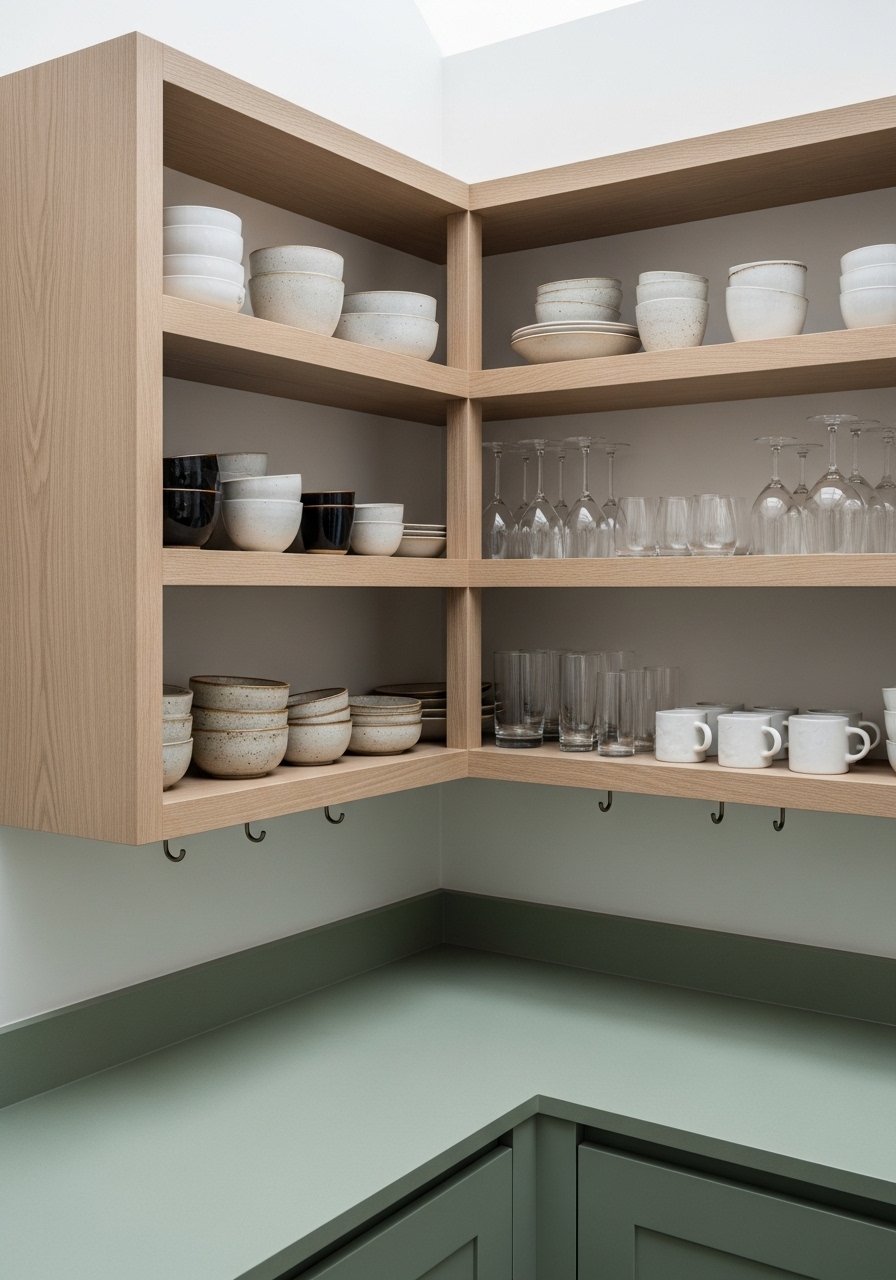
Open stained wood or white oak shelves over a sage countertop add instant depth. I swapped a heavy upper cabinet for two 36-inch oak shelves and the counters suddenly had a backdrop that reads like a living shelf rather than storage. Style is warm modern and it is perfect for kitchens and open-concept areas. Keep the shelf depth at 10 to 12 inches so plates and jars sit comfortably without overhang. People often pile too much stuff on the shelves. Stick to three to five curated pieces per shelf and repeat one material for unity. For a ready option, look at white oak floating shelves in 36-inch lengths.
Removable Backsplash Tiles for Renters with Sage Counters
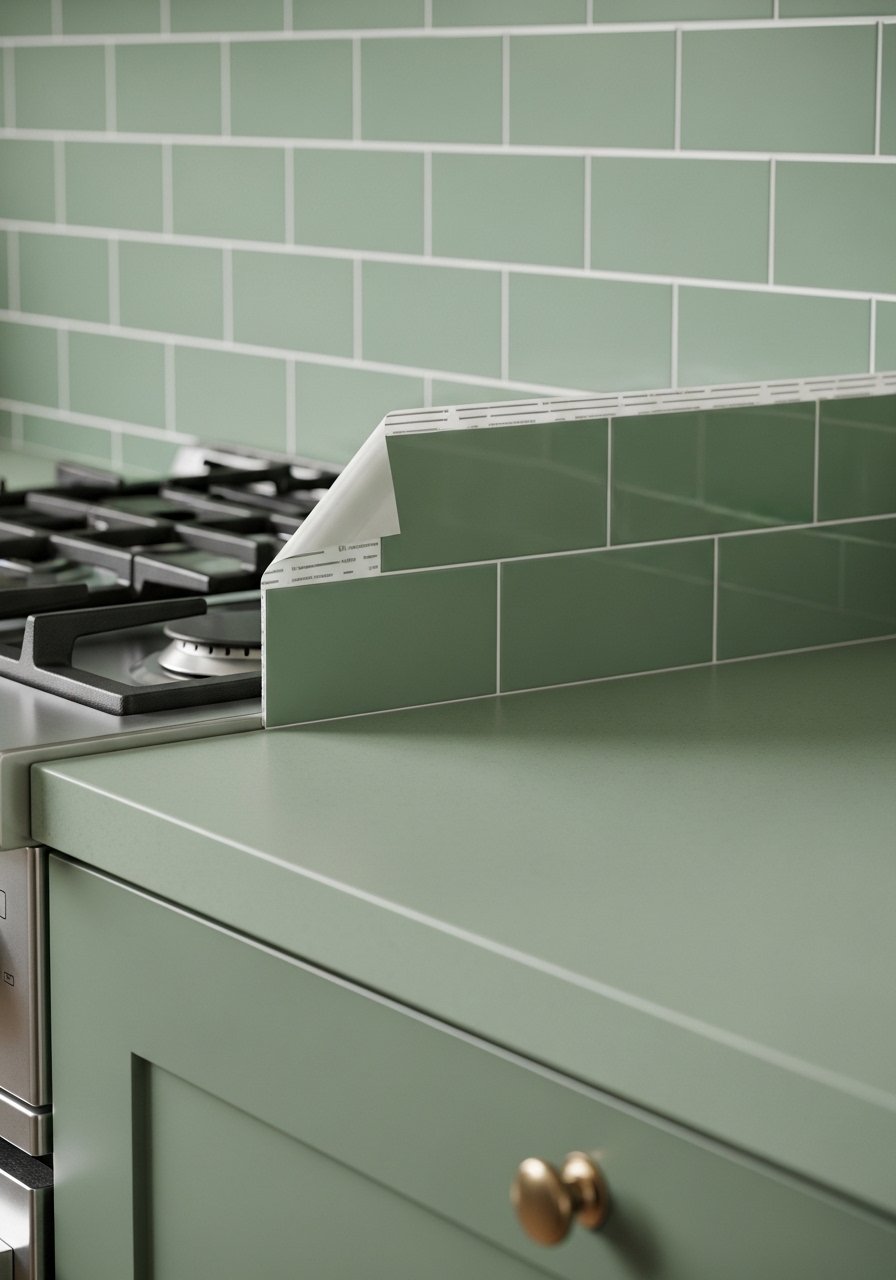
If you rent and can not replace counters, peel-and-stick backsplash tiles are your best friend. I installed subway-style stick-ons behind my friend’s sage lower cabinets and it brightened the whole room in under an hour. This is a low-cost project under $70 and fully reversible. The mistake people make is buying thin, matte-looking film that peels. Choose a thicker vinyl with a sealed edge. A useful detail is to order one extra 12-inch strip per 8 linear feet to account for pattern matching. Try peel-and-stick subway tiles in glossy off-white for maximum reflectivity.
Mixed Metals for a Collected, Modern Kitchen
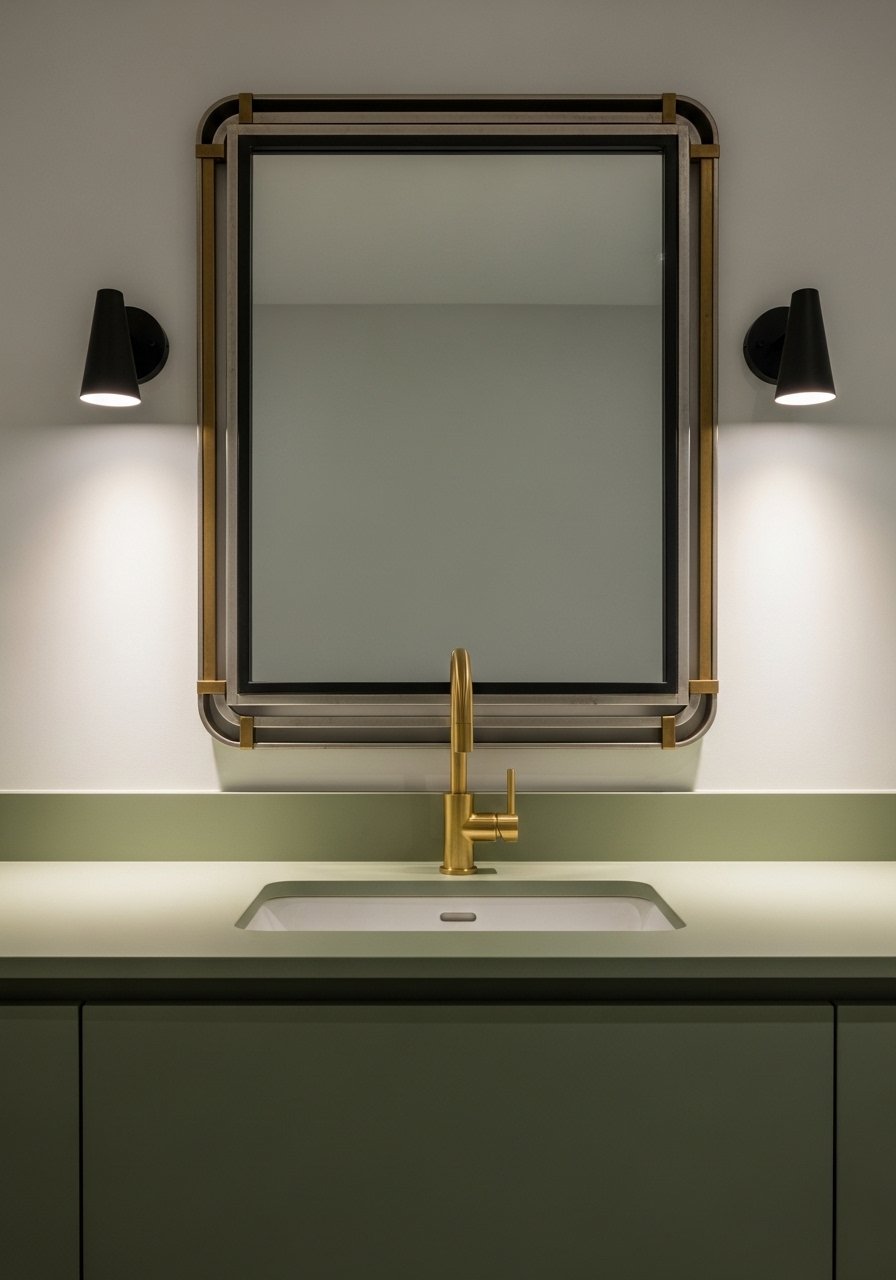
Mixing metals makes a sage counter feel intentional rather than matchy. My rule is pick one dominant metal and one accent metal. For example, brass cabinet pulls paired with a matte black light fixture and mixed metal frames creates a layered look without chaos. This approach fits urban modern and vintage-curb appeal kitchens. Common mistake is equal amounts of each metal. Keep a roughly 80/20 ratio so one metal reads as dominant. Also note brass ages differently. A small maintenance tip is to wipe brass weekly with a soft cloth to slow tarnish. I sourced a brass faucet to match the pulls.
Deep Sage with Black Accents for a Moody Small Kitchen
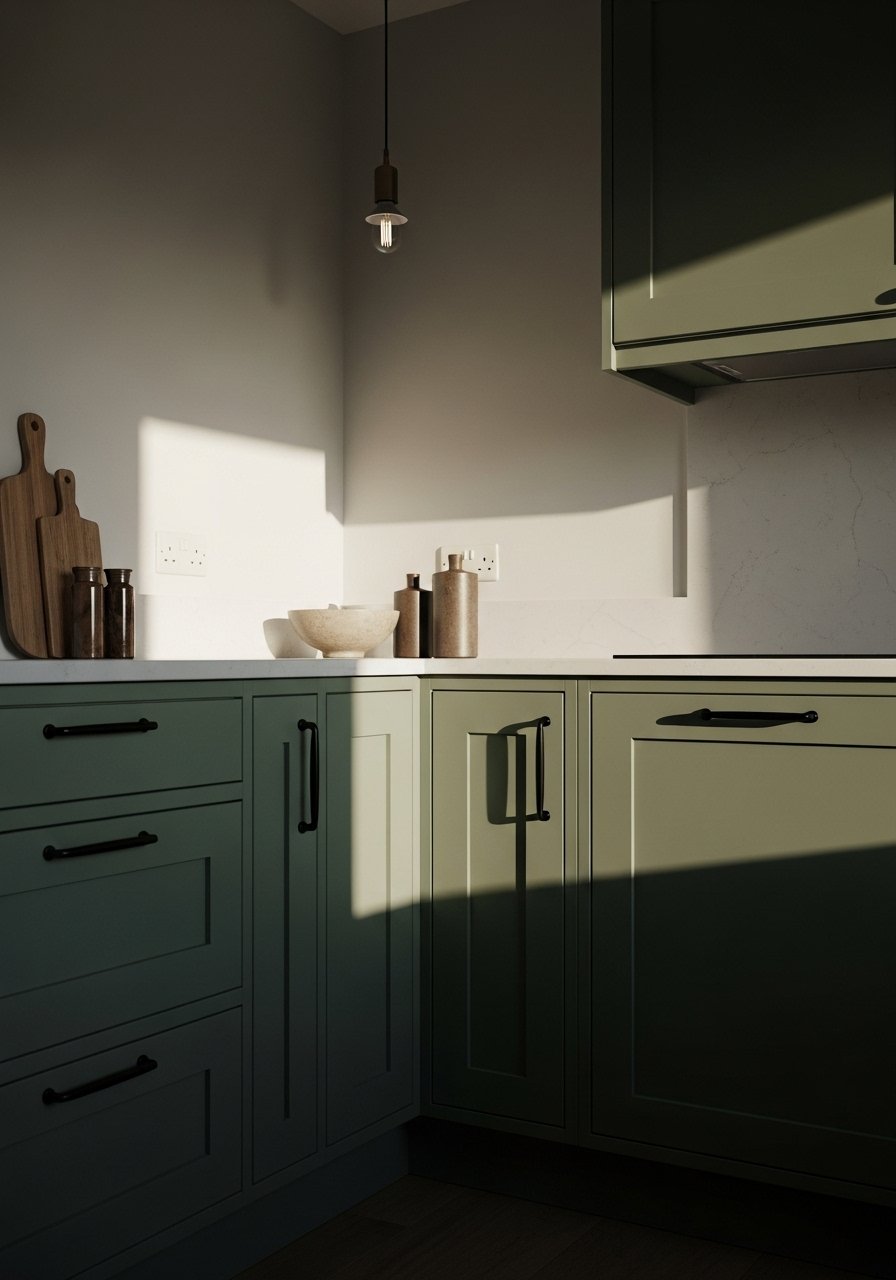
If your kitchen is tiny and you want a strong personality, go deep sage on lower cabinets and use black hardware for contrast. It reads moody but modern and keeps light surfaces where you need them by pairing with a white or cream countertop. I used this on a galley kitchen and the black hardware added crisp edges so the room looked designed, not cluttered. A mistake is going too dark on the wall above. Keep the upper wall or backsplash light to preserve bounce. Specific ratio suggestion is dark lower cabinets, light upper walls or backsplash, and black accents limited to 10 to 15 percent of visible surfaces. For a hardware option try matte black cabinet knobs.
Small Green Plants and Practical Styling for Everyday Life

Plants are an obvious suggestion but the practical detail is which varieties survive kitchen life. I use a pothos near the sink, a snake plant in low light corners, and one small succulent for the window sill. Sage green counters hide water marks better than white, which is great if you have pets. A common mistake is buying five tiny pots and scattering them. Group plants in odd numbers and vary heights so the display feels intentional. For pet owners, pick non-toxic options or keep plants on a high shelf. Try pothos live plant if you want something forgiving.
Your Decor Shopping List
Textiles
- Honestly the best $40 I have spent. Chunky knit throw in cream in a 50×60 size for bar stools or a breakfast nook.
- 22-inch linen pillow covers, down-filled in muted terracotta and oatmeal. Similar at Target.
Hardware and Fixtures
- Matte brass cabinet pulls, 3-inch (~$12 each). Affordable swap that changes the room.
- Matte black cabinet knobs set for a moody contrast.
Shelving and Backsplash
- White oak floating shelves 36-inch for above-counter display.
- Peel-and-stick subway tiles in off-white for renters.
Plants and Pots
- Pothos live plant in a 6-inch pot.
- Terracotta utensil crock as a warm accent.
Shopping Tips
White oak beats dark wood in 2026. Design feeds have shifted completely. These white oak floating shelves look current, not dated.
Grab matte brass cabinet pulls for $12 each. Swap them with basic tools and your sage cabinets read more intentional.
Curtains should puddle or kiss the floor, never hang halfway up. These 96-inch linen panels are the right call for standard 9-foot ceilings.
One big plant beats five tiny succulents. This 6-foot faux fiddle leaf fig gives height without fuss and is great if your light is limited.
Frequently Asked Questions
Q: Can I mix terracotta with white marble without it clashing?
A: Yes. Put terracotta as a small accent near the white marble rather than beside patterned marble. The trick is scale. One 6-8 inch terracotta pot pairs well with a 24-inch run of white marble.
Q: My sage counters look flat, what did I do wrong?
A: Most people pick the wrong shade. Warm sage needs cream counters. Cold sage survives with bright white or black accents. Test paint samples beside a small counter tile sample first. Most folks pair green cabs with light tops which is why the samples matter.
Q: I rent. How much can I change safely?
A: You can do a lot with removable updates. Swap hardware, add peel-and-stick backsplash tiles, and layer trays or plants on the counter. For a renter-friendly purchase try peel-and-stick subway tiles.
Q: Does brass tarnish fast in the kitchen?
A: Brass will age but a weekly wipe slows tarnish. Also pick matte or brushed brass finishes for less obvious patina. Brass is the go-to pull for sage now so it is worth the small upkeep if you like the warm look.
Q: Are live plants a bad idea near sage counters if I have pets?
A: Not necessarily. Choose non-toxic options or keep plants elevated. Pothos is pet-toxic, so pick a snake plant for pet households or go faux. A faux option like artificial fiddle leaf fig gives height without risk.
Q: What's the easiest way to test a countertop pairing before committing?
A: Order a small tile or remnant sample and tape it to the counter next to your cabinet swatch. Live with that arrangement for a week and see how light changes the tones. A sample of marble-look quartz tile works well for testing.