

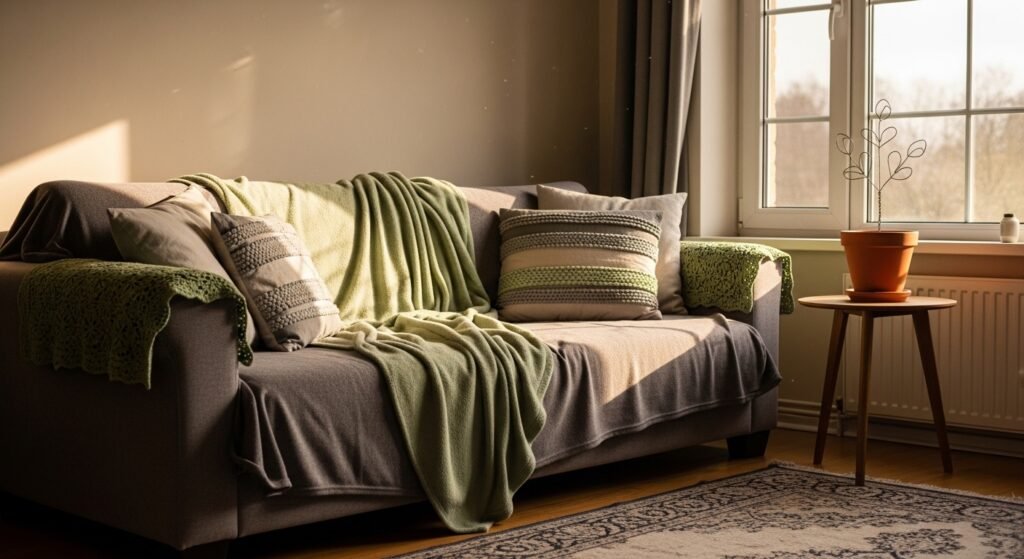
Spent $400 on a coffee table. Room still looked off. Spent $35 on a throw and three candles. Suddenly everything clicked.
These ideas lean modern farmhouse with a soft boho edge. Most pieces are under $50, with a few splurges around $100. They work for living rooms, bedrooms, nurseries, and small apartment nooks.
Scandi Sage Leaf Stem for Kitchen Planters
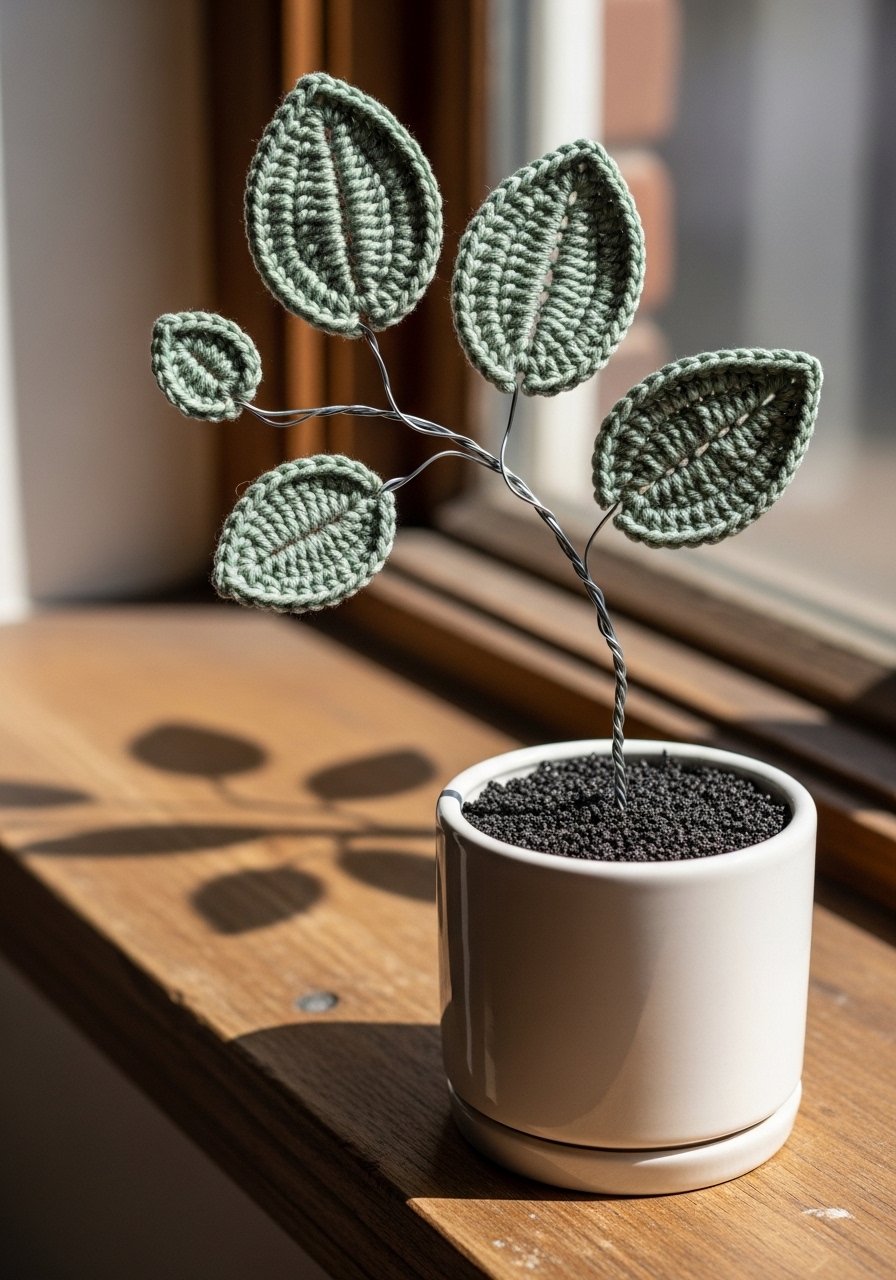
The moment I wired a stem and used odd-numbered leaf groups the whole planter stopped looking like craft fair decor. Use a 40cm wire stem wrapped with yarn tails so you can bend the branch into a tiny pot. I like a tight stitch with a 2.5mm hook on sport-weight cotton so leaves hold shape without floppy edges. I paired Circulo-style sage cotton with a cream mohair strand for vein texture. Sage cotton yarn and a pack of craft wire spools are the basics. Common mistake is making all leaves the same size. Use 1-2-2 leaf sizing and wrap the wire fully for a clean stem.
Jar Covers That Make Counters Look Intentional

My spice shelf used to scream clutter until I slipped on jar covers that actually fit. The trick is 10-ply cotton for a snug grip so jars do not wobble when you pull them. I knit covers to fit standard mason jars, then stored them on a single shelf. For a quick buy try sage jar cozies. Budget is $10 to $20 per set. People often use too flimsy yarn and the cover slides off. Measure your jar neck, aim for a 2cm negative ease so the crochet hugs the glass. These cover jars hide ugly labels and make countertops feel edited without breaking the bank.
Coastal Sage Bunting Over The Bed
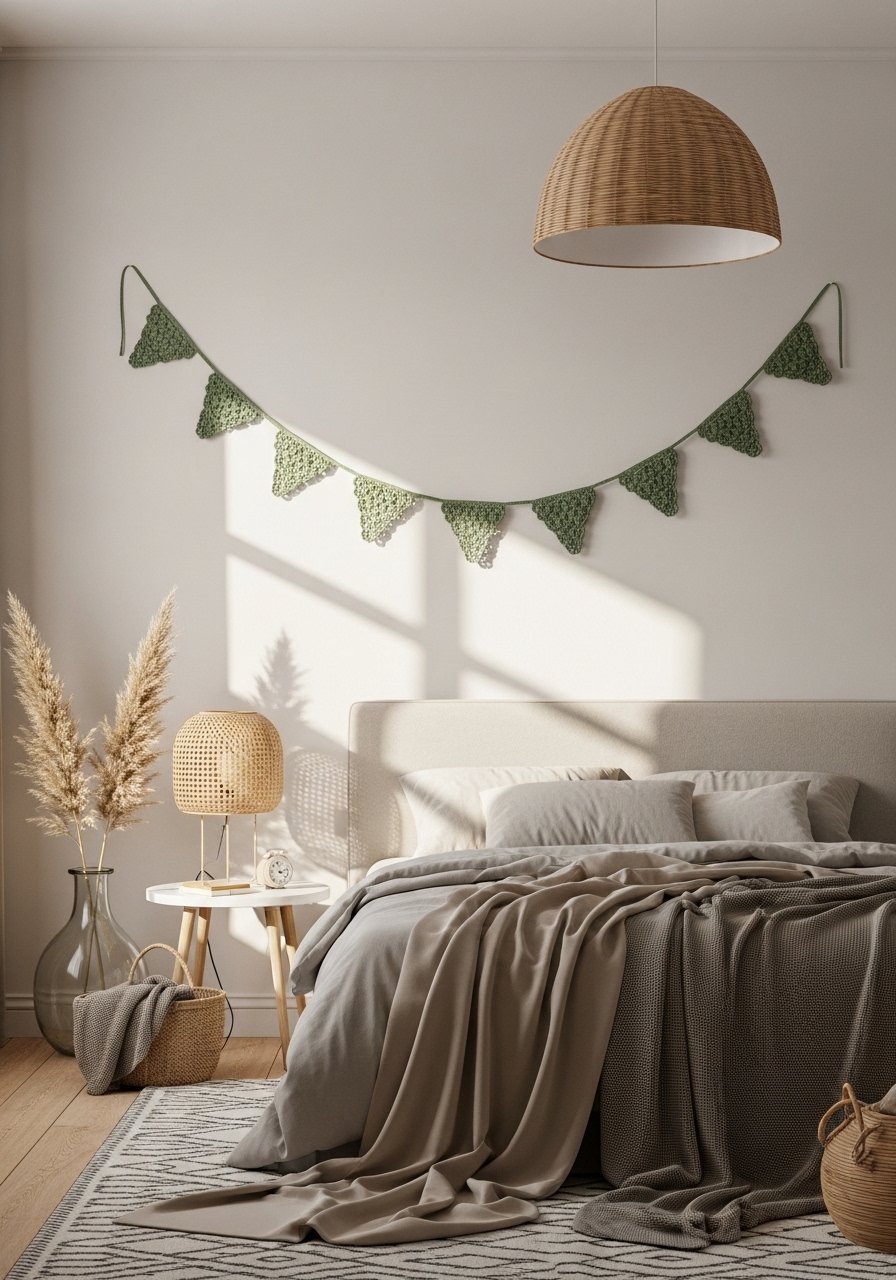
A friend texted me a photo of her bedroom asking why it felt cold. She had zero textiles. This bunting softens blank walls and plays well with Scandinavian or coastal vibes. Space each flag 6 to 8 inches apart so the garland fills the wall without crowding. I used removable command strips instead of nails to keep it renter-friendly. If you want ready-made, search for sage crochet bunting. Budget runs $30 to $50. Most folks hunting muted greens like sage these days. A common mistake is making flags all the same size. Mix small and medium flags to add movement.
Layered Sage Throw for the Sofa (Modern Farmhouse)

The moment I draped a textured sage throw over the arm of my sofa the room stopped feeling flat. Fold throws in thirds before placing them over an arm or back for an intentional look. I keep a cotton-blend throw in sage for everyday use and a heavier knit for guests. Budget is $40 to $80. Try sage knit throw blankets in 50×60 inches. People buy thin throws that disappear on the couch. Pick a weight that reads as material in photos and still feels soft to touch. If you have pets, avoid long-loop yarns that trap hair.
Minimalist Sage Basket Liners for the Entryway

My entry used to be a dumping ground until I added lined baskets. A crochet liner protects from damp shoes and hides the mess. Use washable 10-ply cotton so liners survive handwashing or a gentle machine cycle. I recommend measuring the basket diameter and making the liner about 1cm smaller so it stays tucked. Sage basket liners run $15 to $25. Small apartments benefit from a single liner for one catchall basket instead of a dozen decorative baskets. People forget to make a drawstring or elastic edge and the liner slips down. Add a simple edge to keep it in place.
Nursery Sage Bunting That Grows With The Room

One in four crochet projects ends up as baby gifts. I made a muted green bunting for a nursery that now lives above a small book nook. Keep the flags small so they do not overpower tiny walls. Use cotton-mohair mixes sparingly for texture, because fuzz shows in photos but may shed in a crib area. Removable hanging methods are a must for rental nurseries. Sage baby blanket kits are an easy place to start. A common mistake is over-texturing everything at once. Pair the bunting with a simple mobile and one soft blanket to keep the space calm.
Stackable Sage Coasters for Real Life Coffee Tables

There is comfort in stackable small things. I keep a set of six thick sage coasters by the couch so guests can grab one without digging. Use tight stitches and 10-ply cotton so the coaster does not curl or absorb too much liquid. Sage coaster sets are budget friendly at under $15 for a set. Beginners often make them too thin. Aim for about 10-12 rounds depending on your hook and yarn so they sit flat. When not in use stack them by the tray to keep the table tidy and styled.
Sage Leaf Garland For Light-Filtered Windows
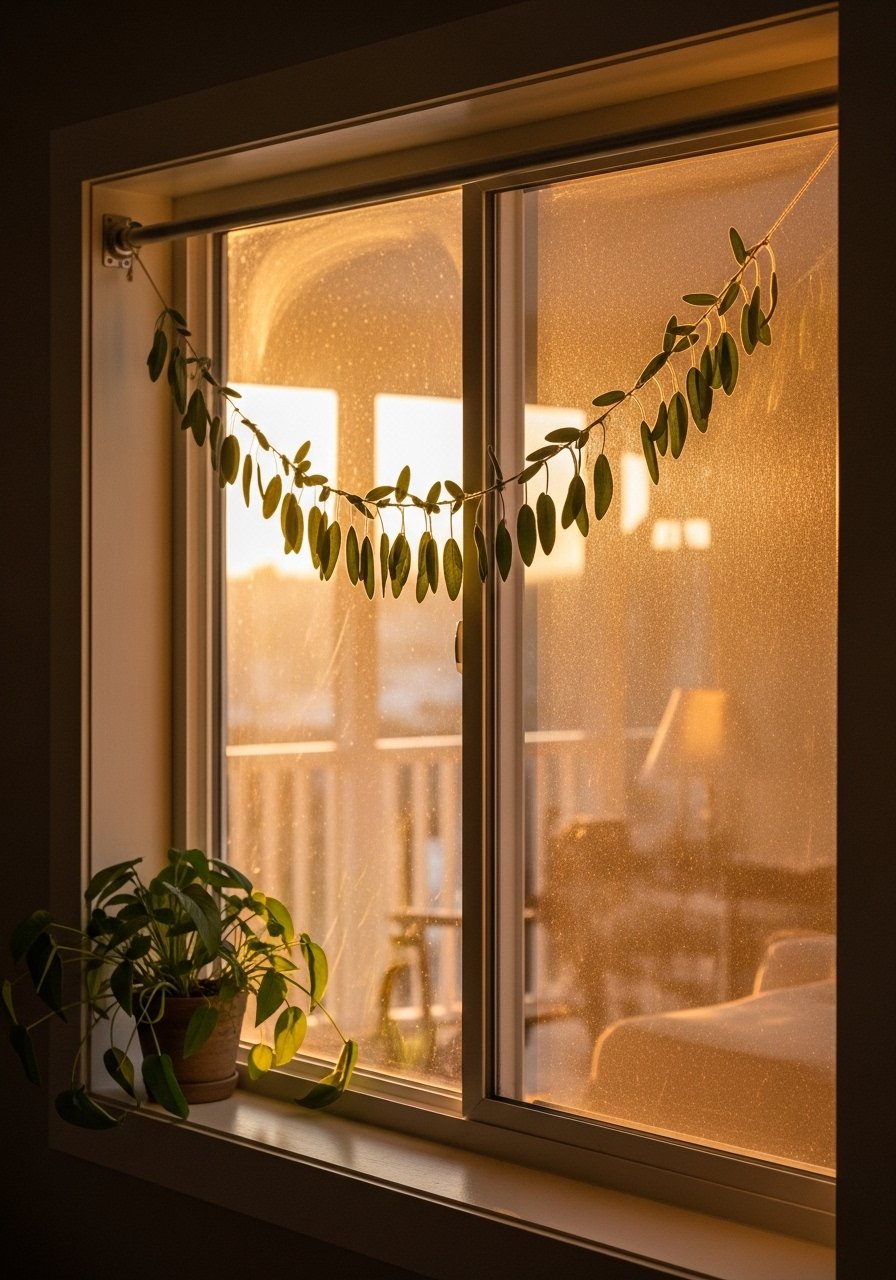
I prefer a single garland over a full vine when windows are small. Twist multiple wired stems together for a fuller look without a heavy installation. Wrap each 40cm wire stem fully with yarn and then join stems so you can bend the garland into a tension rod or curtain rod without hooks. Craft yarn in sage and a set of bendable floristry wires are the tools here. Pet owners should know mohair picks up dog hair, so stick to cotton if you have pets. A frequent mistake is not wrapping the wire end, which leaves metal exposed and looks unfinished.
Sage Crochet Trivet Set for Open Kitchens
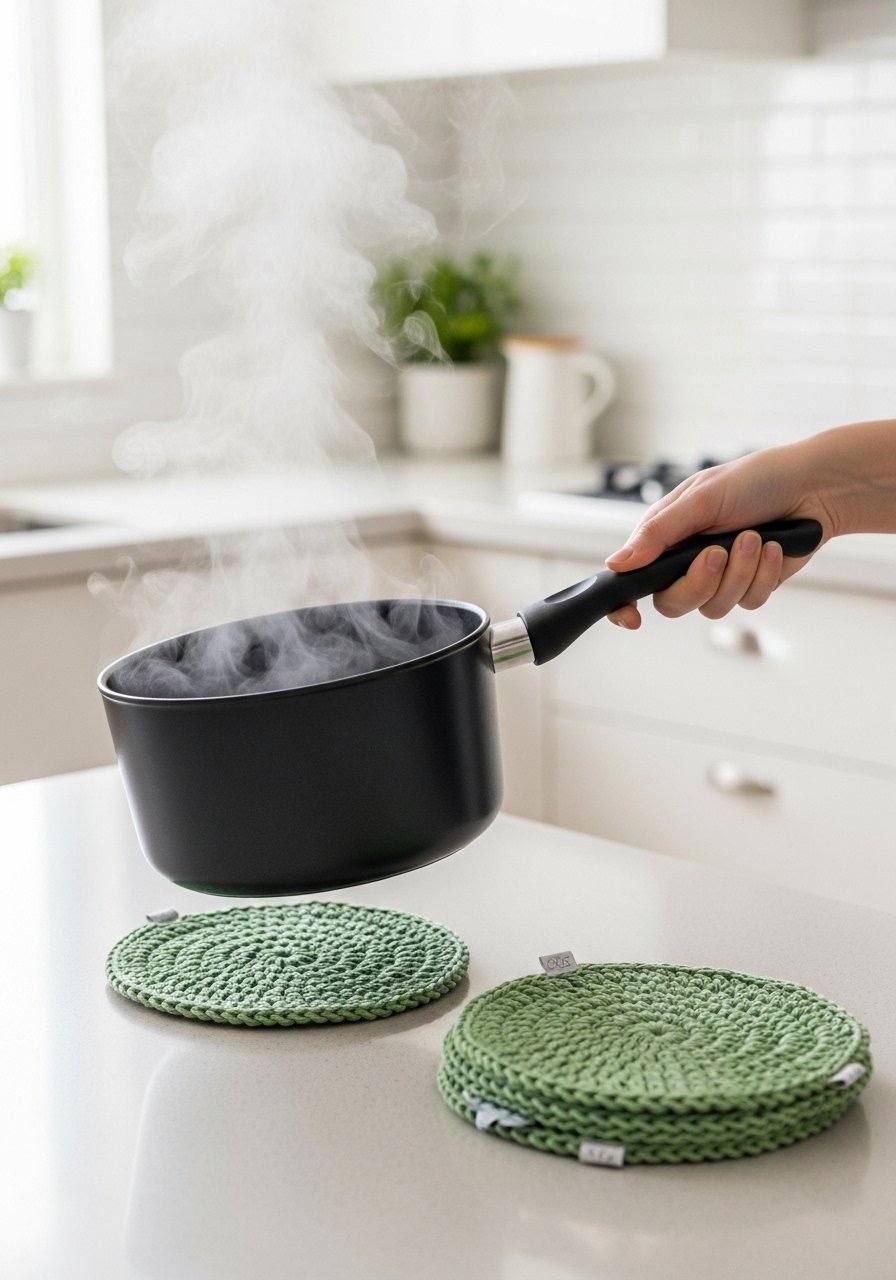
Open kitchens need pretty but practical pieces. Trivets in 10-ply cotton save counters and stack neatly when not in use. I learned the hard way that acrylic melts near hot pans so always choose cotton for heat resistance. A four-piece set will sit at the ready under a bread board or under a serving dish. Sage trivet sets cost $12 to $22. If you live in a humid climate, pick cotton blends that dry quickly and resist mildew. A post-wash reshape or re-block keeps them flat after laundering.
Your Decor Shopping List
Textiles
- Honestly the best $40 I have spent. Sage knit throw blanket in 50×60 inches for sofa draping
- 22-inch linen pillow covers (~$20 each), down-filled inserts sold separately
Wall Decor
- Found these while looking for something else. Sage crochet bunting (~$35), use command strips for renters
- Mixed metal picture ledges (~$18-25) to swap art without new holes
Kitchen & Tabletop
- Sage jar cozies for mason jars in 10-ply cotton
- Sage crochet trivet set (~$15), cotton heat safe
Craft Supplies
- Sport-weight sage cotton yarn for leaves and stems
- Floristry wire spools 40cm for bendable stems
Budget Finds
- Pack of removable adhesive strips for bunting and light decor, similar at Target
Shopping Tips
White oak beats dark wood in 2026. White oak floating shelves look current and help sage accents read modern.
Grab these sport-weight sage yarn skeins for $8 each. Use a 2.5mm hook when you need tight stitches that hold stuffing or shape.
Curtains should hit the floor or puddle slightly, not float. 96-inch linen panels are the right move for 9-foot ceilings.
Lead with one large statement plant rather than five tiny ones. Artificial fiddle leaf fig 6ft gives height without maintenance.
Swap acrylic for cotton in kitchen items. 10-ply cotton yarn dries faster and resists heat better.
Frequently Asked Questions
Q: Can I mix mohair with cotton for leaf texture without shedding?
A: Yes, layer one strand of cotton with one strand of mohair for visual depth. Use mohair sparingly in high-touch areas and avoid it on items next to pets since it can attract hair.
Q: How do I hang bunting without making holes in the wall?
A: Use removable adhesive strips rated for the weight of the bunting. Space flags 6 to 8 inches apart for balance and attach strips at the ends and middle for longer runs.
Q: Will sage yarn fade after washing?
A: Use cotton blends with colorfast dye and wash on a gentle cycle or by hand. Re-block leaves or trim fuzz after washing to reshape pieces that go soft.
Q: What hook size prevents stuffing from showing in small crochet leaves?
A: Choose the smallest hook recommended for your yarn, often around 2.5mm for sport cotton. Tight stitches keep stuffing or shaping material from poking through.
Q: Are wired stems safe for renters?
A: Yes, wired stems are a great renter hack because they bend into planters or tension rods with no wall damage. Wrap the wire fully with yarn so no metal shows.
Q: Can I use cotton crochet covers for jars that hold food?
A: Yes if yarn is washable and clean before use. For direct food contact, use a liner or keep the covers decorative only.