

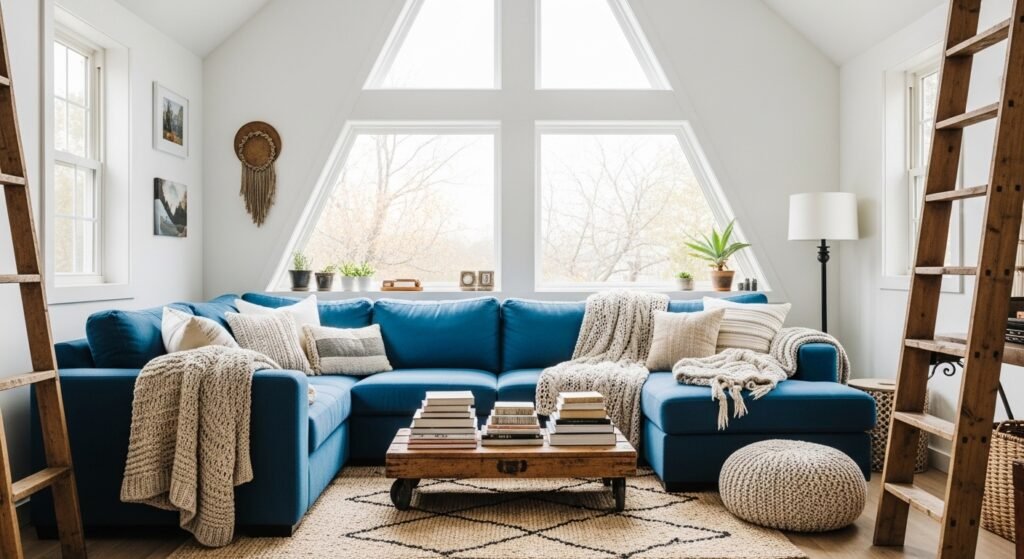
My living room had nice furniture and decent lighting but it still felt like a waiting room. Took me embarrassingly long to figure out it was missing texture. Every surface was smooth, every color was flat, and nothing invited you to actually sit down. After adding a single chunky throw and swapping one cheap lamp for a brass one, the whole place felt like someone actually lives there.
These ideas lean rustic and modern mixed together. Tiny homes around 360sqft run about $45k if you build yourself. Most items I mention are under $150 with a few splurges, and they work for living rooms, bedrooms, porches, or a tight studio where everything needs to pull double duty.
White Walls With One Big Blue Sectional For Living Areas
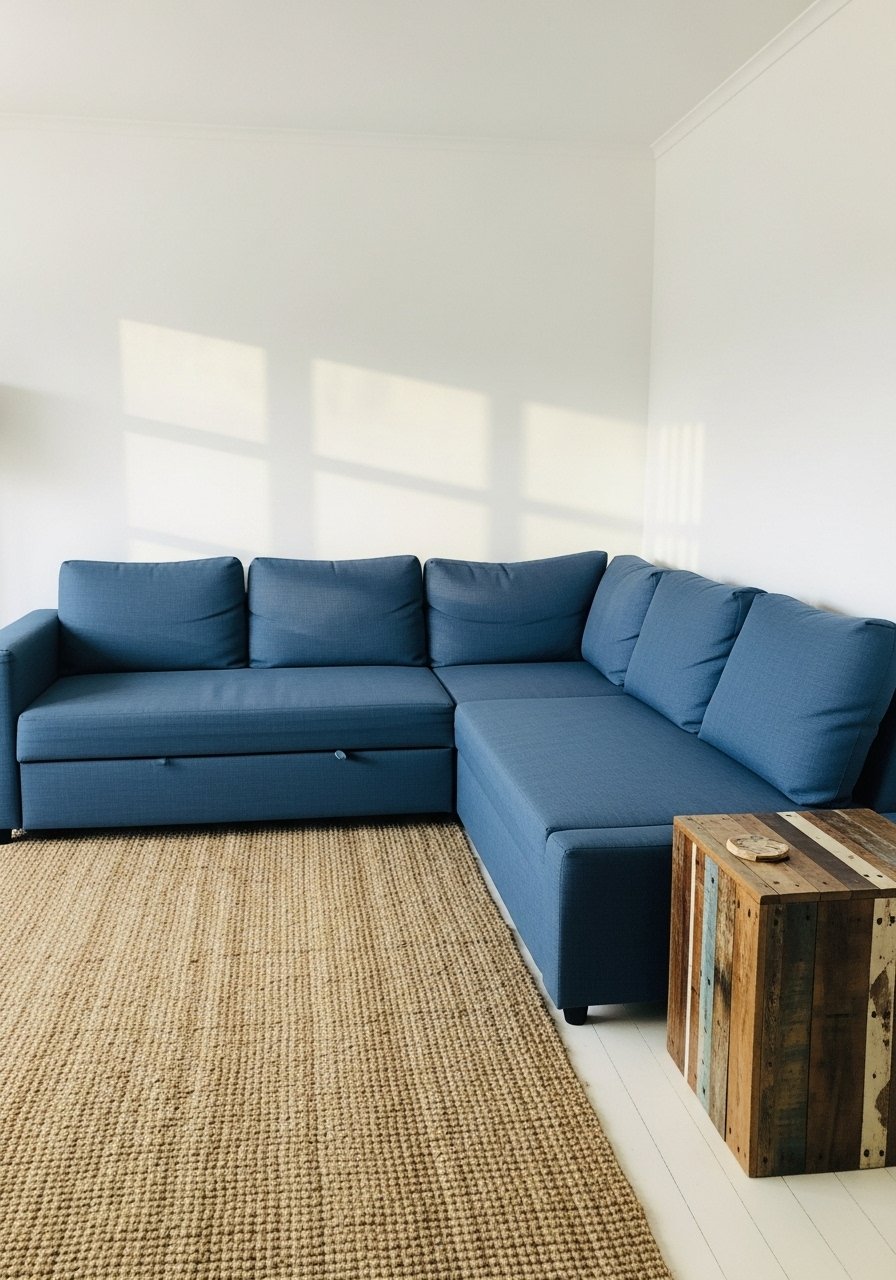
The moment I got serious about seating I stopped buying two tiny chairs and went for a sectional the room could handle. Filling the seating first keeps traffic flowing and avoids the common mistake of crowding too many small pieces into one spot. Visually, white walls let the blue sofa read as an anchor instead of visual clutter. If you want the same effect, try a search for blue sectional covers and sofas to find a fabric you like. Budget tip, pick a 2.5 to 3 seat width that aligns with your room measurement, not a generic small sofa. Pair it with 22-inch linen pillow covers for scale. This combo works in living rooms and studio sleeping nooks.
A-Frame Window Wall To Flood Light Into Compact Cabins
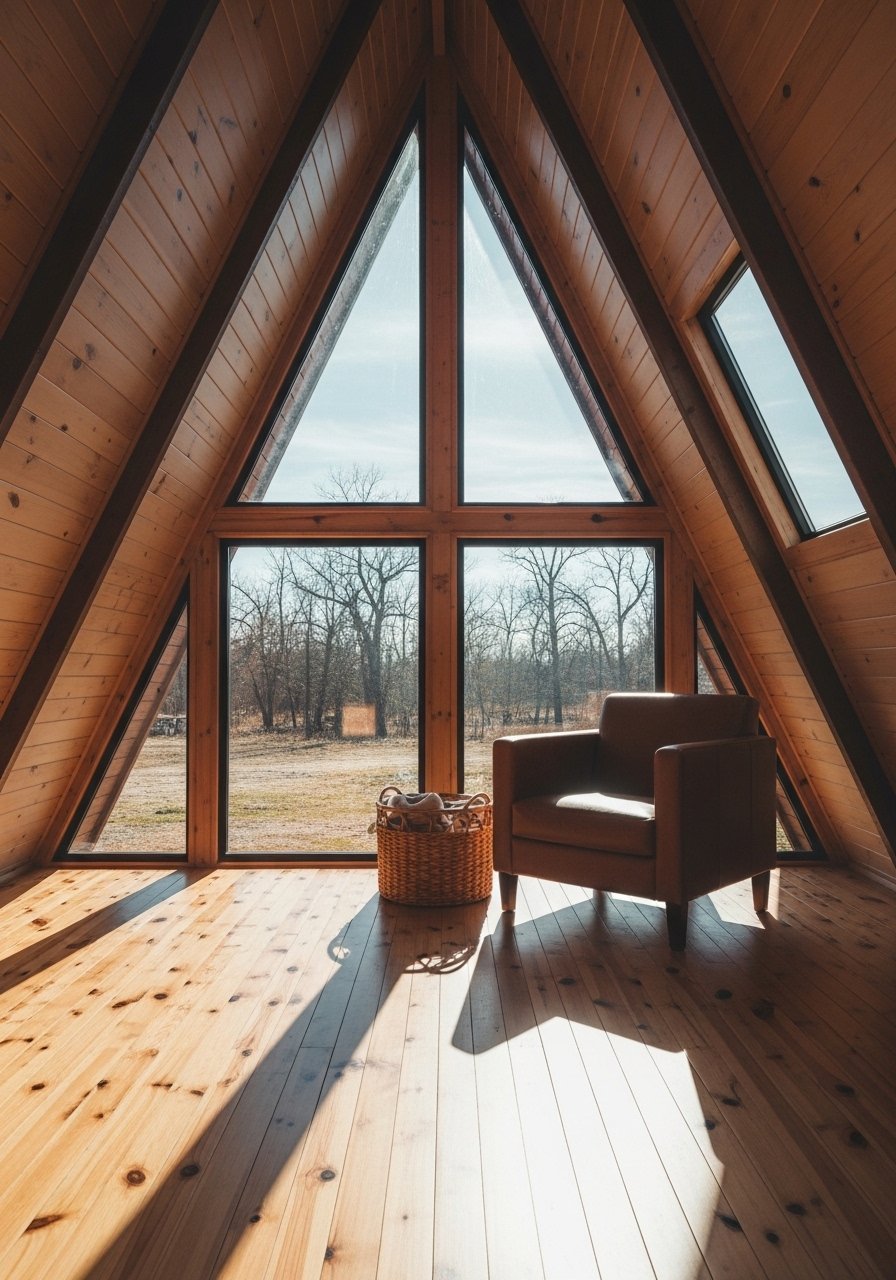
Most tiny homes feel darker than they should because windows are an afterthought. An A-frame front wall stuffed with glass changes that immediately and removes the need for extra lamps. I swapped blinds for sheer 96-inch panels and the difference in daylight spread was huge. If you rent, use tension rods and try sheer linen panels that sit off the frame. One thing people miss is glare control. Sheers soften light without losing the view. This setup is perfect for a living area or a studio kitchen-lounge combo where you want views to feel like part of the room.
Cedar Accent Walls That Hide Scuffs in High-Traffic Spots
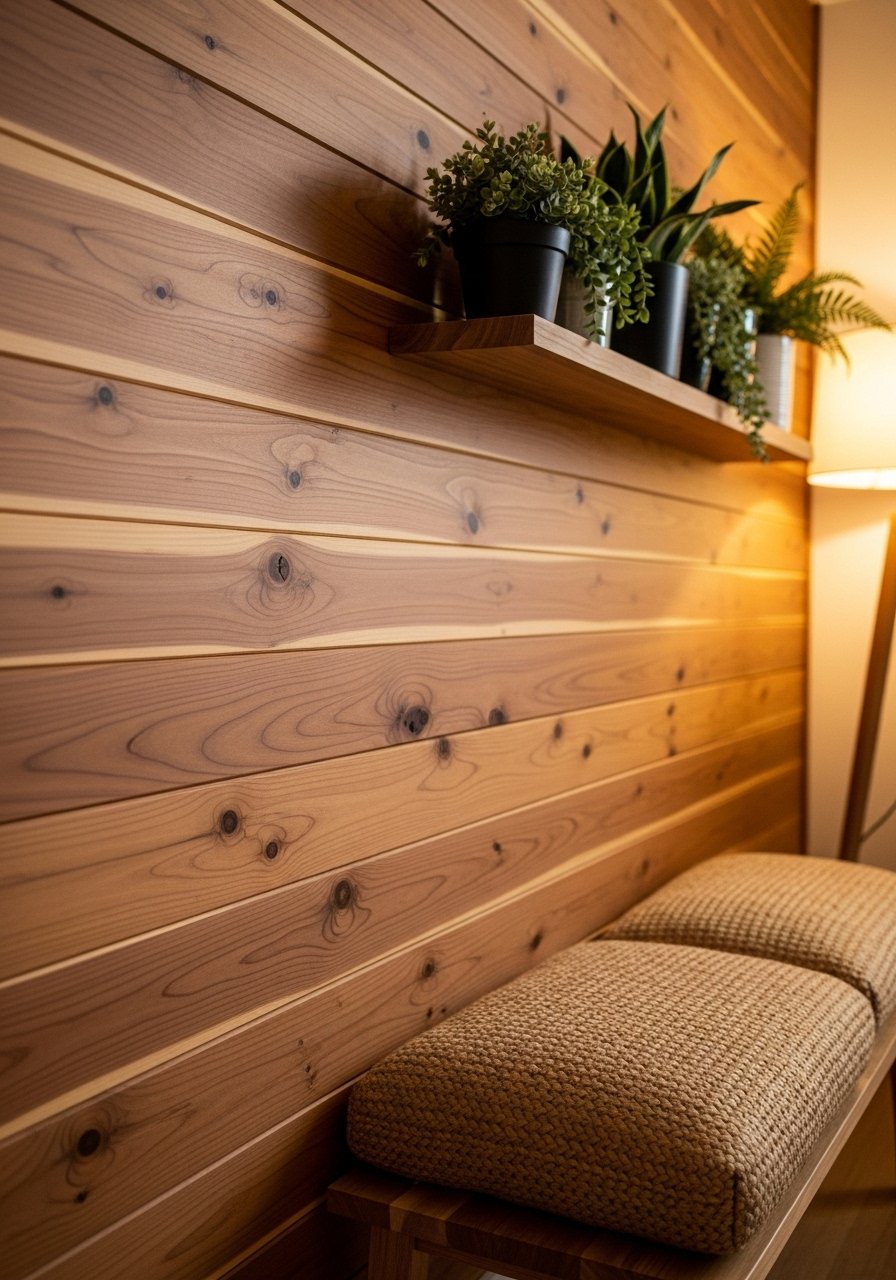
Pet owners and busy people will love cedar because it hides dings better than soft pine. I used a single cedar accent behind my kitchen open shelves where everything gets bumped. It reads rustic without making the whole space look dated. For renters, peel-and-stick cedar panels are a smart swap. Try a small sample pack from cedar wall panels set before committing. A detail most articles skip, cedar tones work best when 30 to 40 percent of the room includes warm wood so the color reads intentional, not messy. Budget is moderate for solid planks and low if you go peel-and-stick.
Build A Stand-Up Loft You Can Actually Use
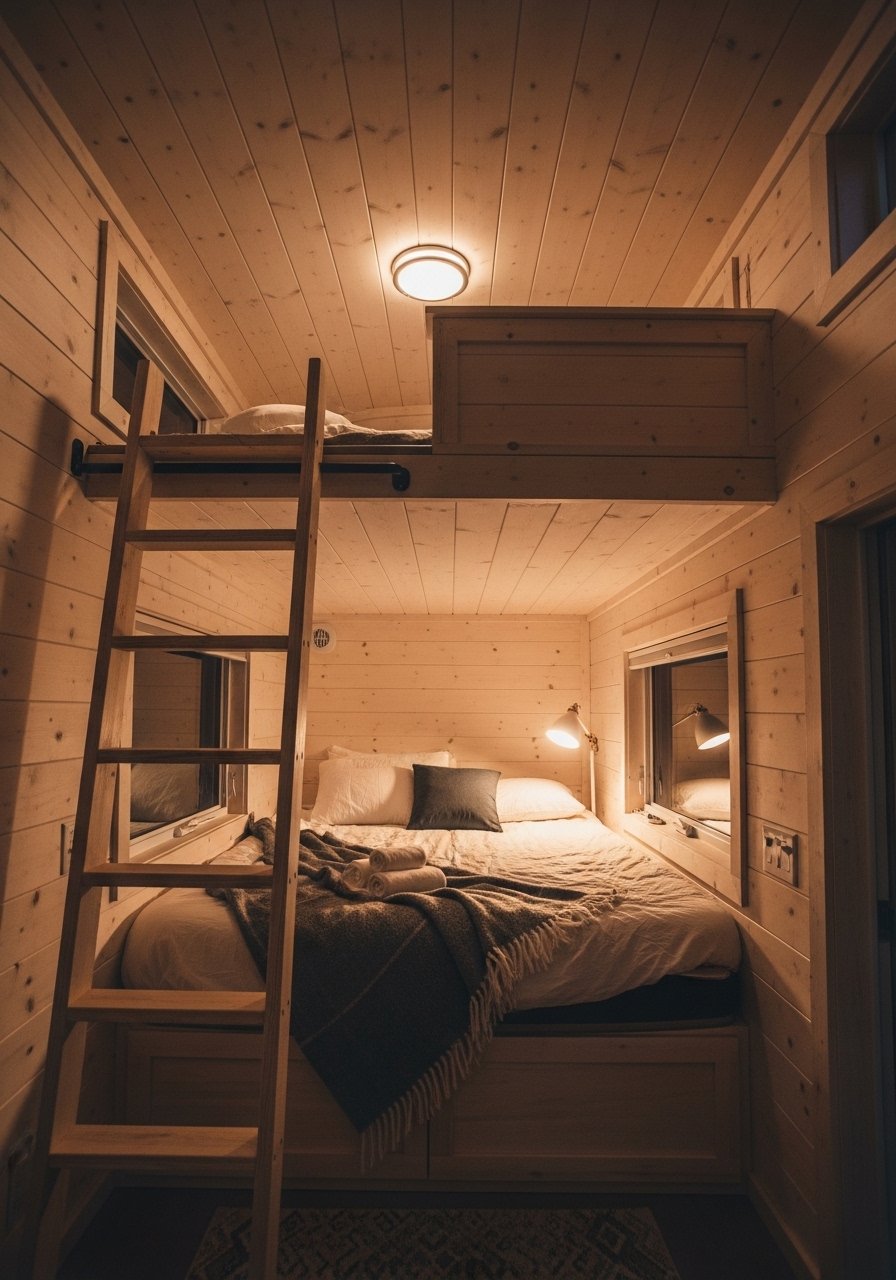
Lofts are romantic until you realize you crouch every time you make the bed. Fix that with a stand-up loft height if your build allows. I measured so I could stand at the edge and reach a shelf without bending over. If a full stand-up loft is impossible, build a half-loft for storage and keep a 6-foot sleeping platform. For ladders, a pine stair-ladder combo from wood loft ladder feels sturdier than the spiral options. Photo-versus-reality note, many tour photos hide how tight headroom actually is, so always check finished ceiling height not just plan elevations.
Rustic Wood Mixed With Clean Modern Lines For Balance

I used to buy all reclaimed everything and my place felt stuck in one decade. Mixing in clean-lined modern pieces keeps rustic details from overwhelming. Try pairing floating white oak shelves with a smooth steel table lamp. I grabbed a set of white oak floating shelves and the room stopped feeling heavy. Common mistake, people match woods too closely. Aim for two wood tones maximum. A useful detail, shelves scaled to 10 to 12 inches deep work for books and bowls without taking up visual weight in a tiny room.
Max-Size Sectional Rule To Solve Seating Issues
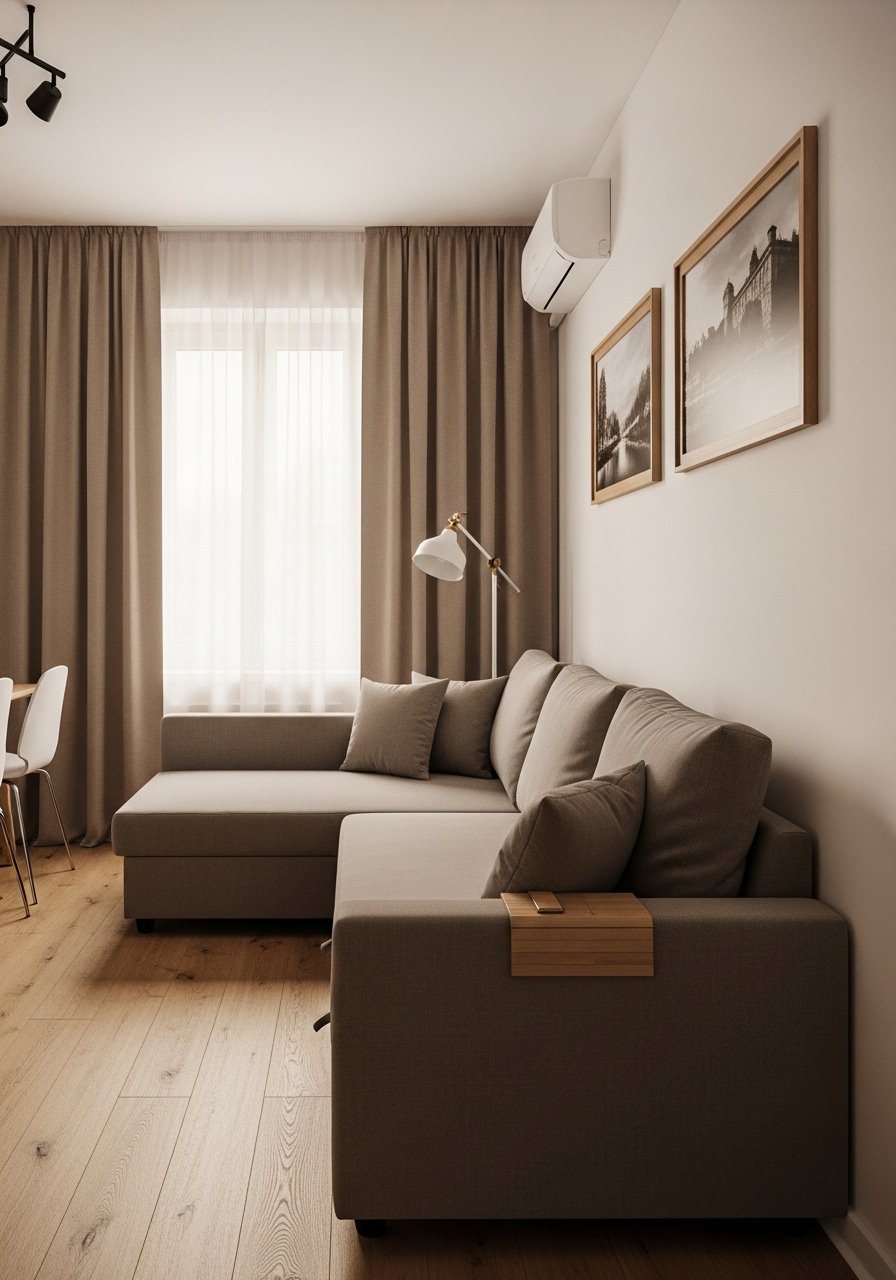
Seating eats floor so I started sizing sofas by the path needed around them, not by sale tags. The rule that saved my layout was simple, get the biggest sectional that still leaves a three-foot path to the kitchen. That keeps four people comfortable and keeps traffic clear. If you need a renter-friendly option, look for a slipcover-ready loveseat or modular sectional pieces you can reconfigure. A mistake I see is choosing too many chairs that break the visual flow. One anchor seating piece makes the room readable and practical.
Built-In Benches And Storage For Entryways And Dining
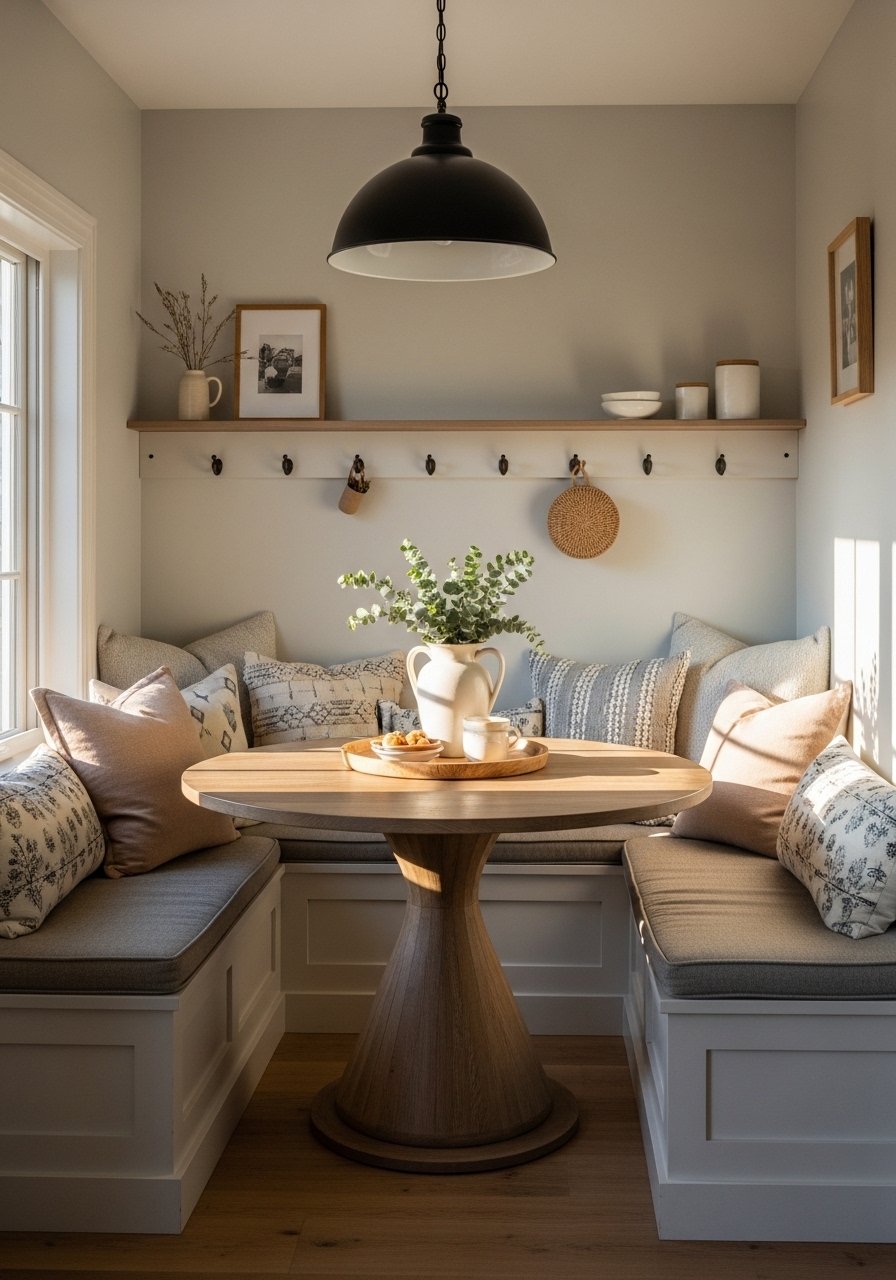
Built-ins multiply usefulness in tiny homes because they hide storage in plain sight. I had an entryway that was a shoe dump until a built-in bench with cubbies changed everything. If you cannot build permanently, a sturdy freestanding bench with baskets underneath is nearly as good. I used 18-inch deep benches to match standard seat height and added jute cushions. For cushions, try bench cushion 18×48 inches in neutral tones. Many guides skip how bench depth affects knee clearance. Keep bench depth under 20 inches for narrow corridors.
Open Floor Tiny Cabin Layouts That Feel Twice The Size

An open plan feels twice the size when you avoid visual barriers. I removed a dividing wall and suddenly had room for a larger sofa and a small island. The trick is zoning with rugs and lighting, not furniture clusters. Use an 8×10 rug under rooted seating to ground the area. A folding pine table can serve as extra prep space and a dining spot. I linked a durable foldable option, folding pine table, that fit my porch when guests came. Real-life note, open layouts mean less storage, so plan hidden storage under benches or stairs.
Mountain Facade Rustic Exterior For Curb Appeal

Curb appeal matters even for tiny homes because the facade sets expectations for what is inside. I chose cedar shakes on the gable and dark metal roof accents to make the house read larger against slope. For a renter-friendly look, use cedar-look siding panels rather than full replacement. Small detail most people skip, contrast the porch rail color with a slightly darker stain to make the entry pop without being loud. A sample pack of cedar shake siding samples helped me pick a tone that hides weathering.
Your Decor Shopping List
Textiles
- Honestly the best $45 I have spent. Chunky knit throw in cream (~$35-55). Drape over the sofa arm for instant texture
- 22-inch linen pillow covers, set of two, natural in stone or sand, down fill is optional
- 96-inch sheer linen curtain panels, pair, white for A-frame or tall windows
Wall Decor
- Brass picture ledges, set of two (~$18-25) to swap art without new holes
- White oak floating shelves, 24 x 8 inches for mixed modern-rustic balance
Lighting
- Adjustable brass task lamp (~$60) for reading nooks
Budget Finds
- Folding pine table, 30 x 20 inches (~$50) good for porches or pop-up prep
- Bench cushion 18 x 48 inches, jute cover (~$40) for built-in or freestanding benches
Most of these items have similar finds at Target or HomeGoods, but I prefer the specific sizes and materials linked when scale matters.
Shopping Tips
White oak beats dark wood in 2026. Design feeds have shifted completely. These white oak floating shelves look current, not dated.
Grab velvet pillow covers in two colors for $12 each. Swap them seasonally and a tiny home feels different without a full makeover.
Curtains should kiss the floor or puddle slightly, never hang halfway up. These 96-inch panels are right for standard 9-foot ceilings.
Lead with seating size not trends when laying out a tiny living room. If you need a renter option try modular sectional pieces that can be moved as needs change.
One tall plant beats five small ones. If you want height without fuss, try an artificial fiddle leaf fig, 6-foot for corners that need presence.
Frequently Asked Questions
Q: Can I get the rustic look if I rent?
A: Yes. Use peel-and-stick cedar panels in high-touch spots, freestanding benches with storage, and slipcovers for sofas. Peel-and-stick wood planks sample pack lets you try before you commit.
Q: What size rug should I pick for a tiny living area?
A: Bigger than you think. For a standard tiny living layout, go 8×10 if your room allows. All front furniture legs should sit on the rug. A neutral jute rug works well under rustic-modern mixes.
Q: How do I avoid the "cheap" look after buying rustic pieces?
A: Mix in modern clean-lined items and limit wood tones to two. Add real textiles like linen pillows and a knit throw to make inexpensive wood feel intentional.
Q: Are lofts practical for everyday use?
A: They are if you plan headroom. A stand-up loft edge is worth the extra framing. If you can not do that, consider a lower loft for sleeping and keep standing areas clear.
Q: Which wood is better for pet owners, cedar or pine?
A: Cedar hides scratches better than soft pine and holds up to wear in kitchens and entries. If you have aggressive chewers, durable finishes and peel-and-stick options are safer choices.