


Spent $400 on a new table and the room still felt like a waiting area. Spent $35 on a throw, three candles, and a runner. Suddenly everything clicked. That small shift from polished to lived-in is what rustic dining room decor is about for me, not just wood and burlap, but the way things sit together and invite you to stay.
These ideas lean modern farmhouse with warm rustic touches. Most items here are under $75, with a few splurges around $150. Works for a dining room, breakfast nook, or an open-plan kitchen area that needs more personality and less polish.
Reclaimed Wood Table Centerpiece for Warmth

A low, layered centerpiece keeps conversation flowing and still makes the table feel intentional. I use a linen runner, a tray, three candles at varying heights, and one small cluster of greenery. Aim for a centerpiece no taller than 12 inches so people can see across the table. For a quick start try a linen table runner in neutral and glass hurricane candle holders. Common mistake, especially in small dining rooms, is a centerpiece that blocks sight lines. Keep the rule of three in mind with objects grouped in odd numbers for a balanced look.
Mix Wood Tones for Layered Rustic Style
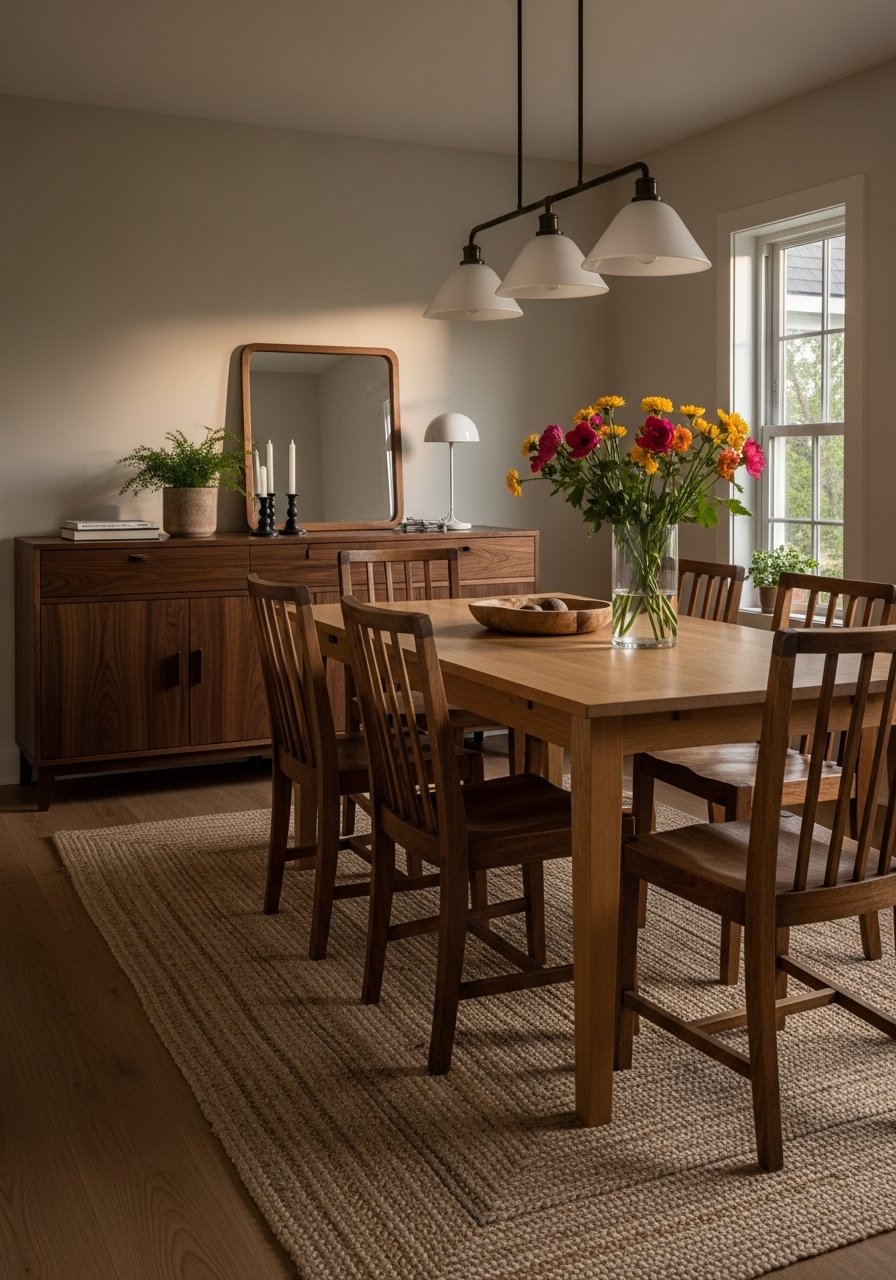
When I first tried to match wood tones exactly the room looked too staged. Mixing a dark sideboard with a lighter table creates depth. Stick to an 80/20 color ratio, 80 percent warm wood and neutrals, 20 percent darker accents. Add white oak floating shelves for lighter balance and dark walnut buffet hardware to ground the space. The mistake people make is matching every wood piece. A deliberate mix reads collected, not cheap. An extra detail I use is keeping chair finishes within two shades of each other so it still reads cohesive.
Oversized Mirror to Open a Small Dining Room
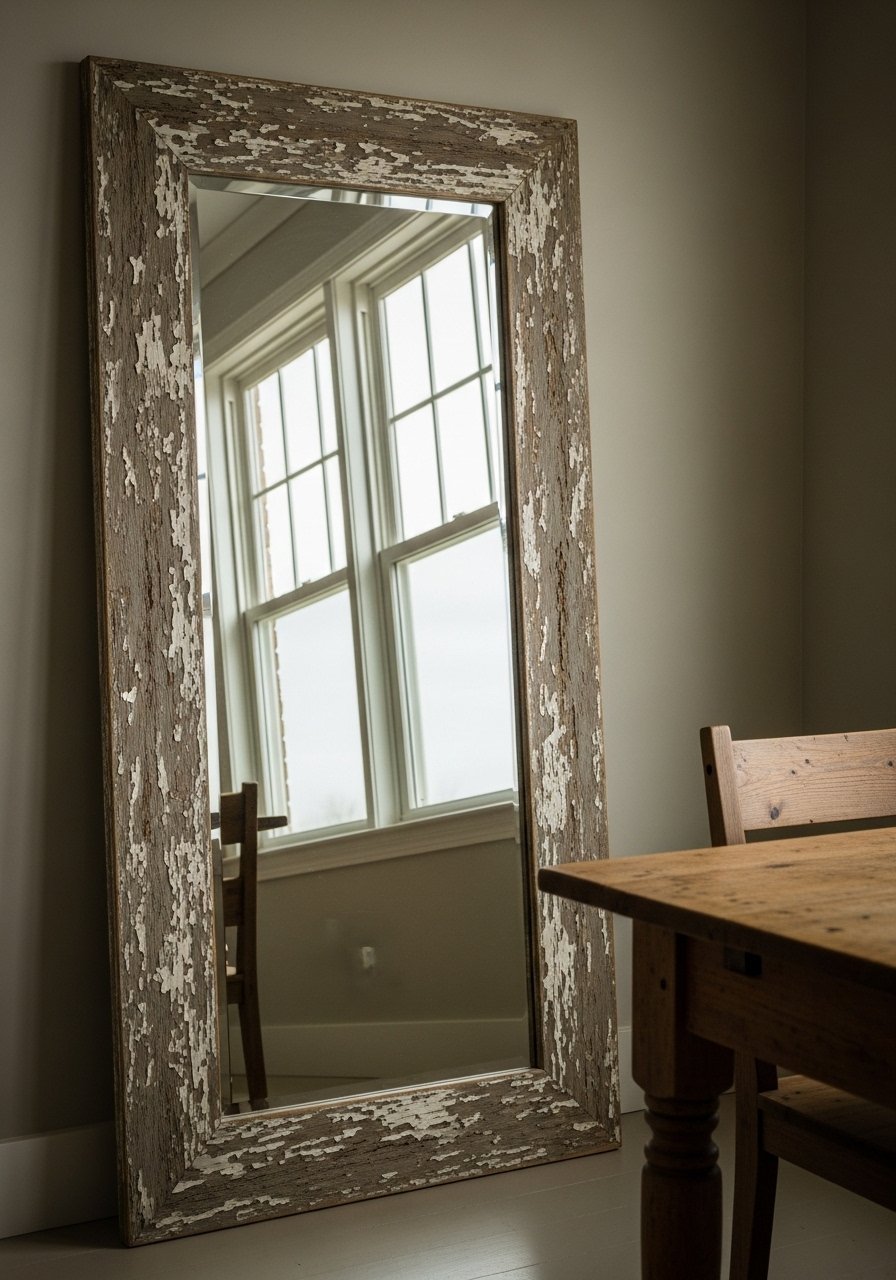
Leaning an oversized mirror behind a dining console doubled the light in my narrow space and made it feel twice as deep. Choose a distressed frame to keep the rustic vibe. I recommend a mirror at least 30 inches wide for a small room, but scale up if your wall allows. Try a distressed wood leaning mirror. A common error is hanging a mirror too high. The bottom edge should be 4 to 6 inches above a console top, not above eye level. This trick works well next to the gallery wall idea below.
Layered Rugs for Texture and Definition

Layering a durable jute rug under a softer patterned rug gives rustic rooms life and protects floors. Go bigger than you think. For a standard table pick an 8×10 or larger so chairs stay on the rug when pulled back. I paired a natural jute rug with a 6×9 patterned rug on top. Find a large jute rug and a 6×9 distressed wool rug. People often pick rugs that are too small which makes the room look chopped up. Note that jute sheds at first, so vacuuming weekly for a month helps settle it.
Warm Metallics and Mismatched Lighting
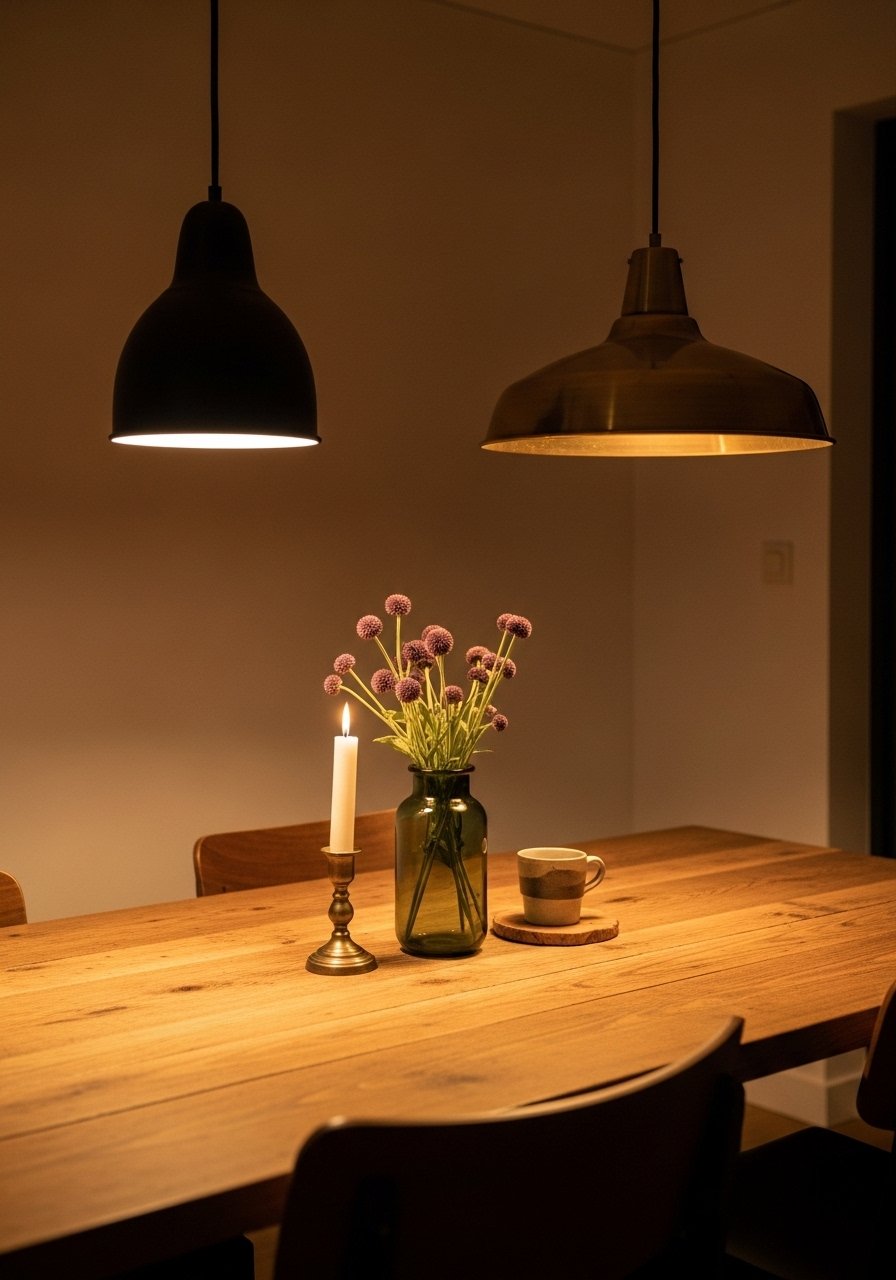
I stopped matching lighting years ago and the room finally felt intentional. Mix matte black iron with warm brass accents to give rustic spaces a modern edge. Hang pendants 30 to 36 inches above the tabletop, and if you use two pendants space them 20 to 30 inches apart depending on table length. Try a black iron pendant light or brass metal pendant. The mistake is buying identical fixtures thinking they will match the style. Mismatched metals read collected. Pair this with the mixed wood tones idea for a layered result.
Bench Seating for Casual Rustic Vibes
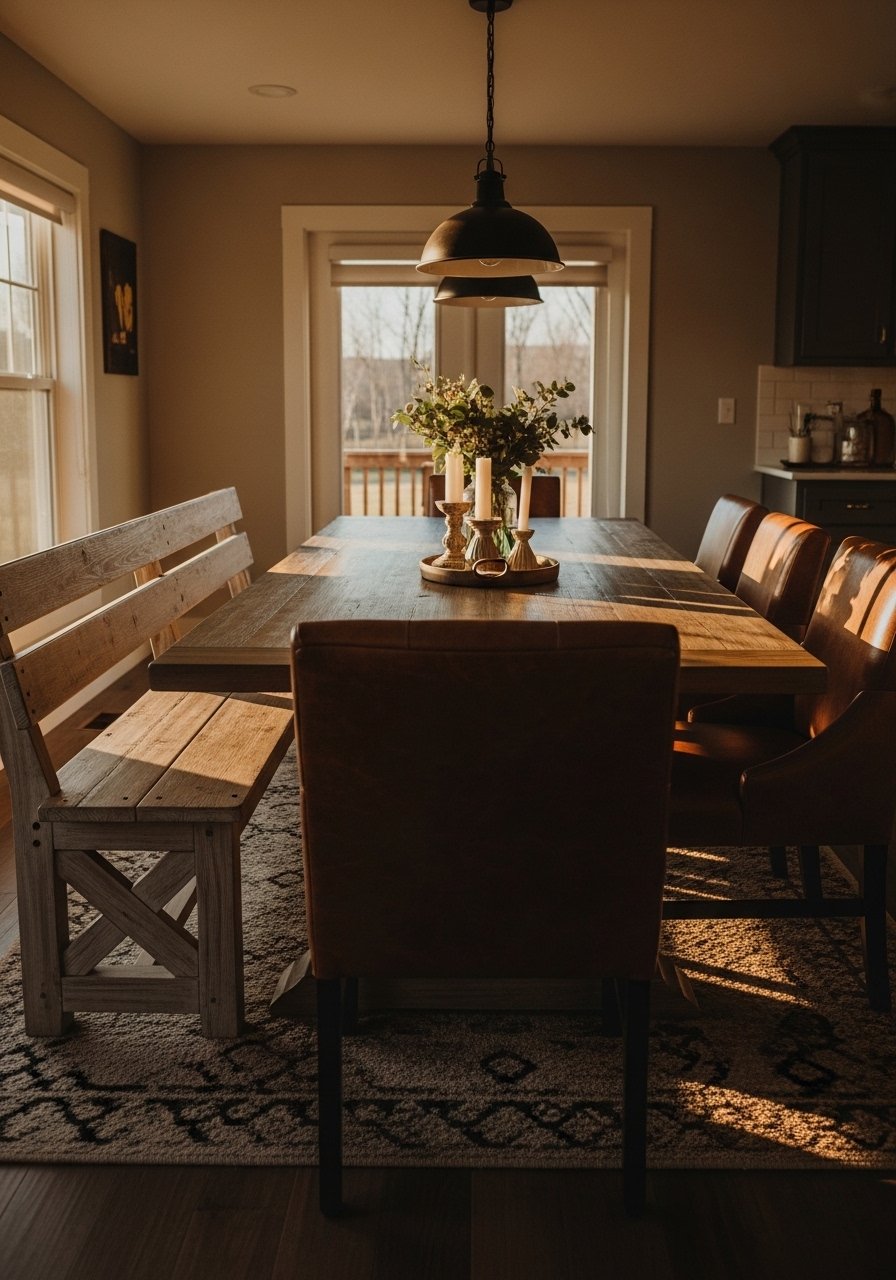
Benches instantly make a dining area feel relaxed and practical. I swapped two chairs for a slim bench and the room suddenly invited family meals. Size the bench so it tucks under the table when not in use and allow 18 to 24 inches per person for seating. A reclaimed wood bench is perfect for the rustic vibe. A common mistake is choosing a bench that is too deep which blocks legs and looks bulky. If you want softer seating, add a 22-inch down-filled cushion to the bench for comfort and texture.
Vintage Glassware and Pottery for Table Styling

Swapping identical glasses for a small collection of vintage stems makes dinners feel curated. I mix clear vintage goblets with stoneware plates and woven placemats for tactile contrast. Look for pieces in amber, green, and clear tones. A set of vintage-inspired wine glasses and a handmade stoneware pitcher go a long way. People often overload the table with fragile items; stick to the rule of three for decor pieces so it reads collected, not cluttered. Small mismatches tell a better story than a brand-new set.
Layered Lighting for Flexible Mood
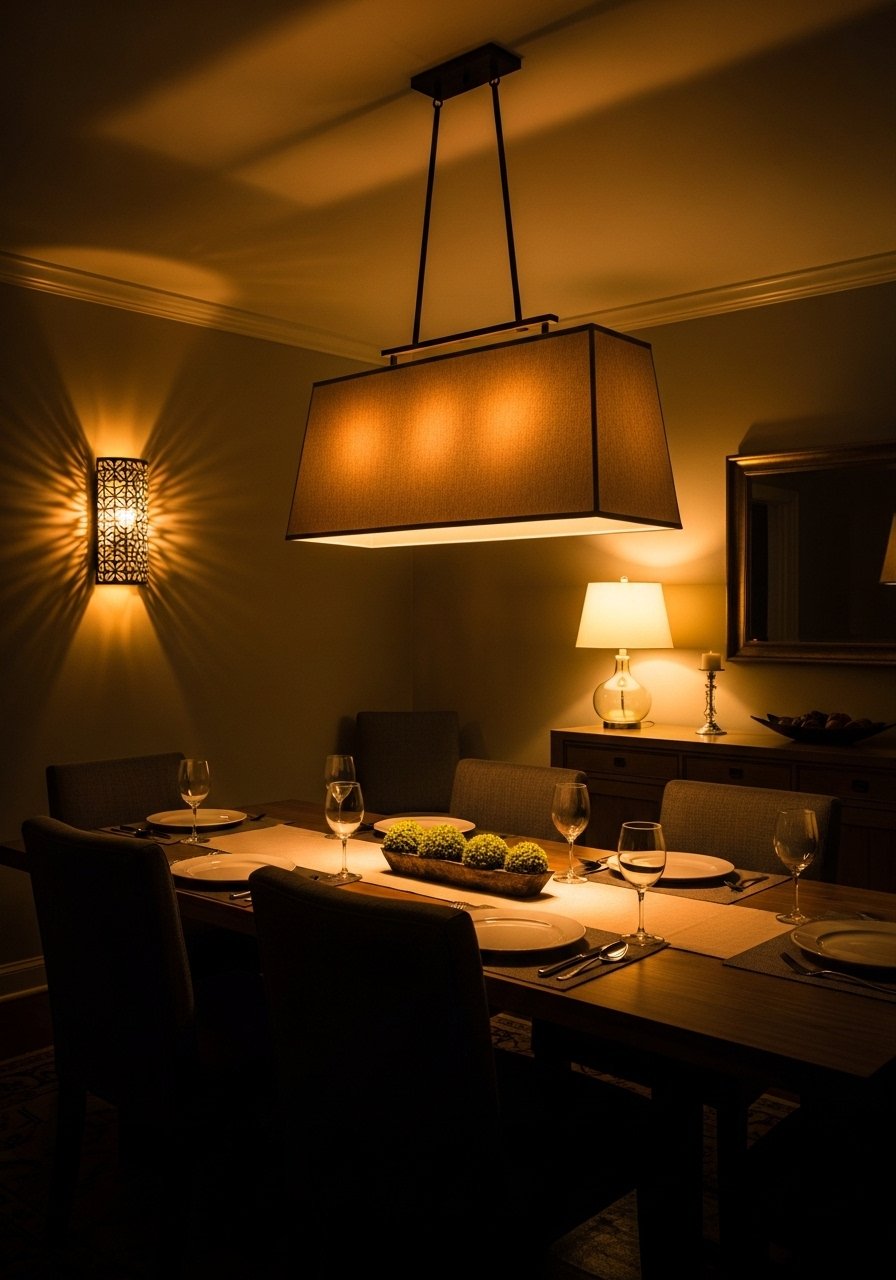
My dining room felt dark until I added three light layers. Use overhead, task, and ambient lighting for versatility. A dimmer on the main pendant plus a pair of wall sconces creates a restaurant-like mood. I use a dimmable black chandelier and plug-in wall sconces for renters. The mistake is relying on one overhead fixture which makes the room flat. For detail, place tabletop lamps on a sideboard at differing heights so the light feels layered and lived in.
Textiles That Soften a Rustic Space

There is something about a reading nook with layered pillows that makes you want to cancel your plans. Same with a dining chair draped with a chunky throw. Textiles balance raw wood and metal. I use 22-inch linen pillow covers on a bench and a chunky knit throw on one chair for an asymmetrical, lived-in feel. Try 22-inch linen pillow covers and a chunky knit throw. A common error is using only seat cushions. Add a back pillow for comfort and style. For color balance use 80 percent neutrals and 20 percent a deeper accent shade.
Gallery Wall with Rustic Frames
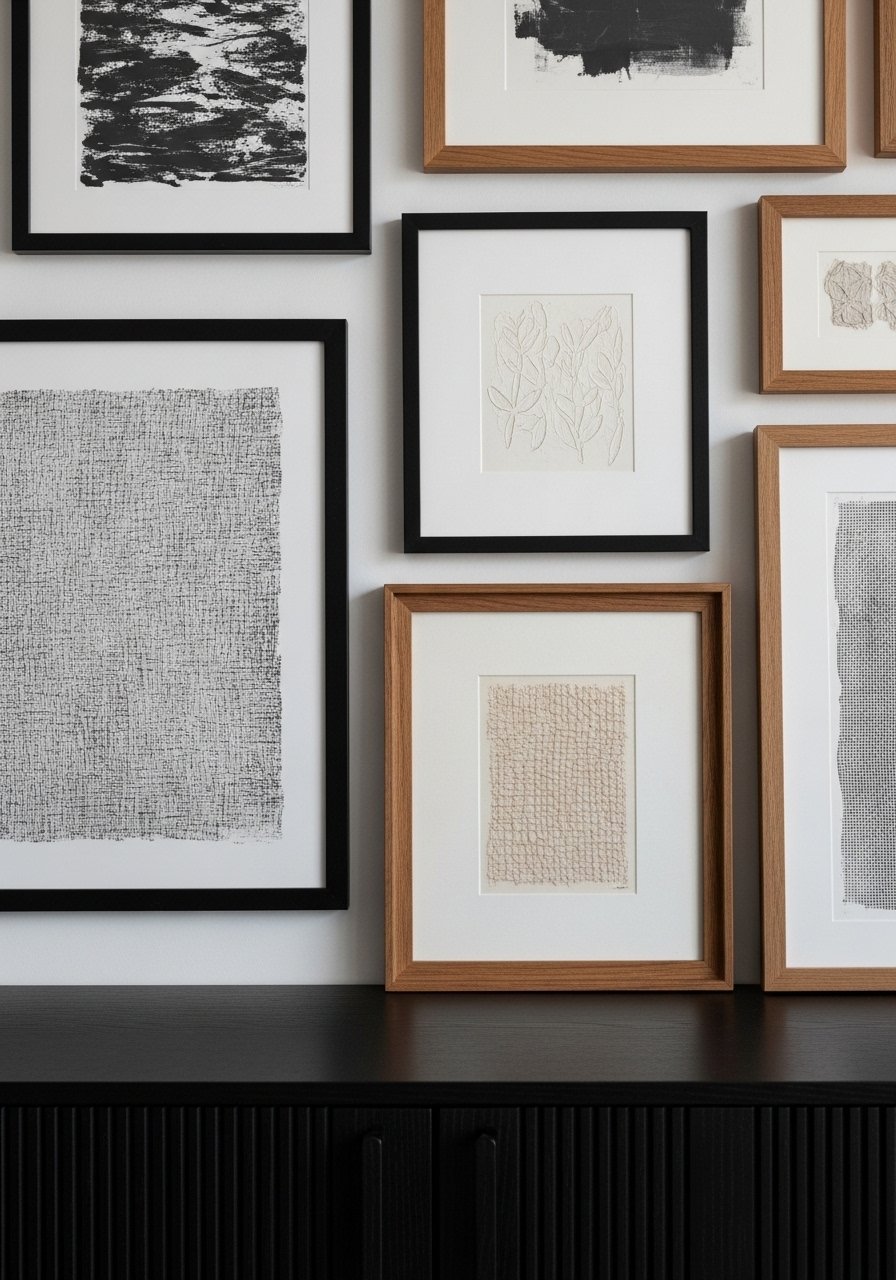
My walls used to be blank until I committed to a small gallery over the buffet. Use frames in two finishes only so it does not read chaotic. I lay pieces on the floor first to get spacing right, then hang with 2 to 3 inches between frames. Try mixed wood picture frames and pick prints with a common color tie. The common mistake is centering the gallery on the whole wall. Instead center it on the furniture below for cohesion. A little secret is to include one object like a small shelf or woven basket to break up too many flat frames.
Natural Greenery and Dried Grasses
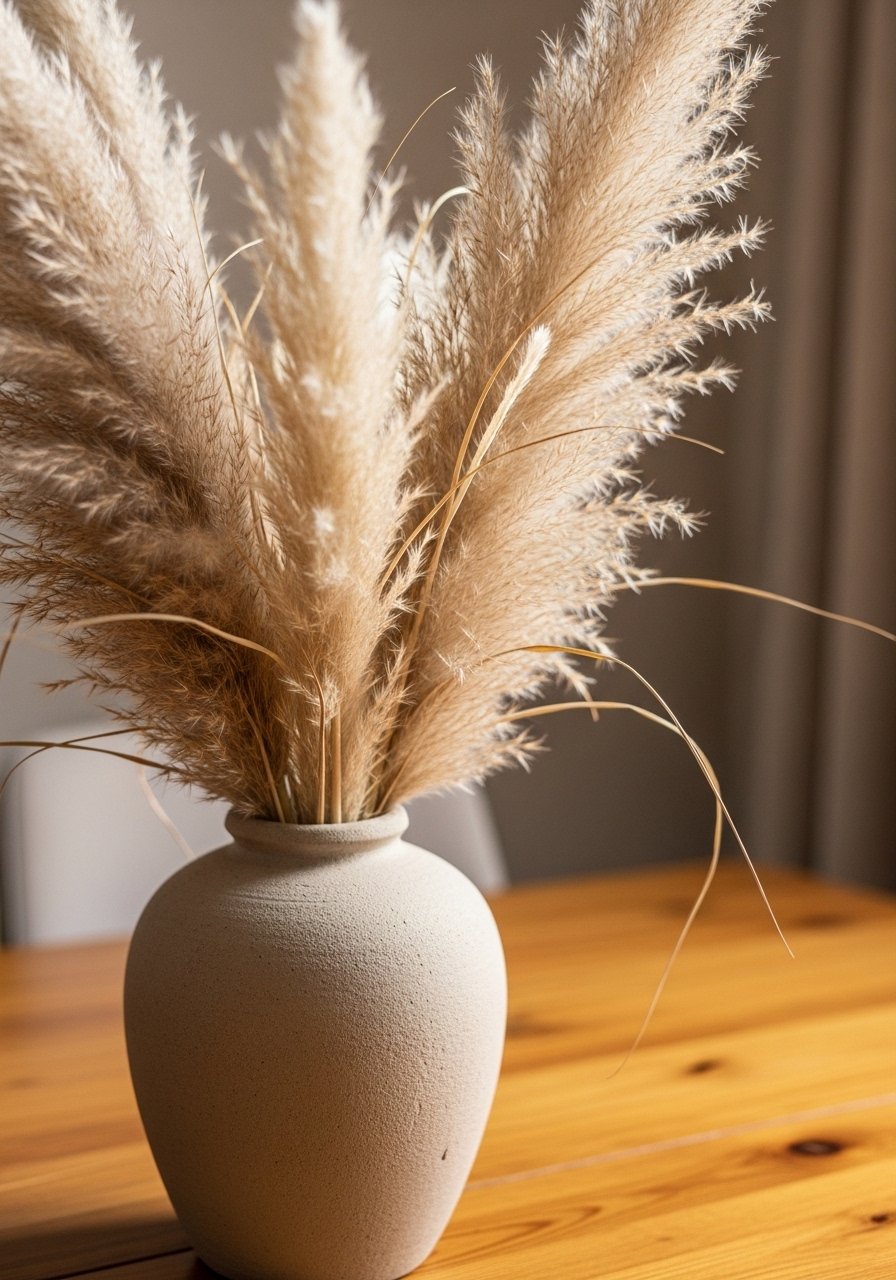
A single tall plant or dried pampas grass adds height and that rustic, imperfect feeling. For table use dried stems under 20 inches so they do not block sight lines. I use a clay vase with dried pampas stems and a faux fiddle leaf fig in a corner for low maintenance greenery. People stress over living plants. If you travel a lot, pick a realistic faux with a sturdy base. Small detail most articles skip, real greenery needs rotation to avoid leaning toward the light. Turn your pots every few weeks.
Practical Storage That Looks Styled

Clutter kills rustic charm. I added a sideboard with baskets and open shelves and suddenly dishes had a place and the room felt calm. Use labeled crocks for utensils and woven baskets for linens. Try a reclaimed wood sideboard and woven storage baskets set. The mistake is hiding everything behind closed doors and then piling items on top. Instead keep just a few everyday pieces visible and store the rest. A practical tip, leave 2 to 4 inches of breathing room on shelves so items do not look jammed.
Your Decor Shopping List
Textiles
- Honestly the best $40 I have spent. Chunky knit throw in cream (50×60 inches)
- 22-inch linen pillow covers, set of 2 in natural and slate
Wall Decor
- Mixed wood picture frames set (assorted 8×10 and 11×14)
- Distressed leaning mirror, 36×48 inches
Lighting
Rugs and Seating
Tabletop
Budget Finds
- Woven storage baskets set (good for linens)
- Similar pieces at HomeGoods or Target for quick swaps
Shopping Tips
White oak beats dark wood in 2026. Design feeds have shifted completely. These white oak floating shelves look current, not dated.
Grab velvet pillow covers for $12 each. Swap them seasonally and the room feels different without a full furniture overhaul.
Curtains should puddle or kiss the floor, never hang halfway up. These 96-inch linen panels are right for standard 9-foot ceilings.
Everyone buys five small succulents. One single 6-foot faux fiddle leaf fig has ten times the visual impact and requires zero care.
Frequently Asked Questions
Q: What size chandelier for my dining table?
A: Go for a fixture that is about one-half to two-thirds the width of the table, and hang it 30 to 36 inches above the tabletop. For example, a 36-inch table pairs well with an 18 to 24-inch wide chandelier.
Q: Can I mix rustic pieces with modern chairs without clashing?
A: Yes. Mix a rustic wood table with modern chairs to avoid a theme-park look. Keep chair finishes within two shades of each other and use one accent color in textiles so the mix reads intentional.
Q: How big should my rug be under the dining table?
A: Bigger than you think. For most tables choose an 8×10 rug or larger so all chairs stay on the rug when pulled out. A layered jute plus patterned rug solution works well for high traffic.
Q: Real plants or faux in a dining area with little light?
A: Faux plants are fine where light is low. A realistic faux fiddle leaf fig gives height and texture. If you prefer real plants, pick tolerant varieties like snake plant or pothos and rotate them toward light weekly.
Q: How do I keep a gallery wall from looking messy?
A: Limit frame finishes to two, space frames 2 to 3 inches apart, and center the grouping on the furniture below. Lay everything on the floor first to test arrangements and include one non-flat object like a small shelf for variety.
Q: What is a common rookie mistake when styling a rustic dining room?
A: Matching everything too perfectly. People match wood, metals, and textiles and end up with a showroom vibe. Intentional mixing, odd-number groupings, and layered textures make a room feel lived in and welcoming.