

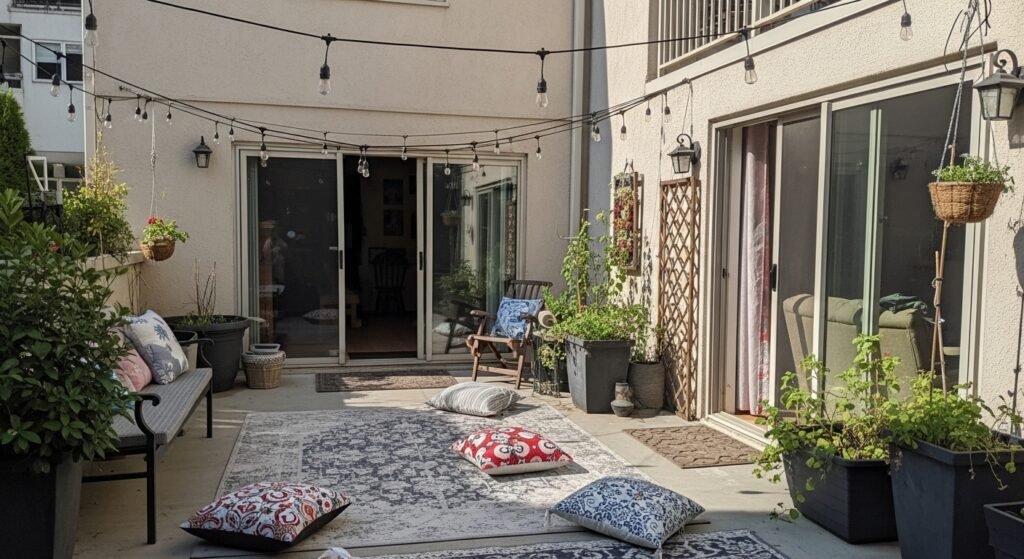
I used to step outside and feel like my patio was unfinished. Cushions faded, rugs flattened, and pieces looked temporary after one season. It’s a small, discouraging thing that makes a nice view feel cheap.
I learned how to make outdoor decor that reads intentional and survives weather, without spending a fortune.
How to Make DIY Outdoor Decor That Lasts
This is the method I use when a porch or balcony needs to look like it was thought through. You’ll learn how to anchor the space, choose weather-friendly pieces, and place lights and plants so everything reads balanced and lived-in. The result stays usable from spring through fall.
What You'll Need
- Outdoor rug, 5×7, neutral geometric pattern (~$40–150)
- Solar globe string lights, warm white, 25ft (~$15–35)
- Outdoor throw pillows, 18×18, Sunbrella-style stripe, set of 2 (~$20–45)
- Large fiberglass planter, 18" matte white (~$40–120)
- Metal outdoor wall art, 30" geometric panel (~$30–100)
- Outdoor lantern with handle, medium metal and glass (~$25–60)
- Weatherproof pouf, 20" woven neutral (~$50–120)
Step 1: Anchor the space with the right rug
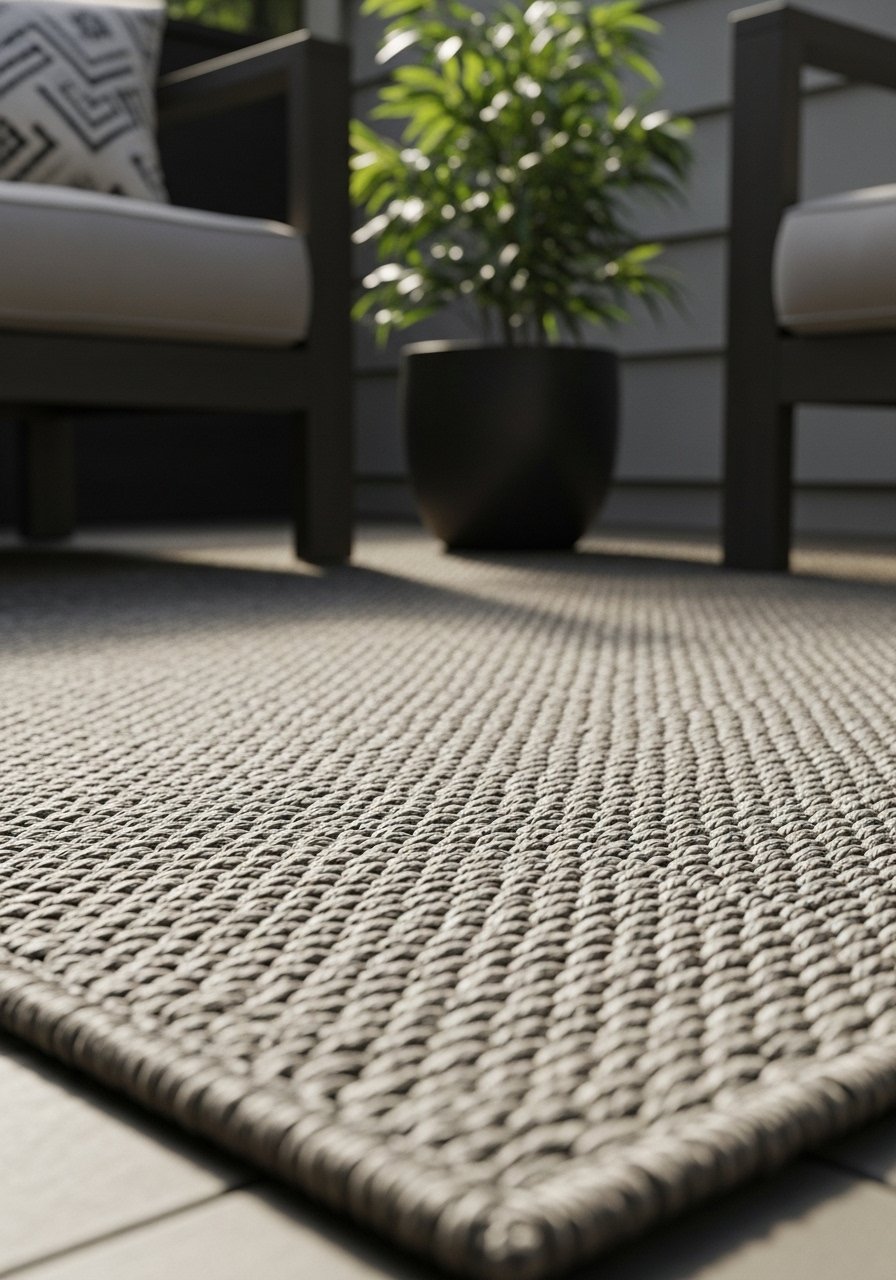
I start by choosing a rug that actually fits the seating, not the exact floor. I pull chairs so at least the front legs sit on the rug. That simple choice makes the area read like a single zone instead of a scatter of furniture. Visually, it gives weight and warmth.
People often pick rugs because they like the pattern, then realize it’s too small. One small mistake is using a thin indoor carpet outdoors—opt for an outdoor-rated weave so it won’t go limp after a season. I use a neutral rug so colors layer without clashing.
Step 2: Layer seating and weatherproof pillows
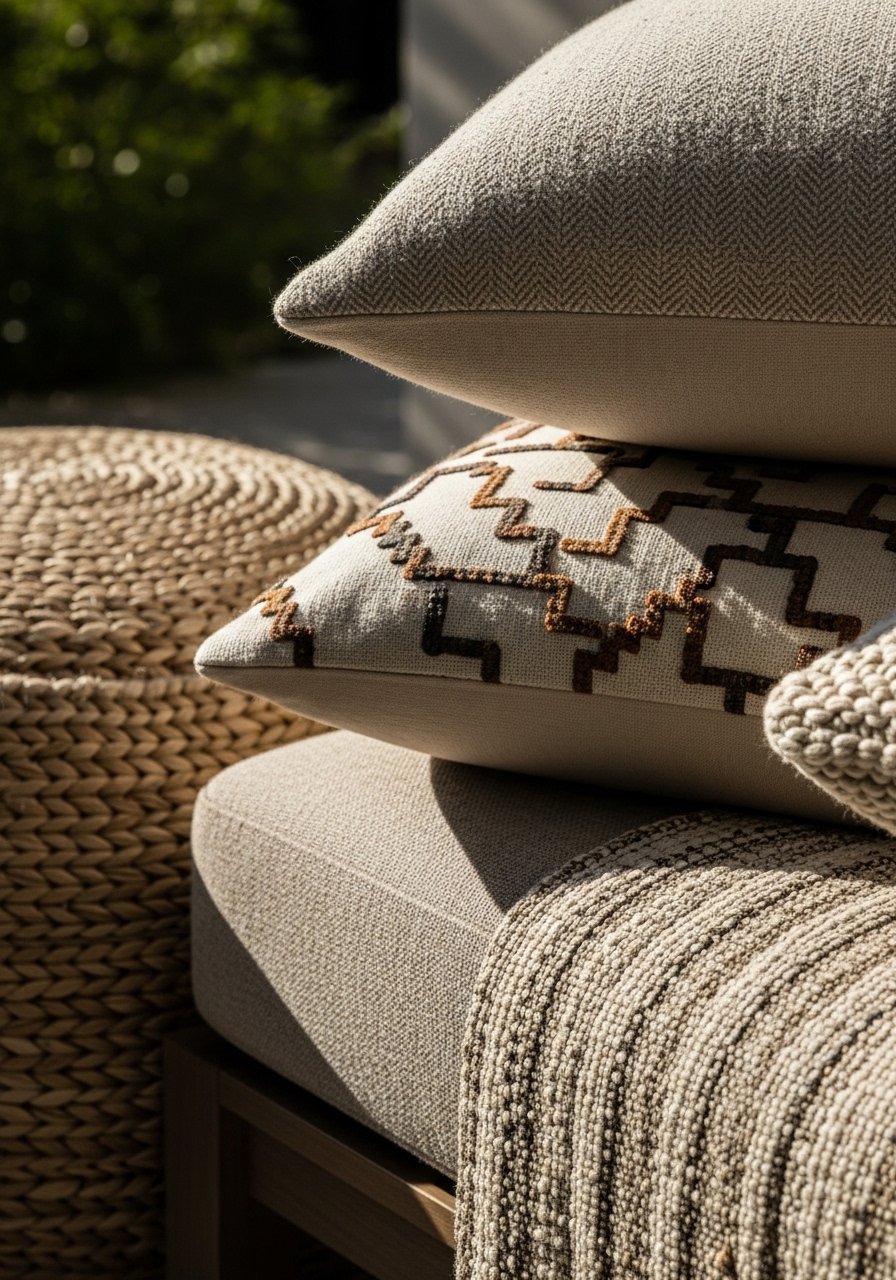
I place the main seating, then add two pillows of different scales—one solid, one patterned. I tuck the pouf near the seat to create asymmetry and extra seating. This makes the arrangement feel relaxed and intentional rather than catalog-ready.
What changes visually is depth: patterns and solids push the eye and anchor a focal spot. A common miss is too many small pillows—stick to one or two per seat. Also avoid indoor-only fabrics; choose fade- and mildew-resistant covers so colors stay true through sun and rain.
Step 3: Place lighting so evenings feel cozy, not festival-like
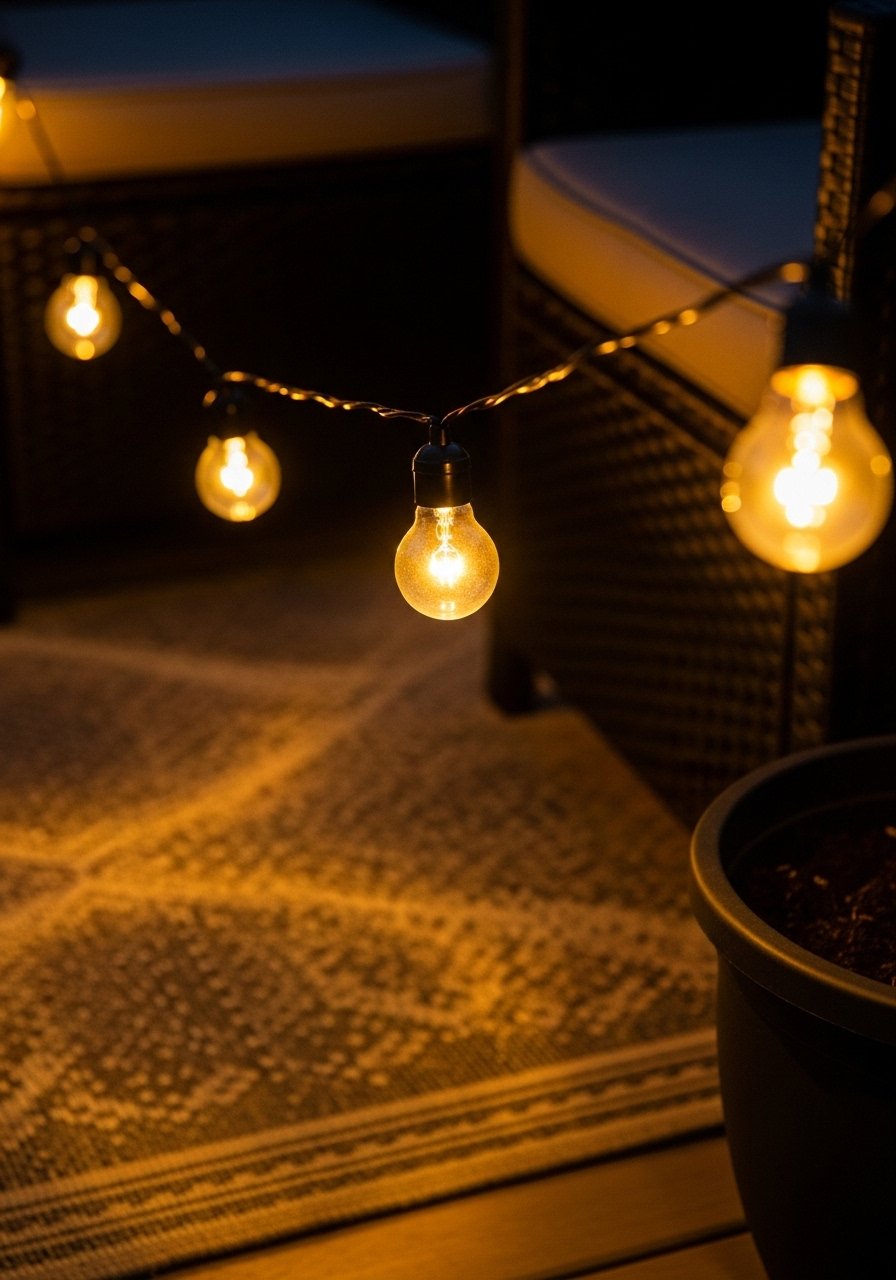
I drape solar string lights along the outer edge or between posts so light washes the seating area. I layer with a lantern on the side table for pockets of brighter light. The difference is immediate: the space goes from usable to inviting after dusk.
People forget to think about scale—tiny fairy lights can disappear in a big space. One mistake is hanging lights too high; keep them close enough to create a canopy effect. Solar options are great because they’re low-effort and look like deliberate design rather than an afterthought.
Step 4: Add greenery in sturdy, grouped planters
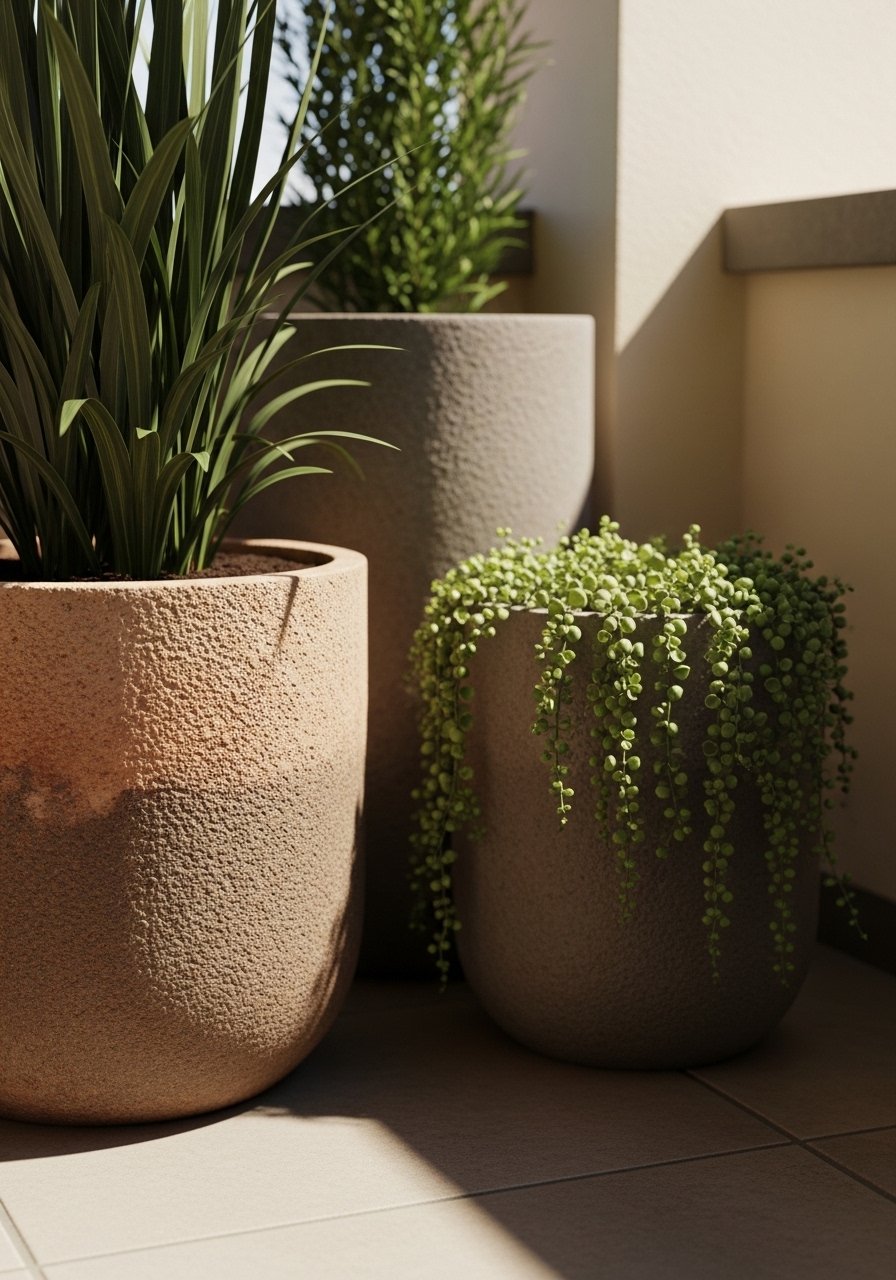
I group at least three planters of different heights in a corner or beside seating. I always include one taller structural plant, one mid-height leafy planter, and one trailing pot. Grouping creates a layered backdrop that reads like a single planted piece.
Visually it softens hard edges and gives a sense of enclosure. People often scatter plants individually—when they’re grouped they read as intentional. Avoid blocking walkways or crowding the seating; leave breathing room so the area still feels open.
Step 5: Choose materials and placements that age well
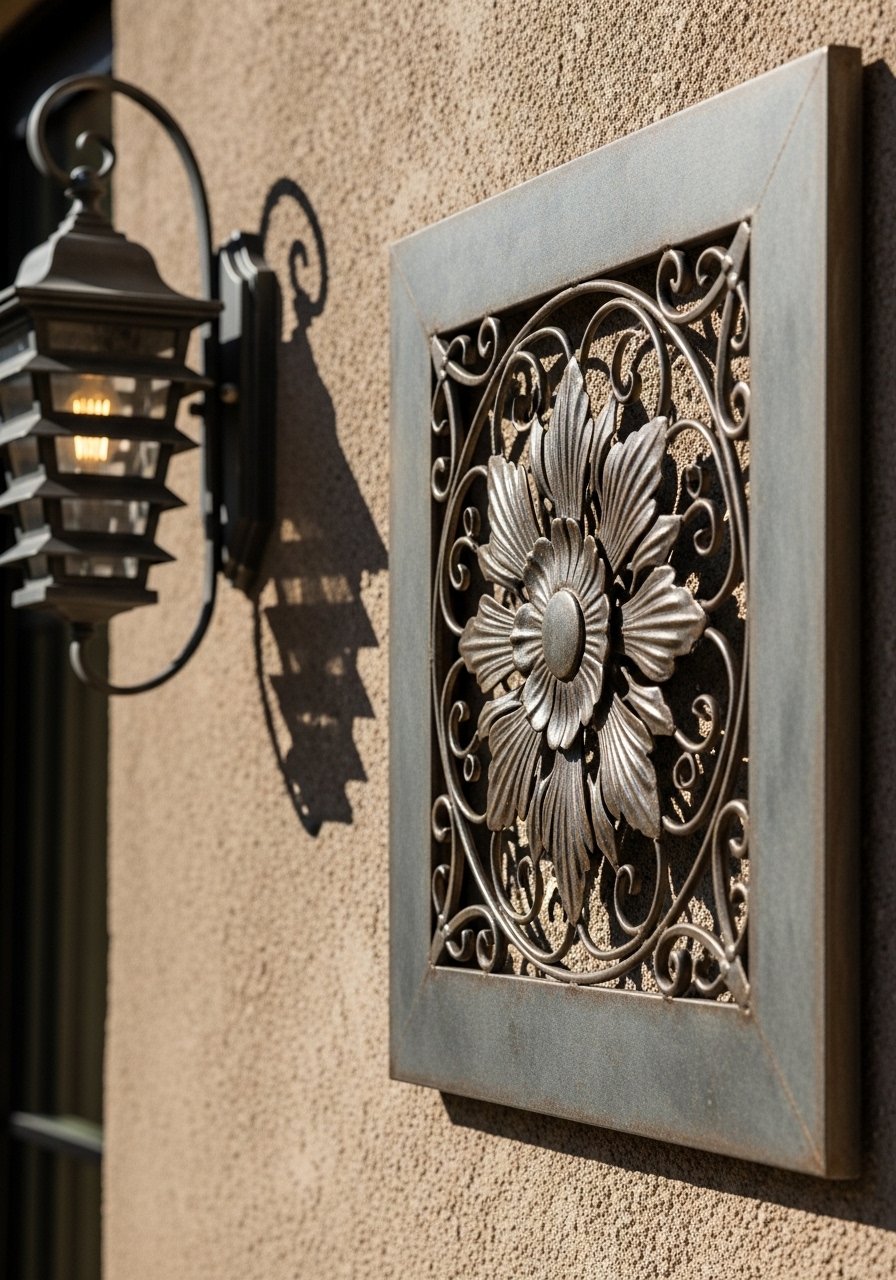
I pick pieces meant for outdoors: metal wall art that develops a soft patina, fiberglass planters that won’t crack, and lanterns that tolerate moisture. I place wall art where it balances the opposite furniture mass so walls don’t feel bare.
What changes is confidence—the space looks considered and holds up. A common oversight is leaving cushions out in the rain; rotate cushions inside after heavy storms. Don’t assume “outdoor” means indestructible—simple shifts in placement and a little upkeep make things last far longer.
Common mistakes that make outdoor decor feel cheap
I see two predictable problems: scale mismatch and cheap materials. Small rugs with big furniture, or a single tiny plant in a big corner, instantly read unfinished. Cheap, thin textiles fade and pill quickly, which makes the whole area look tired.
Quick fixes I use:
- Choose a rug that seats furniture legs.
- Layer one solid pillow and one patterned for each seat.
- Cluster plants for impact instead of scattering single pots.
Adapting the look for small spaces or tight budgets
I scale down but keep the same rules. A 4×6 rug can anchor a bistro set just as well as a big rug anchors a porch. Use one prominent planter and fewer lights, and focus on texture—woven poufs or a single metal wall piece go a long way.
Budget tips:
- Buy two pillows instead of four.
- Use solar lights over wired fixtures.
- Pick a durable neutral rug and change small accents seasonally.
Seasonal care to make things last longer
I treat outdoor decor like wardrobe rotation. In wet months I store cushions and let textiles dry inside. In high-sun months I shift lighter colors to less exposed spots to reduce fading. A quick wipe of lanterns and planters every few weeks keeps them from collecting grime.
Simple habits that help:
- Bring soft textiles indoors during heavy weather.
- Shake out rugs and vacuum debris.
- Wipe metal and glass with a mild cleaner before winter storage.
Final Thoughts
Start with one small zone: a rug and a pair of pillows, or a string of solar lights. It’s an easy way to see how placement changes feel. I often suggest solar string lights as a low-commitment upgrade that immediately makes evenings cozier.
You don’t need to overhaul everything at once. Make small, intentional choices and the space will look lived-in and last season after season.