

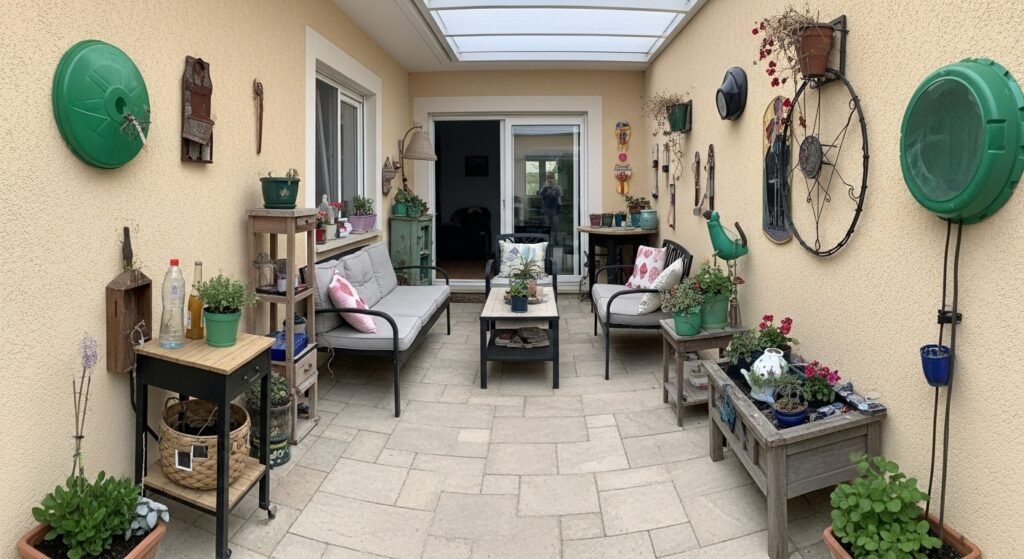
I kept staring at the blank corner by my back door. It was one of those small outdoor spots that felt cold and unfinished, even when the plants were healthy. I wanted it to feel deliberate, not like an afterthought.
I learned to treat that kind of space like a tiny room. A few ordinary things — jars, a frame, a string of lights — rearranged with intention makes it feel cozy and used.
How to Make DIY Garden Decor from Household Items
This shows you how I turn everyday things into garden decor that reads intentional, not thrown together. You'll get a clear vision of the finished look — a layered, cozy corner with height, light, and texture — and the confidence to edit what you already own. It's easy, low-cost, and fits cottagecore or organic modern touches.
What You'll Need
- Mason jar set, clear, 16 oz (12-pack) (~$12–25)
- Terracotta nursery pots, set of 6, 4-inch (~$12–25)
- Solar string lights, warm white, 33ft (~$15–30)
- Macramé plant hangers, cotton, set of 2 (~$12–25)
- Recycled green glass bottle vases, set of 3 (~$20–35)
- Vintage-style wood picture frame, 8×10 (~$12–30)
- Outdoor decorative throw pillow, botanical print, 18×18 (~$20–40)
Step 1: Choose containers and treat them like furniture
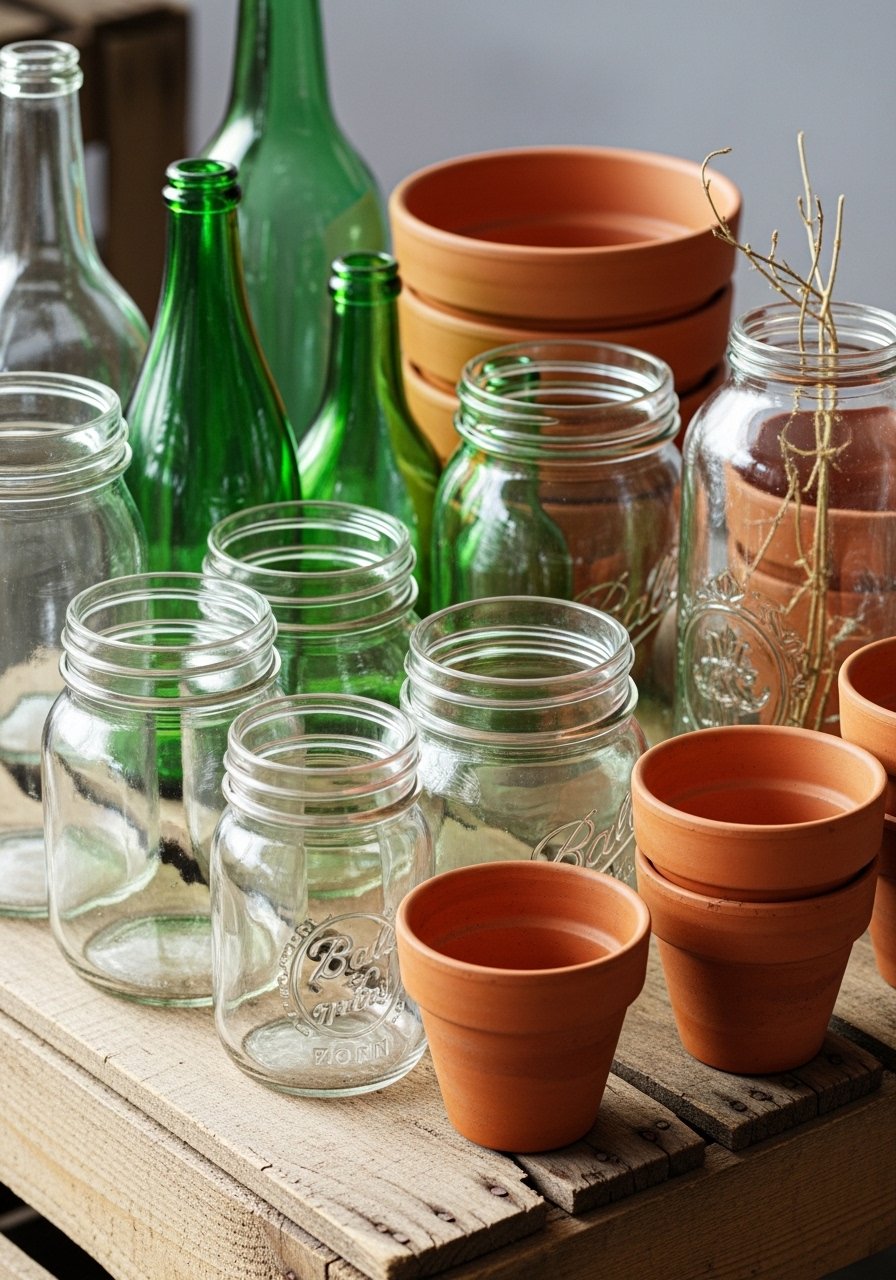
I start by pulling every small container from the house: jars, bottles, small pots. I lay them out and edit to three or four shapes that share a color or finish. That single decision makes the display read cohesive.
Visually, the space goes from flat to layered. People miss how important negative space is — less is usually more. Avoid using every pattern you own; too many finishes makes the group feel busy, not intentional.
Step 2: Build a simple focal point at ground level
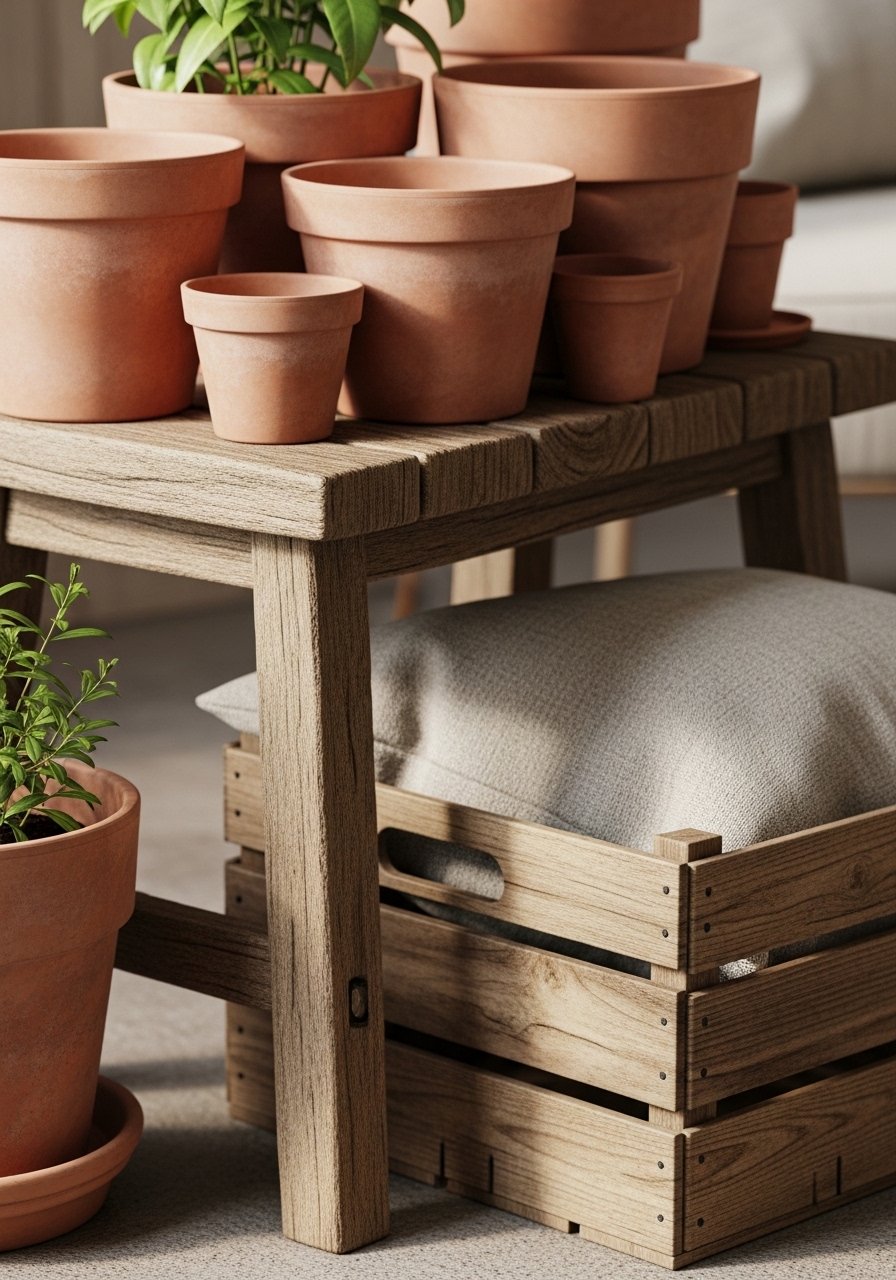
I anchor the corner with one low, solid object — a stool, a crate, or a stack of books — and arrange terracotta pots on and around it. A stable base gives the eye a place to rest and lets taller pieces feel anchored.
The visual change is immediate: the corner reads like a vignette. One insight I learned is to stagger heights in odd numbers. Small mistake to avoid: placing everything flush to the wall. Pull pieces forward an inch or two so they breathe.
Step 3: Add vertical interest with repurposed frames and hangers
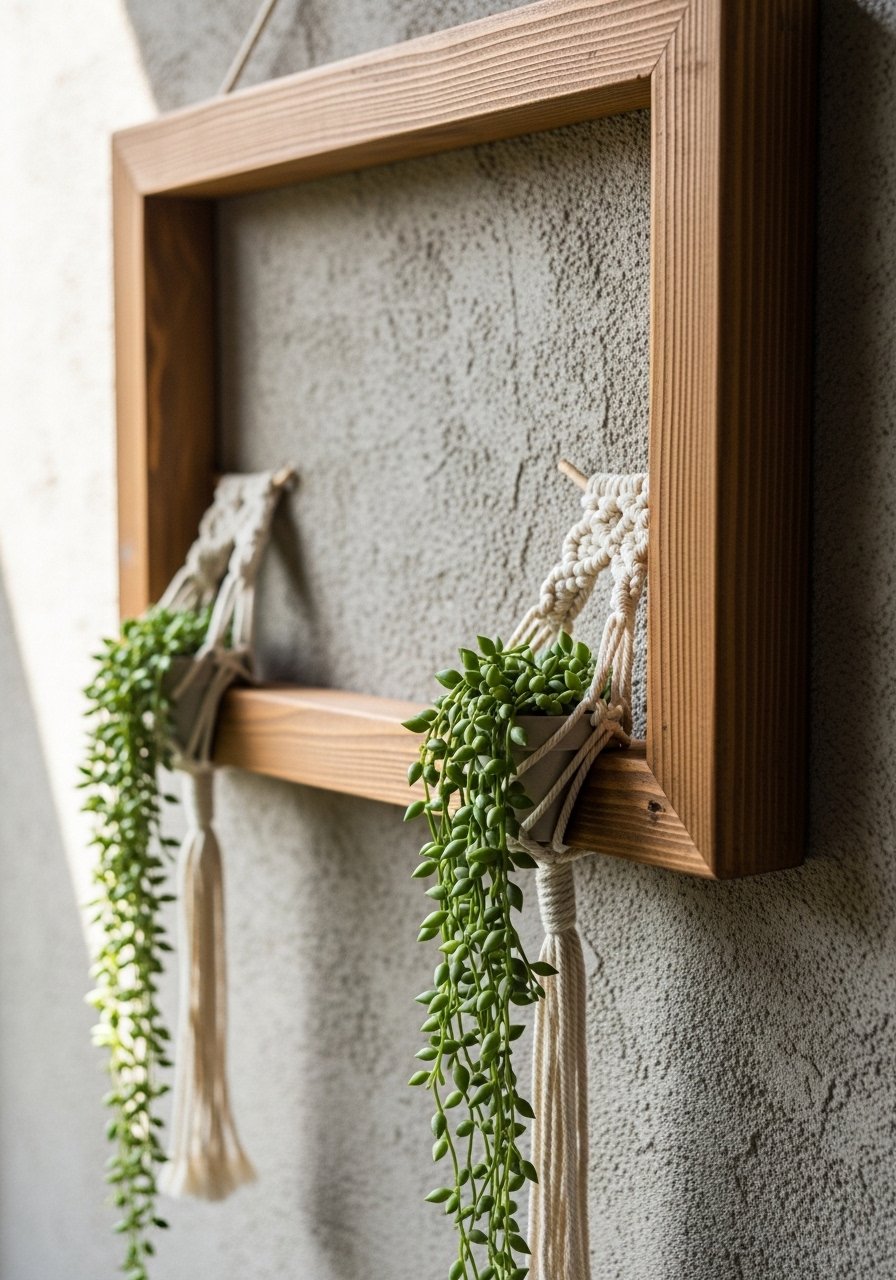
I turn an old picture frame into a backdrop for a small hanging cluster. I hang macramé plant holders at varying heights inside the frame and add a trailing plant or two. It reads like art, not clutter.
This creates a focal plane above the low grouping and makes the whole area feel intentional. People often miss the power of framing — a single frame unifies different objects. Don’t cram too many pots into the frame; it should feel airy, not crowded.
Step 4: Layer light and texture for evening use
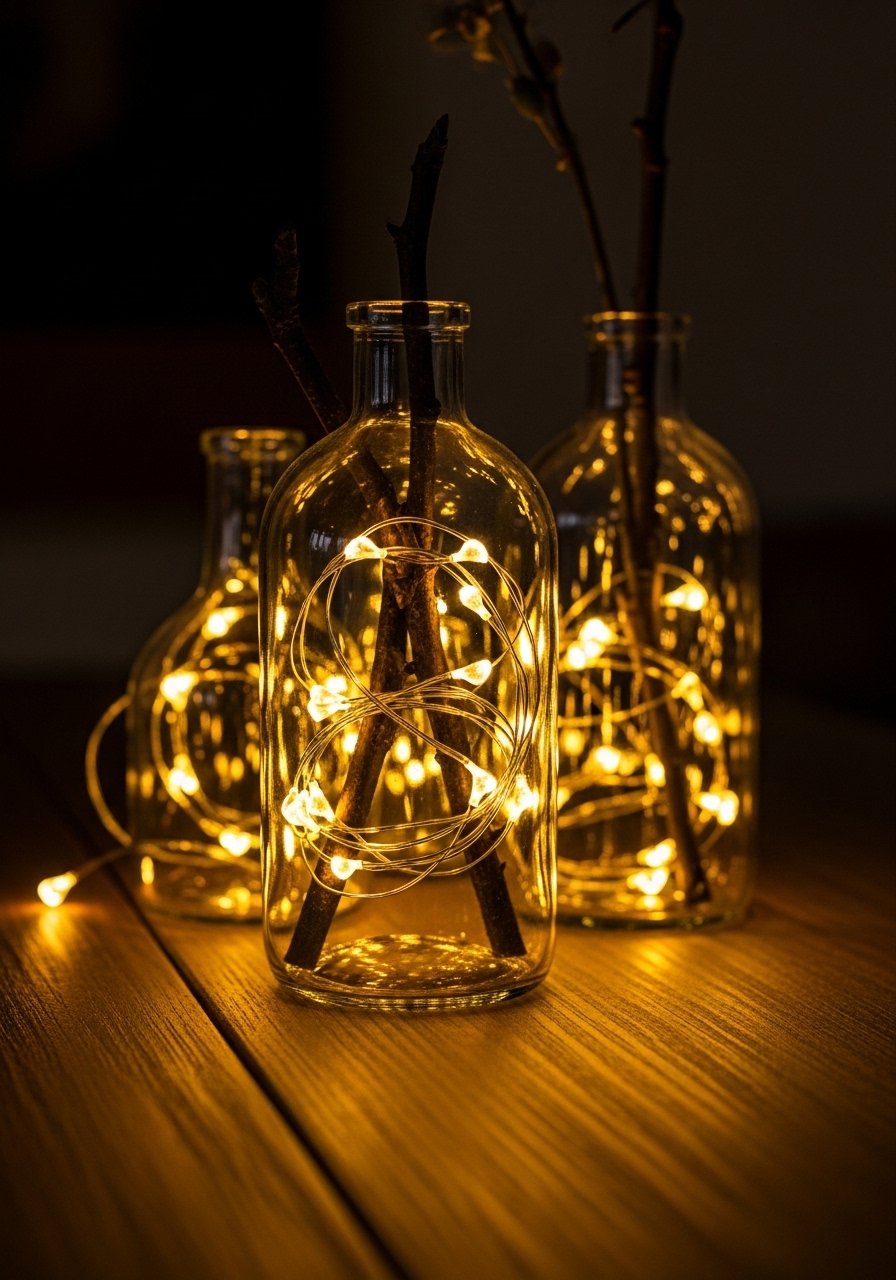
I weave solar string lights through the arrangement and drop a string into a mason jar or bottle for a soft glow. Warm light changes how a garden reads at dusk — it goes from functional to comfortable.
Visually, light blurs edges and makes the space feel lived-in. One insight: warm, low light is more forgiving than bright overhead bulbs. Avoid competing light sources with wildly different colors; mixed temperatures make the scene feel disjointed.
Step 5: Finish with one repeated color and a cozy seat
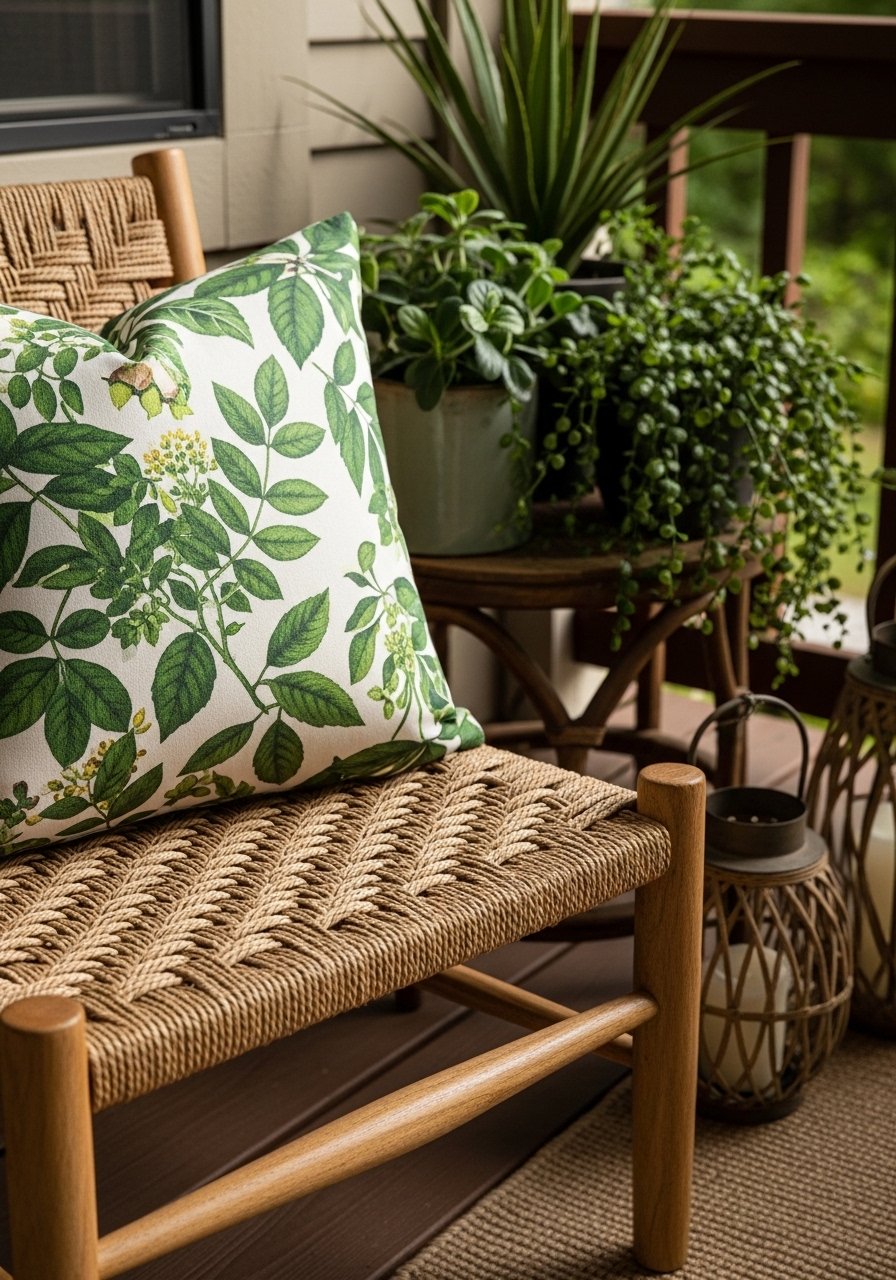
I add a single repeated color across a pillow, a painted pot, or a ribbon tied around a bottle. Repetition ties disparate objects together. Then I place one comfortable seat or cushion nearby to invite lingering.
The last visual change is cohesion — the corner stops feeling like random finds and starts to read as a little room. People often over-accessorize; a single, intentional pillow is better than a pile of mismatched cushions. Don’t add too many small trinkets that compete with the plants.
Common mistakes and how I avoid them
I see the same errors often: too many finishes, no anchor, and ignoring scale. I avoid them by editing down to a few materials and one color repeat.
- Too many shiny things: pick one metallic or glass accent.
- No height: always include at least one item that lifts the eye (hanger, frame, tall bottle).
- Wrong scale: tiny pots lost against large furniture — scale everything to the corner.
I make changes slowly. If something feels off, I remove it and look again.
Adapting this for small spaces or tight budgets
Small balcony? I focus on verticals. Hang a single macramé hanger and lean a frame against the railing. Use mason jars as herb planters on a narrow shelf.
On a budget, I reuse what I already own:
- Jars become vases.
- Old frames become living art.
- Strings of solar lights cost under $20 and change evening mood instantly.
I prefer one or two thoughtful pieces over a pile of cheap decor. It reads calmer and lasts longer.
Mixing this look with what you already own
I don’t rip everything out to match a style. Instead, I slot these DIY elements next to existing pieces.
- If your home leans organic modern, keep finishes matte and colors neutral.
- For cottagecore, lean into worn wood, florals, and green glass.
- For boho, add a textured pillow and a woven tray.
I ask: what repeats? Repeat a color, material, or texture twice and the rest falls into place.
Final Thoughts
Start with one small corner and a mason jar or two. It’s low-risk and shows results fast. Tweak the arrangement over a week — plants and light reveal what needs to shift.
If you want a simple first buy, try a set of solar string lights. They make even humble collections read intentional and cozy.