A real, lived-in living room showing the final result of DIY floral decor for home. Natural daylight, soft shadows, layered textures. The space feels intentional but not staged. No text overlay. Wide angle that shows balance and flow.
I’d stare at the mantel and feel something missing. No matter how many pillows or candles I added, the room still looked…unfinished and a bit flat.
Fresh florals are expensive and store bouquets often look too perfect. So I started making simple floral arrangements and small florals for corners. They warm a room without feeling fussy.
How to Make DIY Floral Decor for Home
You’ll learn how I pick stems, pair vessels, and place florals so a corner reads intentional, not crowded. It’s simple, approachable, and fits organic modern or lived-in styles. The goal: small arrangements that make a room feel warm and balanced.
What You'll Need
- Small glass bud vases, set of 3, clear, 6" (~$15–30)
- Ceramic cylinder vase in matte white, 10" (~$30–60)
- Silk peony stems, set of 6, blush (~$18–35)
- Dried eucalyptus garland, 6ft, sage (~$12–25)
- Pampas grass stems, natural, bundle of 5, 24" (~$20–40)
- Woven seagrass basket planter, medium, 10" (~$25–50)
- Mini wreath, preserved boxwood, 12" (~$18–35)
- Rattan tray, oval, 16×10" (~$20–45)
Step 1: Choose two or three complementary stems
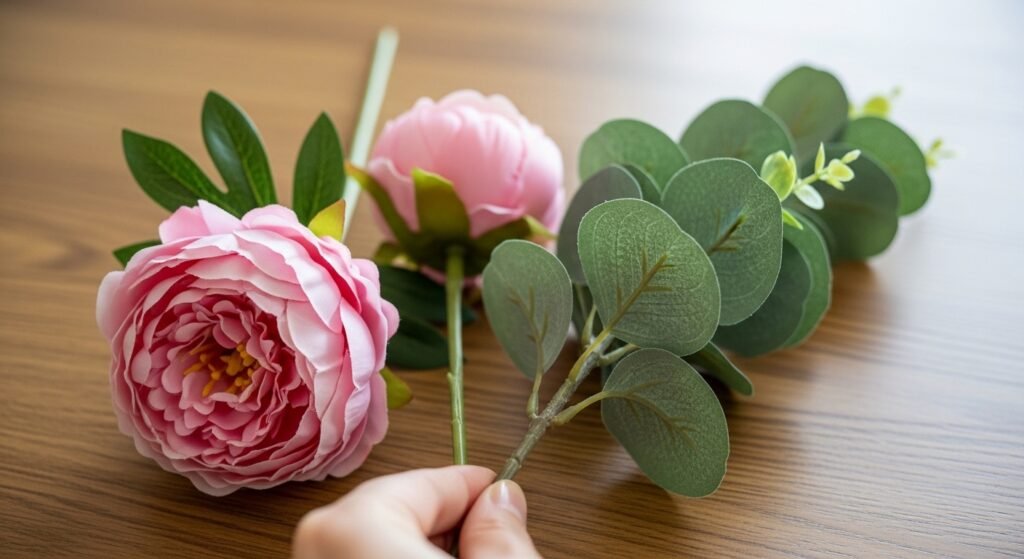
I start by limiting my palette. Two contrasting stem types—one with a flower and one leafy or wispy—read as intentional. For example, a blush peony with dried eucalyptus gives soft color and movement. It keeps things calm and not fussy.
People often forget scale. Pick stems that vary in height and texture. Mistake to avoid: grabbing every color. Too many hues makes the arrangement feel busy, not balanced.
Step 2: Pick a vessel that sets the mood
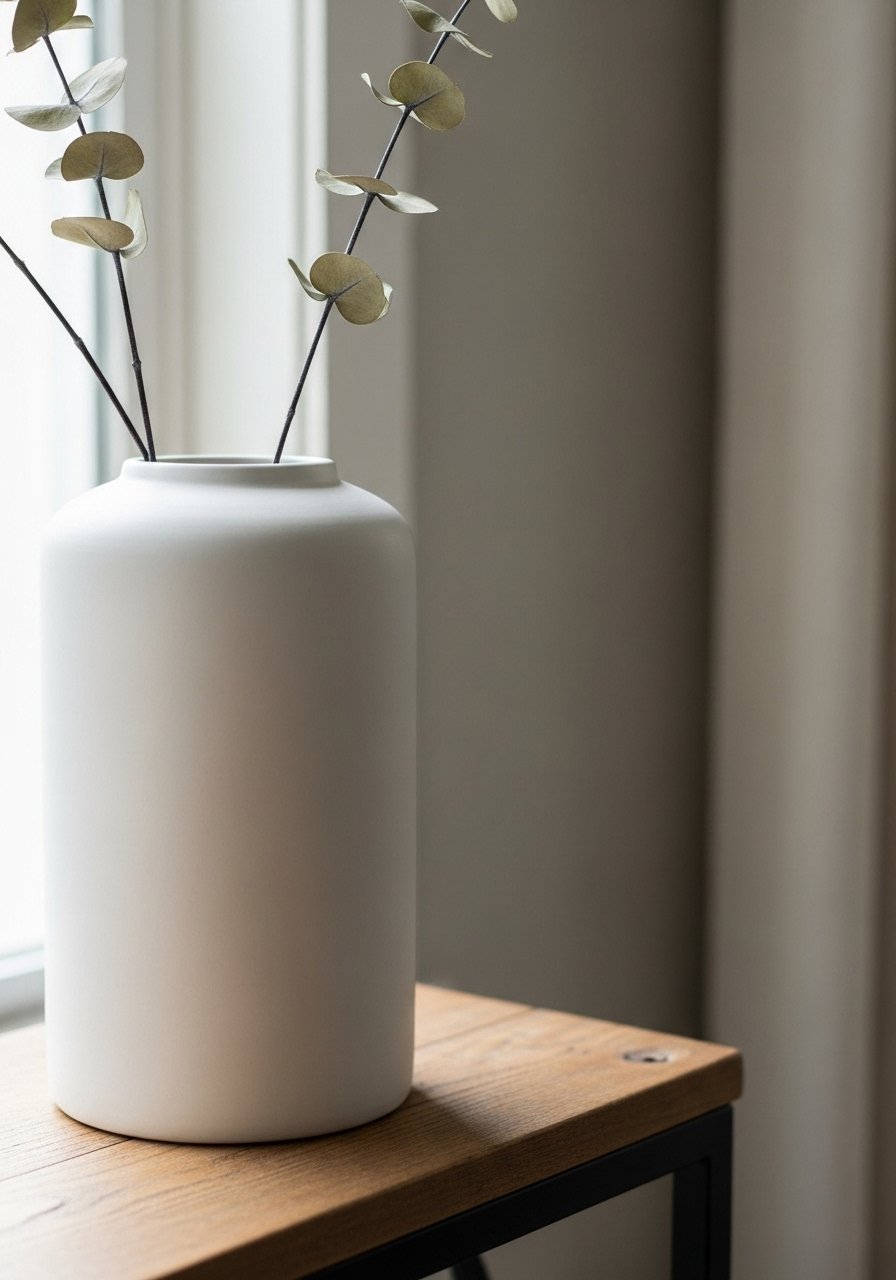
The vessel decides the arrangement’s personality. A low, matte ceramic vase feels organic modern; a set of clear bud vases reads casual and collected. I consider negative space—the empty area around stems—so the vase isn’t just full of flowers but breathing within the room.
Insight people miss: the vessel’s visual weight matters as much as stem size. Mistake to avoid: using a vase that’s too large, which swallows delicate stems and makes the whole display feel clumsy.
Step 3: Edit, trim, and arrange with rhythm
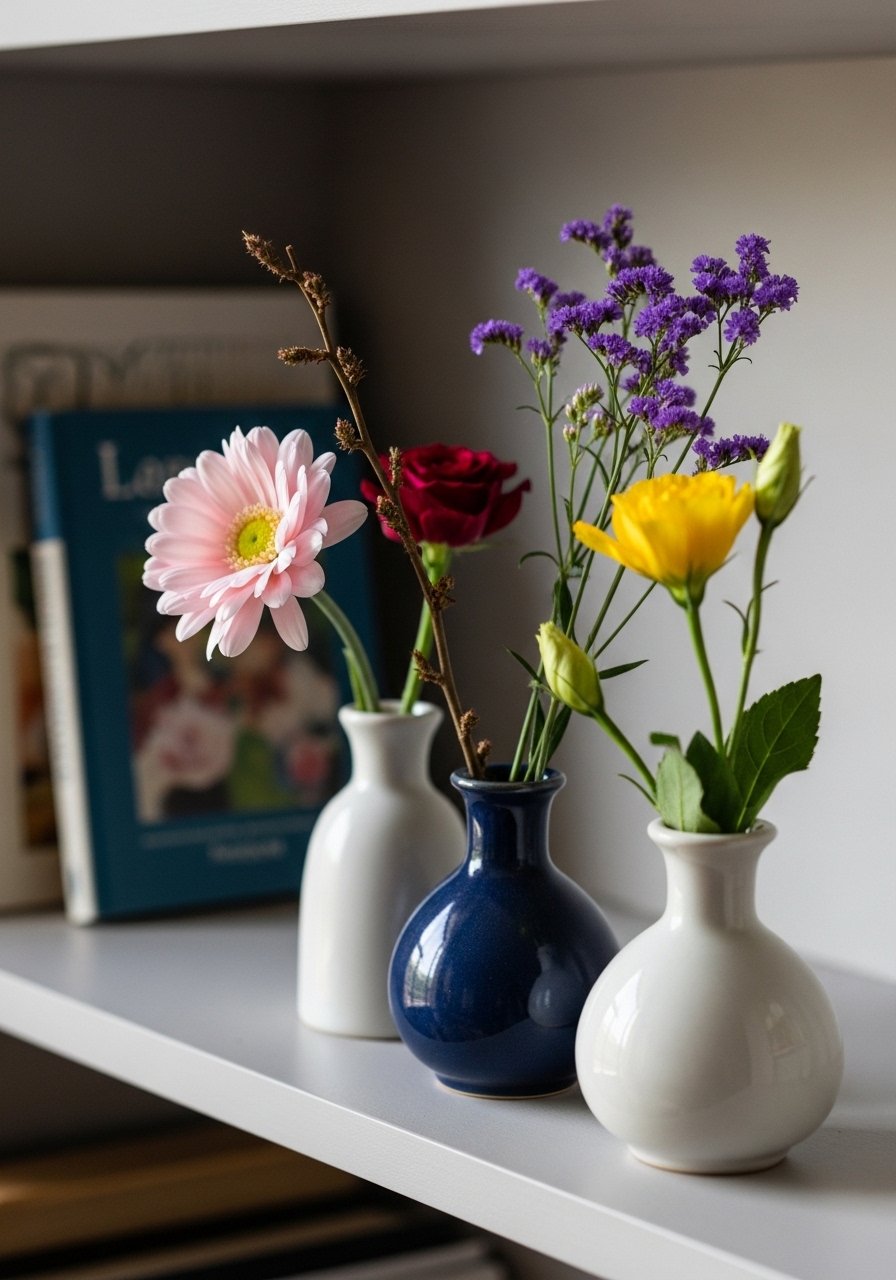
I trim stems to different lengths and place them in odd-numbered groups—three bud vases, two taller stems in one vessel. This creates rhythm and natural asymmetry. Visually, you want a gentle curve or diagonal that leads the eye, not a straight line.
People usually overfill. One insight: empty space within the arrangement makes it feel lighter. Mistake to avoid: cutting all stems the same height. That flattens the composition.
Step 4: Anchor florals to room balance
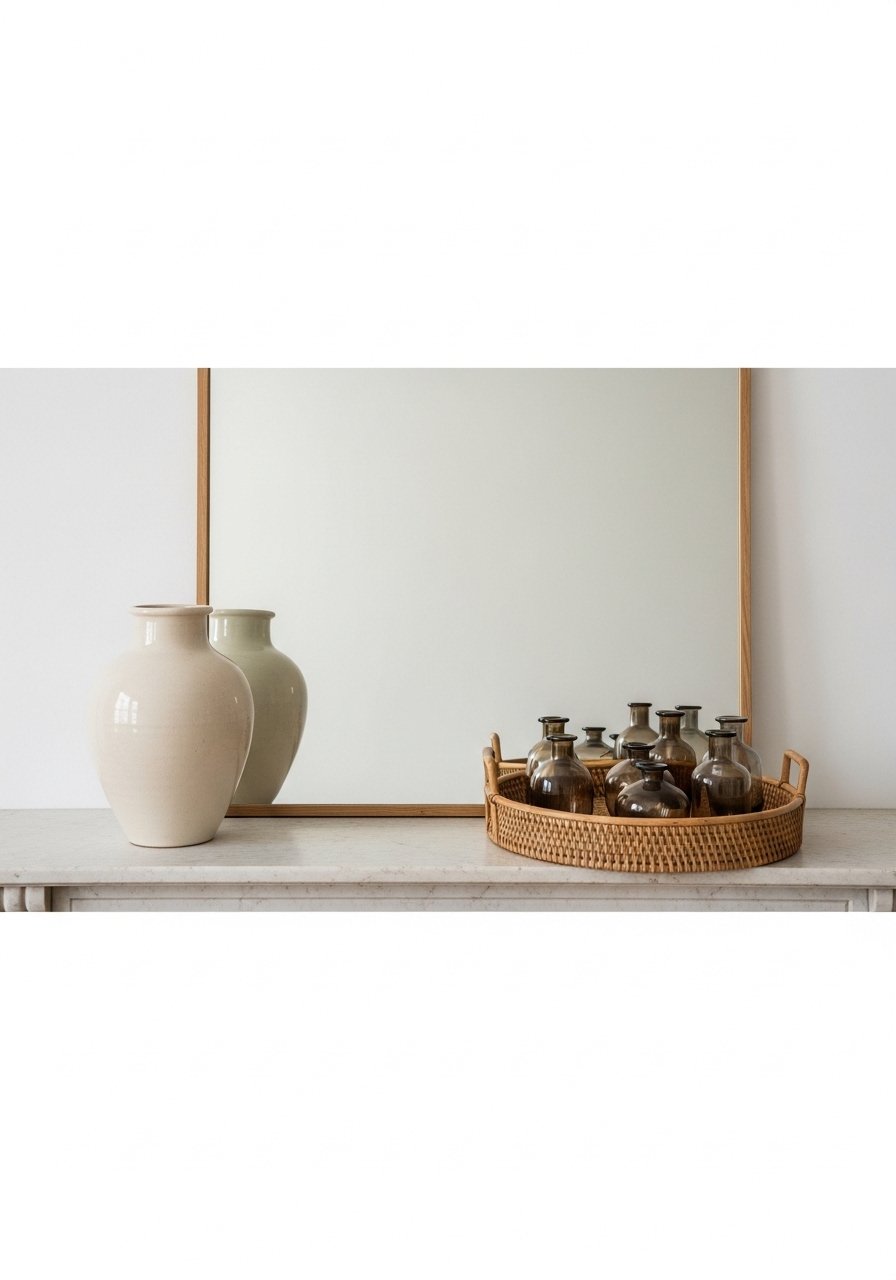
Placement is the quiet part of decorating. I use florals to fix awkward gaps: a low vase fills a coffee table, a taller stem crowns a console, and a mini wreath softens a blank wall. I think in pairs—if one side of a mantel has height, counter it with a horizontal element on the other.
People forget sightlines. Mistake to avoid: placing an arrangement where it blocks views or the mirror’s light. Always step back and look from the doorway.
Step 5: Layer textures and refresh by season
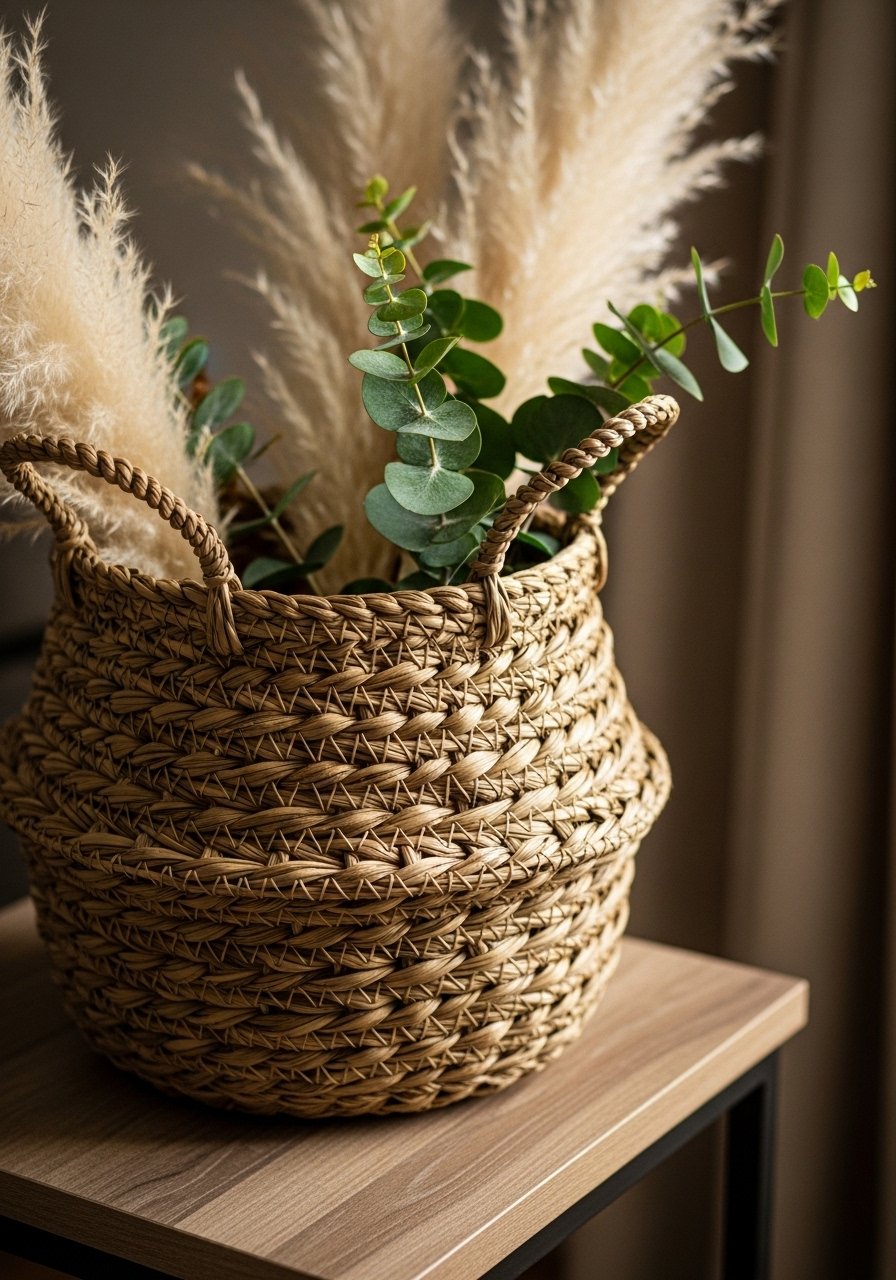
I mix dried and silk stems for longevity and texture—pampas for softness, eucalyptus for structure. Seasonal swaps are easy: swap peonies for ranunculus in spring or add warm-toned dried grasses in fall. Small changes make a big impact without a full redo.
An insight many miss: combine fresh-sounding textures with something preserved to keep the look alive longer. Mistake to avoid: using only one texture (all fluffy or all rigid)—it reads flat.
Common mistakes I see
I mess up sometimes too, and these are the things I correct quickly.
- Too many colors at once. Stick to a subtle palette.
- Overcrowding a vase. Give stems room to breathe.
- Forgetting scale. Test arrangements from different distances.
When I walk into a room, I check the florals first. If they feel off, the rest of the styling often follows.
Adapting for small spaces and budgets
You don’t need a big budget or a lot of room to make florals matter.
- Use single stems in tiny bud vases on windowsills or bathroom shelves.
- Repeat one economical stem type across the house for cohesion, instead of buying expensive bouquets.
- Swap stems seasonally rather than replacing entire displays.
I often start with a set of inexpensive stems and reuse vessels I already own. It reads collected, not expensive.
Mixing florals with what you already own
I treat florals as another layer—like a throw pillow or a piece of art.
Place a vase next to a stack of books, or nest a bud vase inside a rattan tray with a candle. Match the arrangement’s mood to the room: neutral and textured for organic modern, brighter and looser for casual spaces.
Bulleted ideas:
- Pair a matte white vase with natural linen for a calm look.
- Use a mini wreath above a console instead of a painting for a seasonal touch.
Final Thoughts
Start small—one vase, one shelf. I promise it’s easier than it looks. Floral decor is about feeling, not perfection. Swap a stem or move a vase, and you’ll notice the room breathe differently. A single peony in a clear bud vase is a low-cost, low-commitment place to begin.