

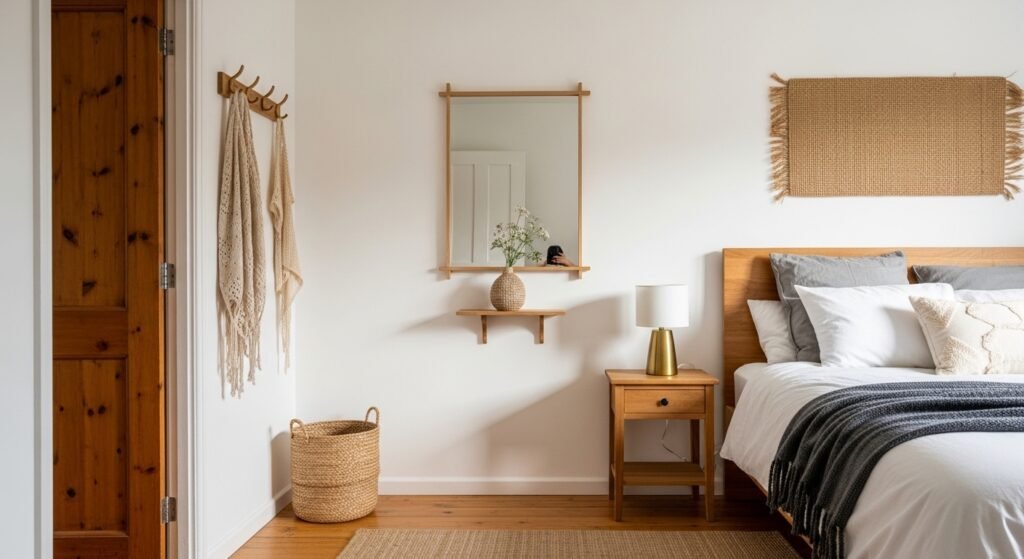
My bathroom mirror always felt like a bland hole in the wall. I tried towels, plants, and frames, and nothing clicked. Everything looked fussy or unfinished.
I spent a weekend experimenting with simple additions. I learned which tweaks make a mirror look intentional. Small changes give a room more personality without a big project.
I've noticed that the easiest way to make a mirror feel finished is to focus on proportion and placement. You will end up with a cleaner, more modern look that fits quiet luxury or organic modern spaces. It works in under an hour once you have the pieces together.
What You'll Need
- Peel-and-stick mirror frame kit, 1.5-inch trim ($15 to 30). I use this when I want a framed look without carpentry
- Brass corner protectors, set of 4 ($8 to 18). Small detail that reads finished up close
- Faux eucalyptus garland, 6-foot ($12 to 25). Easy to bend into a half-wreath
- Natural jute rope, 50-foot ($8 to 15). Cheap, tactile, and great for asymmetric wraps
- Battery-powered warm white LED strip, 6-foot ($12 to 30). Adds glow without wiring
- Gold leaf kit, small ($10 to 20). Use sparingly on frame edges
- Felt pads for mirror backing ($3 to 8). Prevents scuffs and quiets the mirror against the wall
- Heavy-duty picture hanging strips, 75-pound ($10 to 20). Keeps a mirror secure, renters friendly
Step 1: Measure the mirror and pick a proportion that feels balanced
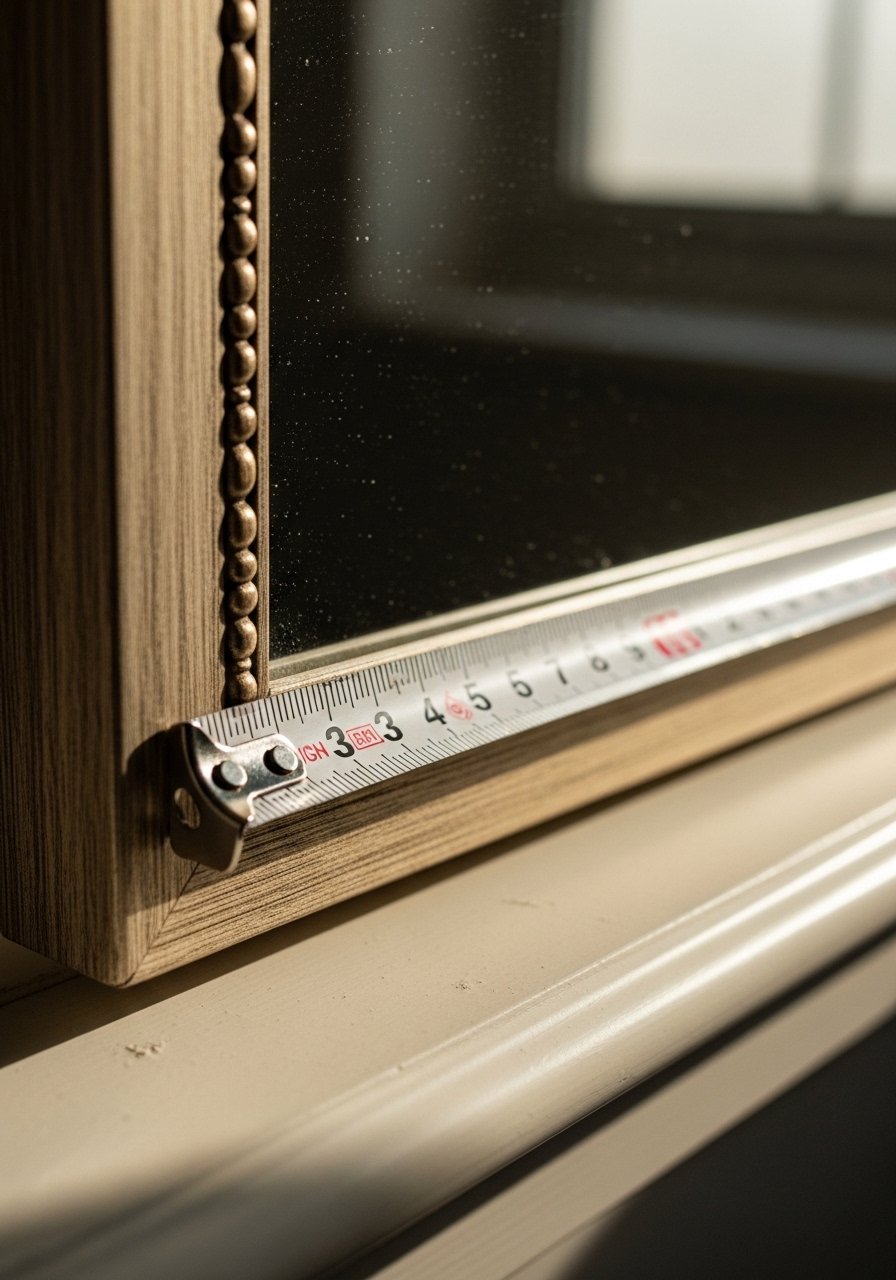
Start by measuring the mirror edge to decide how wide a trim or ribbon should be. I aim for a frame that is 6 to 8 percent of the mirror width. For a 24-inch mirror, that means a 1.5-inch trim looks right. The frame should be visible, not bulky. Too wide and the mirror loses its reflective presence. Too skinny and it reads like an afterthought.
People often pick either tiny trim or huge molding. Both can feel off. The right proportion keeps the mirror looking like it belongs to the room. Avoid guessing. Measure once. Re-check the visual with a mock-up piece placed temporarily.
Step 2: Add the frame or edge detail for structure
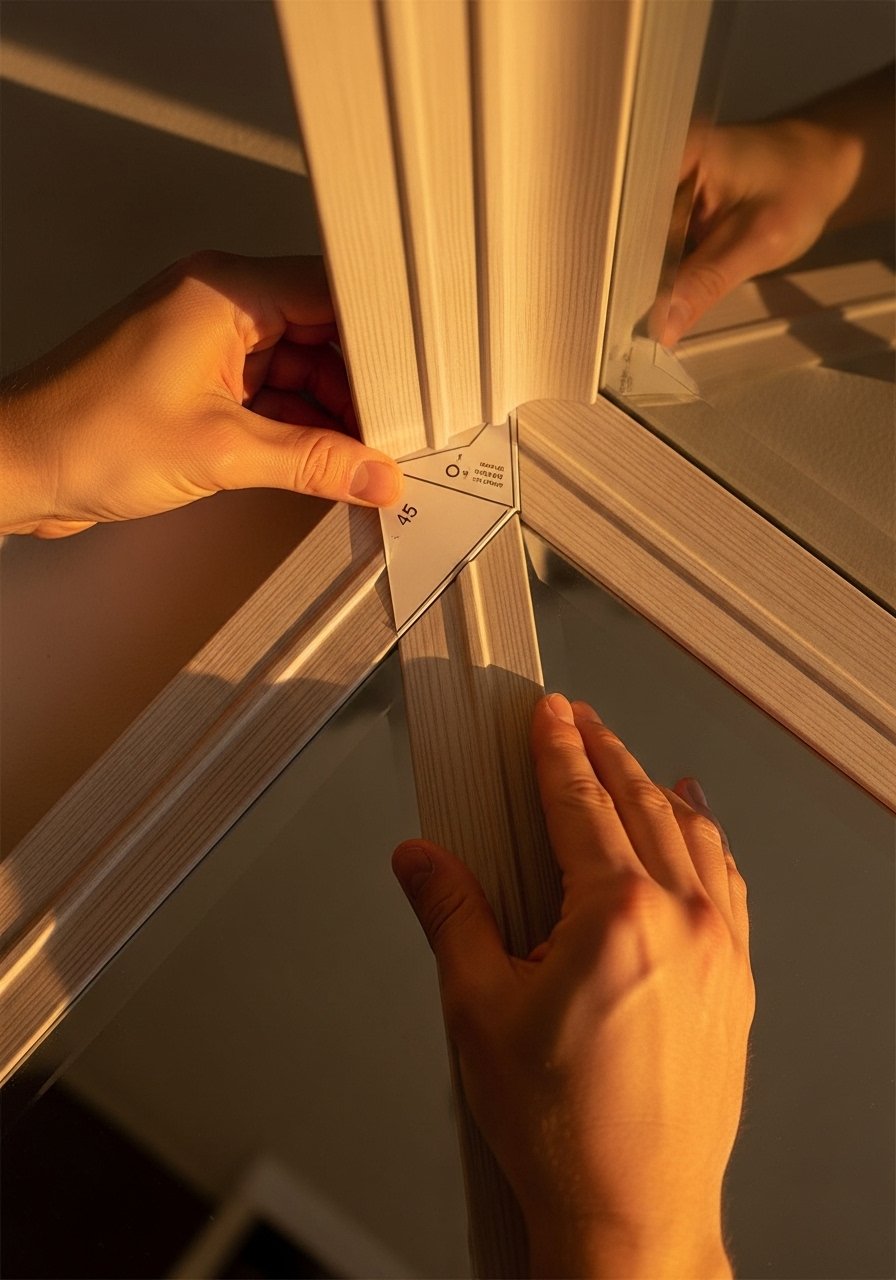
Apply a thin stick-on frame or use brass corner protectors to define the mirror. I like peel-and-stick moulding when the wall is flat. It gives a clean architectural line without heavy work. When I want a subtler touch, I add brass corners only. The visual change here is immediate. The mirror stops feeling like a hole and becomes an object.
A common mistake is lining the trim exactly on the glass edge. Leave 1 to 2 millimeters of reveal for shadow. That tiny gap keeps the frame from looking glued on. If your wall surface is uneven, use felt pads to even out pressure points before fixing the frame.
Step 3: Introduce an asymmetrical accent for personality
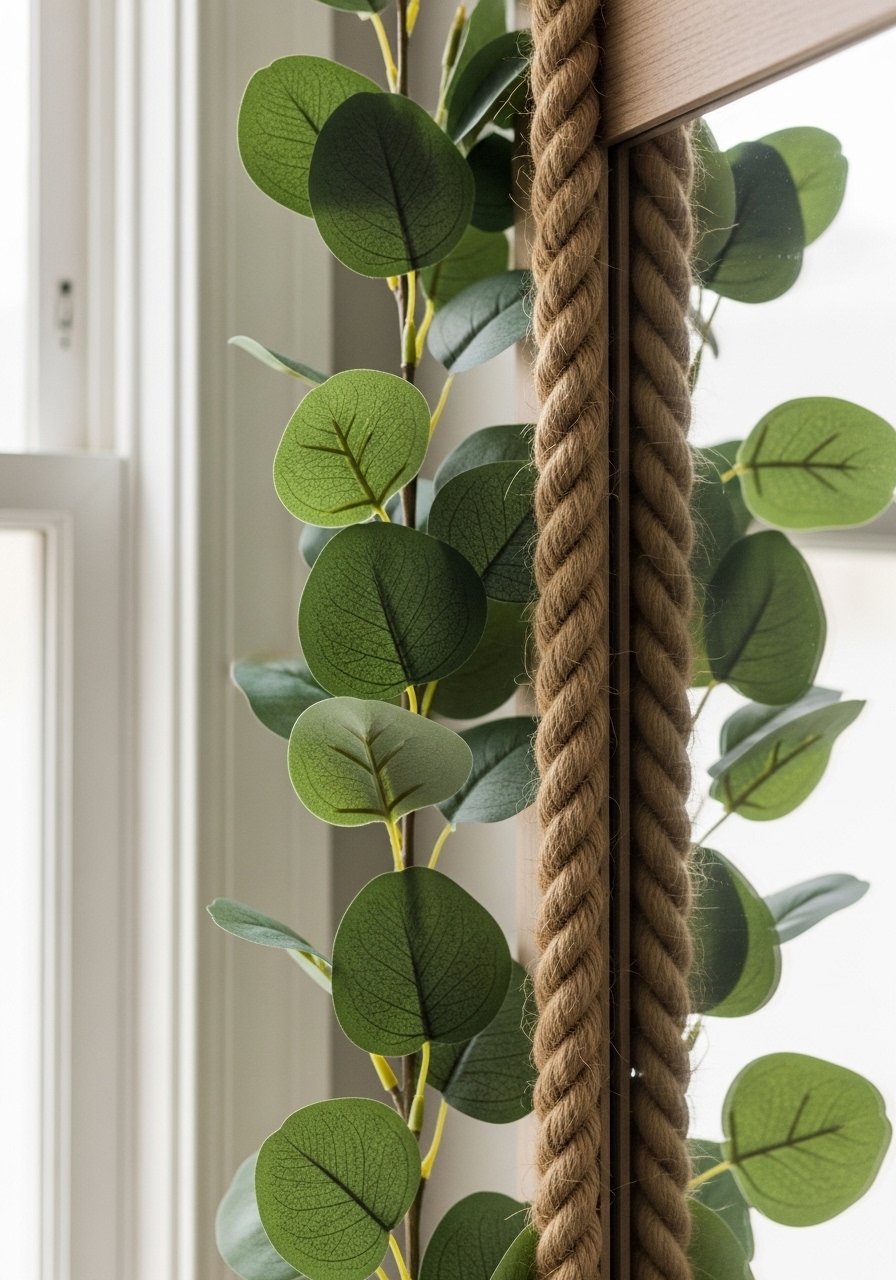
This is where the mirror starts to feel styled. I usually drape a 18-24 inch length of faux eucalyptus over one corner and secure it so the greenery covers about one third of the perimeter. The imbalance makes the whole mirror read as intentional. It adds softness against the hard glass and pairs well with a wood or brass frame.
People try to decorate every inch. That looks cluttered. One side decorated, one side clean, is the trick. Avoid wrapping florals all the way around. You will hide the reflection and make the mirror too heavy visually. If you like symmetry, keep a repeat element opposite, but smaller.
Step 4: Add subtle light to change the mood
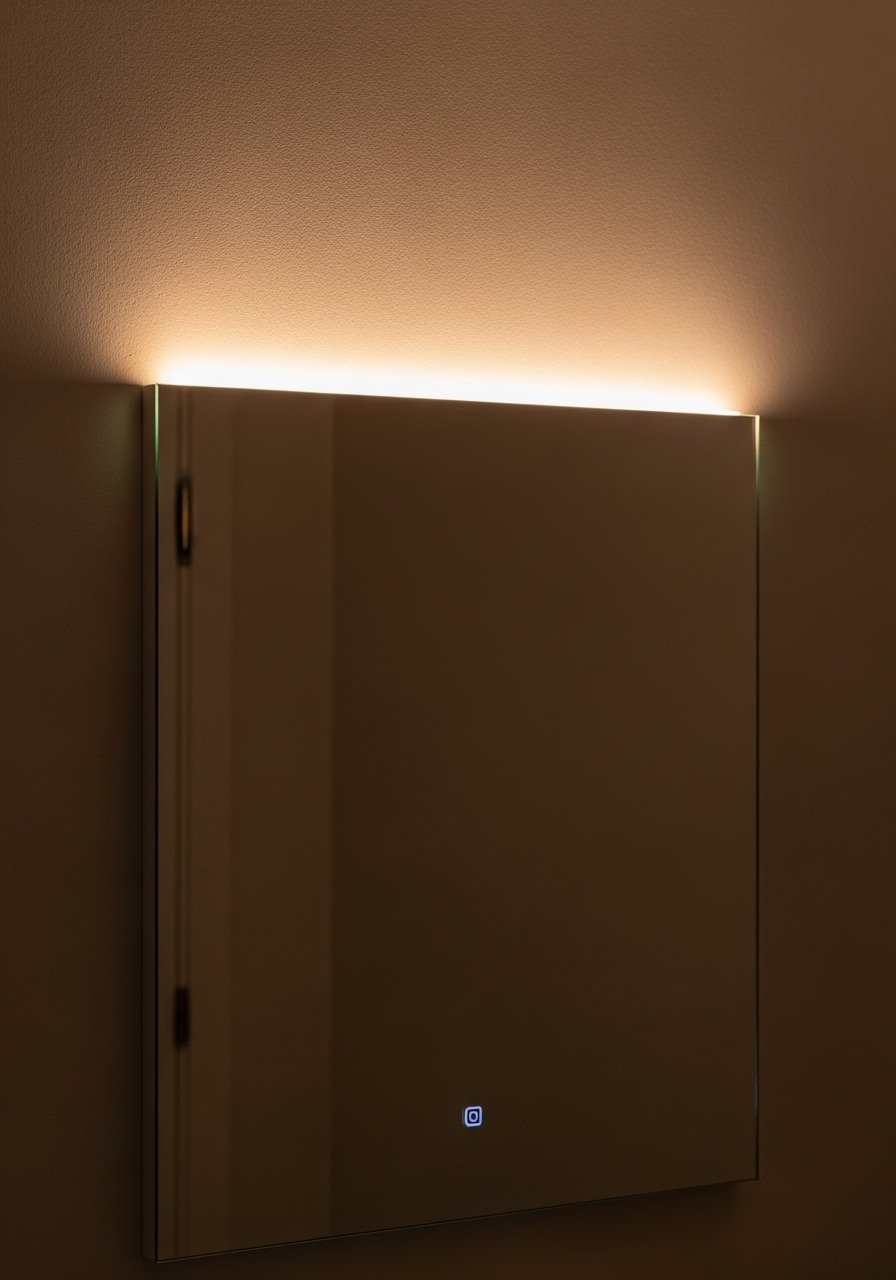
Lighting alters the mirror's effect more than any trim. I hide a battery LED strip behind the top edge for warm, even glow. Mounted this way, the mirror becomes a soft focal point. The reflection gains depth. Use warm white instead of cool white to keep skin tones flattering in bathrooms and bedrooms.
A tempting move is to choose bright, cool lights to highlight the mirror. That makes the space feel clinical. Instead, aim for a glow that reads like indirect daylight. Test the placement for glare. If the strip is visible from seating positions, reposition it higher or add a thin trim to conceal the source.
Step 5: Anchor the mirror in the room and maintain balance
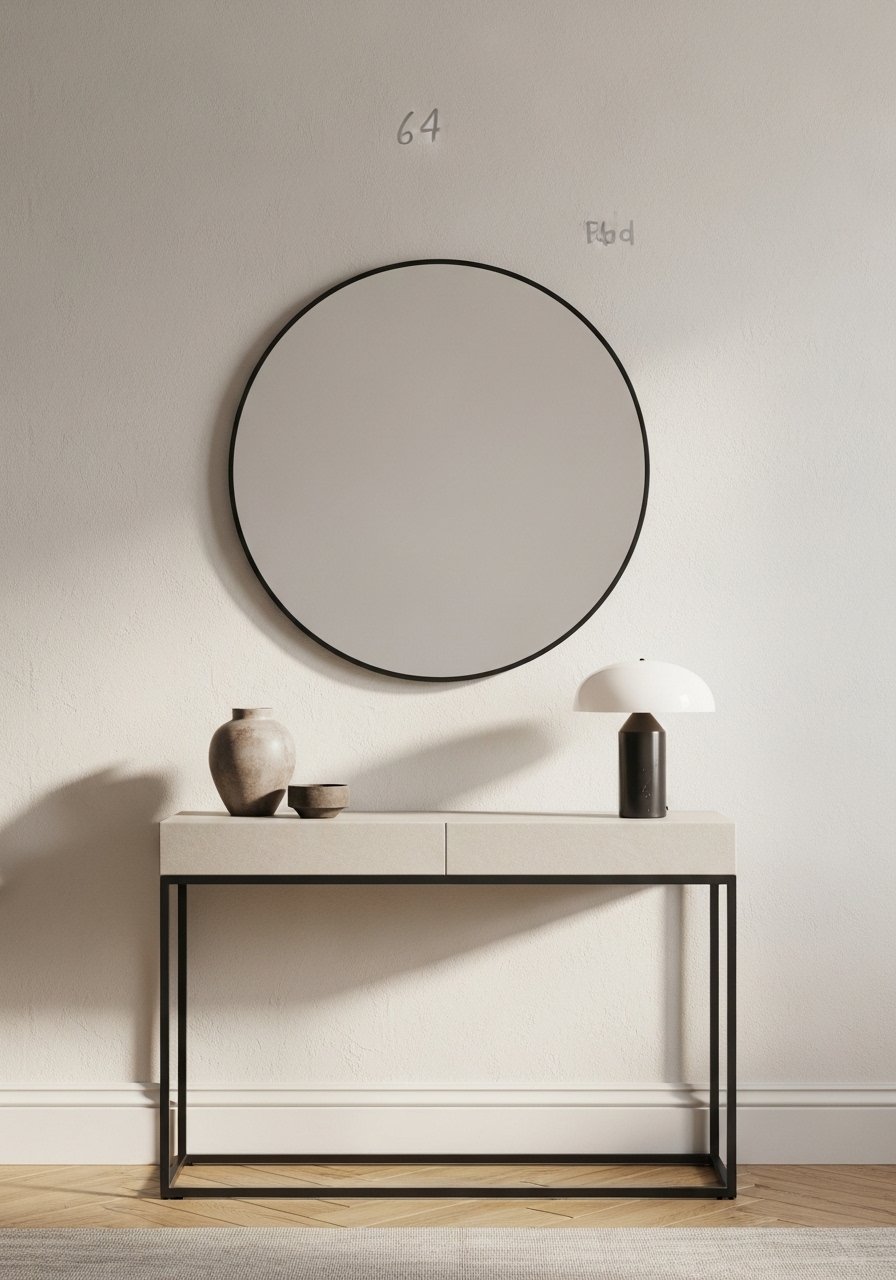
Hang the mirror so the center sits around 60 to 65 inches from the floor for average sightlines. I pair the mirror with a shelf or a single narrow table below to ground it. The visual change is the mirror reads as part of a vignette rather than floating. Keep the objects under the mirror low in height so the mirror can still reflect the room.
A common error is hanging the mirror too high above furniture. That makes the wall look disjointed. If your ceilings are tall, lower the mirror slightly to maintain human scale. Use picture hanging strips for a renter-friendly fix that still keeps everything aligned and secure.
Why Mirrors Often Still Look Unfinished
I keep seeing mirrors that are sized right but feel like they were an afterthought. The missing piece is context. A framed edge, a touch of greenery, and controlled lighting create cohesion. Small surface-level fixes do not work if the surrounding elements are ignored.
- Check the mirror proportion to nearby furniture. A mirror above a console should be roughly two-thirds the width of the console.
- Consider materials. Brass corners read classic. Jute rope leans casual. Match the finish to the room.
- Think about reflection. Avoid placing a mirror where it will reflect clutter. The purpose is to add depth, not double the mess.
Making This Work in Small Bathrooms or Narrow Halls
In tight spaces I prefer thin frames and vertical accents. A narrow mirror framed with a 1 to 1.5-inch trim keeps scale intact. I often add a 12- to 18-inch garland on one side rather than a full wreath. The trick is to avoid anything that reduces usable wall space.
- Use battery LED strips instead of plumbed fixtures to add light without electrical work
- Choose slim profile trims over chunky moulding in narrow halls
- Anchor the mirror with a slim shelf for soap or keys, not a bulky console
From what I’ve gathered, small rooms benefit from mirrors that extend light, not steal it. A thin frame and a single accent make a noticeable difference.
How to Mix This Look with What You Already Own
A friend asked me about mixing an updated mirror with older furniture. I suggested tying finishes together by repeating one material in three places. For example, use brass corner protectors, a brass lamp, and a small brass tray on the shelf. That repetition makes the mirror feel like it belongs.
If your style is modern, stick to slim metal trims and warm LEDs. If you favor organic modern, add jute rope and faux greenery. I switched to this approach six months ago and it makes older pieces read fresh. The mirror becomes a connector rather than a contrast.
Start with One Mirror
Pick the most visible mirror in your home and try one small change this weekend. Add a thin frame or a single strand of greenery. Test a warm LED strip for an hour to see how the light reads.
You will feel the difference quickly. Small, confident choices make mirrors look intentional and pull a room together.