

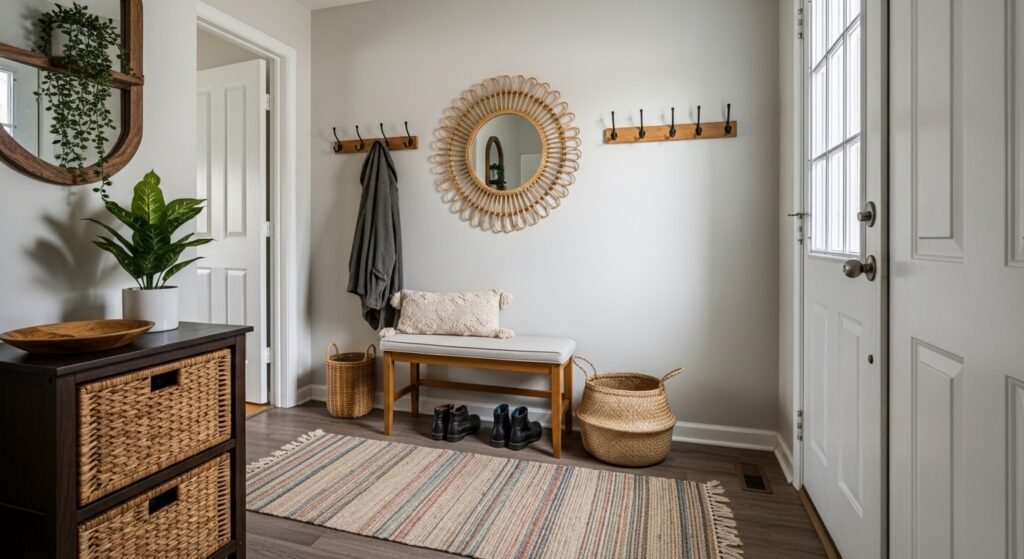
I always notice the entryway first. It’s where a house either welcomes you or leaves you wondering what to do with that awkward strip of wall. Mine used to feel cold and empty or just cluttered with shoes.
I learned to treat it like a small stage. A few deliberate pieces and one or two simple DIY touches changed how the whole home felt.
How to Decorate an Entryway with DIY Ideas
This will show you how to make an entryway feel intentional and easy to live with. I focus on balance, practical styling, and one or two handmade touches that make the space feel warm and worn-in. The result is an organic modern entry that actually invites you in.
What You'll Need
- Small solid wood console table, 36 in, oak (~$120–300)
- Round rattan mirror, 24 in (~$60–180)
- Flat-weave runner rug, 24×72, natural stripe (~$50–150)
- Upholstered bench with cushion, 36 in, bouclé cream (~$100–250)
- Woven seagrass basket, large (~$25–60)
- Ceramic catchall tray, matte white, 8×5 in (~$12–25)
- Table lamp, linen shade, small (~$30–80)
- Wall coat hooks set, matte black, 3-pack (~$15–35)
Step 1: Anchor the area with a slim console or bench
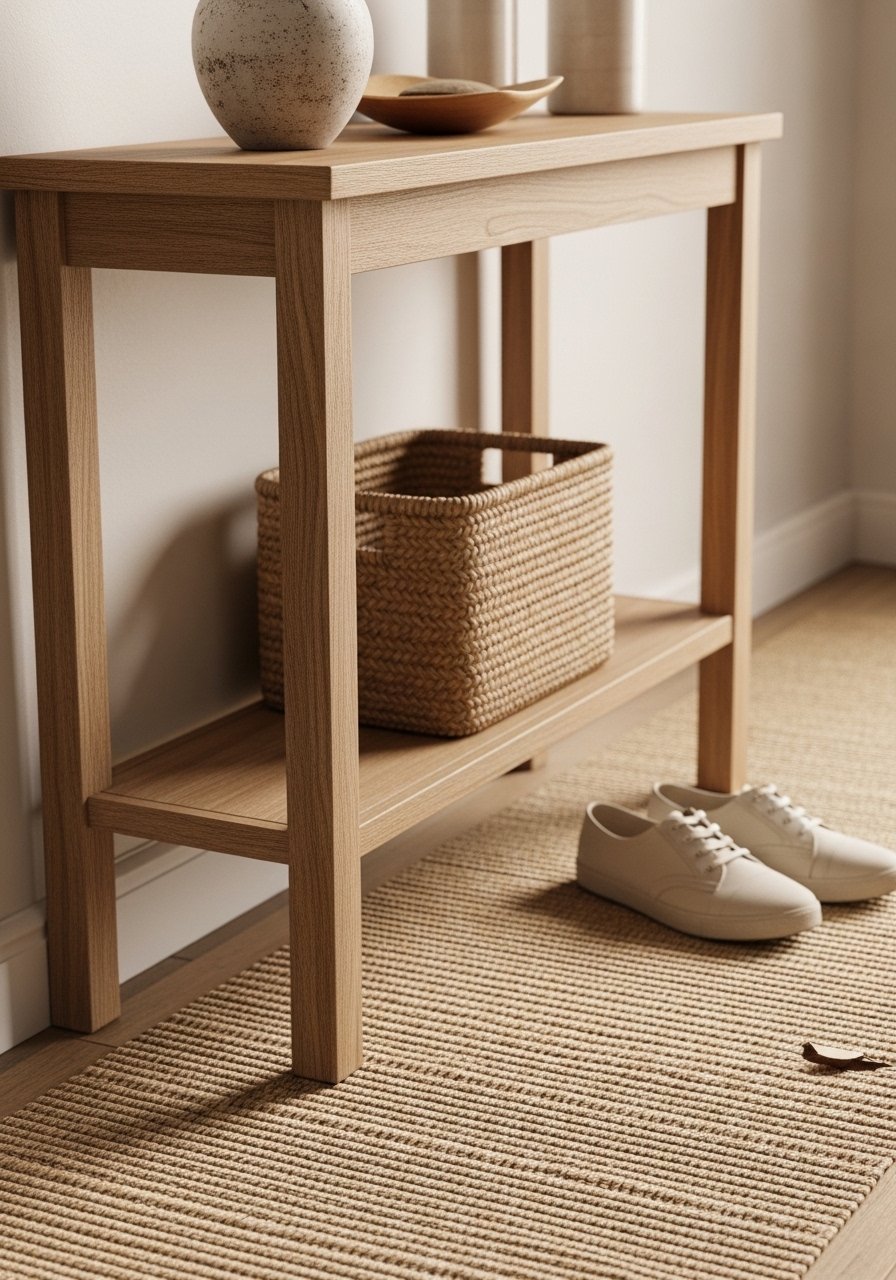
I start by choosing either a slim console or a bench depending on space. A console gives you surface height; a bench gives seating and grounds the area. The visual change is immediate—the wall no longer floats. People often miss scale: a too-wide console eats the walkway, a too-narrow one looks fussy. Avoid filling the entire width; leave breathing room on both sides so the entry feels balanced, not crowded.
Step 2: Hang a mirror at eye level to add depth
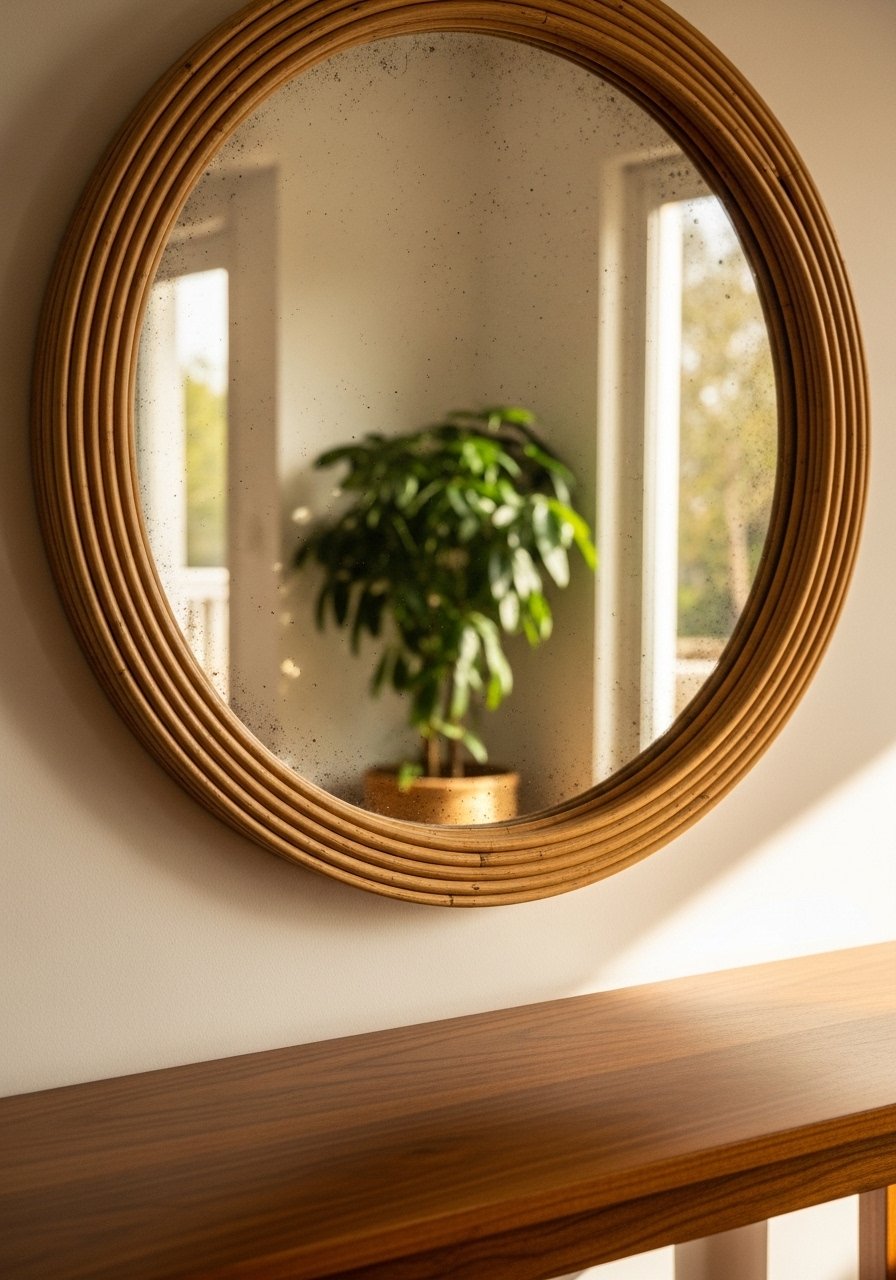
I always hang a round mirror centered over the console or bench. It pulls light in and makes the small space feel larger. The visual shift is from flat to layered. One insight: mirrors read best when their diameter is about half the width of the console. A common mistake is hanging it too high—then you lose the welcoming reflection. Aim so you can see your shoulders and face when standing at the doorway.
Step 3: Layer texture with a runner and soft accents
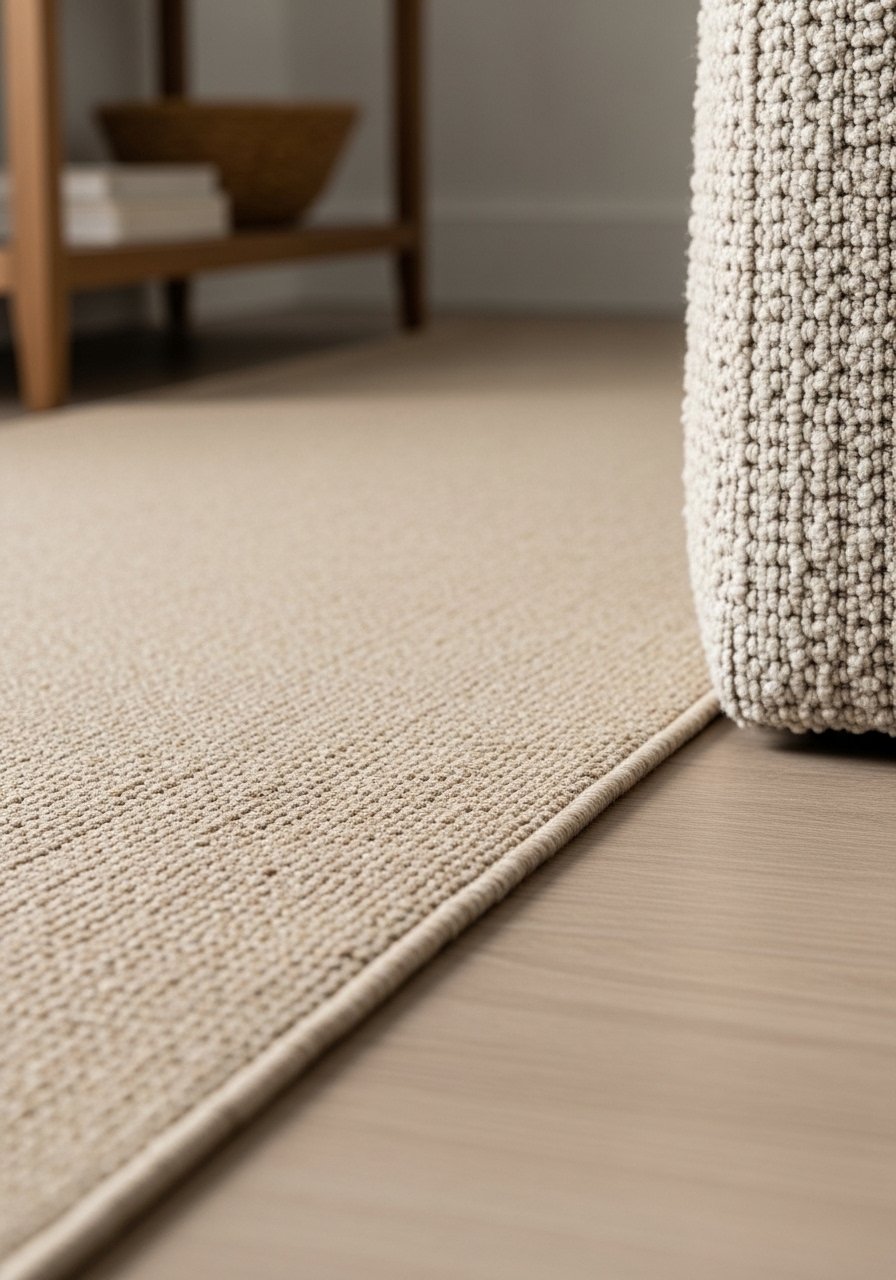
I place a runner that starts just inside the door to lead the eye inward. It anchors movement and adds softness underfoot. Visually, the space becomes warmer and more intentional. People often choose busy patterns that fight with shoe clutter; I stick to flat-weave, natural tones or subtle stripes. Don’t let the runner hang over the doorway or create a tripping edge—keep it secure and proportional to the walkway.
Step 4: Create a landing spot for keys and mail
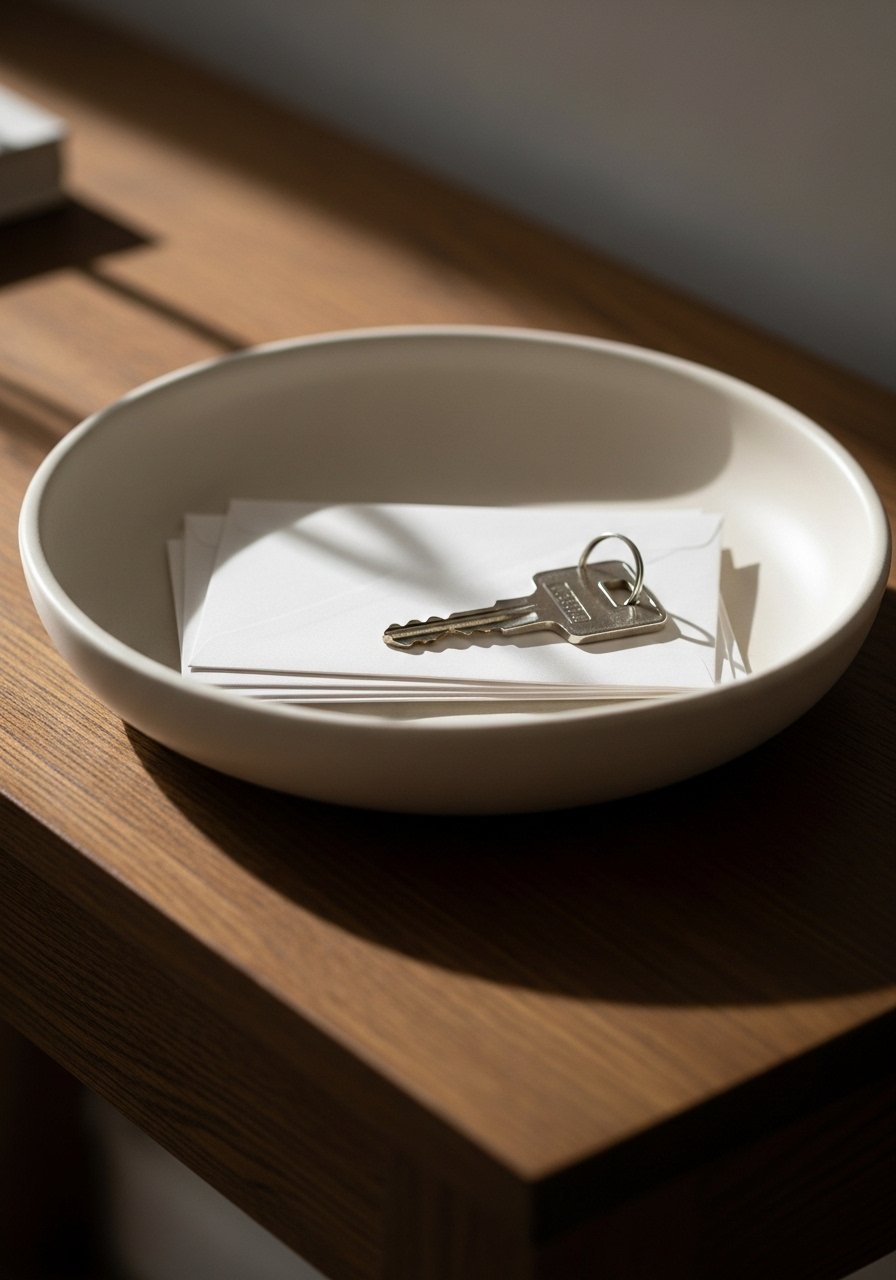
I always leave a small ceramic tray on the console for keys and loose mail. It’s a tiny detail that immediately reduces the “out of control” look. The visual effect is one of order: things have a home. One insight is to pair the tray with a small vertical element (a lamp or a slim vase) so the arrangement reads as styled, not sloppy. Don’t skimp on scale—tiny trays disappear; pick one proportional to your console.
Step 5: Add purposeful storage and a finished base
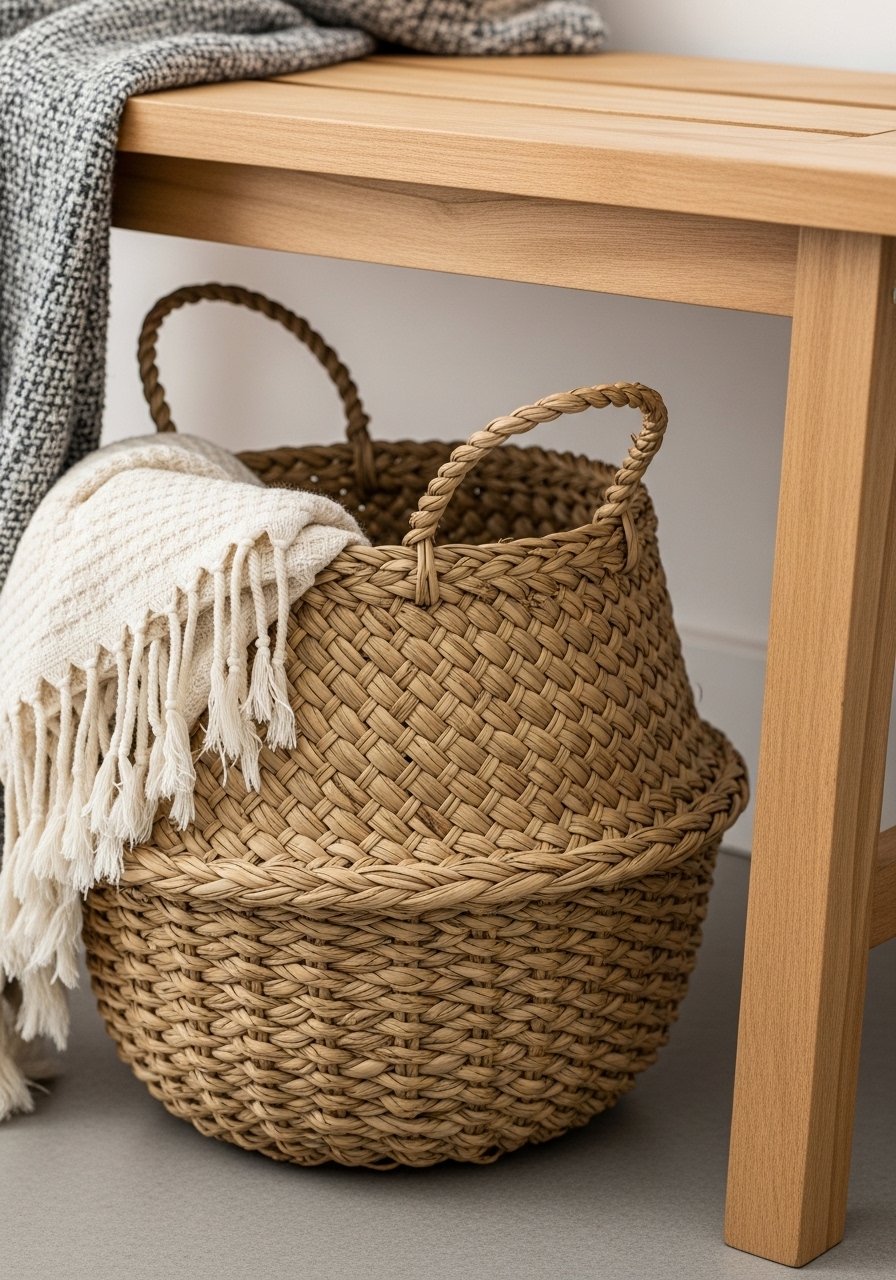
I tuck a woven basket under the console or beside the bench for shoes, umbrellas, or a seasonal throw. It finishes the floor plane and hides the bits you don’t want on view. Visually the entry reads calm and practical. A common insight: the basket should echo other textures in the space (rattan mirror, wooden table). Avoid making the basket the only storage option—combine it with a hook or small shelf so items don’t pile up on the surface.
Common mistakes I see and how I fix them
I often fix entries that feel "staged" or unusable. The two biggest mistakes are scale and lack of a landing place. If furniture is too big, it blocks flow. If there’s no tray or hooks, clutter builds.
Quick fixes I use:
- Swap a wide console for a slim one to reopen the path.
- Add a single hook near the door for a daily bag.
- Use one woven basket for shoes and one small tray for keys.
Adapting this look for small spaces or tight budgets
I work with tiny entries all the time. You can get the same feeling without big purchases. Choose one anchor piece (a bench or mirror) and make the rest by editing what you already have.
Budget tips:
- Use a thrifted mirror or repurpose an old frame with rattan tape.
- A runner in a neutral flat weave looks expensive but often costs $50–100.
- Swap a lamp for a tall candleholder for mood without more wiring.
Mixing styles and keeping the look lived-in
I like mixing organic modern with a touch of Japandi—clean lines, warm natural materials, and a soft textured bench. The key is restraint: choose two main materials (wood and rattan, for example) and repeat them in small doses.
How I keep it feeling lived-in:
- Let one object show wear (a scuffed bench or slightly frayed runner).
- Add a small plant or branch for life.
- Rotate seasonal textiles—nothing perfect, everything useful.
Final Thoughts
Start with one small change: hang a round rattan mirror or add a catchall tray. These make the entry feel thought-out quickly. Work in layers—anchor, reflect, soften, and store—and you’ll end up with a space that welcomes both you and the day.
A simple mirror and basket are low-commitment pieces that make a big difference. Take a look around and pick the thing that will make you use the space differently.