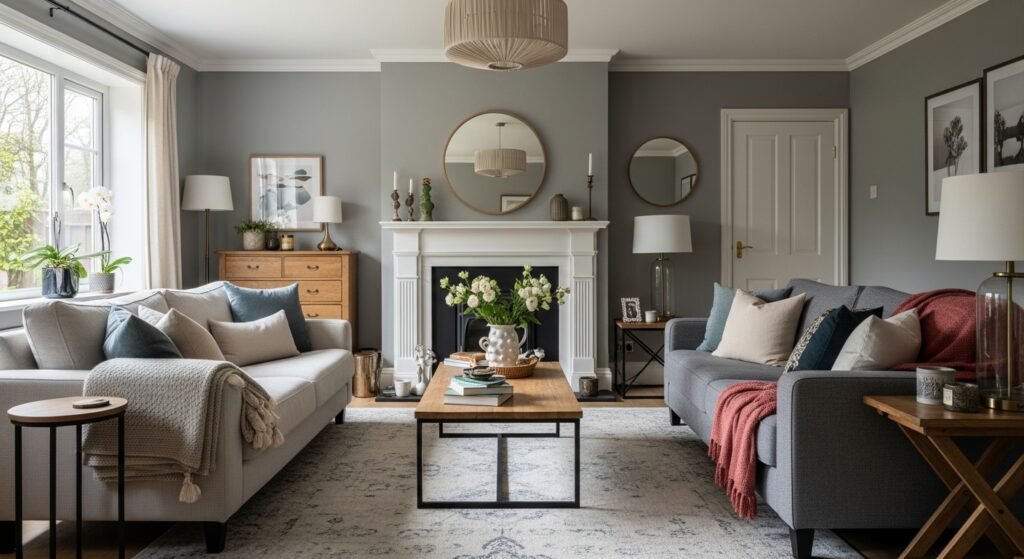
I've stood in living rooms that felt cold and empty, unsure how to make them look lived-in without buying a whole new set of furniture. Awkward corners and flat walls make the room feel unfinished.
Small, layered choices—rugs, throws, plants, and grouped objects—can change the room's balance fast.
How to Decorate a Living Room with DIY Decor
This is the method I use whenever a living room feels unfinished. I’ll show how to use simple DIY decor—textiles, vases, plants, and art—to make the room feel cozy, balanced, and intentionally layered in an organic-modern way.
What You'll Need
- Chunky knit throw in oatmeal, 50×60 (~$40–65)
- Bouclé accent pillow, 20×20, cream (~$25–45)
- Linen curtains, 52×84, natural (~$35–80)
- Jute area rug, 5×8, natural (~$80–150)
- Ceramic table lamp with linen shade, matte white (~$40–90)
- Set of 3 ceramic vases, matte white, varying heights (~$25–50)
- Faux fiddle leaf fig floor plant, 6 ft (~$50–120)
- Rattan wall basket set, 3-piece (~$20–45)
Step 1: Find (or make) the focal point and own it
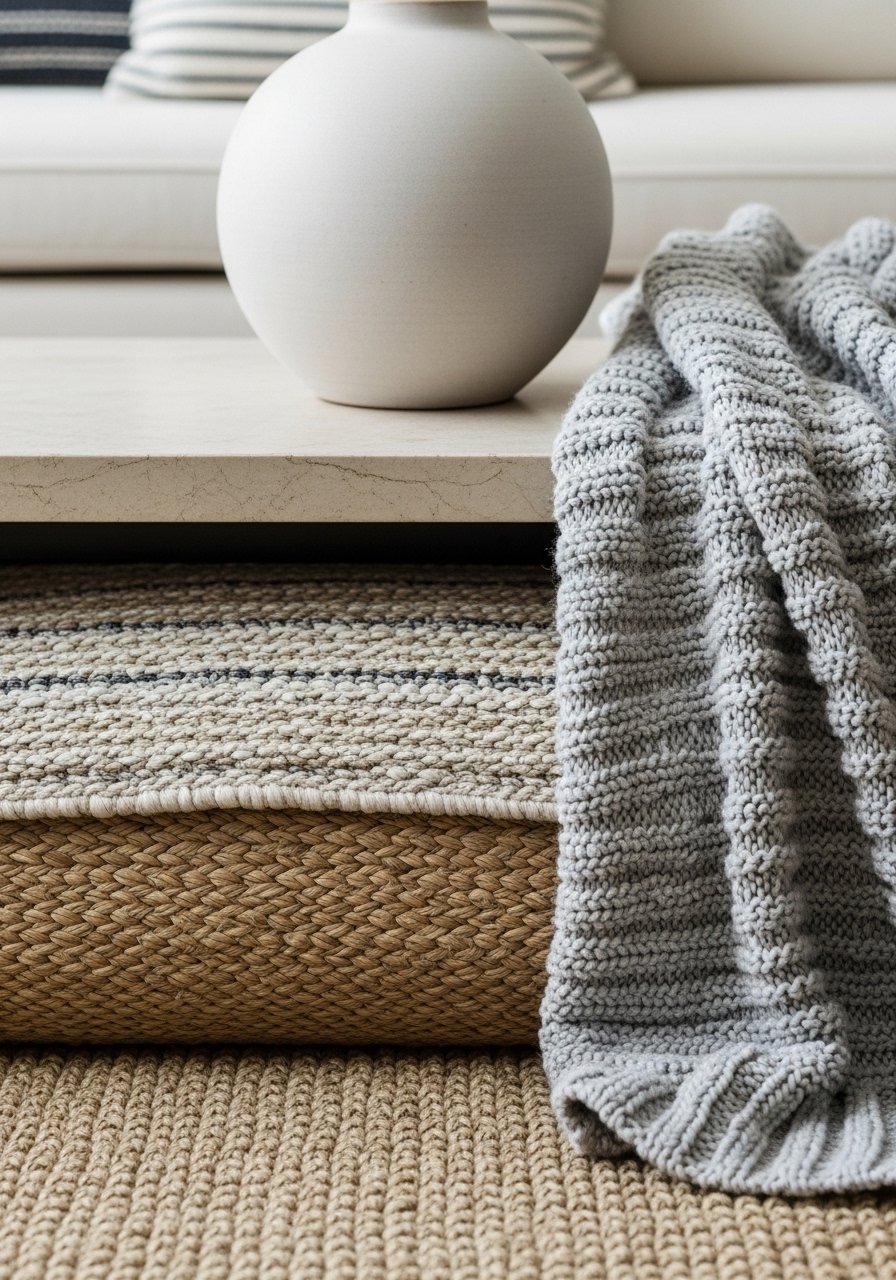
I start by deciding where the eye should land. For me that’s usually the sofa and coffee table, or a fireplace wall. Placing a jute rug under the coffee table and a single large vase on the table gives the space an anchor. Visually, the room immediately reads as purposeful instead of random.
People often miss scale—too-small rugs make the center feel disjointed. Avoid a rug that stops halfway under the front legs; it should either be fully under the seating or clearly layered.
Step 2: Anchor seating with textiles and rhythm
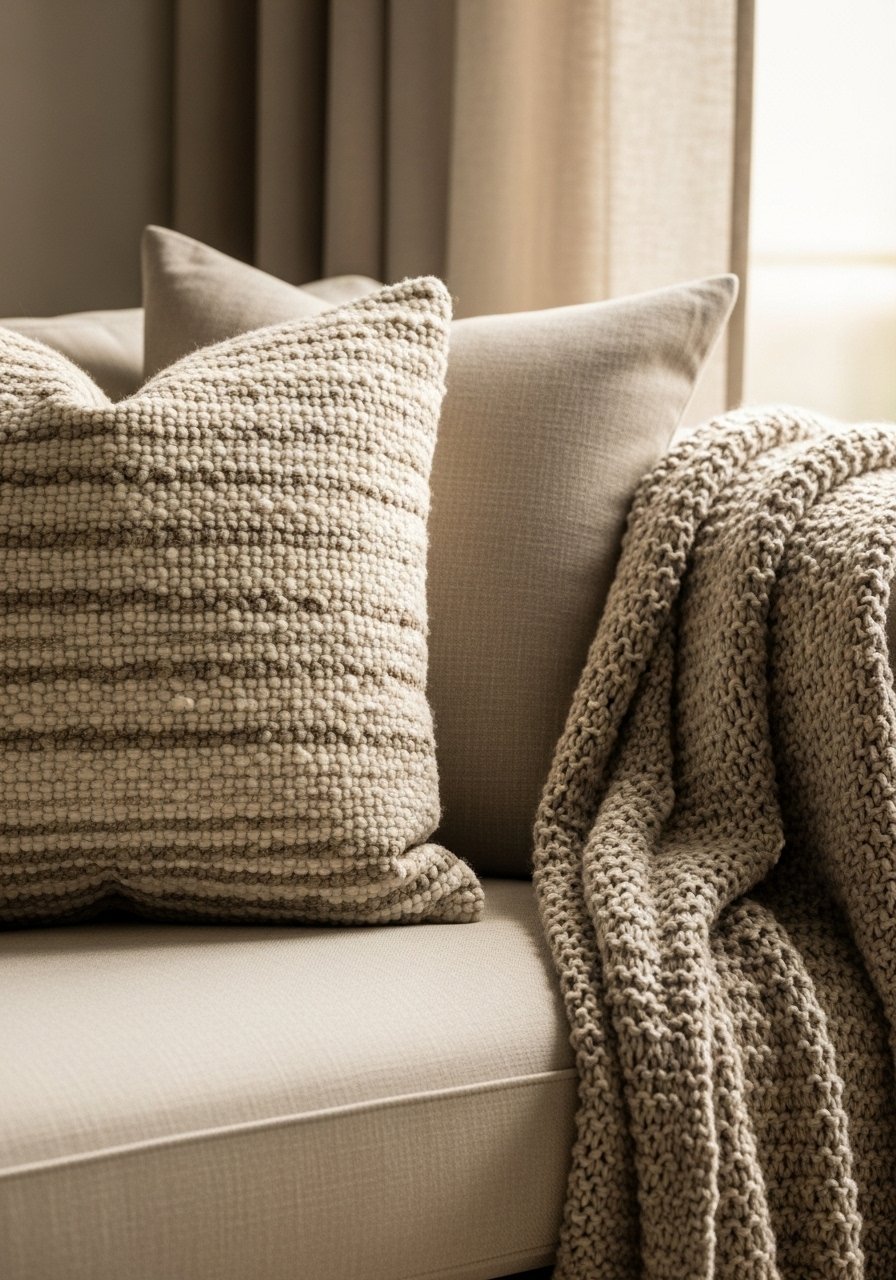
I add pillows and a throw in different textures to give the seating weight and rhythm. A bouclé pillow plus a linen cushion and the chunky knit throw create a small conversation of textures. It’s about rhythm: repeated colors or textures across the room so your eye travels.
What changes is the feeling—seating looks inviting, not photo-perfect. One thing people miss is contrast: a too-uniform set of cushions reads flat. Don’t overcrowd the sofa with matching cushions; let negative space breathe.
Step 3: Balance height and group objects on surfaces
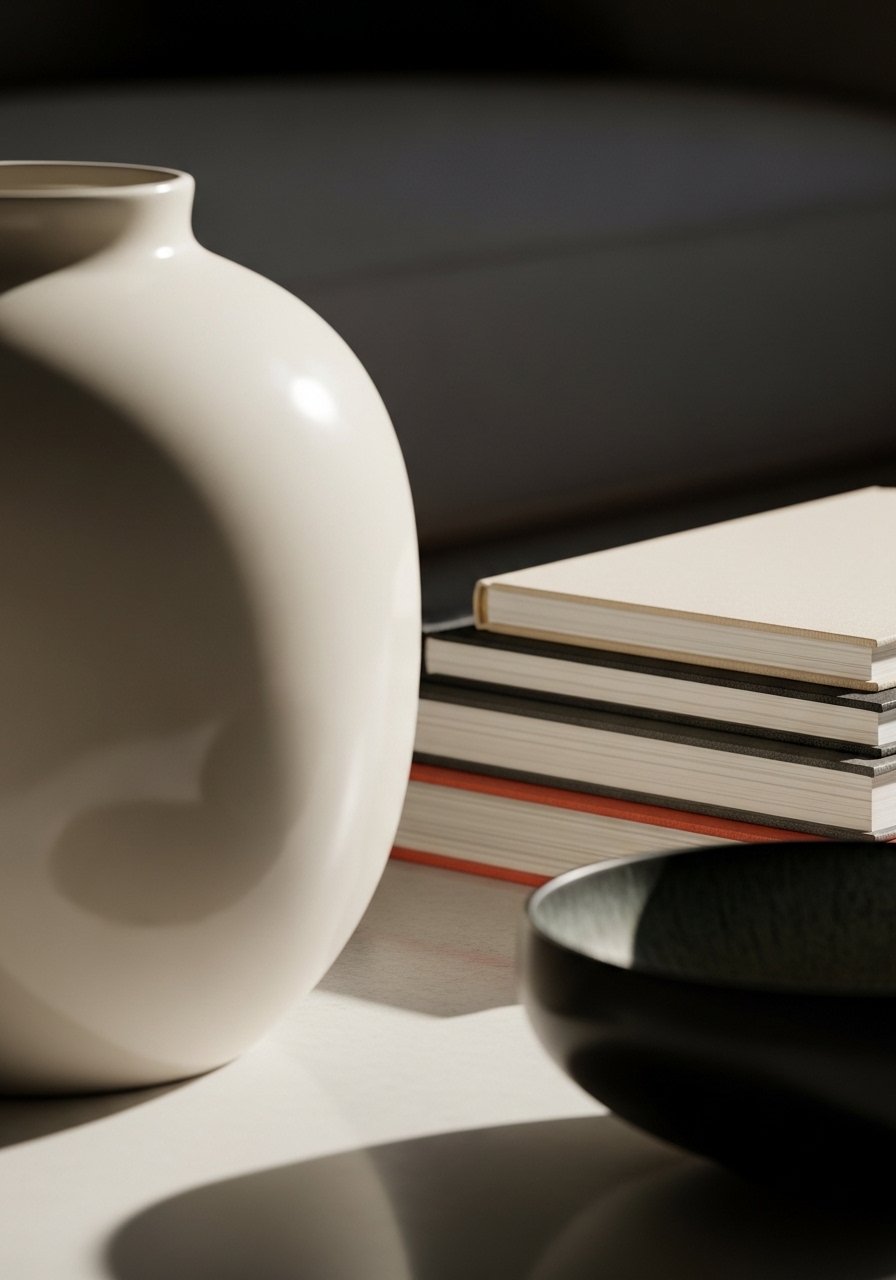
I group objects in odd numbers and vary heights—vase, small stack of books, low bowl. This is where ceramic vases shine; they give a handmade, organic feel. Visually the tabletop looks layered and curated, not cluttered.
An insight I learned: negative space is part of the group. Leaving a small empty corner on the table keeps the vignette readable. A common mistake is arranging items in a straight line—keep them clustered and angled for a lived-in look.
Step 4: Fix awkward corners with living pieces
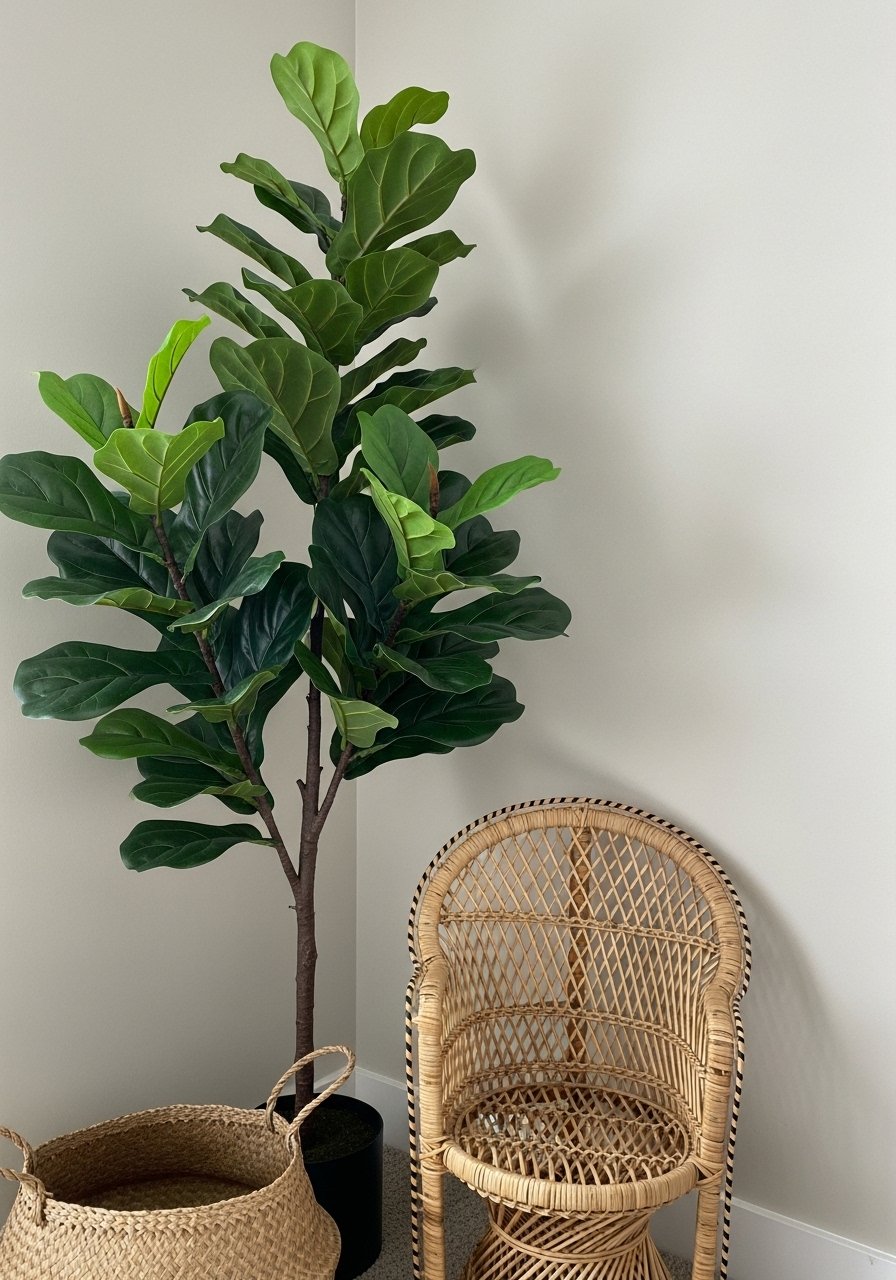
If a corner feels dead, I bring in a tall plant or a slim chair with a side table. A faux fiddle leaf fig fills vertical space and softens corners without permanent commitment. The room instantly gains depth and a natural pause point.
People often push plants too close to the wall. Angle the pot slightly into the room so leaves catch light. Avoid tiny decorative items in a corner—either go big with one piece or keep it empty.
Step 5: Layer window treatments and lighting for mood
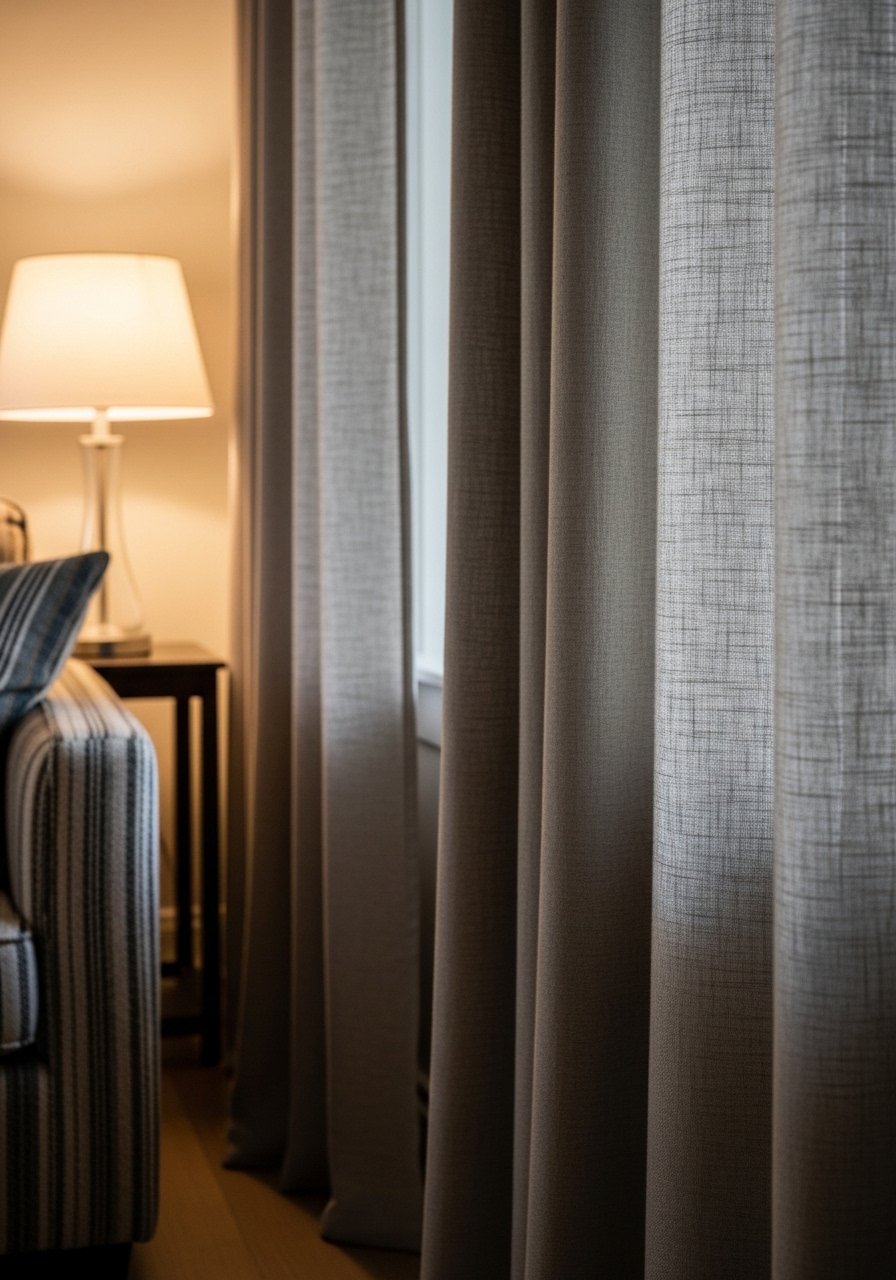
I hang curtains higher than the window and let them touch the floor; that simple change lengthens walls and feels intentional. Then I add a ceramic table lamp on a side table for warm, local lighting. The combination softens the room and makes it feel used.
A detail people miss: scale of the rod and curtain fullness. Too-short curtains break the wall; too-narrow panels look skimpy. Avoid only overhead lighting—layer light so every seat has its own glow.
Step 6: Finish with wall edits and small clusters
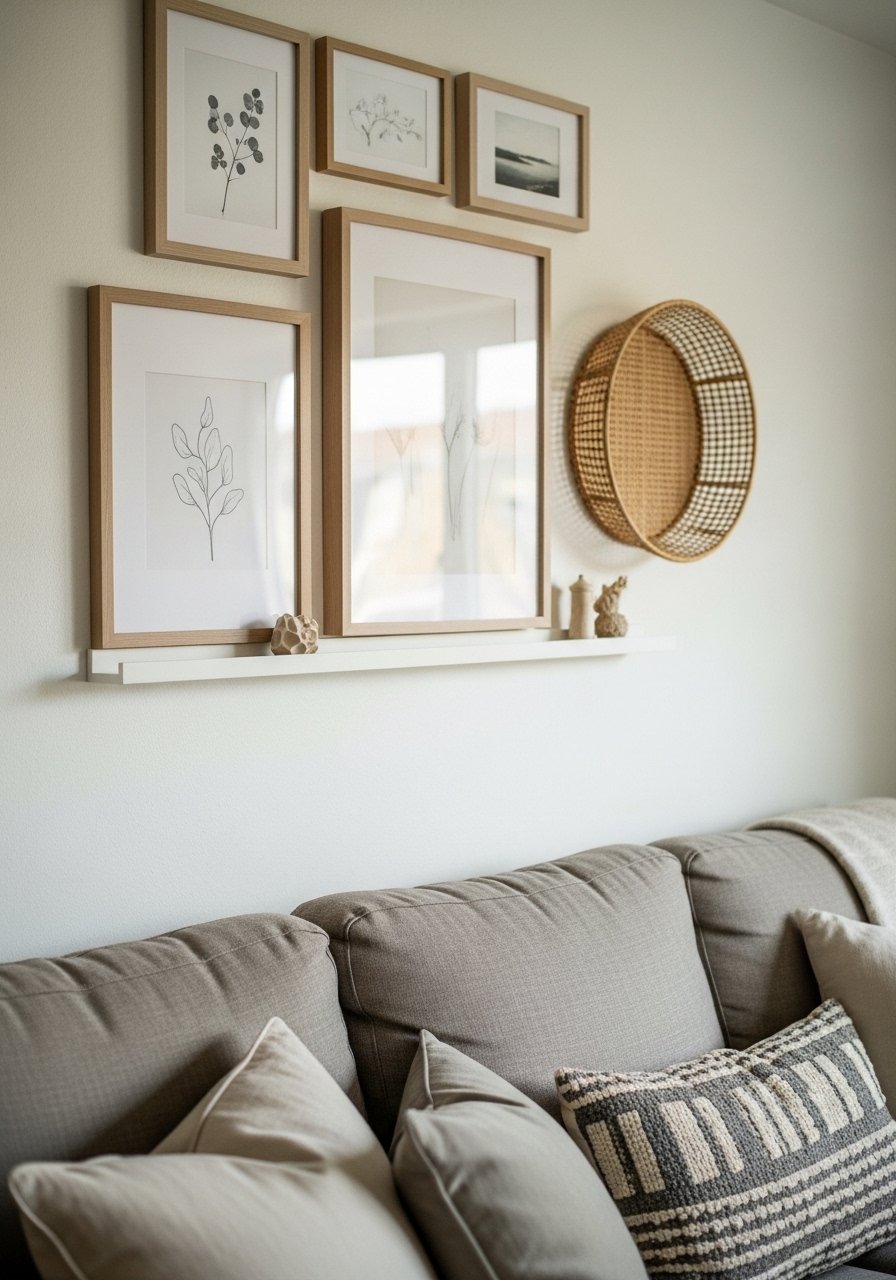
I edit the walls last. One large art piece or a small gallery above the sofa sets tone. I mix in a rattan basket or a ceramic wall pocket to add texture. The result is a wall that feels curated, not fussy.
People try to fill every inch—resist it. One clean focal art piece plus a textured accent is often better than a crowded gallery. The small mistake to avoid is overcrowding with tiny frames that compete.
Common mistakes with DIY decor
I see the same traps: buying everything in the same texture, not thinking scale, and ignoring negative space. Those make a room feel shop-bought or chaotic.
- Don’t match everything exactly—mix materials.
- Check scale by standing back; what looks okay up close may feel off from the doorway.
- Leave breathing room on shelves and tables.
When I edit, I remove half the objects and then bring back one if it still feels empty.
How to adapt this for small rooms or a tight budget
Small rooms need bigger gestures, not more things. I pick one large rug, one tall plant, and a standout lamp instead of many small accessories. That creates impact without clutter.
On a budget I focus on textiles and paint: a new throw, a pillow cover, and a painted wall or simple art are inexpensive but effective.
- Swap in faux plants if maintenance is a concern.
- Reuse frames and spray-paint them for cohesion.
I always start with what I already own and build around it.
Mixing DIY decor with what you already own
I don’t toss family pieces. I pair them with new textures to make them feel current. An old coffee table sits well with a jute rug and white ceramic vases.
Tips I use: repeat one color from the old piece across the room, add modern textiles, and introduce one natural texture (rattan, jute, linen).
- Keep one consistent finish (like matte white ceramics) to anchor varied pieces.
- Edit ruthlessly: if two pieces fight, remove the one you love least.
This keeps the room personal and balanced.
Final Thoughts
Start with one corner, one shelf, or a single wall. Small edits add up fast and keep the room feeling lived-in, not staged. I often begin with a chunky knit throw and a set of ceramic vases—low commitment, big return.
You’ll know you’re done when the room feels comfortable to sit in and to leave.