

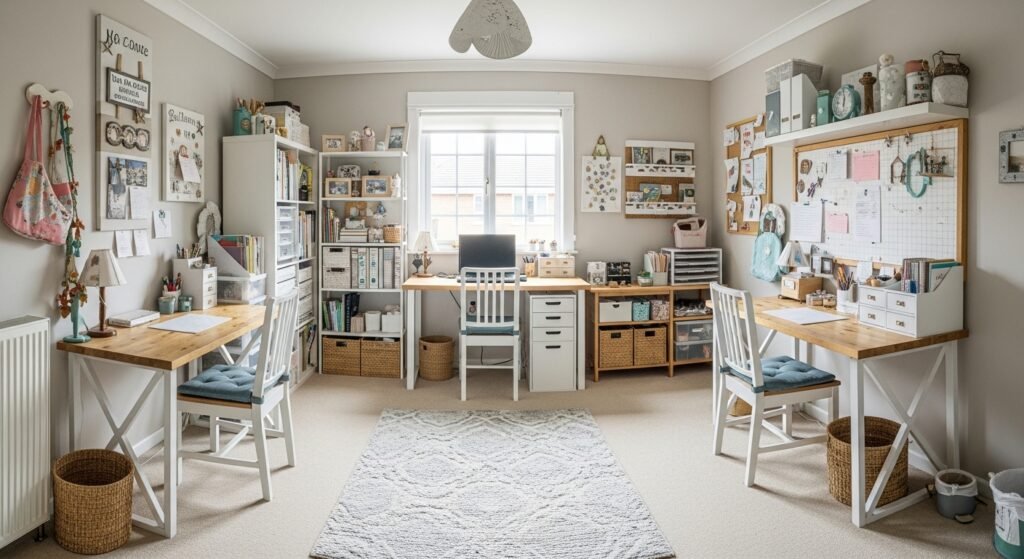
My desk felt like a stage set. Too many mismatched things. Nothing anchored the space. I kept moving items and the room still looked off.
I finally treated it like a small living room. I edited. I grouped. The result was a calm, usable room that actually invites work.
This is the exact approach I follow when a home office feels unfinished. It works with quiet, organic modern palettes. You can do it in an afternoon and keep the result feeling lived-in.
What You'll Need
- Adjustable LED desk lamp in brass ($35-60). I like warm bulbs around 2700K for desk tasks
- Floating wall shelves, set of 2, 24-inch ($25-45). Use for books and small vases
- Set of 3 ceramic vases, matte white ($25-40). Group in odd numbers
- Jute area rug, 6×9 ($60-120). Adds texture without stealing color
- Brass picture ledges, 24-inch ($18-30). Great for rotating prints
- Linen curtains, natural, 52×84 ($40-80). Softens light and noise
- Woven storage basket, medium ($30-50). Hides cords and extras
- Desk organizer tray, wood finish ($15-30). Keeps small items from spreading
Step 1: Clear the Surface and Edit Intentionally
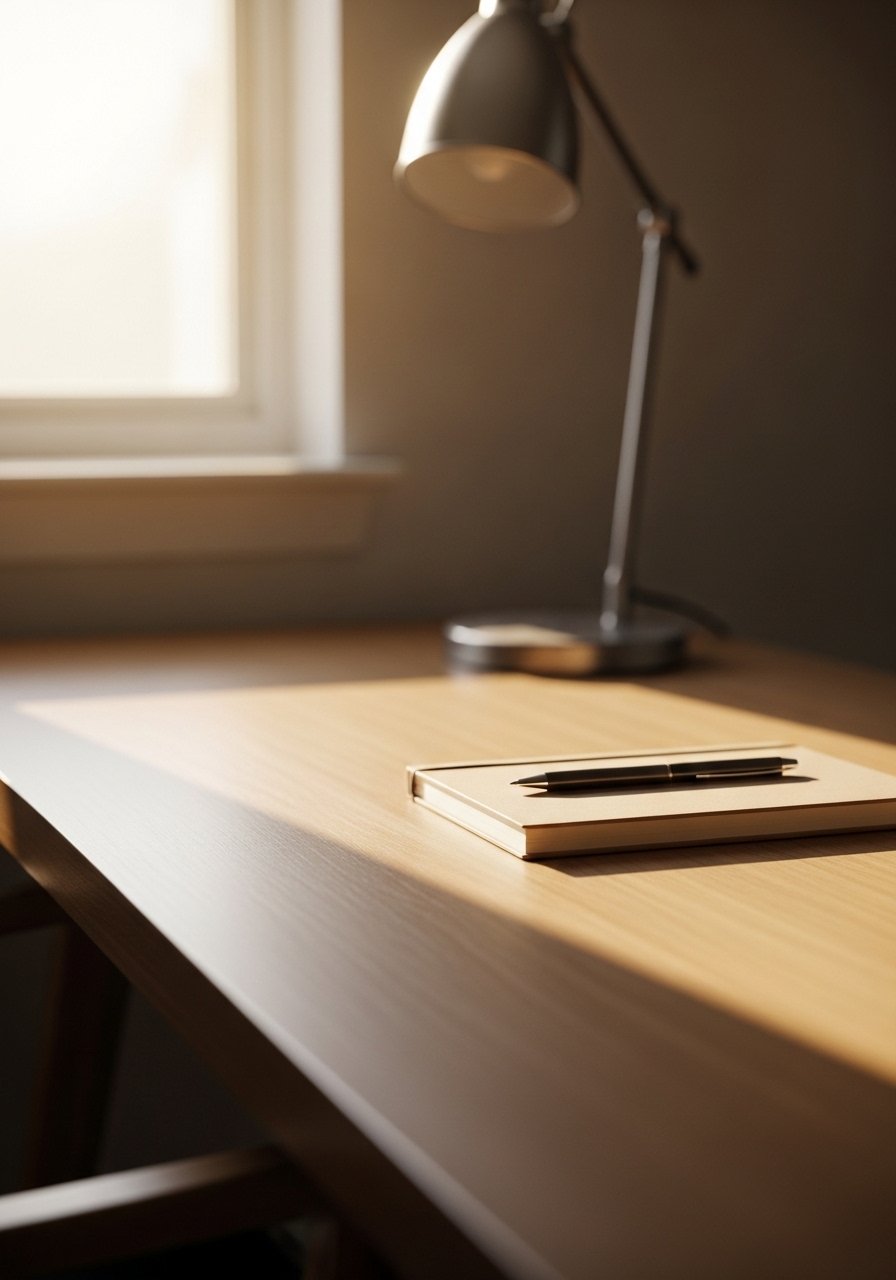
Most people start by decorating around clutter. I start by removing everything. Take everything off the desk and into boxes or a chair. You need the blank visual to judge scale and negative space.
Visually you shift from chaos to calm. The desk becomes a plane, not a museum shelf. I aim to leave about two-thirds of the desktop empty. That proportion lets a lamp and a notebook breathe.
Common mistake, piling back in the same order. If it tempted you before, it will again. Put back only the essentials.
Step 2: Anchor with a Rug and Big Piece
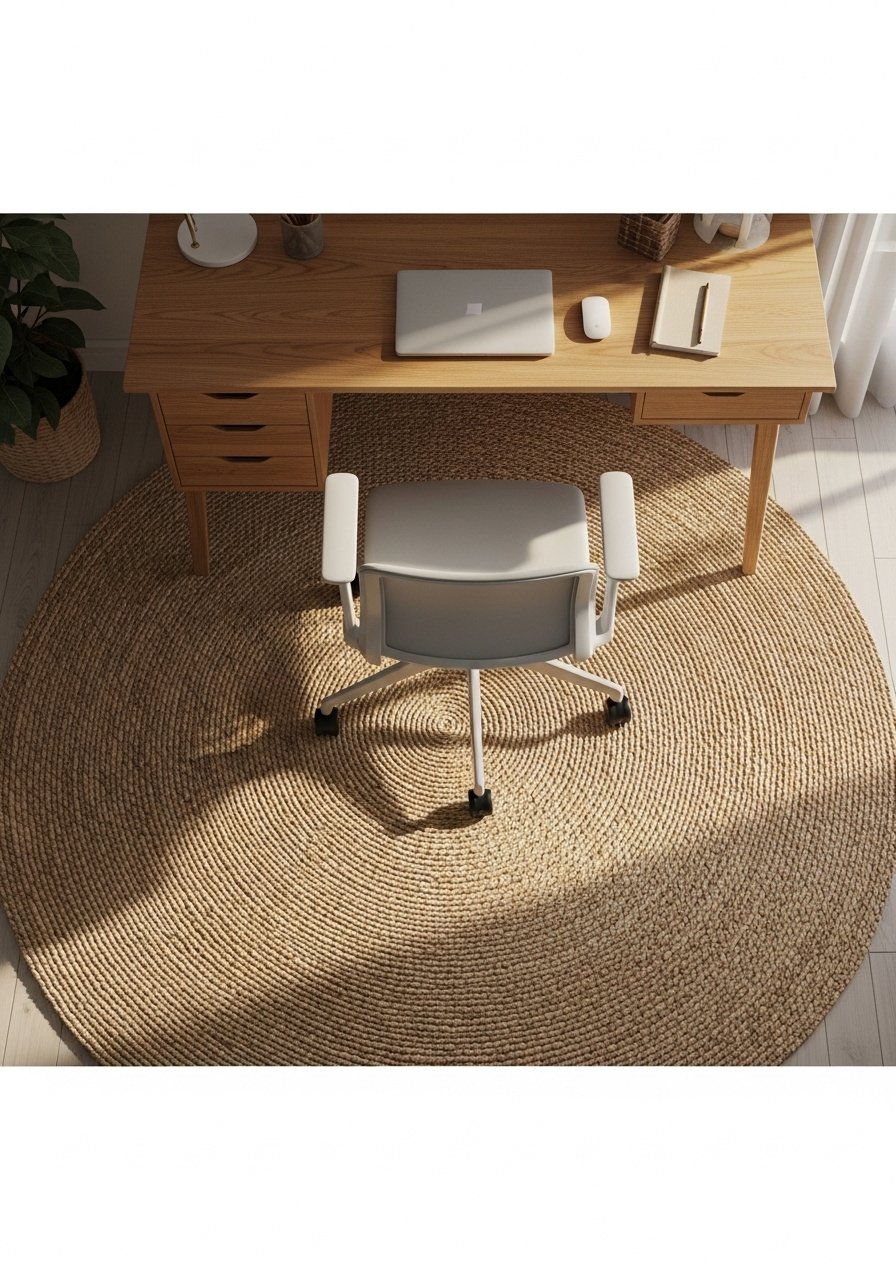
This is where the room starts to feel like a place. Lay a 6×9 jute rug so the desk and chair sit fully on it if space allows. If the room is narrow, center the rug under the chair and front legs of the desk only.
The visual change is immediate. You get a grounded rectangle that reads as a workspace. In small rooms, a rug that is too small looks like an afterthought. In large rooms, a rug that is too tiny makes the desk float.
A common temptation is to skip the rug to save money. Wait. Even an inexpensive neutral rug gives the room context.
Step 3: Place Lighting with Purpose
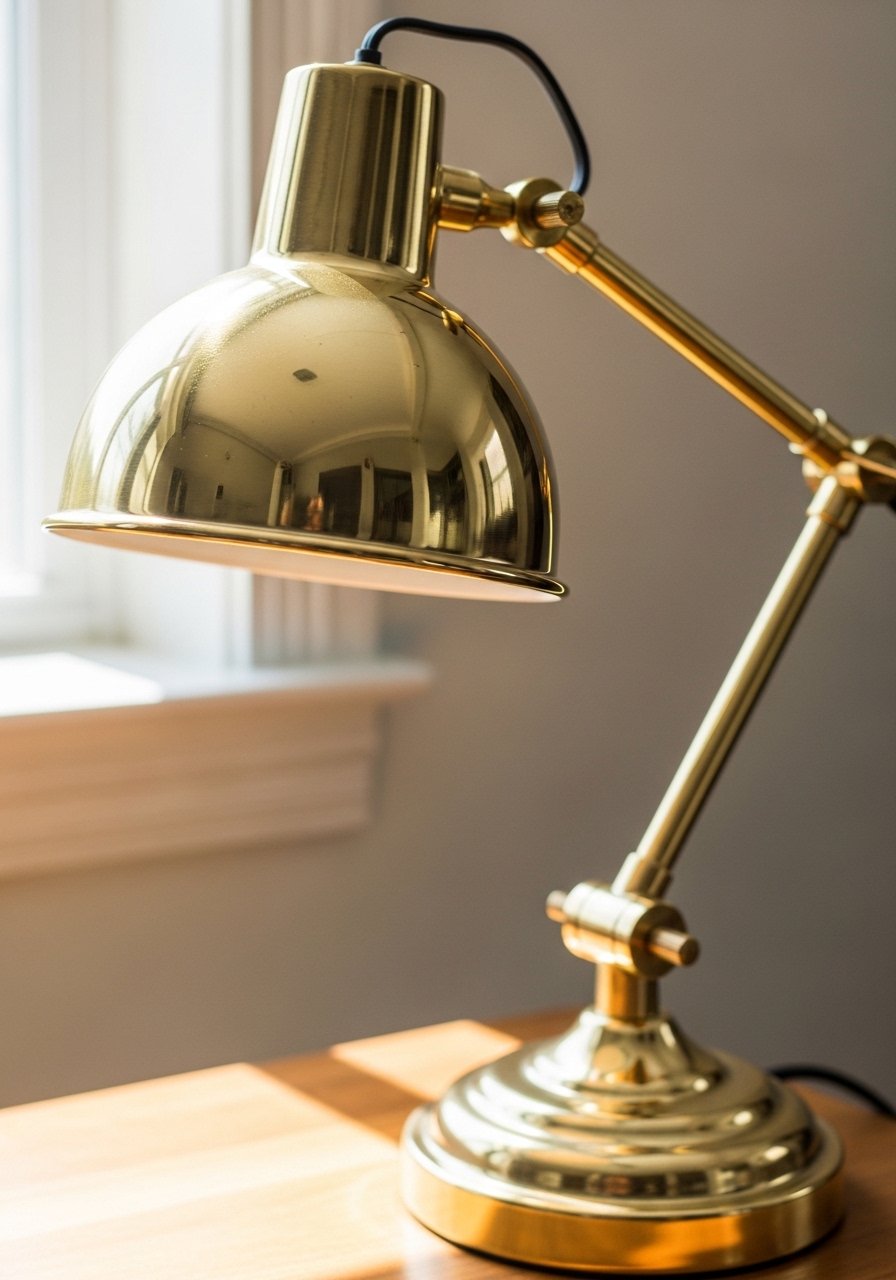
I used to put the lamp wherever there was space. Now I place it to balance what will go on the wall. If art or shelves sit to the left, place the lamp on the right. Rule of thumb, keep the lamp base at least 8 to 12 inches from the monitor to reduce glare.
What changes visually is a triangle of light, object, and negative space. That triangle makes the desk feel edited. Wrong placement looks like a spotlight on clutter.
Avoid a lamp that is too tall. A low lamp can obstruct your view, a tall one can feel like a column.
Step 4: Build Layers on Shelves, Not Rows
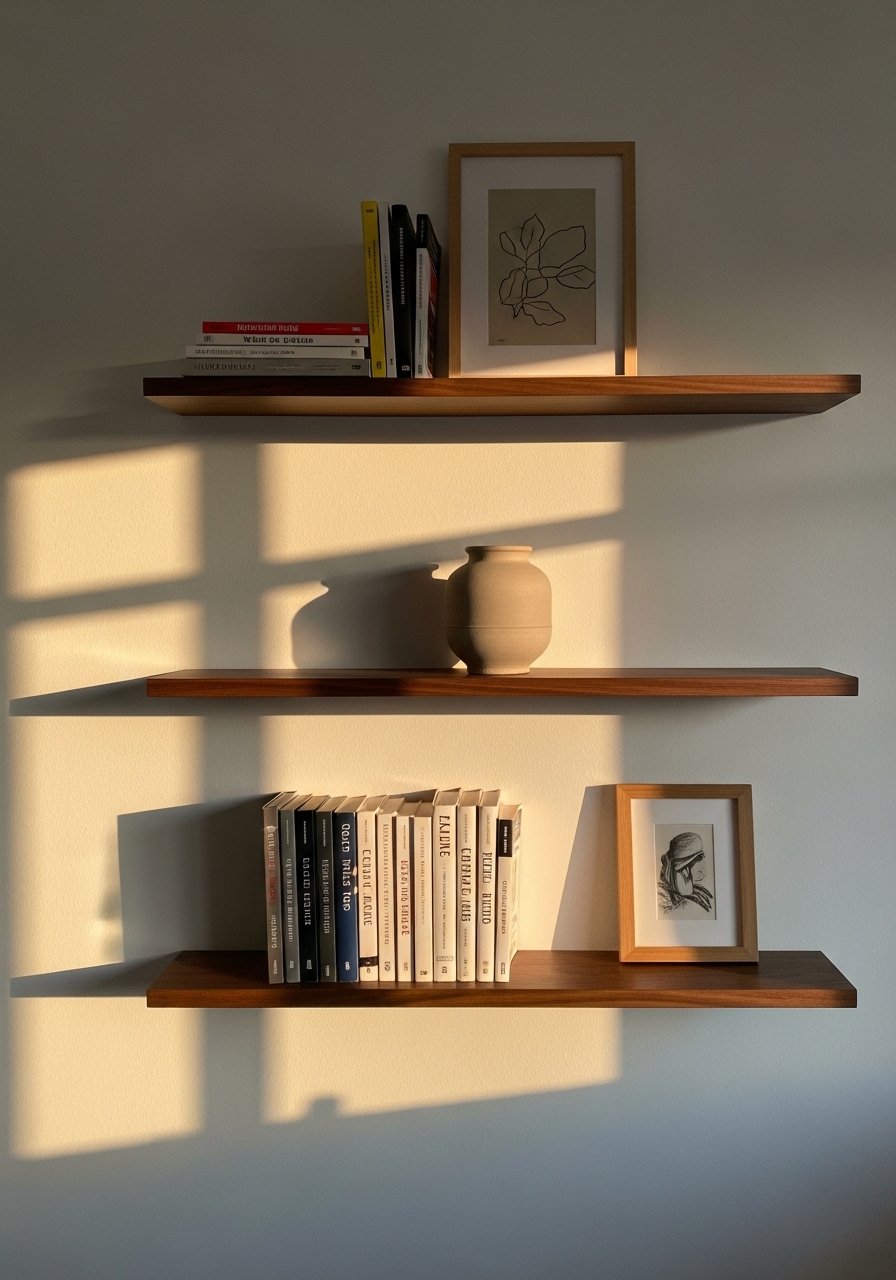
Pull everything off the shelves first. Then rebuild in layers. Start with books as the low plane. Add a tall vase at one end, and a small stack of objects at the other. I aim for one-third books, two-thirds objects across the shelf run for balance.
What changes is depth. Shelves stop being flat rows and start to feel collected. Many people make the mistake of centering everything. Offset your groups by about 2 to 4 inches to create visual tension.
If your shelf is shallow, stack books horizontally in one group to create a platform for a small plant or brass ledge frame.
Step 5: Edit Accessories with Grouping and Negative Space
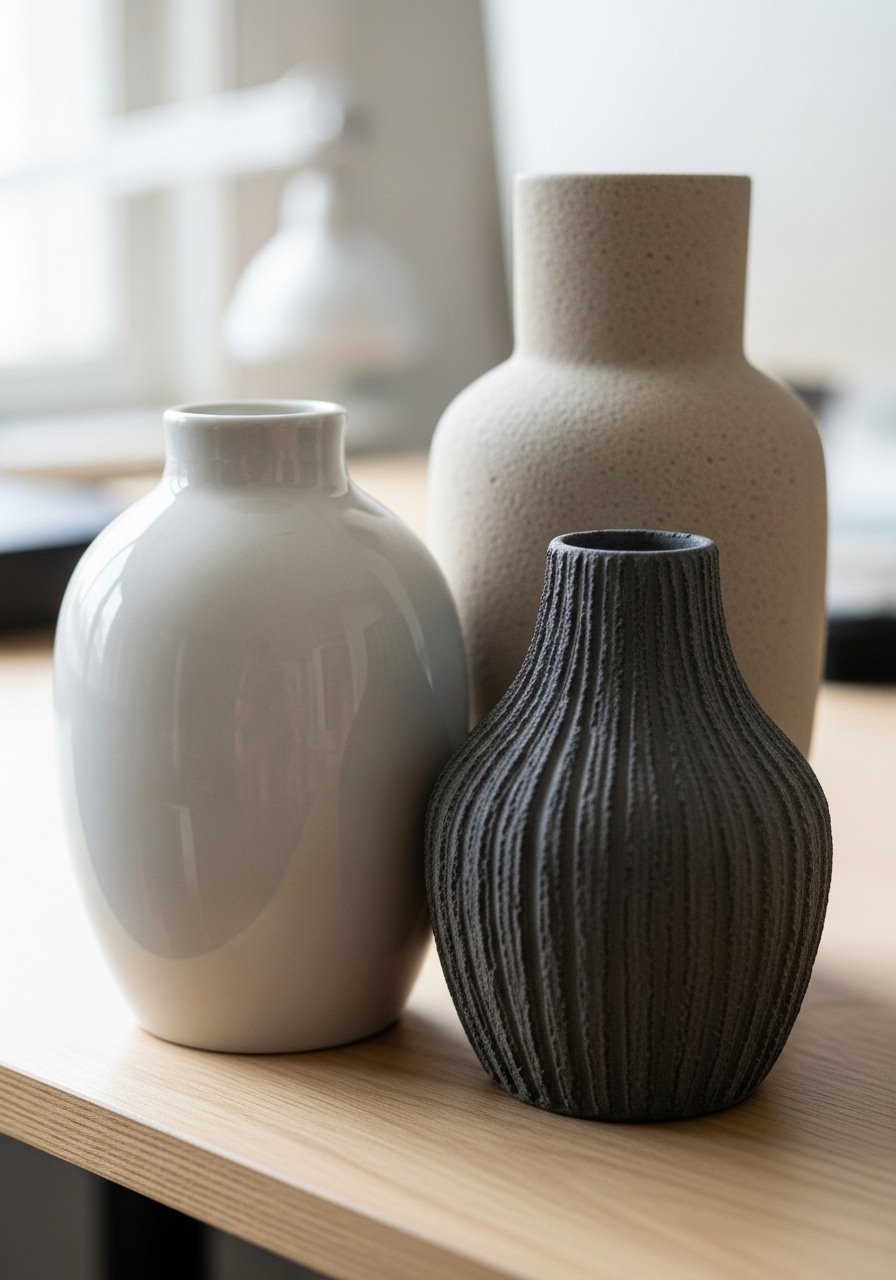
This is the step where the room stops looking staged and starts to look lived-in. Group accessories in odd numbers and vary height. I keep a rule, nothing smaller than 2 inches from another object in the same group unless nested. Leave at least 2 to 3 inches of empty shelf at each group edge.
Visually the room gains rhythm. Too many small items spread across a surface look like confetti. People often try to show everything at once. Instead, store extras in the woven basket and rotate items seasonally.
A small mistake, placing similar textures together. Mix matte and glossy, metal and ceramic, to read as intentional contrast.
Step 6: Final Balance, Add Soft Textiles and Living Green
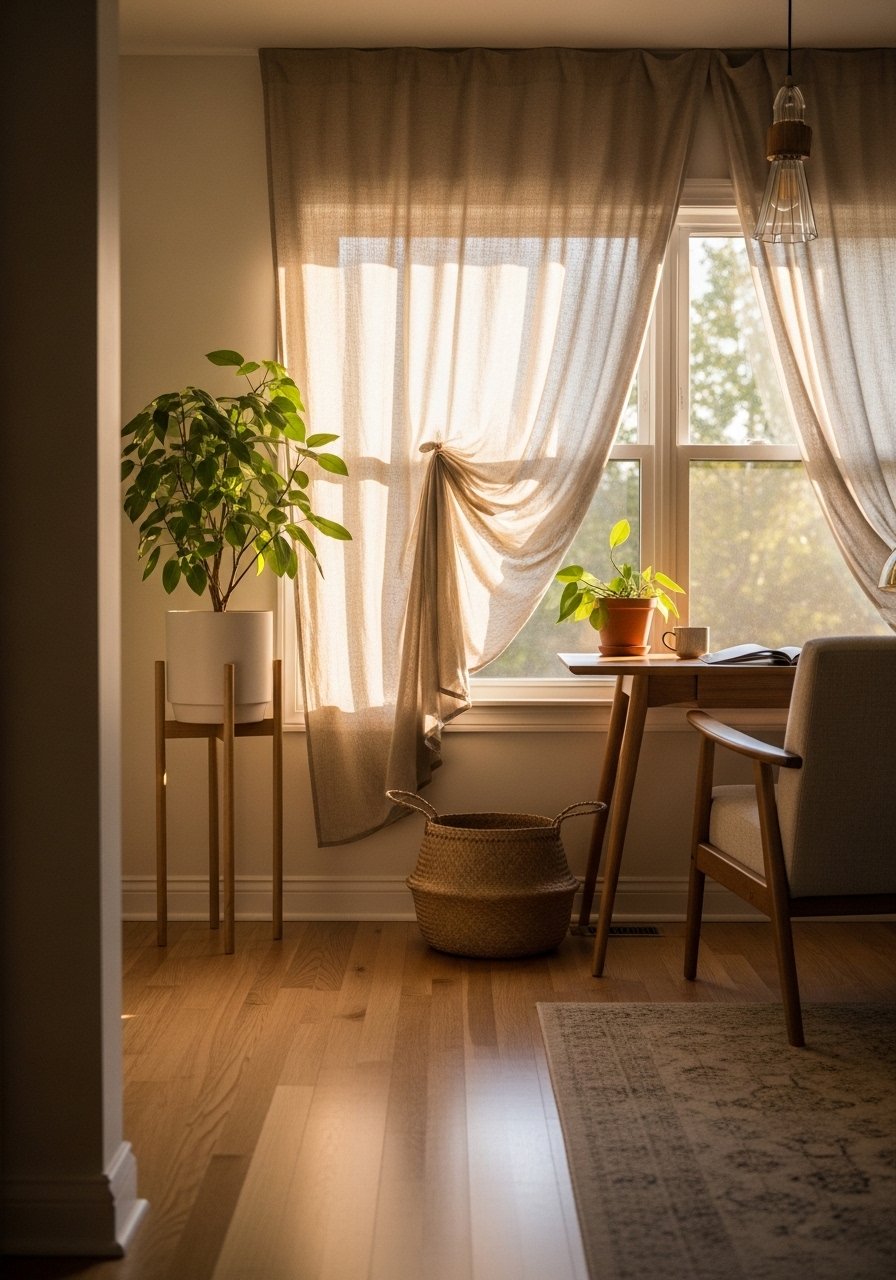
I used to skip plants because they felt fussy. Now a single tall plant near the window changes scale and warms the space. Place it so it reads against the wall, not in front of the desk. Add linen curtains to soften light and a woven basket to hide a power strip.
The final look should have three vertical anchors: tall lamp, tall plant, and a tall stack of books or framed print. If one side feels heavier, add a small rug runner or curtain tieback to balance.
Avoid overstuffing with plants. One healthy, well-placed plant beats three sad ones.
Why Your Office Still Feels Off After Styling
I've noticed the same problem in client rooms. Everything is pretty, but nothing belongs together. That happens when scale and repetition are ignored.
- Check repetition. Repeat a material or color at least three times across the room
- Look at scale. Small frames plus a large blank wall will feel imbalanced
- Edit weekly. Rotate one item each week to keep the room feeling fresh
A tiny tweak, like moving a lamp two inches left, can fix the whole composition. Trust your eye, not rules.
Making This Work in a Small Room
From what I've seen, small offices reward restraint. Pick two focal points and keep other elements simple. Use these quick rules.
- Keep the desk depth under 30 inches if you need floor space
- Use floating shelves to free floor area
- Choose a 6×9 or 5×8 rug depending on layout
- Hang curtains high to lift the ceiling visually
If your room has one window, place your desk perpendicular to it. That gives natural light without glare on your screen. Small changes win in tight spaces.
Mixing What You Own with New Pieces
My feed is full of rooms that mix old and new. The trick is to let one new piece carry the style. A brass lamp or a jute rug can set the tone. Keep existing furniture, then add three items that share a material or color.
Example: keep a walnut desk. Add brass lighting, a woven basket, and linen curtains. The shared warmth of those materials will read intentional. Don't try to replace everything at once. Swap in one new thing and live with it for two weeks.
Start with One Corner
Pick one corner and commit to editing it. Move nonessentials out. Add a lamp, one vertical plant, and a woven basket. Live with that setup for a week, then add a ceramic vase or a brass ledge print.
Trust the small steps. A single corner done well makes the whole room feel finished.