

A real, lived-in front porch showing the final result of decorating a front door with DIY decor. Natural daylight, soft shadows, layered textures. The space feels intentional but not staged. Wide angle that shows balance and flow. No text overlay.
I used to hate my front door. It always felt cold and empty, a place where everything important got ignored. Guests arrived and I didn’t know where to look or how to make it feel inviting.
This guide shows how small, deliberate choices make your entry feel intentional and lived-in, without a big budget.
How to Decorate a Front Door with DIY Decor
You’ll learn how to layer a wreath, doormat, lighting, and a small vignette so the door reads balanced and welcoming. It’s a simple, organic modern approach I use when I want a calm, comfortable entry without fuss.
What You'll Need
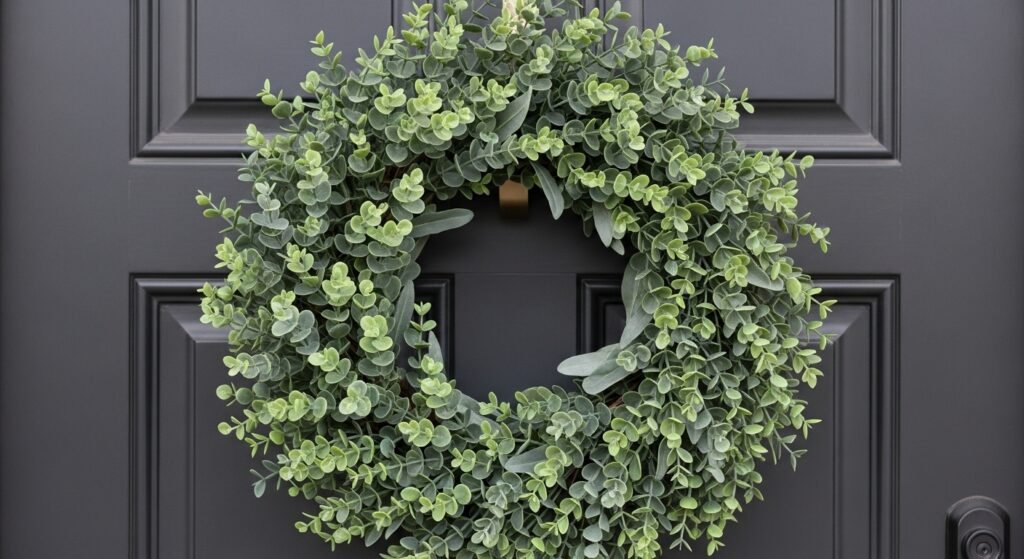
- Natural eucalyptus wreath, 22-inch (~$25–45)
- Coir doormat, 18×30, black "Welcome" (~$20–35)
- Matte black outdoor wall lantern, 9-inch (~$60–120)
- Battery LED candle lantern, 8-inch, warm white (~$25–50)
- Hanging ceramic planter with rope, white, medium (~$20–40)
- Outdoor bench cushion, 48×18, neutral stripe (~$30–70)
- Black metal house numbers, 4-inch (~$20–40)
- Linen door bow ribbon, 2.5-inch, natural (~$8–15)
Step 1: Choose a focal piece and get the scale right
I always start with a single focal piece—usually a wreath. It’s the anchor that tells your eye where to land. A 22-inch wreath works for most standard doors; smaller wreaths look lost and larger ones can feel heavy.
People often miss scale. If a wreath is too small it reads like an afterthought. Don’t hang it off-center either; that’s the easy mistake. Aim for eye-level or slightly above, and let the wreath set the tone for the rest of your layers.
Step 2: Anchor with a mat and simple symmetry
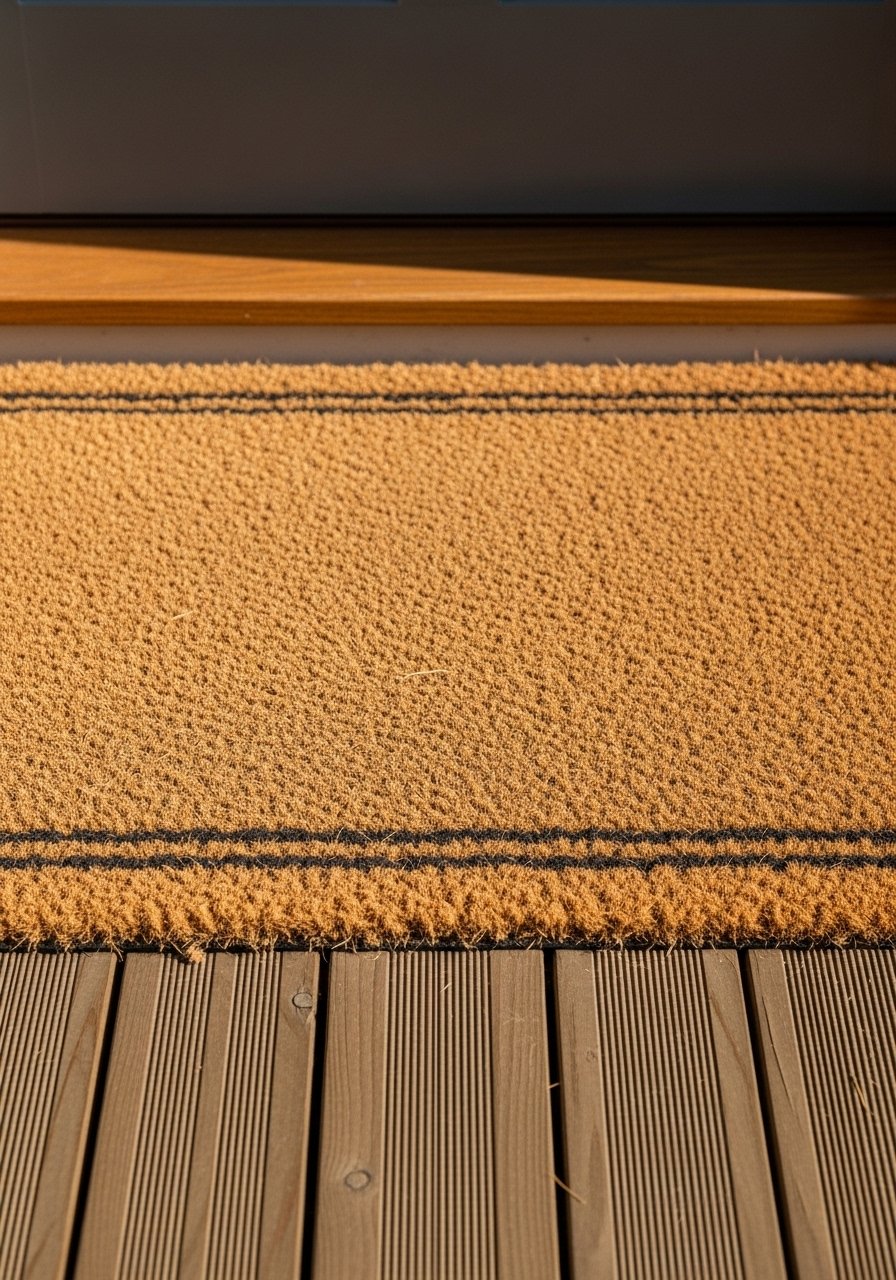
Place your doormat so it lines up with the door and the porch edge. The mat is the visual base of the composition. A neutral coir mat with a simple word or pattern keeps things calm and welcoming.
Most people underestimate how much a mat grounds the space. It immediately reads “entry” and invites touch. Avoid a mat that’s too ornate or huge—it competes with the wreath. Keep proportions simple: mat width should sit comfortably inside the porch span, not wrap around it.
Step 3: Layer in warm lighting for mood and safety
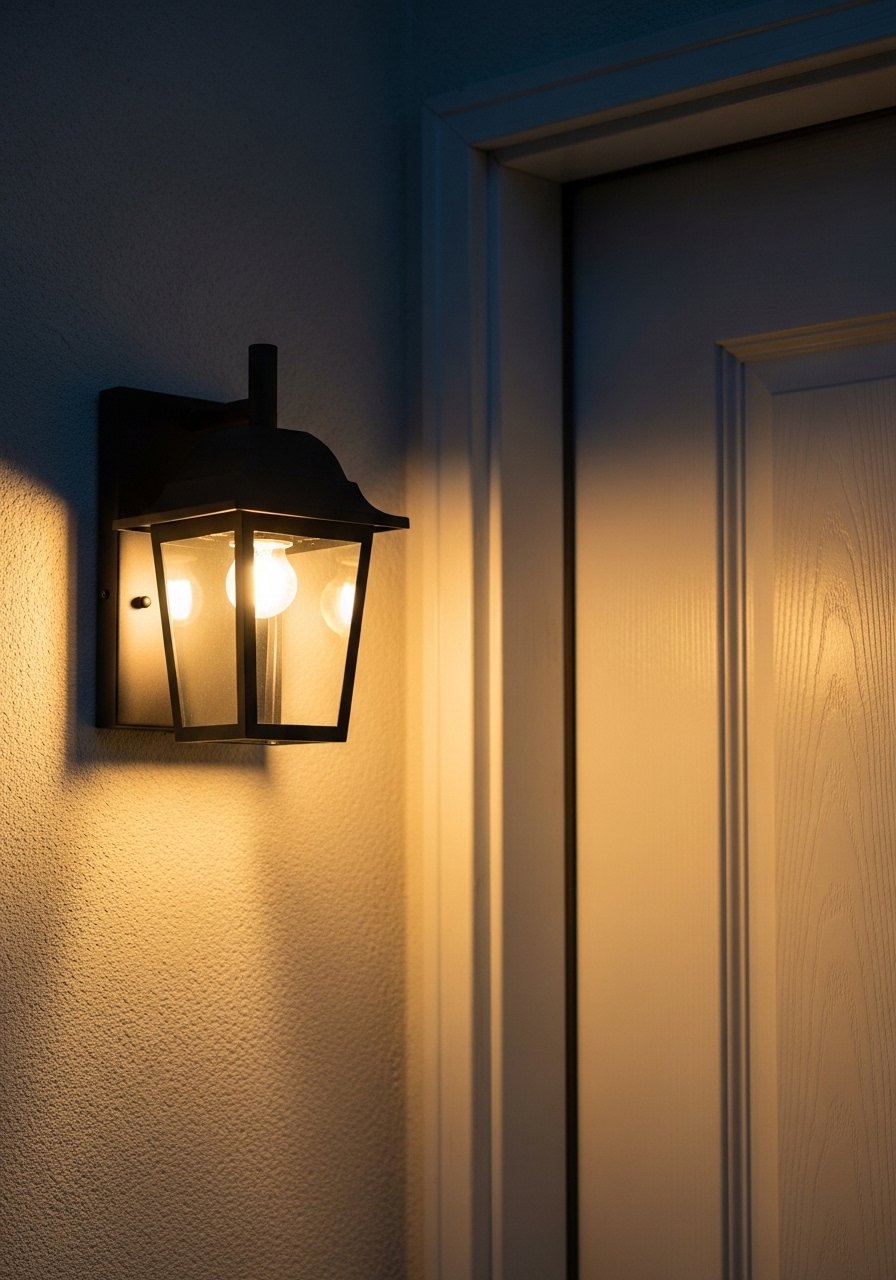
Lighting changes everything. I add a weatherproof wall lantern or a battery LED lantern on the step to give soft, warm light. It makes the door read friendly at dusk and highlights textures like wood grain or paint color.
People forget color temperature. Choose warm white—too cool and the entry feels sterile. Also, keep finishes consistent; matte black pairs well with natural wreaths and neutral mats. Don’t over-illuminate with harsh floodlights; the goal is cozy clarity, not a spotlight.
Step 4: Create a one-sided vignette for balance
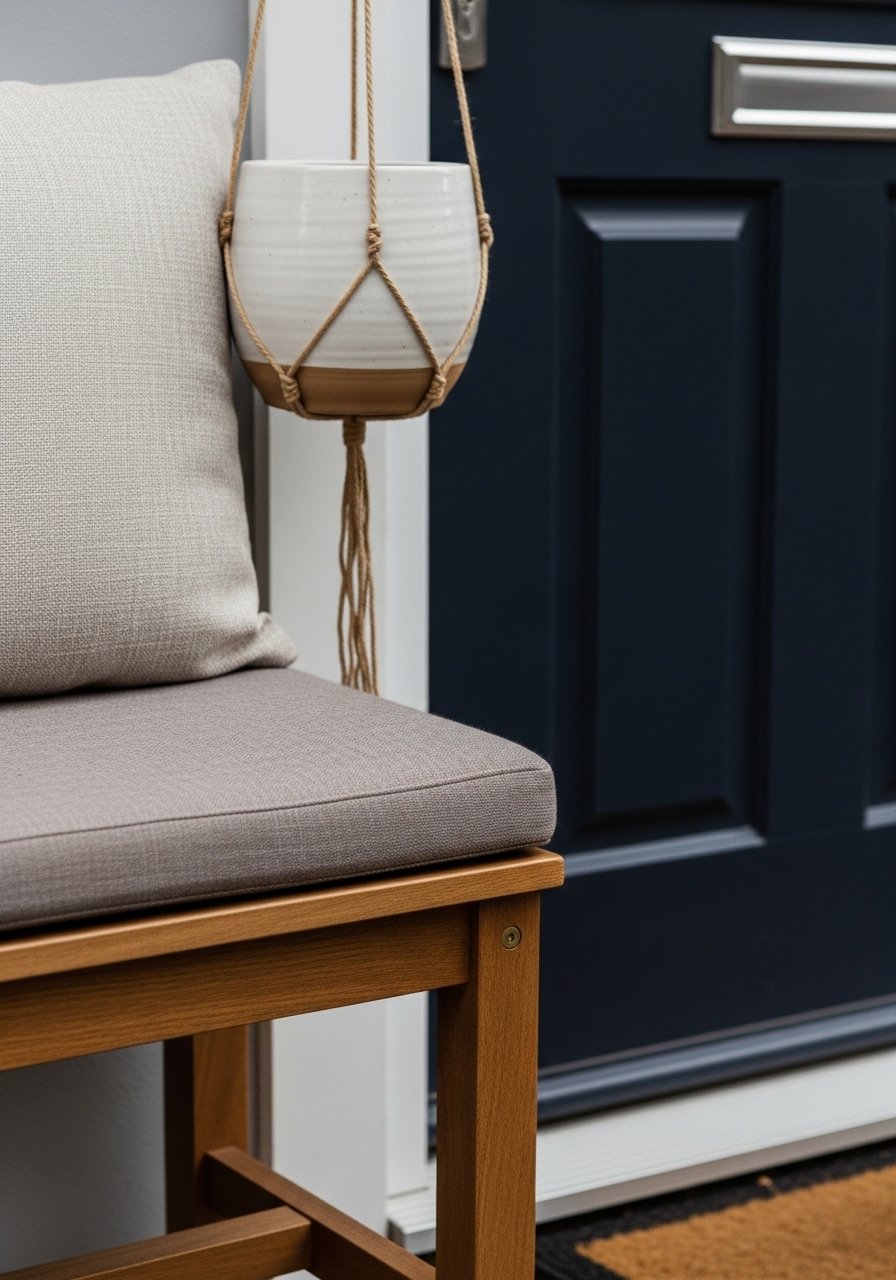
A small bench or a single planter gives the door context. I usually place a low bench on one side and a taller planter or hanging planter on the other, or cluster a short/ tall pair together. The contrast in height keeps things visually interesting and grounded.
An insight I learned: keep the vignette slightly asymmetrical. Perfect symmetry can feel staged. Avoid crowding—leave breathing room. One common mistake is trying to fill every inch; negative space matters and makes the arranged pieces feel intentional.
Step 5: Add numbers and hardware that harmonize
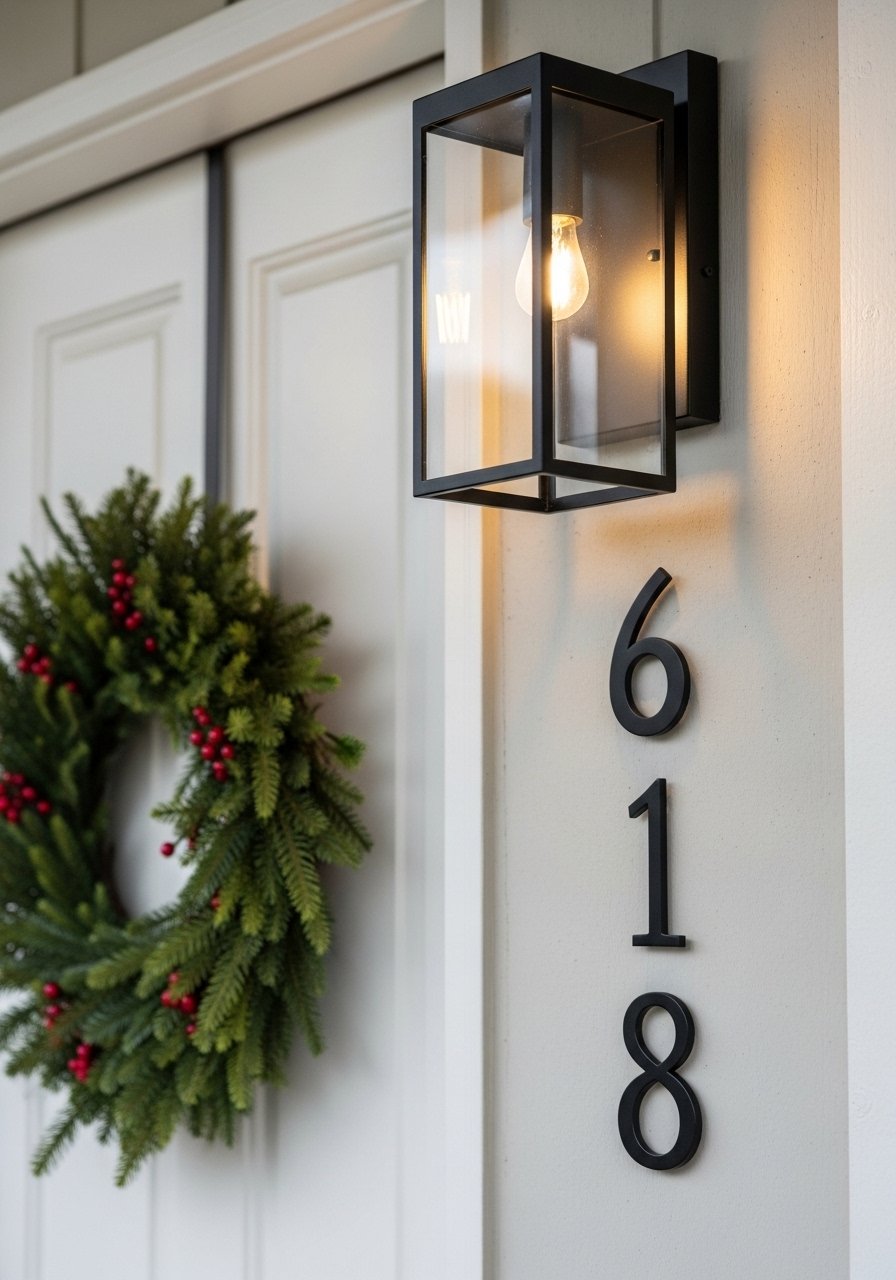
Switching small things—house numbers, knocker, or handle—can tighten the look. I pick a finish that echoes my light fixture. Black metal numbers are crisp against white or light paint, and they help the entry read as a complete composition.
People often mix too many metals or finishes. That creates visual noise. One mistake is too-small numbers; they disappear at a distance. Place numbers so they’re readable and sit in proportion to your door and lantern—neither floating nor crowded.
Step 6: Finish with a soft accent and seasonal change
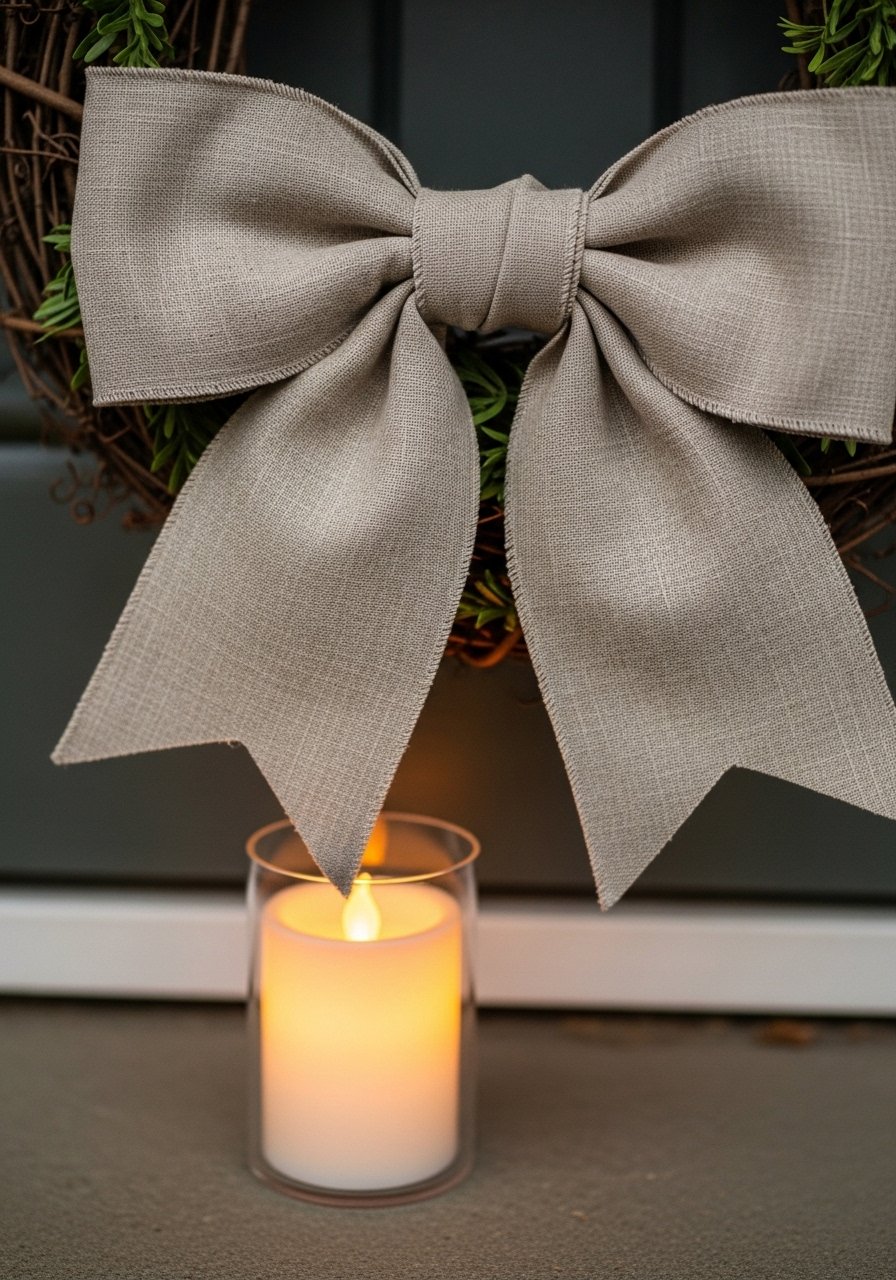
I finish with a cloth bow or a few seasonal accents—linen ribbon feels calm and natural. A battery LED lantern adds warmth without wiring. These soft touches make the entry feel lived-in and approachable.
A key insight: less is often more. One meaningful accent reads better than three competing ones. Don’t over-seasonalize with every holiday ornament; rotate one or two items so the door always feels coherent. Avoid plastic-y accents that break the overall texture.
Common mistakes and how to fix them
I see the same problems often: wrong scale, too many finishes, and cluttered porches. Fix scale by stepping back—take photos from the street to see what others will notice. Stick to one metal finish for hardware and lighting.
Quick fixes:
- If things feel tight, remove one item and live with it for a day.
- If the entry looks cold, add a soft texture (ribbon, cushion, or lantern).
- If it feels messy, edit to three focal points max: wreath, mat, vignette.
Adapting this look for small porches or apartment doors
Small entries need lighter pieces. I choose a slim doormat, a small 18–20 inch wreath, and a single hanging planter instead of a bench. Vertical arrangements work well on narrow stoops—stack height rather than width.
Bulleted tips:
- Use a slim bench cushion if you need seating.
- Hang lightweight planters to keep floor space clear.
- Use removable adhesive house numbers and battery lanterns for apartments.
Seasonal swaps and budget-friendly options
I change just one or two elements each season. A linen ribbon and a new LED lantern can shift the mood without fuss. For budget updates, swap the wreath or add a simple ribbon—these cost less than replacing big hardware.
Affordable ideas:
- Swap wreaths (greenery for spring/summer, dried blooms for fall).
- Use battery lanterns instead of new wiring.
- Refresh the mat each year; a clean mat looks new without spending much.
Final Thoughts
Start with one change—a wreath or a new mat—and see how the porch reads. Small edits add up and build confidence. You don’t need everything to match perfectly; aim for balance, simple textures, and a few well-placed layers.
A eucalyptus wreath is an easy, low-commitment place to begin.