

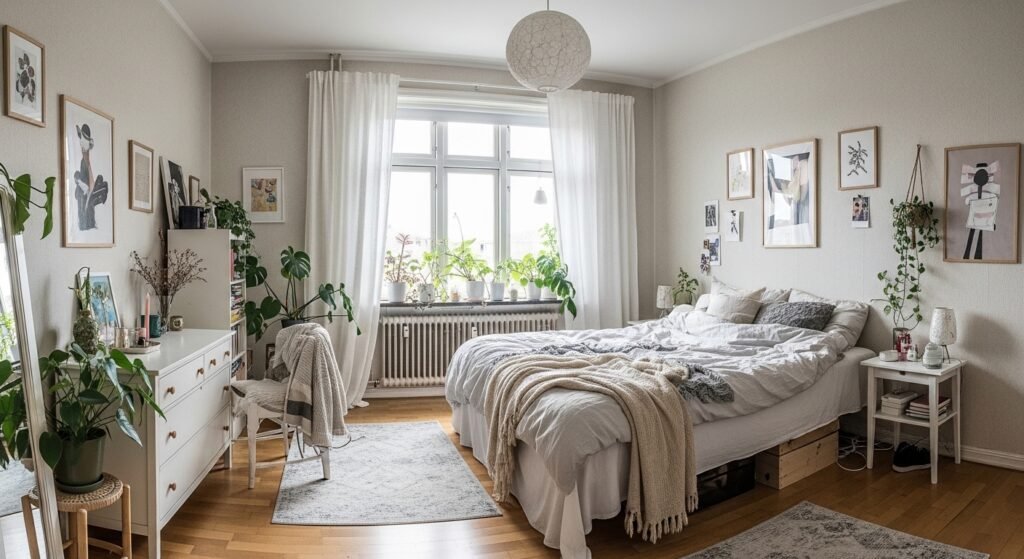
I stared at my bedroom for months, feeling like something was missing. Pillows looked like afterthoughts. Art sat too high. The room felt like a decor checklist, not a place I wanted to lie down.
I had to slow down and edit. Small choices about scale and placement fixed more than adding things ever did.
I've noticed quiet luxury and organic modern details popping up everywhere I look this year. The approach below is the one I use when a bedroom feels unfinished. It leaves a warm, intentional room that reflects what I already own. It takes me about an hour once I get hands-on.
What You'll Need
- Chunky knit throw in oatmeal, 50×60 ($40 to 65). I keep one folded at the foot of the bed
- Worth every penny: linen duvet cover in sage green, queen ($70 to 110). Texture matters more than color
- Set of 3 ceramic vases, matte white ($25 to 40). Good for a bedside grouping
- Brass picture ledges, 24-inch ($18 to 30). Great if I cannot commit to a gallery wall
- Jute area rug, 8×10 ($90 to 160). Natural fiber keeps a room grounded
- Table lamp with warm brass base, 26-inch ($35 to 80). I use one on each side for balance
- Set of two euro shams, neutral linen ($30 to 50). They add scale behind sleeping pillows
- Decorative lumbar pillow, 18×12 ($20 to 45). Small but expressive
Step 1: Anchor the Bed and Rug to Create Scale
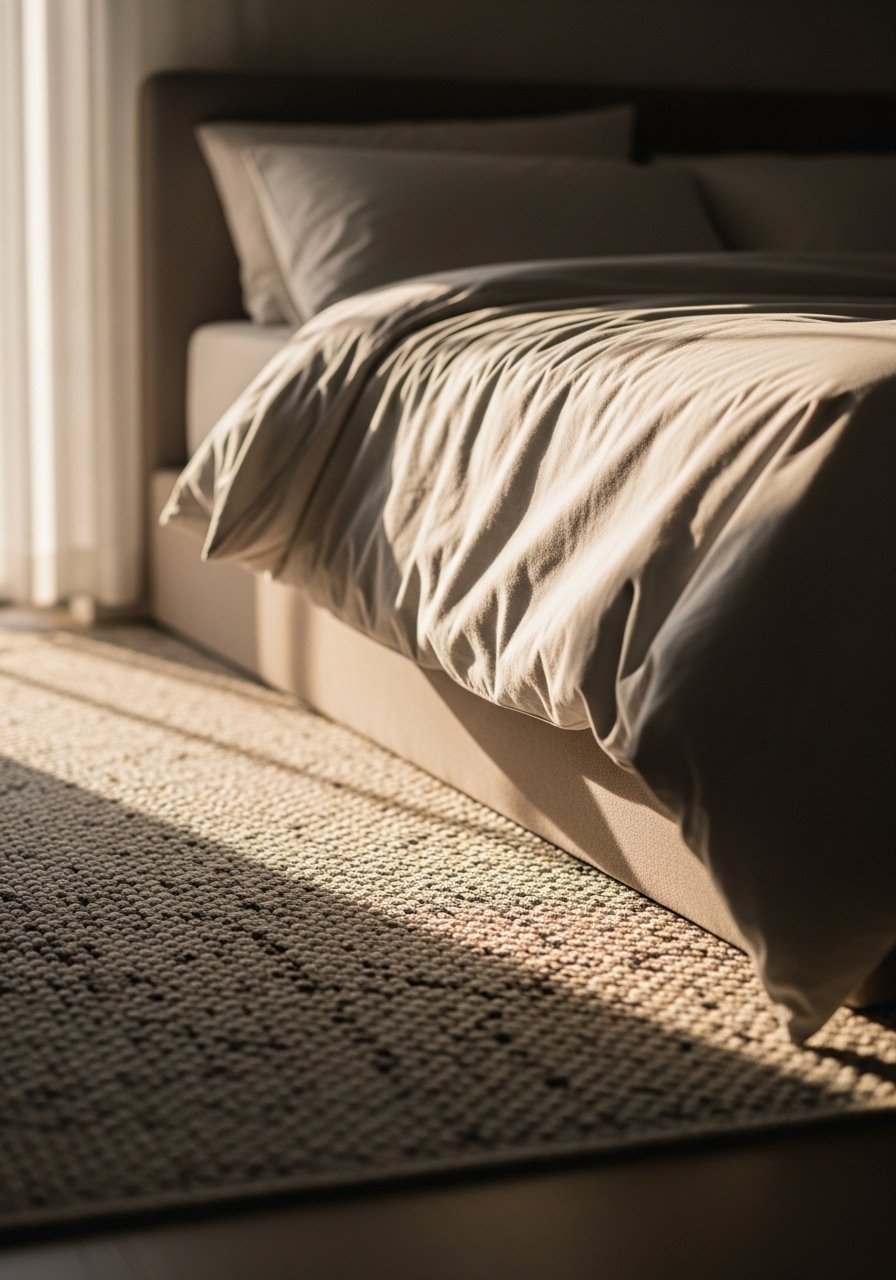
I start by placing the bed and then anchoring it with a rug. The rug should extend at least 18 to 24 inches beyond the sides and foot. If the rug is too small it reads like an afterthought. If it is too large it makes the room feel crowded.
What visually changes is instant. The bed stops floating in the middle of the floor. I used a jute rug for texture. A common mistake is choosing a rug that ends at the feet of the bed. It looks chopped. I resist the urge to center small rugs. I leave about 6 inches of exposed flooring at the room edges so the space feels grounded, not swallowed.
Step 2: Layer Bedding for Comfort and Proportion
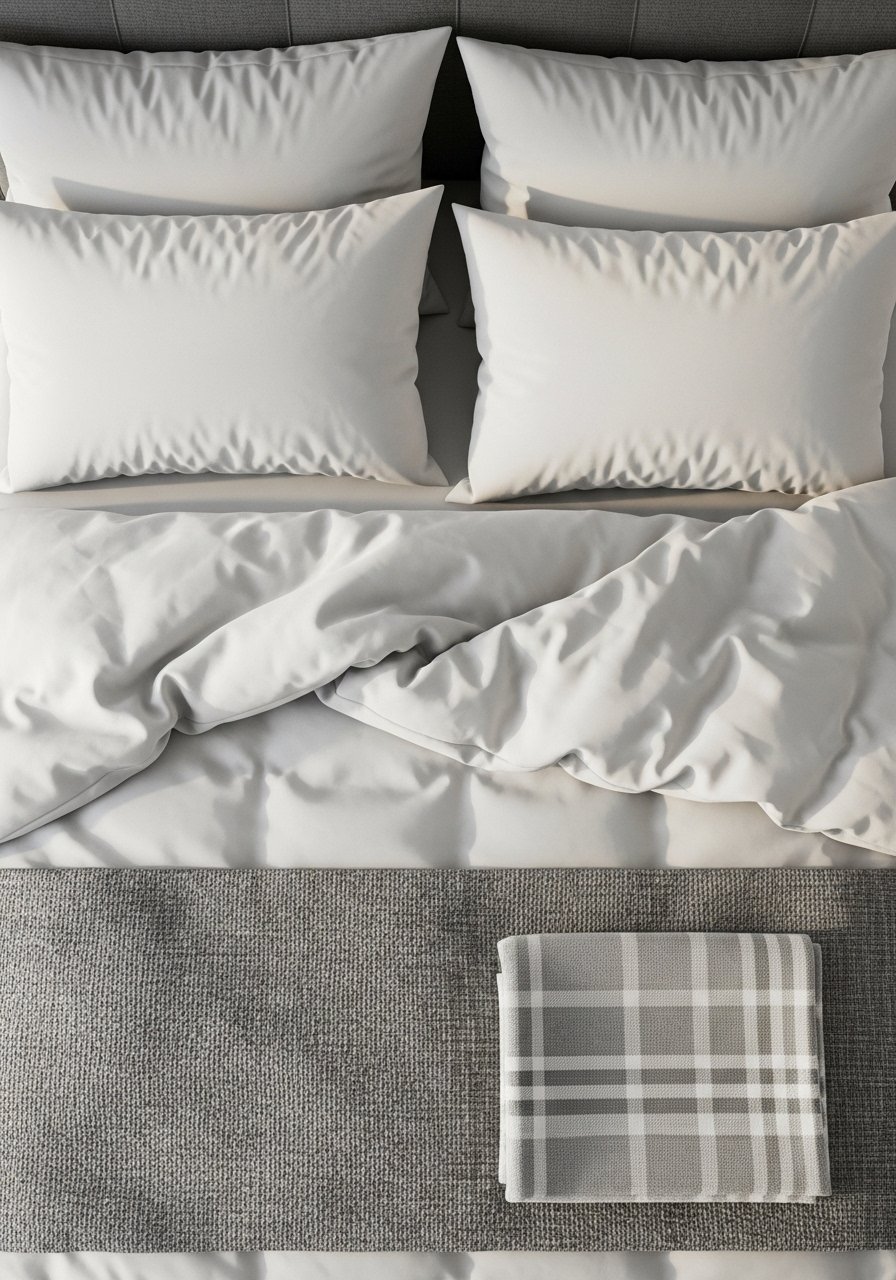
I layer bedding in thirds to get proportion right. Two euro shams in back, two sleeping pillows in front, then a decorative pillow or lumbar. The duvet goes to the mattress edge, but I fold the top third down to show sheets and texture. A throw folded across the foot, one third of the bed length, adds a finished look.
When done wrong everything looks flat and squashed. When done right the bed reads tall and inviting. I keep linen for the duvet because the slack weave adds a lived-in feel. A mistake I used to make was over-stuffing pillows. Too many pillows steal scale. I now stick to three to four layers only.
Step 3: Balance Nightstands and Lighting
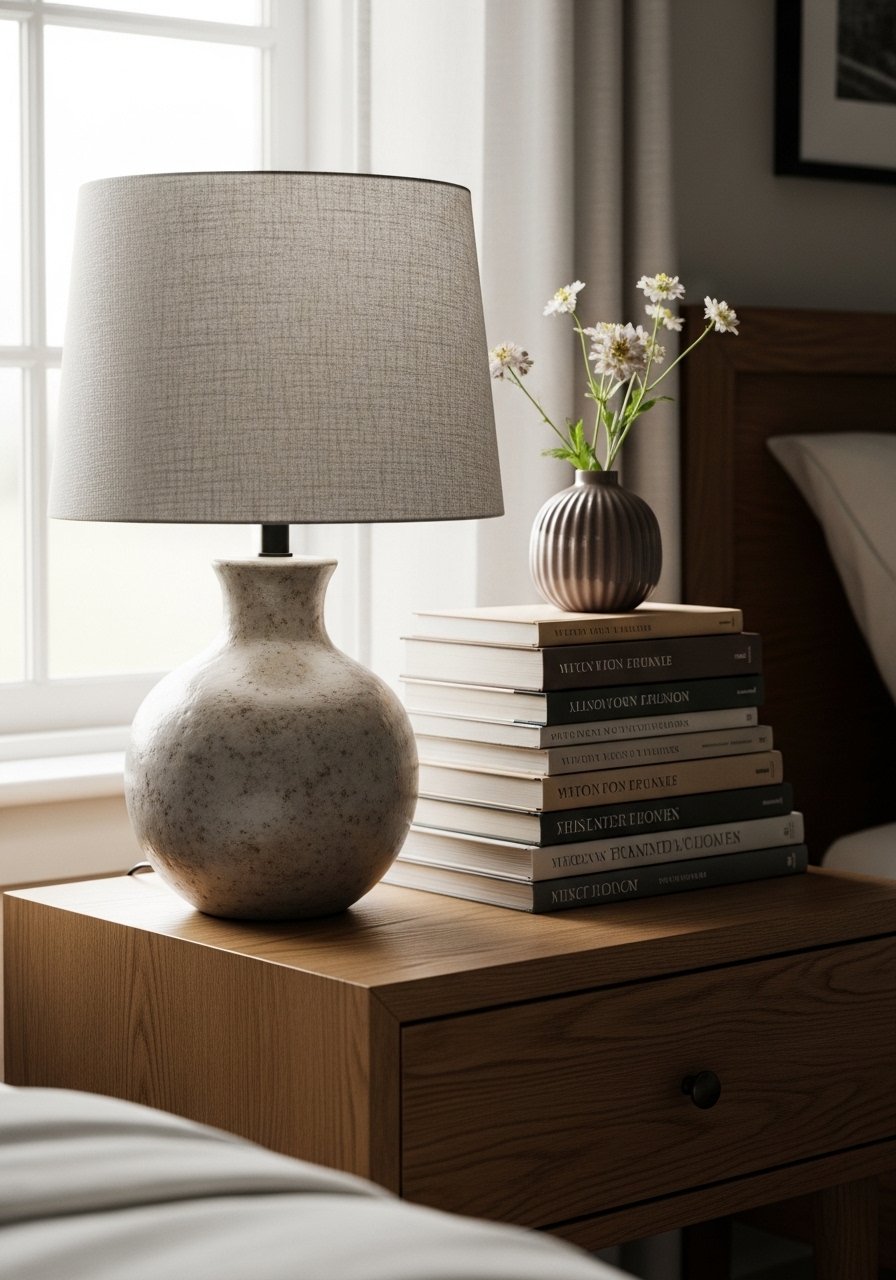
I style each nightstand with a trio of items. One taller item, like a lamp, one medium item such as a book stack, and one low accessory like a ceramic vase. Lamp height matters. My lamp base plus shade centers around 26 to 30 inches from the tabletop. If a lamp is too tall it overwhelms the headboard.
The room begins to feel balanced when both sides echo each other but do not match exactly. I avoid symmetry that becomes boring. A frequent error is cluttering the table with small objects. I leave negative space on the surface. I swapped one heavy lamp for a slimmer brass option and the whole wall relaxed.
Step 4: Place Art and Create a Visual Line
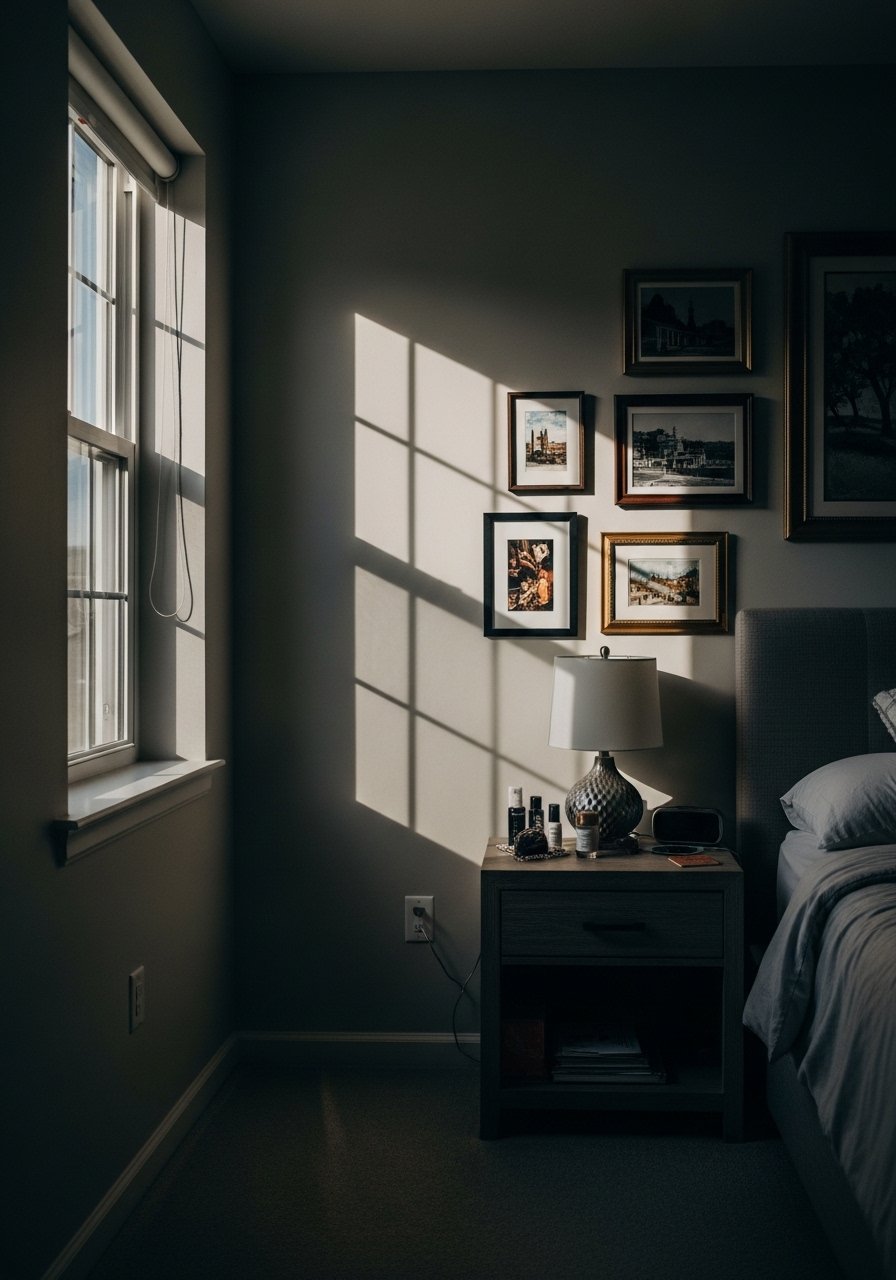
I hang art so the center sits around 57 to 60 inches from the floor. If the artwork sits too high it looks disconnected from the furniture. When possible I start with one larger piece or a ledge that keeps things flexible. I keep frames in the same finish for cohesion but vary content and scale.
What changes is the eye path. The room suddenly has a calm horizontal line that ties the bed and nightstands together. A common tendency is to hang pieces at ceiling height. That creates tension. I step back and lower things until the composition feels like part of the room. I use picture ledges when I want to swap art seasonally.
Step 5: Edit Accessories and Test the Light
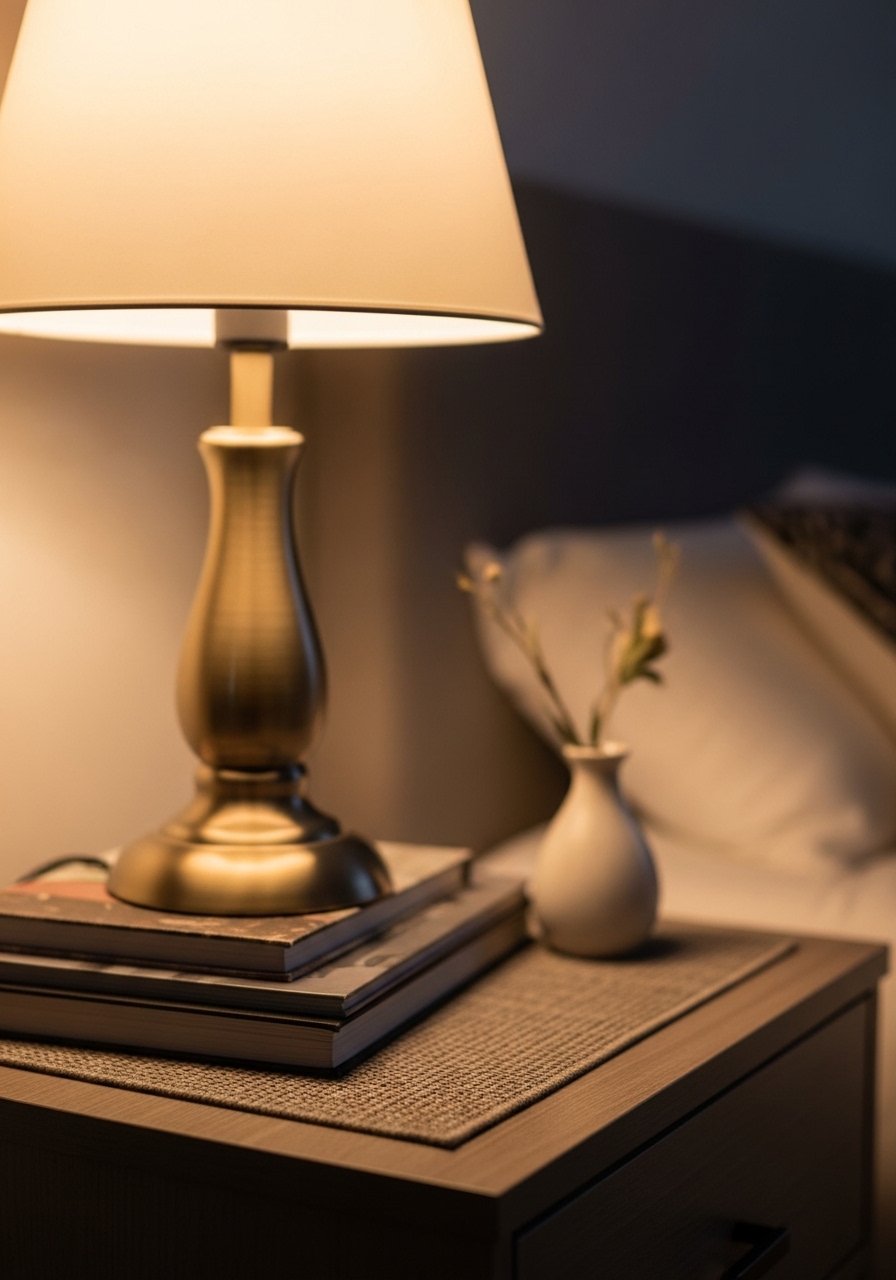
I finish by editing. Fewer pieces with deliberate spacing read better than many small objects crowded together. I check ratios. Two tall items, three medium, and one low anchor the surface well. I also test the lighting at night. Lamps should give a warm pool of light that makes the bed look cozy.
What looks different is the room feels intentional and lived-in. People often add more accessories instead of removing one. I resist adding extra because it rarely helps. A mistake I made was adding several candles that competed with the lamp. Now I place one candle, one book, and one vase. It reads calm.
Why Bedrooms Still Feel Off After Styling
I used to think more was better. It was not. The usual problems come from scale, height, and too many small objects. Pieces need breathing room. If the headboard is low then taller bedside elements fix the imbalance. If the rug feels small then everything looks anchored to nothing.
A quick checklist I use when a room feels off:
- Check rug proportion, it should extend 18 to 24 inches from bed edges
- Align art centers with 57 to 60 inches from the floor
- Limit small tabletop items to two or three confident pieces
Editing is the easiest fix most people skip.
Making This Work in a Small Bedroom
Small rooms ask for fewer, bolder decisions. I pick one surface to show texture and keep other surfaces calm. Wall-mounted lighting frees up nightstand space. Light colors on textiles help the room read larger.
Try these small-room swaps:
- Use a 6×9 or 5×8 rug and center it so the bed sits mostly on it
- Replace two bedside lamps with one wall sconce to create visual air
- Opt for a single large piece of art over many small frames
I found these moves create room without adding stuff.
Mixing What You Already Own With New Pieces
I like mixing an older dresser with a new linen duvet. The old gives character while the new provides the updated texture that ties the room together. Start by choosing one modern-texture item, like a linen duvet or chunky throw, to pair with vintage wood or metal.
An example: I kept a family heirloom dresser but swapped the hardware to matte brass. I added two matching table lamps to anchor each side. The result felt cohesive, not matched. My rule is simple. Keep one signature piece, then edit around it so the room reads consistent.
Start with One Corner
I tell friends to pick one corner and style it. Make it the reading or bedside corner. Swap the throw, add a plant, and lower one lamp. Little edits give big confidence.
If I had to suggest one low-commitment buy, it would be a linen duvet cover. It changes the room's texture without asking for a lot of work. Start small. Edit quickly. The room will follow.