

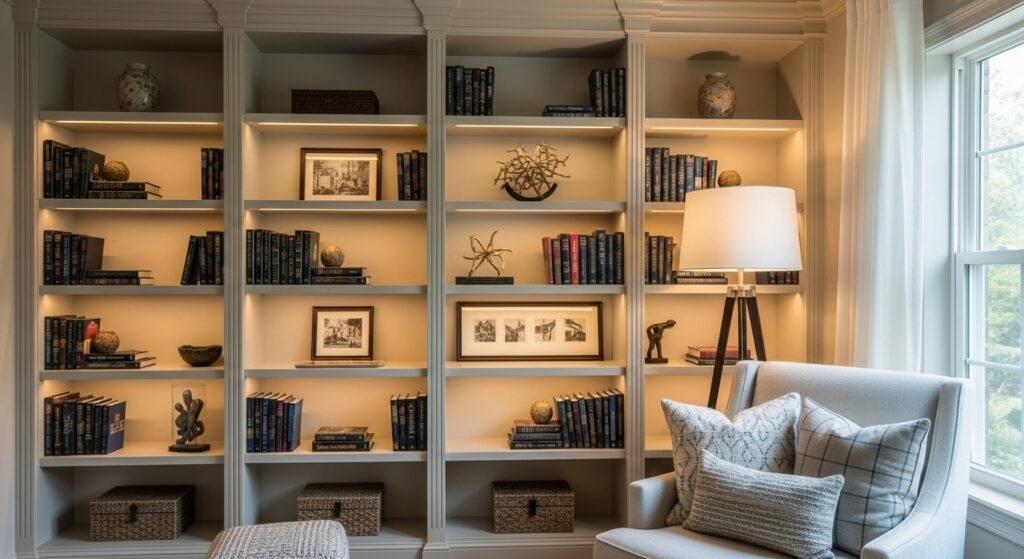
My living room had nice furniture but it still felt like a waiting room. Took me embarrassingly long to figure out it was missing texture. I kept rearranging shelves until I learned to mix book stacks, ceramics, and a lamp with one soft throw. These are the changes I made and the specific products that actually helped.
These ideas lean modern cozy with classic touches. Budgets range from under $25 for small styling pieces to $400 for a splurge chair. They work for a dedicated library, a reading corner in a living room, or a bookshelf-lined hallway.
Built-In Bookcases With Warm Integrated Lighting
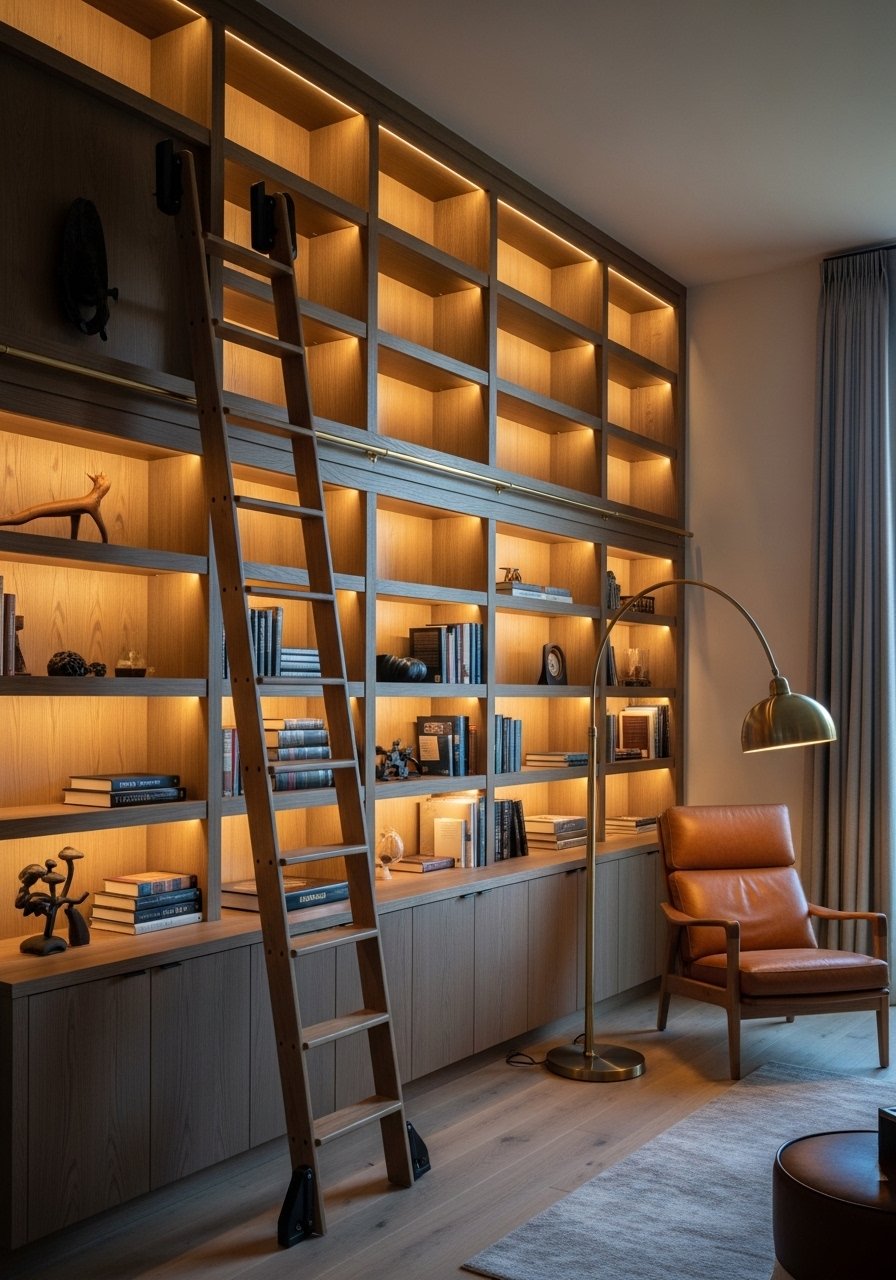
I added LED cabinet lights to my built-ins and the whole wall stopped feeling like a storage unit and started feeling like a room. The trick is 3000K warm light strips, hidden behind the shelf lip, spaced every 18 to 24 inches. It creates depth and keeps book spines readable. Budget range is $25 to $80 for strips and a wireless dimmer. Avoid one common mistake, which is lighting only the top shelves. Light from top to bottom, or the top looks like a stage and the rest looks like a cave. Try LED cabinet light strips that can be cut to length.
Window Seat Reading Nook With Underseat Storage
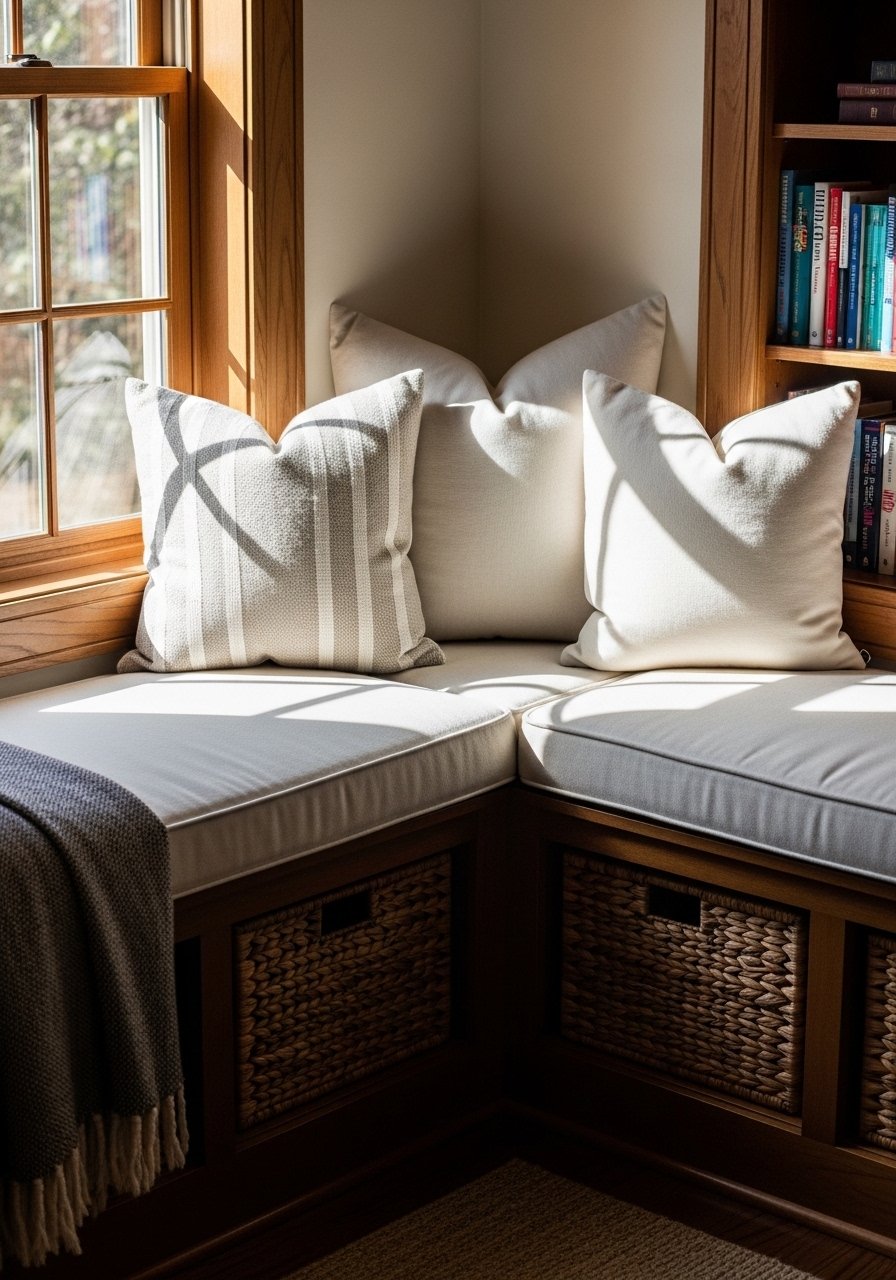
There is something about a reading nook with layered pillows that makes you want to cancel your plans. I built a 20-inch deep seat cushion on top of drawers and it added storage for throws and extras. Pick a foam thickness of 4 to 6 inches so the seat feels plush but not too high. Common mistake, people make the seat too shallow and your spine protests after ten minutes. For a finished look pick a neutral cushion cover and add one patterned lumbar pillow. I use 22-inch down-filled linen pillow covers for the layered look.
Ground-to-Ceiling Shelves With Rolling Ladder

Tall rooms beg for floor-to-ceiling shelving. A rolling ladder makes the top shelves accessible and looks intentional. My rule is shelve the top two rows for decorative items and closed boxes, middle rows for frequently used books, and lower rows for baskets. A common error is making every shelf the same height. Vary shelf heights in thirds, with one 12-inch shelf for paperbacks and one 14 to 16-inch shelf for stacked coffee table books. I found a sturdy wooden rolling ladder kit that matched my stain.
Curated Color-Blocked Bookshelf
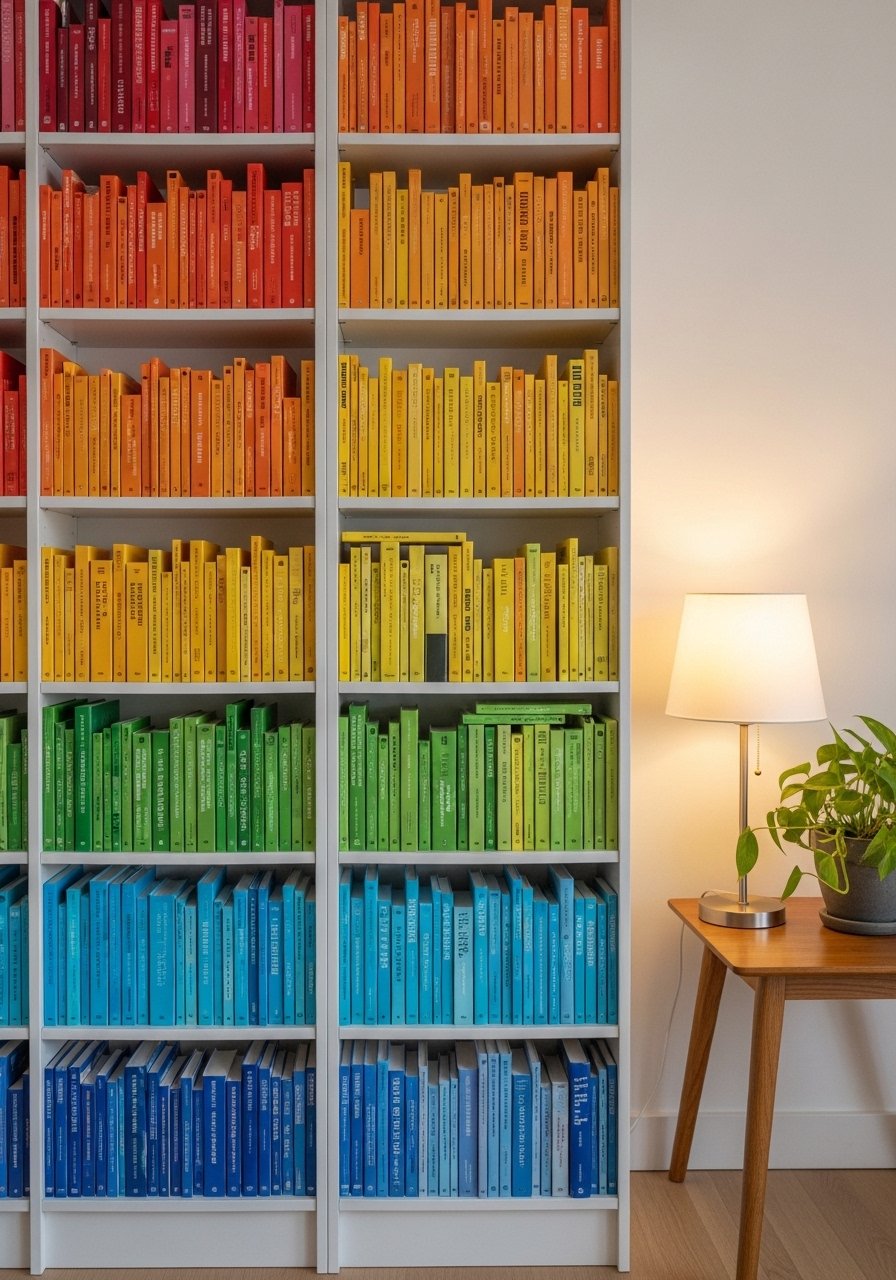
Organizing by color actually works if you set a simple rule, 80/20. Keep 80 percent of the shelf classic neutrals or dark spines and use 20 percent for a deliberate color block. That makes the shelf readable instead of chaos. The mistake most people make is full rainbow with no negative space. Reserve one shelf for objects and one for horizontal stacks. A small step I use is pairing color blocks with one ceramic piece to ground them. Try ceramic bookends in matte white to give the color some breathing room.
Layered Wall of Art and Books for a Homey Feel
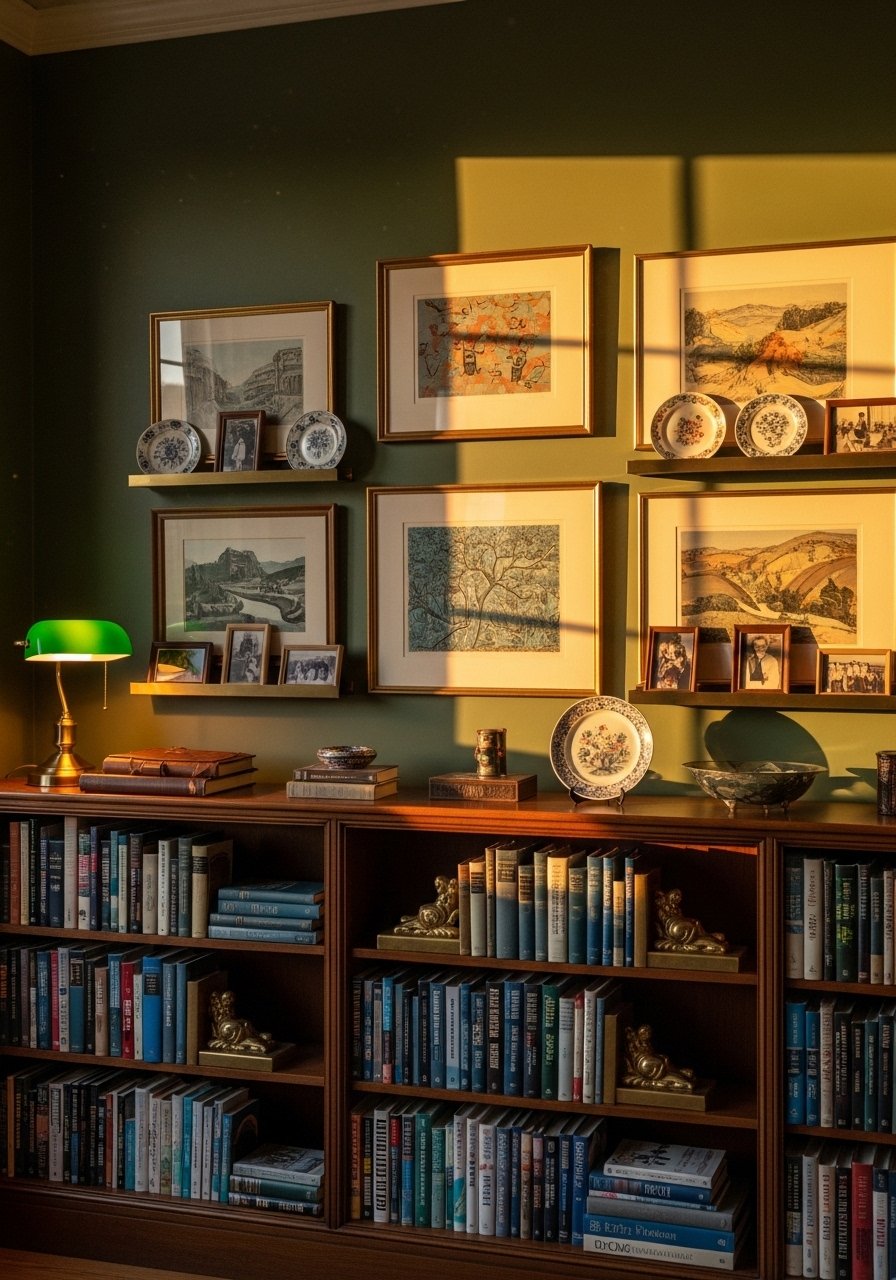
My living room used to be full of nice items but they all sat at the same height and the wall felt flat. Adding a picture ledge above the lower shelves fixed that. I hang a mix of framed prints and lean art on the ledge. Use the rule of three when styling a ledge: two frames and one sculptural object works better than five tiny things. The common mistake is centering everything. Offset your largest piece by 6 to 8 inches and let smaller things balance it. I use brass picture ledges for easy swaps without new holes.
Statement Armchair and Ottoman For Actual Reading Comfort
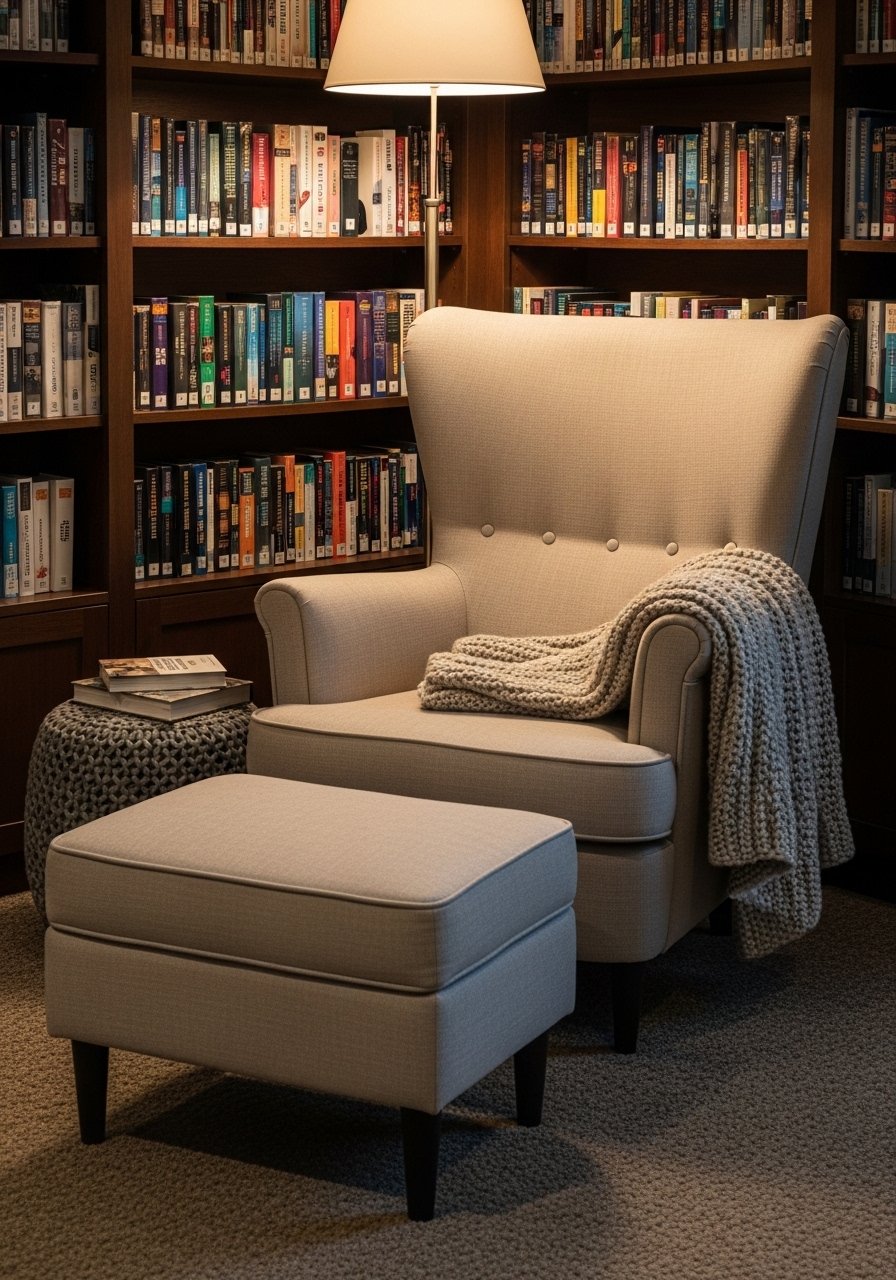
Spent $400 on a new coffee table. Room still looked off. Spent $35 on a throw and three candles. Suddenly everything clicked. That taught me to splurge on at least one seat you can sink into. Aim for a seat height of 17 to 19 inches and an arm height you can rest elbows on. People often pick pretty chairs that are actually uncomfortable. I recommend an upholstered chair with a loose back cushion and an ottoman to prop feet. Pair it with a mid-century style accent chair if you want the look without a huge price tag.
Minimalist Monochrome Library With Black Accents
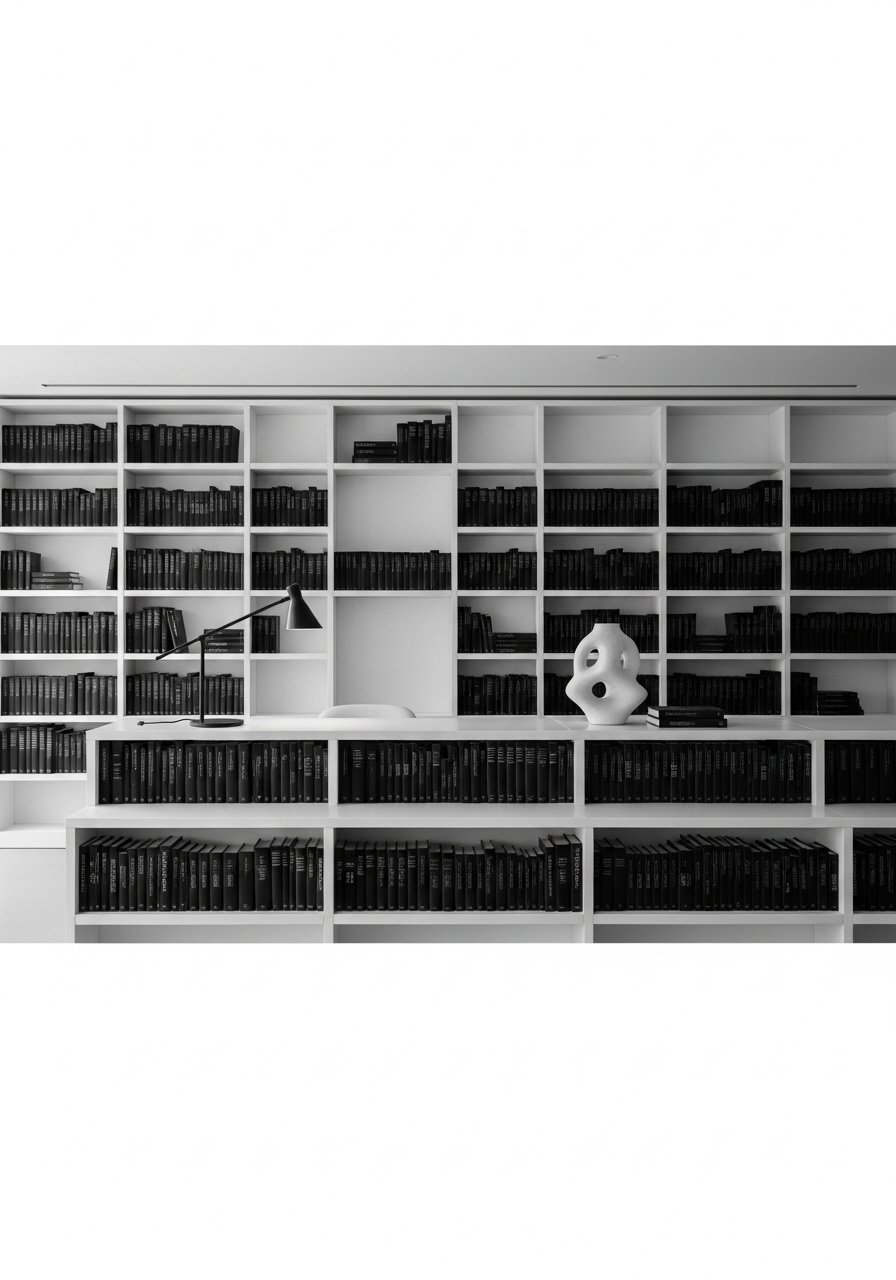
Minimalist libraries can feel cold if you skip texture. I kept a monochrome palette but layered tactile items like a woven basket, a wool throw, and a matte black lamp to keep it warm. Use a 3:1 ratio for objects to books on display. The common error is an all-books shelves that reads like a warehouse. Add one organic element per shelf and a low pile rug to ground the space. For a modern finish, try matte black bookends and mix in a linen-covered box.
Vintage Finds Mixed With Modern Shelving
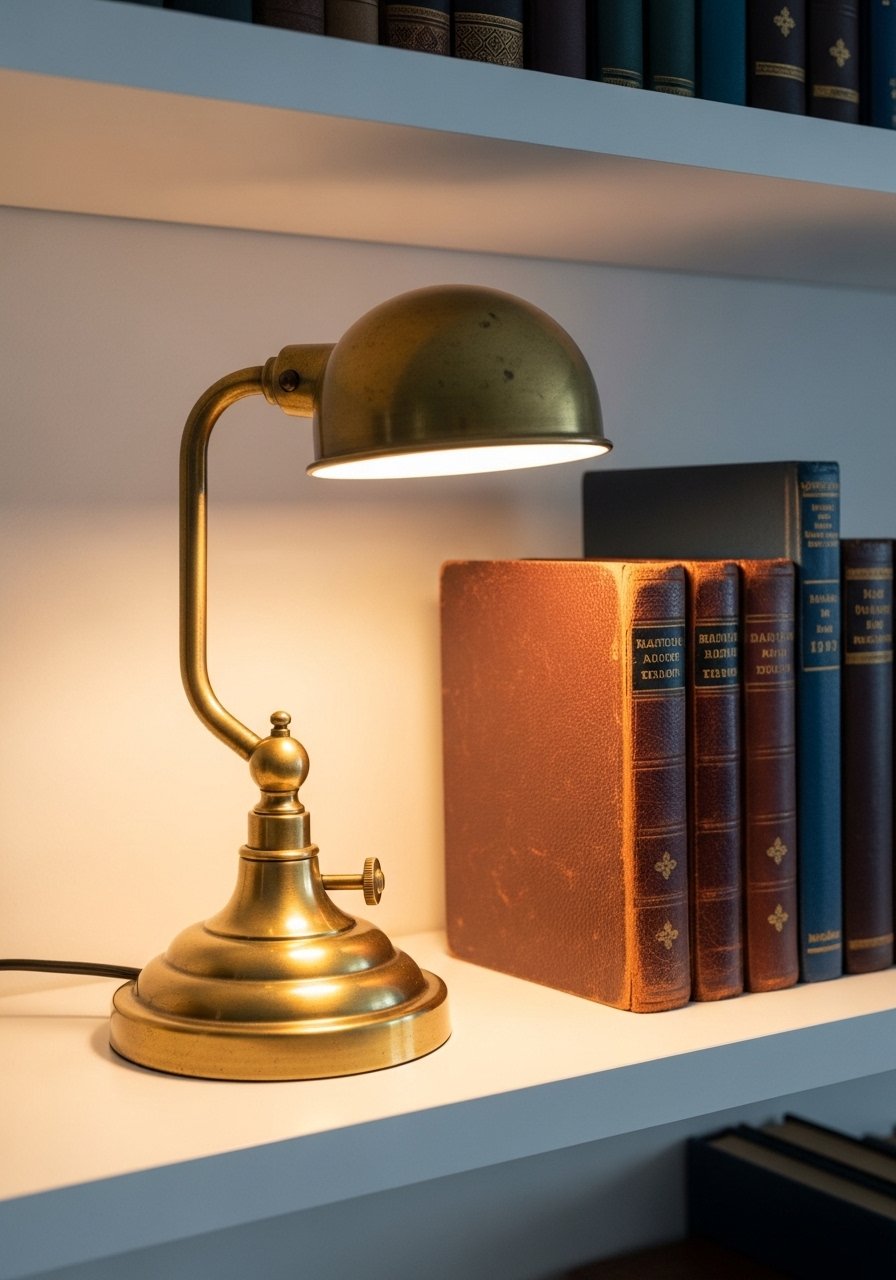
Mixing eras stops a library from feeling staged. I hunted a vintage brass lamp for under $60 and it gave the whole shelf personality. The key is balance. One vintage point per three modern pieces keeps the room curated rather than cluttered. A common mistake is matching everything for safety. Swap one modern frame for an old world map and the shelf will read as lived-in. If you want the look, try brass clip lamps that clip to the shelf edge and add instant character.
Glass-Door Cabinets To Hide the Mess

Bookshelves are never tidy for long. Glass doors let you show favorite items and hide the rest. I chose frosted glass on lower cabinets so the eye reads texture not dust. The common mistake is glass that reflects everything and makes the room darker. Use thin mullions and clear tempered glass for brightness, or frosted panels to soften. For a classic touch add knobs that are 1.25 to 1.5 inches in diameter. I swapped plain pulls for brushed brass cabinet knobs.
Built-In Desk Below Shelves For a Compact Home Office
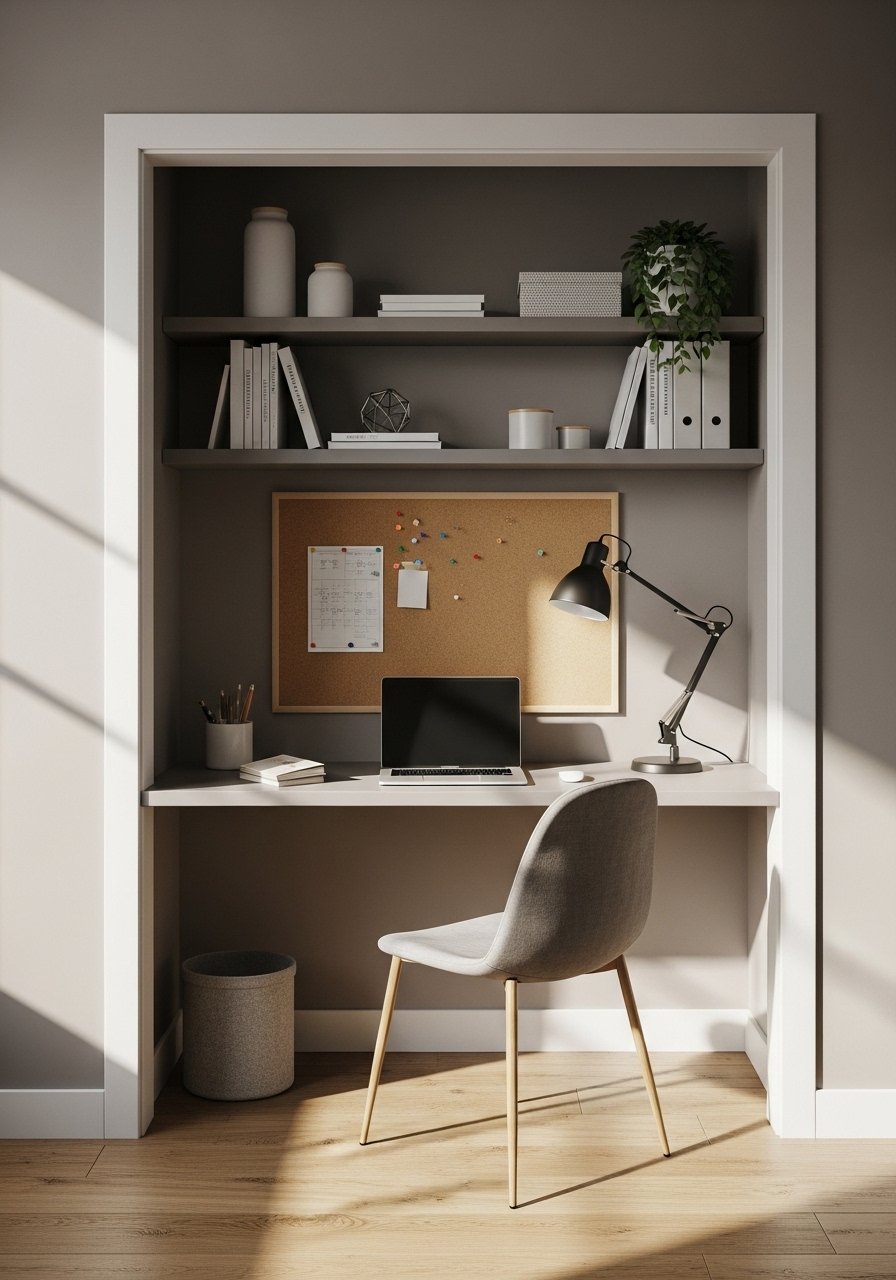
I converted part of my library wall into a tiny desk and it suddenly made the whole room multi-functional. Keep the desk depth at 20 to 24 inches so you have space for a laptop and a lamp. A common frustration is losing shelf storage when you add a desk. Use two shallow drawers and vertical file pockets on the side to keep clutter off the surface. For a tidy desktop pick a slim lamp that clamps to the shelf, like adjustable clamp desk lamps.
Library Lighting Layer With Floor Lamp, Table Lamp, and Sconces

Layered light equals more reading time. I use a bright task lamp for pages, a floor lamp for general light, and a dimmable sconce for mood. A common mistake is relying on one overhead fixture and no task light. Aim for a lamp that puts 400 to 600 lumens on the book page. The rule of three works here, too. If you have one strong light, add two softer sources. I keep a torchiere floor lamp with dimmer by the chair for evenings.
Greenery That Actually Survives Indoors
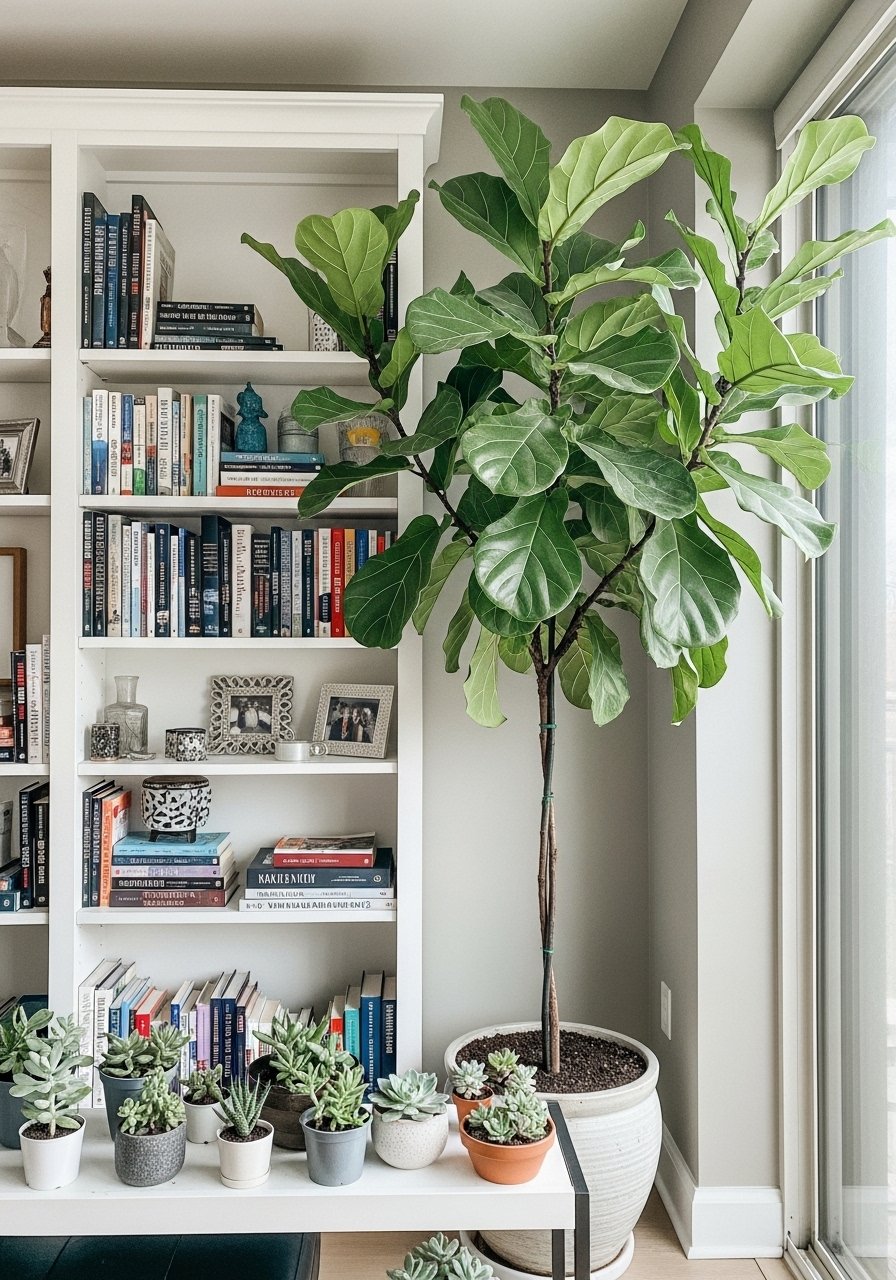
Real plants change the air and the mood, but low-light spaces suffer. I use a mix: a low-maintenance snake plant and a faux fiddle leaf in the darkest corner. One disproportionately tall plant beats five tiny succulents scattered. The mistake is crowding plants without considering watering needs. Give houseplants their own rule, one watering day per week or per two weeks depending on the plant. If you need drama without upkeep, try an artificial fiddle leaf fig.
Layered Textiles and Rug Anchoring for Warmth
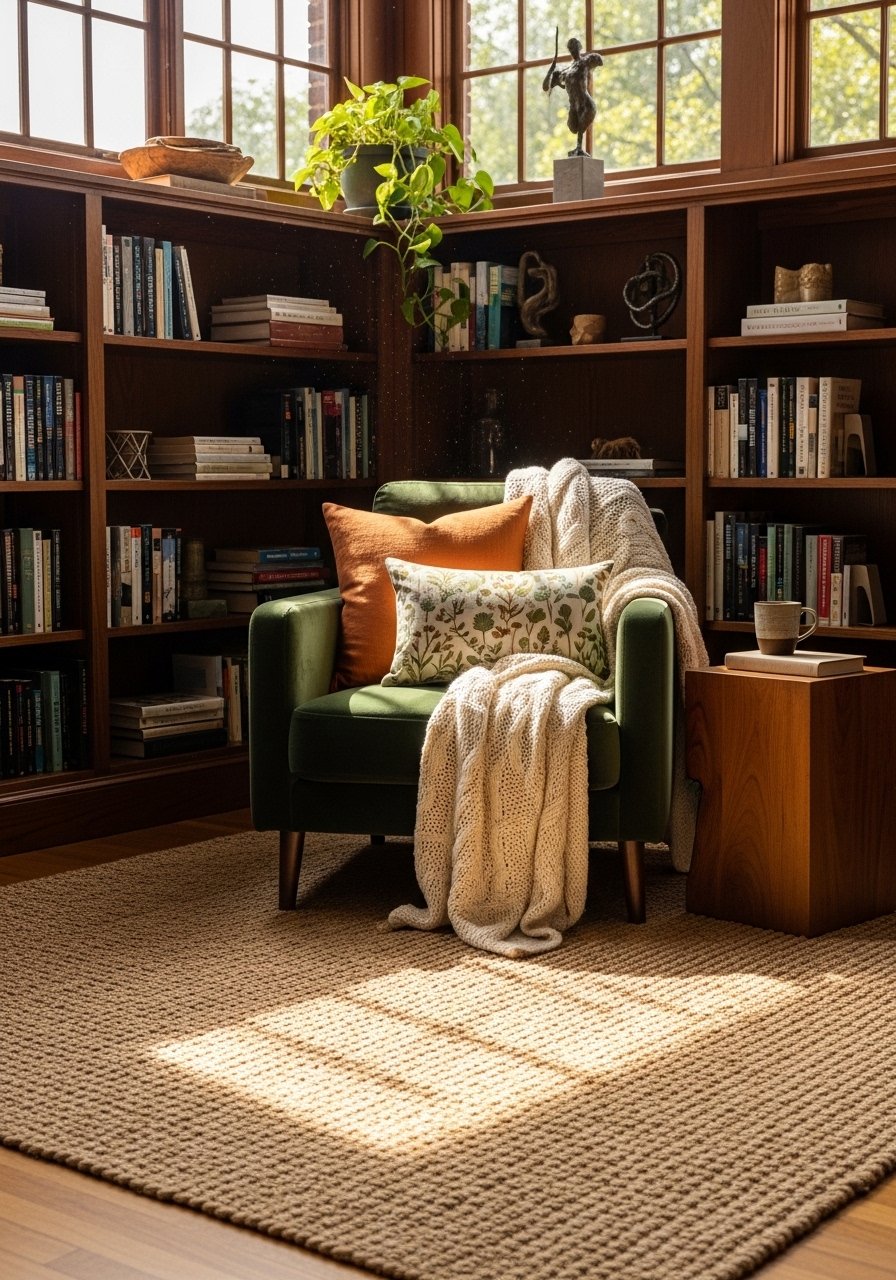
Throws and rugs finish a library. I learned the hard way that an undersized rug makes everything float. For a seating group aim for an 8×10 so front legs of seats sit on the rug. Add a chunky knit throw and a 22-inch lumbar pillow to make the chair usable for hours. Avoid matching every textile exactly. Mix linen, wool, and a subtle pattern to add interest. I use a neutral 8×10 jute rug for durability and layer a soft wool runner on top for winter.
Your Decor Shopping List
Textiles
- Honestly the best $40 I have spent. Chunky knit throw in cream (~$35-55). Drape over the sofa arm for instant warmth
- 22-inch down-filled linen pillow covers in two colors for a layered look
Wall Decor
- Brass picture ledges (~$18-25) for swapping art without new holes
- Matte black bookends for the minimalist shelf
Lighting
- LED cabinet light strips for warm built-in lighting
- Torchiere floor lamp with dimmer for layered evening light
Furniture & Storage
- Mid-century style accent chair if you want a splurge without a full investment
- Wood rolling library ladder kit for tall shelves
Plants & Pots
- Artificial fiddle leaf fig 6ft for height without fuss
- Ceramic planter set for shelf-sized greenery
Budget Finds Note: Similar items are always at Target or HomeGoods if you prefer to see texture in person.
Shopping Tips
White oak beats dark wood in 2026. Design feeds have shifted completely. These white oak floating shelves look current, not dated.
Grab velvet pillow covers for $12 each. Swap them seasonally and the whole room feels different.
Curtains should puddle or kiss the floor, never hang halfway up. These 96-inch linen panels are right for standard 9-foot ceilings.
One tall plant > five small succulents. Try an artificial fiddle leaf fig where you need height without maintenance.
When in doubt, buy one oversized item not five small ones. A single statement armchair anchors a space more than matching side tables.
Frequently Asked Questions
Q: What size rug do I actually need for a library seating group?
A: Bigger than you think. For a standard seating area go 8×10 minimum so the front legs of seating sit on the rug. If the room is narrow consider an 8×10 jute with a soft rug layered on top.
Q: Can I mix vintage and modern without it looking messy?
A: Yes. Use one vintage piece for every two or three modern items. That ratio keeps the look curated. I swap a vintage lamp or map into a modern shelf and it reads intentional.
Q: How should I arrange books and objects on shelves?
A: Alternate vertical books with horizontal stacks in roughly a 2:1 ratio, two vertical shelves for every one styled shelf. Add one sculptural object per shelf to avoid the warehouse look.
Q: What lighting is actually necessary for late-night reading?
A: A task light that puts 400 to 600 lumens on the page is essential. Add a floor lamp for ambient light and a dimmer sconce for mood. Layered lighting keeps eyes comfortable.
Q: Real plants or faux plants in a low-light library?
A: Both. Use low-light real plants like snake plants where possible. For corners with no sun, a realistic faux ficus gives you height without the maintenance.