

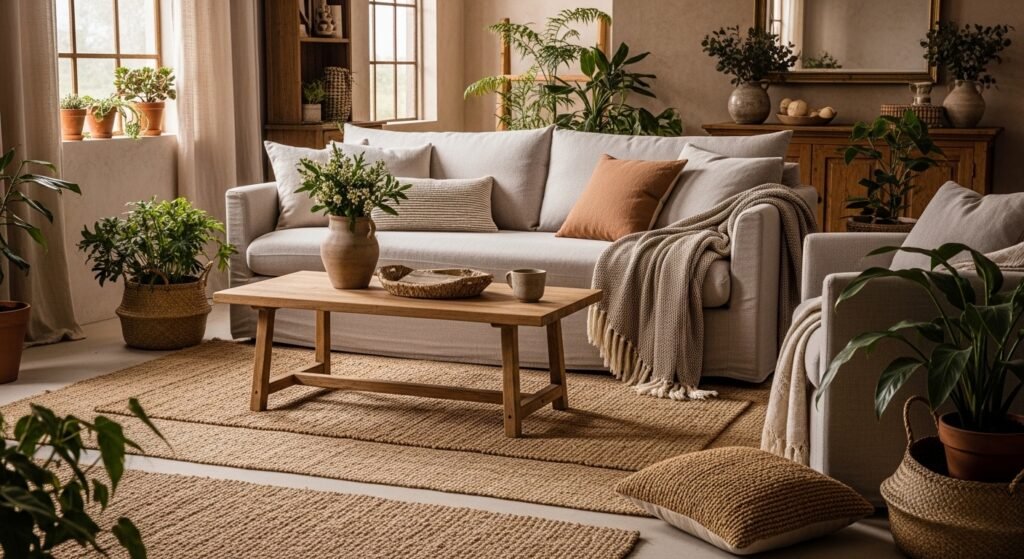
My living room had nice furniture and decent lighting but it still felt like a waiting room. Took me embarrassingly long to figure out it was missing texture. Every surface was smooth, every color was flat, and nothing invited you to actually sit down. Once I added a few earth-toned furniture pieces and focused on scale instead of matching, the whole place stopped feeling sterile and started feeling like home.
These ideas lean warm modern and casual rustic. Most pieces are under $400, with a couple splurges around $700 if you want a statement item. Work them in living rooms, family rooms, and large seating areas that need more weight and texture.
Low-Profile Linen Sofa for Airy Earthy Vibes
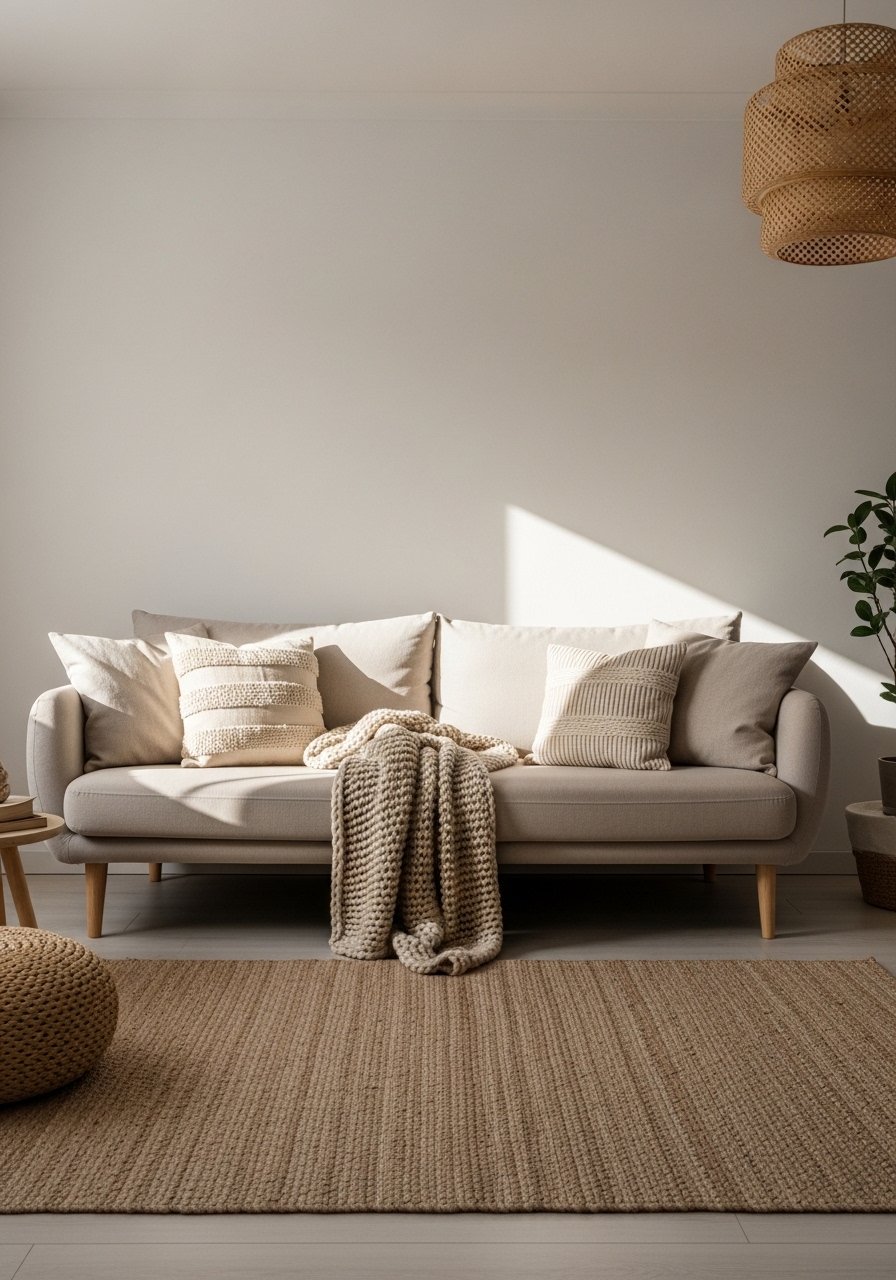
The moment I swapped my tall, formal sofa for a low-profile linen one, the room finally felt grounded. Low sofas in linen read earthy without being heavy. They work especially well in shallow rooms because they keep sightlines open. Budget range here is $300-900 depending on size and frame. Watch the seat depth—22 to 24 inches is comfortable for most people and avoids the "dive-in" look that makes a room seem messy. I liked pairing mine with a reclaimed wood coffee table like this one I found, which kept the scale balanced. A common mistake is buying a low sofa but a tall coffee table; keep coffee table height within 2-4 inches of the sofa seat for cohesion.
Chunky Wood Coffee Table for Rustic Centering
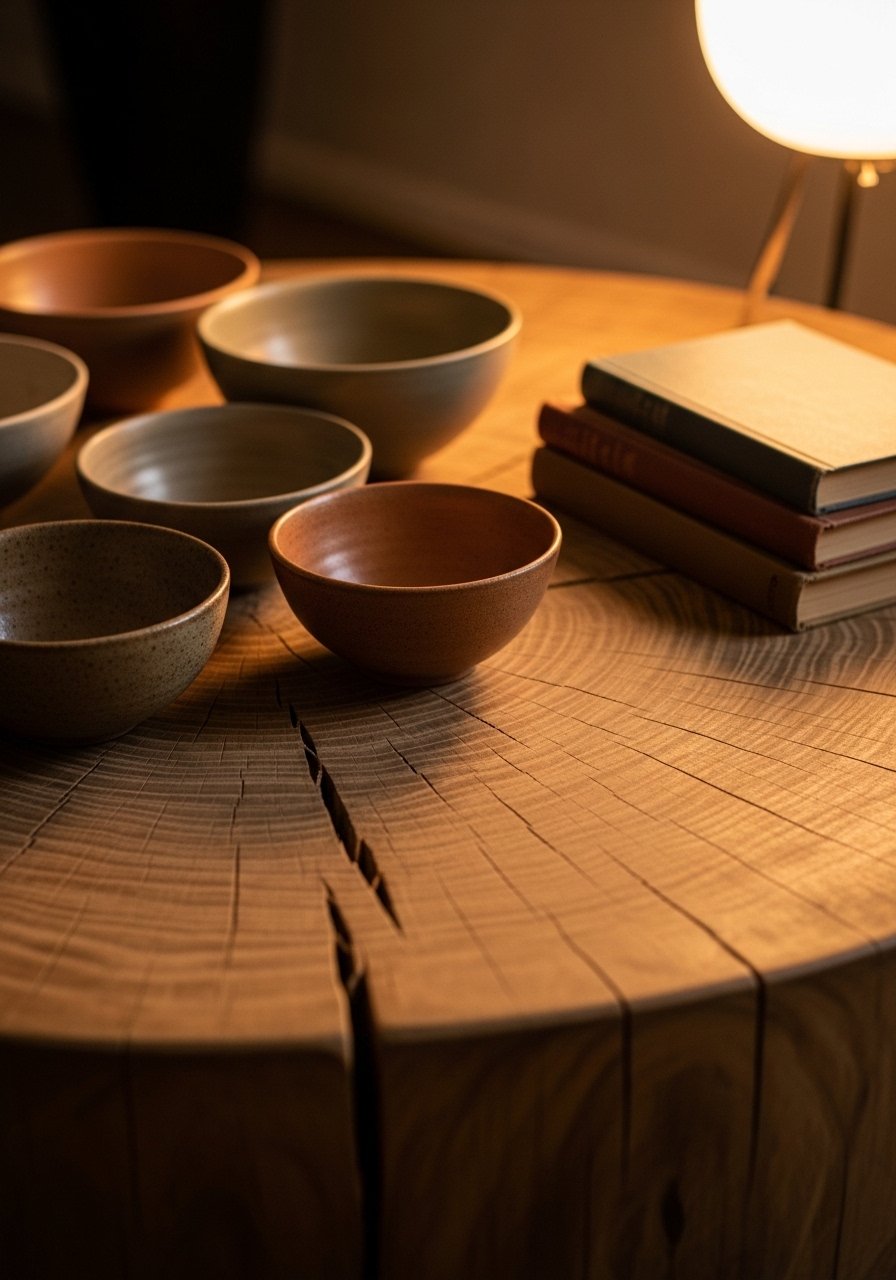
A heavy wood coffee table anchors everything. I spent $400 on a sleek table once and the room still looked off. Switched to a chunky round wood table for about $180 and the seating grouped itself around it. It creates a tactile center and hides scuffs better than lacquered surfaces. Use a table diameter that leaves 16-18 inches between the sofa and the table edge for comfortable legroom. I paired mine with a woven tray and a set of ceramic coasters to keep the surface useful. Mistake people make is picking a table that’s the wrong scale for the rug, so measure before you buy and remember, round shapes soften square furniture layouts.
Open Wood Shelving for Layered Texture
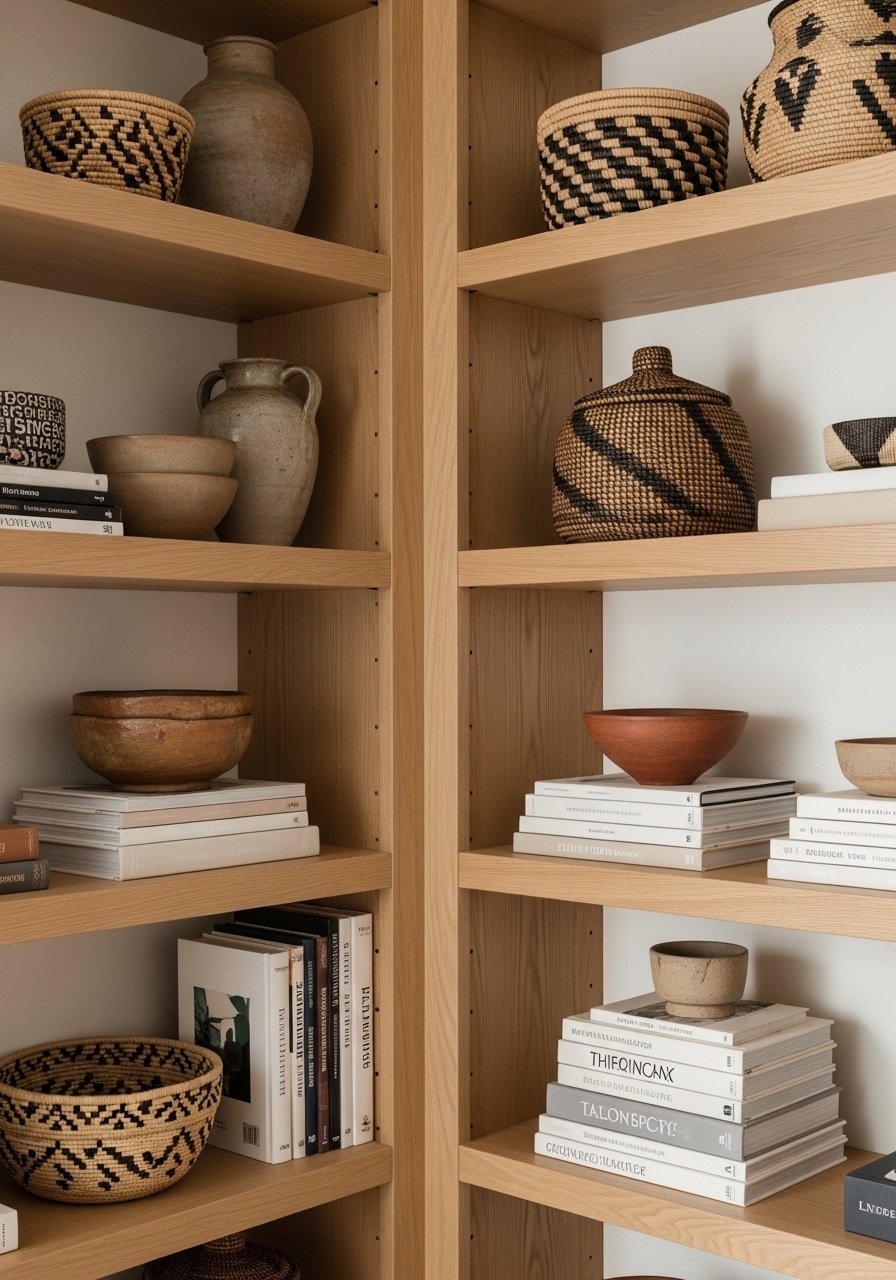
Open shelving in white oak adds instant warmth and gives you places to layer ceramics, books, and plants. I prefer shelf depth around 10-12 inches for living room styling; anything deeper looks like storage instead of display. Budget is flexible, $60 for brackets and boards to $350 for pre-made units. These shelves are great for showing off a mix of matte pottery and framed photos, and they play well with the gallery wall idea below. I used minimal brass brackets to avoid visual clutter. A common mistake is overstuffing shelves. Apply the rule of three and leave negative space so the natural materials can breathe.
Leather Accent Chair for Warm Contrast
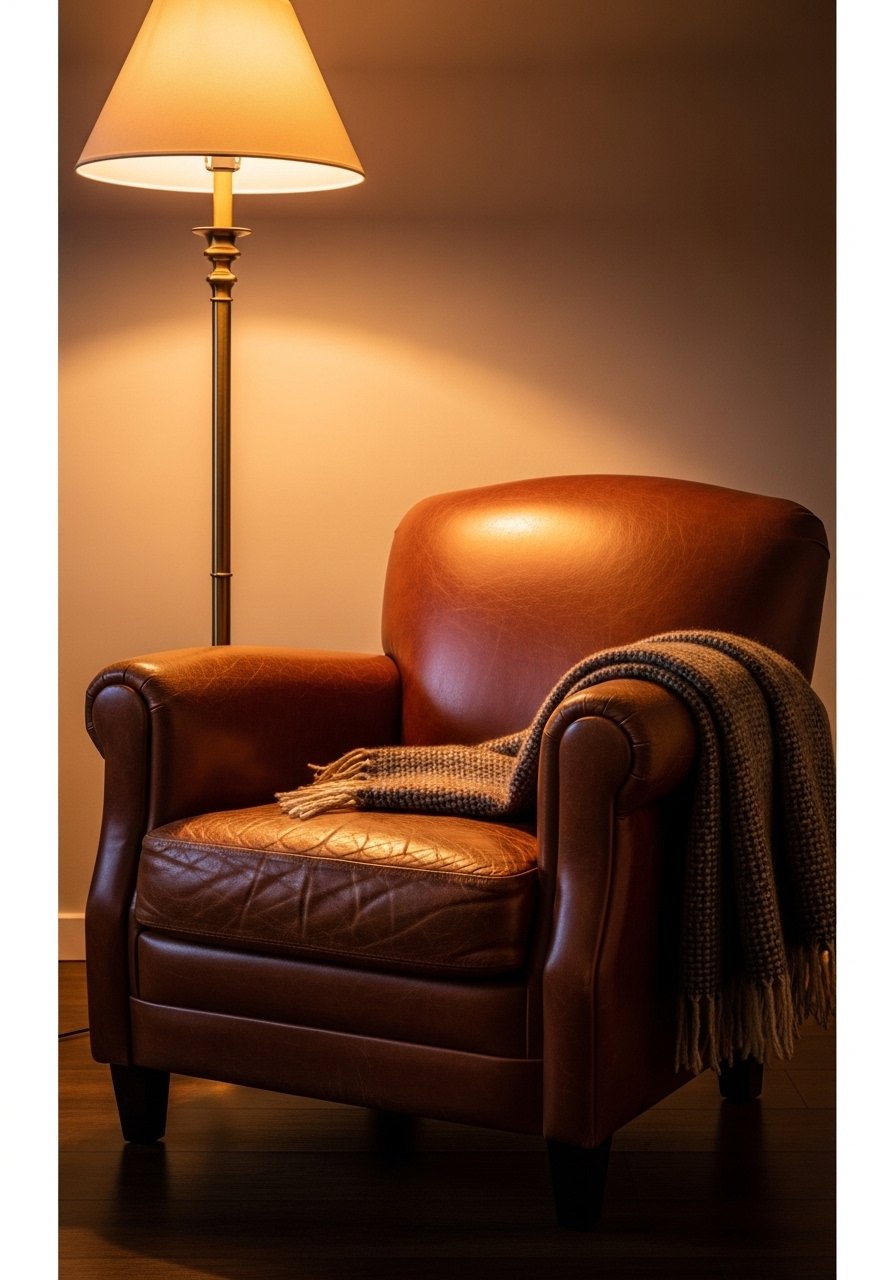
There is something about a leather chair that immediately reads earthy and lived-in. A cognac leather chair around $250-700 adds both color and durability. I like chairs with slightly angled backs for reading comfort and 20-22 inch seat width for proportion. Place it at a gentle angle to the sofa rather than directly facing it. I paired mine with a small side table, this brass-accented option, and the combo made the whole seating area feel intentional. People often buy matching sets and lose contrast; mixing textures like leather and linen prevents the room from feeling flat.
Oversized Woven Rug to Anchor Seating Areas
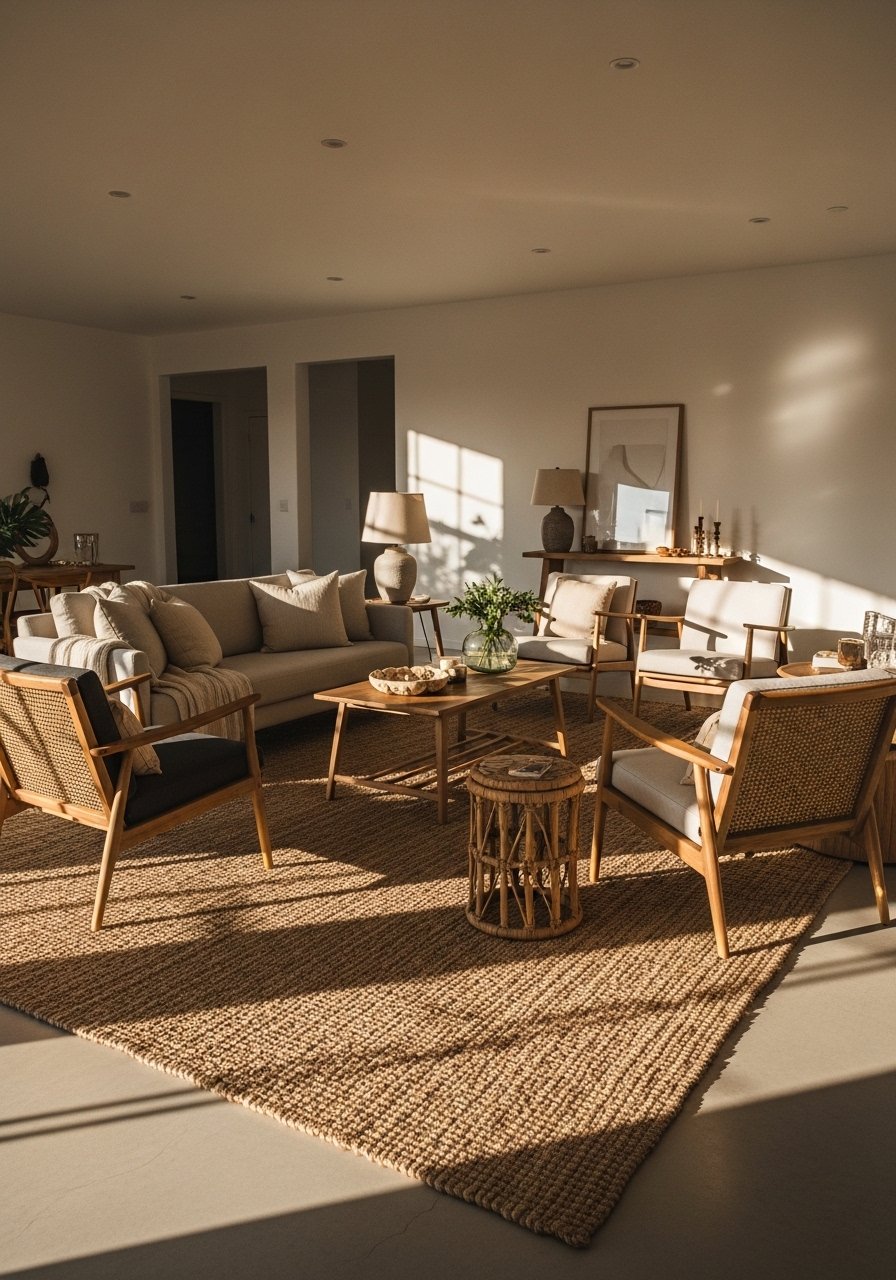
Rugs too small are the single most common mistake I see. Bigger rugs make everything read as one room instead of floating islands. For most living rooms I go at least 8×10, and if your sofa backs are against the wall, aim for 9×12 so all front legs sit on the rug. A natural jute rug adds an earthy base and cost $120-300. I layered a smaller wool rug on top for softness and pattern without sacrificing the raw texture. I bought an 8×10 jute rug and then a 5×8 wool runner for the high-traffic zone. Photo-vs-reality note: jute looks darker indoors, so order a sample if color matters.
Round Wooden Coffee Table for Cozy Conversation Nooks
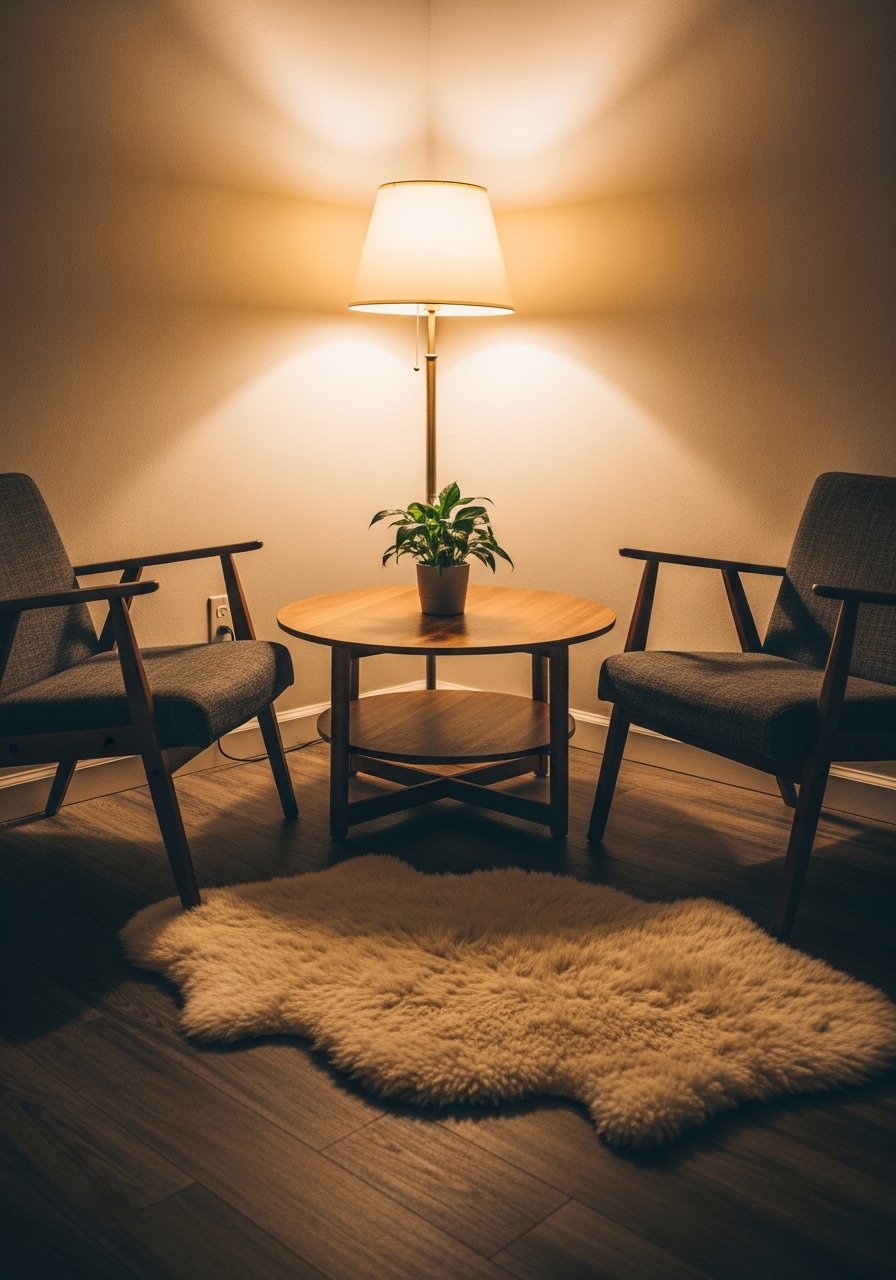
Swapping a rectangular table for a round wood piece changed how people moved in my living room. Round shapes encourage conversation and fit well in smaller seating nooks. Aim for a table diameter of 30-36 inches in compact areas so there is still 18 inches clearance around seating. I paired my round table with two slim chairs and a small jute rug underneath. The trick many miss is spacing: leave a walk path at least 30 inches wide next to seating so the room doesn’t feel cramped. For styling, add a low vase and a stack of coasters to keep the surface useful without clutter.
Earth-Toned Media Console with Closed Storage
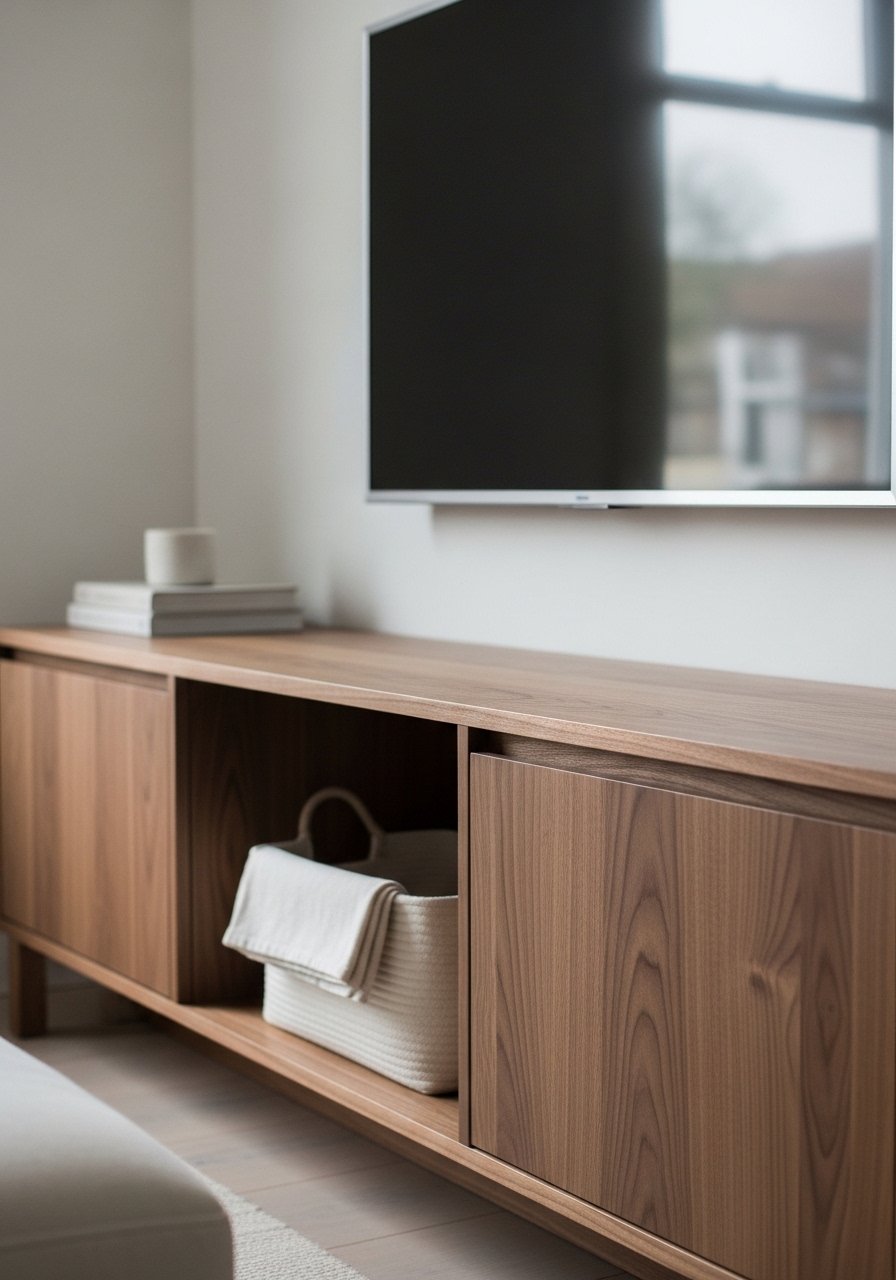
My TV wall used to be a pile of cords and devices. Switching to an earth-toned media console with closed storage tidied sightlines and warmed the room. Choose a console height around 22-26 inches so the TV sits eye level when seated. I spent $220 on a walnut-finished unit with adjustable shelves and it hid everything. For smaller budgets, look for a console with sliding doors. I recommend this walnut console. A common mistake is buying a console that is too narrow for the TV; match width within 6 inches of your screen to avoid a lopsided look.
Natural Fiber Poufs for Flexible Seating
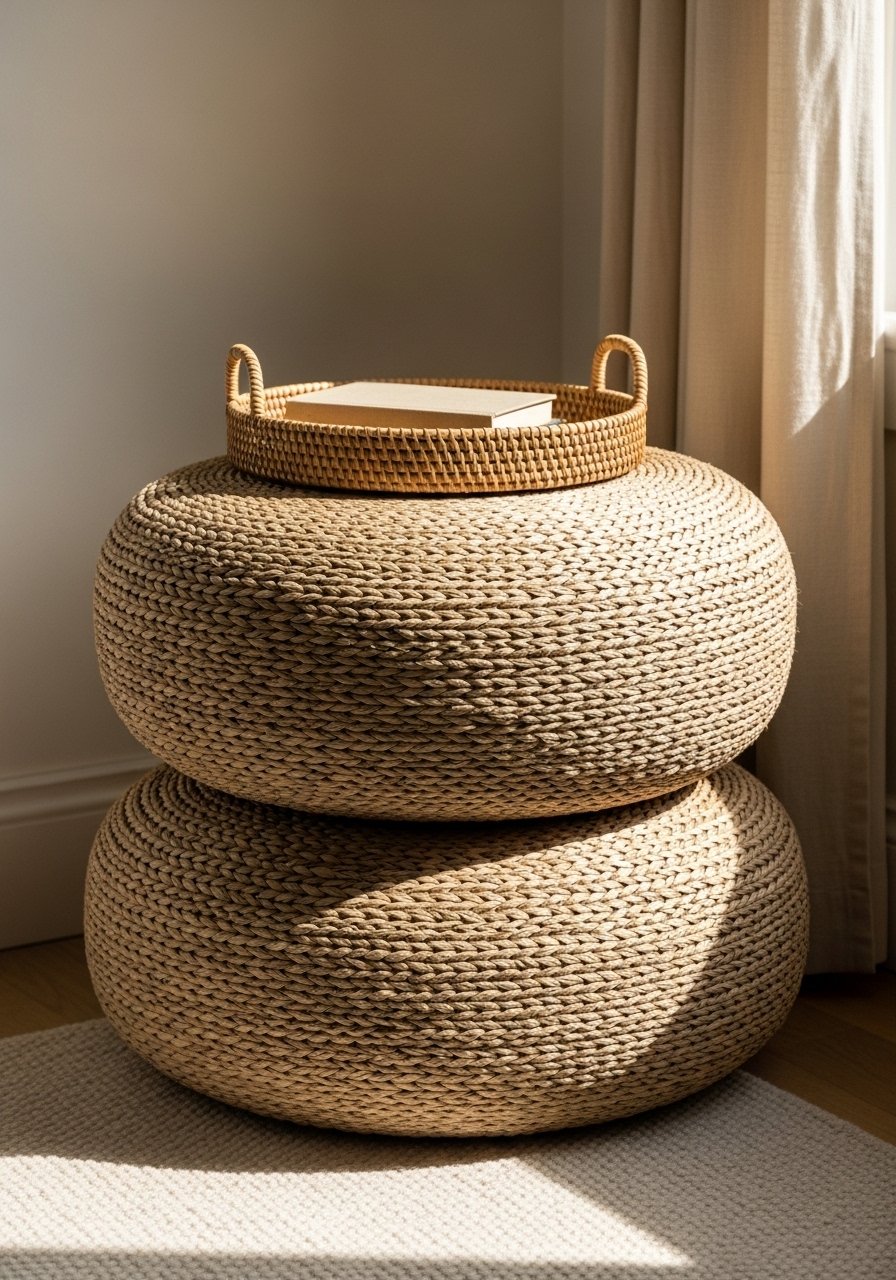
Poufs are the cheap trick that makes a room feel intentional. I have two jute poufs that cost under $80 each and they act as extra seats, footrests, or side tables in a pinch. They are especially good in rooms where you want occasional flexibility without permanent chairs. Size-wise, 18-20 inches diameter is comfortable for adults to perch on. I toss a small tray on one when guests arrive to keep drinks stable. Bought a pair of woven poufs and they solved the "where do people sit" problem at gatherings. Avoid poufs that match everything exactly; slight variation in tone keeps the palette layered.
Oversized Floor Lamp for Warm Task Lighting
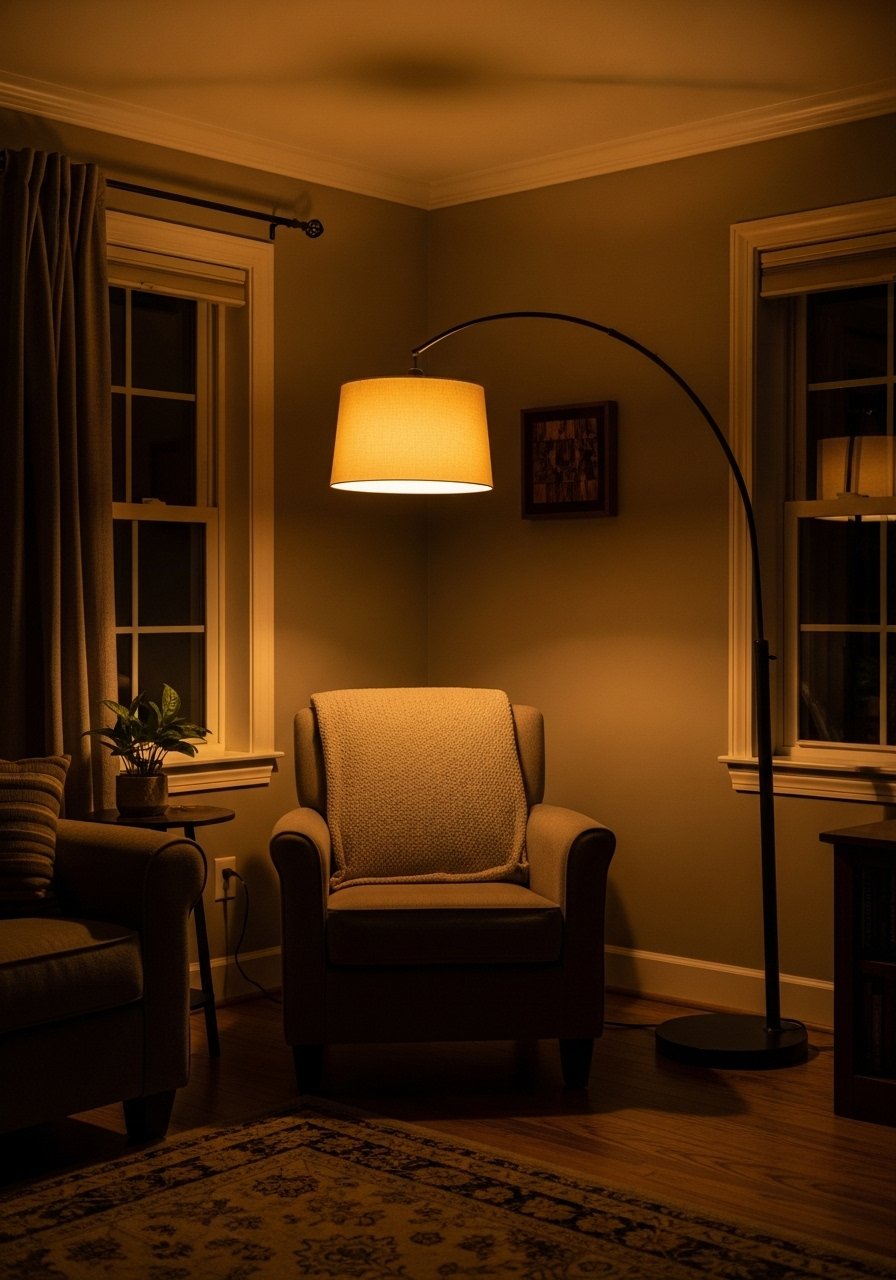
Swapping a small table lamp for an oversized floor lamp made my reading corner feel purposeful. Earthy metal finishes and linen shades soften light and complement wooden furniture. Look for an arc lamp with a 60-72 inch reach so it can pass over a side table and cast light across a sofa. Budget ranges from $80 to $250. I bought an arched floor lamp and it instantly created a cozy reading triangle. Common error is relying on overhead lighting alone. Layer at least two sources in a living room for depth and to avoid a cold, clinical feel.
Sculptural Side Table for Visual Interest
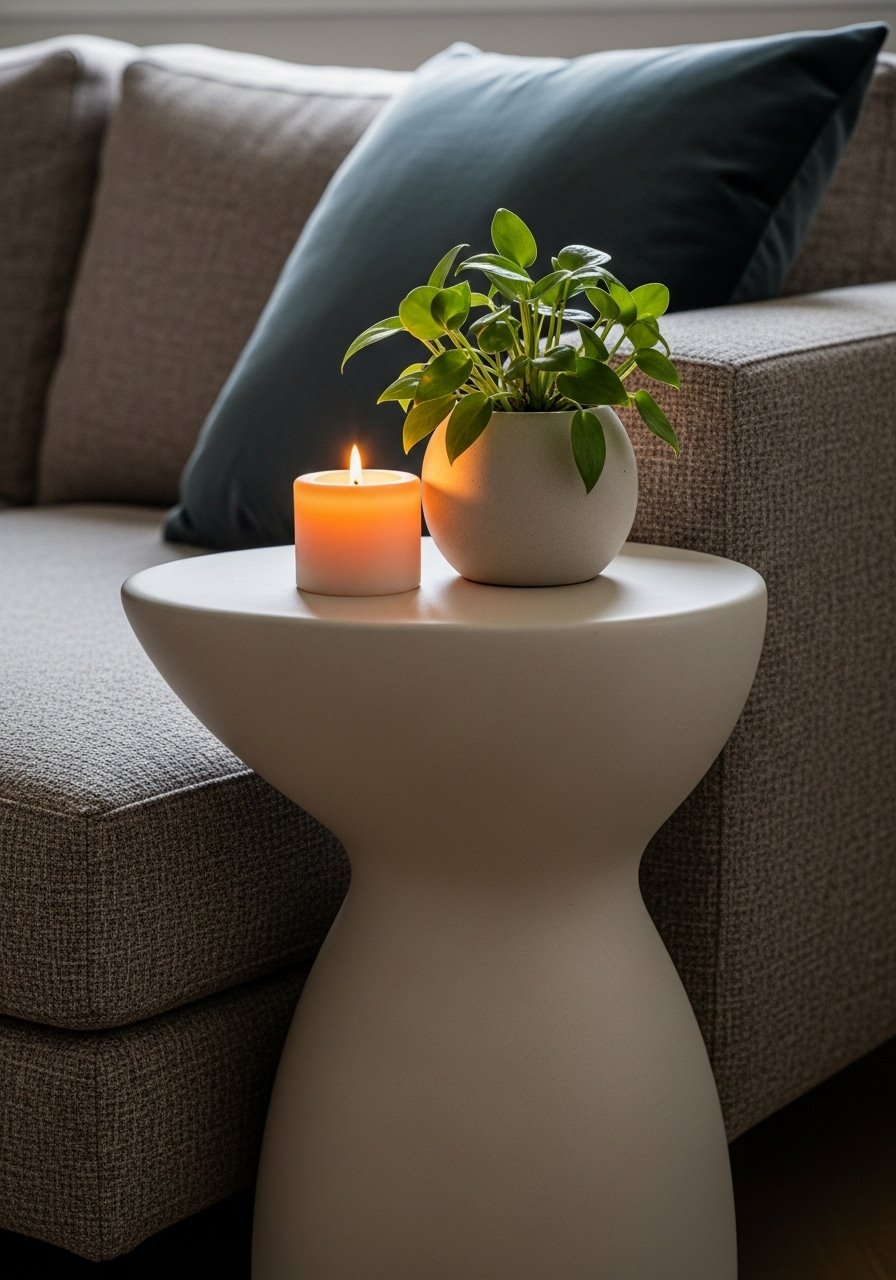
If your room feels too predictable, add a side table with a sculptural silhouette. These pieces act like small art installations and keep the earthy vibe without adding color. I like ceramic or turned-wood tables around 18-22 inches high, which sit nicely next to most sofa arms. I grabbed a ceramic drum side table for about $120 and it became the spot everyone put their drinks on. The mistake people make is buying a table that is too tall or too flat on top; choose one with a practical surface or pair it with a tray to make it usable.
Vintage Trunk as Coffee Table and Storage
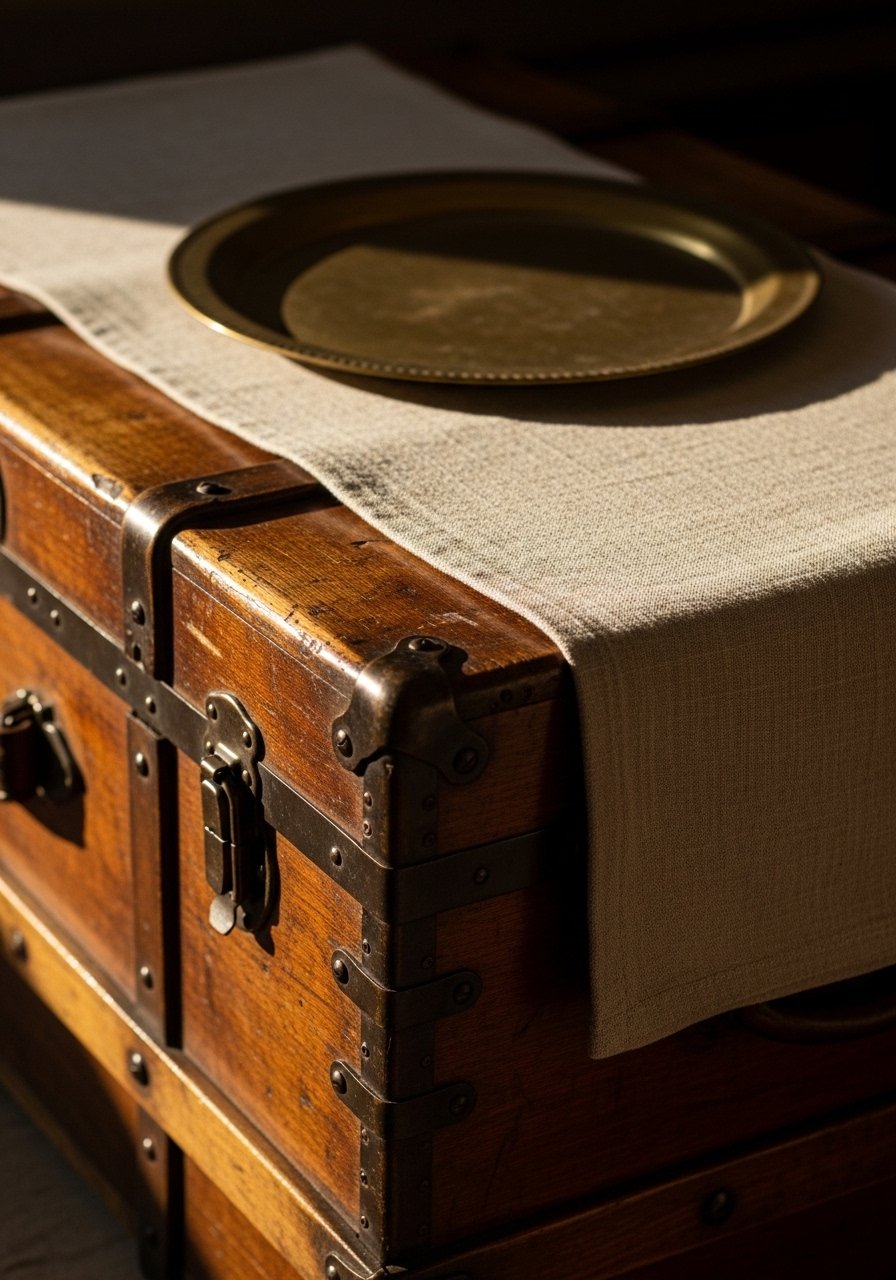
I used to lose blankets and board games in a closet. Swapping to a vintage trunk solved storage and gave the living room a lived-in story. Trunks range in price, from $150 for reproductions to $700 for authentic pieces. Size should be about two-thirds the length of your sofa so it reads proportional. I keep throws and seasonal items inside and top it with a tray so it's still a flat serving surface. Found a trunk-inspired option like this storage trunk that looked aged without breaking the bank. Common mistake is choosing a trunk that’s too small, which makes the seating area feel disconnected.
Your Decor Shopping List
Textiles
- Honestly the best $40 I have spent. Chunky knit throw in cream (~$35-55). Drape over the sofa arm.
- 22-inch linen pillow covers, set of 4 in warm neutrals. Down-filled inserts recommended.
Wall Decor
- Mixed metal picture ledges (~$18-25). Great for swapping art without new nail holes.
- Large round mirror, 36-inch in aged brass. Use above a console for instant depth.
Lighting
- Arched floor lamp (~$80-250). Place it over a reading chair or sofa.
- Brass table lamp for side tables.
Rugs and Tables
- 8×10 jute area rug (~$120-300). Layer with a smaller wool rug if you need softness.
- Reclaimed wood coffee table (~$150-400).
Plants and Accessories
- Faux fiddle leaf fig 6ft for height without maintenance.
- Set of ceramic coasters to protect wood surfaces.
Notes: Most items have similar picks at Target or HomeGoods if you want to inspect in person.
Shopping Tips
White oak beats dark wood in 2026. Design feeds have shifted completely. These white oak floating shelves look current, not dated.
Grab these velvet pillow covers for $12 each. Swap them every season and the whole room feels different.
Curtains should puddle or kiss the floor, never hang halfway up. These 96-inch linen panels are right for standard 9-foot ceilings.
One tall plant beats five tiny ones. If you need height without upkeep, try this faux fiddle leaf fig.
If your rug looks small in photos, it probably is. Invest in the largest size that fits your room. This 9×12 sisal rug is neutral and durable.
Frequently Asked Questions
Q: What size area rug do I actually need?
A: Bigger than you think. For most living rooms go 8×10 minimum, and if furniture backs are against the wall aim for 9×12 so all front legs sit on the rug. I like an 8×10 jute rug as a durable neutral base.
Q: Can I mix leather and linen without it looking mismatched?
A: Yes. Mix textures to create balance. Pair a cognac leather chair with a linen sofa and add a wool throw to bridge them. Keep color temperature similar and use metal accents to tie finishes together.
Q: How do I make a small living room feel earthy and not cluttered?
A: Pick a low-profile sofa, one statement rug, and a tall plant rather than multiple small accessories. Leave breathing room around pieces. I often recommend a single oversized lamp instead of three small lamps to reduce visual clutter.
Q: Should I match my metals or mix them?
A: Mix them. It looks more intentional. Use one dominant metal, like aged brass, and introduce a secondary metal in small doses, such as table legs or picture frames. Mixed metal frames are an easy place to start.
Q: Are faux plants acceptable in earthy schemes?
A: Absolutely. Real plants are great if you have light and patience. For height and consistency, a faux fiddle leaf fig gives impact without the upkeep.
Q: What common mistakes make an earthy room feel off?
A: The top ones are rugs that are too small, furniture all at the same height, and no mix of textures. I see people buy matching sets and then wonder why the room lacks personality. Add at least one wooden piece, one leather element, and layered textiles to fix it.