

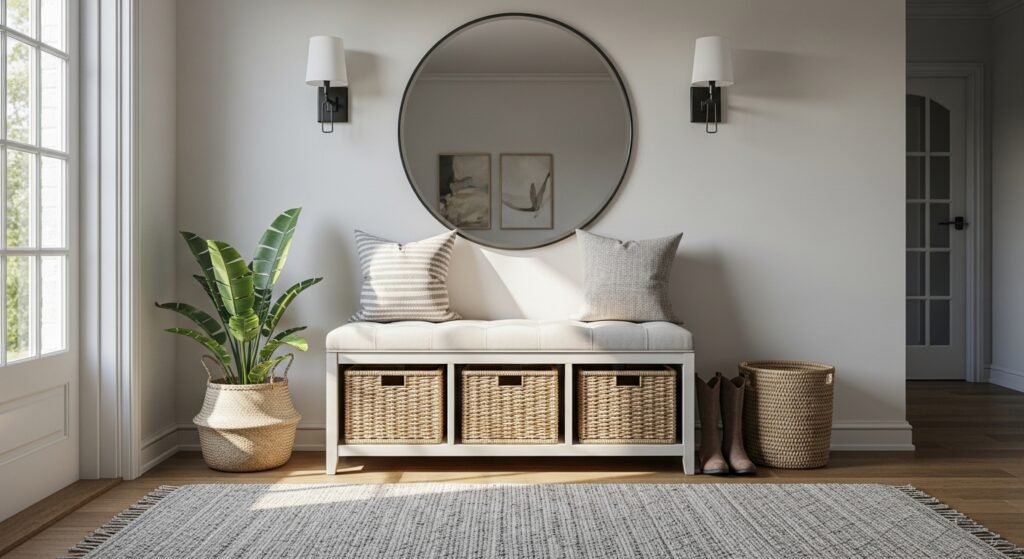
My living room had nice furniture and decent lighting but it still felt like a waiting room. Took me embarrassingly long to realize everything was the same height and there was no place to drop a bag or sit and tie shoes. Building one simple bench with storage fixed that first impression for guests and family.
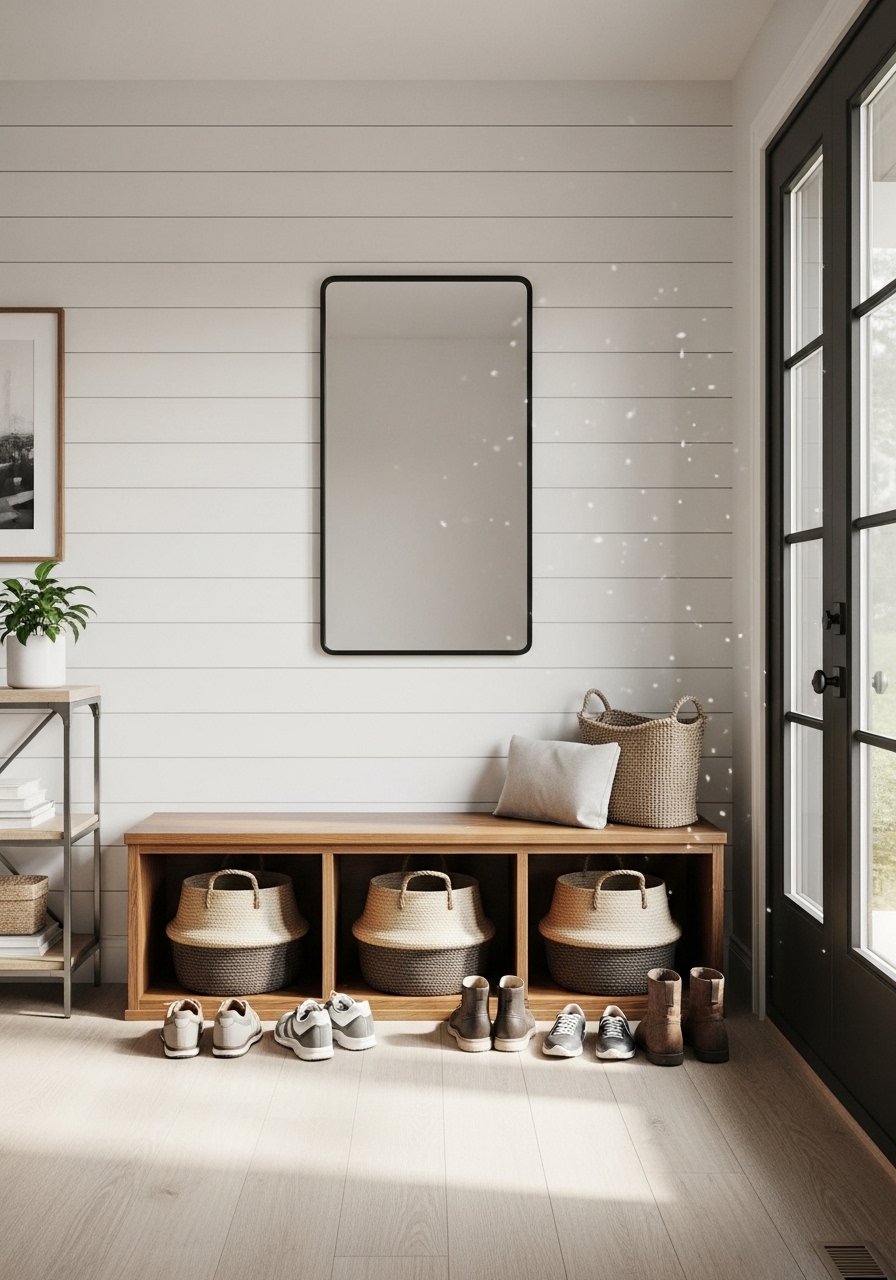
I love this because it does exactly what it promises, stashes daily shoes and looks tidy. Build the box at a 16 to 18 inch depth so boots sit flat, and make the seat 18 inches from the floor so everyone sits comfortably. Most builds run $40 to $80 a square foot with plywood. Use 3/4-inch plywood, add 1×3 pine trim for a farmhouse feel, and line cubbies with woven baskets like seagrass baskets to hide clutter. Common mistake is making the bench too shallow. Aim for 16.5 inches and a 1-inch top overhang for a finished look.
Transitional Lift-Top Bench For Blankets
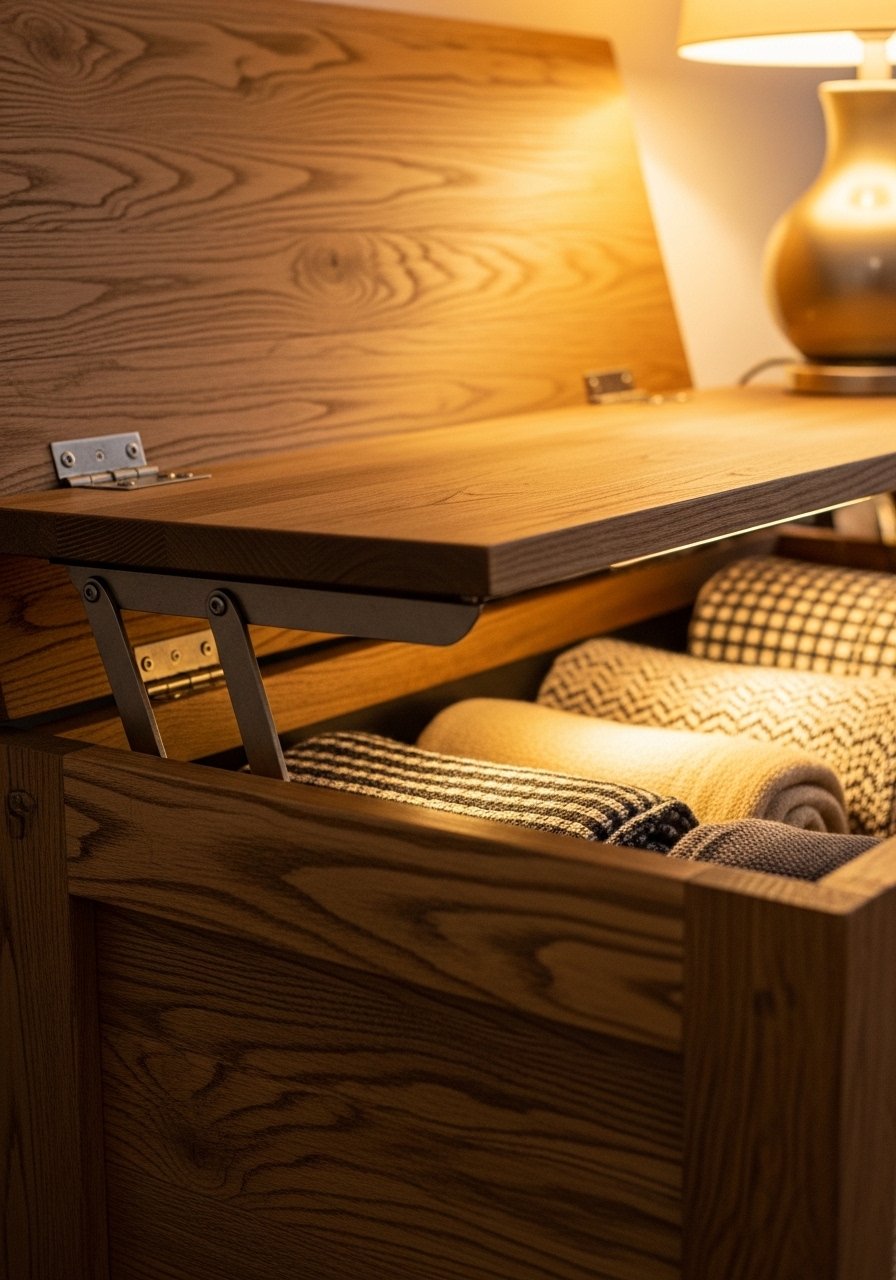
If you want to hide winter scarves or guest throws, go lift-top. Start with a 2×4 frame and a 1/2-inch MDF lid reinforced with plywood. Add soft-close hinges like soft-close-storage-hinges to prevent slams and keep kids safe. One mistake is skipping pilot holes around edges, which makes the wood split. Drill pilot holes before every screw, especially on narrow pieces. I store bulky blankets in this bench and it keeps the room looking calm while giving me easy access to seasonal items.
Scandinavian Adjustable-Shelf Bench For Boots

This one is great if the household alternates between sneakers and tall boots. Cut shelf pin holes every 2 inches in the plywood sides so you can move shelves for boots or kids shoes. Everyone sits at 18 inches off the floor, so keep the seat that height. I used a shelf pin jig and a simple drill press guide, then painted the inside white. Avoid fixed shelves only. Adjustable shelving saves space and prevents shoes from piling into one messy heap. Add adjustable-shelf-pins for a neat solution.
Industrial Mudroom Combo With Coat Hooks

Pairing coat hooks with a cubby bench keeps everything by the door where it belongs. Screw a 1×4 back panel into studs if you can, or use heavy duty adhesive hooks for renters. The mistake I see is too few hooks. Install hooks every 16 inches so coats do not overlap and drip on shoes. Use black pipe hooks like industrial-wall-hooks for the look. This plan runs about $70 to $120 and feels custom without the built-in price.
Minimalist Framed Front Panel Entry Bench

If visible seams ruin the look for you, add a 1/2-inch MDF front panel framed with 4-inch trim. That single detail hides cuts and looks professional after paint. Most people forget the 1-inch overhang on the top, which makes the bench read like a piece of furniture instead of a box. I used 1×4-primed-mdf pieces and a brad nailer to attach trim. Expect a low budget of $30 to $60 and big visual payoff.
Coastal Pocket-Hole Plywood Bench
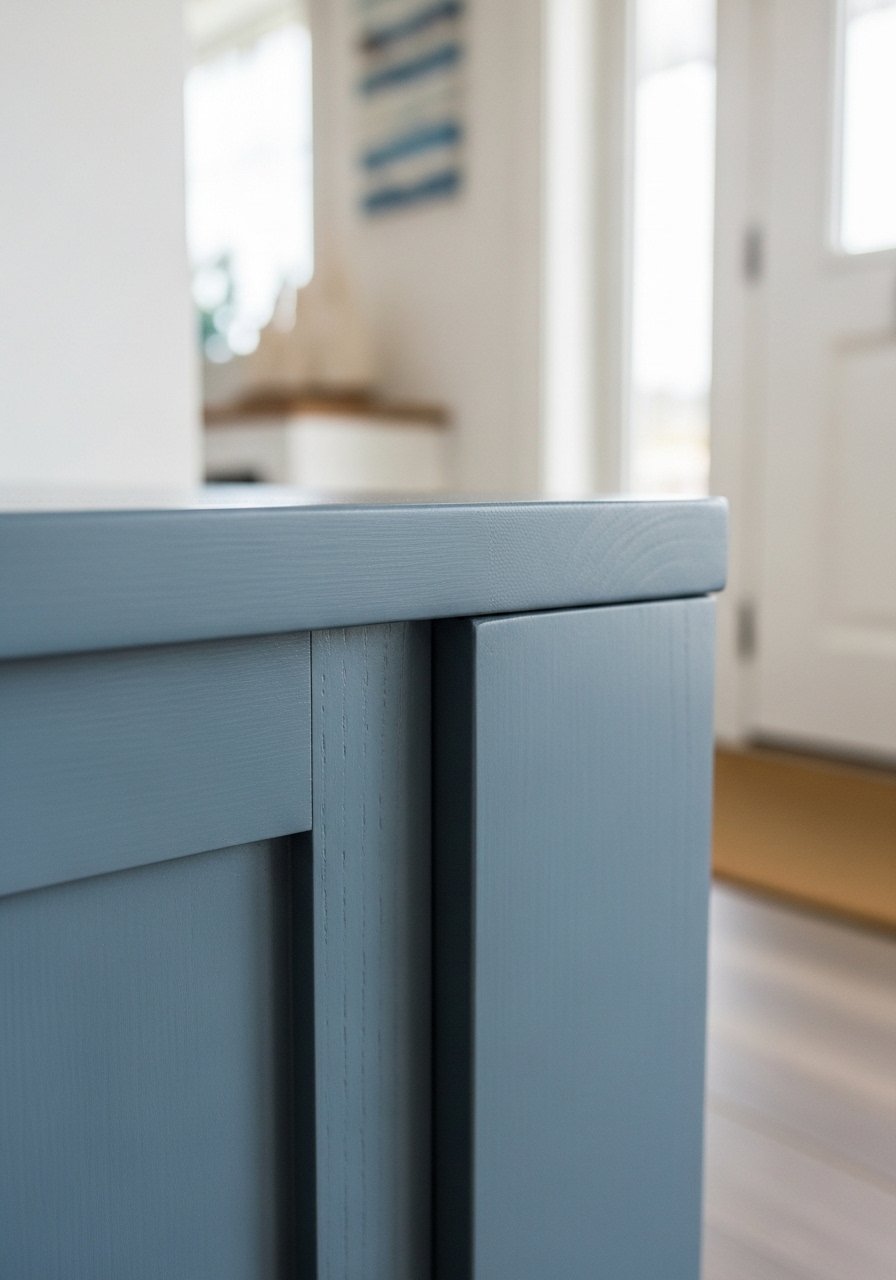
Pocket holes make strong invisible joints and speed the build. Use a Kreg jig on 3/4-inch plywood and plug the holes for a smooth painted finish. Plugged and sanded pocket holes keep paint from showing gaps, which is a small detail most tutorials skip. I like whitewash paint for a coastal feel and added brass knobs on lids for contrast. Grab a kreg-pocket-jig to get started. Watch your corner squares and check 90 degrees before final screwing.
Grandmillennial Backed Bench Against Wall

A backed bench acts almost like a mini-settee in a wider entry. Screw the 1/4-inch plywood back to studs when possible for real stability. One real detail I use is a 1-inch top overhang to hide the frame. This style works well with patterned cushions and costs $50 to $90. Common mistake is not bracing the back, which leads to wobble. Add corner braces or a ledger strip along studs to stop the wobble that shows up a week after guests arrive.
Boho Tall-Back Bench With Overhead Hooks
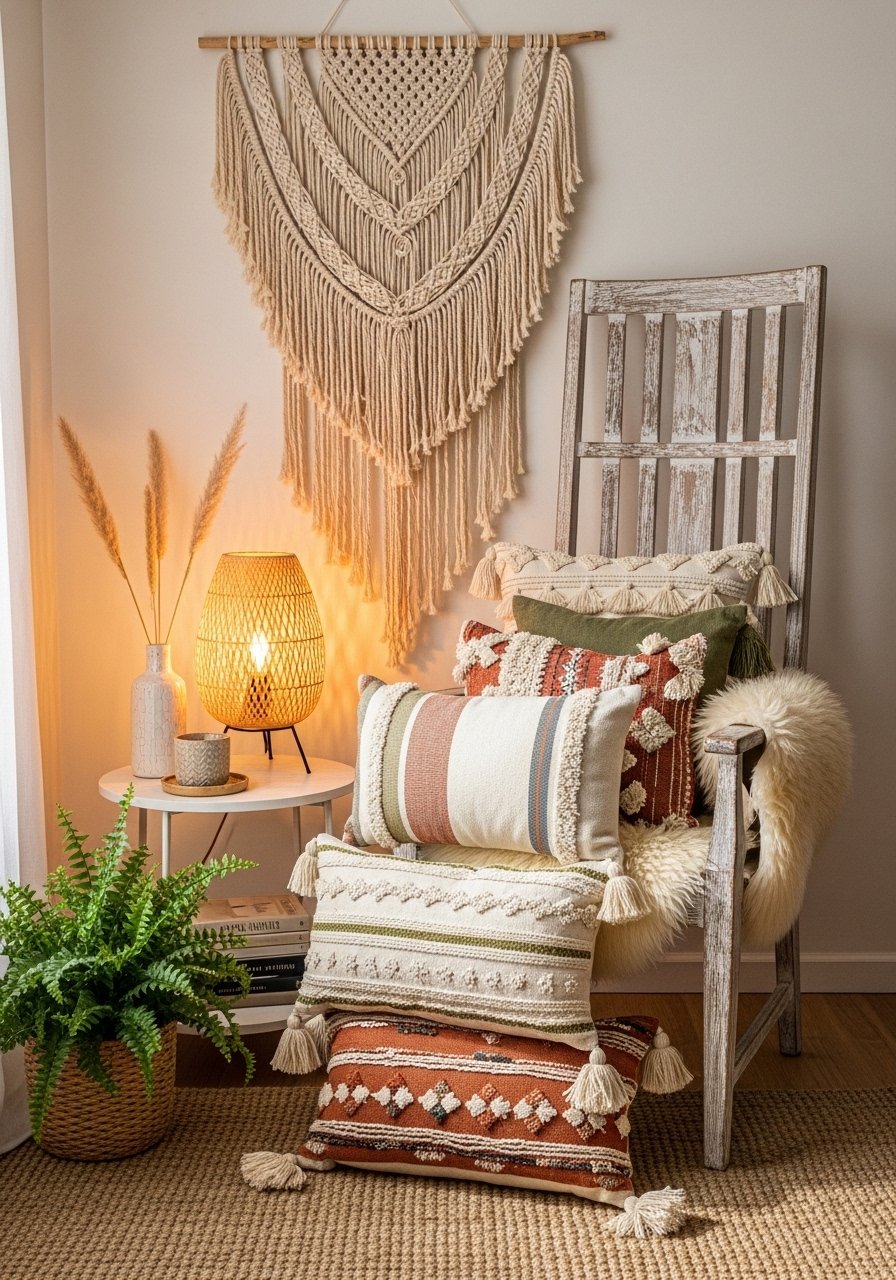
Tall backs keep coats from touching shoes and make a small area feel intentional. I built vertical 1×6 pine slats and spaced cup hooks across the top row for hats. Soft-close hinges on a lid keep little hands safe if you add a lift-top. A common mistake is making the cubby too shallow. Stick with the 16 to 18 inch depth rule so boots do not stick out and muddy your walkway. Add cup-hooks-set for hanging caps and dog leashes.
Modern Divided Bays For Shoe Organization

Dividers every 12 to 16 inches stop shoes from toppling and make the bench seem orderly. I use 1×3 supports between cubbies and stagger heights for boots versus sneakers. Three cubbies cover shoes for a family of four easy, but narrower divided bays make the same footprint hold more pairs. The mistake is leaving bays unanchored. Glue and screw the 1x3s into place so heavy shoes do not shift the dividers over time. Use 1×3-pine-boards cut to size.
Clean Painted Bench With Plugged Pocket Holes
If you plan to paint, fill pocket holes with wood plugs and sand to a seamless finish. That step alone makes a DIY bench look polished. Use wood filler on plugs and two coats of latex paint. People skip plugging and blame paint quality later. Exact detail I use is a 120 grit sand then 220 before the final coat for a factory smooth look. Try wood-plugs-pack for the job.
Transitional Hinged Lid With Soft-Close Safety

If kids or pets use the bench, soft-close hinges are worth the small extra cost. I installed them on a bench used for school backpacks and winter hats. A mistake I see is choosing cheap butt hinges that allow slams. Soft-close-storage-hinges stop pinched fingers and keep the lid aligned. Also shim the lid to sit perfectly flush, and use playing cards or thin cardboard under the hinge during install as a cheap trick. Grab soft-close-storage-hinges for the setup.
Farmhouse Low-Profile Shelf For Slippers
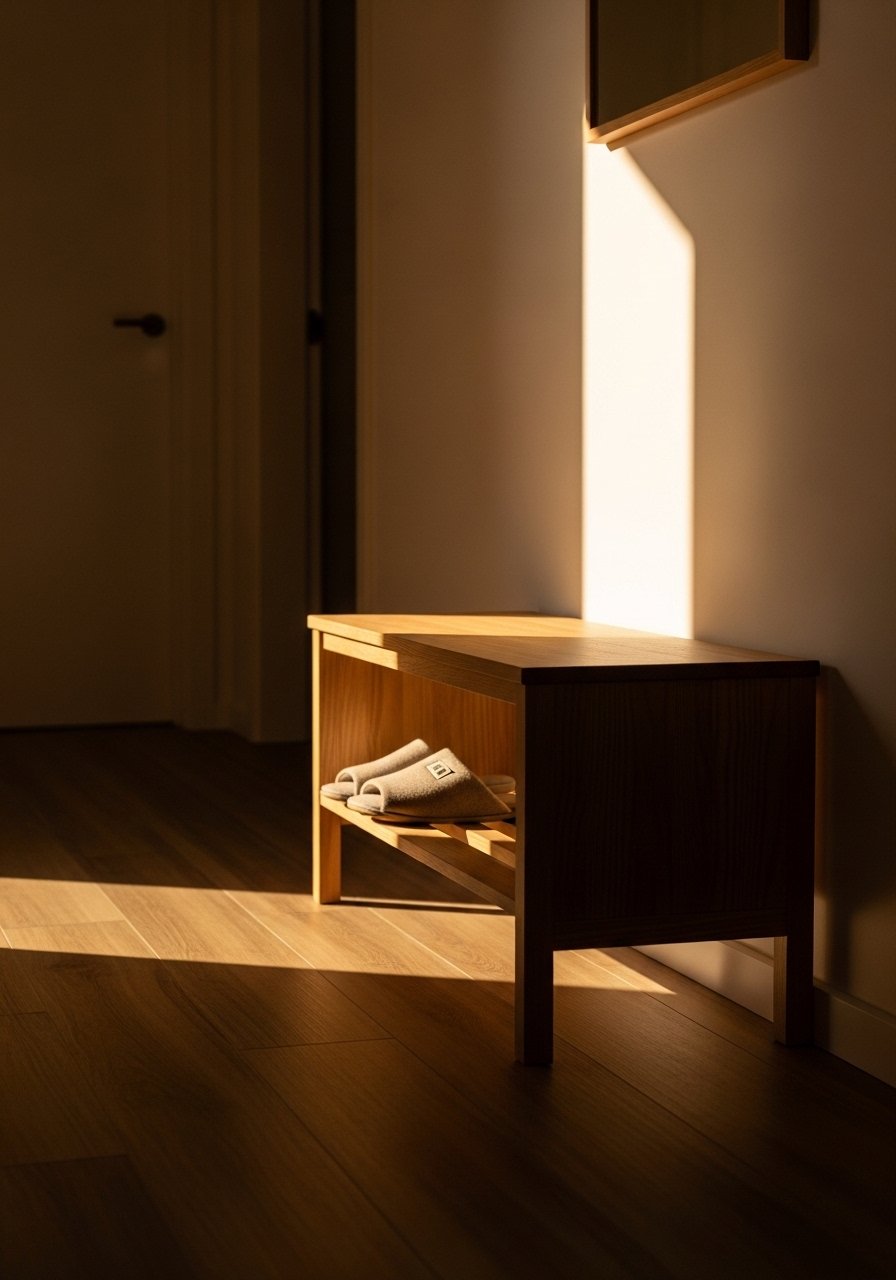
A base shelf set at 12 inches high holds slippers and low-sole shoes. It keeps the front of a long hallway clear without adding visual bulk. I build the lower shelf out of 3/4-inch plywood and add an edge trim so it reads finished. Too often people make the bottom shelf adjustable and then never move it. Fix one height at 12 inches for quick access. Add a couple of woven-slipper-bins for small items.
Traditional Cove-Molding Interior Edges
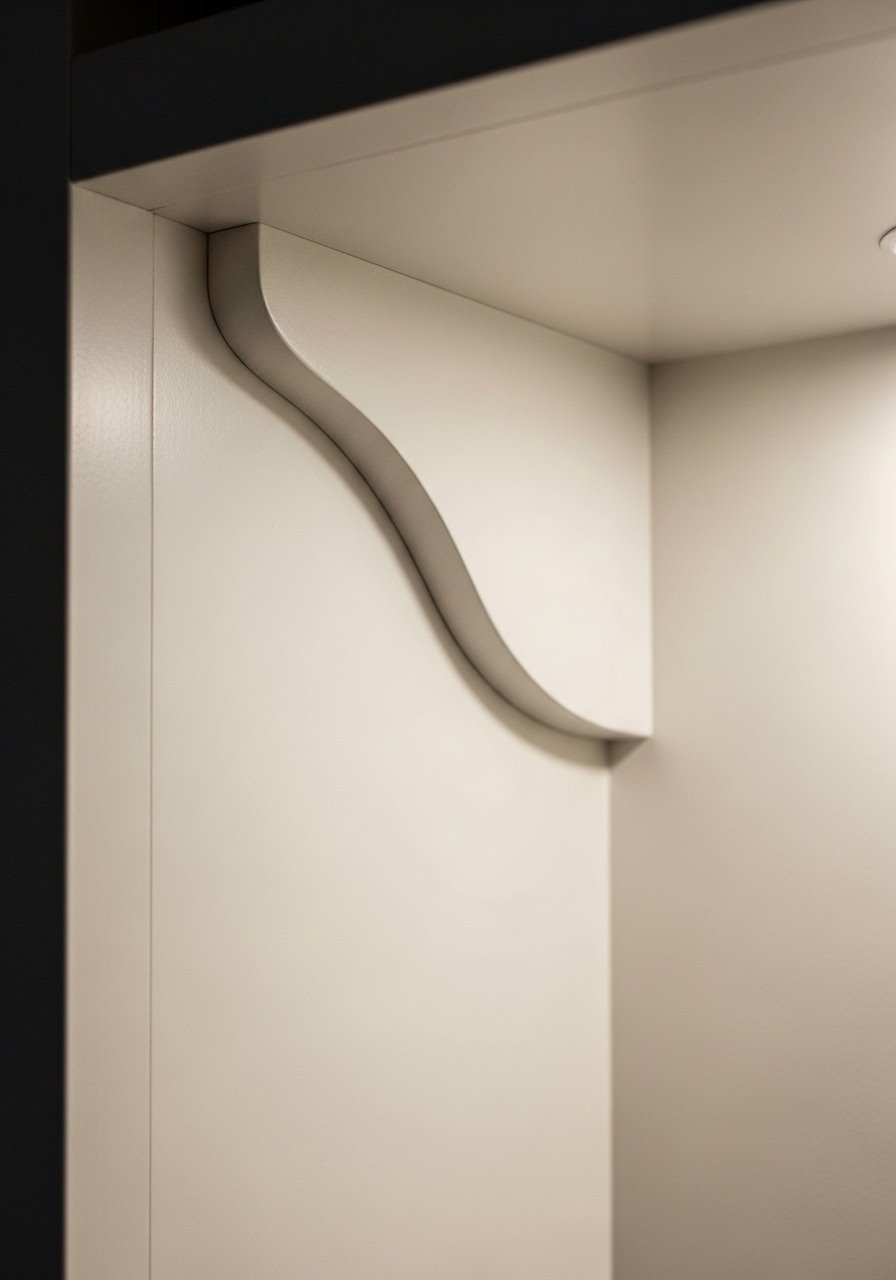
Cove molding inside cubby edges softens corners and hides raw plywood cuts. It is a tiny touch that prevents scuffing on shoes and looks intentional. I glue a narrow cove strip and paint it to match the interior. Many builds skip molding to save time and then regret the visible seams after staining. Cove molding also helps keep fabrics from catching on raw corners. Grab cove-molding-1×4 to finish inside edges.
Minimal Freestanding Four-Leg Apartment Bench
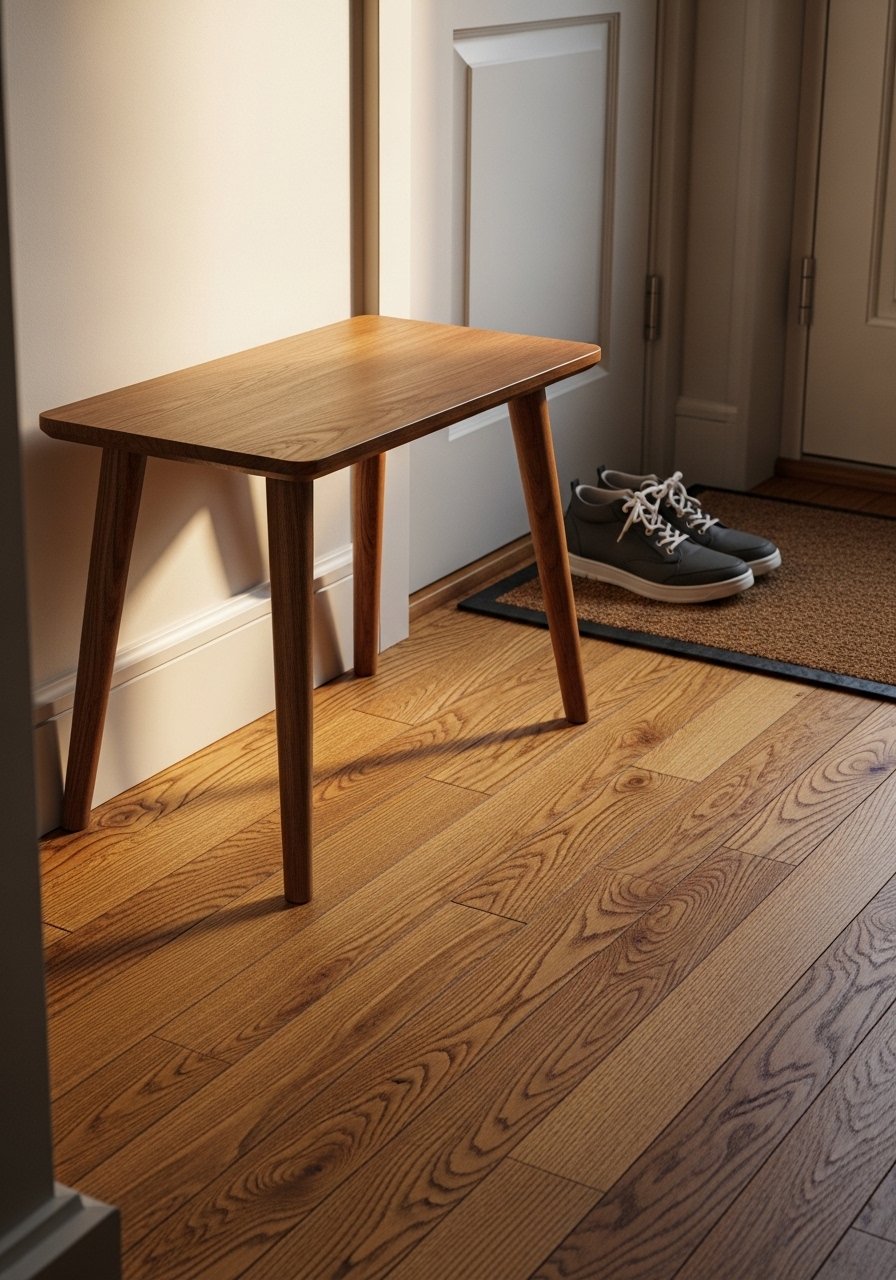
For renters, freestanding is the way to go. No studs, no damage, and you can move it if the lease ends. Build a four-leg frame with 2×4 legs pocket screwed into the top. Pocket screws hide the hardware and keep the bench sturdy. A common oversight is skipping adjustable feet, which are later added to stop wobble. Everyone sits at 18 inches off the floor, so match that height for comfortable seating. Use leveling-feet-kit if your floors slope.
Rustic Lift-Top Bench For Pet Supplies
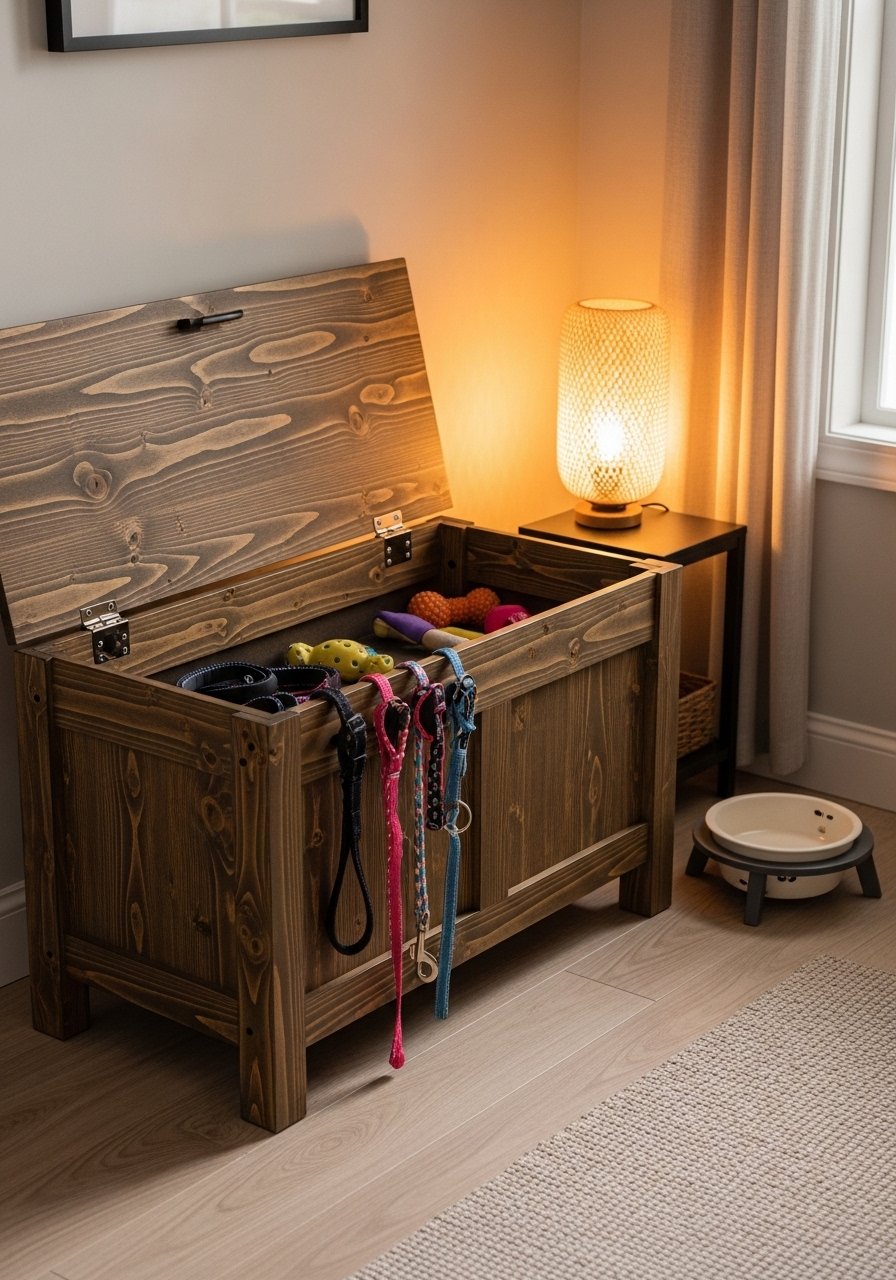
If you have dogs, dedicate one bench to pet gear. Make an internal divider to separate food containers from leashes. A sealed plywood interior stops water stains and scratches from bowls. One detail a lot of builds miss is sealing plywood edges so pets’ nails do not splinter the finish. Use a polyurethane topcoat and add a small latch if you want extra security. Consider waterproof-polyurethane for a durable finish.
Compact Half-Width Bench For Narrow Hallways
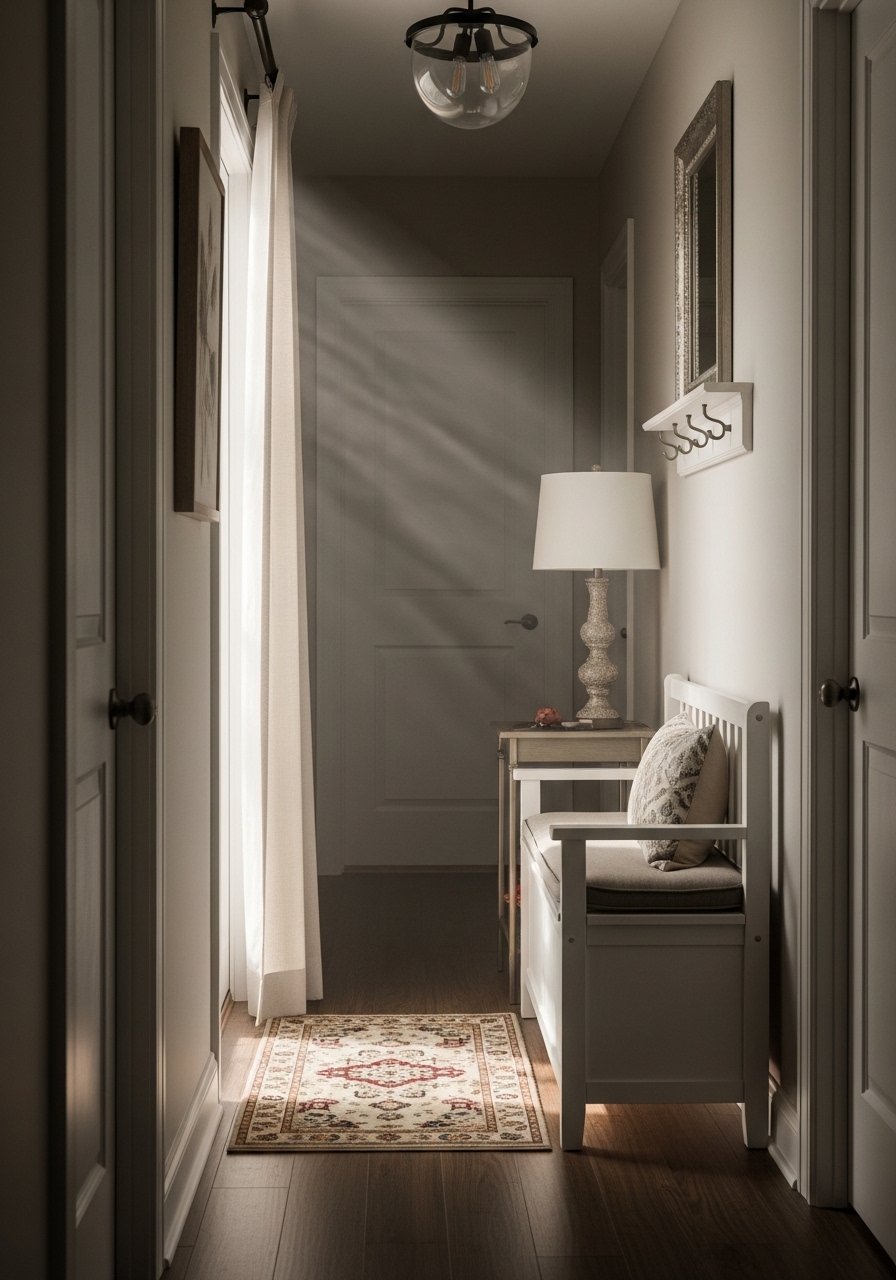
Not every entry can fit a full bench. Cut your bench to 24 inches wide to keep a narrow hallway functional. Scale down the number of cubbies and keep the 16 to 18 inch depth so shoes still fit. A lot of plans assume big spaces. Scaling down like this preserves circulation and feels intentional. Use a smaller woven basket and a slim cushion. I used 24-inch-bench-cushion to finish the look.
Shallow Bench For Small Spaces That Fits 16 Inch Depth
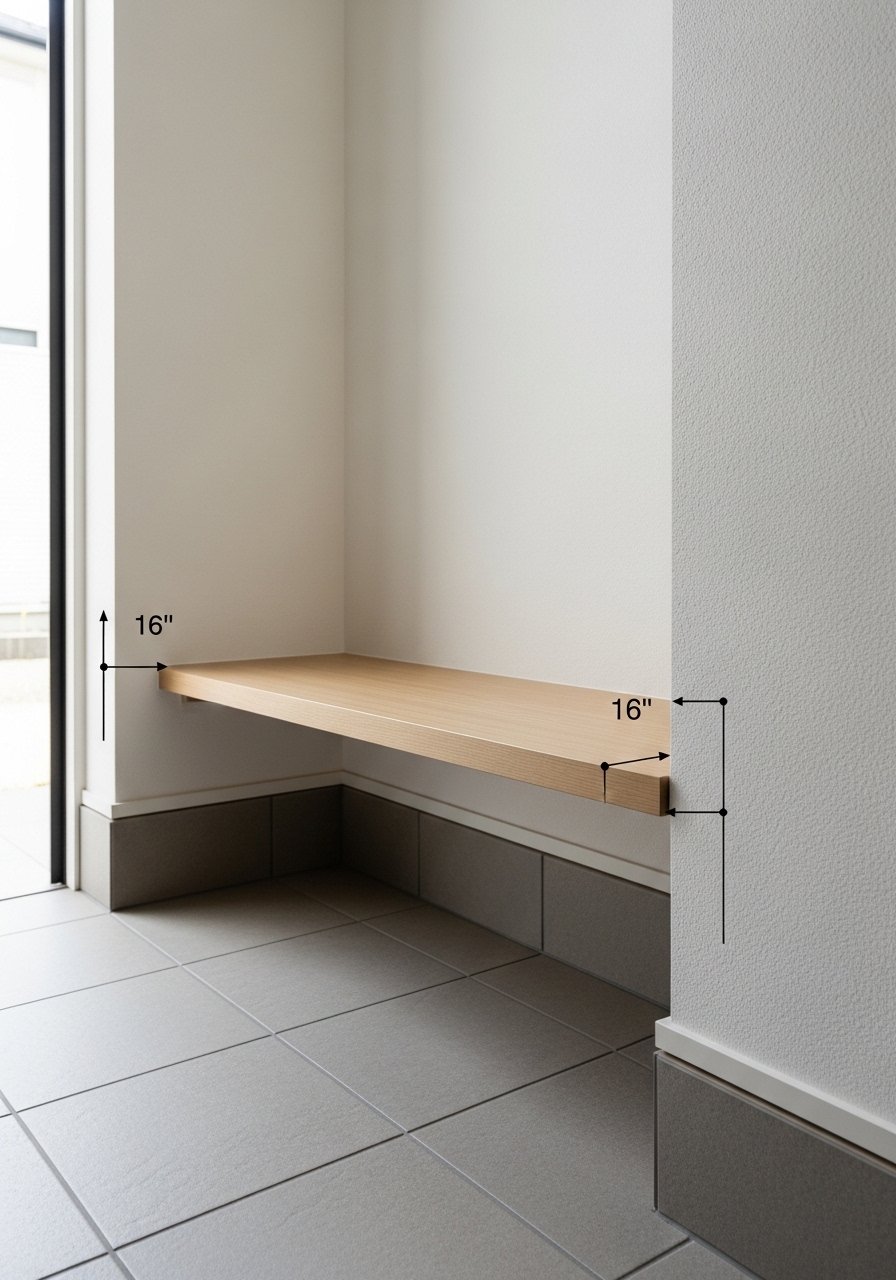
If you have a tiny entry, 16 inches of depth is your friend. Making it shallower than that makes boots stick out, and making it deeper eats the walkway. Keep the seat 18 inches high and the lid overhang at 1 inch so it reads balanced. I built one that tucks into an alcove and still holds four pairs of shoes. People often make benches too deep for small spaces. Stick to 16 inches and test the footprint in cardboard first.
Kids-Friendly Bench With Rounded Corners And Storage
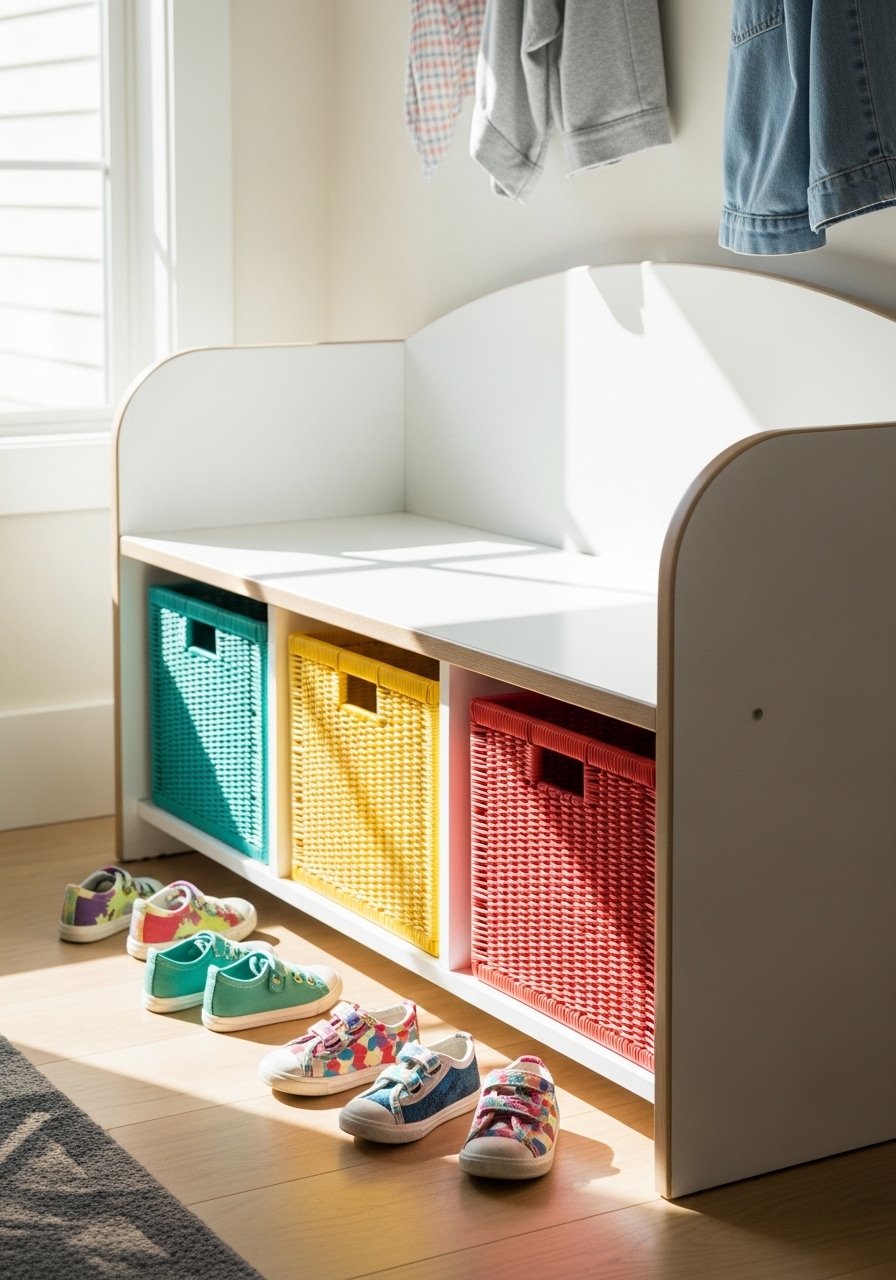
Kids run into corners. Round off the top edges and use soft-close hinges on lids. Inside I add low bins labeled with names so shoe chaos disappears. A key detail parents miss is reinforcing the seat with extra cleats if kids will climb on it. Add a washable cushion with a removable cover for messy days. I used washable-bench-cushion that unzips easily and throws in the washer.
Bench With Hidden Drawer For Keys And Mail

A shallow hidden drawer is perfect for keys and incoming mail. Build the drawer into the front apron and use full-extension slides for smooth operation. The mistake is making the drawer too deep and losing storage behind it. Keep it 3 to 4 inches tall so it holds envelopes and sunglasses without interfering with the main storage. I use full-extension-slides to keep the drawer reliable.
Bench With Drop-Down Shoe Compartments For Mudrooms
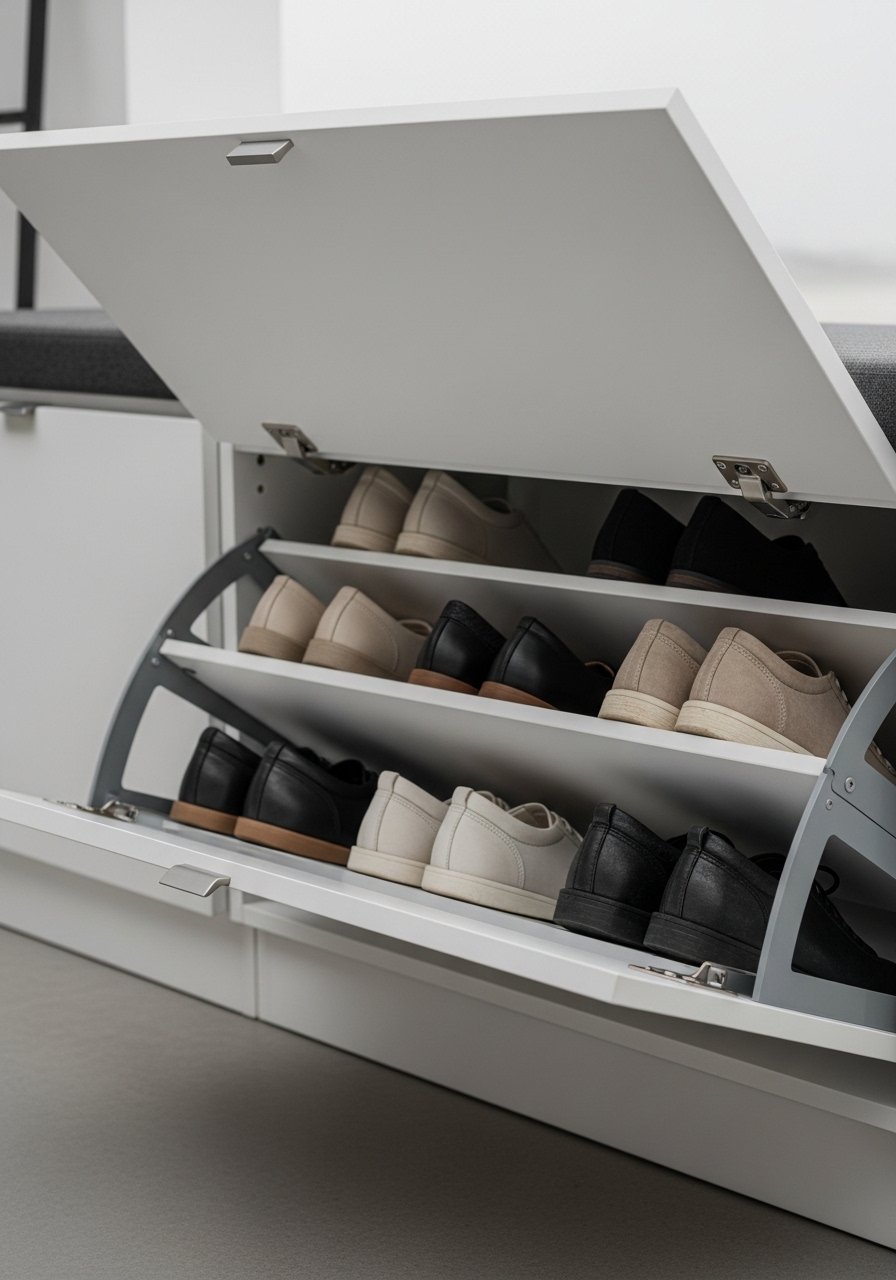
Drop-down compartments angle shoes for compact storage and hide mess behind doors. Use soft-close hinges and magnetic catches, and line the angled shelves so shoes slide in easily. Many builders forget to check corners for square, which makes doors bind. Verify each corner with a square before attaching doors. A 1-inch overhang on the top hides the drop-down seam for a cleaner front. Try magnetic-catches-pack.
Bench With Removable Bins For Easy Cleaning

Removable bins make seasonal swaps and cleaning a breeze. Label them for hats, mittens, or dog leashes. One practical detail is cutting a small finger notch in the bin front so kids can pull them out easily. I use clear bins for kid gear so I can see contents without opening. Make sure the internal cubby width accounts for bin handles. I use clear-storage-bins for visibility and durability.
Upholstered Bench Seat With Removable Cover
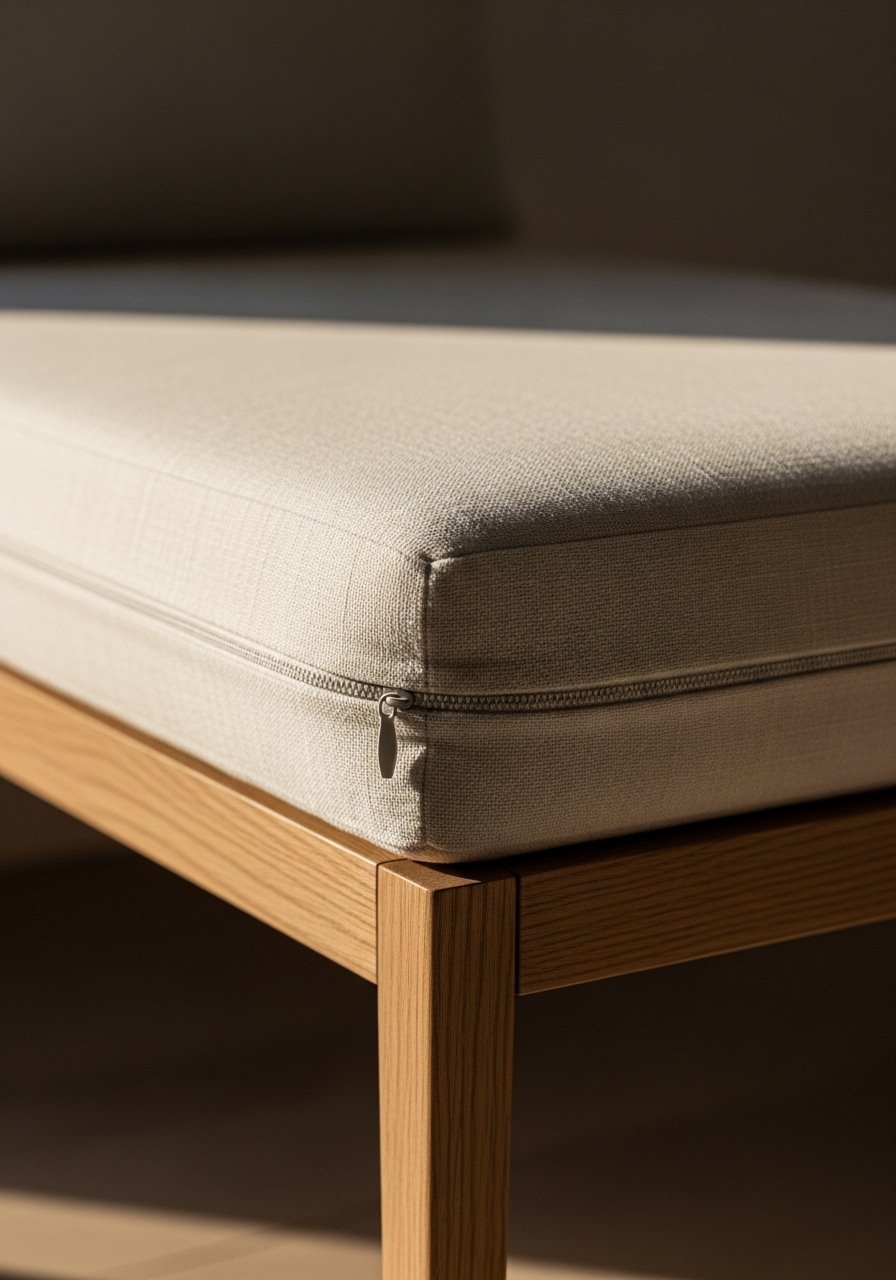
An upholstered seat makes the bench feel like a real seat rather than a workbench. Build the seat on a plywood platform with foam and a removable linen cover. The detail I always mention is sewing the cover with extra allowance so it fits over foam and zipper without pulling. Washing is easier with a removable cover. I used a zippered-linen-cover that fits a standard 48 by 16 seat.
Bench With Adjustable Feet For Wobble Fixes

Most wobble problems are solved by adjustable feet. Install them early so you do not have to shim the whole bench later. I keep a set of leveling feet on hand and screw them into the bottom of the legs. Also add diagonal corner braces under the seat if wobble persists after leveling. Pocket screws and corner braces together mean the bench will stay steady for years. Pick up a leveling-feet-set to finish the job.
Bench With Vertical Boot Slots For Tall Boots
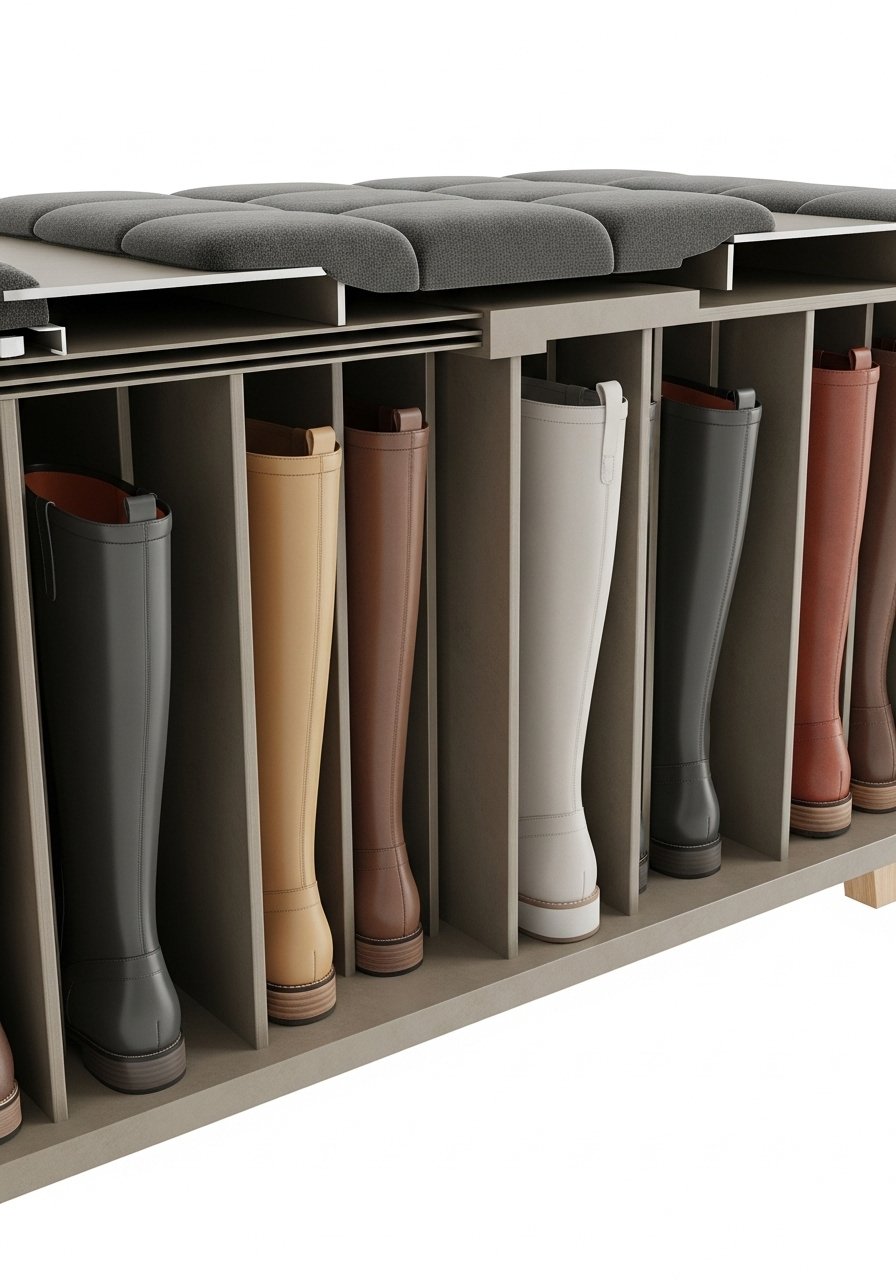
If winter means tall boots for your family, build vertical slots that keep boots upright and save cubby width for other shoes. Make each slot about 6 to 8 inches wide and 16 inches deep. A common oversight is not reinforcing the slot bottoms. Add a center cleat for support so heavy boots do not sag the shelf over time. I keep a soft scrub brush in a small bin near these slots for salt cleanup. Use plastic-bin-small.
Bench With Built-In Charging Station For Tech
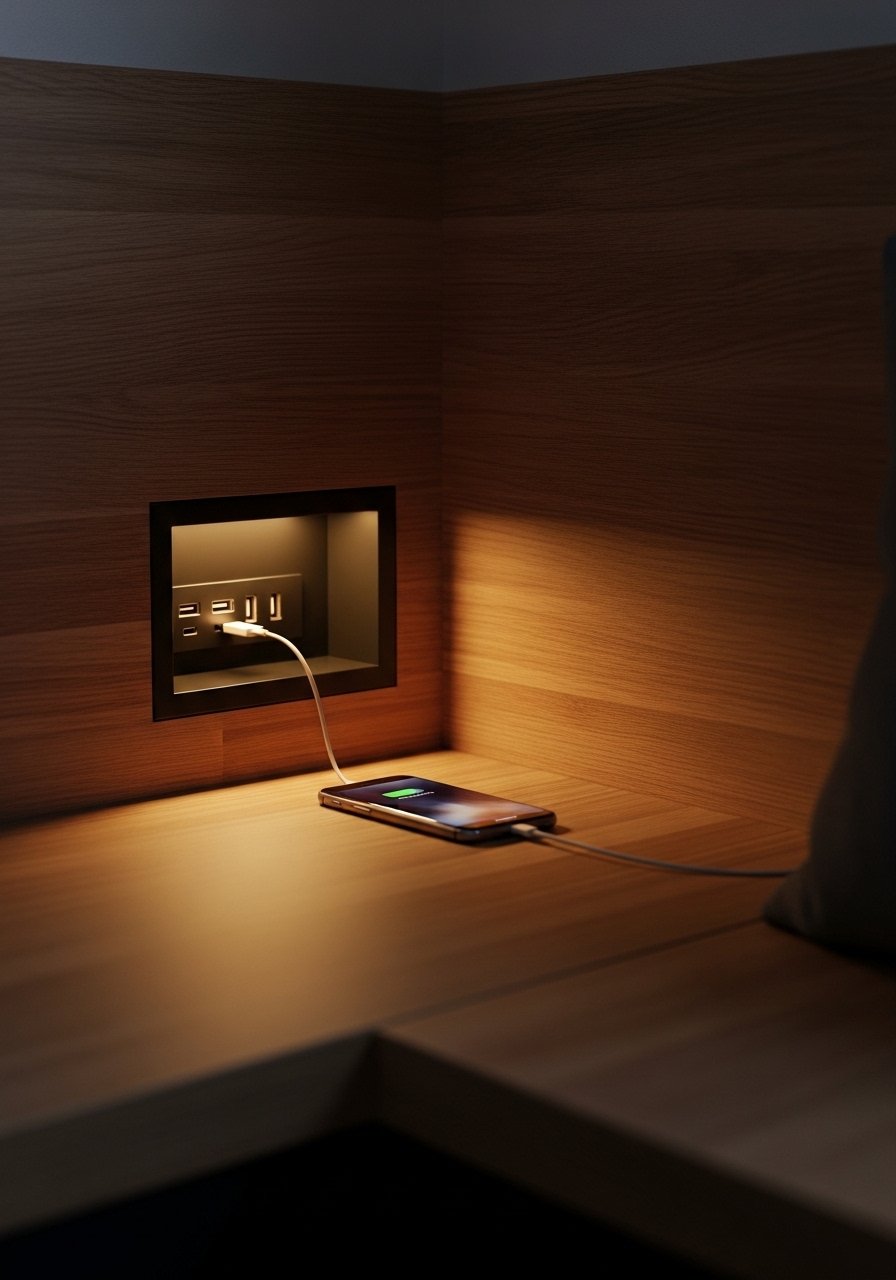
Add a small recessed cubby with a power strip and USB ports for phones and earbuds. This keeps devices off countertops and in one place before you walk out the door. Put the cubby at eye level or just under the seat, and run cord access through a small drilled notch. A mistake is overloading a single strip without thinking of ventilation. Use a surge protector rated for devices and mount it securely. I use usb-surge-strip for safe charging.
Your Decor Shopping List
- Honestly the best $40 I have spent. Seagrass baskets, set of 3 in natural for cubbies
- For the lift-top lid I used soft-close-storage-hinges (~$18) so kids do not get pinched
- For pocket holes grab a kreg-pocket-jig starter kit, it hides joins
- 1×3 pine boards for internal dividers, cut to fit cubby widths
- Full-extension-slides for hidden drawers, 12-inch length works for small drawers
- Leveling-feet-kit to fix post-build wobble, great on older floors
- Zippered-linen-cover 48×16 for removable seat options, similar at Target
- Clear-storage-bins for removable bin organization, buy a few sizes
- Waterproof-polyurethane for pet-friendly sealing
- Cove-molding-1×4 if you want softened inside edges
- Magnetic-catches-pack for drop-down doors
- Adjustable-shelf-pins if you plan to change shelf heights
- Seagrass-basket-small for small accessories and leashes
- Brass-knobs-set if you want a little shine on the front
Shopping Tips
- White oak beats dark wood in 2026. Design feeds have shifted completely. White oak floating shelves look current and pair well with painted benches.
- Grab zippered-linen-cover options for $30 to $50. A removable cover means you can wash the seat after muddy kids.
- Curtains should kiss the floor, not hover. For the seating area consider 96-inch linen panels if you have standard 9-foot ceilings.
- Lead with a small investment in tools. A quality brad nailer will save time and make trim look pro.
- Everyone buys small plants. Instead pick one statement piece. Artificial fiddle leaf fig 6ft gives height and needs no watering.
Frequently Asked Questions
Q: What depth should an entryway bench be for boots?
A: Aim for 16 to 18 inches of depth. If you go shallower boots will stick out and make the walkway feel cramped. I use 16.5 inches for a three-cubby layout and it keeps everything tucked away.
Q: Can I build a bench without screwing into studs?
A: Yes, freestanding four-leg designs work well for renters. Use pocket screws and add adjustable feet for leveling. For extra stability you can add a thin ledger that rests on the baseboard without drilling into studs.
Q: How do I prevent the lid from slamming on small hands?
A: Install soft-close hinges. They are inexpensive and stop slamming. I keep soft-close-storage-hinges on my shopping list for any bench with a lift-top.
Q: My bench wobbles after a week, what do I do?
A: First check every corner is square, then add adjustable feet. If wobble continues add diagonal corner braces under the seat and tighten pocket screws. Small tweaks fix most problems.
Q: What seat height is comfortable for most people?
A: Everyone sits at 18 inches off the floor so make your bench seat that height. It matches chairs and makes sitting to put on shoes easy.
Q: Is plywood really better than particle board?
A: Yes. Plywood holds screws better and lasts longer, especially for benches that carry weight. Most DIY plans these days use plywood for a reason.
Q: How do I keep pets from scratching the finish inside cubbies?
A: Seal the interior with a waterproof polyurethane and round the edges. That stops splinters and makes cleanup easier if muddy paws sneak in.
Q: Can I add a charging station safely to a bench?
A: Yes. Recess a small cubby, mount a surge protector with USB ports, and provide ventilation space. Use a rated surge protector like usb-surge-strip and avoid enclosing electronics without airflow.