

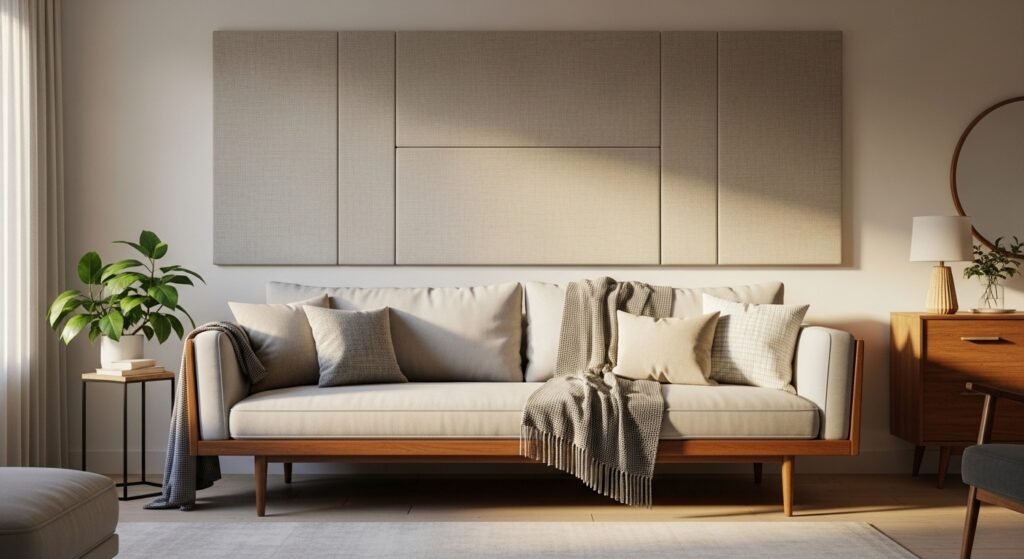
My living room had nice furniture and decent lighting but it still felt like a waiting room. Took me embarrassingly long to figure out it was missing texture. I built a few panels and suddenly people stayed longer, conversations softened, and the TV sounded better. Making acoustic panels taught me more about scale than anything. Once I started treating corners first and mixing fabrics, the room stopped echoing and started feeling lived in.
These ideas lean modern and functional with a few boho and industrial twists. Most builds sit between $20 and $80 per panel, and a few of the more decorative options hit $100. They work for living rooms, bedrooms, home offices, media walls, and even hallways that rattle when someone closes a door.
Minimalist Living Room Fiberglass Panels

What made this click for me was scale, not secrecy. I used 2×4 panels with a 2-inch Owens Corning core wrapped in black burlap and mounted two inches off the wall with wooden spacers so they actually absorb lower frequencies. These run about $35 bucks a pop for 2 by 4 feet size, so the math adds up fast. Common mistake is wrapping fabric too tight, which shows the foam texture. Staple every inch on the back and use a 1×3 frame so sound can hit the sides. Pair with a printed rug to stop the room from feeling flat. Owens Corning 703 fiberglass board
Rental-Friendly Foam Wedge Treatment For Apartments

If your landlord frowns on drilling, peel-and-stick wedge foam is where I start. Peel-and-stick foam wedges give immediate high-frequency dampening and take only minutes to apply. Most people skip corners first, which is the real error, but for rentals you can place wedges behind a desk and above a TV using 3M strips. Over half go for fabric covers instead of naked foam, but wedges are a cheap first step. Budget runs $15 to $40 for a pack. Try these on a hidden wall first so you can see before committing to more permanent options. Peel-and-stick acoustic foam wedges
Corner Bass Traps For Home Office
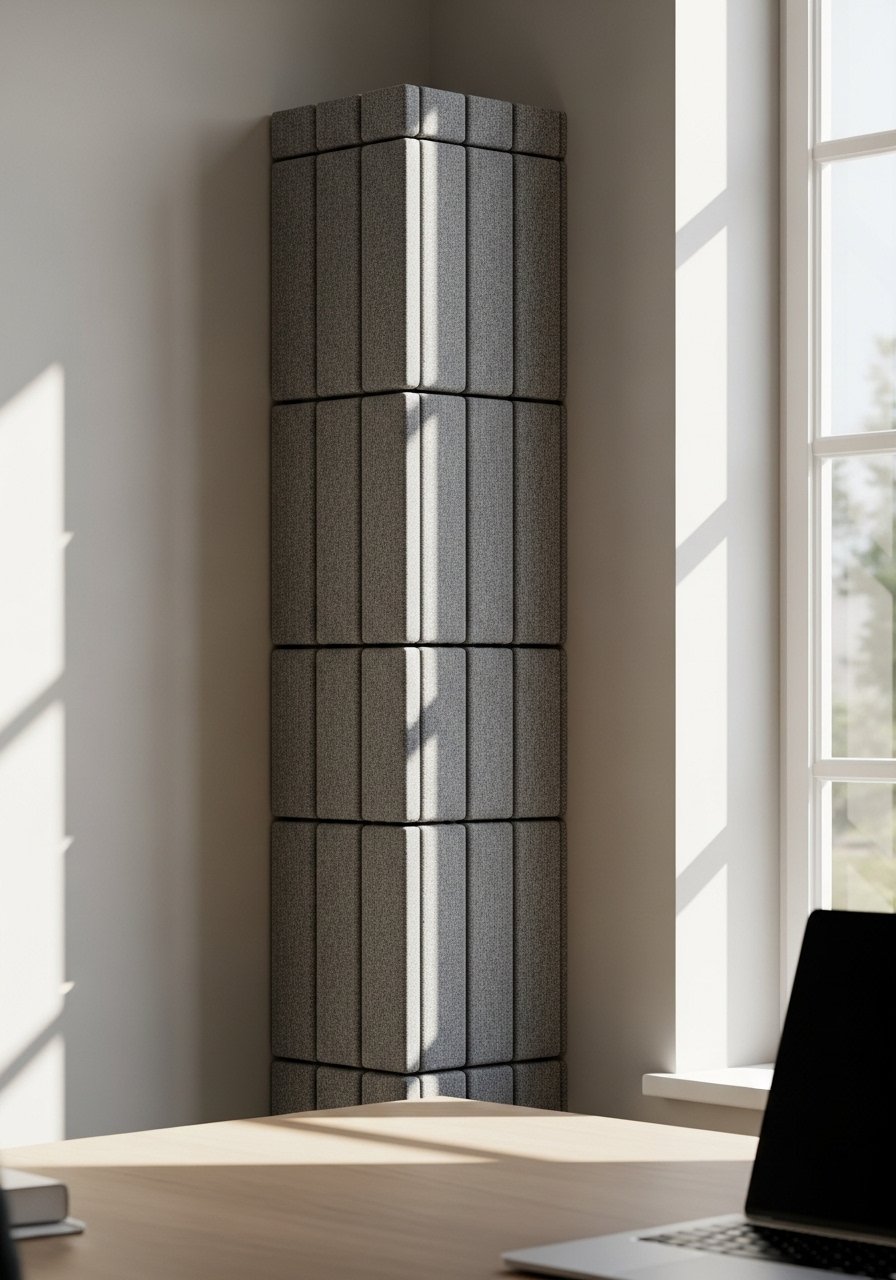
Bass lives in corners and that is where you should start. I built corner traps from 2-inch rockwool safe n sound batts and covered them in speaker cloth, then slid them into corners where they quietly ate boominess. The trick most people miss is the air gap between the trap and corner. Leave one to two inches if you can, or use a thin plywood wedge to create a cavity. Renter hack: use a tension pole across the corner to hold lightweight traps without screws. These cost $40 to $80 each depending on materials. Rockwool bass trap batts
Framed Art-Look Panels For Media Walls
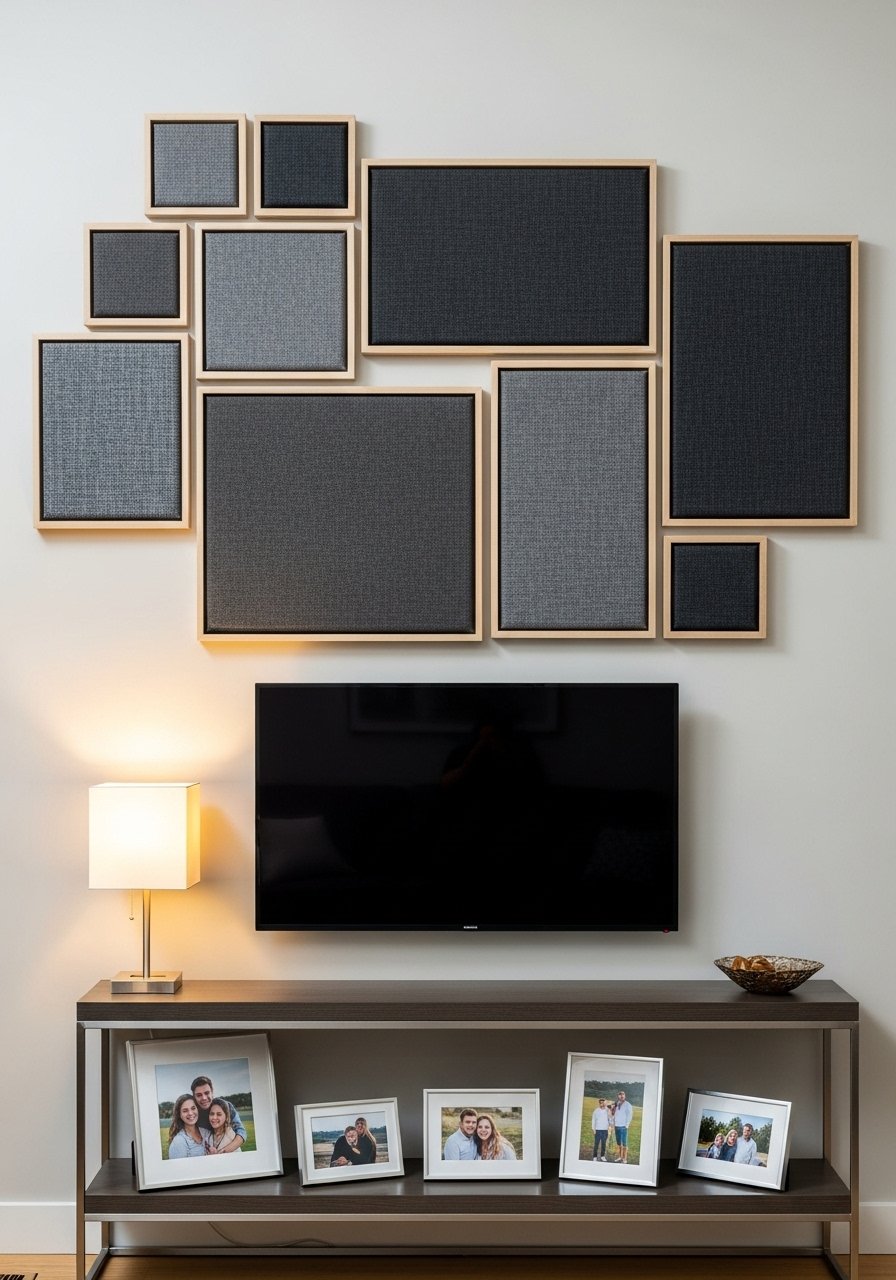
I hid treatment by turning panels into framed art. Stretch breathable linen over a 1×3 wooden frame and staple to the back so edges look like a gallery canvas. These fit media walls and make sound clearer without screaming "DIY." A mistake I see is using upholstery fabric that blocks sound, so pick open-weave linen or Guilford-style fabric. Panels sized 2 feet by 4 feet match studs and hang reliably. Most folks notice less echo with just four to six panels. Cost runs $50 to $100 per framed panel depending on fabric choice. Linen fabric yardage
Suspended Acoustic Clouds For Bedrooms

I suspended clouds over my bedroom because the ceiling was reflecting every small sound. Building clouds from 2-inch rigid fiberglass, wrapping them in breathable fabric, and hanging with thin fishing line cuts flutter echo without heavy hardware. One detail most tutorials skip is using a light hook and a ceiling anchor rather than raw screws, which is easier to remove later. These are a bit more involved and cost $60 to $120 for a pair. Overhead installs can be renter-friendly if you use hook anchors and clear instructions. Hanging hardware kit
Boho Floor-To-Wall Panels For Bedrooms

Leaning panels are my go-to when wall drilling feels excessive. I made a 2×4 core wrapped in felted wool and leaned it behind a chair in the bedroom. The texture warms the wall and the panel is easy to move for cleaning. One mistake is making the frame too thin, which lets panels bow over time. Use a 1×3 frame and staple the fabric every inch. These run $30 to $70 depending on fabric. They pair great with rugs and layered pillows to stop that "waiting room" vibe. Felted wool fabric remnant
Hexagon Modular Tiles For Playrooms
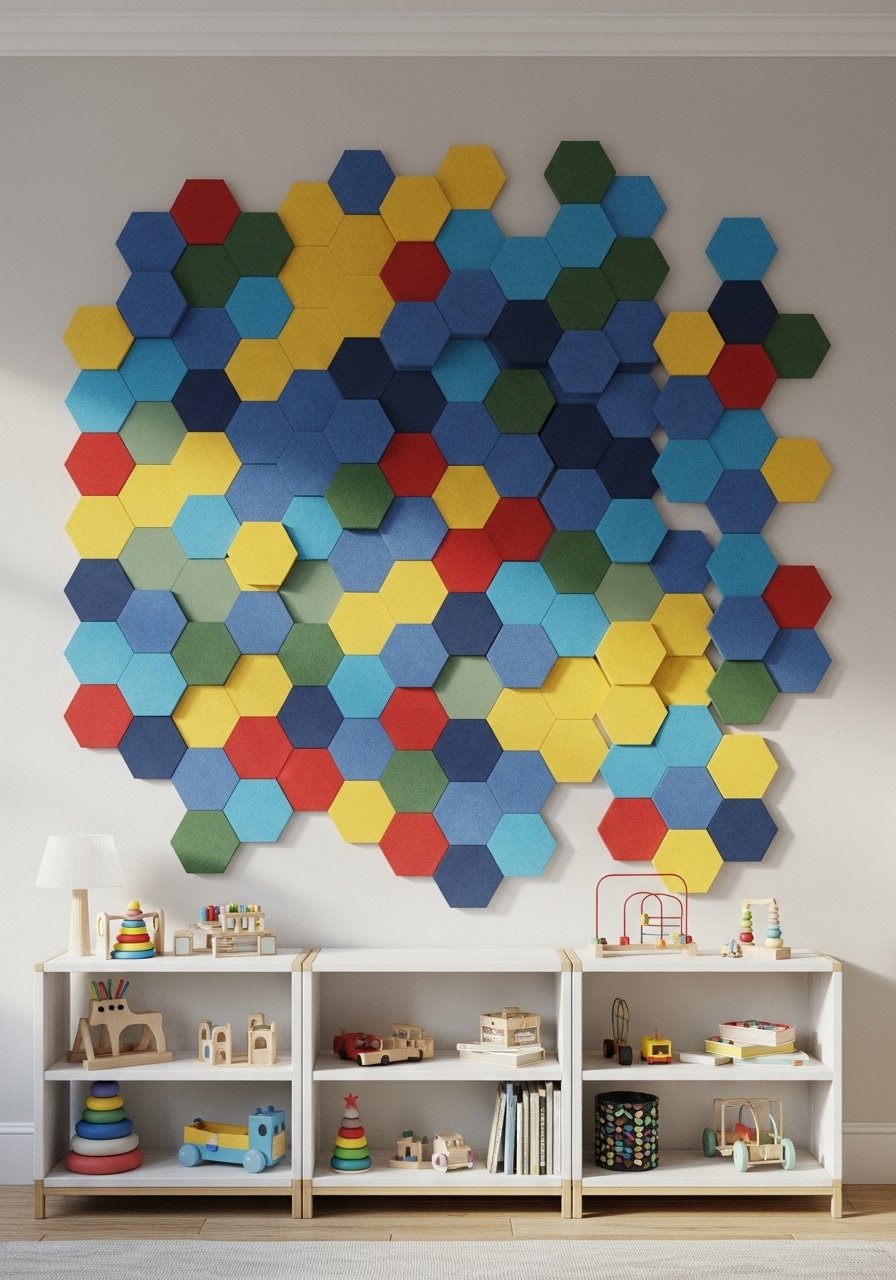
For a kid space, hex shapes make the panels feel playful instead of clinical. Cut EVA foam or thinner rigid panels into hexes, cover in kid-safe fabric, and mount with heavy-duty velcro so you can swap patterns. The trick is to vary heights and orientations for both style and better diffusion. Parents often pick loud patterns that clash with toys, so stick to a 60/40 color rule for calm. Budget is $25 to $60 per group of six depending on materials. EVA craft foam sheets
Speaker Backdrop For Media Room

I installed a horizontal row of panels behind my TV to tighten dialogue without hiding the screen. Use two-inch rigid fiberglass and a linen-like fabric to keep sound passing through. Avoid putting panels flush against your speakers because you want a small air gap to tame reflections. A common slip is making the panels too small; 2 feet by 4 feet panels line up with studs and look intentional. Cost for a full backdrop runs $70 to $150 depending on frame and fabric choices. Speaker grille cloth
Overdoor Slim Panels For Hallways
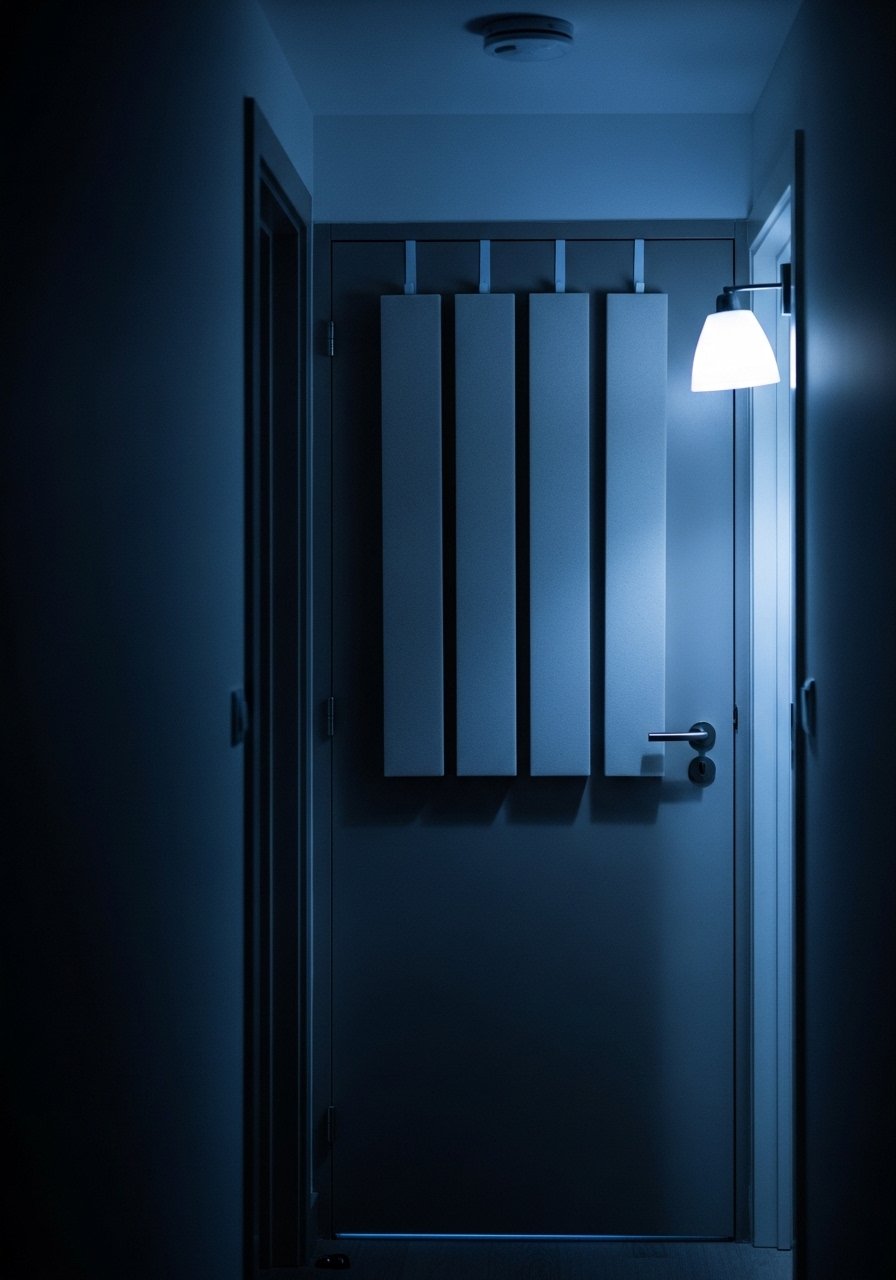
Hallways echo because sound bounces between hard walls. I slapped slim 12×36 panels over doors using over-the-door hooks and immediately reduced clatter. This is a cheap fix that renters can do without damage. The mistake is using thick cores that catch on door frames. Go with 1 to 1.5-inch foam or thin rockwool and choose a breathable cover. Budget is $20 to $45. These are great for apartments that shake when someone slams an inner door. Over-the-door hooks set
Pet-Proof Family Room Panels

Pets change the fabric rules. I re-covered panels in microsuede after my cat decided burlap was a buffet. Microsuede stands up to claws better and hides dirt. Use velcro-backed frames so you can remove covers for washing. A typical error is choosing delicate linens that stain or tear. Budget for durable fabric panels runs $50 to $110. If you have kids or pets, plan for detachable covers and avoid glued seams. Microsuede upholstery fabric
Window-Adjacent Reflection Reducers For Living Rooms
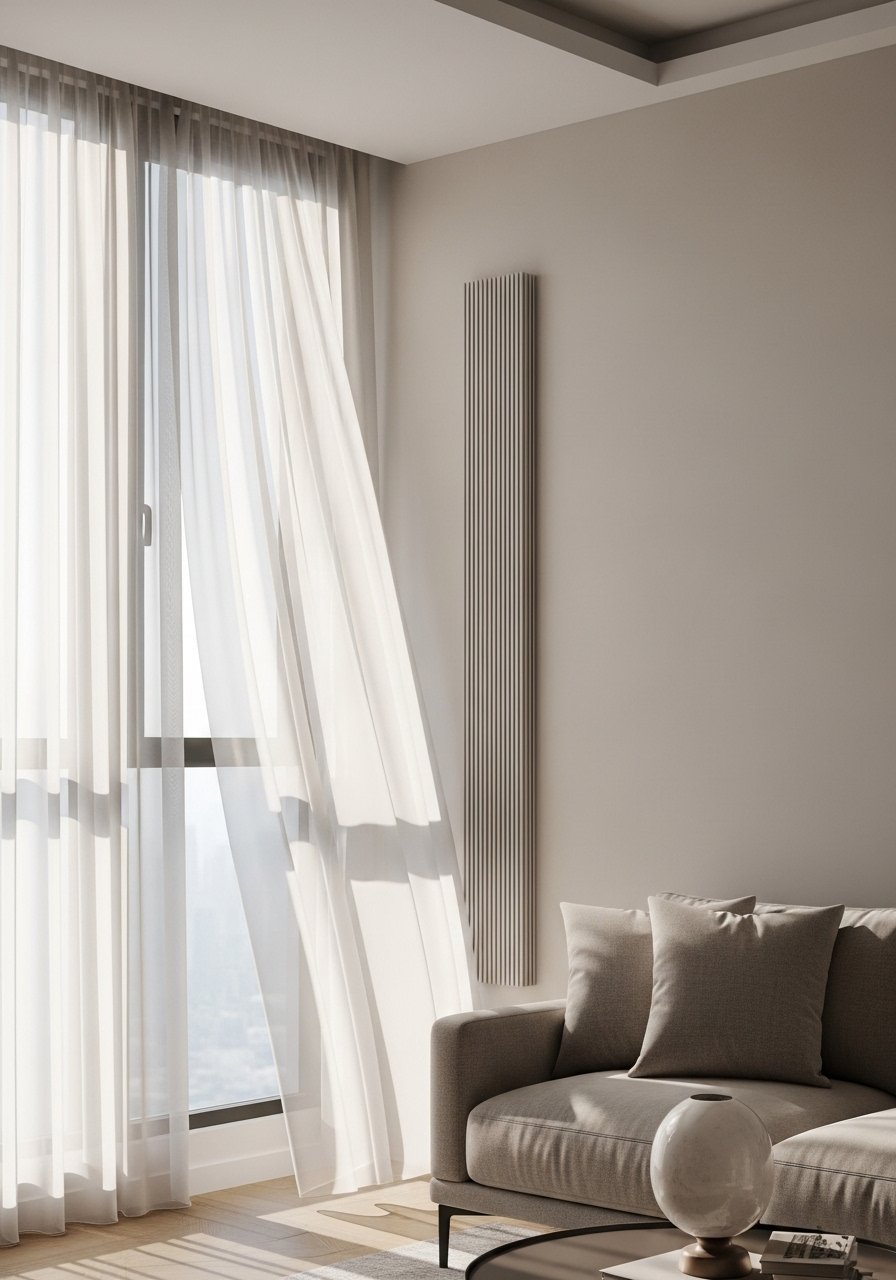
Glass throws back high frequencies. I placed narrow 18×48 panels beside windows and noticed the room stopped sounding tinny. The specific detail most articles miss is to mount panels two to four inches off the wall to create an air gap for better bass absorption. Use breathable fabric so wind through the window does not carry sound straight back. These panels are inexpensive at $35 to $75 and work best when paired with curtains for low-mid control. Breathable linen curtain panels
Leaning Panels For Studio Apartments
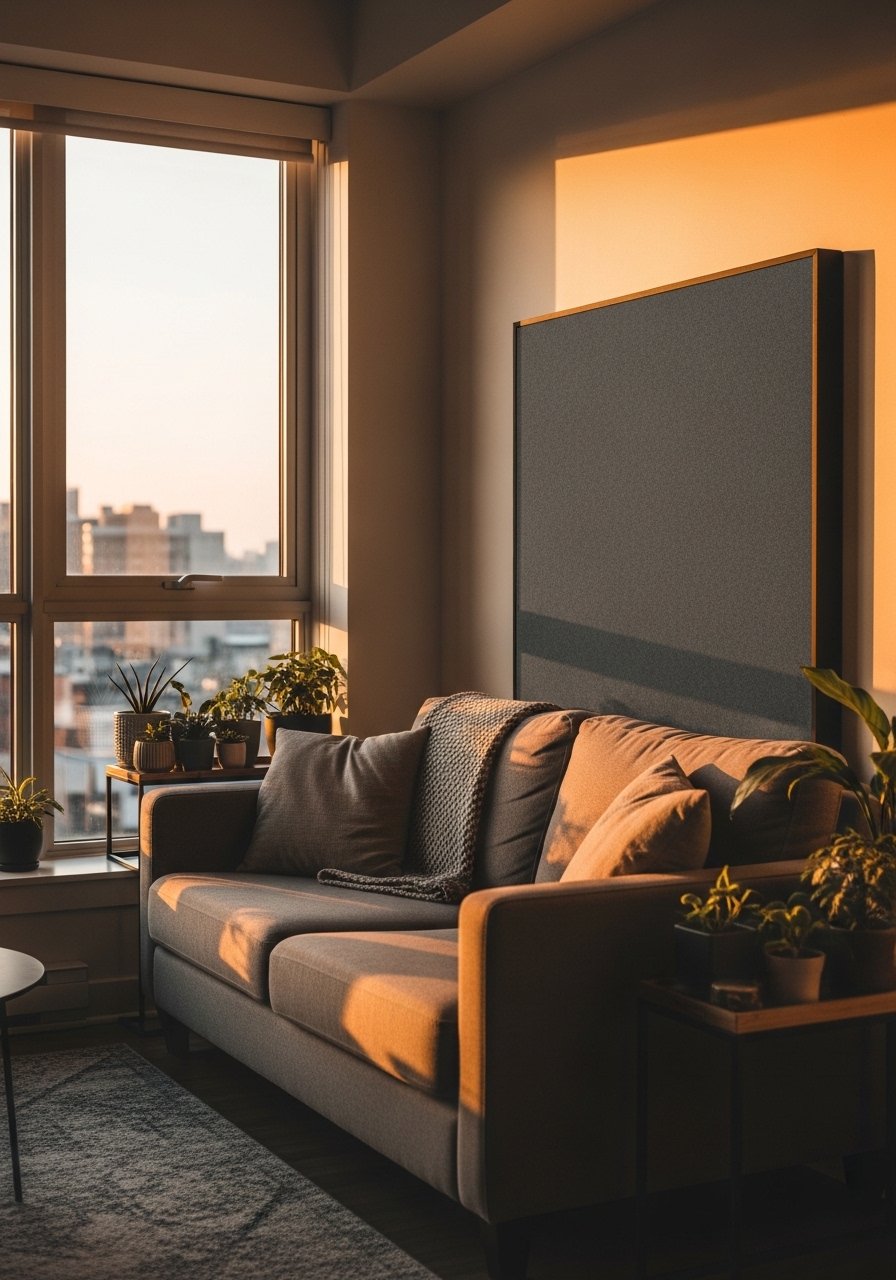
Small spaces need flexible fixes. I built a tall 2×4 panel and leaned it behind my sofa so I could angle it depending on where guests sat. The panel doubles as art because I covered it in textured fabric and added a thin wood trim. People often over-treat entire walls; odd-number groupings and moveable panels make small rooms feel balanced. These are renter-friendly and cost about $40 to $90. Use a rubber foot on the base so the panel does not slip. Rubber furniture pads
Budget Cardboard Wrapped Panels For Dens

When I wanted cheap and quick, I used thick corrugated cardboard as frames, wrapped rockwool cores, and covered the whole thing in thrifted fabric. It is not museum quality but it cuts echo and hangs lightweight. The detail many tutorials skip is sealing cardboard edges with gaffer tape before stapling fabric, which keeps it from fraying. Common mistake is using cardboard for heavy cores; stick to 1 to 2-inch cores. Budget friendly builds like this can be under $25 per panel. Gaffer tape roll
Bass-Trap Bookcase Inserts For Libraries

I stuffed thin rockwool slabs into custom fabric-wrapped boxes and slipped them into gaps on my bookshelves. The bass softened and the room felt less muddy. The specific trick is leaving the front grille slightly recessed so the fabric sits off the shelf edge and creates a small air gap. Many people only treat blank walls; bookcase inserts are invisible and effective. Cost varies, but plan $30 to $70 per insert depending on materials. Rockwool mineral wool slabs
Upholstered Canvas Panels For Guest Bedrooms

Instead of framed panels, I stretched fabric over deep canvas stretcher bars and wrapped a 2-inch acoustic core inside. They look like oversized art and add welcome texture above the bed. A rookie error is using too-tight stretcher bars which squeeze the core. Use 2×4 dimensions to match common stud spacing and staple every inch on the back. Guests notice sound clarity and the room immediately feels calmer. Budget per panel is $50 to $100 depending on fabric. Canvas stretcher bars set
DIY Acoustic Baffles For Home Gym
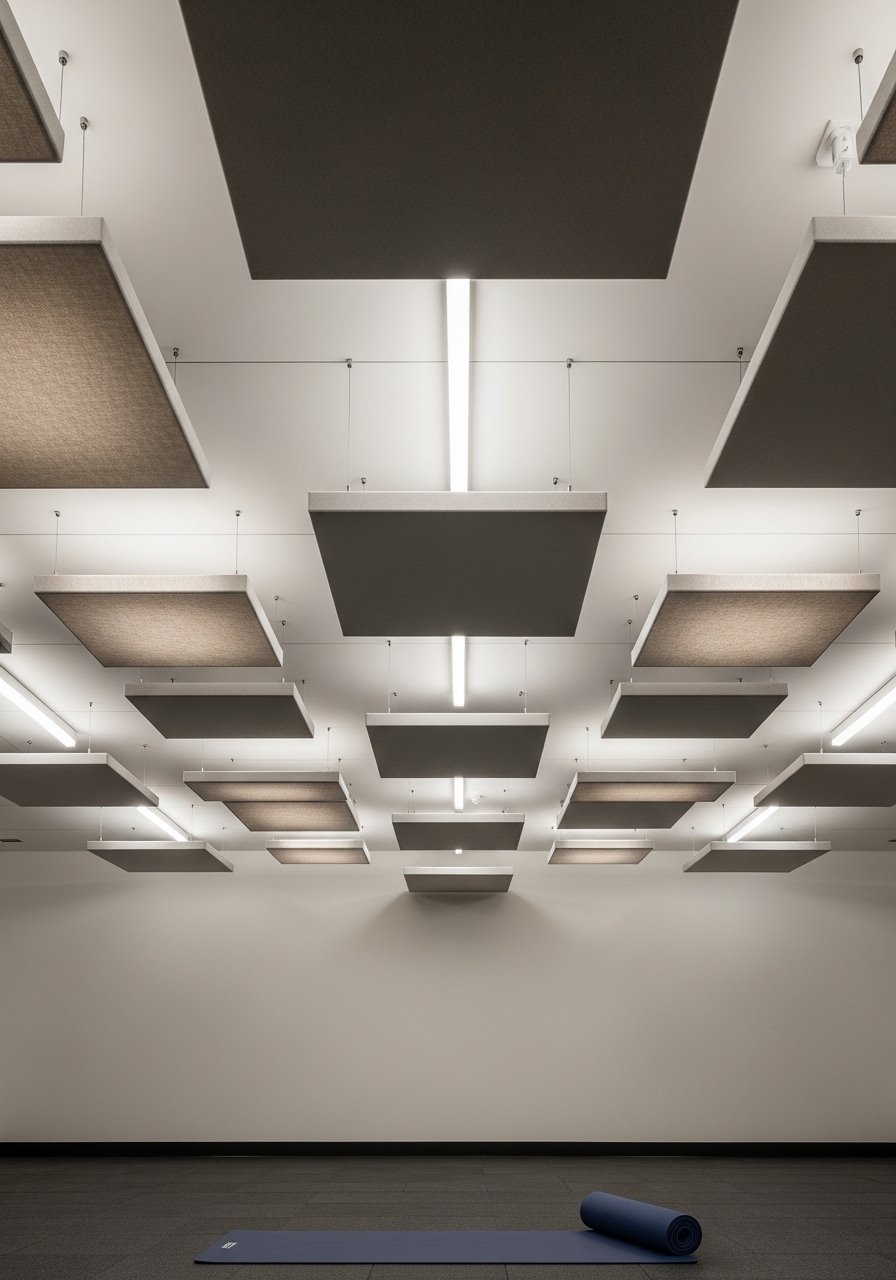
Gyms rebound every stomp unless you treat the ceiling. I made baffles from rigid fiberglass wrapped in breathable black fabric and hung a zigzag pattern to break reflections. Competitors often only suggest floor mats but overhead baffles actually stop flutter. Mount with ceiling anchors and use fishing line to create a floating look. A mistake is crowding them too close; space them to break the path of sound. These are mid-range builds at $80 to $160 total for multiple baffles. Ceiling anchors and line kit
Narrow Vertical Panels For Slim Walls

Slim walls present odd gaps that reflect sound oddly. I cut 12×48 panels and staggered them vertically to elongate the wall and absorb reflections. The style is modern and works in hallways or between windows. Important detail: use odd-number groupings so it reads like intentional design rather than random fixes. Typical cost is $25 to $60 per narrow panel. Pair with a tall plant to complete the visual lift. Tall artificial plant 5ft
Patterned Fabric Gallery Wall For Living Rooms

I mixed patterned fabrics across a gallery of panels to hide the acoustic function. The key is breathable patterned fabric so you do not lose absorption. A common mistake is matching all patterns too closely which reads busy. Use a main fabric, a secondary neutral, and a single bold accent to follow the rule of thirds. Panels sized to picture frame dimensions feel custom. Expect $60 to $120 for a decorative grouping. Patterned upholstery fabric yardage
Sound Absorbing Headboard For Small Bedrooms

I converted my headboard into a thick acoustic panel by building a sturdy frame, adding a 2-inch core, and finishing with microsuede. The bed suddenly stopped sounding like it was in a tunnel. One detail people miss is securing the headboard to two studs or using a French cleat for safety. This doubles as decor and a functional absorber for late night TV. Expect $70 to $150 depending on fabric. French cleat hanging kit
Magnetic Removable Panels For Renters

If you are renting, magnet-backed panels are a revelation. I attached thin panels to a hidden metal strip and swapped them for cleaning or when guests came over. The trick is using rare-earth magnets rated for the panel weight and spreading them across the frame for safety. People often try double-sided tape and then complain when panels fall. These magnetic systems cost more upfront but save wall repair later. Budget $40 to $100. Rare-earth magnet set
Your Decor Shopping List
Textiles
- Honestly the best $40 I have spent. Microsuede upholstery fabric, 1 yard in charcoal for pet-proof covers
- Linen curtain panels 96-inch, set of 2 (~$30-50 per panel) for window-adjacent panels
Wall Hardware
- Found these while looking for something else. French cleat hanging kit (~$12) for secure mounts
- Ceiling panel hanging kit for clouds and baffles
Cores & Fill
- Owens Corning 703 fiberglass boards, 2-inch (~$30 each)
- Rockwool mineral wool slabs for corners and bass traps
Tools & Misc
- Staple gun heavy duty for fabric backs
- Gaffer tape roll for quick edge sealing
- Rare-earth magnet set for removable panels
Budget Finds
- Peel-and-stick acoustic foam wedges, pack (~$20-35) for instant rental fixes
Shopping Tips
White oak beats dark wood in 2026. Design feeds have shifted completely. White oak floating shelves look current, not dated.
Grab these linen curtain panels 96-inch for $30 per panel. Curtains should kiss or puddle the floor, never hang halfway up.
Lead with function on cores. Owens Corning 703 fiberglass 2-inch boards absorb the speech range you actually need in living rooms.
Found these while looking for something else. Microsuede upholstery fabric is worth the extra few dollars if you have pets.
Everyone buys five small succulents. One single 5-foot artificial fiddle leaf fig has ten times the visual impact.
Frequently Asked Questions
Q: Can I hang panels without drilling in a rental?
A: Yes, use over-the-door hooks for doors, rare-earth magnets on a metal strip, or heavy-duty Command picture hooks rated for the panel weight. For ceiling clouds try removable hook anchors and fishing line so you avoid drywall damage.
Q: How many panels will actually make a difference?
A: Most folks notice less echo with just four to six panels. Start with corners and the area opposite your main sound source, then add panels until the room sounds balanced.
Q: Will these stop bass problems?
A: Flat wall panels help highs and midrange. For bass you need corner traps and an air gap behind larger panels. Build bass traps with 2-inch rockwool and leave a one to two inch gap for better low-end control.
Q: What fabric should I use so panels still work?
A: Use breathable fabrics like linen, Guilford-style acoustic fabric, or microsuede for pets. Over half go for fabric covers instead of naked foam. Avoid tight-woven upholstery or vinyl that blocks sound.
Q: How big should panels be for standard rooms?
A: Two feet by four feet panels match studs and hang cleanly. These run about $35 bucks a pop for 2 by 4 feet size, so plan coverage based on your room and budget.
Q: Any quick tips for keeping panels looking good after a month?
A: Vacuum fabric covers gently and swap removable covers for washing. Reinforce staples every year and check hanging hardware. Panels with velcro or magnetic backs make maintenance painless.
Q: Can I make panels look like art without losing performance?
A: Yes, stretch breathable patterned fabric over a 1×3 frame and keep the core 2 inches thick. Leave the edges clean and staple every inch on the back so the panel reads like a canvas while still absorbing sound.