

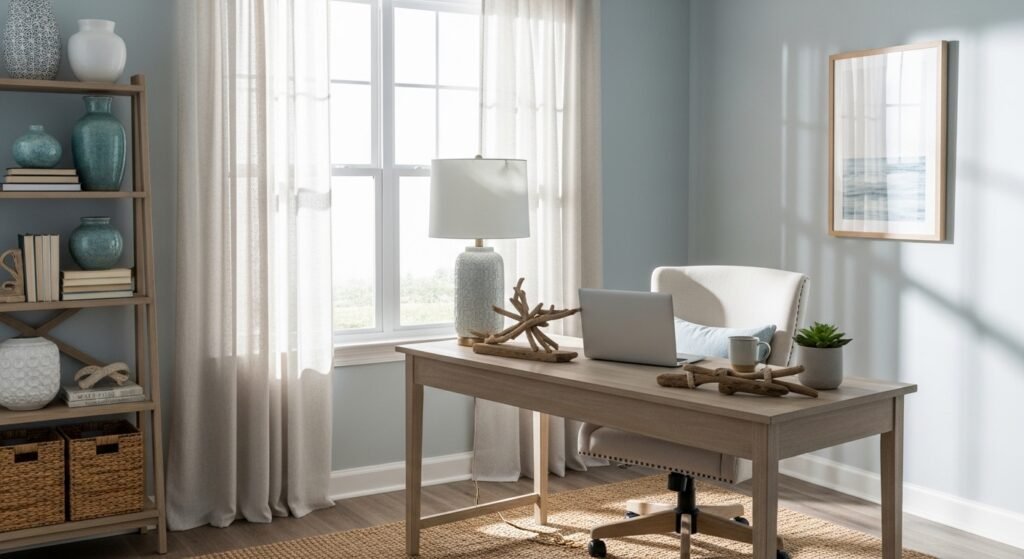
My living room had nice furniture and decent lighting but it still felt like a waiting room. Took me embarrassingly long to figure out it was missing texture. Every surface was smooth, every color was flat, and nothing invited you to actually sit down. That same thing happens to home offices, they can feel efficient and empty at once.
These ideas tilt toward relaxed coastal with sun-bleached wood, soft blues, and lots of linen. Most suggestions are budget friendly, under $75, with a few splurges around $100-150. They work for a dedicated home office, a desk corner in a bedroom, or the built-in nook you somehow never use.
Layered Neutrals with Sea Glass Accents for a Cozy Office
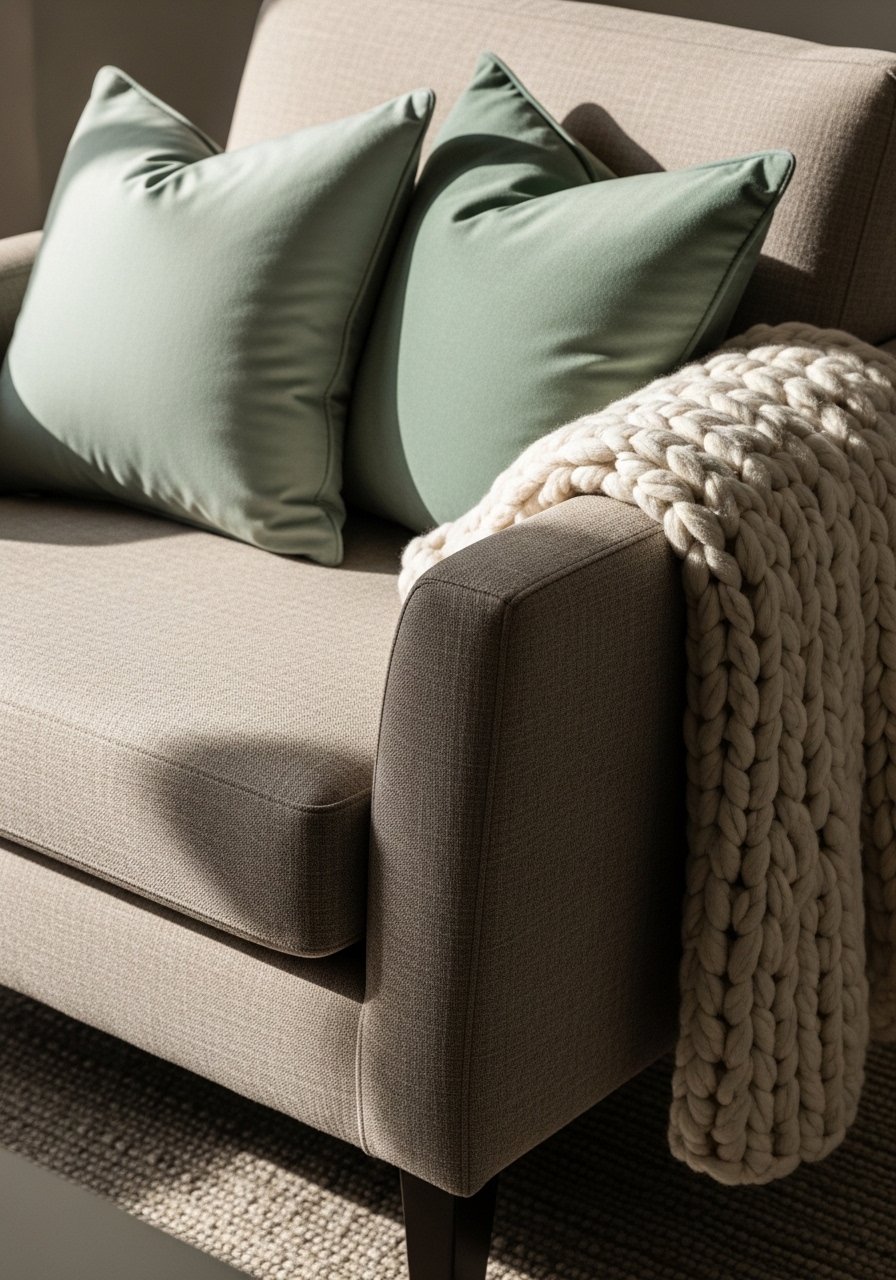
The moment I swapped my charcoal pillow for a sea glass green one the whole desk area stopped looking so severe. Use an 80/20 color ratio, where 80 percent stays in neutral beiges and linen and 20 percent is sea glass or muted aqua. I like 22-inch down-filled linen pillow covers for the big shapes and one 12-inch lumbar as the accent. For products, try sea glass velvet pillow covers and a chunky knit throw in cream. Common mistake is buying all small pillows so nothing reads as an anchor. A quick detail most people miss is keeping the larger pillow at a 2:1 size ratio to the lumbar pillow. Pair this with the curtain trick later for a finished look.
Weathered Wood Desk and Driftwood Accessories for Coastal Character
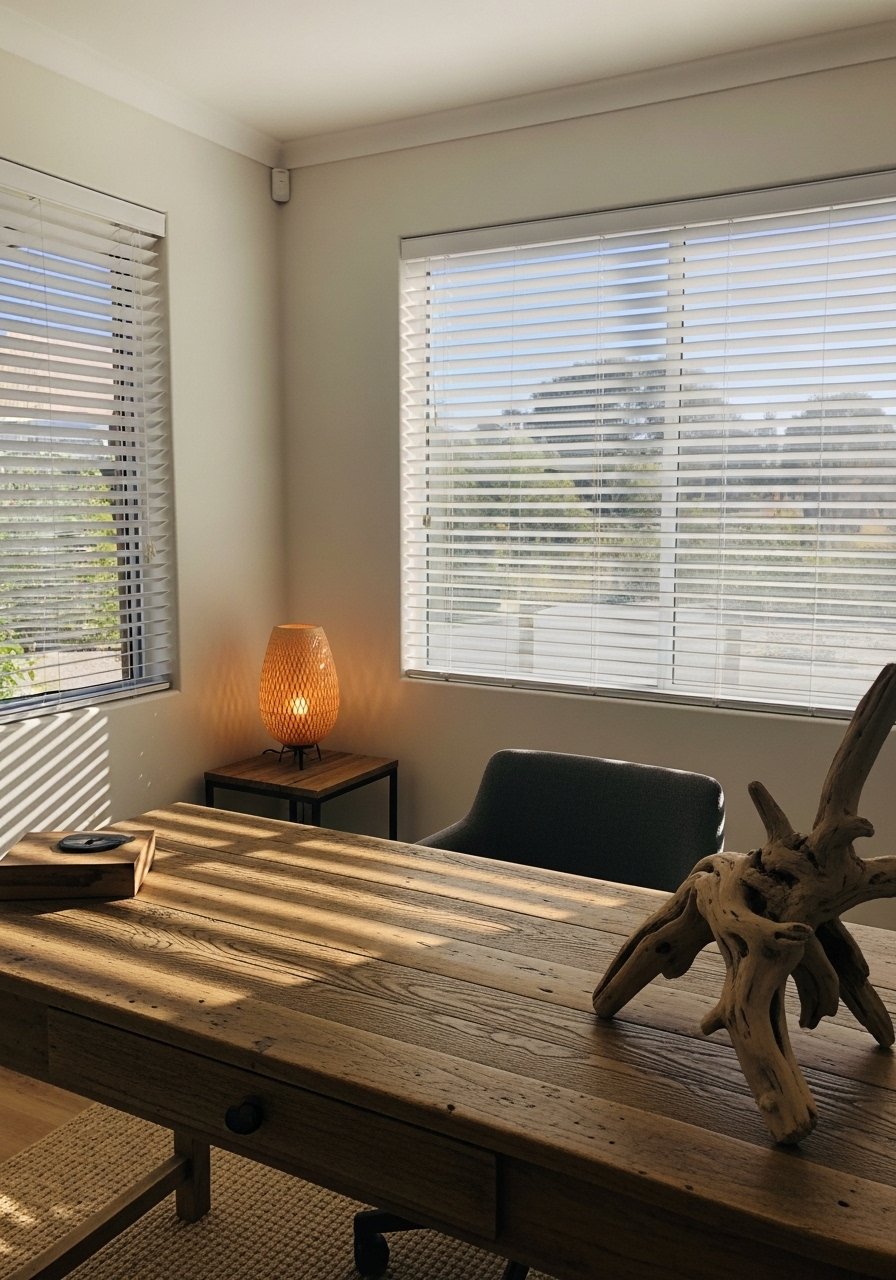
I swapped my heavy oak desk for a weathered white oak desk and the room instantly read coast rather than office supply store. White oak tones look current and keep the space light. For shelves, white oak floating shelves are inexpensive and anchor the wall without feeling heavy. Add a driftwood desk organizer for pens and it makes the whole setup feel curated. People often match all furniture finishes and the space flattens. A detail to try is placing a lamp on the left of the desk and a plant on the right to create visual balance, keeping one side slightly heavier. This works well in a full home office or a compact corner workspace.
Layered Window Treatments to Add Height in Small Offices
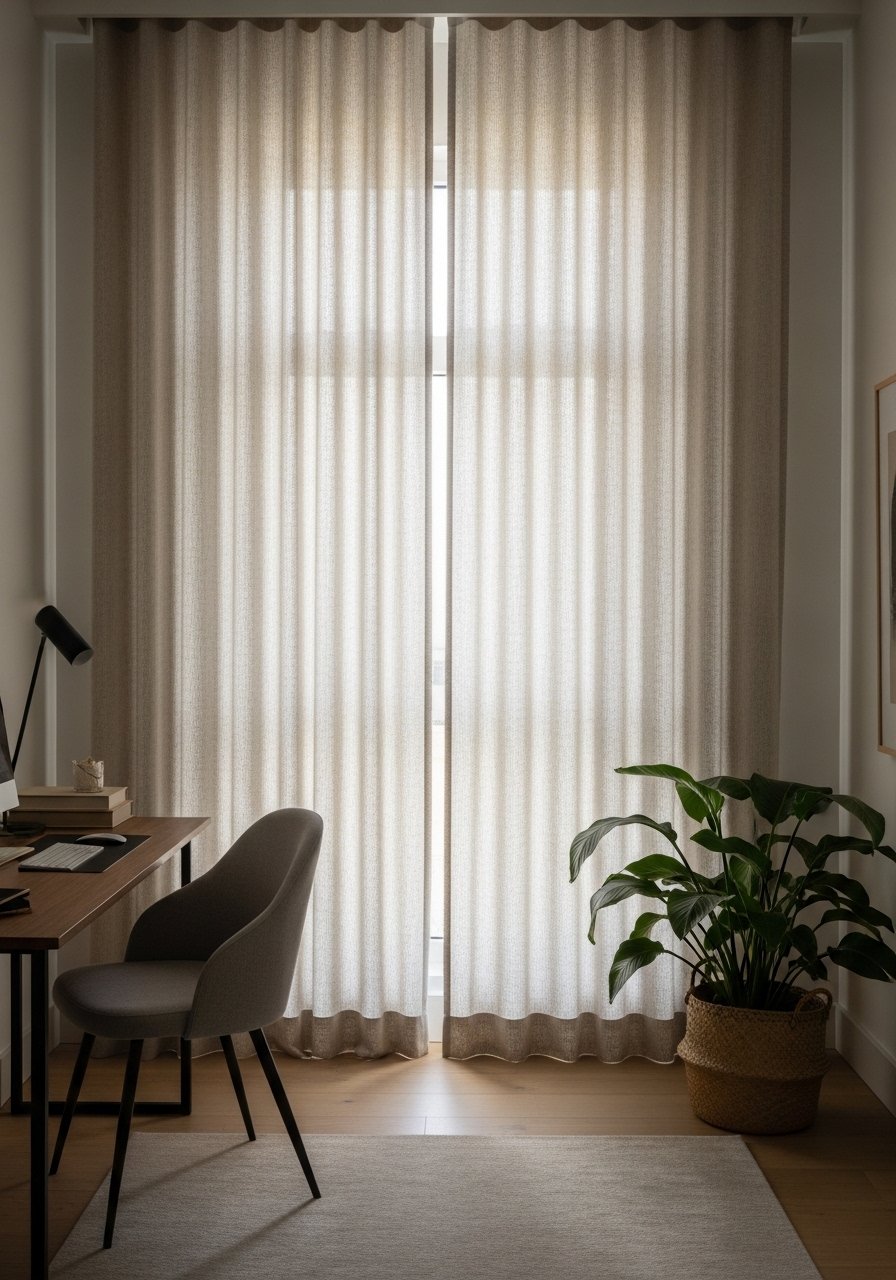
Most people hang curtains right at the window frame. That is why their rooms look shorter than they are. Hang panels 4 to 6 inches above the frame and go to the floor, or let them puddle an inch or two if your floor is low. For 8 to 9-foot ceilings I use 96-inch linen panels. Try 96-inch linen curtain panels for a soft beachy texture. A common error is picking curtains that are too narrow. Panels should be 1.5 to 2 times the window width for proper fullness. A small real-life note, if your rod extends 6 inches beyond the frame you gain more visible wall and the window feels wider, which is great for a compact office.
Rope and Textured Lighting for Relaxed Coastal Glow

There is something about a reading nook with layered pillows that makes you want to cancel your plans. Lighting does the same for a desk. Swap harsh overhead fluorescents for a rope-wrapped pendant or a lamp with a woven shade and a warm 2700K bulb. I use a rope pendant light over the desk and a woven table lamp on the credenza. People often choose bulbs that are too bright or cool and the room loses coastal warmth. A specific tip is pairing a dimmable lamp with a 60-watt equivalent soft white bulb to get the afternoon glow without glare.
Oversized Mirror to Brighten Dark Corners in a Small Office
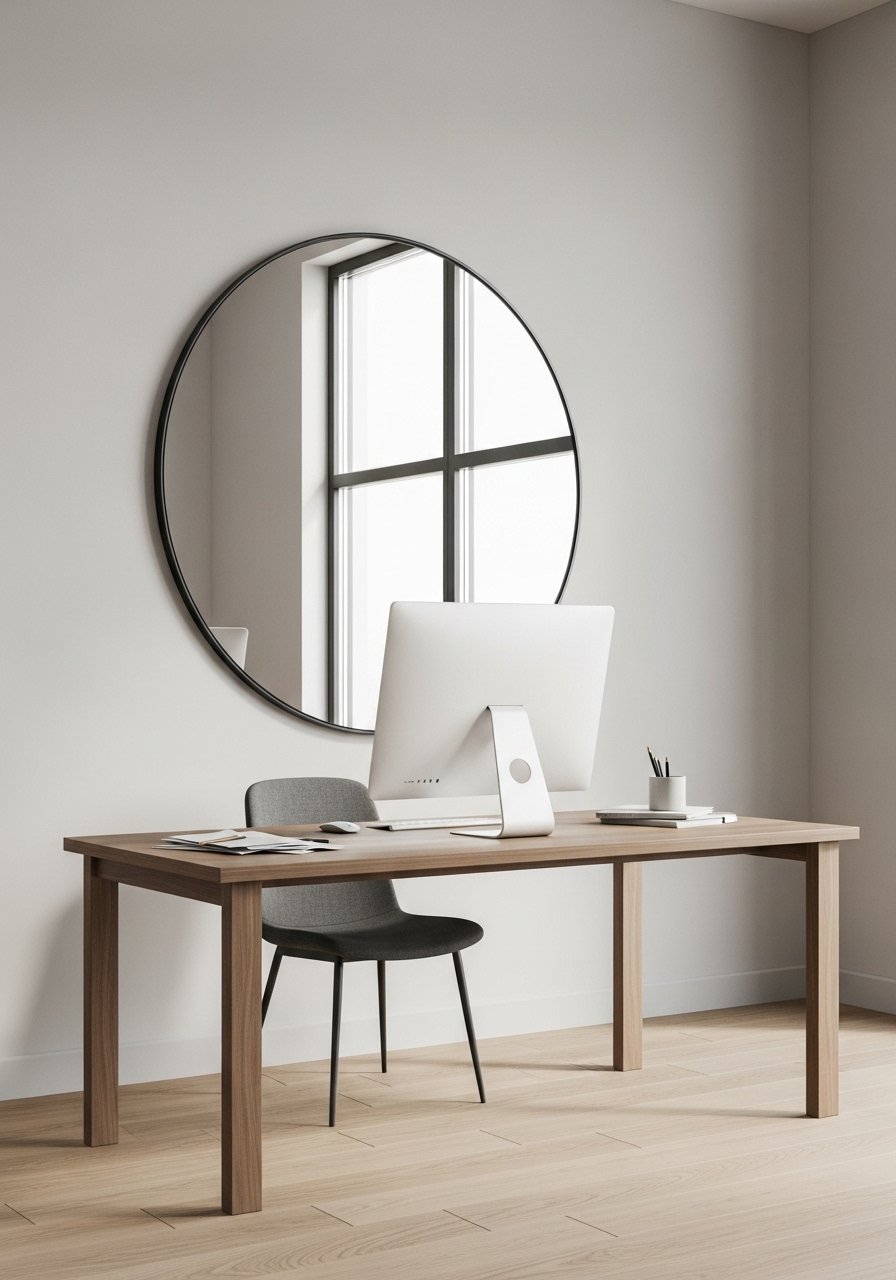
I leaned a 36-inch round mirror behind my monitor and suddenly the window light doubled. Oversized mirrors bounce light into dark corners and make a small office feel twice as big. Try 36-inch round leaning mirror in a weathered frame to match coastal tones. A mistake is hanging a mirror too high so it reflects the ceiling instead of the window. A real-life detail, mirror placement should capture window light at roughly the height of your seated eye level for maximum effect. Mirrors pair beautifully with the layered curtain idea for more openness.
Casual Gallery Wall with Nautical Prints for Personality

I found brass picture ledges on Amazon for under $20 and they solved my gallery wall commitment problem. Use ledges so you can swap art without a new nail every time. Mix three frame sizes, follow the rule of three for focal grouping, and keep 2 to 3 inches of spacing between frames for balance. I like brass picture ledges and a set of nautical art prints to start. A common trap is trying to perfectly center every piece. Instead, create a slightly off-center anchor piece and let the rest orbit it. This works well over a desk or a built-in shelf and pairs with the mixed metals idea below.
Natural Fiber Rug Layering for Warmth Underfoot
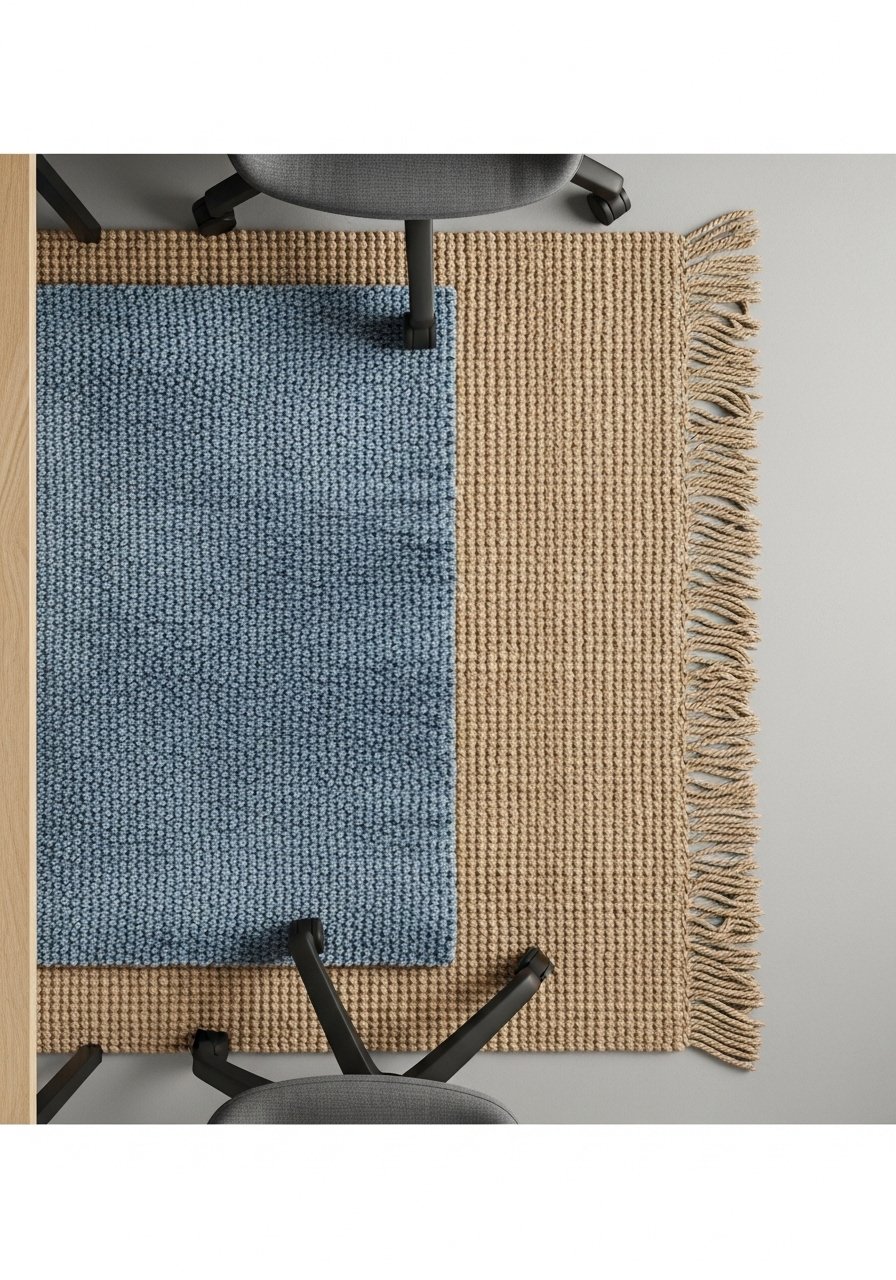
A single rug can read utilitarian. Layering a jute rug with a softer area rug on top creates coastal texture and keeps your chair from sliding on bare floor. Start with a 6×9 jute and add a 5×7 soft wool or low-pile rug centered under the desk. I use an 80/20 visual rule where the natural fiber is dominant. For products try 6×9 jute rug and a 5×7 coastal blue low-pile rug. People often buy a rug too small for the space and it looks off. Real detail, leave 6 to 12 inches of border where the jute shows around the inner rug to keep the layered look intentional.
Greenery and Low-Maintenance Plants for Coastal Freshness

Everyone buys five small succulents. One single 6-foot fiddle leaf fig has ten times the visual impact. Use a large plant for height and a couple of low-maintenance real plants at desk level to soften screens. If you cannot keep a live plant alive, an artificial option gives the same scale without the fuss. Try an artificial fiddle leaf fig 6ft and a snake plant in ceramic pot. A common mistake is clustering too many tiny plants so none read as a focal point. Place the tall plant in a corner and a single small plant on the opposite side for balance.
Functional Styling with Baskets and Cable Management
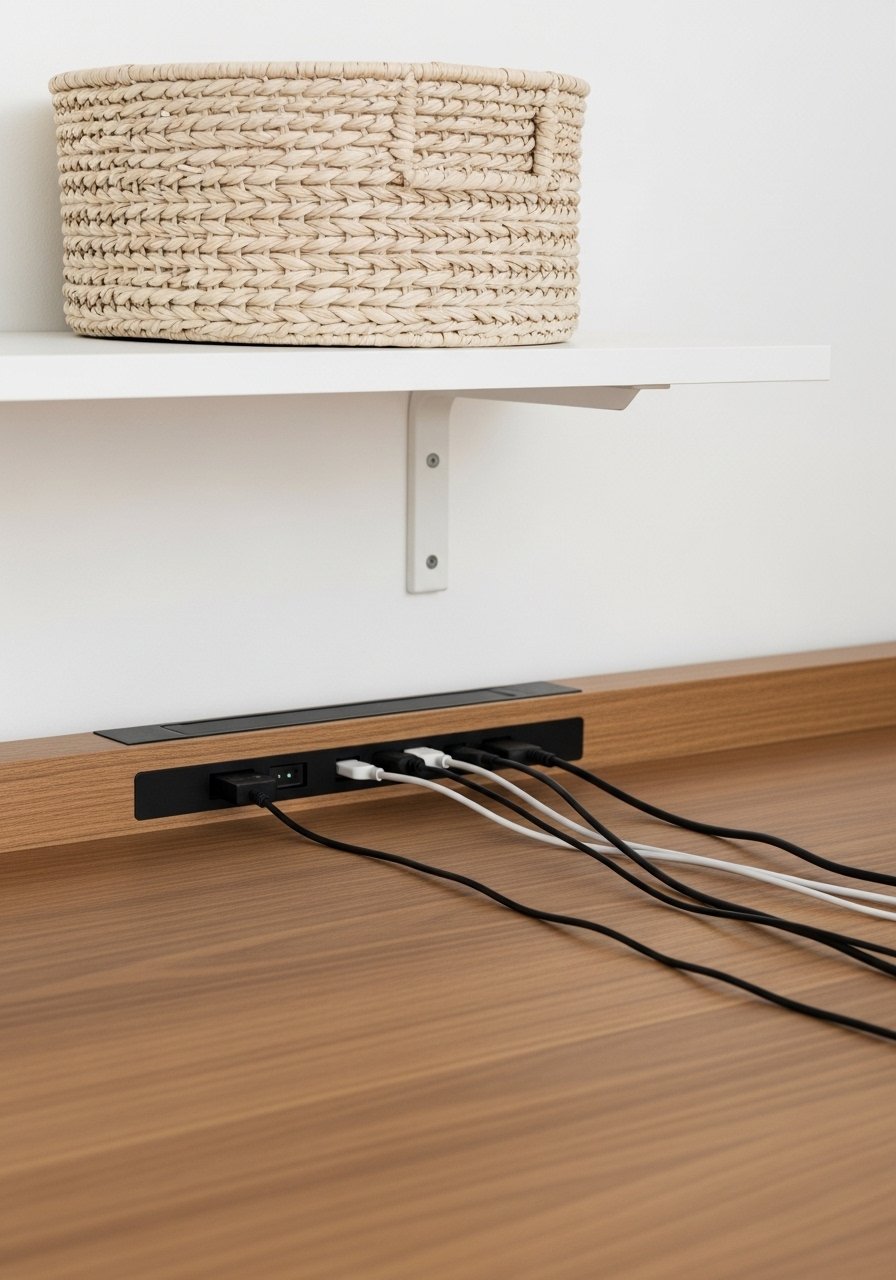
Clutter kills that coastal calm fast. Baskets hide paperwork and a thin cable box keeps cords invisible. I keep two woven baskets under my desk for current projects and a cable management box behind the power strip. For visible surfaces use a slim tray for mail and a small catchall bowl for keys. People often buy pretty trays that are too small so clutter spills over. A practical detail that helps is using 12×16 inch baskets for letter-size files and rotating the contents every month to avoid pileup.
Soft Blue Accent Wall Behind Desk for Depth and Calm
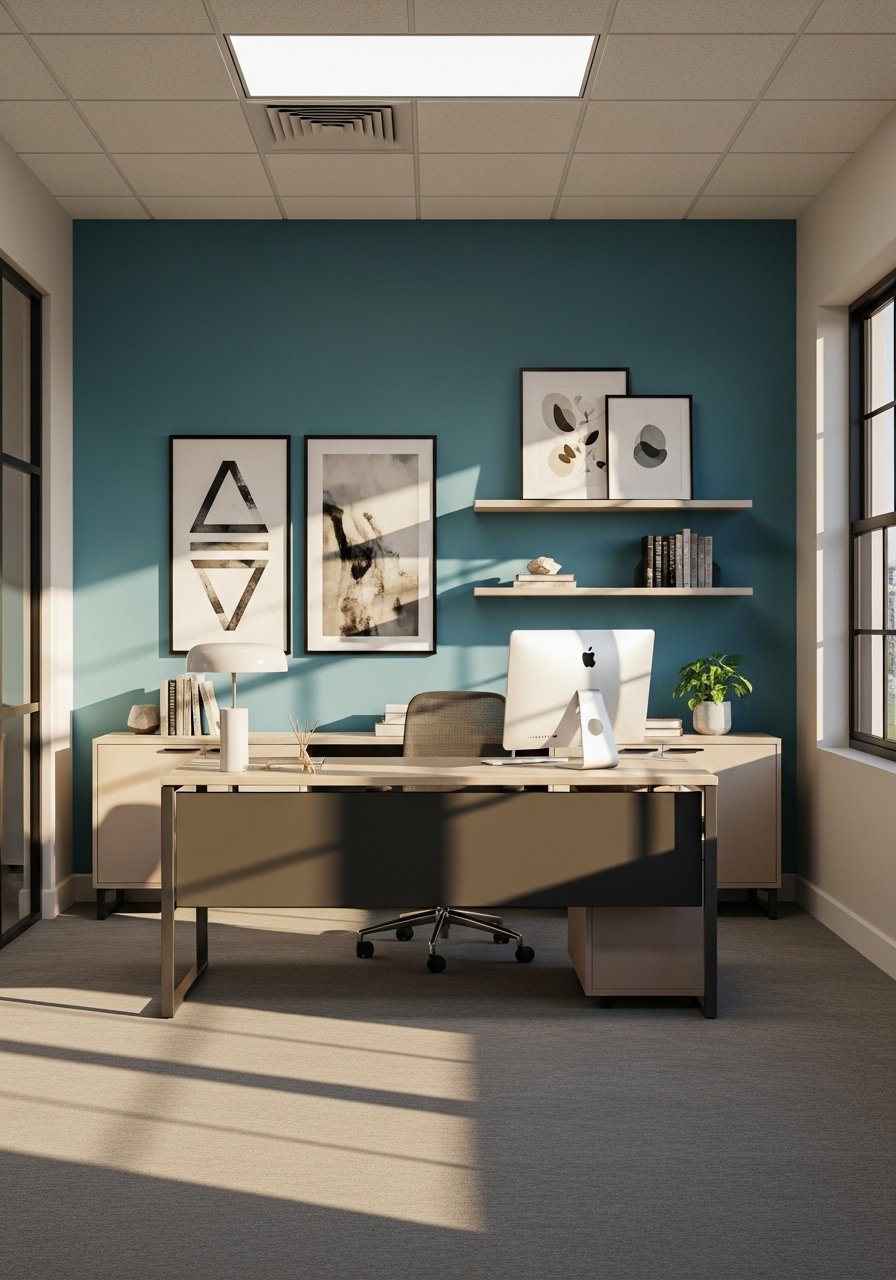
Paint can be the least expensive way to add drama. I painted the single wall behind my desk a muted sea blue and everything felt anchored. Keep the rest of the room neutral so the blue reads like depth rather than color overload. If you do not want paint, peel and stick wallpaper in a subtle stripe works the same. Try peel-and-stick coastal blue wallpaper. A frequent error is painting three walls and turning the room into a cave. One wall behind the desk gives a sense of enclosure and focus, which is ideal for productivity.
Mixed Metals and Shell Accents for a Subtle Nautical Touch
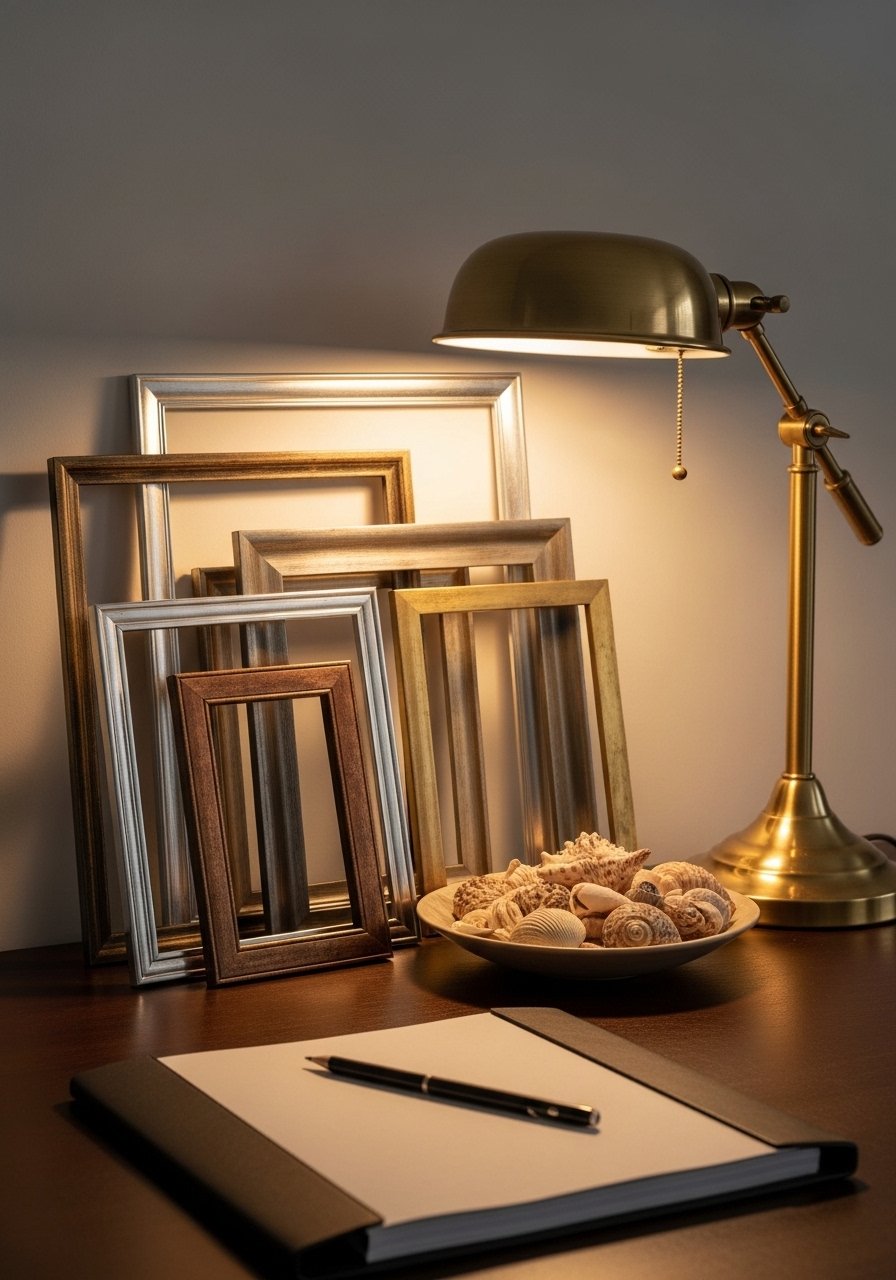
Most decor advice has you match every metal. I mix brass, aged nickel, and patinaed pewter for a collected look. Use small shell accents rather than large displays so it reads coastal without being kitschy. Start with mixed metal frames and a small shell bowl for the desk. A common mistake is overdoing shine which becomes distracting on camera calls. Keep metal finishes varied and matte where possible. This pairs nicely with the gallery wall idea and with natural woods to complete the coastal palette.
Your Decor Shopping List
Textiles
- Honestly the best $40 I have spent, sea glass velvet pillow covers set for layering
- Chunky knit throw in cream (~$35-55). Drape over chair arm for instant softness
Wall Decor
- 36-inch round leaning mirror to brighten corners
- Brass picture ledges (~$18-25) for easy art swaps, similar at Target
Rugs
- 6×9 jute rug natural base
- 5×7 coastal blue low-pile rug to layer on top
Lighting & Accessories
- Rope pendant light for warm coastal glow
- Mixed metal picture frames set for varied finishes
Plants & Storage
- Artificial fiddle leaf fig 6ft for height
- Cable management box to hide cords
Shopping Tips
White oak beats dark wood in 2026. Design feeds have shifted completely. These white oak floating shelves look current, not dated.
Grab 96-inch linen curtain panels for $30 to $50 per panel. Hang them 4 to 6 inches above the frame and the room feels taller immediately.
Curtains should puddle or kiss the floor, never hang halfway up. These 96-inch panels are right for standard 9-foot ceilings.
Everyone buys five small succulents. One single artificial fiddle leaf fig 6ft has ten times the visual impact and needs zero upkeep.
Try mixed metals in small doses first, like mixed metal frames, then add larger pieces if you like the look.
Frequently Asked Questions
Q: Can I mix boho textiles with modern office furniture without it looking messy?
A: Yes. Use one dominant style for scale and add the other as accents. Keep modern furniture streamlined and introduce boho with one textured rug or a single macrame wall hanging. Stick to a limited color palette so the mix reads intentional.
Q: What size rug do I actually need under a desk?
A: Go bigger than you think. For a home office, aim for at least 5×7 under a single desk and 6×9 if you have a chair that needs to roll. Make sure the front legs rest on the rug so the setup feels anchored.
Q: Should I match my metals or mix them?
A: Mix them. It looks more collected. Start with small pieces like mixed metal frames before committing to lighting or hardware.
Q: How do I stop my small office from looking like a bland workspace?
A: Add three textures, one statement color, and a plant. For textures use linen, woven fiber, and a soft rug. Pick a sea glass accent and repeat it in two or three places so it reads cohesive.
Q: Real plants or fake for a home office with low light?
A: Both work. For low light pick snake plants or pothos for real options. If you travel a lot, a quality artificial like artificial fiddle leaf fig 6ft gives scale without maintenance.
Q: How close should art be to my desk when building a gallery wall?
A: Keep the lowest piece roughly 8 to 12 inches above the desk surface, and maintain 2 to 3 inches between frames. Use ledges if you want to swap without new holes, like brass picture ledges.