


Spent $400 on a coffee table. Room still looked off. Spent $35 on a throw and three candles. Suddenly everything clicked. That flip felt less about buying more and more about arranging what I already had so each piece could breathe.
These ideas lean cozy-modern with a slight vintage touch. Most suggestions are under $75, with a few splurges around $150. They work for living rooms, bedrooms, entryways, and small apartments that need personality without a full renovation.
Layered Neutrals With One Bold Accent Color

The moment I draped a chunky cream throw and added an emerald pillow, the room stopped feeling flat. Layered neutrals create a calm base and one saturated accent color gives the eye a place to rest. I used 80/20 color ratio here, with 80 percent warm neutrals and 20 percent jewel tone. Works well in living rooms or bedrooms, budget $25 to $150 depending on the accent piece. I linked the throw I bought because it is heavy enough to hang over the sofa without looking like a sheet chunky knit throw in cream. Common mistake is adding too many accents at once. Pick one bold color, not three. Pro tip, a 22-inch linen pillow cover in the accent color reads more expensive than tiny scatter cushions.
Floor-To-Ceiling Curtains To Add Height
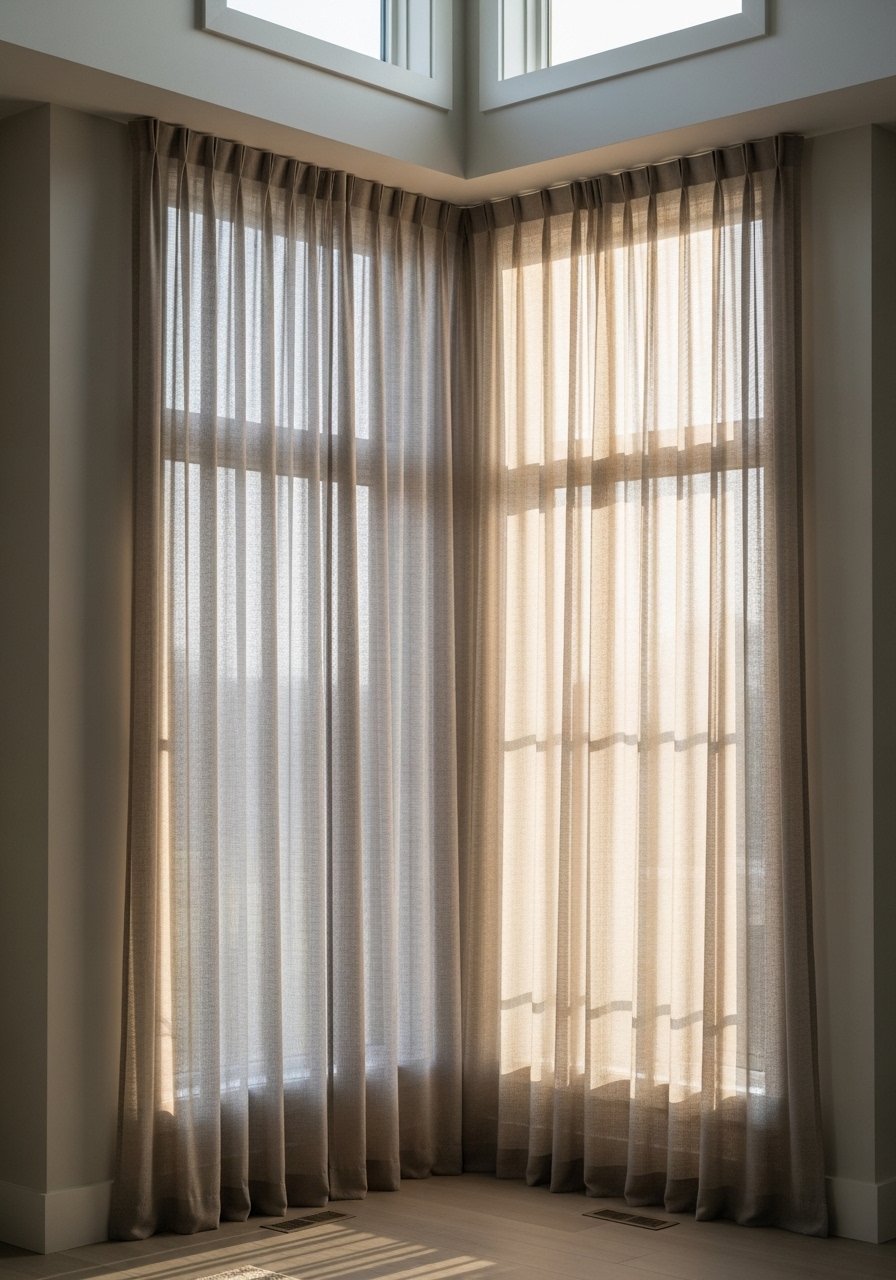
Most people hang curtains right at the window frame. That is why their rooms look shorter than they are. Raise the rod 6 to 12 inches above the trim and hang panels that either kiss or puddle the floor. For 8 to 9 foot ceilings, 96-inch panels work well. I used linen curtain panels 96 inch in my bedroom and it made the ceiling feel higher immediately. Budget is usually $30 to $60 a panel. A common mistake is buying panels that are too narrow. Aim for panels that are at least 1.5 to 2 times the window width so they look full when closed.
Gallery Ledge For Easy Art Rotation
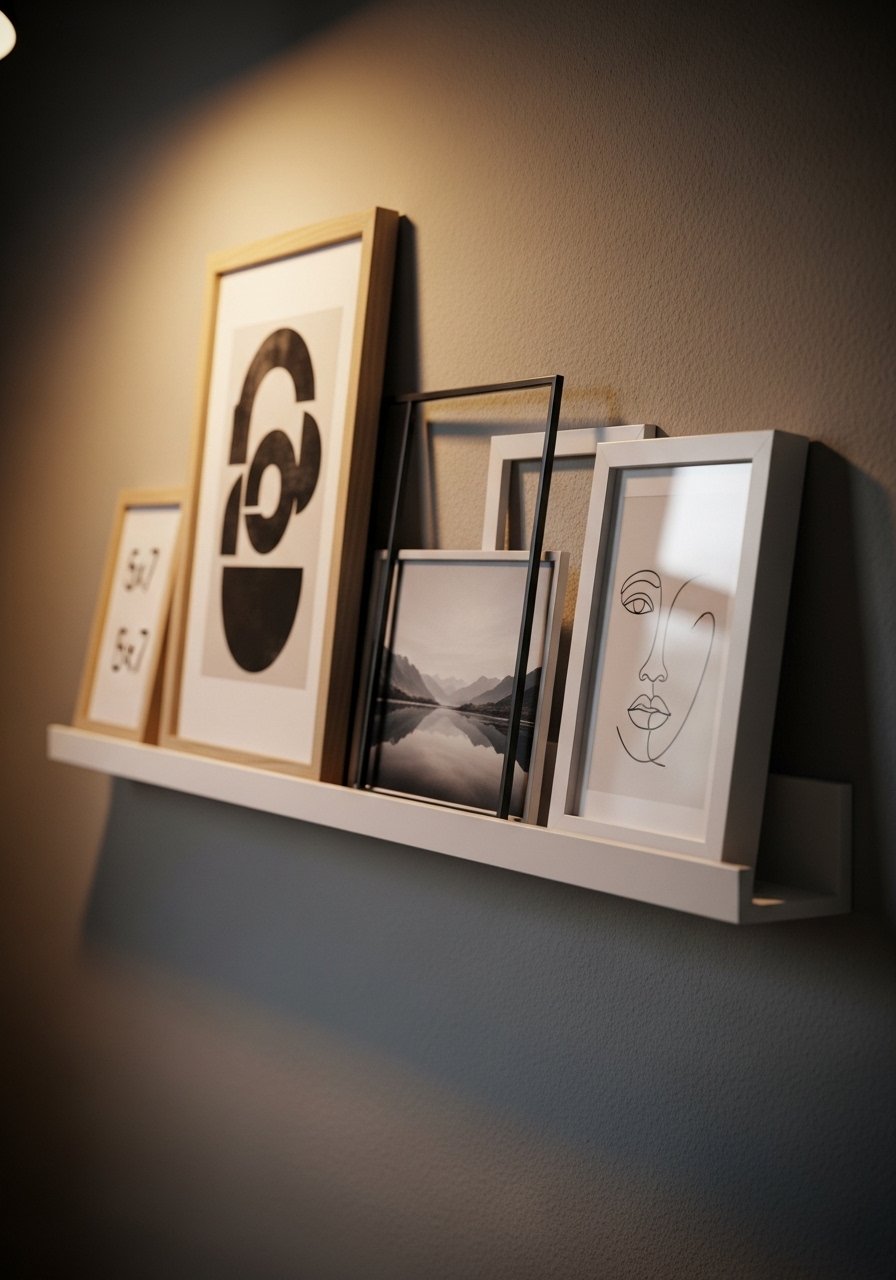
I hated patching holes every time I wanted new art. Gallery ledges let you swap pieces in seconds. Use two ledges staggered vertically to keep things dynamic and follow the rule of three when styling each shelf. I installed wood picture ledges 24 inch that hold three frames comfortably. Style tip, put the largest frame slightly off center and build out with a small ceramic piece and a plant. People often make the mistake of centering everything. Art that sits slightly off center reads more intentional. Cost is under $50 for a pair if you pick modest wood.
Mixed Metallics For Modern Glam
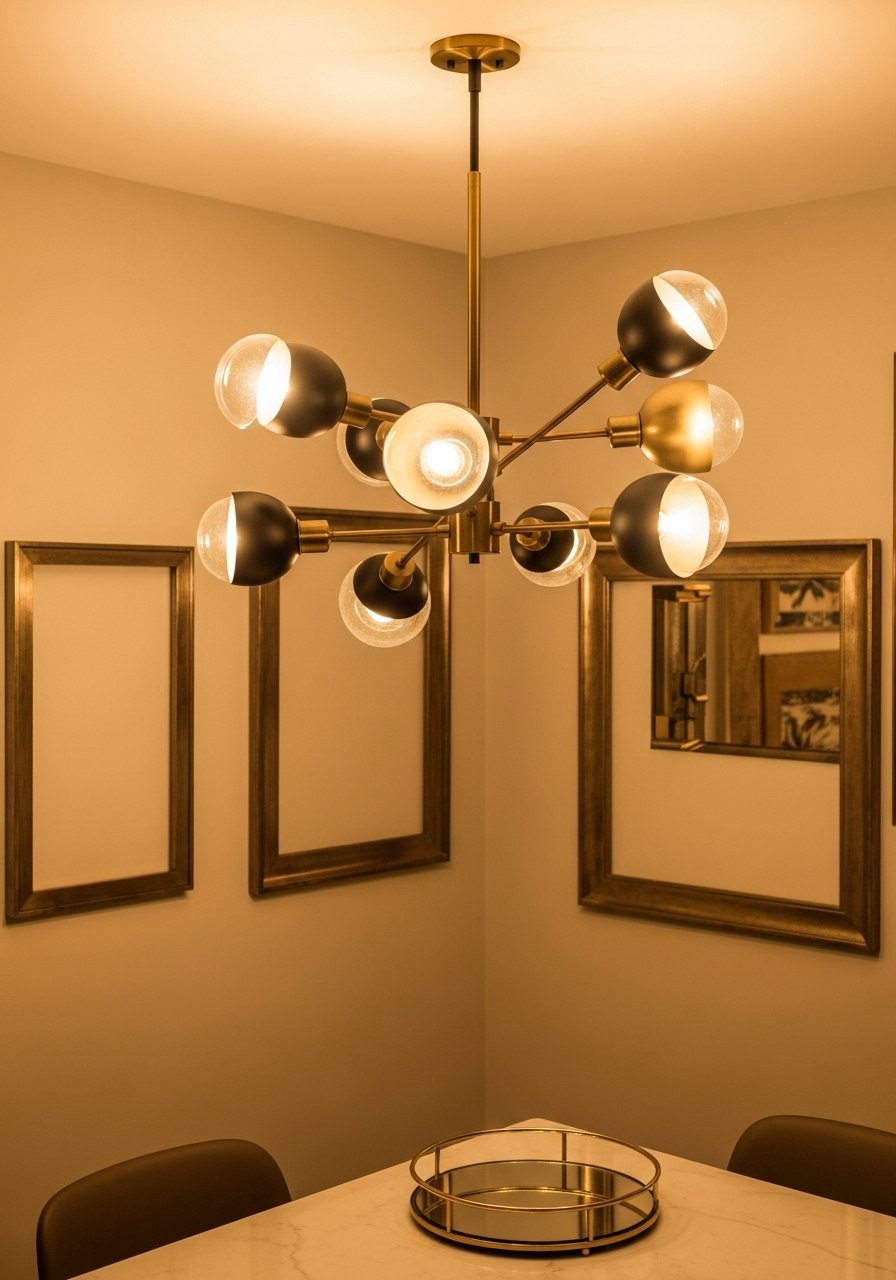
I used to match every metal and my rooms felt catalog-chosen. Mixing metallics adds depth. Try one dominant metal, like warm brass, then add a matte black lamp base and a silver frame as accents. I used mixed metal picture frames and a brass tray on the console. Budget around $20 to $120 depending on the fixture. The mistake people make is overdoing the shiny finishes. Add one matte or aged metal to ground the look. A tiny detail I never see suggested is to swap out the hardware on a lamp to a different metal for instant cohesion.
Oversized Mirror To Brighten Dark Corners

Putting a large mirror opposite my only window brightened the entire living room. Mirrors double light and the space you see. Aim for a mirror that is at least two thirds the height of the wall it leans on. I used arched leaning mirror 48 inch and it made a tiny corner feel like an extension of the room. Common mistake is hanging small mirror art pieces where one statement mirror would work better. Budget $100 to $250 for a substantial frame. If you have an awkward corner, lean the mirror at a slight angle to catch the ceiling and create more vertical interest.
Layered Rugs For Texture And Zoning

Layering rugs is how I finally stopped feeling like every floor was the same. Start with a natural fiber base, like an 8×10 jute, then add a softer 5×8 wool on top under the coffee table. The top rug should cover at least the front legs of seating to tie the group together. I used natural jute 8×10 rug and a textured wool runner for warmth. Expect $60 to $300 total depending on materials. A mistake is using two rugs that fight in scale. Keep one neutral and one patterned for contrast. Also, use rug tape at the corners to prevent slipping.
Statement Lighting For Small Spaces

Swapping a basic ceiling fixture for a statement pendant made the whole corner invite conversation. Go oversized for small dining nooks, aim for a fixture that is about one half to two thirds the width of your table. I installed a woven rattan pendant light 20 inch and it changed the scale of the room. Budget $60 to $200. Avoid fixtures that are too small for your table, because they disappear. If you have low ceilings, pick a semi-flush design rather than a long cord drop.
Console Table Vignette For Entryway Function
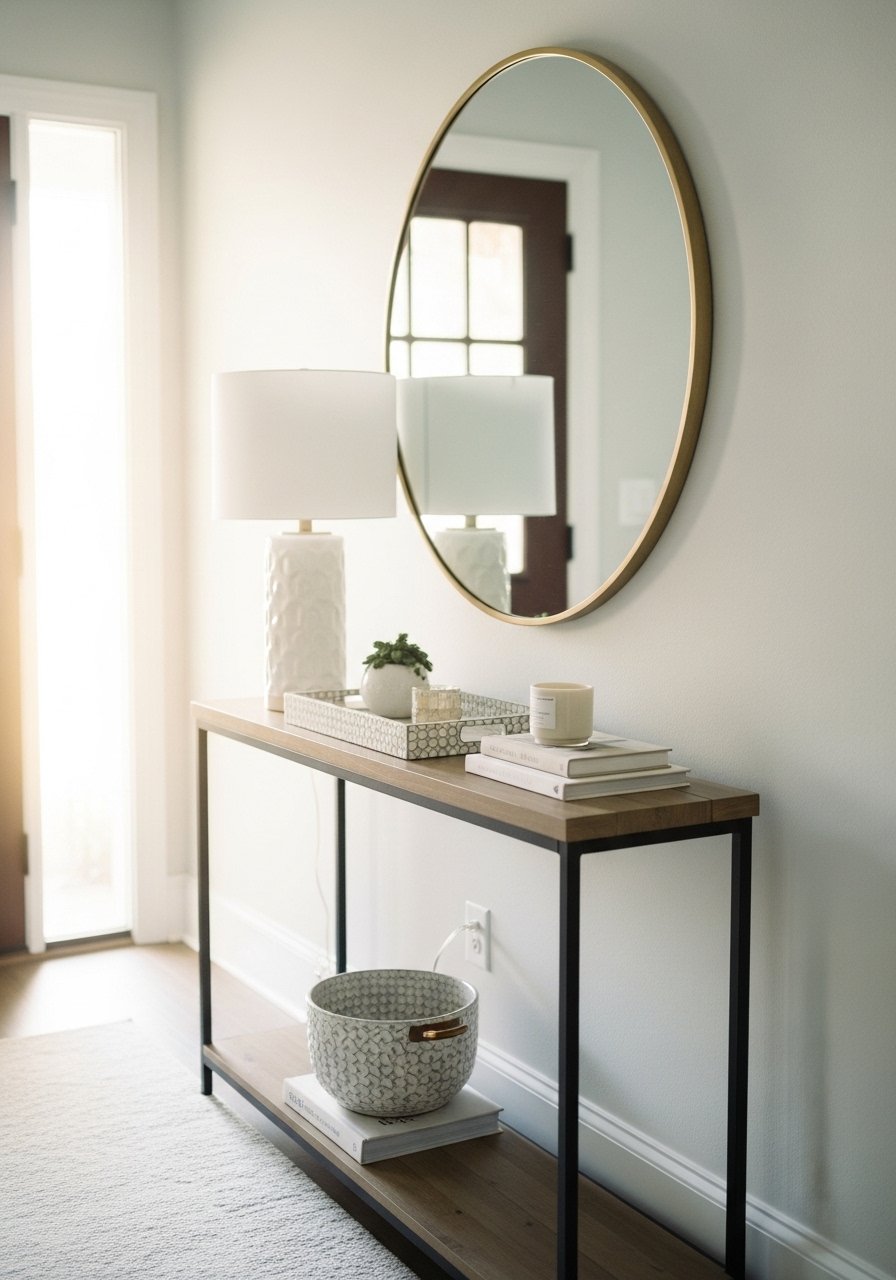
My entryway used to be a dropping zone for papers. A narrow console, a round mirror, and a tray for keys solved that. Use the rule of three when styling the surface: lamp, tray, and a tall object like a vase. I keep a decorative catchall tray for daily clutter and a small lamp so the space feels intentional. Budget $50 to $300. A common mistake is using a console that is too narrow for the wall, which makes the wall feel empty. Aim for a table two thirds to three quarters the width of the entry wall.
Built-In Look With White Oak Floating Shelves

Shelves can look custom for a fraction of the cost when you stack identical floating shelves vertically with equal spacing. White oak looks current and less fussy than painted shelves. I spaced mine 12 inches apart and used white oak floating shelves 36 inch. Budget $40 to $150 per shelf depending on size. People often cram every shelf full. Leave empty space and use three groupings to avoid clutter. A specific detail most guides skip is measuring so the longest line of sight stays under eye level, which keeps the piece from feeling top heavy.
Single Tall Plant For Scale
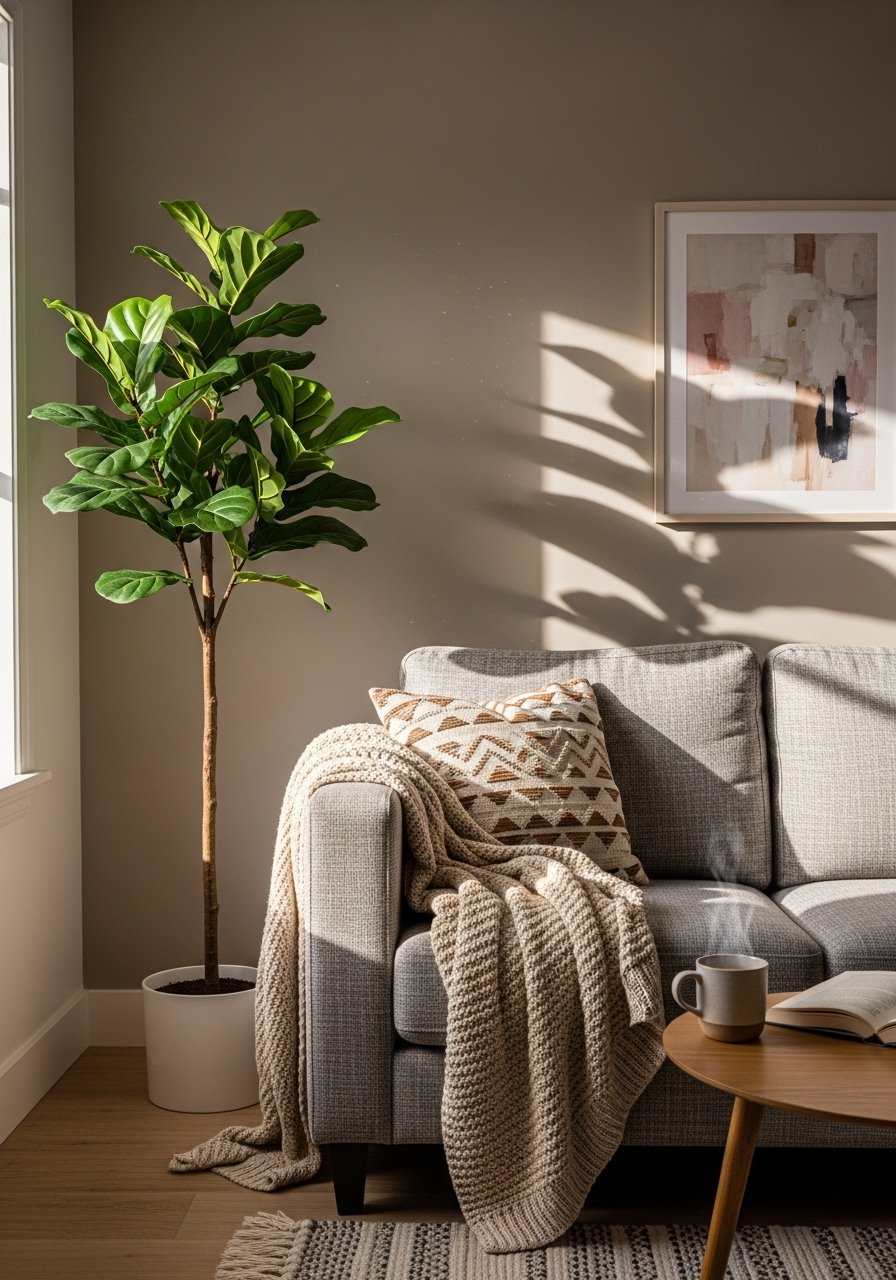
Everyone buys five small succulents. One single 6-foot plant has ten times the visual impact. I added a faux fiddle leaf fig in a woven basket and it finally balanced the sofa scale. I use artificial fiddle leaf fig 6ft when real plants are not an option. Budget $40 to $150. The mistake is scattering tiny plants with no anchor. For real plants, pick ones that tolerate low light for tricky corners. Also, hang one small plant at ceiling height if you want to draw the eye up without a tall plant.
Cozy Reading Nook With Layered Pillows
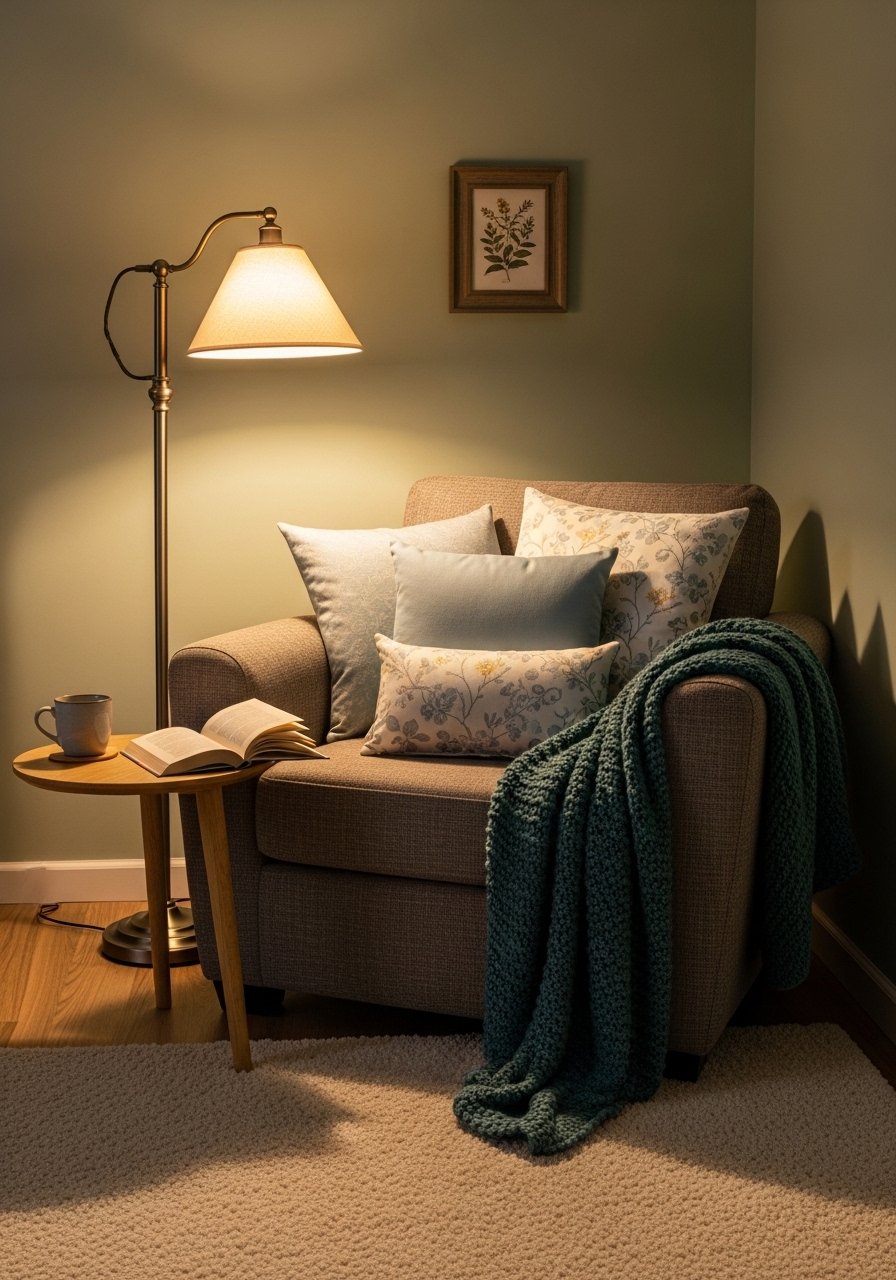
There is something about a reading nook with layered pillows that makes you want to cancel your plans. I turned a corner into a daily retreat by adding a floor lamp, a 26-inch down pillow, and a textured throw. Use a chair with a lower seat and pile pillows that vary in depth. I bought down-filled 26-inch pillow covers in linen. Budget $60 to $250 depending on the chair. A common mistake is too many small pillows. Use two large pillows and one accent rather than five small ones. This also pairs well with the layered rug idea above.
Scale Rugs To Furniture Layout
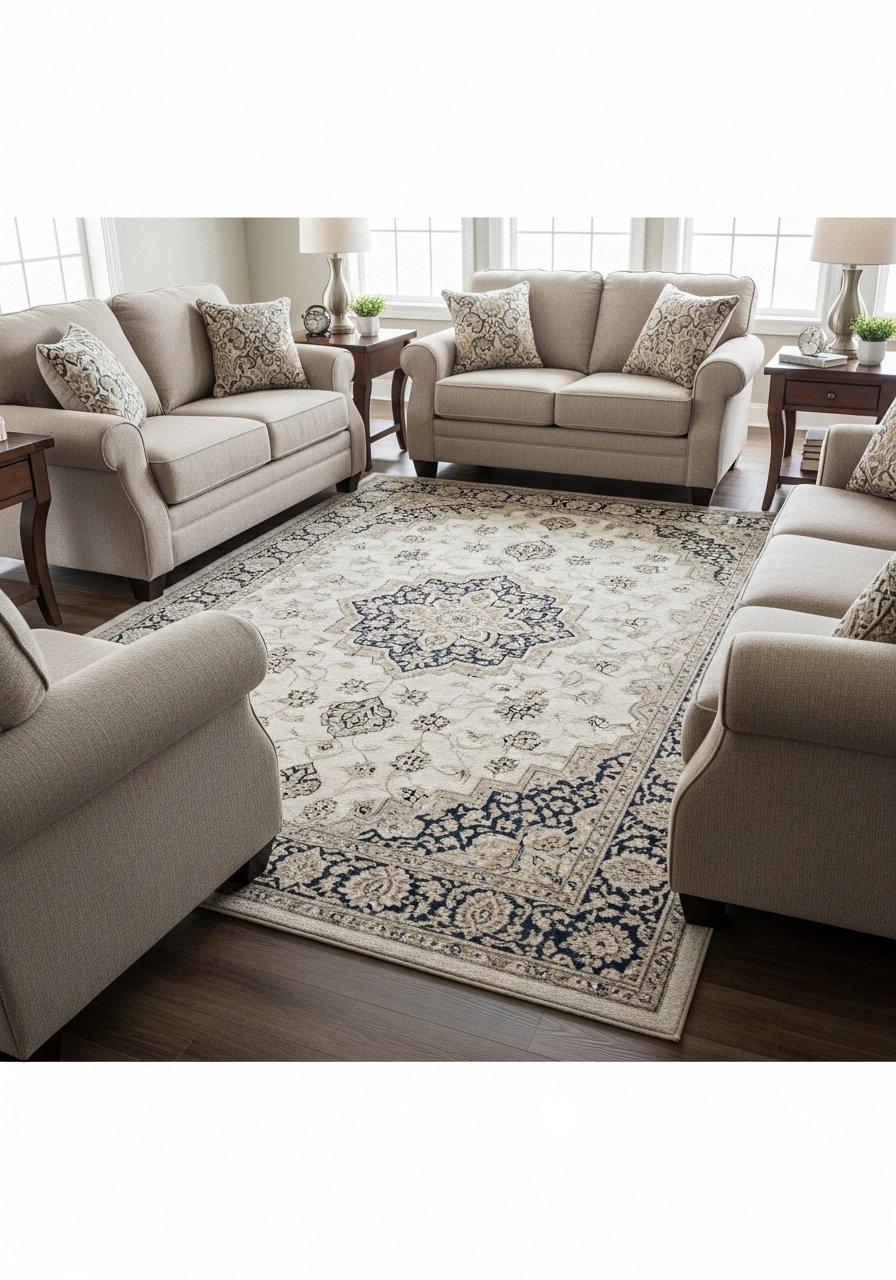
People always ask what rug size to buy. Bigger than you think, I learned. For a standard living room, an 8×10 makes the seating feel anchored. All front legs should sit on the rug or the rug should be large enough that the entire furniture group fits. I purchased an 8×10 wool blend rug for my space and the sofa no longer looks like it is floating. Budget $100 to $500. A common mistake is buying a small rug that only fits the coffee table. If you have an open plan, add a secondary runner to define the traffic lane.
Minimalist Entry With Hooks And A Bench
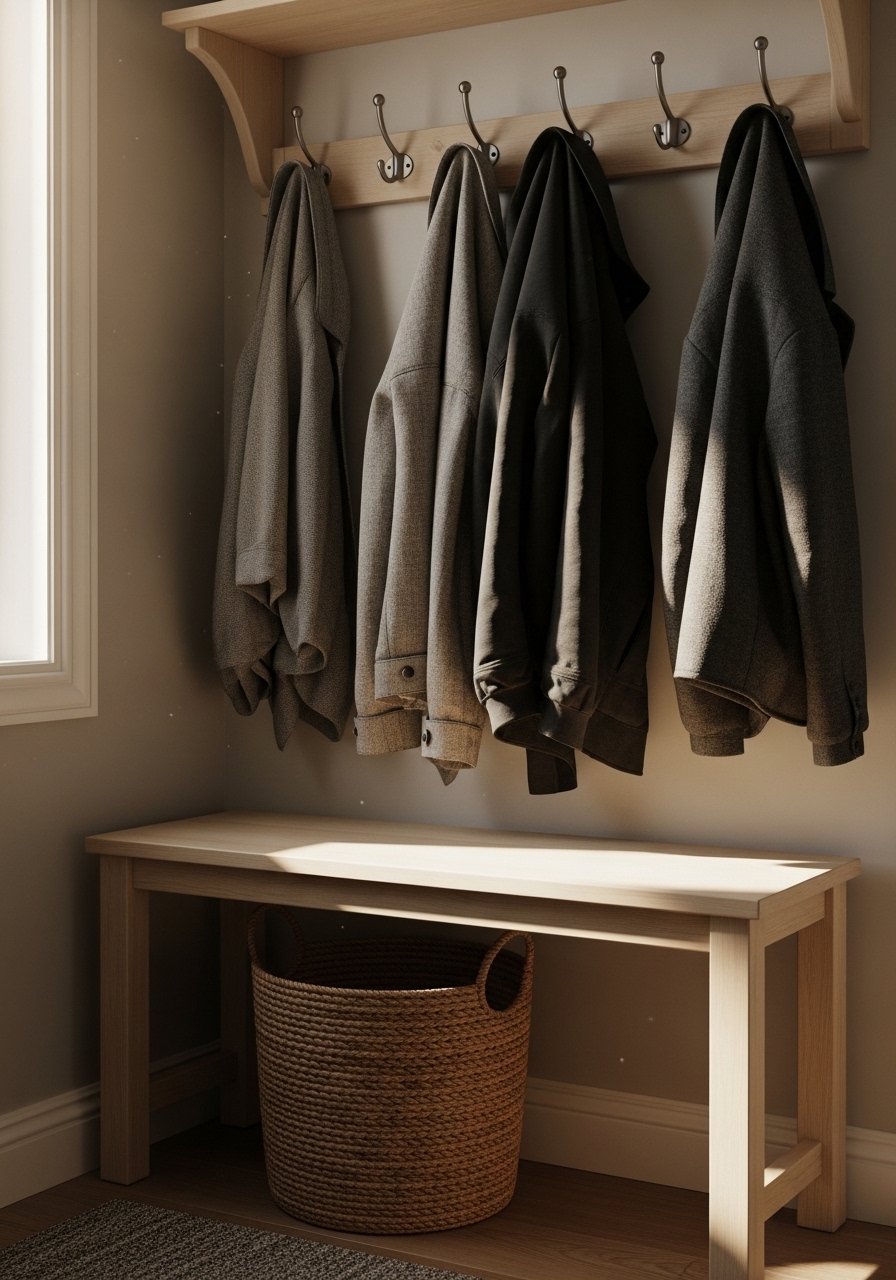
My entryway used to be chaotic because I had nowhere to drop daily items. A slim bench, three hooks at 60 inches, and a basket underneath solved it. The bench doubles as shoe storage and a seat to put on shoes. I use wall hooks set of 3 and a slim entry bench 36 inch. Budget $40 to $200. A mistake people make is hanging hooks too high. Measure at 60 to 66 inches so adults and kids can both reach them.
Your Decor Shopping List
Textiles
- Honestly the best $40 I have spent. Chunky knit throw in cream in cream for sofa layers
- Down-filled 26-inch pillow covers, linen (22 to 26 inch options) for reading nooks
Wall Decor
- Arched leaning mirror 48 inch for dark corners
- Wood picture ledges 24 inch for art rotation
Rugs And Flooring
- Natural jute 8×10 rug as a base
- 8×10 wool blend area rug for warmth
Lighting
- Woven rattan pendant light 20 inch for small dining nooks
- Table lamp with matte base for vignette styling
Plants And Greenery
- Artificial fiddle leaf fig 6ft for scale indoors, similar at HomeGoods if you prefer real
Budget Finds
- Wall hooks set of 3 for entryways
- Decorative catchall tray for keys and mail
Shopping Tips
White oak beats dark wood in 2026. Design feeds have shifted completely. These white oak floating shelves look current, not dated.
Grab linen curtain panels 96 inch for $30 to $60. Hang the rod 6 to 12 inches above the trim and the whole room will feel taller.
Curtains should puddle or kiss the floor, never hang halfway up. These 96-inch panels are right for standard 9-foot ceilings.
Lead with a single tall plant instead of five small ones. Artificial fiddle leaf fig 6ft is low maintenance and gives immediate scale.
Frequently Asked Questions
Q: What size rug do I actually need for my living room?
A: Bigger than you think. For a standard living room, go 8×10 minimum so at least all front furniture legs sit on the rug. If your seating is compact, layer a 5×8 on top of an 8×10 jute to get texture and anchoring.
Q: Can I mix boho textiles with modern furniture without it looking messy?
A: Yes. Keep one dominant style for scale, like modern furniture, and add patterned textiles in two colors only. Use the rule of three when arranging cushions and pick a neutral base rug so patterns do not fight.
Q: How high should I hang art above a console or sofa?
A: Aim for the center at about 60 inches from the floor or hang 6 to 8 inches above the furniture top. For a console, measure from the tabletop and leave a 6 to 10 inch gap so the art reads tied to the surface.
Q: Should I invest in real plants or faux plants?
A: Both. Real snake plants or pothos handle neglect well and clean the air. Use a faux fiddle leaf fig 6ft where you need height without the fuss. Mixing real and faux keeps maintenance realistic.
Q: How do I avoid a waiting-room look even with good furniture?
A: Vary heights, add texture, and include lived-in items like a stack of books or a candle. My living room had nice furniture but it still felt like a waiting room. Took me embarrassingly long to figure out it was missing texture. Start with a throw, two pillows, and one plant and see how the space warms up.