

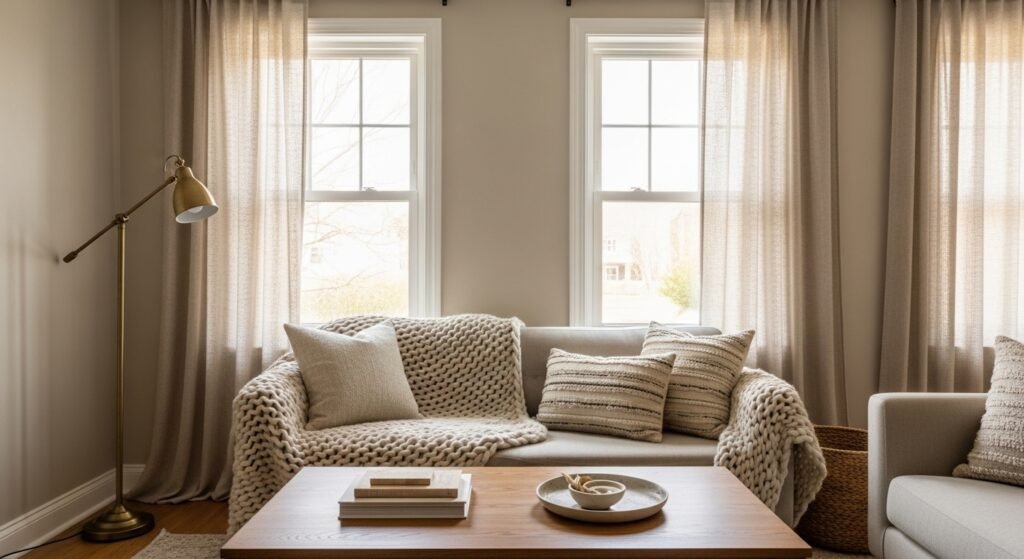
My living room had nice furniture and decent lighting but it still felt like a waiting room. Took me embarrassingly long to figure out it was missing texture. Every surface was smooth, every color was flat, and nothing invited you to actually sit down. repainting the walls in a warmer beige, adding linen curtains, and introducing wood tones fixed the mood more than another sofa.
These ideas lean modern farmhouse with a hint of Scandinavian calm. Most items are under $50, with a few splurges around $100 to $150. They work for living rooms, bedrooms, kitchens, hallways, or the whole home if you want consistent flow.
Creamy Living Room Coziness with Warm Woods
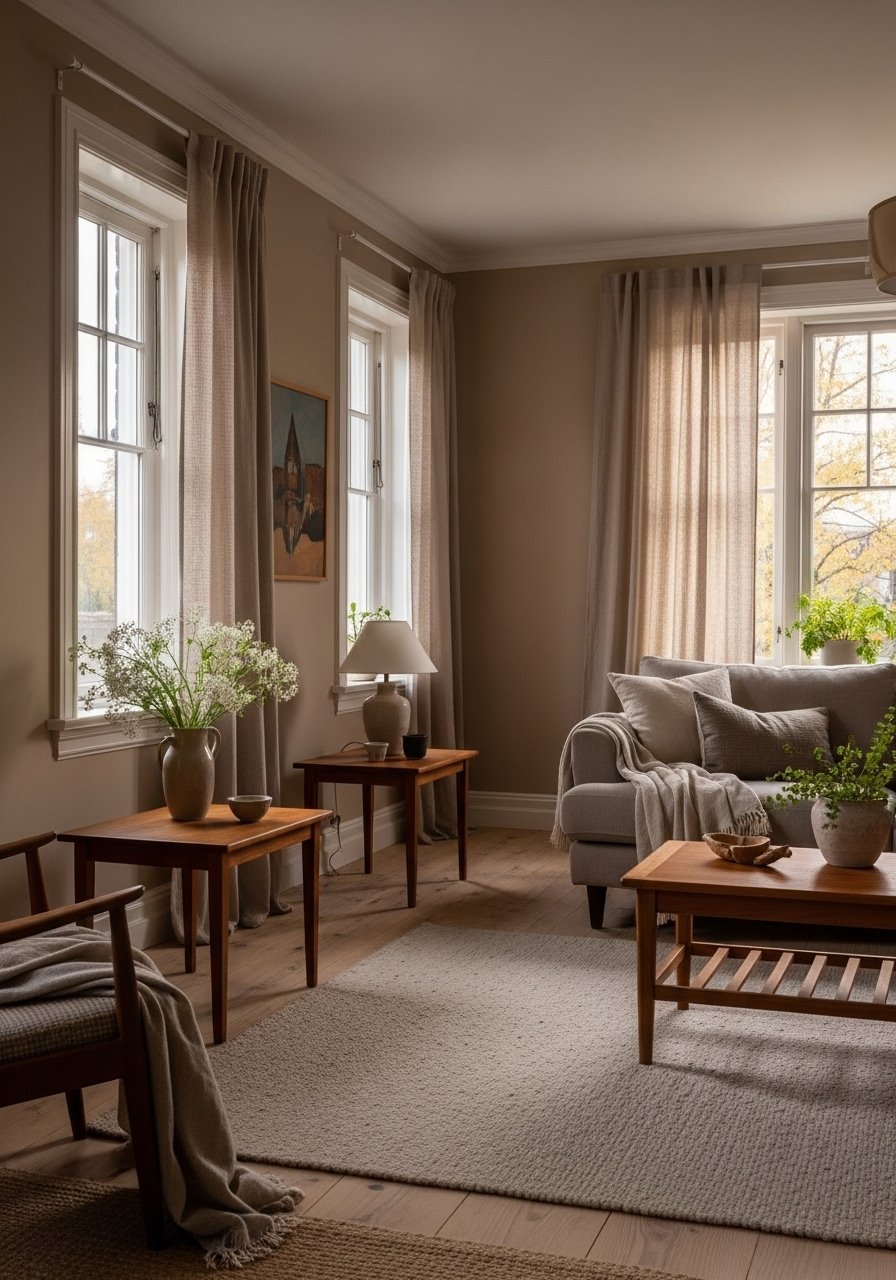
The moment I switched my living room walls to a warm tan, the oak floors stopped fighting the paint. Manchester Tan reads cozy with honey wood and brass hardware, and it hides the little scuffs that show in busy homes. Most folks land on LRV 65ish beiges for rooms that actually work everywhere. I used a satin finish for wipeability, then layered 22-inch down-filled linen pillow covers for texture. A common mistake is matching every wood tone exactly. Instead, pick one dominant wood, then bring in a second finish in smaller doses. Try linen curtains 96-inch for height and brass floor lamp for contrast. Budget: $120 to $250 depending on lamp and panels.
Bedroom Restful Neutral Layers
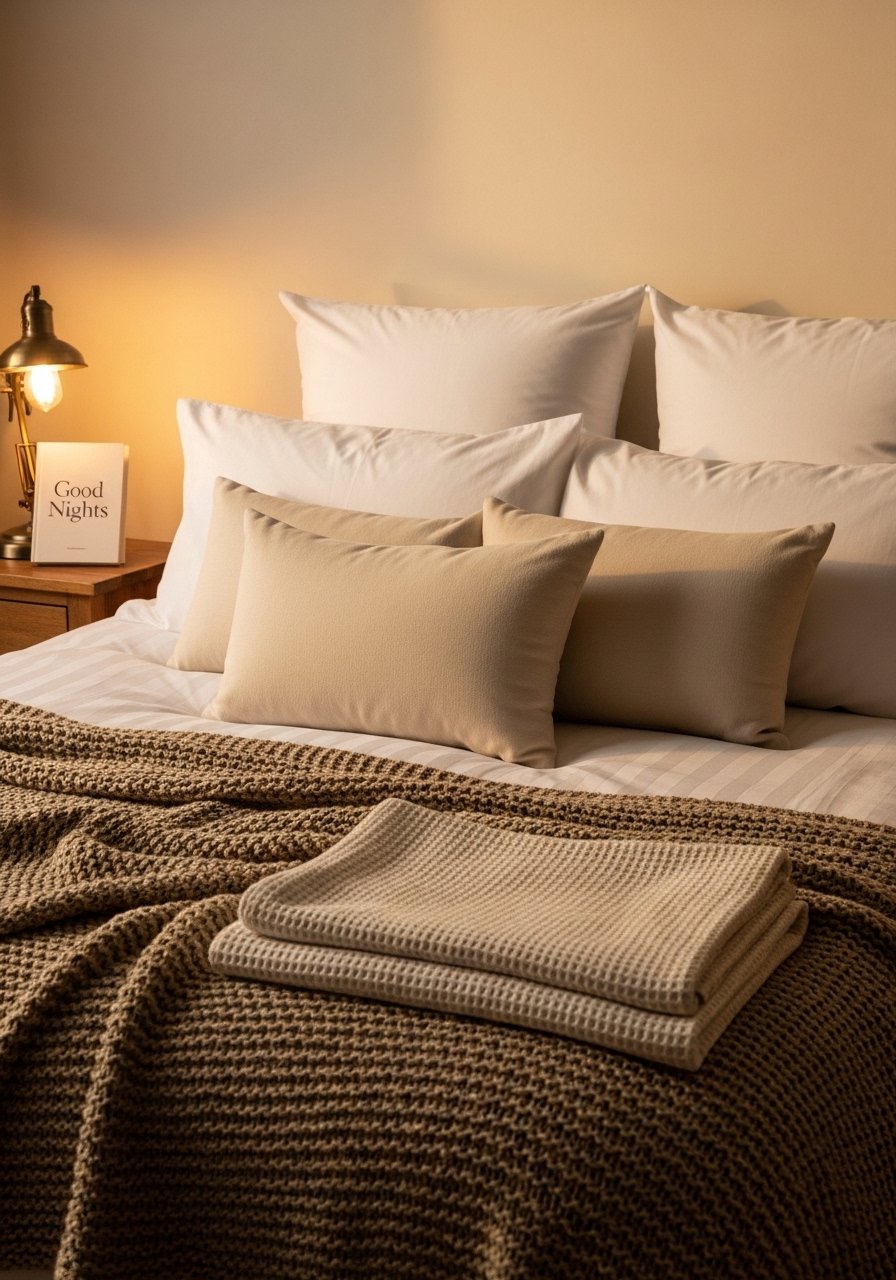
My bedroom felt heavy when I painted it a muddy beige. Swapping to a lighter cream, similar to Muslin, gave the room a restful feel without looking like an empty hotel. Use matte or low-sheen paint with an LRV in the high 60s for calm. Pair white bedding with a 50×60 chunky knit throw and two 22-inch linen pillow covers. Many people skip texture after painting and then wonder why it still feels cold. I used chunky knit throw in cream and a small brass reading lamp. Budget: $50 to $150. A detail most articles miss, test one wall for a week at different times so you see the beige in both morning and evening light.
Whole-Home Flow with Light Beige
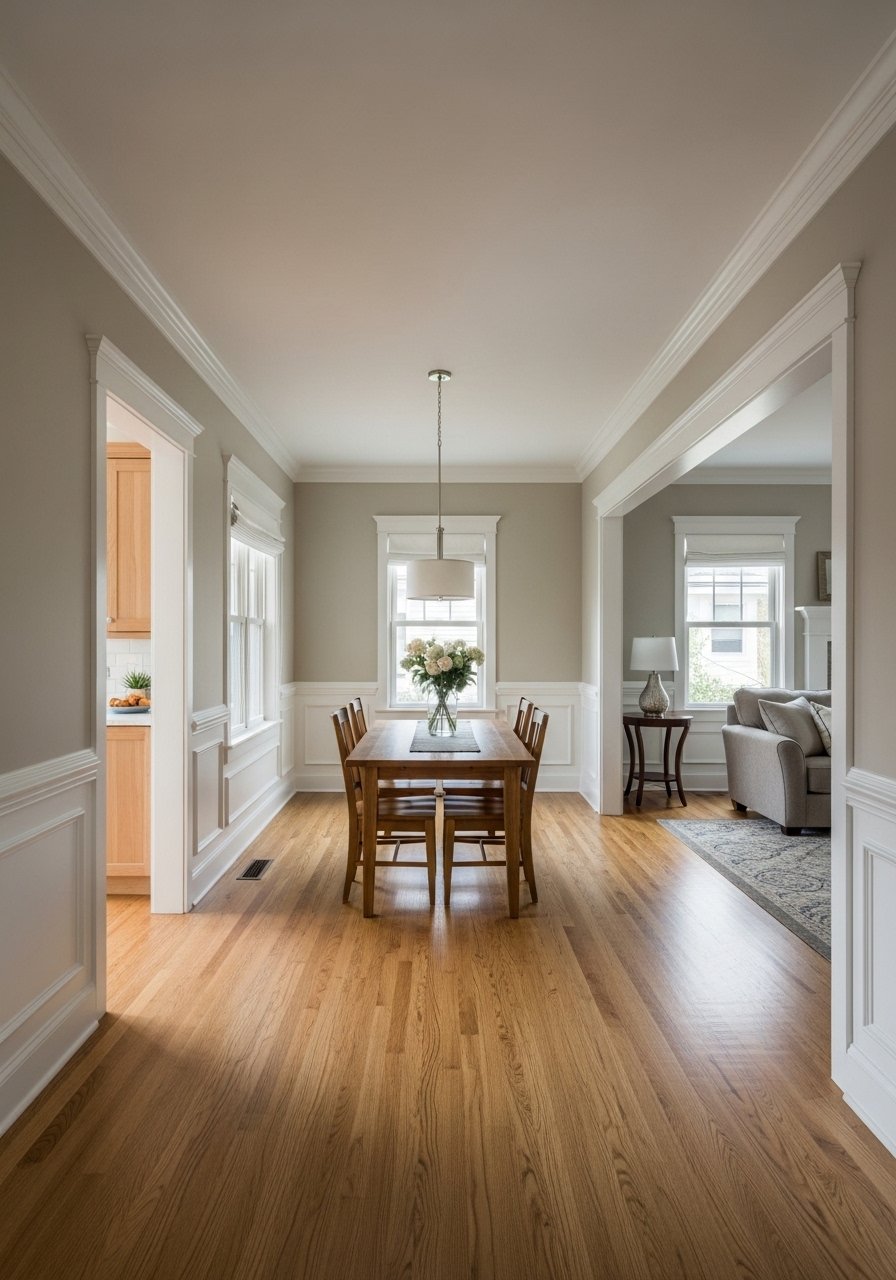
I painted three rooms the same Natural Linen tone and the whole place suddenly read as one thoughtful home. Use an LRV between 65 and 73 for whole-home beiges to keep rooms light but warm. The trick is crisp white trim and identical sheen throughout. A common error is painting hallways a darker beige and breaking the flow. If you want a seamless look, stick to one main wall color and choose two accents for problem rooms. I recommend sample pot set before committing and white trim paint in satin for durability. Budget for a full-house job runs $150 to $300 for small homes. Most folks land on LRV 65ish beiges for rooms that actually work everywhere.
Kitchen Warmth for Oak Cabinets
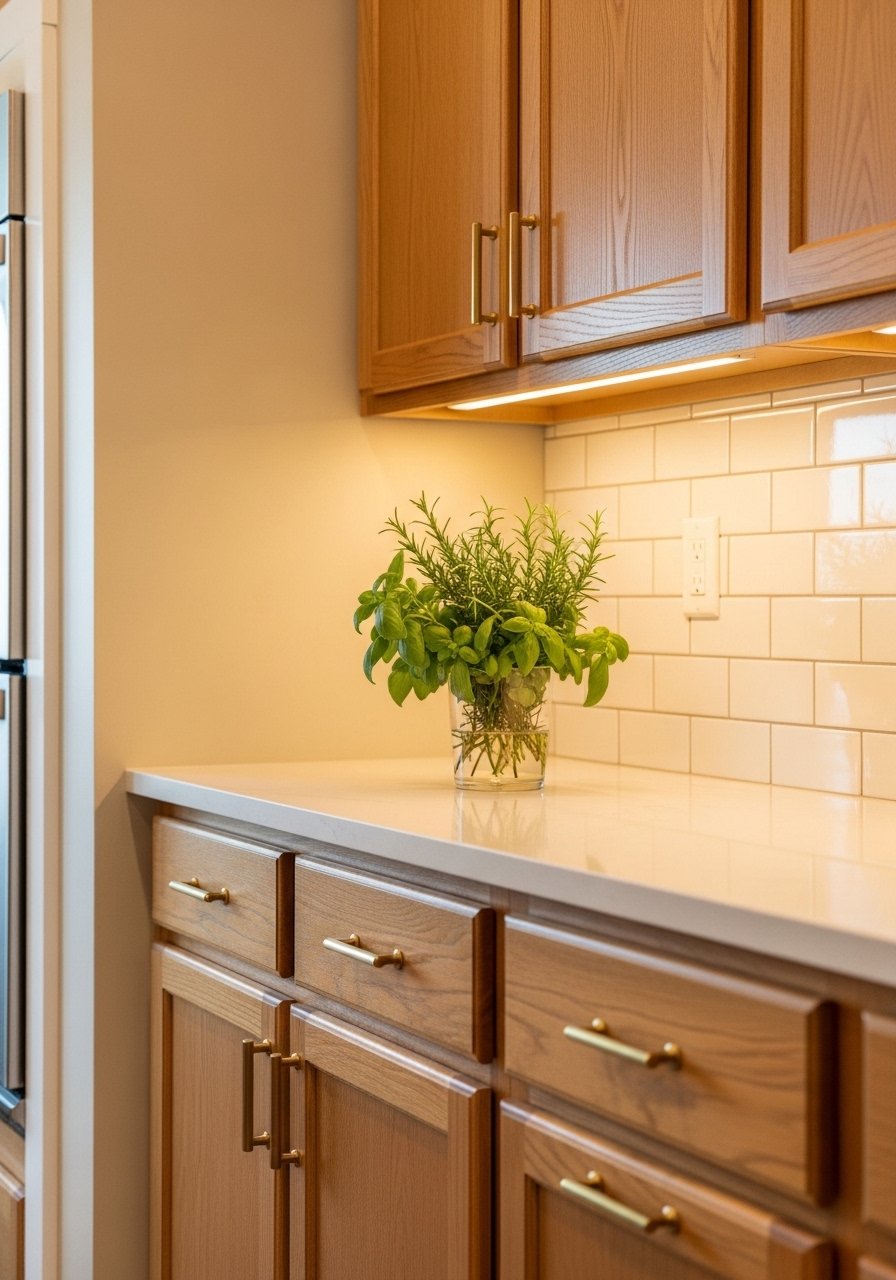
My sister sent a photo of her dated honey oak cabinets and asked why the kitchen read cheap. Painting the walls with a warm beige like Balanced Beige and swapping to brass pulls made the cabinets look intentional. Warm beiges play nice with oak or brass in most houses. Don’t paint everything the same color if the countertops and floors are two different tones. Instead, use the wall beige as a bridge and pick cabinet hardware in warm metal. I used brass cabinet pulls set and a small herb pot trio. Budget: $80 to $180. A detail people skip, test the beige against your countertop edge at both noon and evening light.
North-Facing Room Chameleon Neutral
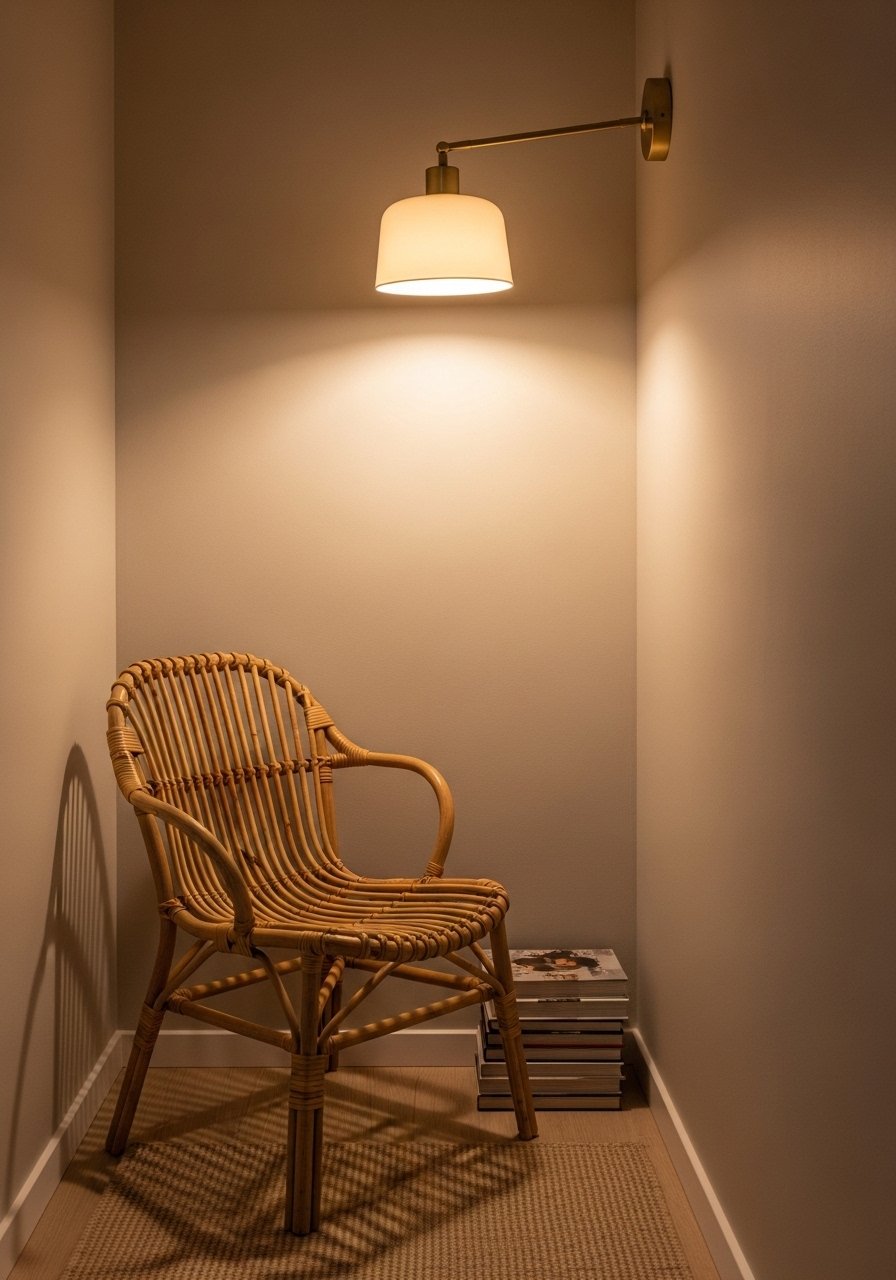
My basement guest room is north-facing and used to read gray all day. I switched to a chameleon beige that has a tiny gray hint so it never looks cold under low light. About six in ten pick beiges that shift with light now. The mistake is choosing a beige that only looks right at noon. Test sample swatches on all four walls and observe at morning, midday, and evening. For renters, use peel-and-stick samples or a single accent wall. Try peel-and-stick sample squares and a warm-hued floor lamp. Budget: $40 to $120. A useful detail, pick a chameleon shade that flexes, not one with a screaming undertone.
Living Room Welcoming Tan Base
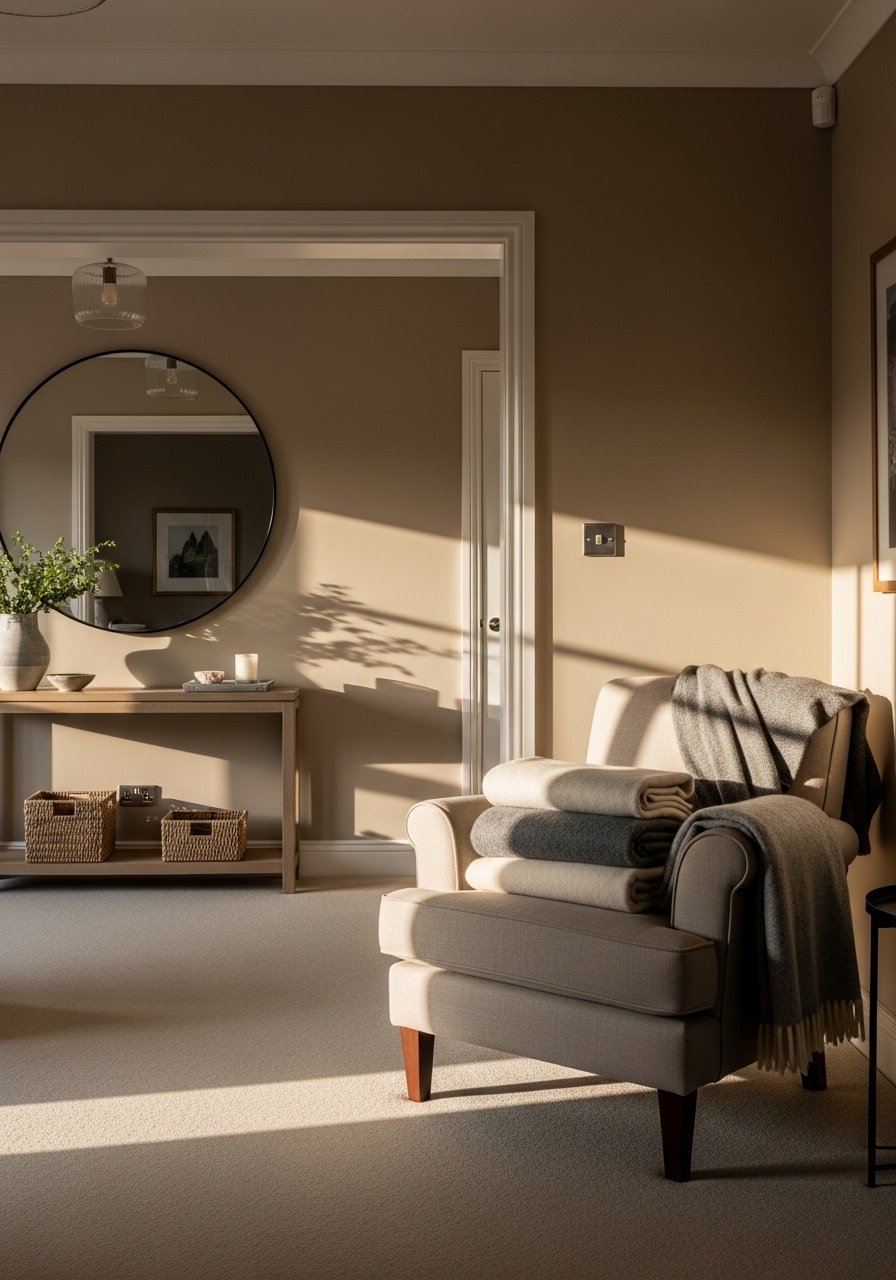
My entry used to be a dumping ground. Painting it a warm tan made every guest feel like they were entering a lived-in home. One classic like Manchester Tan shows up in nearly every cozy room redo. Use Manchester Tan in a flat or eggshell for walls, then pick a slightly glossier trim. People often use the wrong sheen on high-traffic walls. I added a round mirror and an 8×10 jute rug to ground the space. Grab 8×10 jute area rug and round entry mirror. Budget: $120 to $250. A small but real detail, hang your mirror so the center sits at eye height plus 6 inches for higher ceilings.
Bedroom Soft White-Beige Blend
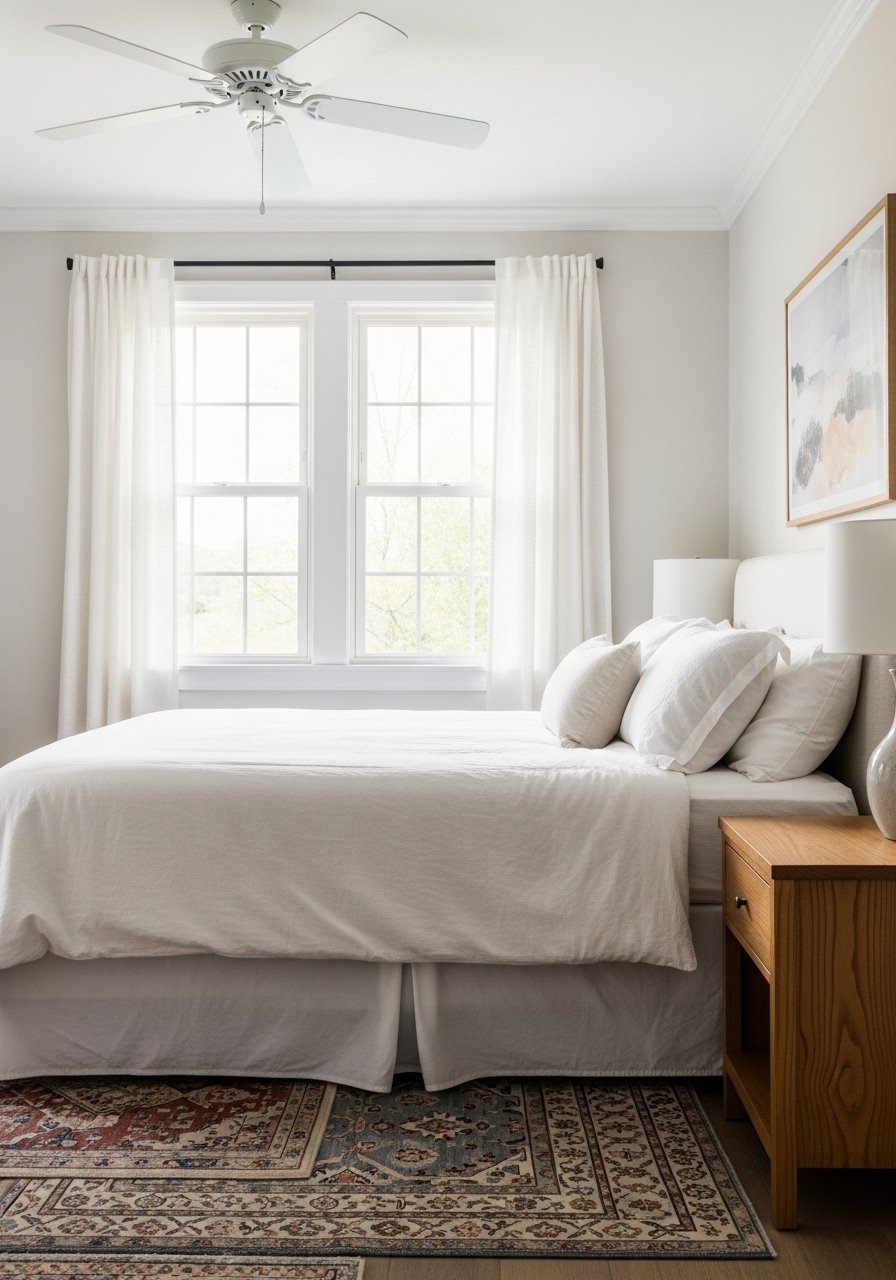
My guest room felt serious until I switched to a soft white-beige blend, Shoji White style. It reads lighter than a true beige but keeps warmth next to wood nightstands. Use this in bedrooms where you want calm without heaviness. A common mistake is pairing it with cool blue linens which makes the room feel chilly. Instead, choose warm-toned bedding and a 9×12 rug under the bed so furniture legs sit on it. I used 22-inch linen pillow covers set and 9×12 neutral rug. Budget: $60 to $140. A detail often missed, use a lower wattage warm bulb in bedside lamps to keep the beige reading warm at night.
Low-Light Versatile Cream for Basements and Halls
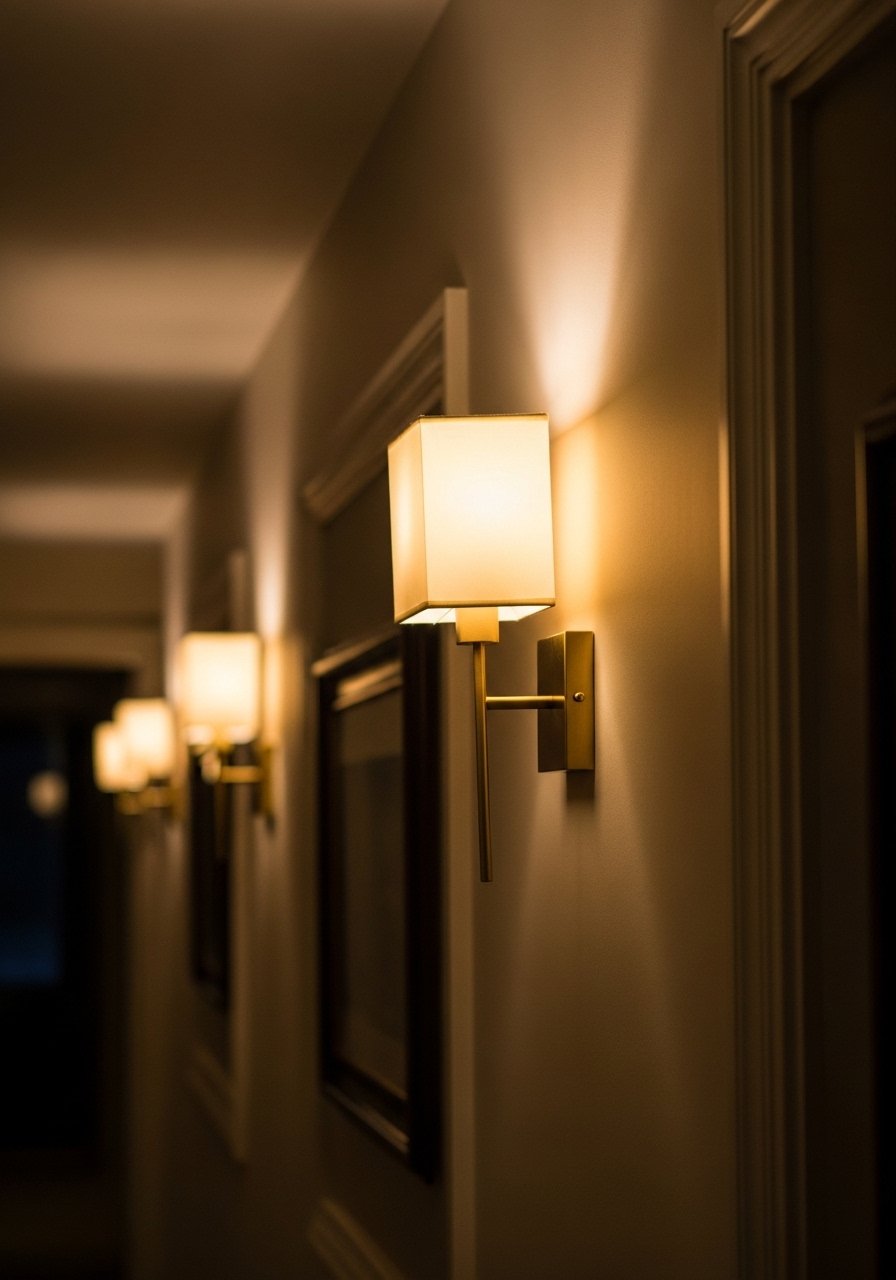
I painted my dim hallway a low-reflective cream that picks up warm lamp light instead of going flat. Chameleon beiges with a little gray hint are perfect for basements and halls. A mistake is using a high LRV in tight spaces which creates glare and shows marks. Aim for LRV in the mid-60s for balance, and choose eggshell for wipeability where kids or pets live. For pet homes, skip flat paint so hair and scuffs are easier to clean. I used matte-touch paint cleaner and wall sconce set. Budget: $90 to $200. A nod competitors miss, pick eggshell over flat for pet hair and wipeability.
Open-Plan Connected Neutrals
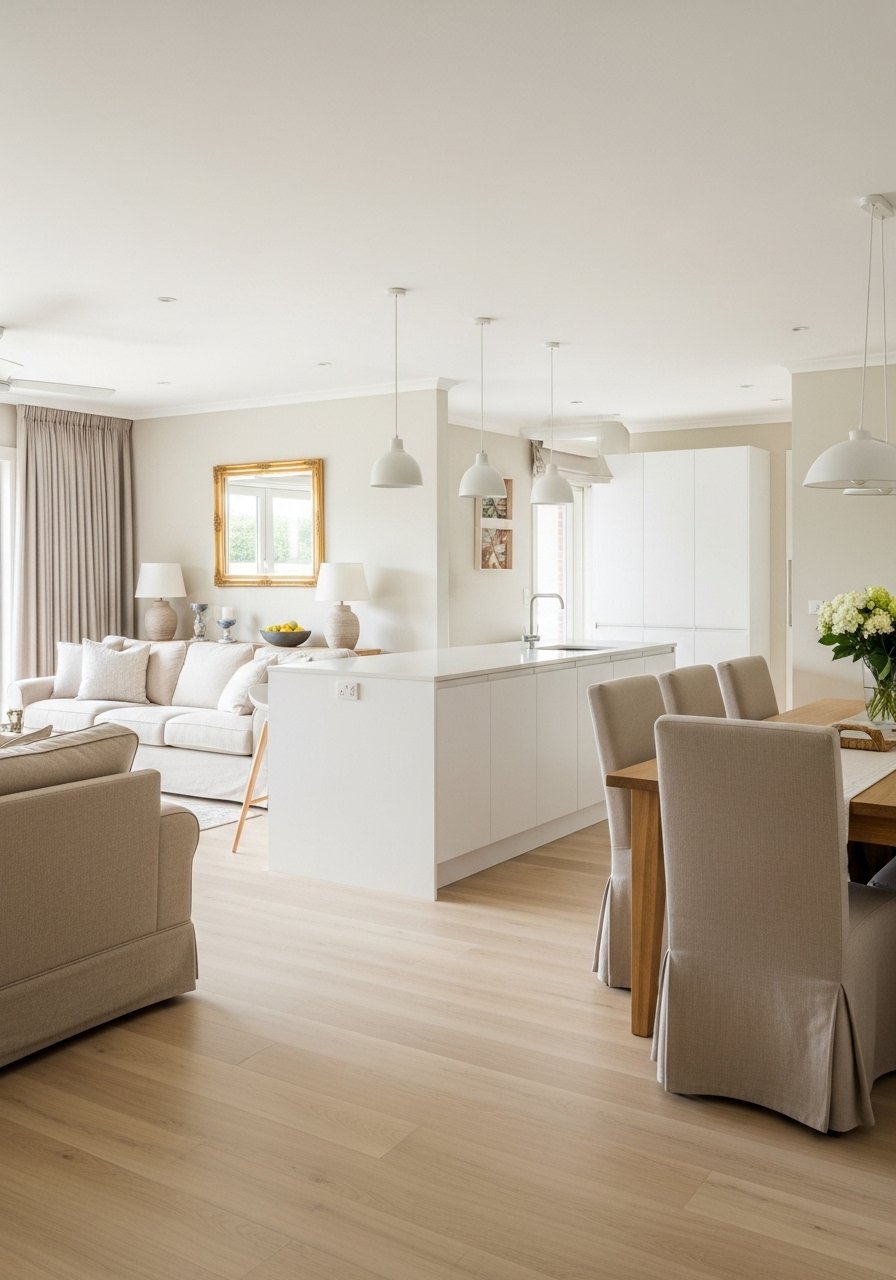
My open-plan space looked choppy when I used three different neutrals. The fix was a single light beige base with two accent colors repeated in both zones. Use the 80/20 rule for color: 80 percent your main beige, 20 percent accents. A mistake is matching paint to the sofa instead of the flooring. For flow, match to the dominant long sightline, usually the floor. I used neutral throw pillows set and white kitchen island pendant. Budget: $70 to $160. A photo-vs-reality note, wide-angle pics can wash out beiges; always inspect in person.
Warm Brass Hardware Pairing for Transitional Spaces
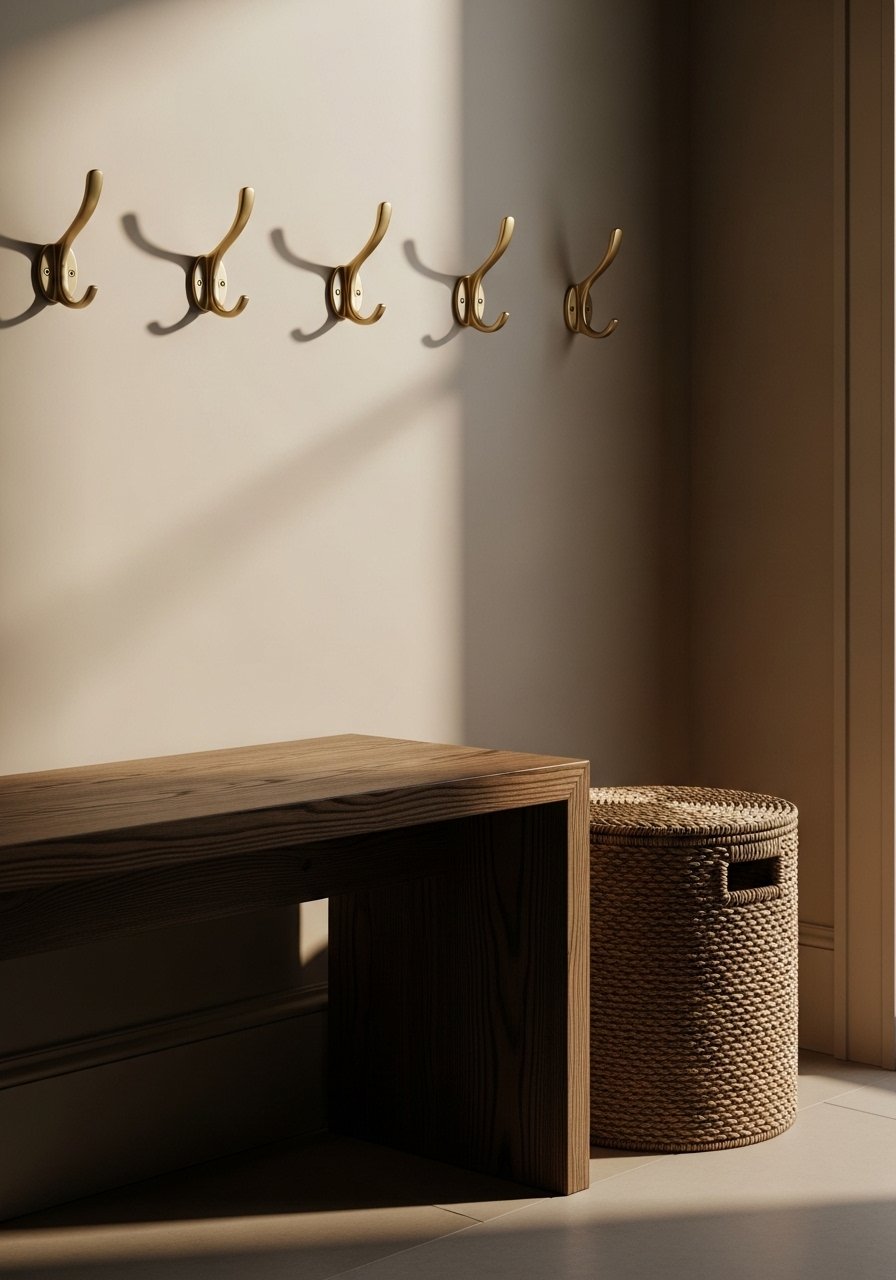
I replaced chrome hooks with warm brass and the beige walls finally felt intentional. Pair Beige With Brass Not Chrome when your walls have yellow or honey undertones. Mixing metals is fine but let brass be dominant if your wood is warm. People assume hardware is insignificant. It is not. Swap out doorknobs, pulls, and light switch plates in one go for cohesion. Try brass switch plate covers and brass coat hooks set. Budget: $30 to $100. A tiny detail I learned, tighten screws a week later because painted humidity can loosen new hardware.
Gray-Mixed Greige Walls for Modern Minimalism
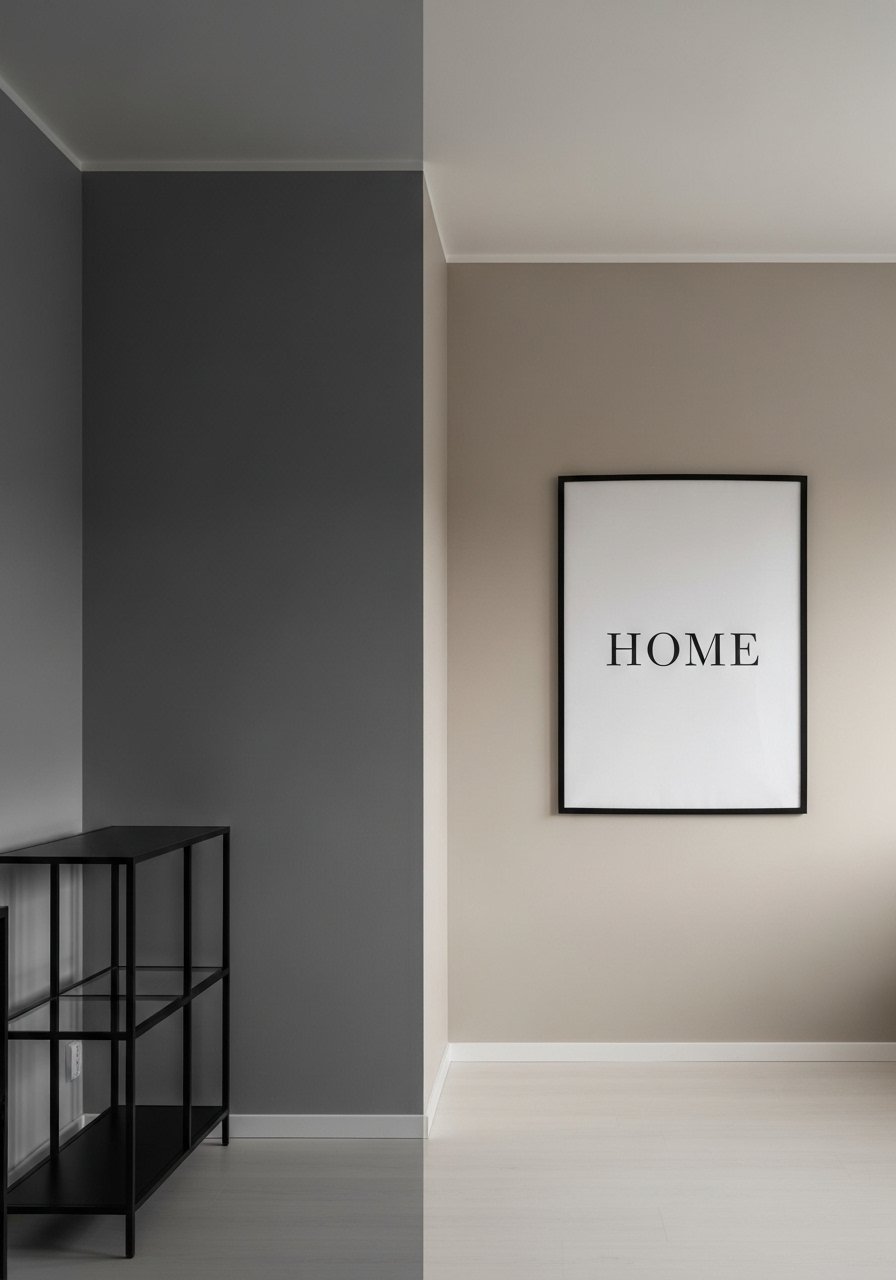
I wanted the clean look of gray without the cold. A greige like Stone Hearth blends old grays with warm beige so nothing looks out of place. Chameleon neutrals are safer than single-note grays, especially across rooms with different light. The common mistake is choosing a gray that fights your wood tones. Instead, test against two or three samples and live with them for a week. I used black metal shelving unit and large framed print reading 'HOME'. Budget: $50 to $130. A practical detail, pick a trim color one shade lighter than walls to make the greige breathe.
Your Decor Shopping List
- Honestly the best $40 I have spent. Velvet pillow covers, set of 4 in two colors for a layered look, 18×18 inches.
- For the curtain trick, you need length. Linen curtains 96-inch (~$30-50 per panel) in natural.
- Found these while looking for something else. Brass picture ledges set (~$18-25) let you swap art without new nail holes.
- Chunky knit throw in cream (~$35-55). Drape over the sofa arm for instant texture.
- 8×10 jute area rug neutral grounding for living rooms and entryways. Similar at Target or HomeGoods.
- Brass cabinet pulls set to update an old kitchen without replacing cabinets.
- Peel-and-stick paint samples for renters or apartment testing.
- 6-foot faux fiddle leaf fig for height in low-light rooms, budget alternative to real plants.
Shopping Tips
- White oak beats dark wood in 2026. Design feeds have shifted completely. These white oak floating shelves look current, not dated.
- Grab velvet pillow covers for $12 each. Swap them every season and the whole room feels different.
- Curtains should puddle or kiss the floor, never hang halfway up. Linen curtains 96-inch are right for standard 9-foot ceilings.
- One big plant beats five tiny succulents. 6-foot faux fiddle leaf fig adds height and anchors a corner without maintenance.
- If you have pets, choose eggshell over flat. Microfiber cleaning cloths set will save elbow grease after paint mishaps.
Frequently Asked Questions
Q: Can I mix warm beige walls with cool gray furniture without it clashing?
A: Yes. Anchor the room with at least one warm accent like a wood side table or brass lamp so the beige has a partner. Avoid pairing cool gray textiles with blue undertones unless you add a warm texture like a wool throw.
Q: What LRV should I aim for if I want one color for the whole home?
A: Aim for an LRV between 65 and 73 for versatile whole-home beige. Most folks land on LRV 65ish beiges for rooms that actually work everywhere. Test on different walls and look in morning and evening light.
Q: My beige looks muddy in some rooms and yellow in others. How do I fix that?
A: Use 2-3 color options. Paint the main living areas one beige and pick two complementary beiges for problem rooms. Also test swatches near your cabinets and floors because warm beiges play nice with oak or brass in most houses.
Q: I rent and cannot paint. Any renter-friendly beige hacks?
A: Yes. Use peel-and-stick sample squares and large removable wallpaper panels for a feature wall. Peel-and-stick paint samples and temporary hooks for lightweight art work well.
Q: Should I use flat paint for beige walls in a home with pets?
A: Skip flat paint. Eggshell or satin is easier to wipe down and hides hair and scuffs better. A practical detail, pick eggshell over flat for pet hair and wipeability.
Q: How do I make a small north-facing room feel warm without repainting?
A: Layer warm textiles, use warm bulbs, and introduce a brass lamp or a warm wood side table. About six in ten pick beiges that shift with light now, so pick lamps and textiles that nudge your existing beige warmer if repainting is not an option.