


My living room had nice furniture and decent lighting but it still felt like a waiting room. Took me embarrassingly long to figure out it was missing texture, and once I added textiles and low lighting the whole space stopped feeling sterile. Below are the setups I actually used or helped friends build so their movie nights finally felt intentional.
These ideas lean modern cozy with some mid-century touches. Most projects are under $150, with a few splurges around $300 for a projector or premium rug. Works for a dedicated media room, an apartment living room doubling as a theater, or a basement that needs warmth and better sound.
Cinematic Bias Lighting and Layered Lamps for Eye Comfort

The moment I added bias lighting behind my screen, late-night watching stopped giving me eye strain. Place an LED strip 3 to 4 inches behind the screen, and set it warmer than your main bulbs. It softens contrast so faces look natural, not washed out. For smart control, I use a dimmable LED kit that lets me fade to 10 percent during credits. Budget runs $20 to $70 depending on length and whether you want app control. A common mistake is using bright white strips that make the picture look punchy and fake. If you want a kit that pairs with voice assistants try this LED bias light kit.
Layered Seating That Respects Sightlines and Comfort

Most small theaters fail because everything is the same height. I swapped a tall back sofa for a low-profile loveseat plus two lounge chairs on a riser I built out of plywood, and suddenly everyone could see without craning. A practical rule I use is to sit 1.5 to 2.5 times the screen diagonal away. For a 100-inch screen that meant moving my main seating back about 12 to 20 feet. Budget options start around $200 for modular seating covers and go up for leather recliners. People often cram too many seats in a row. Staggered rows, even by 6 to 12 inches, fixes sightlines and looks intentional. Try this modular loveseat cover set if you are updating existing furniture.
Acoustic Panels That Double As Wall Art
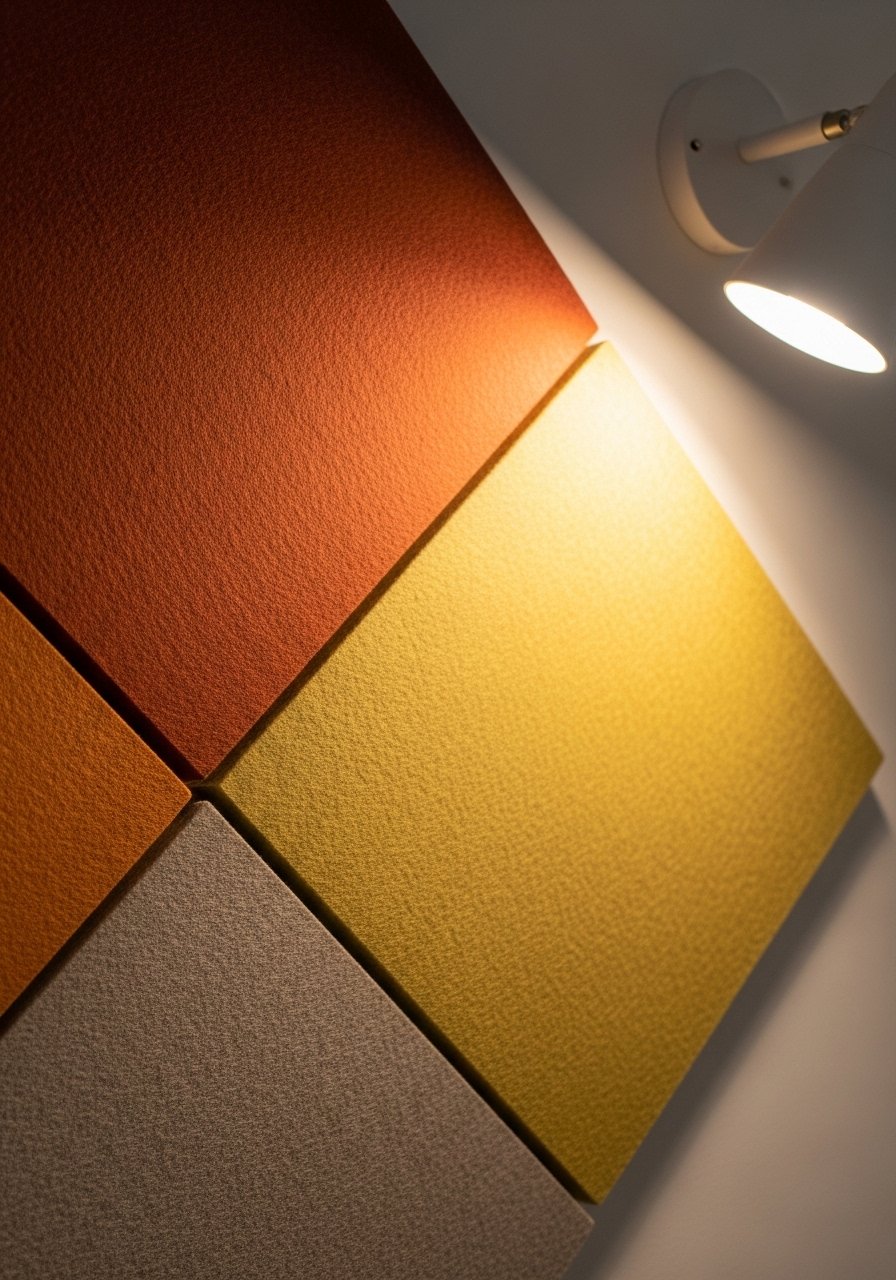
My basement echoed until I installed decorative acoustic panels and then the sound stopped swimming around the room. Place panels at first reflection points and cover roughly 20 to 30 percent of the wall area for a noticeable difference. Pick colors or patterns that read as art so they do not scream "studio." A budget set of fabric-wrapped panels runs $60 to $150. A mistake I see is slapping foam squares where the eye lands. Foam eats treble but rarely looks good. For a tight look try decorative felt acoustic panels. Pair this with the lighting idea above for a soft, cinema feel.
Floor-to-Ceiling Blackout Curtains to Add Height and Darkness

Most people hang curtains right at the window frame. That is why their rooms look shorter than they are. I moved my rods 4 to 6 inches above the window frame and used panels 6 inches wider than the glass on each side, and the room suddenly read taller and darker for daytime screenings. Blackout fabric under a linen panel keeps daylight out without making the room feel cave-like. Expect $30 to $120 per panel depending on material. The common mistake is choosing panels that are too short. For tall ceilings, get 96-inch blackout linen panels.
Buy a Proper Projector Screen, Not Just a Painted Wall

I tried a painted wall for a while and hated how reflections changed by time of day. A portable 100-inch screen with a 1.1 gain gives a cleaner image and is worth the $80 to $300. For rooms with ambient light use a higher gain, around 1.2 to 1.3, and test from your usual seating position. A mistake is buying a glossy screen that shows lamp hotspots. If you need mobility, get a tripod screen that collapses. I use this 100-inch projector screen for weekend movie nights and hide it when guests come over.
A Plush Low-Pile Rug to Anchor Seating and Reduce Echo

There is a texture rule I learned the hard way. Rugs do two jobs: define the seating area and dampen mid to high frequencies. For a living-room-turned-theater, I went with a 9×12 low-pile rug so all front legs sit on it. Small rugs make a room feel chopped and they do almost nothing for sound. Expect $80 to $400 depending on fiber and size. If the rug pattern competes with the screen, go neutral and layer a smaller patterned runner across the center. Try this 9×12 low-pile jute rug for texture without glare.
Snack Station or Vintage Cart for the Full Movie Night Vibe

A friend’s house felt more like a theater the moment I added a tiny snack cart. Popcorn makers can be small, around 1200 watts, and a cart depth of 18 to 24 inches fits narrow corners. Budget popcorn poppers start at $30. I keep a tray for candy jars and a small drawer for napkins. The mistake is placing the cart where it blocks flow. Put it near an outlet but away from the main walkway. For a compact popper, check this countertop popcorn machine.
Curated Poster Gallery for a Retro Cinema Look

When I framed a small set of vintage posters and kept the mats equal, the wall stopped feeling cluttered and started feeling like a themed display. Use 11×17 prints with 1.5 to 2 inch mats and stick to a palette of three colors. The rule of three applies here. A common mistake is mixing too many frame finishes. Pick one metal or wood tone and carry it through. For easy swapping without new holes, I use picture ledges under the gallery. These metal frames with simple mats are inexpensive and look crisp.
Mixed Textures with Throws and Pillows for Invite-ability
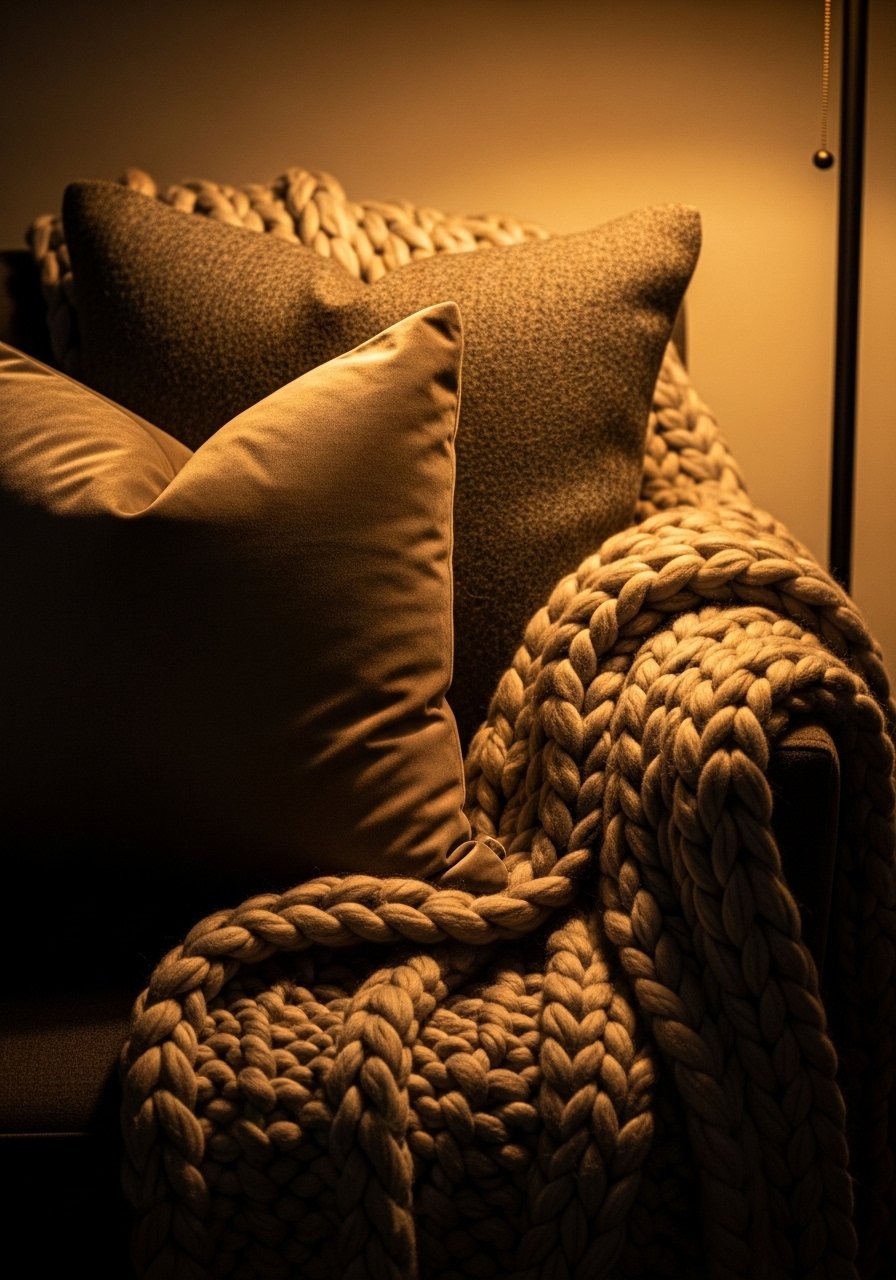
There is something about a reading nook with layered pillows that makes you want to cancel your plans. I aim for an 80/20 color ratio when styling pillows, where 80 percent of the palette stays neutral and 20 percent is an accent texture or color. Use a 22-inch down-filled linen pillow as your base, add a 16×24 wool lumbar, and finish with a 20-inch velvet pillow for touch. Budget for pillow covers is $12 to $40 each and throws are $30 to $120. A sad mistake is matching everything exactly. Mixed textures read richer and feel more lived-in. For velvet accents try velvet pillow covers in jewel tones.
Hide Cables and Streamline Controls for a Sleek Look
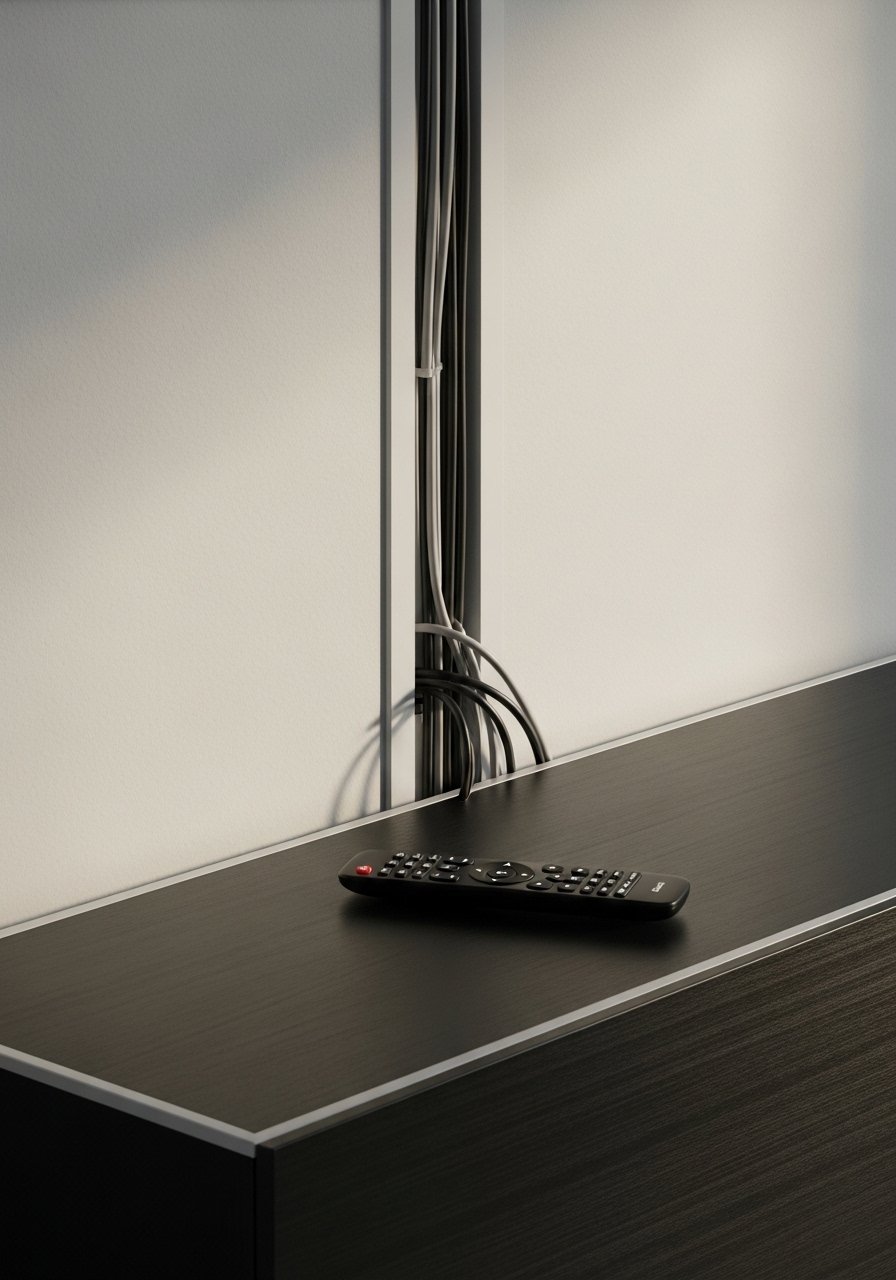
The second most visible thing after the screen is the tangle of cables. I used adhesive cable raceways behind the console and labeled each HDMI with a small tag. Measure cable runs before buying longer cords and leave 6 to 8 inches of slack for movement. A universal remote or a programmable smart hub cuts down on clutter on the coffee table and gives guests one-button play. People buy the wrong length HDMI and then hide the excess in a messy coil. For neatness try this cable raceway kit and a compact universal remote like this model.
Your Decor Shopping List
Textiles
- Honestly the best $40 I have spent. Velvet pillow covers, set of 4 in deep teal and charcoal for layering
- Chunky knit throw in cream (~$35-55). Drape over the sofa arm for instant warmth
Wall Decor
- 11×17 picture frames with mats (~$25-40) for poster galleries
- Decorative felt acoustic panels, set of 6 in warm tones
Lighting
- LED bias light strip kit dimmable (~$25-70)
- Adjustable floor lamp with dimmer (~$60-120)
Audio/Screen Essentials
- 100-inch portable projector screen (~$80-300)
- HDMI high-speed cable, 12ft (~$10-20)
Budget Finds
- Countertop popcorn machine (~$30-80)
- Cable raceway kit (~$10-25)
Similar at Target or HomeGoods: frames, throws, and small accent pillows.
Shopping Tips
White oak beats dark wood in 2026. Design feeds have shifted completely. These white oak floating shelves look current, not dated.
Grab these velvet pillow covers for $12 each. Swap them every season and the whole room feels different.
Curtains should puddle or kiss the floor, never hang halfway up. These 96-inch blackout linen panels are the right call for standard 9-foot ceilings.
One single 6-foot fiddle leaf fig has ten times the visual impact of five small succulents. If you need height without maintenance, check this faux fiddle leaf fig.
Measure twice before buying electronics. For a 100-inch screen plan seating 1.5 to 2.5 times the diagonal. This folding projector screen is a good test purchase.
Frequently Asked Questions
Q: What size screen should I buy for a living room?
A: Go by seating distance. Sit 1.5 to 2.5 times the screen diagonal away. If your sofa is 12 feet from the wall, a 90 to 100-inch diagonal is comfortable.
Q: Can I mix boho textiles with modern furniture without it looking messy?
A: Yes. Keep 80 percent of your palette neutral and use 20 percent as accent texture. A wool lumbar plus a velvet pillow reads intentional instead of chaotic.
Q: How many acoustic panels do I actually need?
A: Start with panels at first reflection points and aim to cover 20 to 30 percent of wall area nearest the speakers. Two panels opposite the speakers and one behind the listening position makes a noticeable improvement.
Q: Will blackout curtains make the room feel too dark when not watching movies?
A: No, if you layer light linen panels over the blackout they soften the look during daytime. Hang the rod higher to add height and keep room proportions balanced.
Q: Is it worth buying a separate soundbar or should I invest in surround speakers?
A: A quality soundbar is the fastest upgrade for clarity and bass under $500. If you want immersive sound and have the space, a 5.1 setup is the next step. For small rooms a well-tuned soundbar usually beats poorly placed surround speakers.