
I’d been stuck with a room that looked like a set—neat but flat. I wanted it to feel lived-in and calm, not thrifted chaos. I learned to stop hunting for the “perfect” piece and focus on simple edits that change the room’s mood.
These small, steady moves made the room relaxed and familiar.
How to Make DIY Farmhouse Decor Easily
This is the method I use when a space feels unfinished. I focus on texture, a few worn-in accents, and thoughtful placement. I’m not promising big builds. I’m promising a room that reads cozy, balanced, and comfortable at a glance.
What You’ll Need
- 24"x6" reclaimed wood wall sign (distressed brown)
- Galvanized metal pitcher (1.5L, vintage finish)
- Natural linen throw (50"x60", oatmeal)
- Seagrass round basket (16", natural)
- Clear glass mason jar set (12 oz, set of 6)
- Industrial black metal wall hooks (set of 4)
- Faux eucalyptus stems (5-pack, muted green)
- Small pine wooden crate (12"x8", unfinished)
Step 1: Anchor the room with a warm focal point
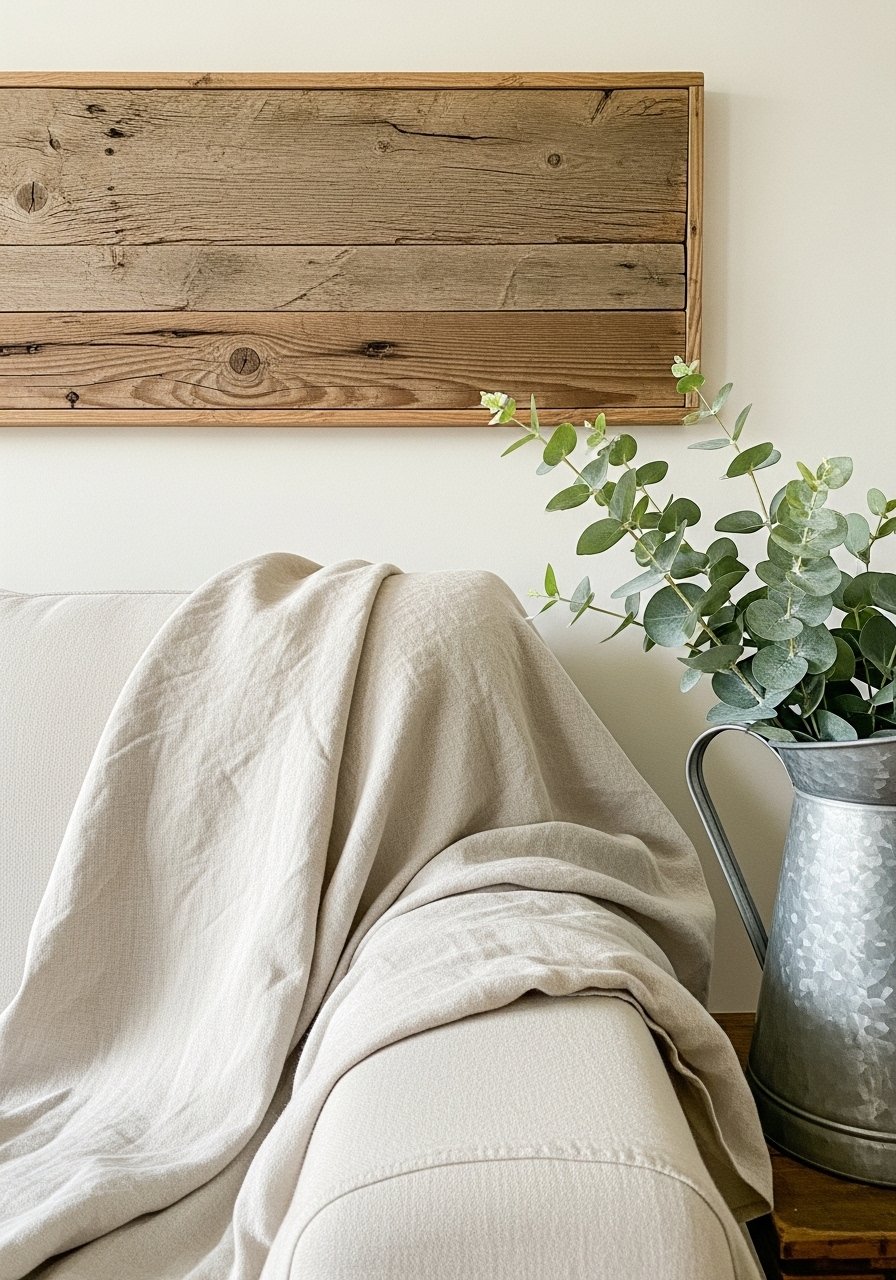
I start by picking one warm focal point—usually a reclaimed wood sign above the sofa. It gives the wall weight and a lived-in look. Visually, the room snaps into place around this anchor. One insight I learned: scale matters more than pattern; a slightly bigger, simple piece reads calmer than many small prints. A small mistake to avoid is crowding the wall with similar colors—let the focal piece breathe.
Step 2: Layer soft textiles for a cozy, worn-in feel
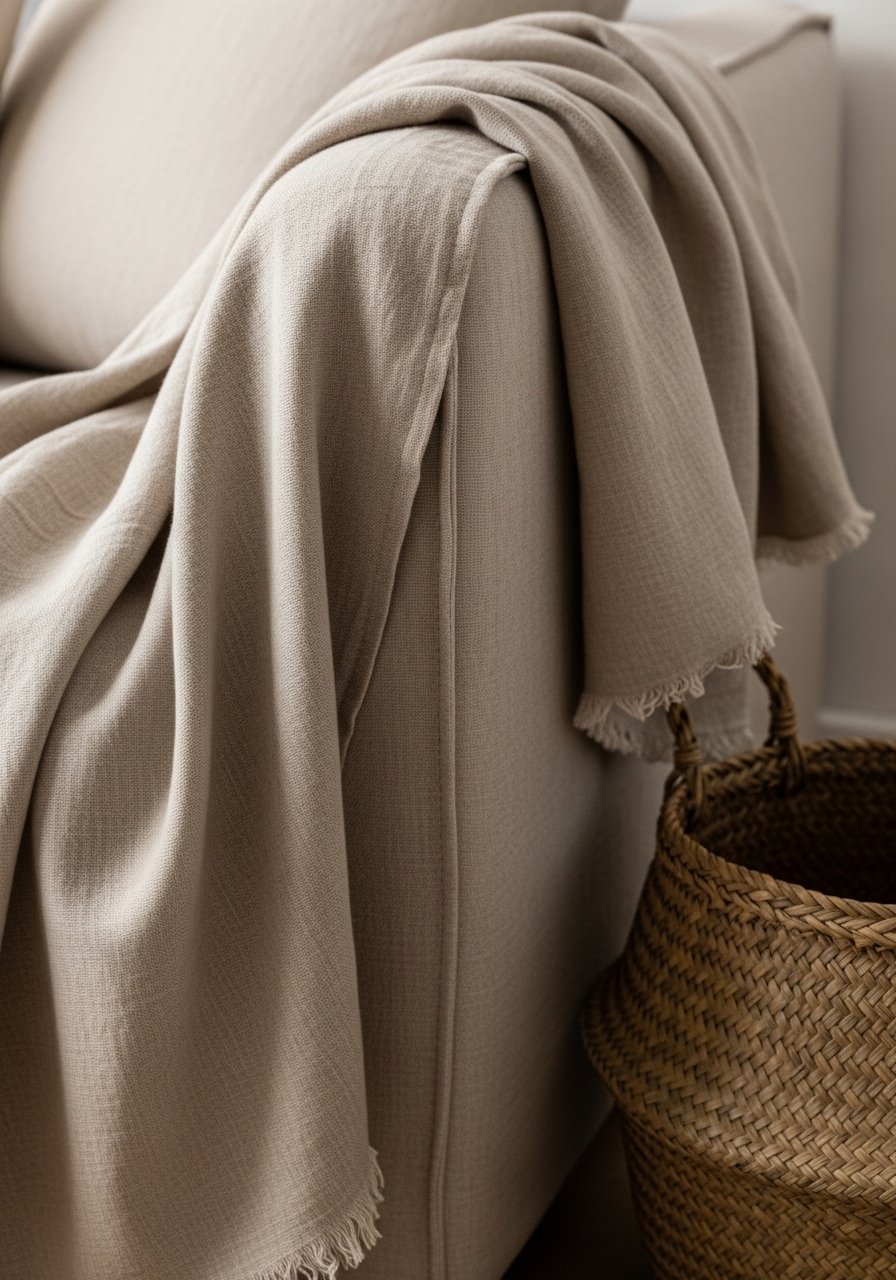
I add a natural linen throw and a couple of neutral pillows next. The room softens immediately. The linen’s subtle creases create that “lived-in” comfort I want. Most people miss contrast in texture—mix smooth linen with a nubby basket or wood to keep it interesting. Avoid matching everything exactly; identical tones across pillows and throws make the space feel manufactured.
Step 3: Use functional rustic pieces as decor
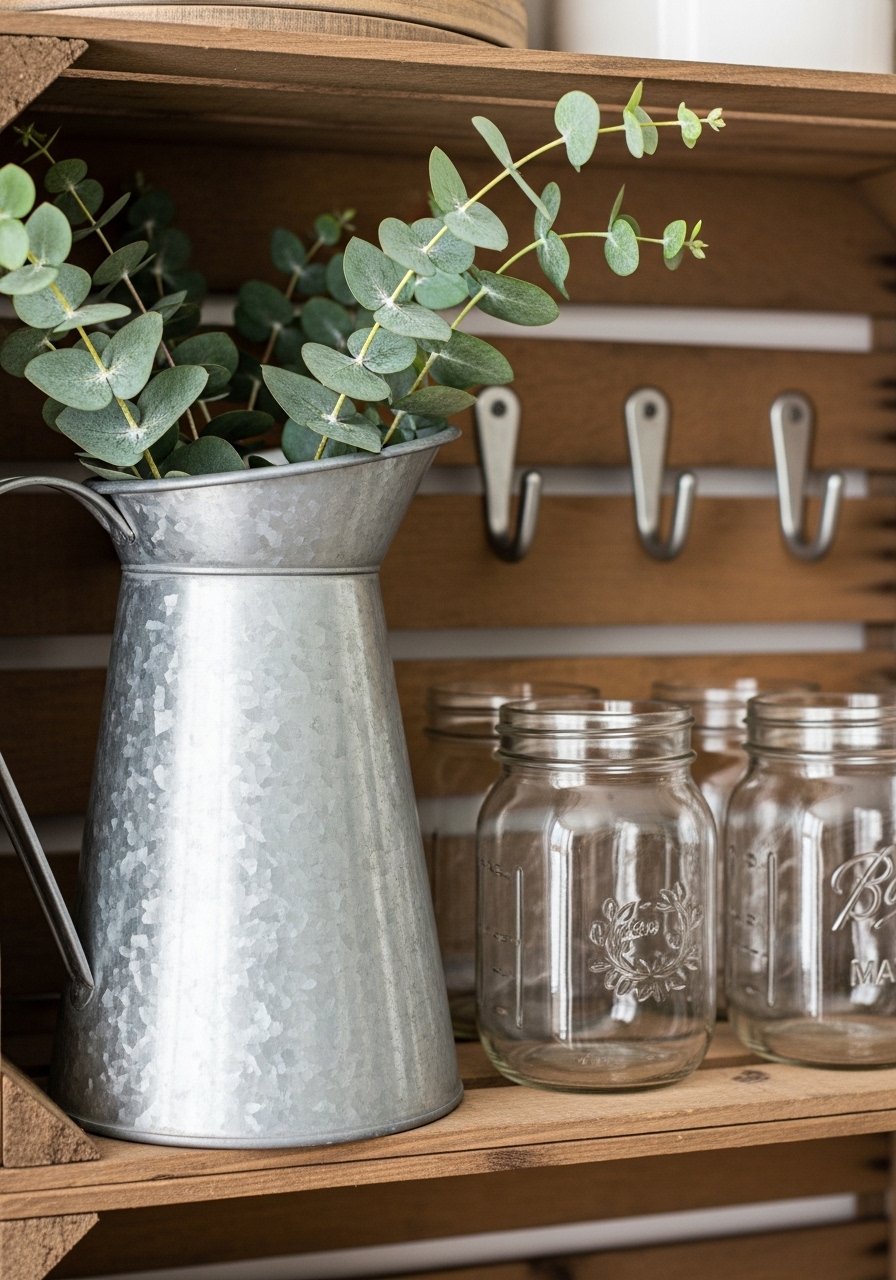
I pick a couple of functional rustic pieces—like a galvanized pitcher with faux eucalyptus or a wooden crate as a low shelf. These pieces add utility and character at once. Visually, they break the flat plane of surfaces and invite touch. An insight: utilitarian items read intentional when you give them a dedicated spot. Don’t scatter useful items without purpose; clutter hides the farmhouse charm.
Step 4: Group small accents in threes for balance
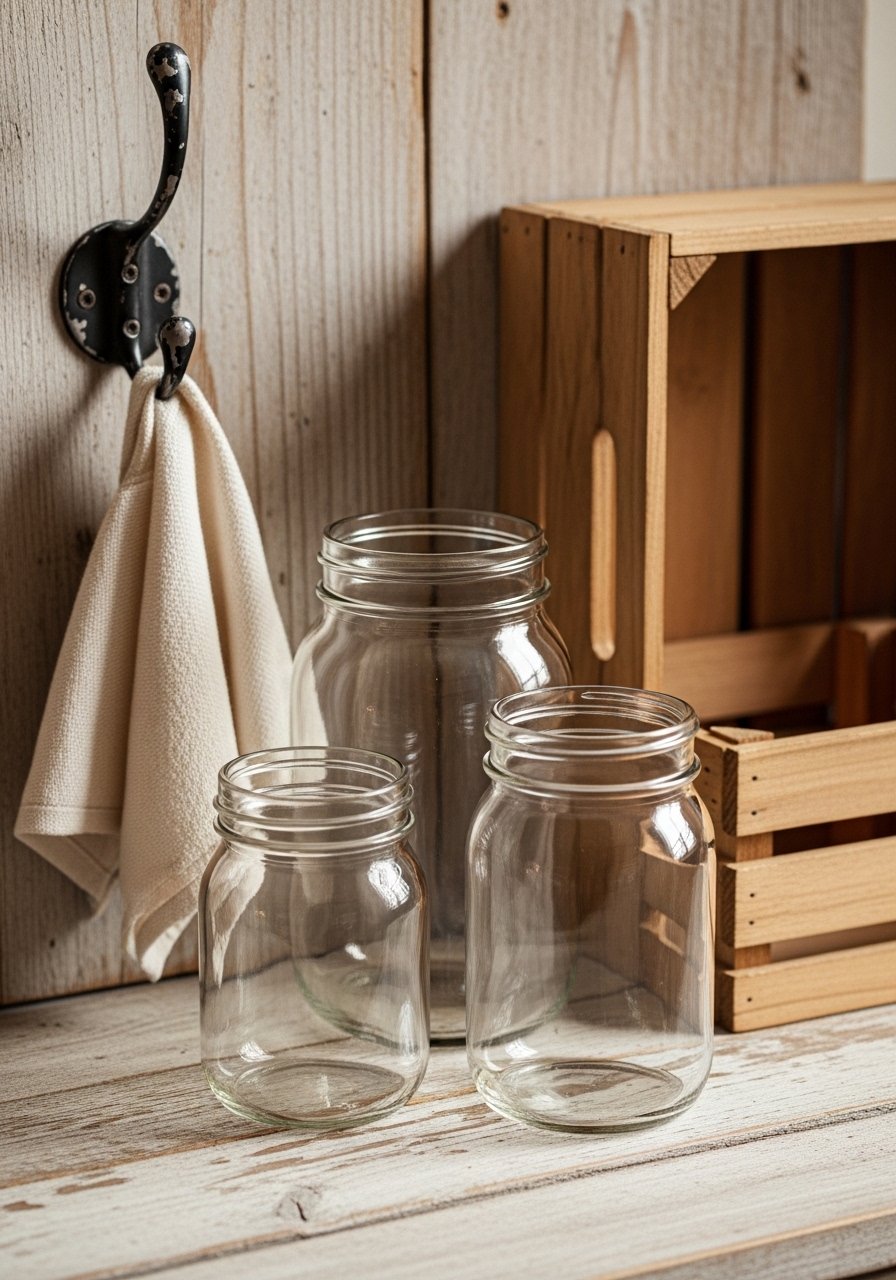
I arrange small accents in groups of three on a shelf or mantel. The trio rhythm creates balance without being rigid. The visual change is immediate—corners feel curated instead of sparse. People often overlook negative space around groups; leave a little breathing room. A common mistake is symmetry for symmetry’s sake—avoid lining three items up evenly; stagger heights and textures for a softer look.
Step 5: Anchor floors with natural storage and soft edges
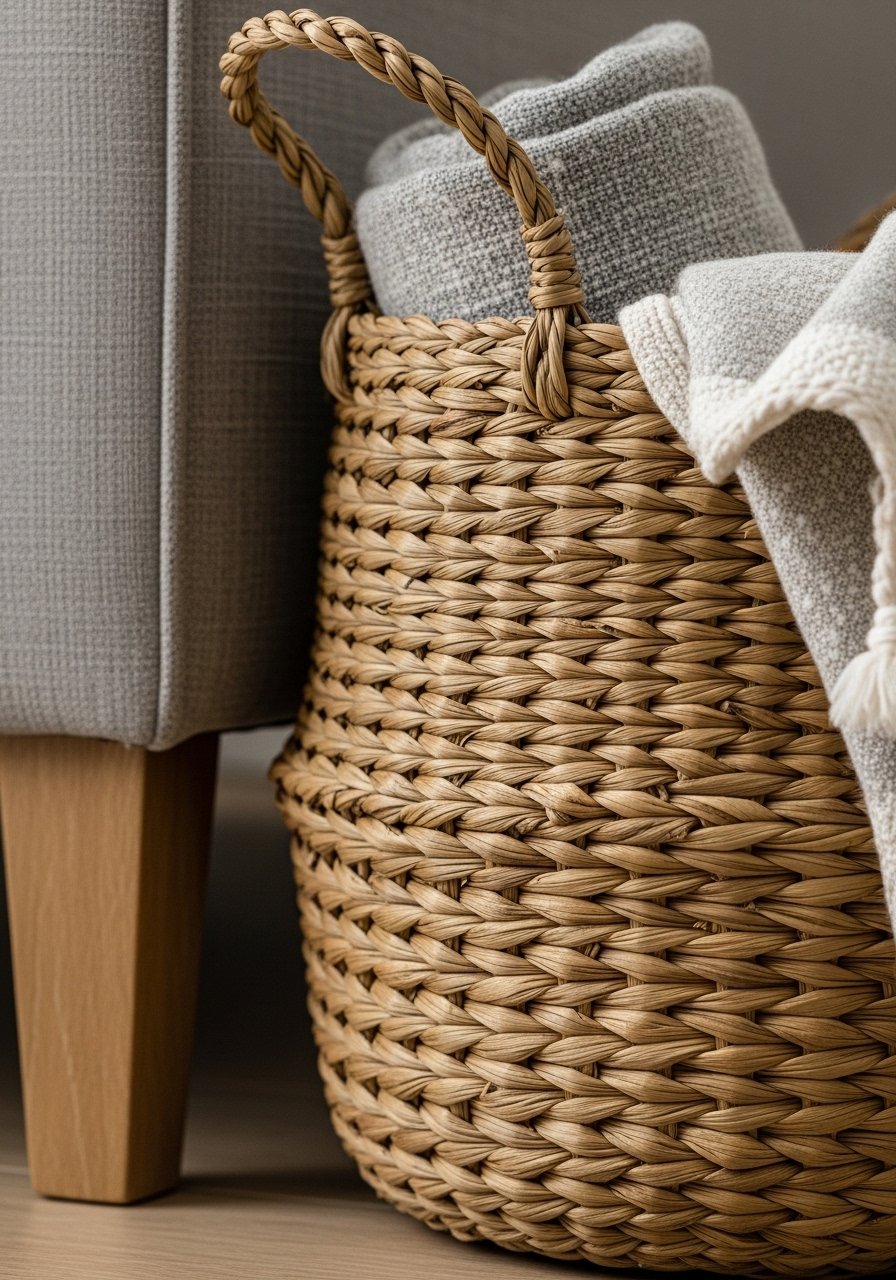
I finish with grounding pieces on the floor: a woven basket for throws and a low wooden crate for magazines. These add texture at eye level and keep the room usable. The room reads complete because the lower plane supports everything above. One insight: storage that’s attractive will be used, not hidden. A small mistake is placing the basket too far from seating—keep it within reach so it feels helpful, not decorative.
What This Solves
I use this approach when rooms feel staged, flat, or too precious. The method fixes awkward corners and empty shelves without a big budget. The result is a space that looks collected over time and still functions for daily life.
I’m not aiming for perfect matching. I’m aiming for a calm, comfortable room that invites sitting down.
Quick Styling Tips I Rely On
I keep color simple—neutrals, warm woods, and one soft green from stems. That palette keeps things cohesive.
I repeat materials: linen, wood, metal, and woven fibers. Repetition ties different areas together.
- Vary heights and depths for interest.
- Let one piece have more visual weight than the rest.
Texture and Color Guide
I choose muted, worn textures over shiny new finishes. Linen, seagrass, and distressed wood read farmhouse better than anything polished. The plants (real or faux) bring life and a soft green that warms the palette.
I also leave small empty spaces. A little quiet around objects helps each piece feel intentional.
Final Thoughts
I start small and edit more than add. A single sign, a throw, and one functional accent often change the whole mood. These are low-pressure edits that make a room feel comfortable and lived-in.
I trust the room to come together as I live in it. Simple, steady moves win every time.