

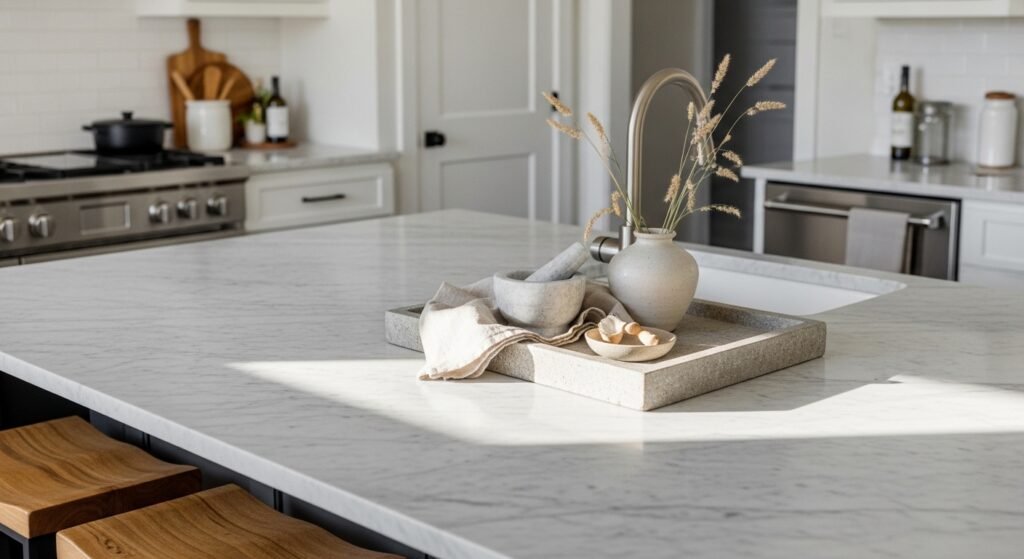
My sister walked into my kitchen once and said, "This feels lived in but not messy." It was the highest compliment because I had been overthinking every single object. I learned that a simple neutral centerpiece can make a kitchen island feel intentional without stealing countertop real estate. Small changes like height variation and an anchor tray made all the difference.
These ideas lean modern farmhouse to quiet modern. Most setups are under $75, with a few splurges near $120. They work on long prep islands, small kitchen carts, and every breakfast bar that needs a bit of personality.
Minimalist Stone Tray for Everyday Use
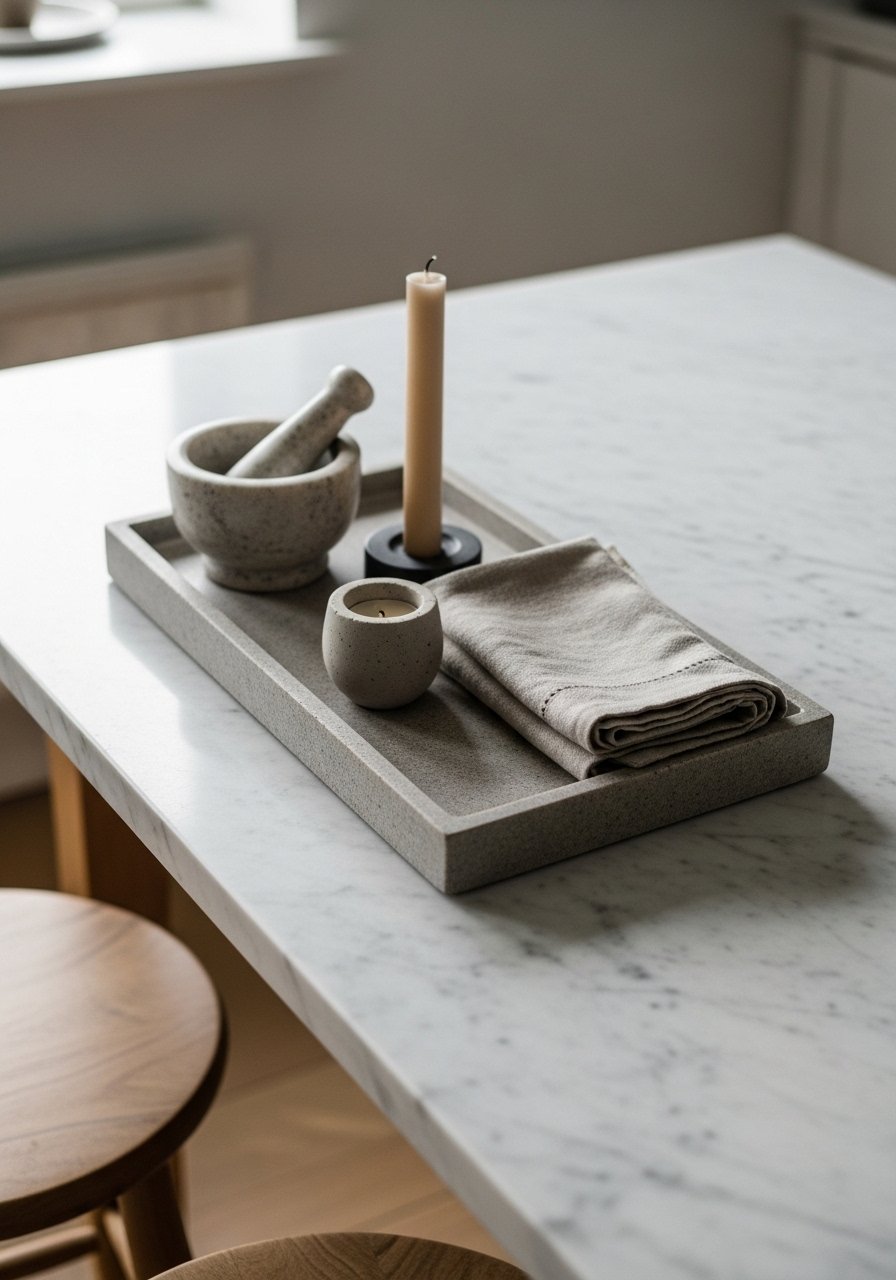
The moment I set a rectangular stone tray on my island, clutter stopped spreading. A tray anchors objects and keeps things useful. Visually it reads as one piece, even when you swap items. Use a 14 by 8 inch tray for a standard 36-inch island so it never feels too heavy. I keep a granite mortar and pestle and one beeswax candle on mine. Common mistake is choosing a tray that is too small. If the tray is undersized everything looks accidental. Also try mixing matte stone with a single glossy ceramic to stop the setup from feeling flat.
Calm Ceramic Bowl with Linen and Fruit
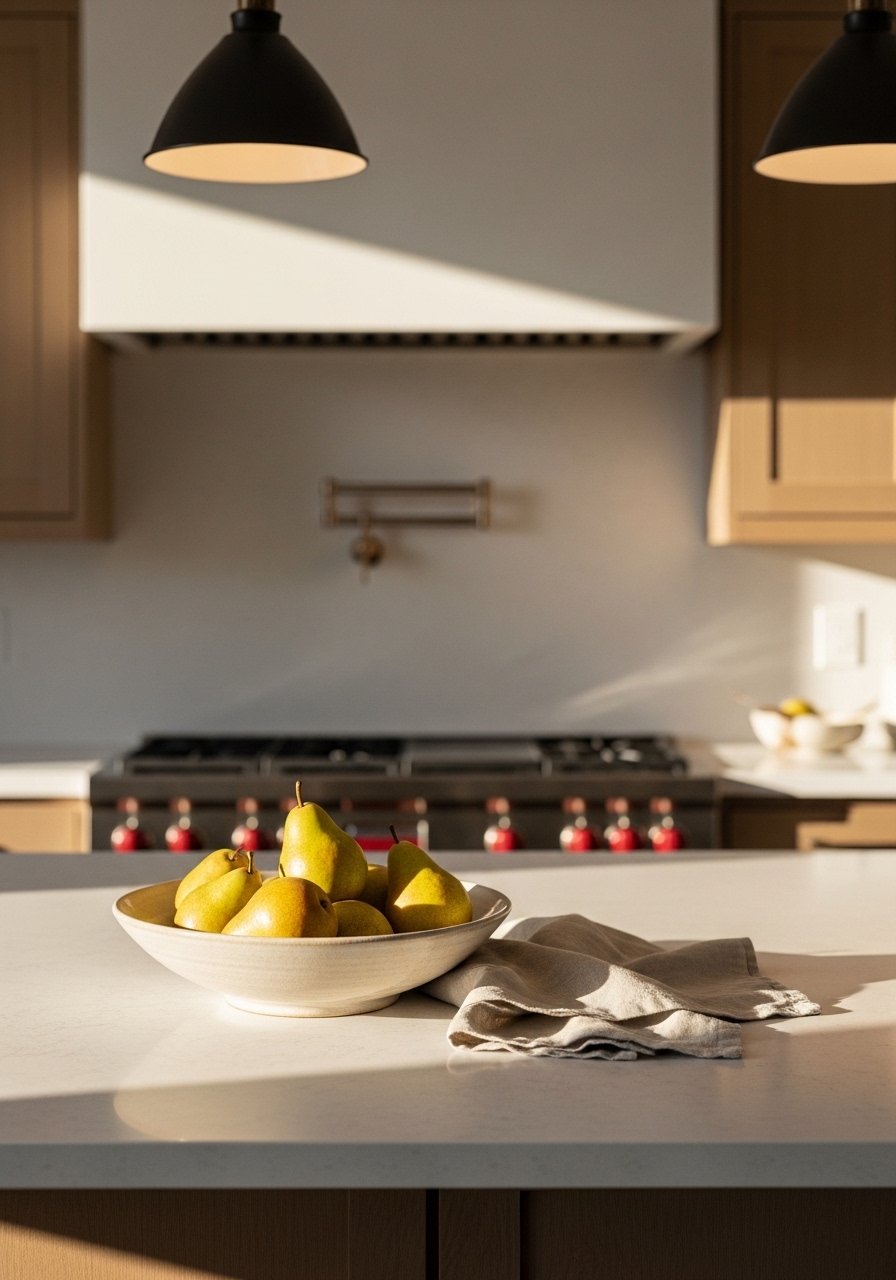
A shallow ceramic bowl with a folded linen napkin makes a centerpiece that is useful and pretty during dinner prep. I aim for a bowl about 12 inches across so fruit looks arranged, not stuffed. Neutral pears or lemons give a soft pop while keeping the palette quiet. I use a handmade white ceramic bowl and swap linen napkins by season. People often pile fruit into a tiny dish and everything topples. Keep the bowl low and wide so it reads as one simple shape. If you want a slightly lived-in look, tuck one wooden citrus reamer beside the bowl.
Monochrome Ceramic Vase with Dried Pampas
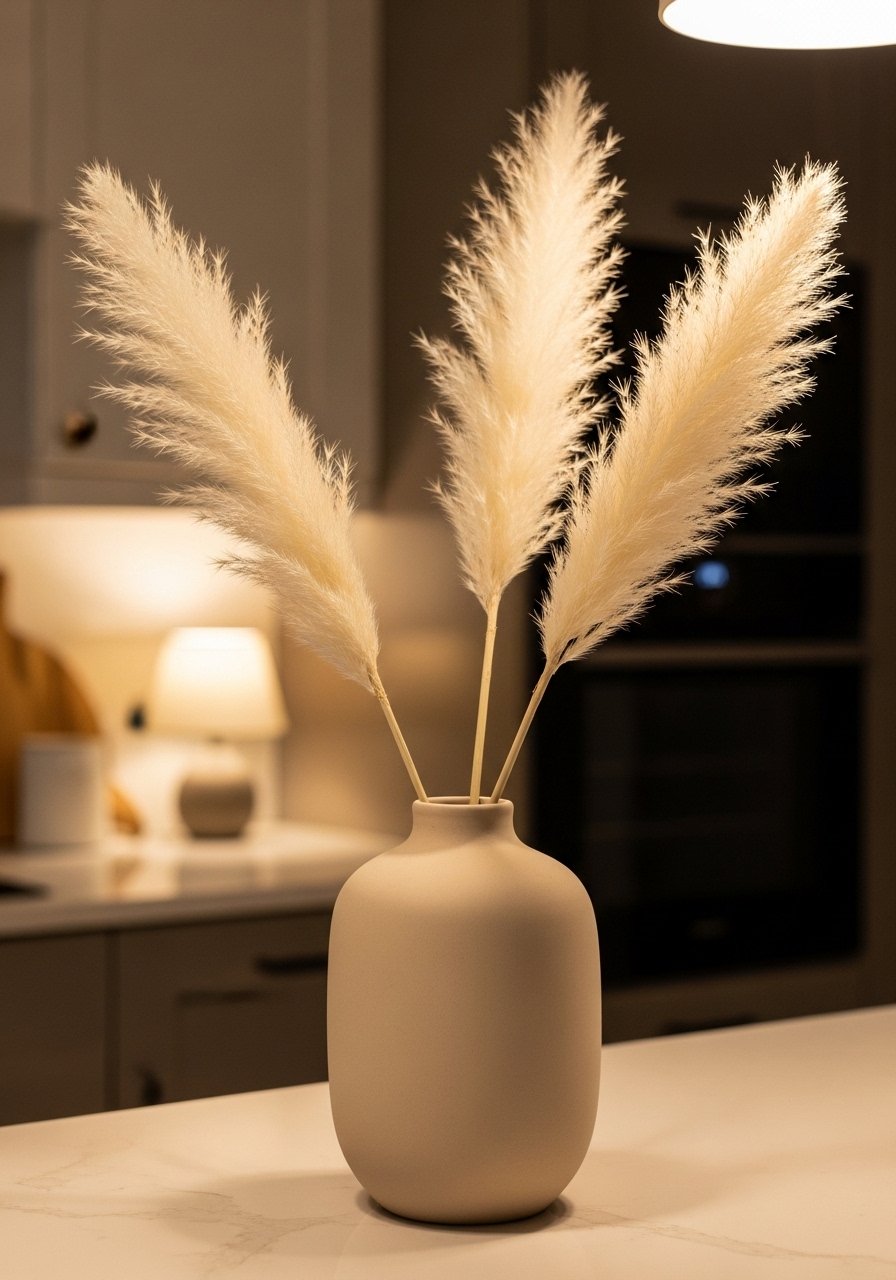
There is something calming about a single ceramic vase with neutral dried stems. I prefer a 10 to 14 inch tall vase for islands so it gives vertical interest without blocking sightlines. My go-to is a matte ivory vase and a trimmed bunch of pampas grass for texture. Try a tall ceramic vase plus one bundle of pampas stalks. A common error is making the stems too tall. Cut them so the top sits two to four inches below the bottom of your pendant lights. If you need a seasonal swap, replace the pampas with foraged eucalyptus for a fresher scent.
Tiered Wooden Tray for Functional Rustic Style
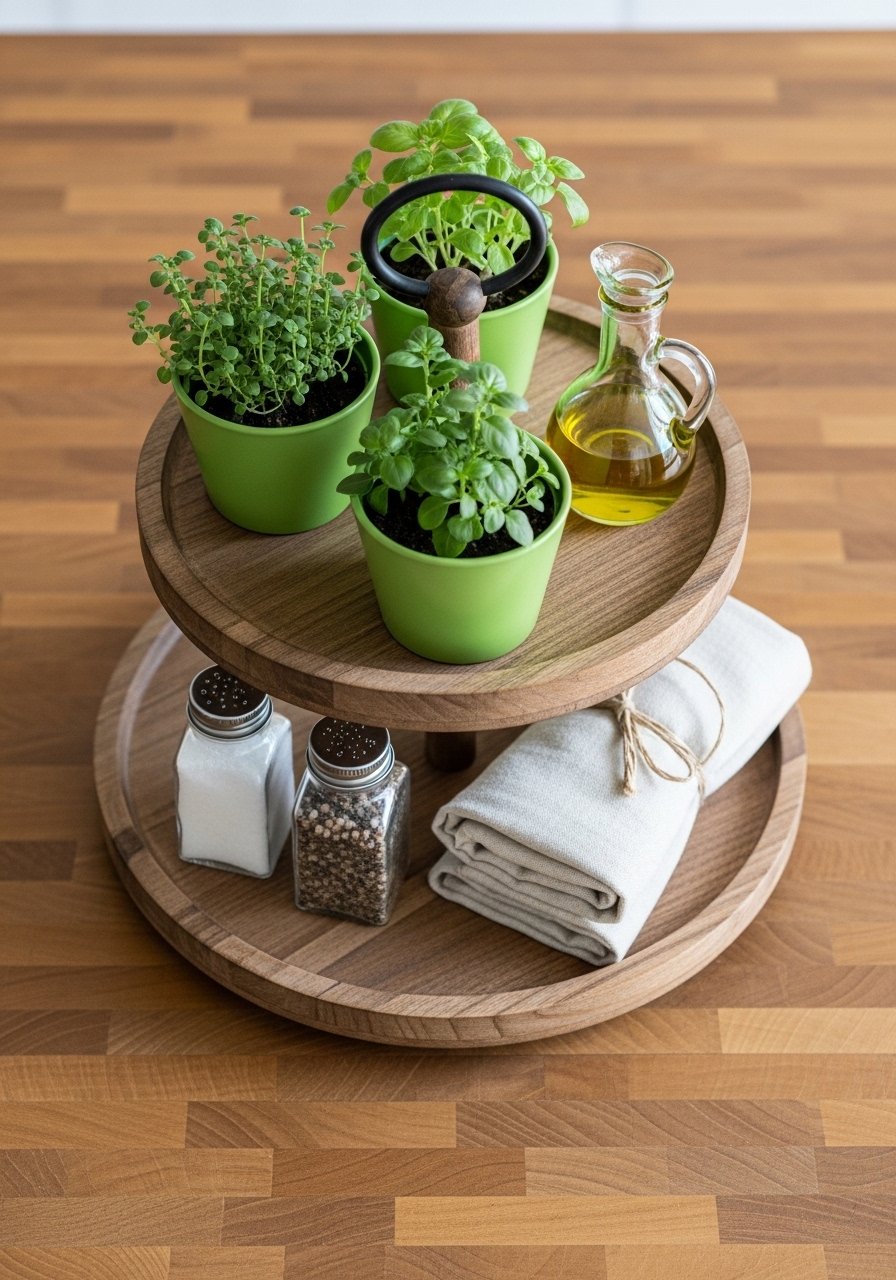
A tiered tray lets you combine function with charm. I keep small herb pots on the top tier and frequently used oils and salts on the lower tier. Pick a tray where the lower tier is at least 6 inches wider than the top so items do not look cramped. Use a two-tier wooden tray and tiny terracotta herb pots. People forget to factor height clearance for pendant lighting. Measure from counter to lowest pendant before buying tall accessories. This setup is great for island kitchens where you want everything within reach but contained.
Stacked Coffee Table Books with a Tiny Plant
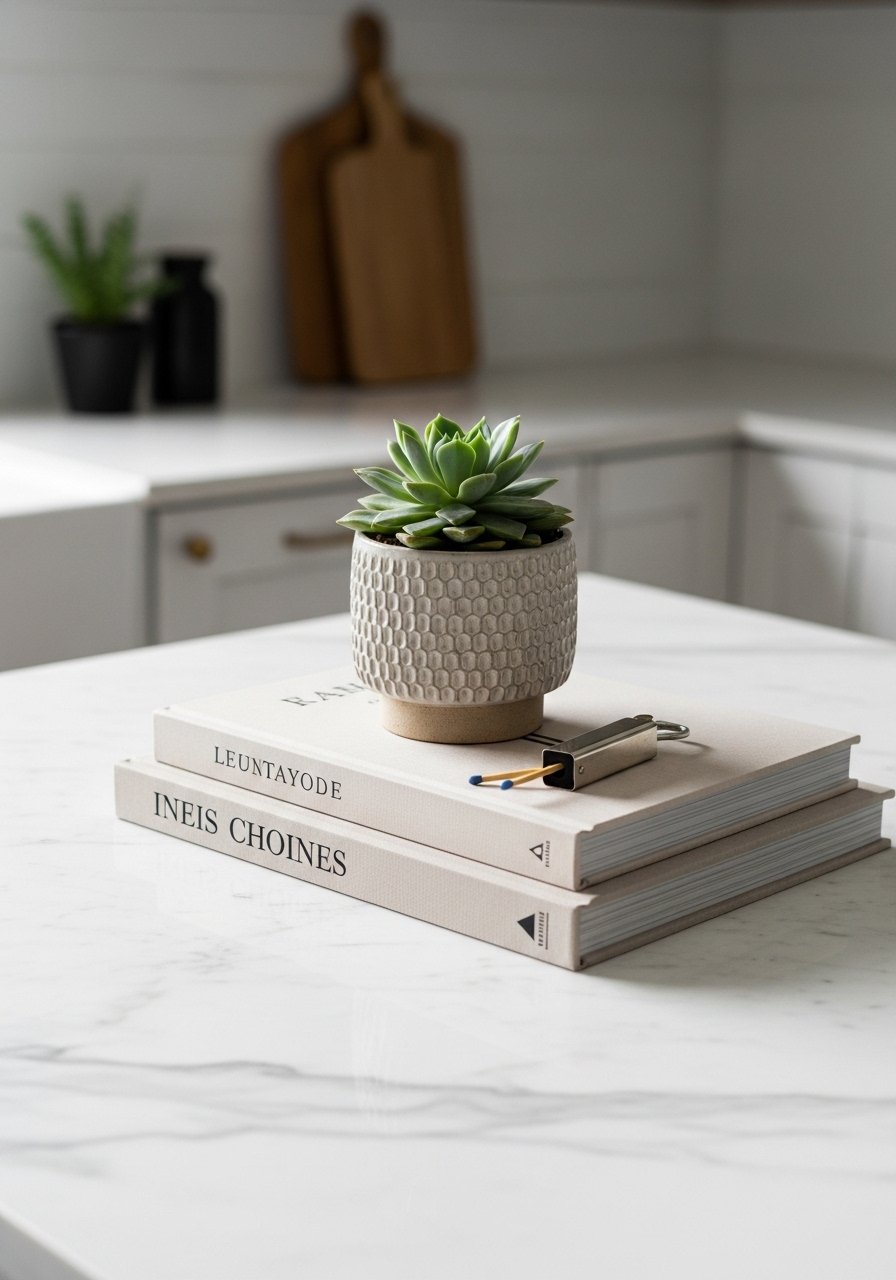
Stacking two low-profile books gives a soft, lived-in anchor without blocking views. I use books roughly 9 by 12 inches each. On top I set a 3 to 4 inch succulent so the centerpiece stays low for prep work. My favorite is a pair of neutral hardcover books and a small faux succulent for zero maintenance. The rookie mistake is using tall books that act like barricades. Also try tying this with the stone tray idea earlier by placing the stack at one end of a tray for layered interest.
Grouped Stoneware Pitchers for Classic Neutrality
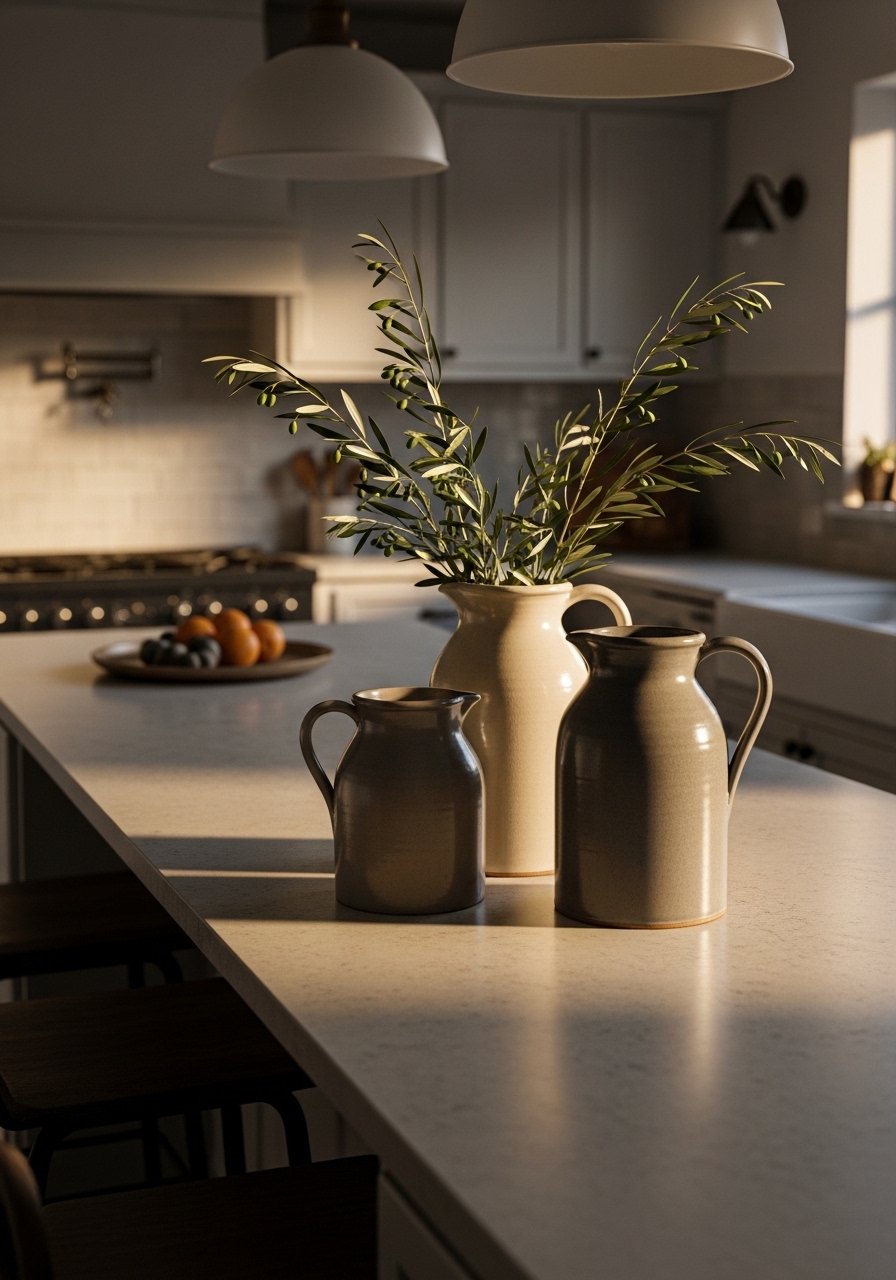
Three staggered pitchers feel collected instead of matched. I pick one taller pitcher about 9 inches high, one medium at 7 inches, and one short at 5 inches. The uneven scale creates rhythm. I keep olive branches or single stems in the tallest pitcher. Try these stoneware pitchers in mixed neutrals. A common mistake is placing them in a straight line. Angle them slightly toward each other so they read as a group. If you have kids or pets, swap real branches for faux olive stems that are easy to wipe down.
Sculptural Candle Cluster on a Marble Slab
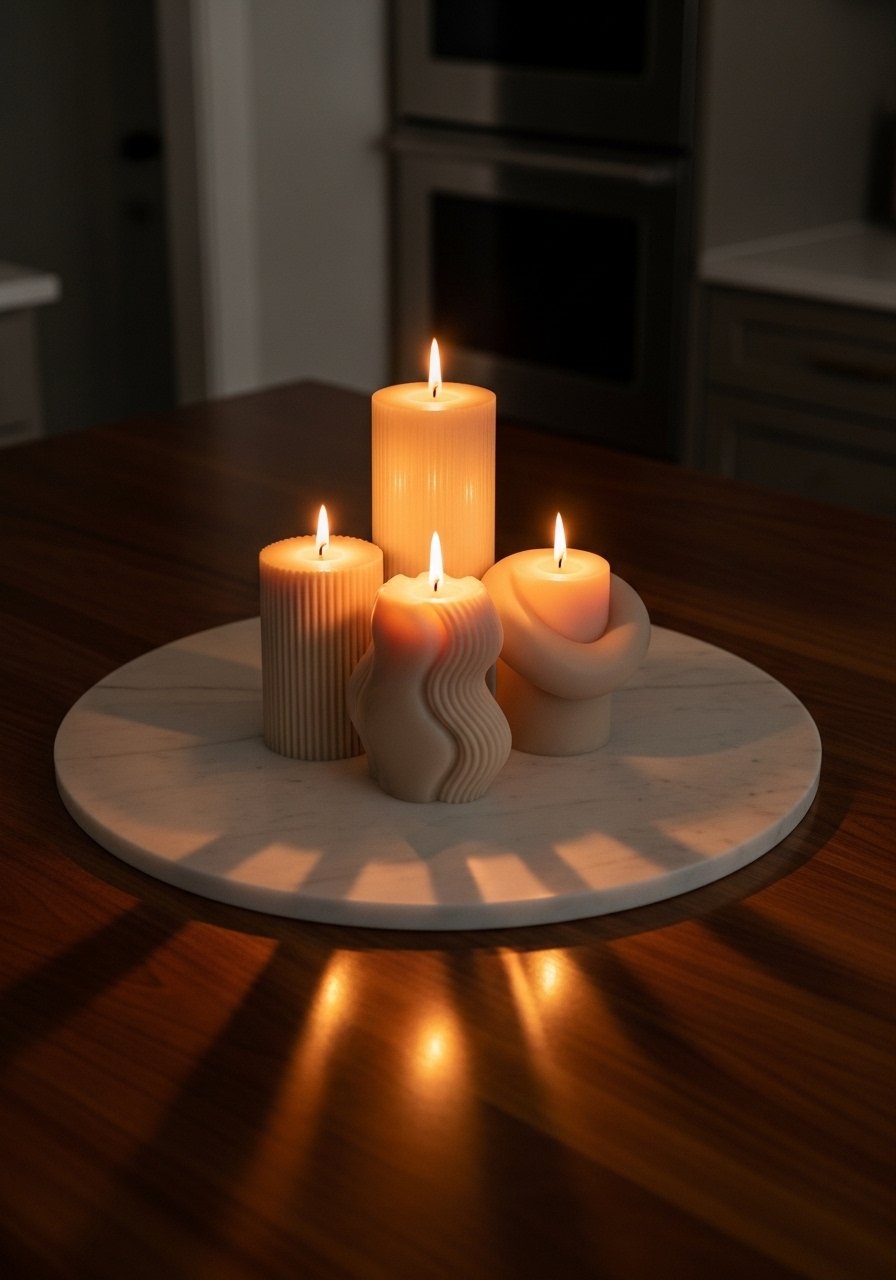
Candles are the easiest way to change mood. I use three sculptural pillar candles in different heights on a 10 inch marble slab for safety and style. If you light them, the slab protects the counter and keeps wax contained. I prefer unscented for cooking nights. Pick sculptural candles and a round marble slab. The usual mistake is buying identical candles. Vary the diameter and height for depth. Keep a small snuffer nearby so you can extinguish quickly when dinner prep gets busy.
Low Succulent Runner for Prep-Friendly Greenery
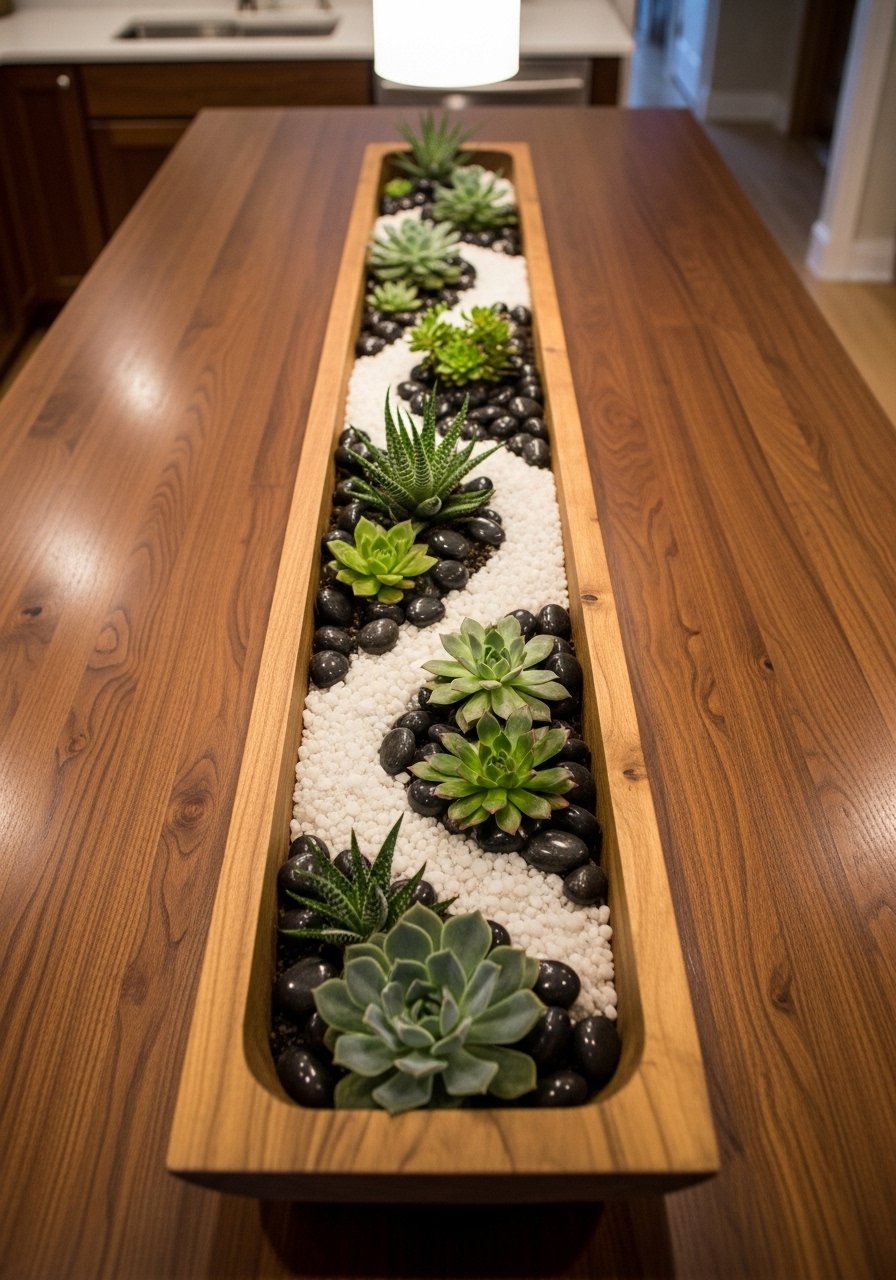
When I need green but can still use the island for prep, a low succulent runner is the answer. Choose a trough about 30 to 36 inches long and 4 to 6 inches wide so it reads like a deliberate stripe. Use mixed succulents and coarse sand for contrast. I bought a succulent planter trough that fits the center third of my island and it instantly looks curated. People often choose plants that need daily attention. Succulents are forgiving and let you forget watering for weeks.
Entertainer's Serving Board with Seasonal Accents
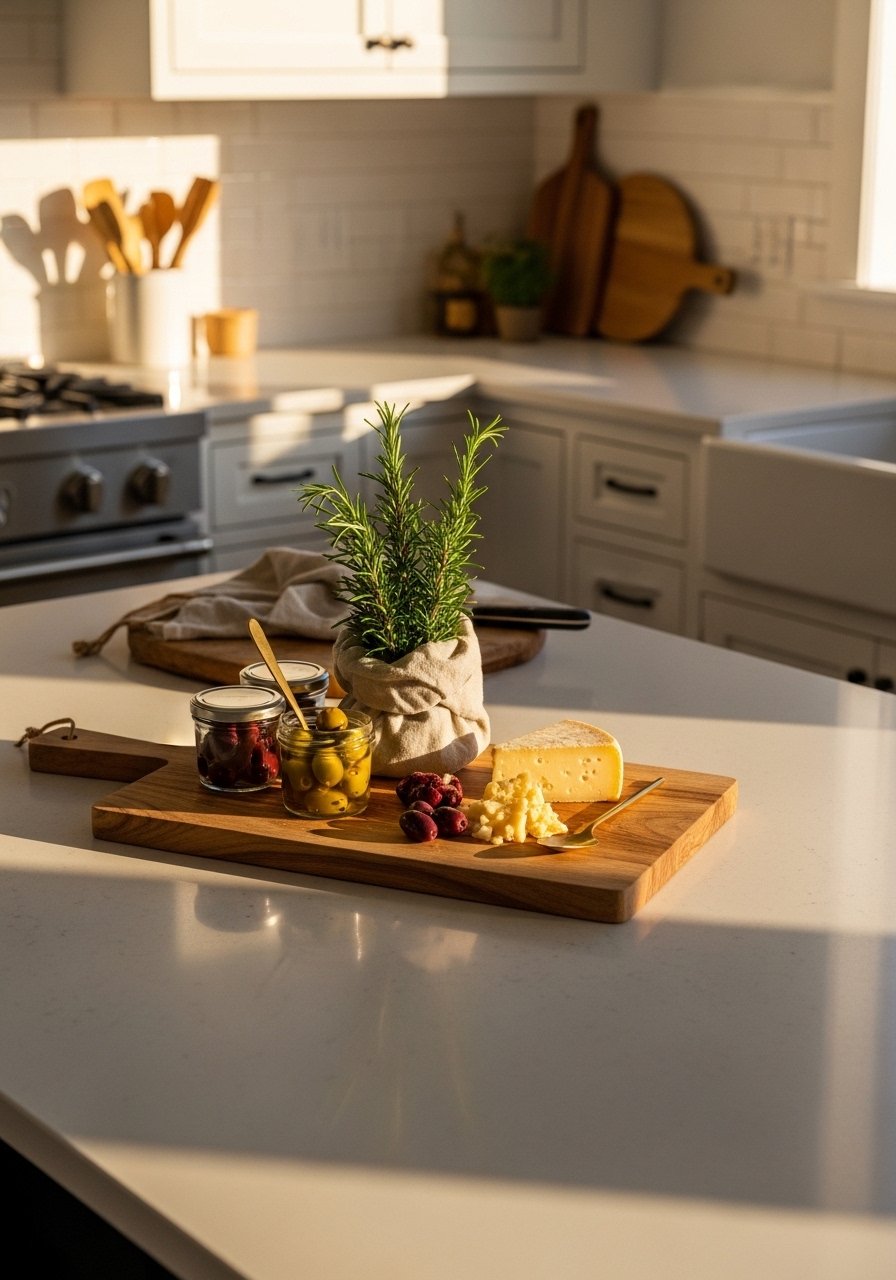
If you host, think of your island as the first station. A long acacia board with small jars, a wedge of cheese, and seasonal sprigs looks intentional and invites people to help themselves. Aim for a board at least 20 inches long. I keep a dedicated set in the island drawer. I use an acacia serving board and a small brass serving spoon. A common misstep is overcrowding the board. Leave negative space so each item reads. This idea doubles as a prep station during dinner parties.
Your Decor Shopping List
Textiles
- 22-inch linen pillow covers, set of 2, natural flax. Great on adjacent benches.
- Light-gray linen napkins, set of 6, 20 by 20 inches.
Wall Decor and Small Objects
- Neutral hardcover design books, set of 2, 9 by 12 inches.
- Brass serving spoon, 8 inches, useful and pretty.
Planters and Vases
- Tall matte ceramic vase, 12 inches high for dried stems.
- Succulent planter trough, 36 inches long, low profile.
Serving and Trays
- Rectangular stone tray, 14 by 8 inches.
- Acacia serving board 20-inch, durable and warm. Similar picks are often at Target or HomeGoods.
Shopping Tips
White oak beats dark wood in 2026. Design feeds favor lighter wood for kitchen islands and accents. Try white oak floating shelves for complementary pieces.
Grab a tall ceramic vase for about $40. It is an anchor piece that works across the year. Swap dried stems for fresh in warmer months.
For low centerpieces, go long not tall. This succulent planter trough provides greenery without blocking sightlines.
If you like texture, pick one stone item. A rectangular stone tray at around $30 brings weight and keeps small items grouped.
Buy a marble slab for candles. Round marble serving slab protects surfaces and looks intentional.
Frequently Asked Questions
Q: Can I mix real plants and faux without it looking fake?
A: Yes. Use a real potted herb or succulent mixed with a taller faux stem for consistent height. It reads more intentional and gives you one real plant that needs care. Place the real plant where light actually reaches.
Q: How large should a centerpiece be for a 96-inch island?
A: Aim for pieces that occupy the center third. For a 96-inch island that means a runner or grouped objects totaling 28 to 36 inches in length. Keep height under 14 inches so you can still work across the island easily.
Q: My island always looks cluttered despite a tray. Why?
A: Most people pick a tray that is too small or add too many items. A large tray with two or three objects gives breathing room. Also empty the tray weekly so it does not become a catch-all.
Q: Are neutral centerpieces practical for families with kids?
A: Absolutely. Choose durable materials and keep breakables off the edge. Low succulents, stone trays, and wooden boards survive handling better than thin glass vases.
Q: How often should I change a neutral centerpiece?
A: Rotate a single element seasonally and keep the anchor the same. Small swaps feel fresh and keep the habit affordable. Scans beat eyeballing about 8 out of 10 times. That applies when you test tones and textures in your kitchen light. Wrong base ruins most DIY matches when you try to recreate a color, so if you ever match ceramics or textiles, test them in your actual light before buying.