


My living room had nice furniture but it still felt like a waiting room. Took me embarrassingly long to realize everything was the same height and color, and the entry had zero personality. Adding a small beige name plate in the right spot fixed both problems. It reads like a tiny handshake when someone walks in, and it cost less than a fancy vase.
These ideas lean calm and handmade, somewhere between modern and lived-in. Most projects fall under $40, with a few around $75 for nicer materials. They work for entryways, home offices, nurseries, kitchens, and closets.
Classic Beige Plaque For Entryway In Cozy Farmhouse

My first DIY was a simple 3×10-inch plaque for the entry. What makes it work is scale. It should be no wider than the console depth and hung three inches above your tray. I used raw basswood blanks, sanded them, and mixed two beige acrylic paints for depth. I hand-lettered the name with a fine paint pen. Budget was under $20 including paint. A common mistake is making letters too small for the viewing distance. Pair this with the brass trim idea below if you want something a touch dressier. I used raw basswood blanks for the base.
Minimalist Acrylic Beige Desk Name Plate For Home Office

For my home office I swapped a cheap plastic plate for a frosted beige acrylic slab. Cut a 2×8-inch rectangle, sand the edges for a matte finish, and use vinyl letters for a neat modern look. It creates a polished, professional vibe without feeling corporate. Budget near $30 if you buy acrylic and a vinyl cutter stencil or pre-cut letters. Mistakes people make include choosing glossy acrylic that shows every fingerprint. I linked the acrylic and the vinyl letter set I used so you can copy the finish. Try frosted acrylic sheets.
Textured Clay Name Plate For Boho Bedroom Nook
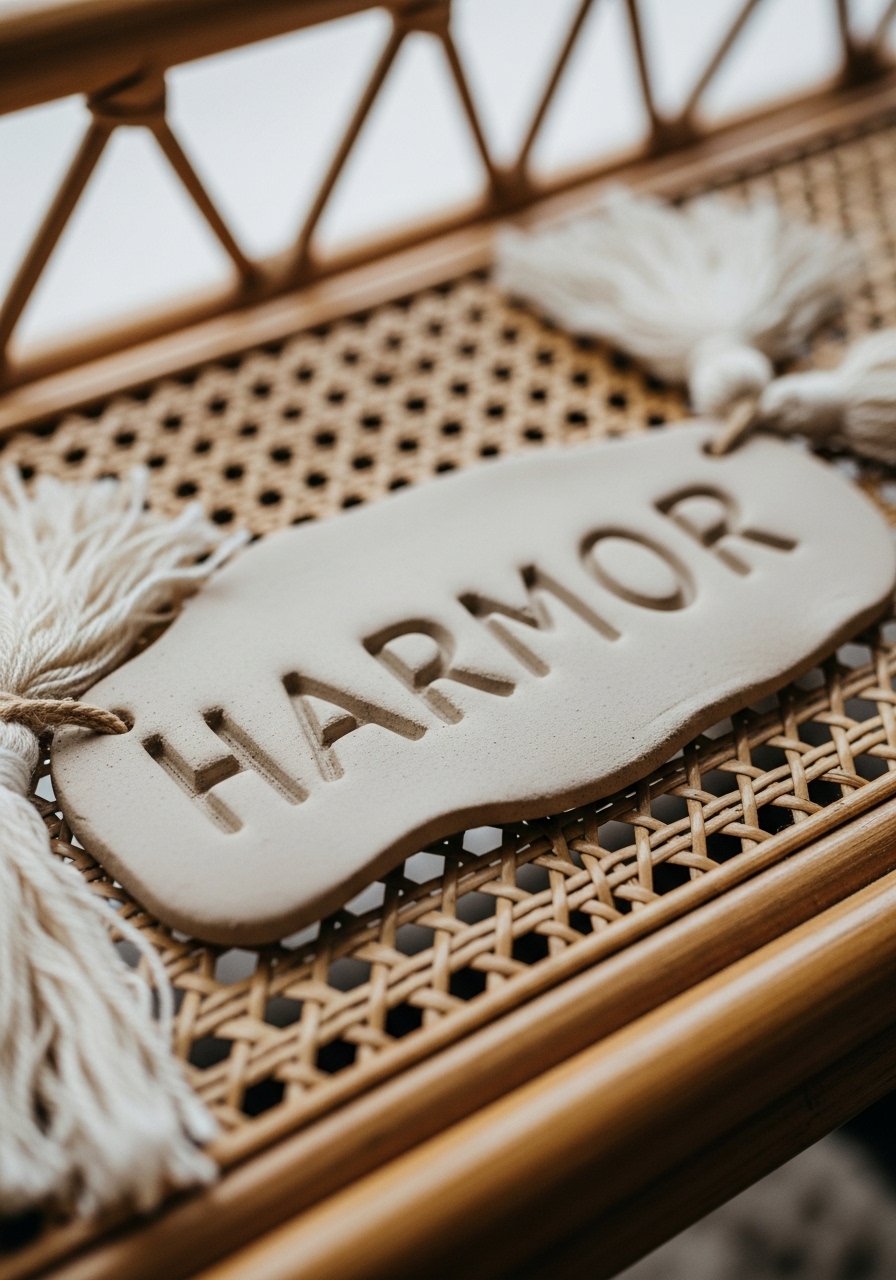
I made a clay name plate for a bedroom reading nook and its texture solved a flat wall problem. Roll your air-dry clay to about 1/4 inch thickness and trim a 4×6-inch shape. Press in letters with a metal stamp or carve freehand. The tactile surface reads warm and handmade. Budget is under $15 for clay and stamps. The common mistake is overworking the clay until it loses crisp edges. Let it dry on a flat surface for 48 hours. I used air-dry clay packs.
Linen-Wrapped Beige Name Plate For Nursery Or Kids Room
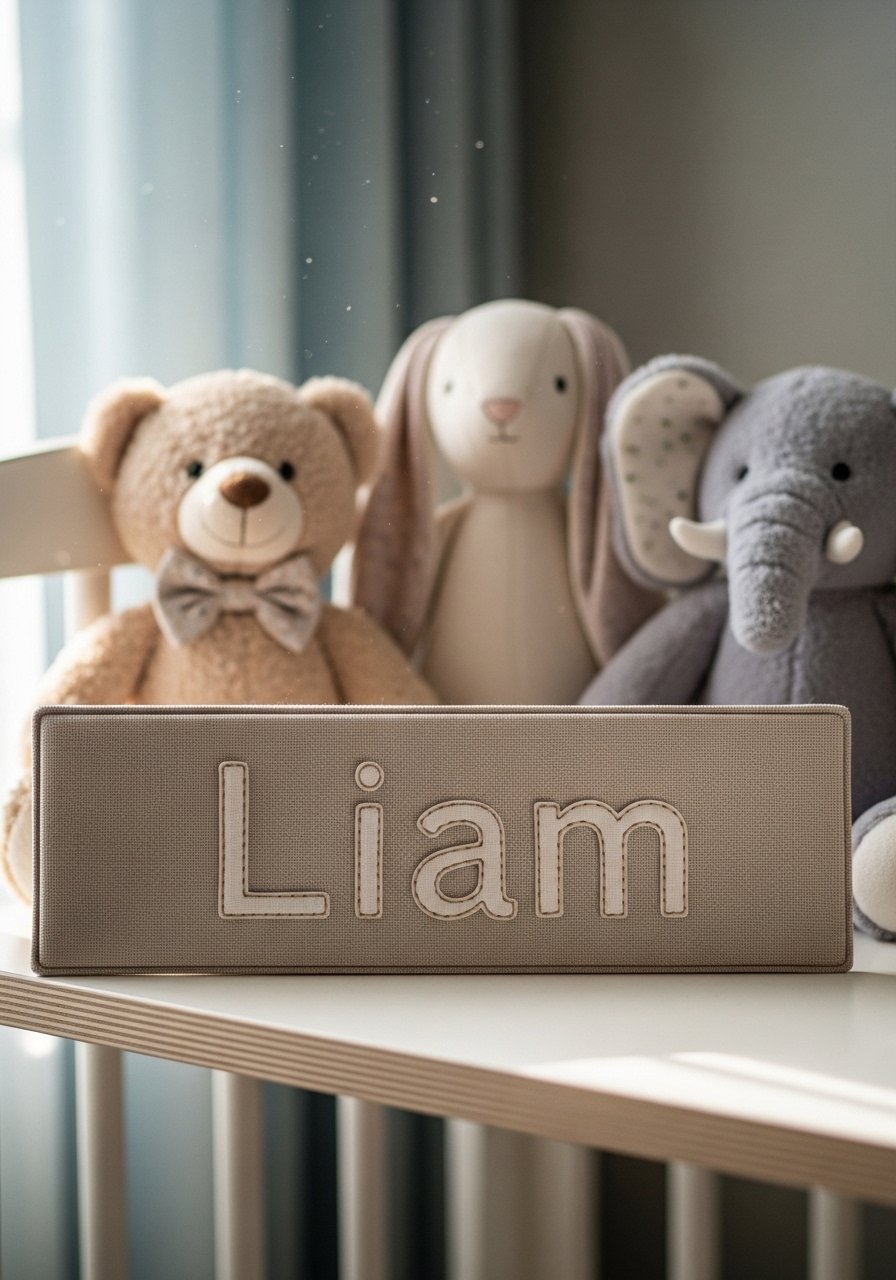
For a nursery I wrapped a thin wood blank in natural linen, stitched the name with embroidery floss, and backed it with felt so it sits flat. It reads soft and safe. I recommend keeping the plate under 3×10 inches so it hangs at eye level for adults without dominating the wall. Budget around $25. People often pick busy fonts for kids names which competes with toys. A simple stitched sans-serif is cleaner. This technique pairs nicely with the gallery fabric patch idea later. I bought natural linen fabric.
Brass-Trim Beige Marble Plate For Modern Living Room Accent
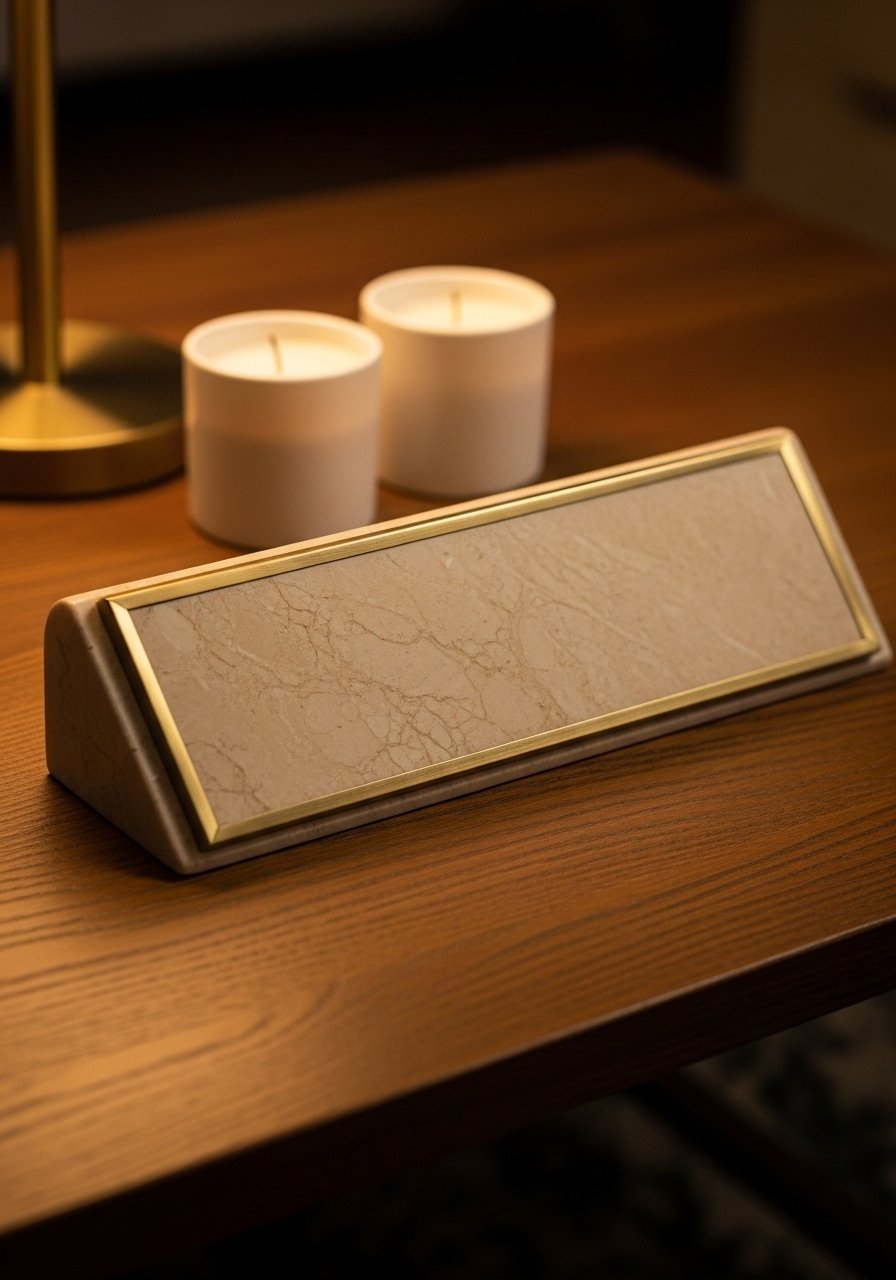
If you want a sleeker look, glue a thin brass picture frame strip to a beige faux-marble tile and etch the name with a fine-tip paint pen. The brass trim gives a small piece real presence on a mantel. Expect $40 to $75 depending on tiles and trim. A common error is choosing a marble pattern that reads too busy. Pick a subtle beige veining. Measure the mantel space and keep the plate under one third of the mantel length so it doesn't look like a lone island. I used brass picture ledges.
Hand-Painted Script On Beige Wood For Hallway With Vintage Vibe
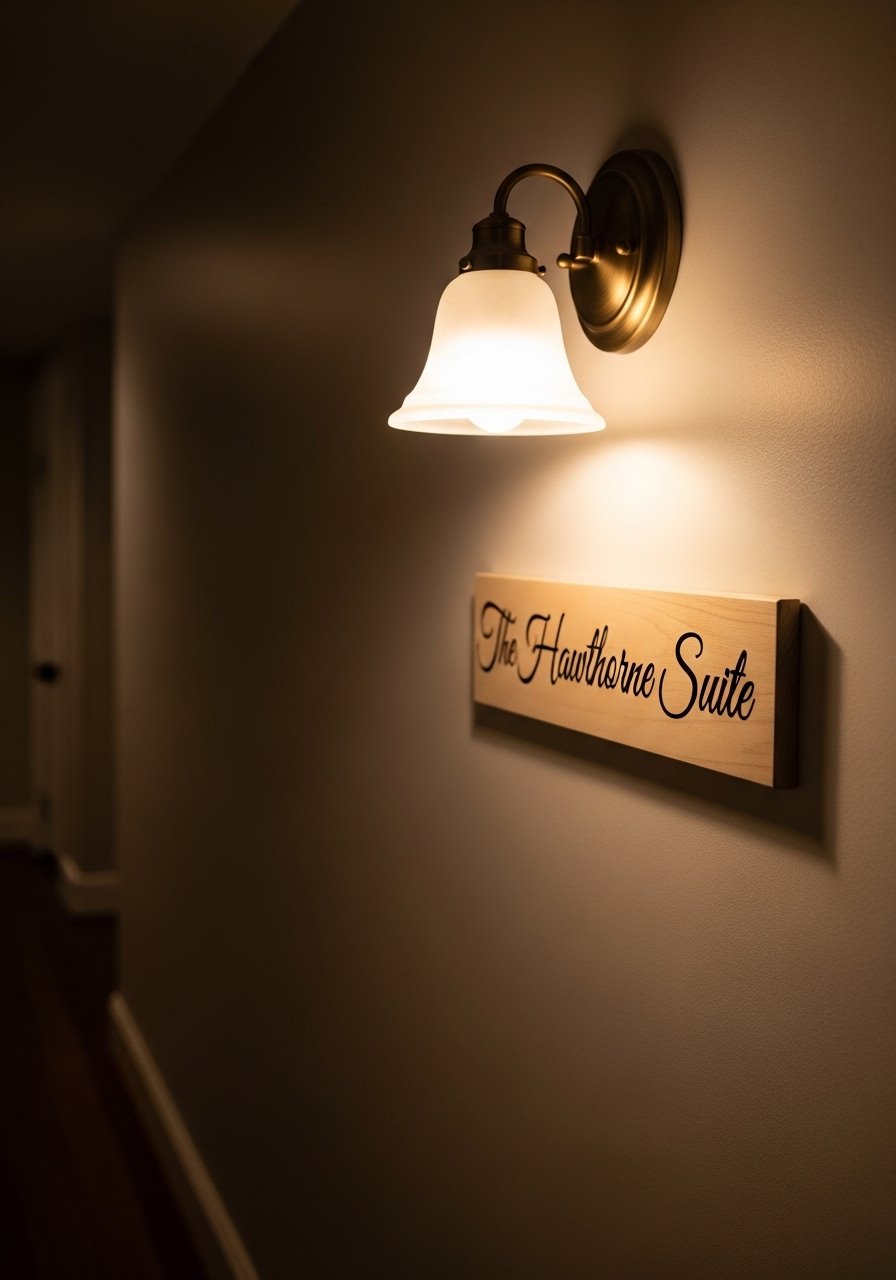
I painted a flowing script on a beige-stained pine board for a hallway and it suddenly felt curated. Use a 2×12-inch board for longer names and paint letters with a small round brush. The trick is using an ink-wash first to map the letter placement. Budget is under $30 including stain and paint. People rush the paint and end up with shaky script. Light pencil guides save hours. This pairs well with the acrylic desk plate idea if you want the same name across rooms. I picked up artist round brushes set.
Leather Tag Name Plate For Rustic Mudroom Or Coat Rack
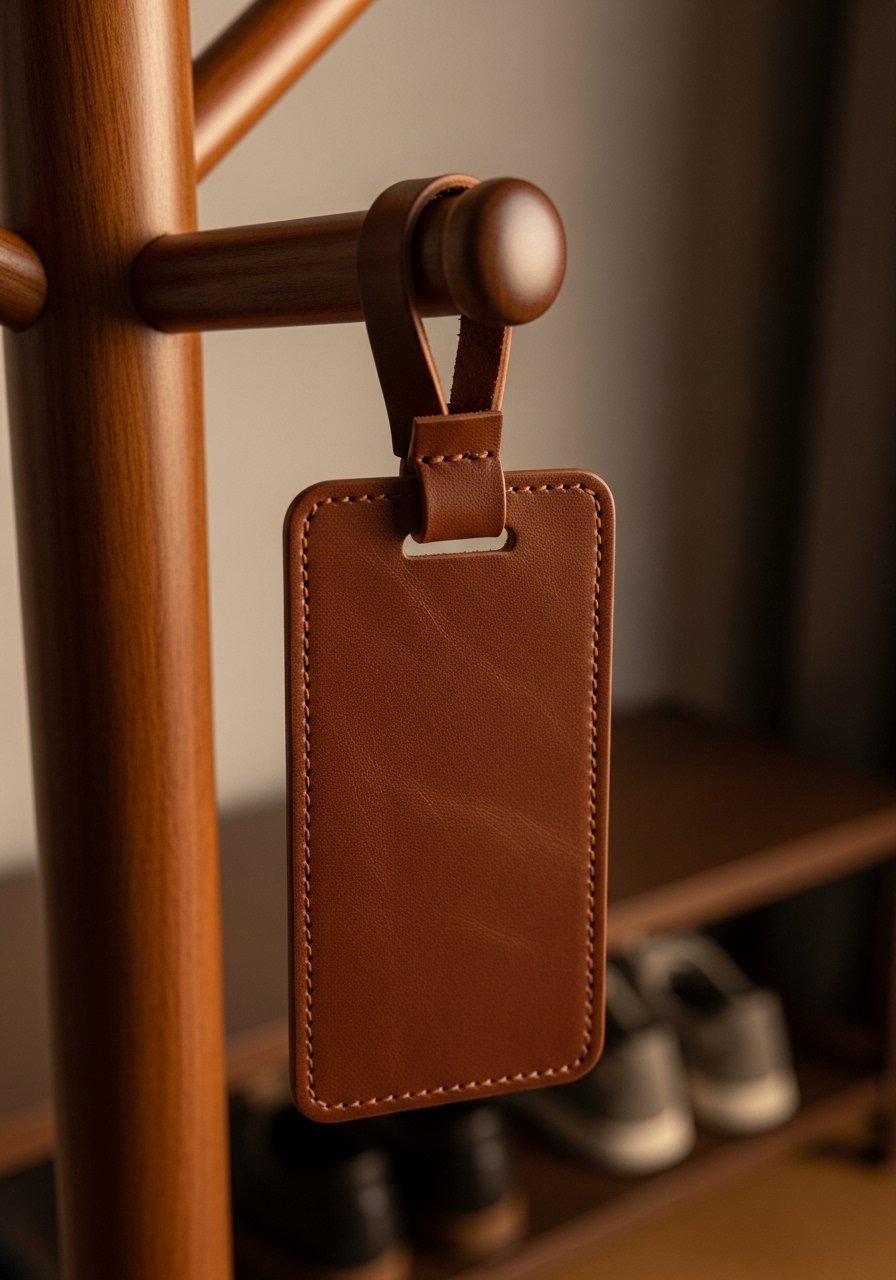
Leather tags are sturdy and practical in a mudroom. Punch two holes and tie them to hooks or bolts. I used vegetable-tanned leather, stamped the letters, and oiled the edges. They age nicely with use. Expect $20 to $40 depending on leather. A frequent mistake is using thin split leather that tears. Go for 3-4 ounce thickness for durability. For a DIY-friendly spin, pair these with the magnetic name plates idea for seasonal swaps. I recommend vegetable-tanned leather strips.
Cork-Backed Beige Plate For Home Office Pinboard Combo
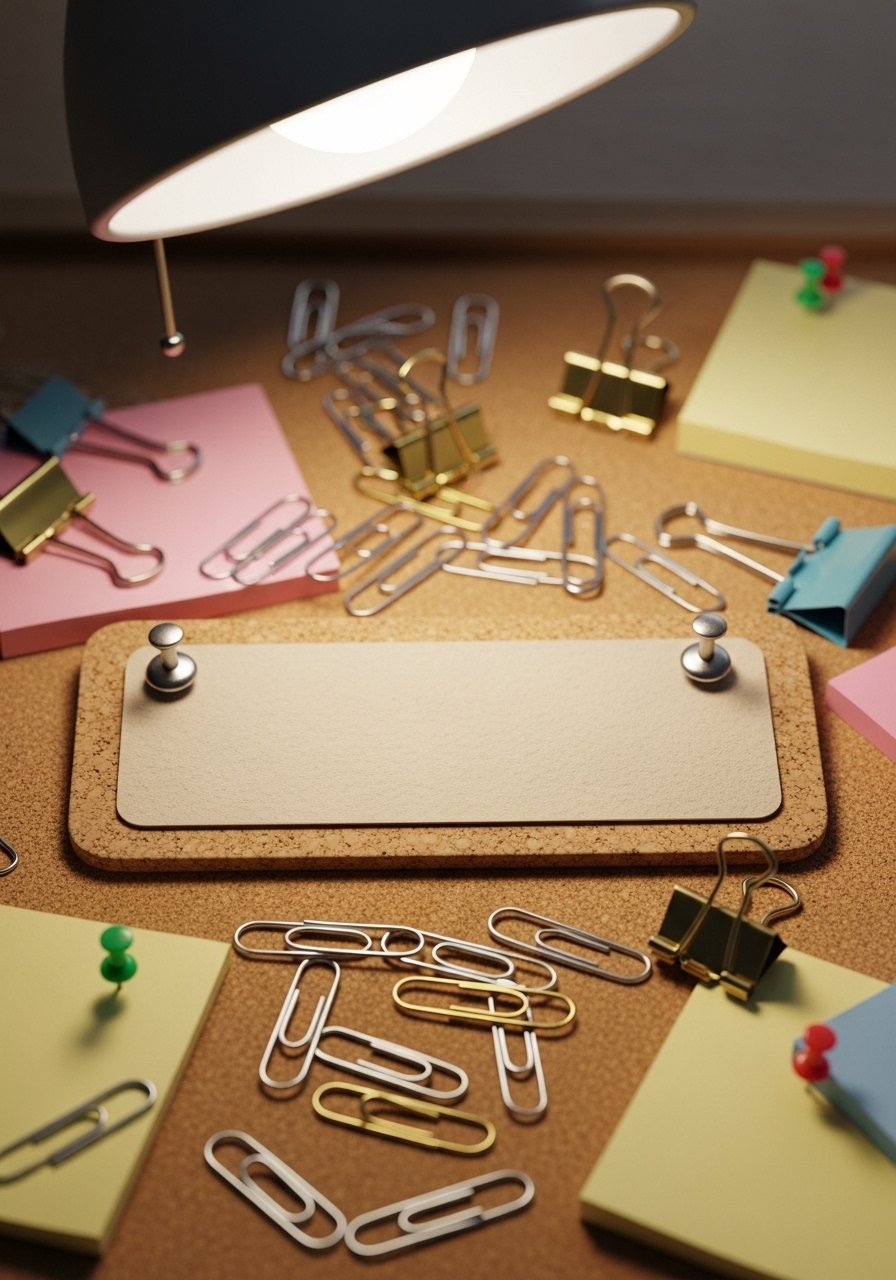
I made a cork-backed name plate to pin on a corkboard above my desk, mixing function and style. Cut a 4×6 beige card and glue a 1/8-inch cork sheet to the back. It becomes a pin-friendly label for zones or people. Budget under $15. Mistake to avoid is making it too thin so pins pop through. Use 1/8-inch cork. This is great next to the minimalist acrylic plate for a layered office setup. I used self-adhesive cork sheets.
Fabric Patch Beige Name Plate For Soft Playroom Styling

Sew a beige fabric patch and iron it onto baskets or canvas bins. I used 4×6-inch cotton canvas patches and heat-bond adhesive so even a beginner can attach them. It makes storage feel intentional and matches textiles in the room. Budget is under $10 per patch. People often skip edge stitching and after a few washes the patch frays. A quick zigzag stitch keeps it neat. This technique links well with the linen-wrapped plate from earlier for a textile theme. I bought heat-bond interfacing.
Concrete-Look Beige Plate For Industrial Kitchen Counter

For a kitchen where metal and stone dominate, a thin concrete-look beige plate softens things. Use concrete-effect paint on a wood base or buy a tile, then seal it. Keep it small, around 3×8 inches, so it reads as accent rather than a trivet. Budget from $20 to $40. The common mistake is skipping a sealer, which stains easily. This idea plays nicely near the brass trim plate if you want mixed surfaces. I used concrete-effect paint.
Simple Canvas Patch For Living Room Gallery Wall Addition

I started adding small beige canvas name plates into gallery walls as a personal anchor. A 5×7 canvas stretched on mini stretcher bars, painted beige, and lettered in charcoal balances photos and art without competing. Budget around $15 per canvas. Mistake people make is using too many small pieces that clutter the visual rhythm. For balance, follow a rule of three and keep at least one larger piece. This idea pairs with the hand-painted script option for consistent lettering. I used mini canvas panels.
Engraved Bamboo Beige Plate For Bathroom Vanity Labeling
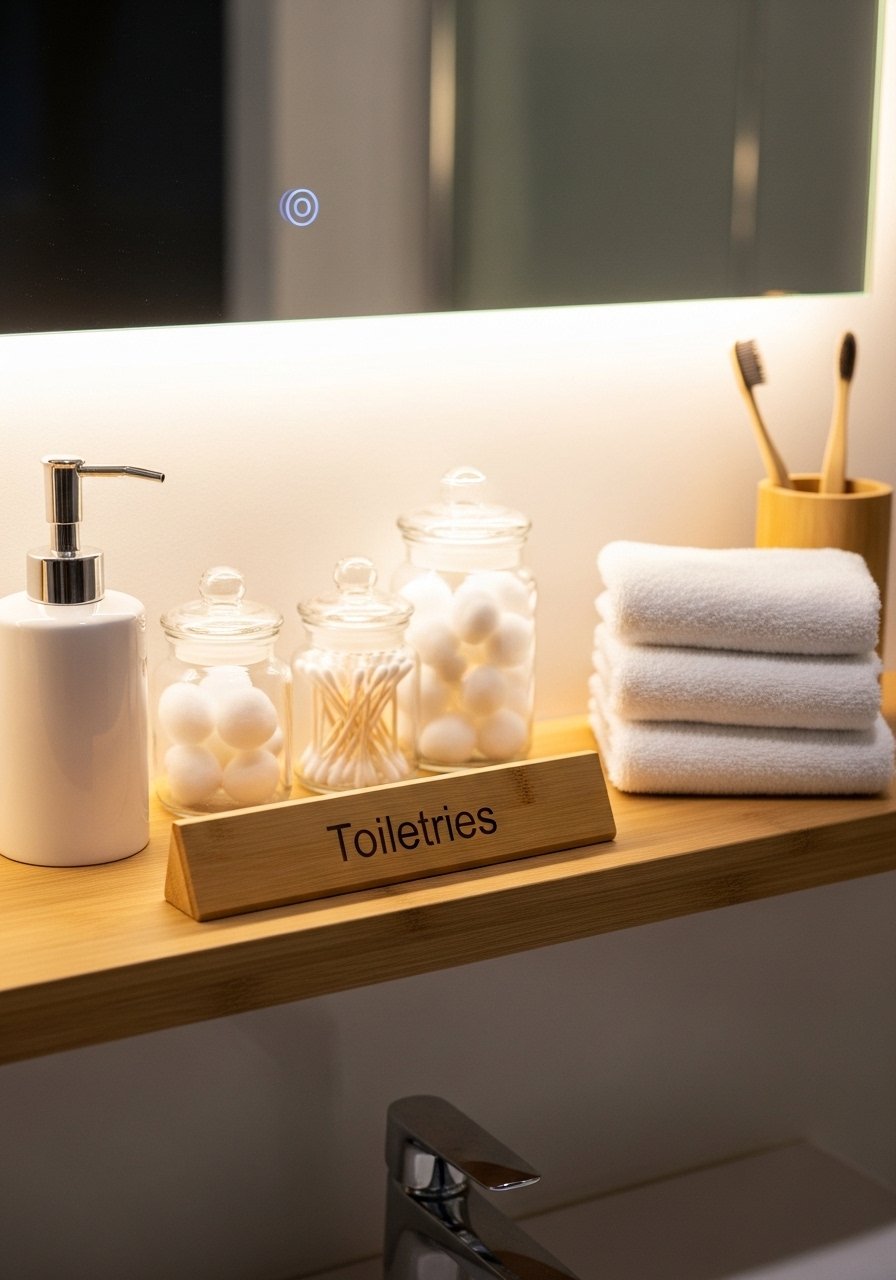
I engraved bamboo blanks for bathroom storage, labeling sections like "Face" and "Hair." Bamboo resists moisture better than raw wood. Make plates 1×6 inches for jars and bottles. Budget around $20 including a small engraving tool or a sharp awl for hand carving. A frequent mistake is using a heavy finish that looks plastic. Use a matte oil instead. These are great for shared bathrooms or labeled drawers, and they stack visually with the cork-backed plates I used at my desk. I ordered bamboo name plate blanks.
Mirror-Backed Beige Name Plate For Dressing Area Glow

I glued a thin mirror piece to a beige-painted wooden backing for a little reflective pop on my dressing table. It catches light and makes the area feel brighter. Keep the mirror no larger than 4×6 inches so it does not function as a full mirror and stays decorative. Budget is $15 to $30 depending on mirror source. Mistake to avoid is using a heavy mirror without a secure hang. I paired this with the linen-wrapped plate in the nursery for material contrast. I used small craft mirrors.
Magnetic Beige Name Plates For Refrigerator Command Center
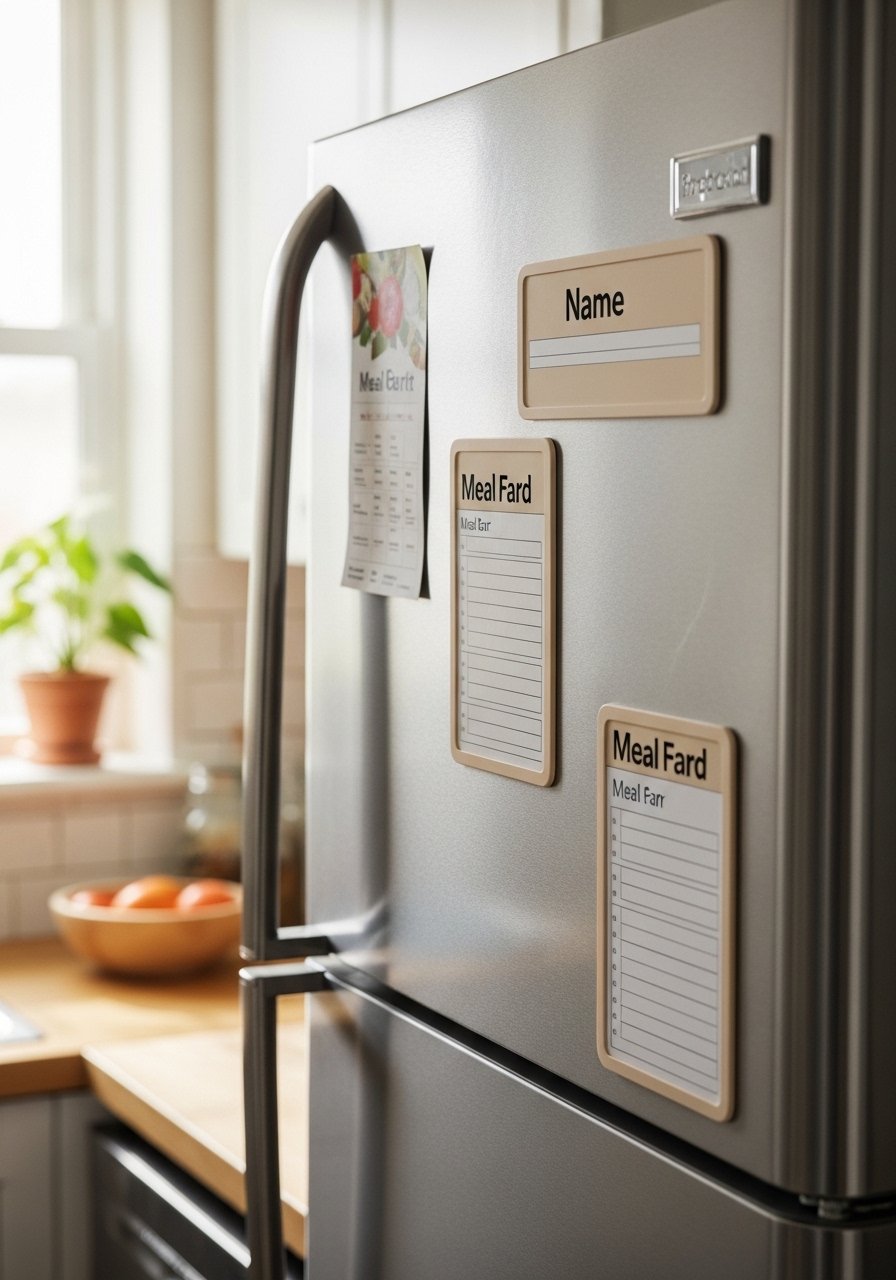
Magnetic plates make labels easy to move. I cut 2×4-inch beige acrylic squares, attached thin magnets, and used them to label lunchboxes and chore cards. They cost about $20 for materials and you can swap names seasonally. Common mistake is using weak magnets that slide off. Use at least 1/8-inch neodymium strips. These work well near the cork-backed plate idea for a full command center. I recommend thin magnetic strips.
Peel-And-Stick Beige Labels For Rental-Friendly Closets

If you rent or avoid nails, peel-and-stick beige labels are a lifesaver. I used matte adhesive vinyl cut to 2×6 inches and stuck them to shelf edges to label zones. They hold well and remove cleanly with a heat gun. Budget is under $10 for sheets. Mistake to avoid is placing them on dusty surfaces. Clean with alcohol first. This is a quick win if you tried the fabric patch idea and want less permanent options. I used matte adhesive vinyl sheets.
Your Decor Shopping List
Textiles
- Honestly the best $40 I have spent. Chunky knit throw in cream 50×60 inches, great drape
- For the linen-wrapped name plate, natural linen fabric 1/2 yard
Wall Decor
- Mini canvas panels pack of 5, 5×7 inches
- Brass picture ledges 12 inches, slim profile
Tools & Materials
- Raw basswood blanks 3×10 inches
- Artist round brushes set assorted sizes
- Air-dry clay pack 2 lb
- Heat-bond interfacing for fabric patches
Hardware & Extras
- Self-adhesive cork sheets 12×12 inches
- Thin magnetic strips adhesive backed
Budget Finds / Alternatives
- Matte adhesive vinyl sheets for rental-friendly labels
- Small craft mirrors assorted sizes
Notes: Similar finds often show up at Target or HomeGoods, but these links are the easiest to order in small quantities.
Shopping Tips
Measure twice, cut once. For name plates, stick to the 3×10 or 2×8 rules for visibility. Raw basswood blanks save time.
Buy a small set of artist brushes and keep one for lettering only. Clean brushes extend their life and keep fonts crisp.
Grab frosted acrylic sheets if you want a modern desk plate. Frosted hides fingerprints better than glossy.
Curtain trick for scale: hang art and plates as if the wall were taller. Mini canvas panels look deliberate when grouped high.
If you have kids, choose washable materials. Matte adhesive vinyl sheets wipe clean and remove later.
Mix one handcrafted piece with two store-bought items. For example, pair a handmade linen-wrapped plate with a purchased brass ledge and a small mirror to avoid a cluttered look. Brass picture ledges
Frequently Asked Questions
Q: What size should a beige name plate be for an entry console?
A: Aim for roughly one third of the console length and no more than the depth. A 3×10-inch plaque often reads perfectly without overwhelming a tray or lamp.
Q: Can I make name plates renter-friendly?
A: Yes. Peel-and-stick vinyl or magnetic plates are great for rentals. Clean surfaces first with alcohol so the adhesive holds. Heat helps remove them cleanly later.
Q: Which material wears best in humid rooms like bathrooms?
A: Bamboo or sealed faux-marble topers handle moisture better than raw wood. Use a matte oil finish, not glossy lacquer, to avoid a plastic look.
Q: How do I make lettering look professional without fancy tools?
A: Use light pencil guidelines, a small round brush, or a paint pen, and work in one steady hand. If you want perfect lettering, print a template and trace it through transfer paper.
Q: Can I mix these name plates with existing gallery walls?
A: Absolutely. Think of small beige plates as resting points. Place one within a group to balance color and texture. Keep at least one larger piece nearby so the eye has a focal point.
Q: What common mistakes should I avoid across these projects?
A: Wrong scale, flimsy materials, and skipping surface prep cause most issues. Clean surfaces, choose proper thicknesses, and keep letters legible at normal viewing distance.
Q: Are faux materials acceptable or should I use real wood and leather?
A: Both work. Faux-marble and acrylic often give more durability for low budget projects. Real materials age better and feel richer, but they cost more. Choose what fits your lifestyle and how much wear the plate will face.