

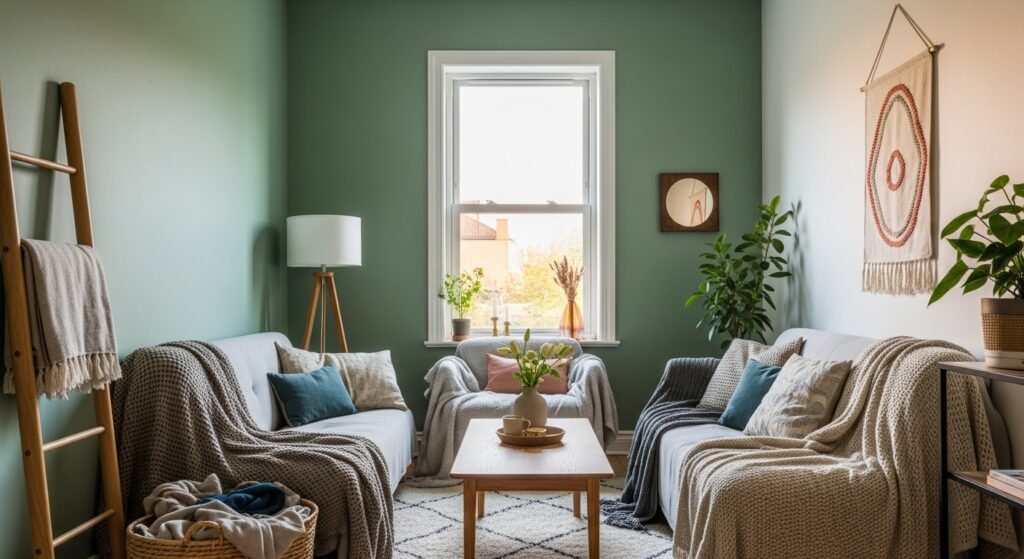
My living room had nice furniture but it still felt like a waiting room. Took me embarrassingly long to figure out it was missing texture. Every surface was smooth, every color was flat, and nothing invited you to actually sit down. After adding sage green in small ways and a handful of tactile pieces, the whole place calmed down and finally felt intentional.
These ideas lean cozy-modern with a hint of cottage charm. Most looks are doable on a $20 to $150 spread, with one or two splurges if you want them. They work for living areas, tiny bedrooms, kitchens, and even outdoor porches on compact homes.
Layered Neutrals with Sage Accent for Small Living Rooms
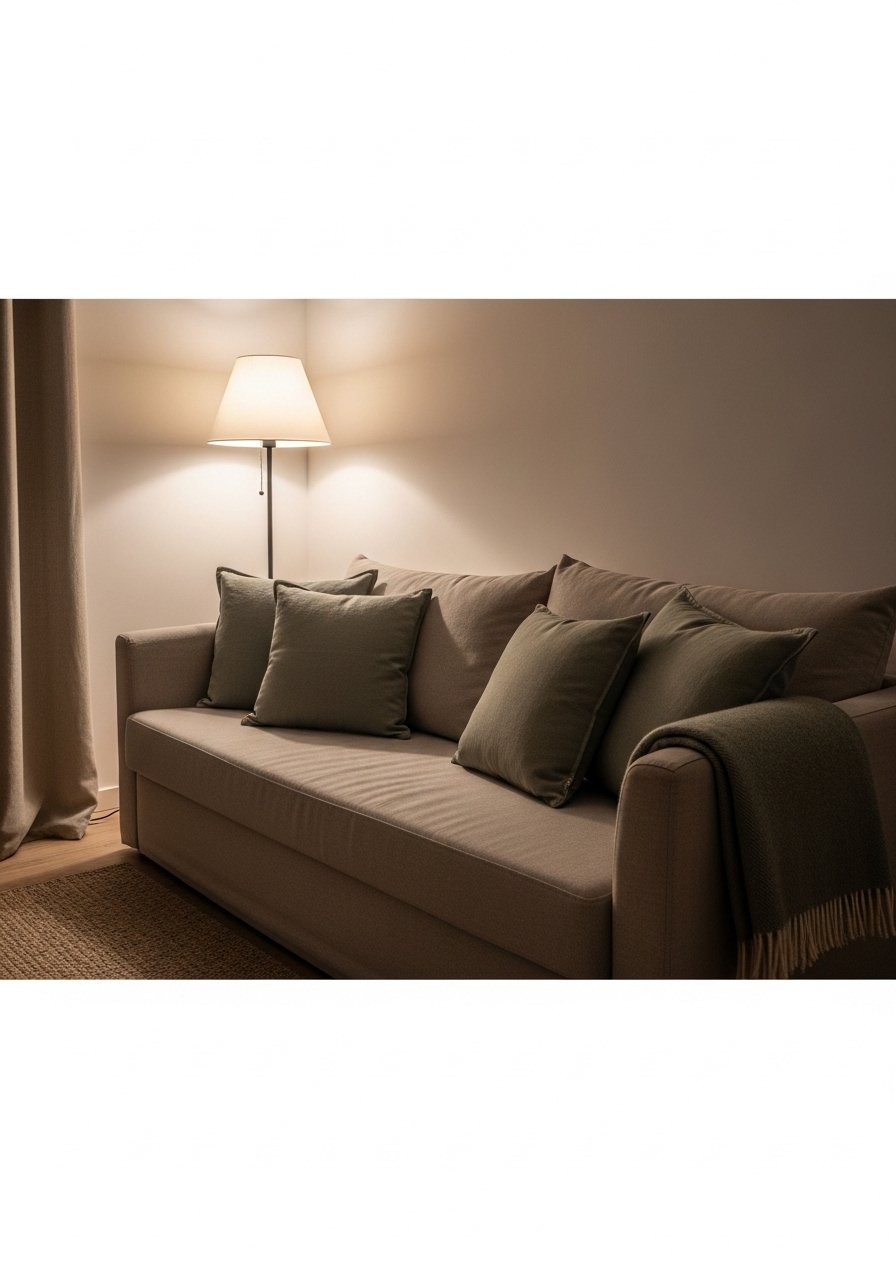
The moment I swapped one cream pillow for a 22-inch sage linen cover, the whole sofa stopped disappearing into the walls. Keep the palette 80 percent neutrals and 20 percent sage. Visually that ratio keeps the color intentional and not overwhelming in a tight space. Budget here is friendly, under $50 for pillow covers and $35 to $60 for a chunky throw. I used 22-inch linen pillow covers in sage and layered them with a down insert. A common mistake is matching every pillow exactly. Mix a textured knit, a smooth linen, and one printed piece to avoid a flat look. Pro tip, scale matters in a tiny home. Use one oversized pillow per end and a smaller lumbar in the middle.
Sage Gallery Wall with Mixed Frame Finishes for Entryways
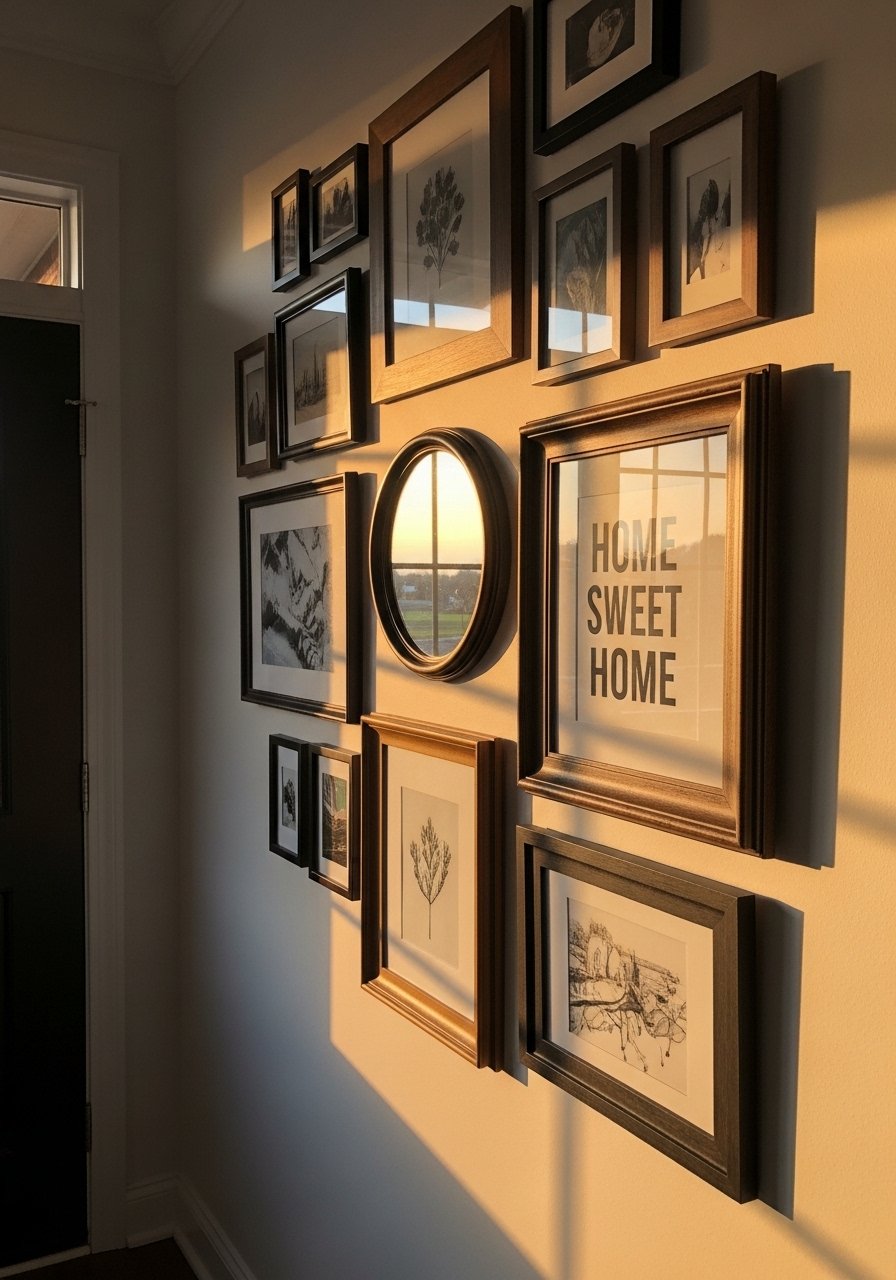
I hung a small gallery of pieces with different frame finishes and the entry felt designed instead of slapped together. Mixing warm wood with matte black and brass keeps sage from reading too sweet. For a tiny hallway, choose three medium frames rather than a dozen tiny ones. I picked mixed metal frames, set of 3 so I could swap art without rehanging nails. Budget is under $75 if you DIY prints. People overfill tiny walls as if size equals impact. Trust negative space. A detail most guides miss is the height ratio: hang the center of the grouping 58 to 62 inches from the floor for human eye level in small spaces.
Floor-to-Ceiling Curtains to Make Ceilings Seem Taller

Most people hang curtains at the window frame and the room ends up squashed. Move the rod four to six inches above the trim and pick 96- or 108-inch panels depending on ceiling height. The extra length reads like a visual vertical push. I used linen curtains 96-inch in a neutral so the sage accents elsewhere could breathe. Expect $30 to $70 per panel. A common mistake is picking sheer panels when you need privacy and insulation in a tiny home. For a sage-featured room, neutral heavy curtains prevent color overload while still letting the green sing. If you have nine-foot ceilings, go 108-inch and let them kiss the floor.
Compact Kitchen Open Shelving with Sage Backing
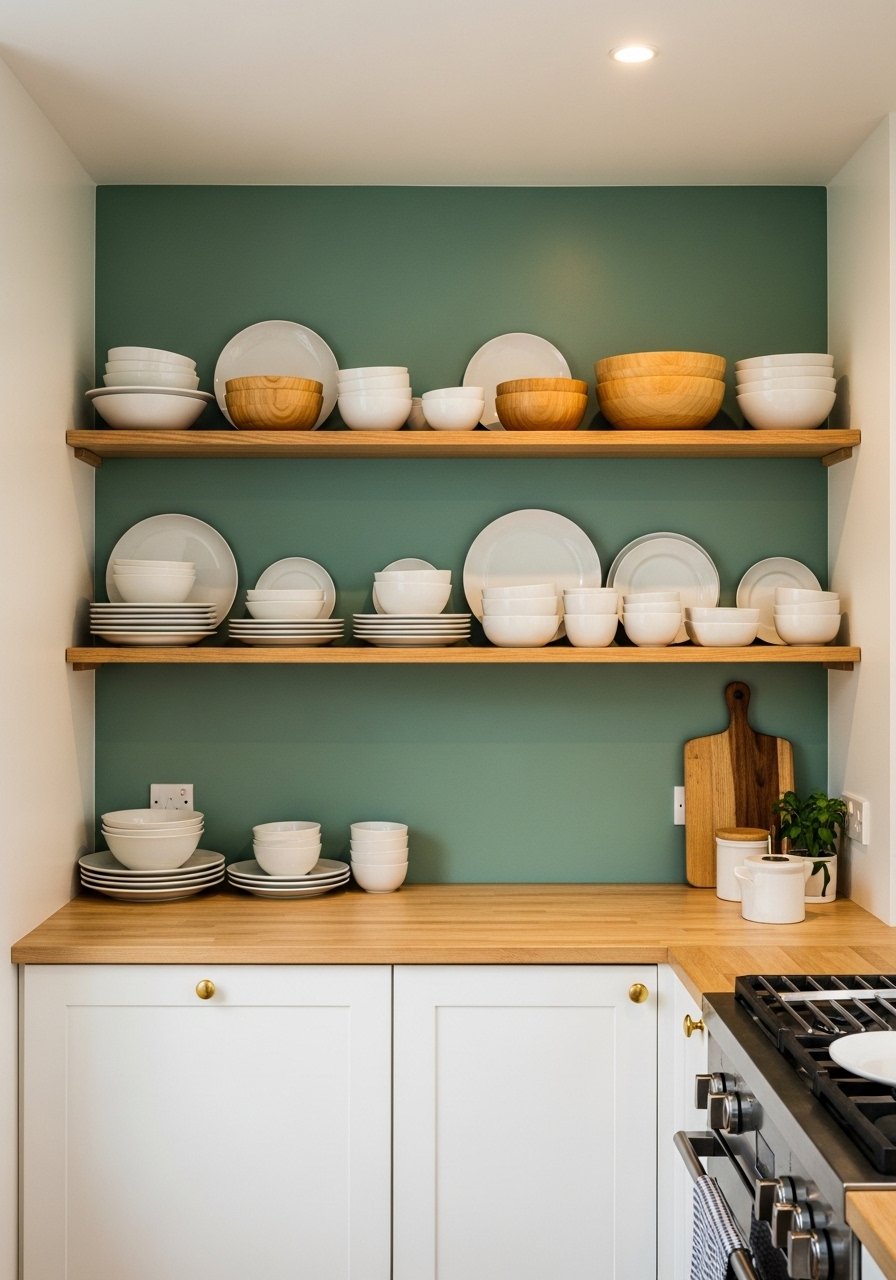
Painting the wall behind open shelves sage makes white dishes pop and hides a cluttered shelf better than plain white. I painted a 12-inch strip behind two shelves and suddenly the kitchen looked curated. This works great in tiny homes where cabinets eat visual space. Budget is small, under $40 for paint plus inexpensive floating brackets if you add shelves. Common mistake, loading shelves like a store display. Instead, use a 2:1 ratio of functional items to decorative ones. A tiny detail I learned the hard way is to keep plates and bowls in consistent colors so the sage background reads as a deliberate design choice, not a hideout for mismatched dishes.
Oversized Mirror to Brighten Dark Corners in Cozy Bedrooms
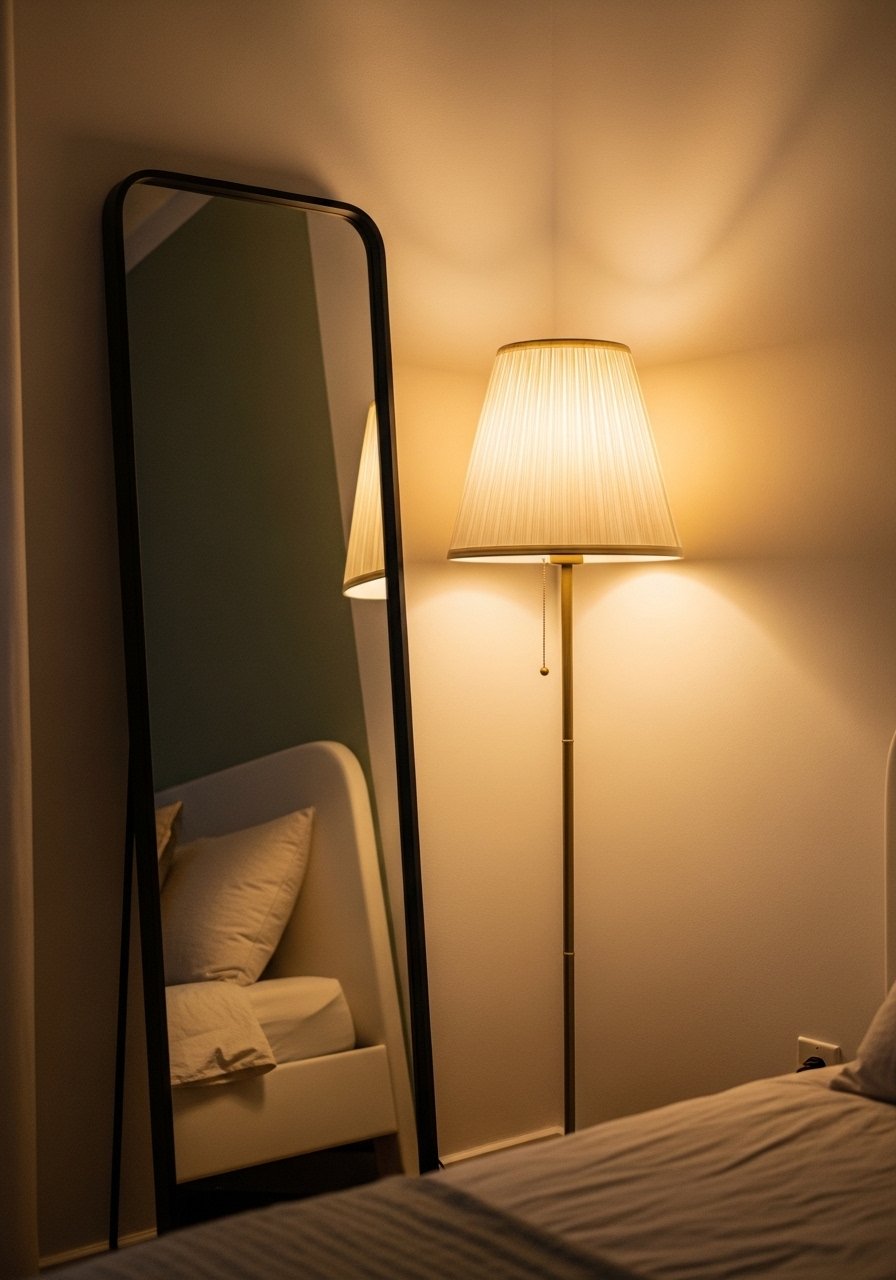
I propped a 30 by 50-inch rounded mirror against a wall and the room felt twice as deep. Mirrors do three things in a tiny home. They reflect light, they add perceived space, and they double the presence of your best color choices, so sage feels intentional. A good budget mirror falls between $60 and $180. I linked a simple, warm metal frame mirror for under $100 large leaning mirror. People often hang mirrors too high. The bottom edge should be roughly 6 to 10 inches off the floor for a leaning placement that looks relaxed. Pair this with the curtain trick from earlier and the effect becomes layered and lived in.
Fold-Down Desk Nook with Sage Accent for Work or Crafting
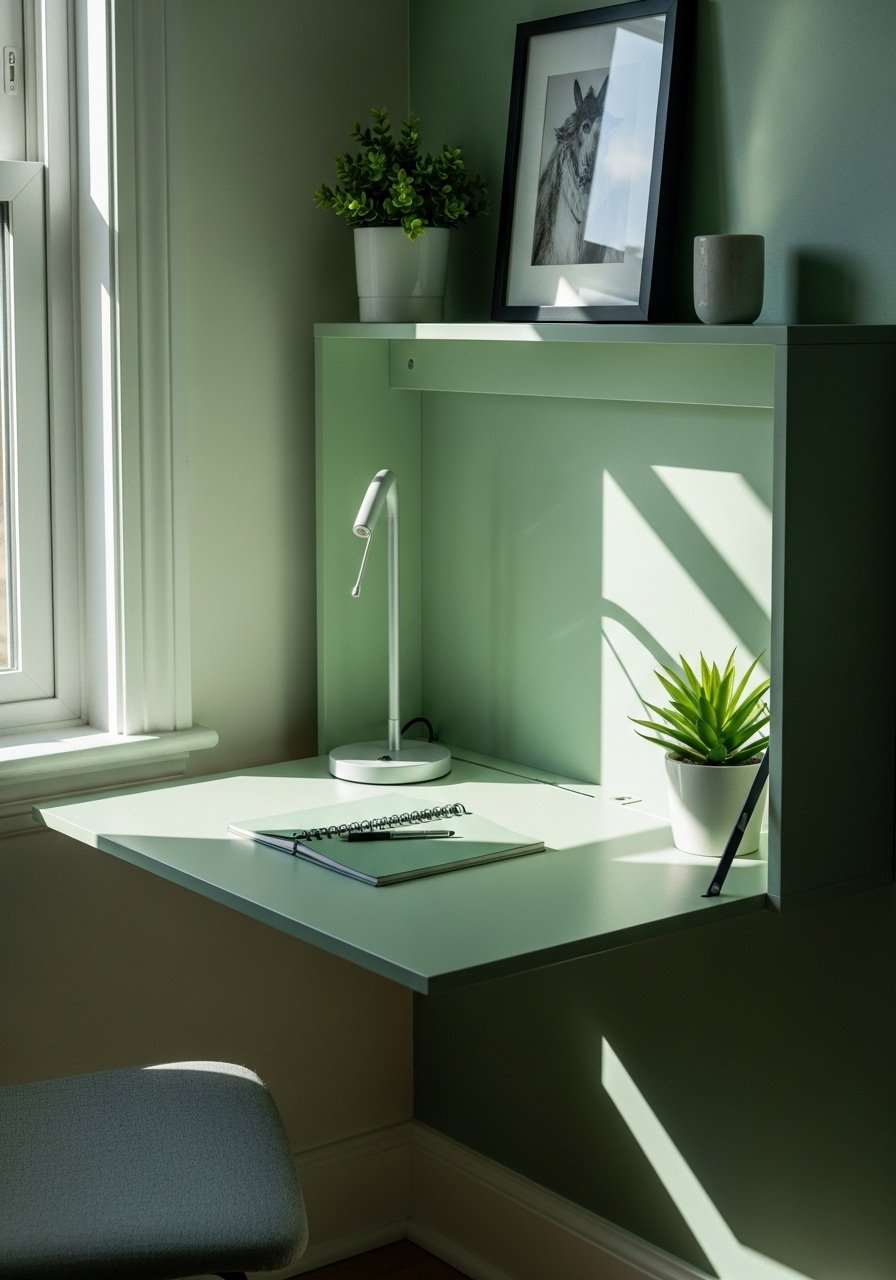
When my spare bedroom became a guest room, I installed a fold-down desk against a sage-painted panel. It gives you a place to work and folds away to keep the room guest-ready. The visual trick is the sage backboard. It anchors the space so the desk does not look like a random add-on. Budget ranges $40 to $200 depending on the mechanism. I used a simple wall-mount bracket and a salvaged wood top plus a compact task lamp, linked here fold-down desk bracket set. A frequent mistake is making the workspace too small to actually use. Aim for at least 28 inches wide if you plan to use a laptop and a notebook. This also pairs well with the gallery wall idea nearby.
Pocket-Sized Porch Styling with Sage Planters and Layered Rugs
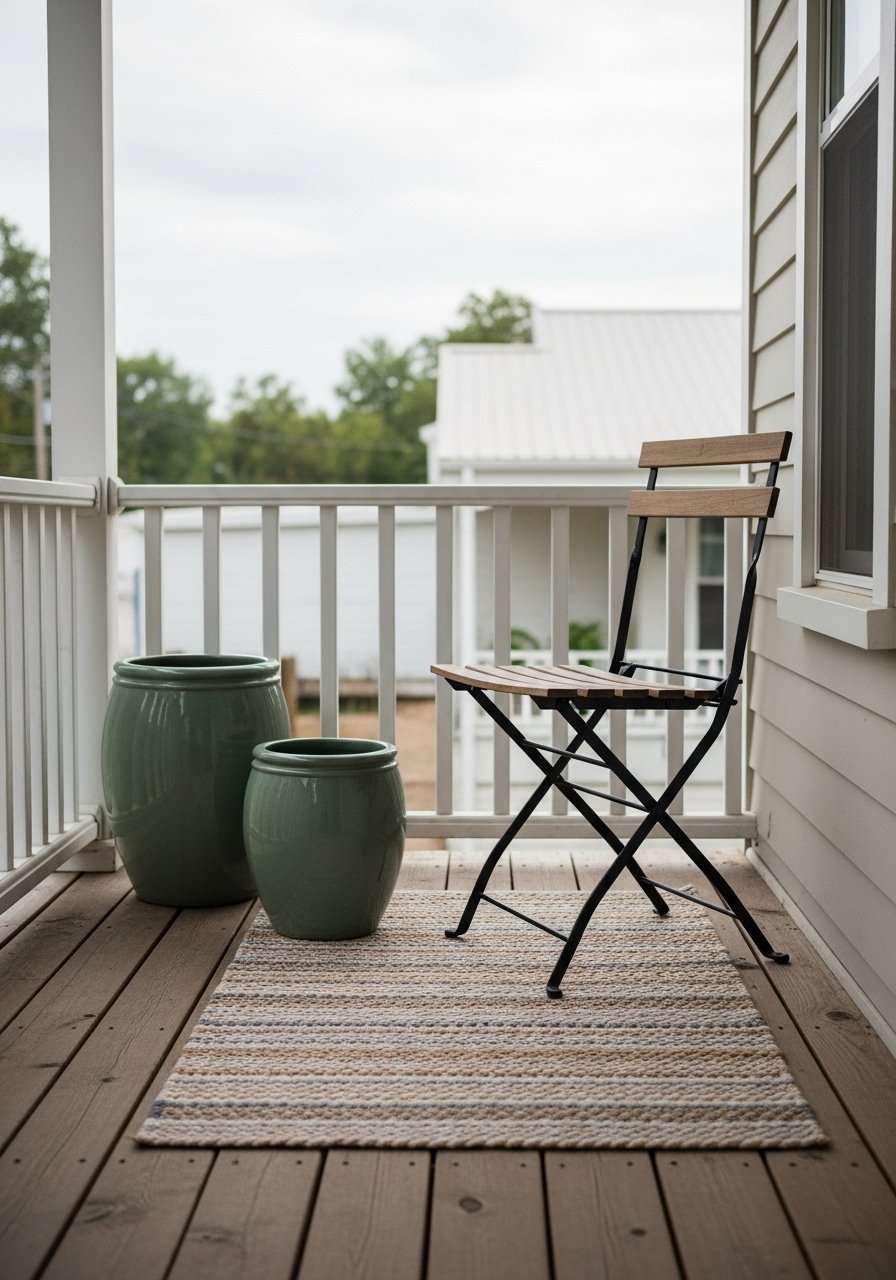
My porch was a cluttered catchall until I committed to two matching planters in sage and a single long runner rug. Matching containers read tidy in a narrow space. Use one tall plant and one trailing plant to add vertical interest without crowding. I bought ceramic outdoor planters set in sage and a weatherproof runner for under $120 total. The mistake is buying five tiny pots. One or two larger elements make more impact. A detail people skip is the runner width. For tiny porches, a 24- to 30-inch rug keeps traffic flow and still frames the door.
Multiuse Seating with Sage Upholstery for Tiny Dining Areas
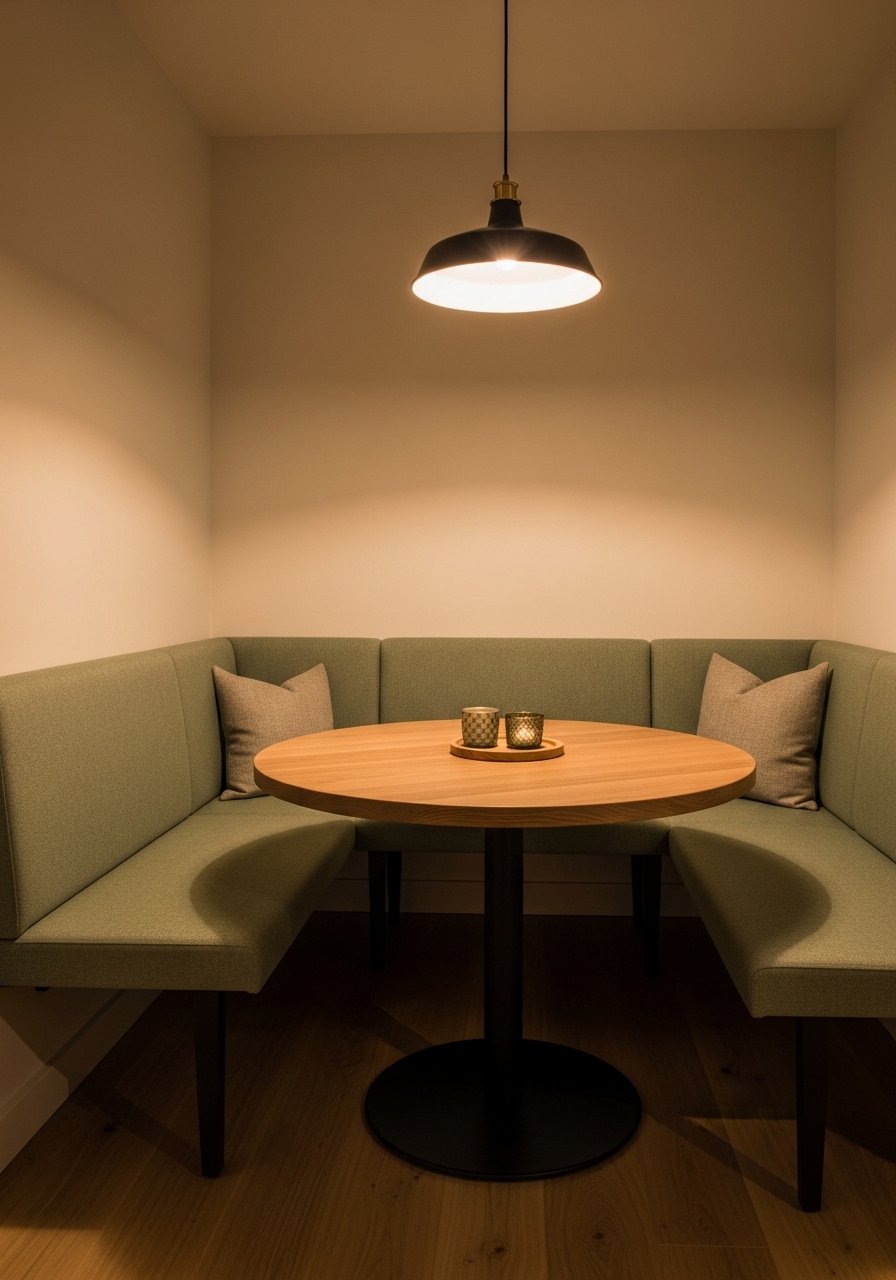
Swapping two dining chairs for a small banquette in sage fabric made my breakfast corner feel like a room instead of a spare seat. Upholstered seating reads warmer than wood, which is nice in a tiny home where everything is up close. Expect $150 to $500 depending on custom versus ready-made. I found an affordable bench cushion in sage velvet that fits a 42-inch banquette. Common mistake, picking too low a back. Even a 12-inch back cushion adds support and makes the dining spot feel intentional. This idea plays well with the layered neutrals section since you can repeat fabrics and pillow sizes.
Minimal Green Accent Wall for Tiny Bedrooms that Sleep Hot
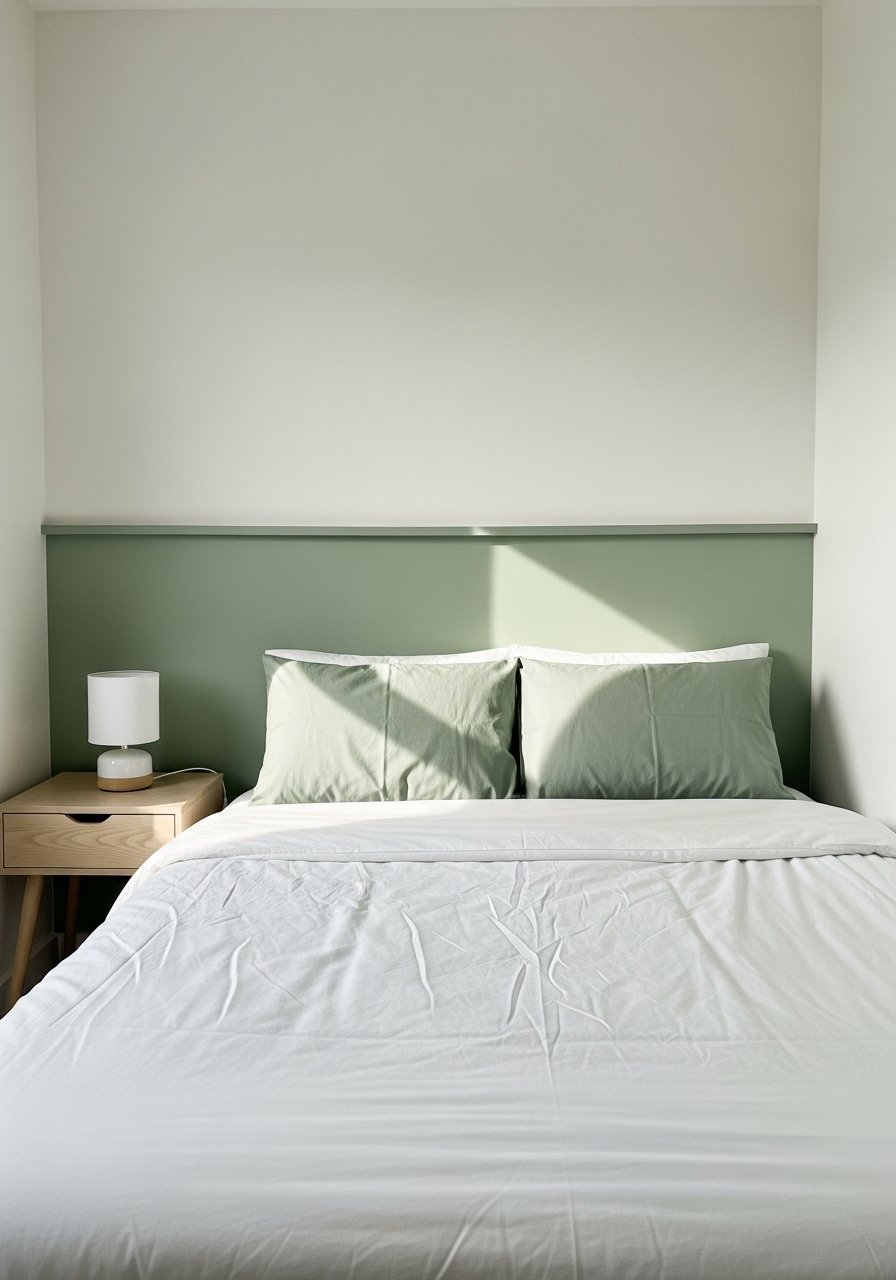
I painted only the top third of a bedroom headboard wall sage and left the lower portion white. The partial accent avoids making the room feel darker, which happens in tiny bedrooms that already run warm from poor airflow. This method cuts paint cost and keeps the ceiling light. A pint of quality paint plus sample testing runs $15 to $40. For touch-ups I used a small angled brush and a mini paint roller kit so edges stayed crisp. Most people expect a full wall or nothing. The scaled approach gives color without heat, and it pairs with neutral bedding to keep the sleeping area calm.
Your Decor Shopping List
Textiles
- Honestly the best $40 I have spent. 22-inch linen pillow covers in sage, set one for each sofa end
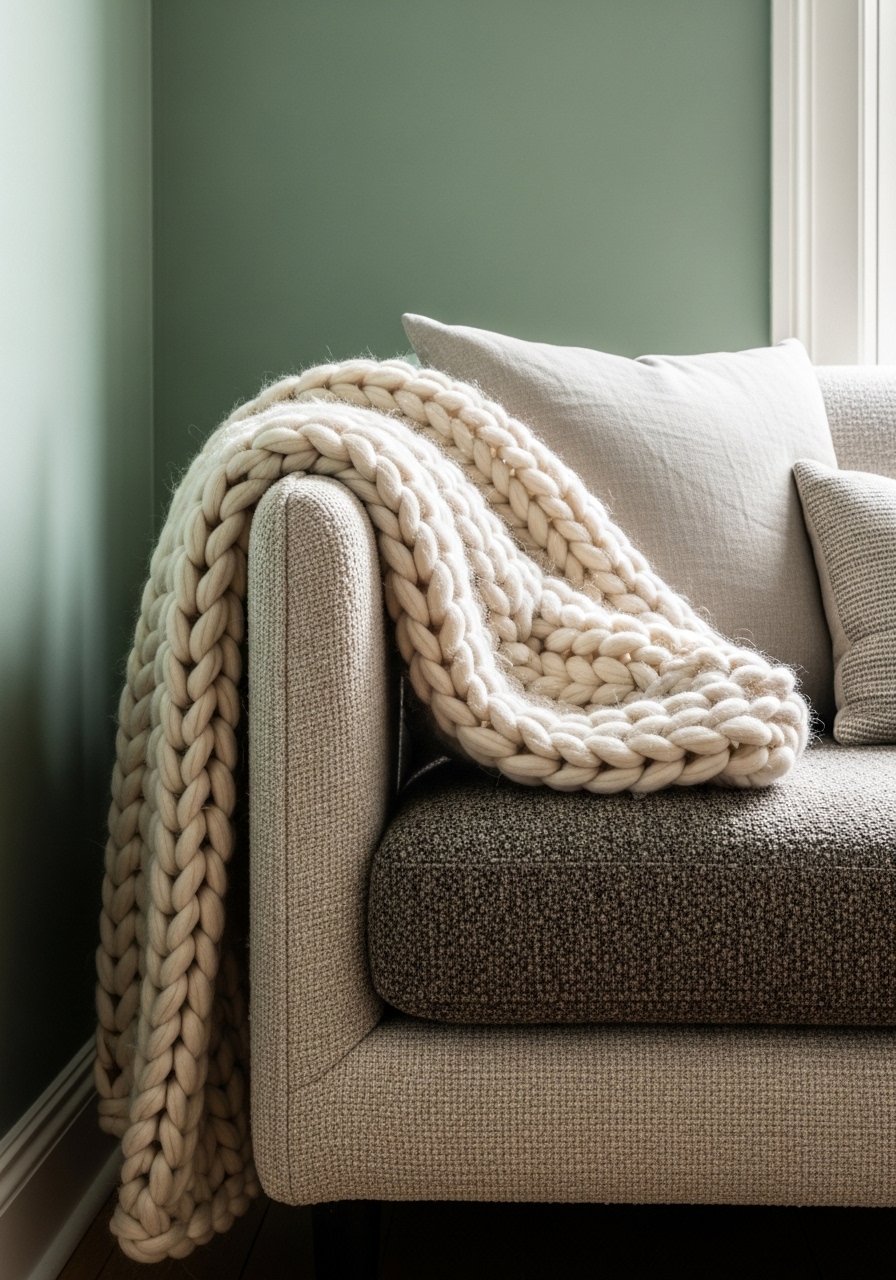
- Chunky knit throw in cream (~$35-55). Drape over the arm for instant texture
Wall Decor
- Found these while looking for something else. Mixed metal picture frames set (~$25-45)
- Large leaning mirror ($60-120), great for brightening corners
Lighting
- Compact task lamp brass finish (~$30). Small footprint, big impact on work nooks
Plants
- Ceramic outdoor planters set in sage (~$40-80) for porch or balcony
Budget Finds
- Linen curtains 96-inch (~$30-50 per panel). Great renter-friendly option
Shopping Tips
White oak beats dark wood in current feeds. White oak floating shelves look current and lighten small kitchens
Grab velvet bench cushion in sage for $45. Swap it seasonally and the dining nook feels fresh
Curtains should puddle or kiss the floor, never hang halfway up. Linen curtains 96-inch are right for standard nine-foot ceilings
One tall plant beats five tiny succulents for scale. Try a faux fiddle leaf fig 6ft where light is limited
Frequently Asked Questions
Q: Can sage green make a tiny room feel smaller?
A: It can if you paint every surface. Use 20 percent sage to 80 percent neutrals or paint a partial accent to keep the feeling open. Try the headboard strip method from the last idea if you worry about shrinking the room.
Q: What rug size works in a tiny living area with layered rugs?
A: Go slightly bigger than you think. For a tiny living area aim for at least 5×8 with a smaller 3×5 layered on top for texture. Keep front legs of the seating on the base rug so the arrangement reads intentional.
Q: How do I mix metals without it looking messy?
A: Limit to two metal finishes and repeat them. A brass lamp and a warm metal mirror plus some black picture frames create cohesion. I like mixing a warm metal with matte black for contrast and balance.
Q: Are faux plants acceptable for tiny porches or low-light nooks?
A: Yes. Use one taller faux like a fiddle leaf fig for height and one trailing faux for texture. Place them in sage-toned planters to tie them to the palette and avoid the look of random greenery.
Q: What is the easiest low-budget way to add sage without painting?
A: Swap in pillow covers, a small throw, and one planter in sage. These items are under $100 total and give the same calming effect as paint without commitment.