


My living room had nice furniture and decent lighting but it still felt like a waiting room. Took me embarrassingly long to figure out it was missing texture and useful spots to drop things. Making a row of simple hooks fixed that, and I kept finding little tricks that saved time, money, and the wall finish.
These ideas lean modern farmhouse with a touch of Scandinavian simplicity. Most projects run under $50, with a few options closer to $100 for hardware or nicer wood. They work for entryways, mudrooms, bedrooms, or any tight spot where you need something that actually holds up.
Raw Dowel Hooks For A Real Entryway Vibe
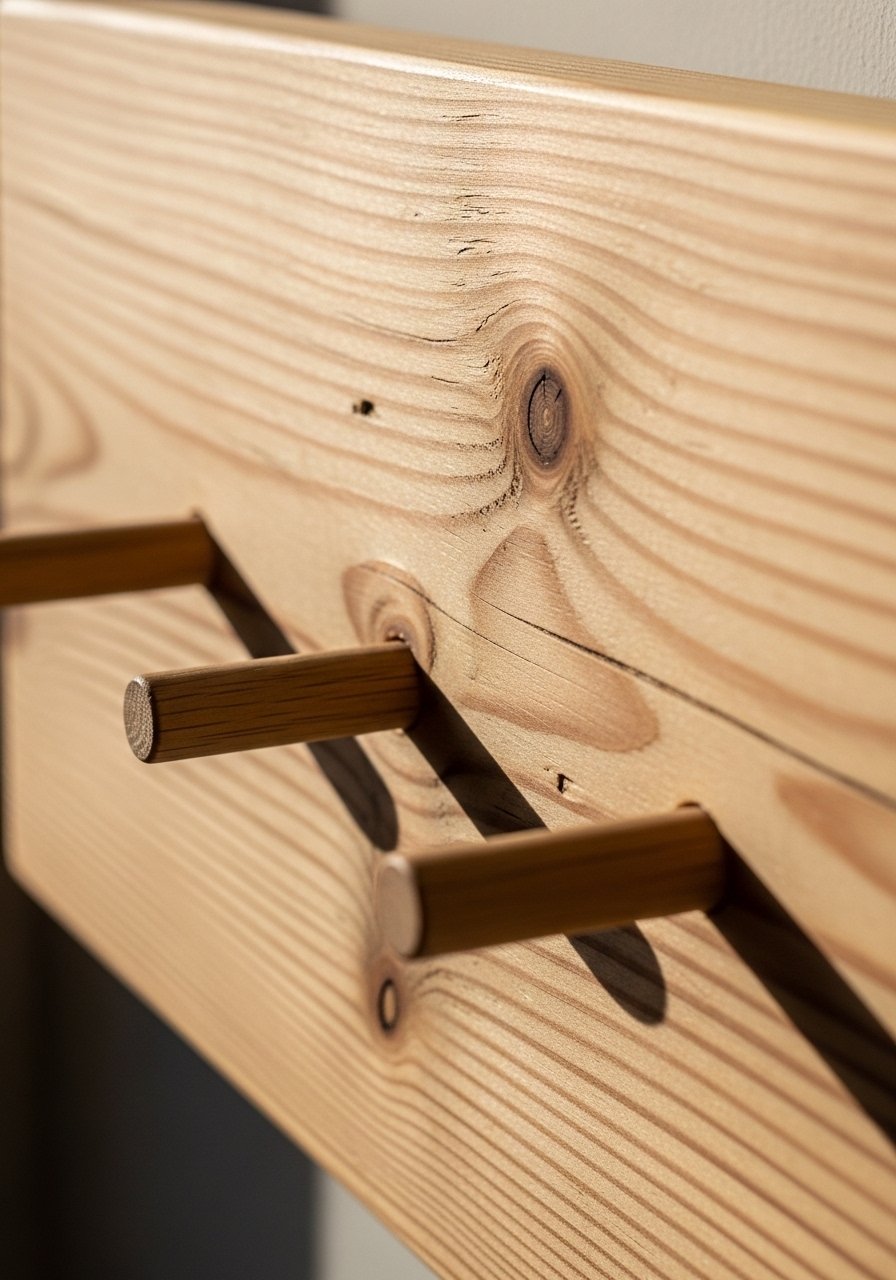
I started with a 1×6 board and 3-inch dowel pieces for coats and tote bags. Cut dowel rods to 3-5 inch pieces so they are sturdy enough to hold bags without snapping. Drill a pilot hole halfway into each dowel slot so the screw goes in clean and the wood does not split. I used double-ended screws and countersunk them into the block so the dowel sits flush. For the finish I stained the board but left the dowels raw so the grain shows. If you rent, swap the studs for toggle bolts or heavy-duty anchors and patch later.
Speckled Clay J-Hooks For A Minimal, Scandinavian Corner
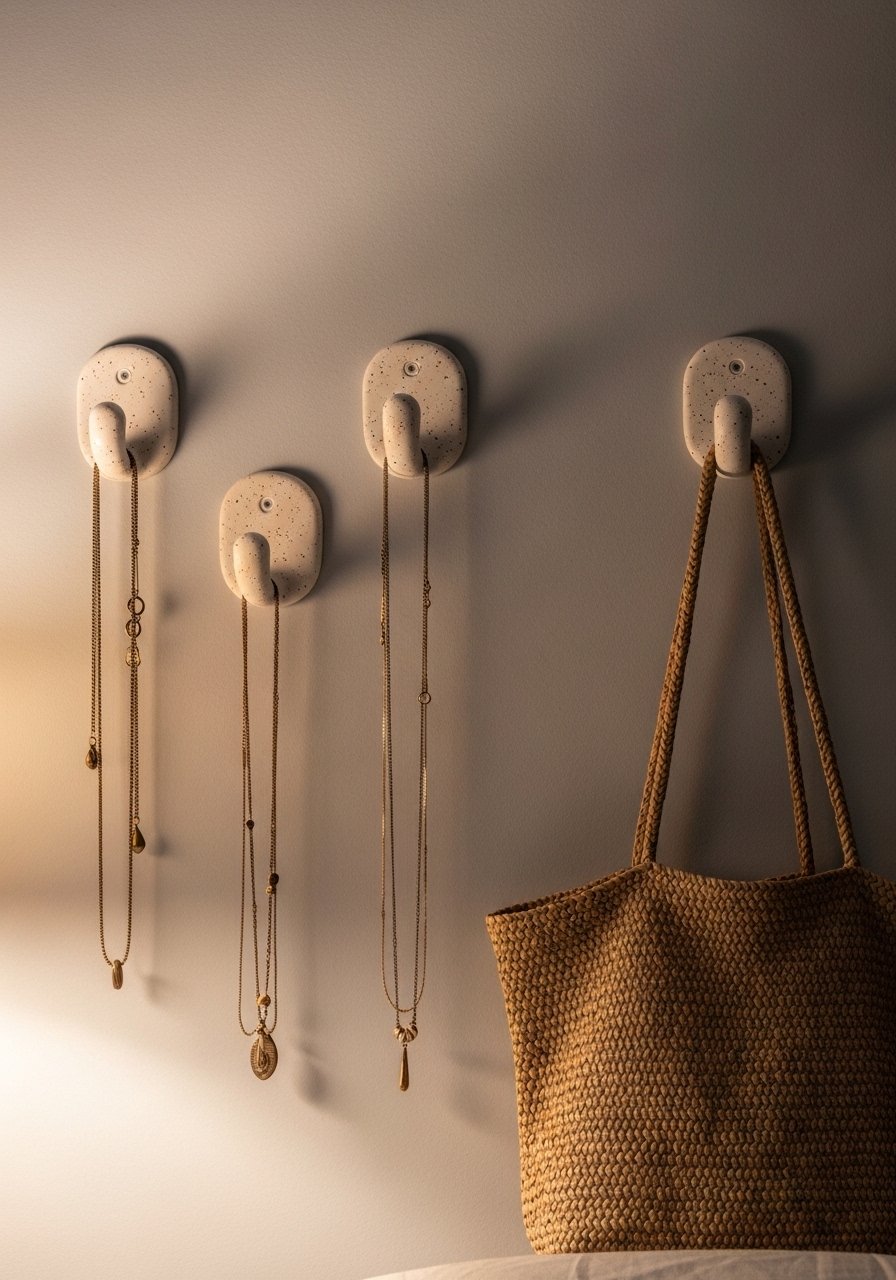
Making clay hooks is one of the quickest wins I have found. Roll polymer or air-dry clay into a 1/2 inch rope then bend into a J, curve the end so keys or hats do not slide off, and bake at 275F for 20 minutes if you use polymer clay. Paint tiny black speckles with a toothpick so they look built-in, not painted-on. Mount with small drywall anchors for light items or with screws through the thicker base for heavier use. Most folks grab wood scraps over metal every time for that warm feel, but clay hides into the wall in a way wood sometimes cannot.
Geometric Multi-Size Block Hooks For Visual Interest

I used assorted 2- and 3-inch blocks to create a staggered pattern that solves the common “everything is the same height” problem. The trick is to vary the block depth by about 1/2 inch so the shadows read intentional. Drill pilot holes into the center of each block before screwing in the peg to stop splitting. This idea is budget friendly, about $20, and pairs well with a slim console under it. A common mistake is spacing hooks too close. Keep at least 4 to 6 inches between items so coats and bags do not overlap.
Toggle Bolt Wood Hooks For Renter-Friendly Strength

My upstairs rental wall would not hold anything until I learned about toggle bolts. Drill a 5/8 inch hole, fold the toggle, thread it, and it locks behind the drywall so it will not pull out. Toggle bolts let you hang heavier coats without chasing studs. Use a 3-5 inch dowel or small wood block attached to the toggle for a clean look. Renters hunt no-drill hangs more than ever now, but toggles give you the strength of a stud without the luck. Patch the hole neatly when you move out and no one will notice.
Raw Wood Pegs On Single Board For A Modern Farmhouse Look

I lined up pegs on one board and mounted that to studs. Raw wood over painted finishes better with daily use and hides tiny dings, so I left everything unfinished and oiled it lightly. Drill pilot holes in the board first, then screw the pegs into the board instead of the wall. The board spreads the load so the pegs feel solid. This is a slightly higher skill job, around 45 minutes, and it reads farmhouse without being fussy. If you have pets, this is durable enough for leashes and collars without scratching as much as metal.
Painted Two-Tone Dowel Hooks For a Soft Pop
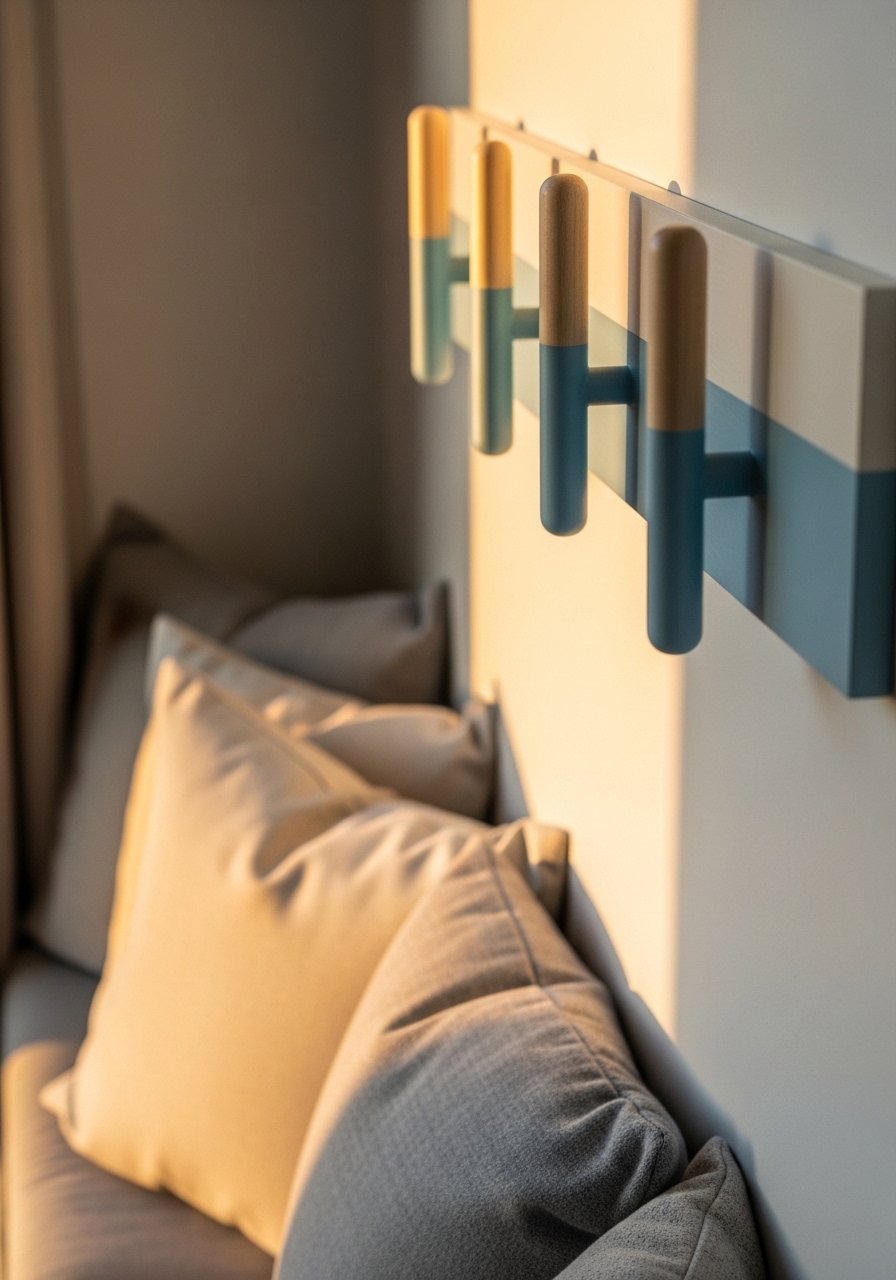
Color can be subtle and useful. Paint the backboard a neutral and the dowels a complementary tone in a roughly 80/20 ratio for interest. I used 4-inch dowels so heavier bags do not sag, and the two-tone treatment makes the hooks feel intentional. A common mistake is painting everything the same color and losing the hook silhouette. This costs about $15 and works on bedroom or entry walls. If you rent, use anchors or hang the board with a French cleat so you can swap it cleanly.
Foldaway Flip-Down Coat Rack For Tiny Entryways
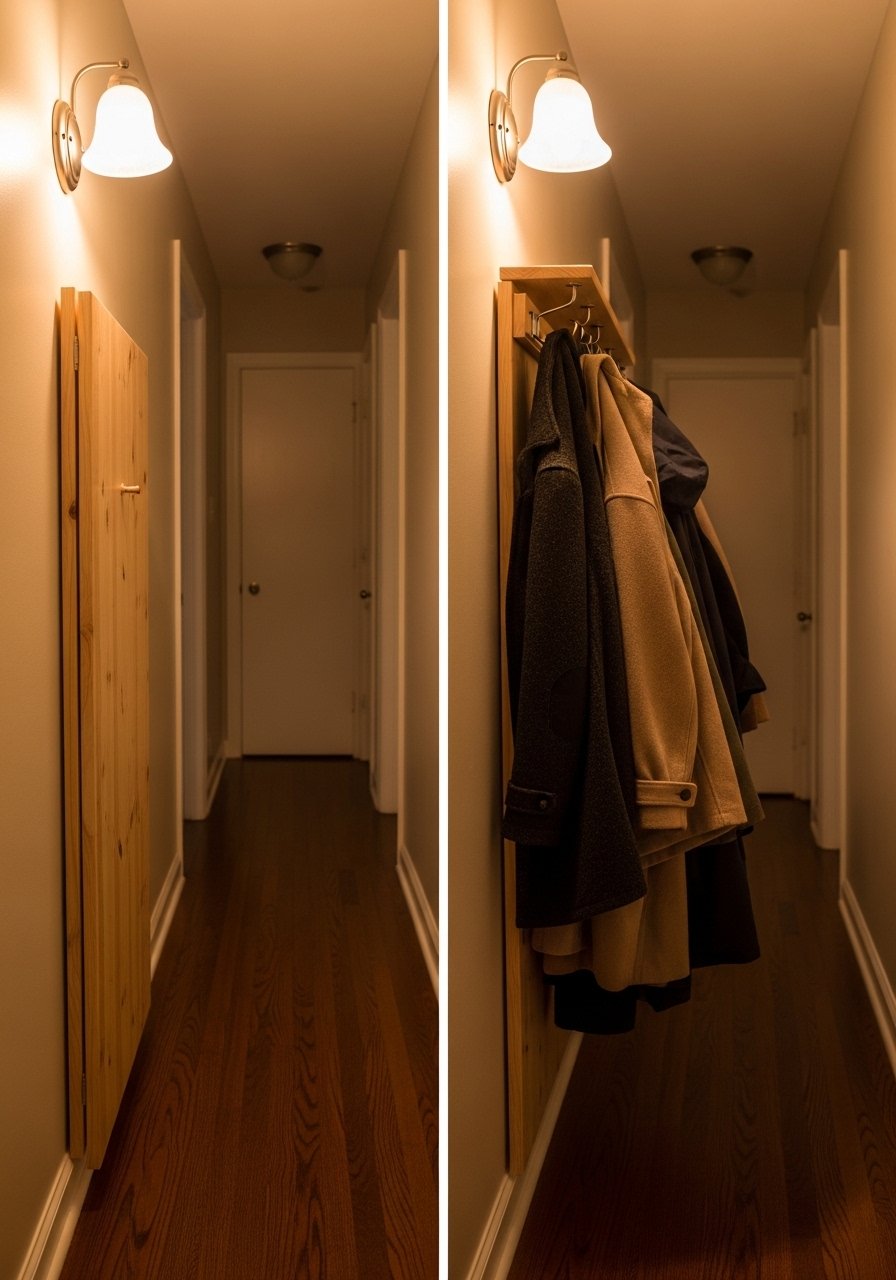
I built a flip-down strip that tucks away when not needed. Attach pivot hinges to a 2×4 strip and add short pegs so it folds flush against the wall. This is a good fix for narrow spaces where a permanent row of hooks feels like clutter. Keep the pivot points simple and pre-drill holes to stop the wood from splitting. Budget runs to $30 to $50 depending on hinges. If you want a renter-friendly version, you can replicate the look with command-style foldaway hooks for lighter items.
Board And Batten Hook Wall To Hide Outlets And Switches
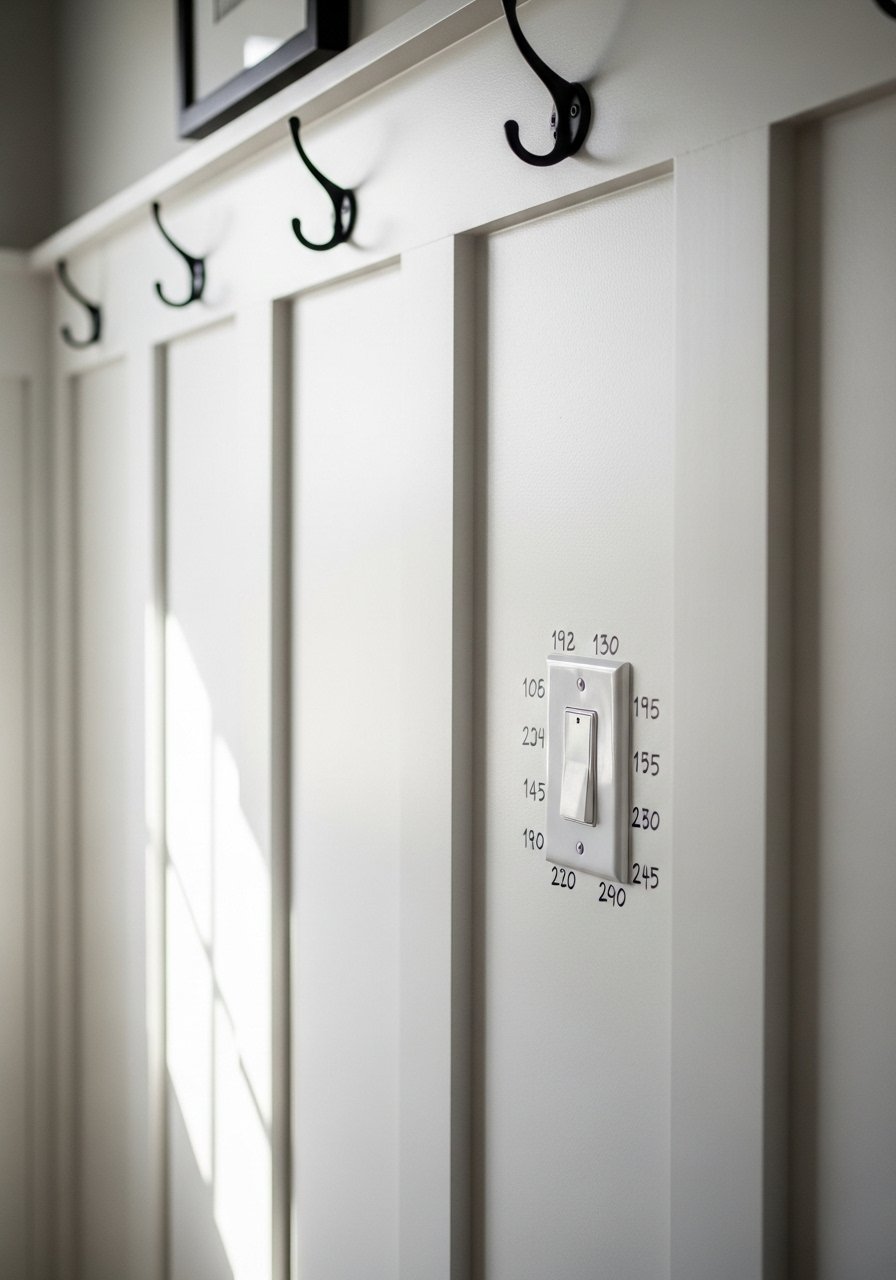
I framed the hook area with vertical battens so I could place hooks around a light switch without odd gaps. Measure first and leave a 1/4 inch gap from switch plates so covers still sit flush. Use 2-1/4 inch MDF strips and paint or stain the battens to match the room. This approach makes the whole wall look custom and is great for mudrooms. It takes a bit longer, about two hours, but hides the awkwardness most tutorials skip. Pilot holes and countersinking are your friends here.
Curved J-Hooks In Clay For Secure Hats And Scarves
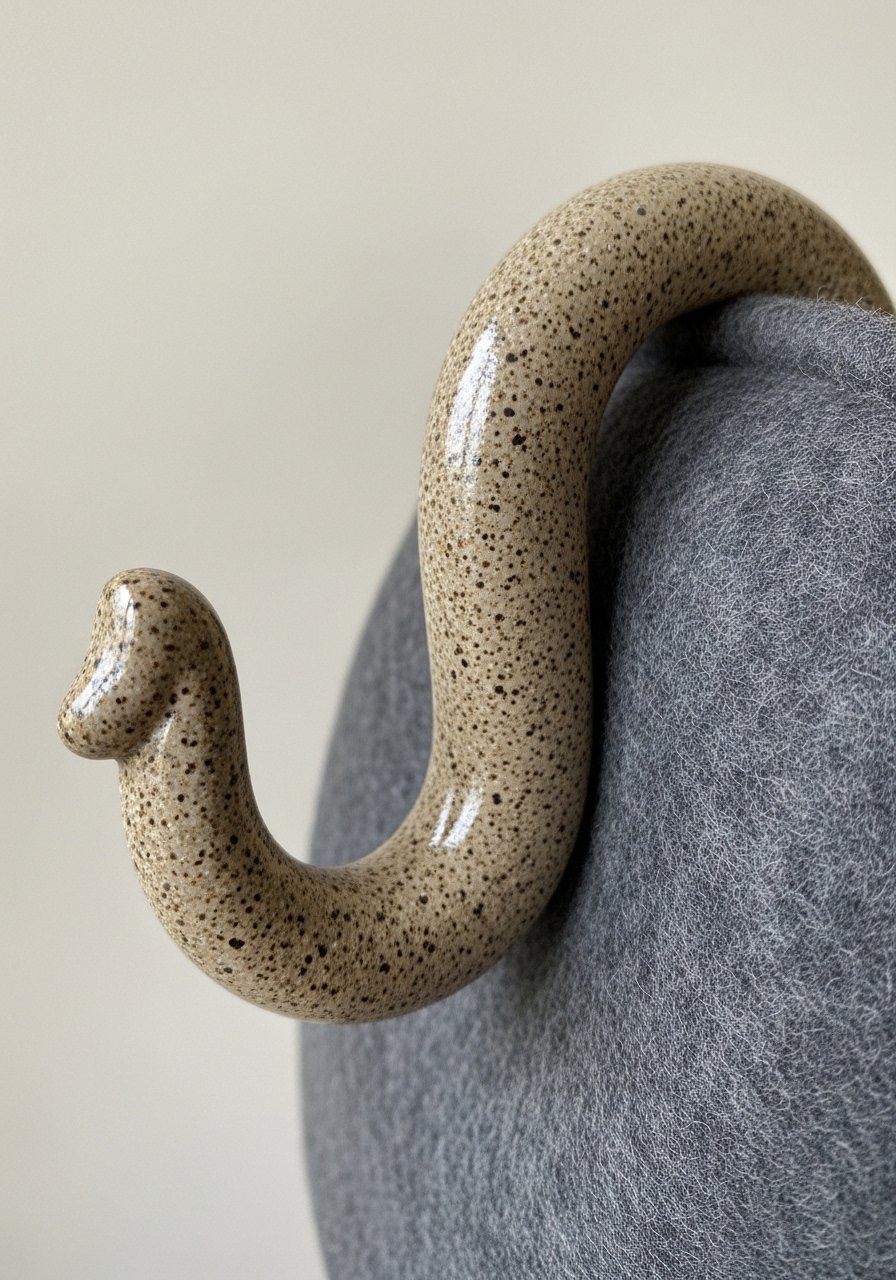
For hats and scarves I make clay J-hooks with a wider curve so items do not slip off when you brush past. Use a drinking straw to create a small hole where the screw will go and bake the clay at 275F for 20 minutes. I reinforced high-use hooks with a thin wood backing glued to the clay before attaching. Clay looks handmade and sits flatter against neutral walls, which is great in minimalist bedrooms. A typical mistake is making the hook too shallow, so add a full inch of curve for proper hold.
Industrial Pipe Hooks For A Modern Rustic Nook
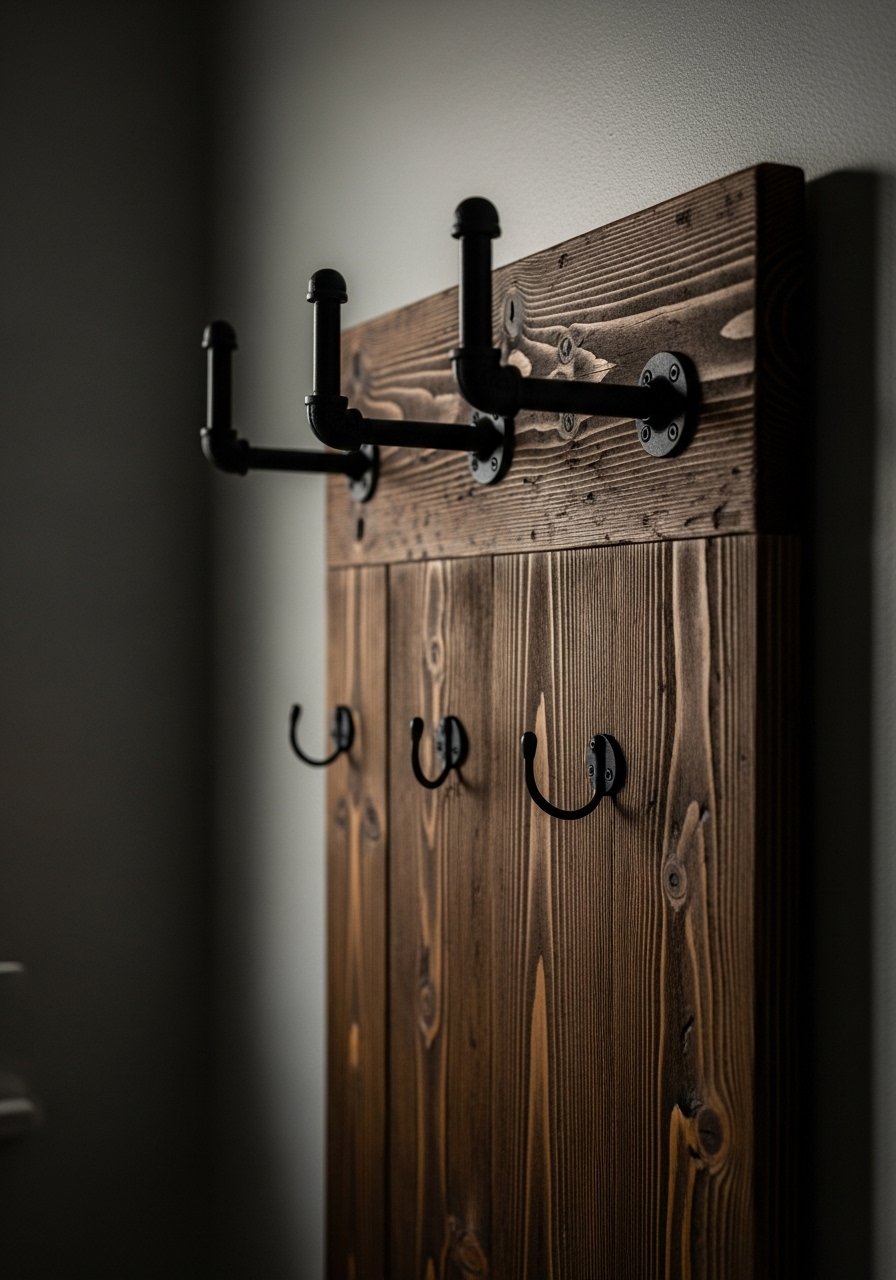
When I wanted something tougher looking I used black iron pipe fittings as hooks. Mount them to a stained plank and screw that plank into studs. Pipes add weight and personality and hold heavy bags without bending. A common oversight is not spacing the pipes to accommodate wide straps. Leave 5 to 6 inches between hooks. This style costs a bit more, around $40, but it reads durable and intentional. If you like the industrial look but not the weight, try faux pipe pegs that screw into a board.
Minimal Brass Knobs For A Tiny Bedroom Wall
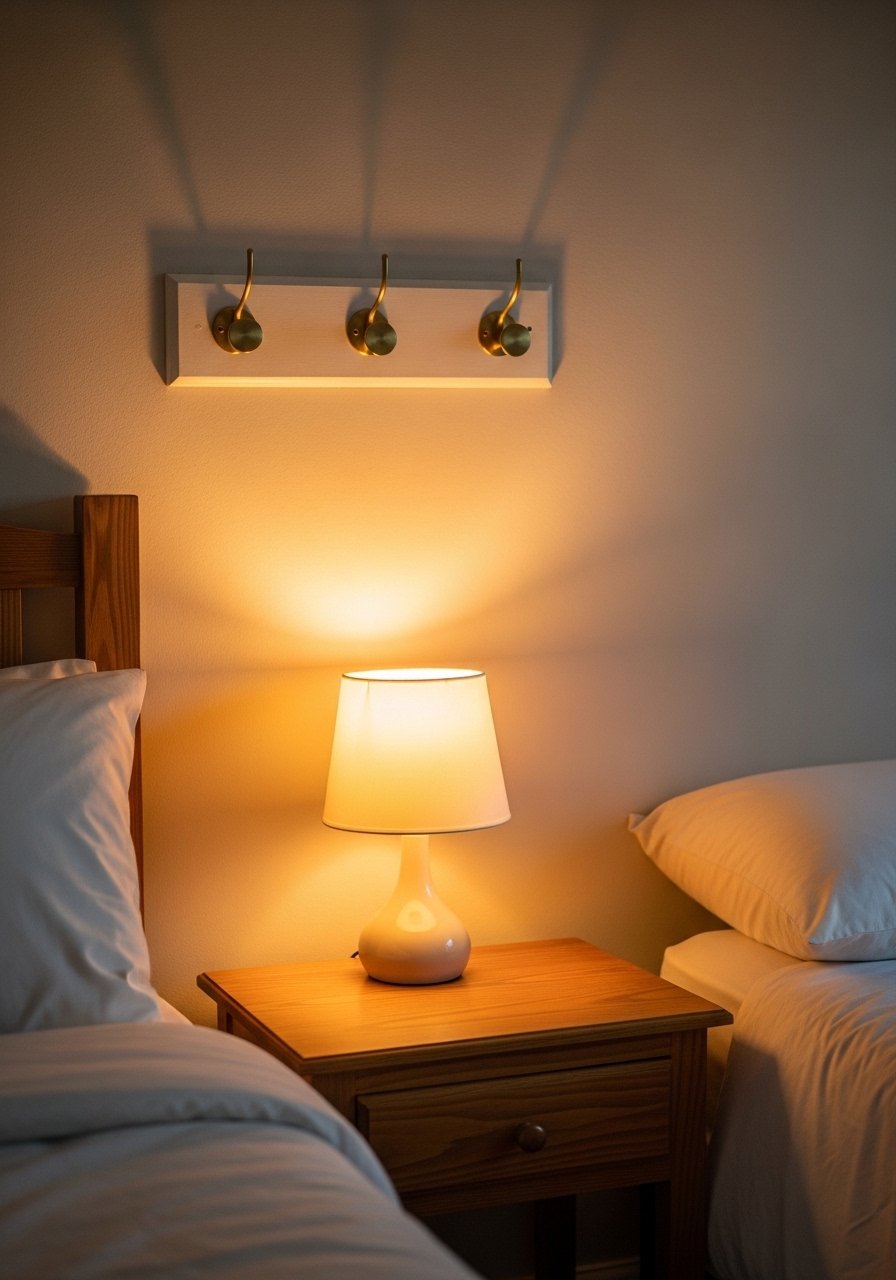
I swapped cabinet knobs for tiny hooks to hang necklaces and a robe. Brass knobs are under $10 for a set and they look more refined than a peg. Mount them using the cabinet screw through a small wood block or directly into the wall with anchors for light items. The secret is spacing and scale. Knobs need only 2 to 3 inches of projection so they do not catch on bedding. This is a subtle upgrade that makes a small wall feel edited.
Reclaimed Wood Lip Hooks For Bags And Backpacks
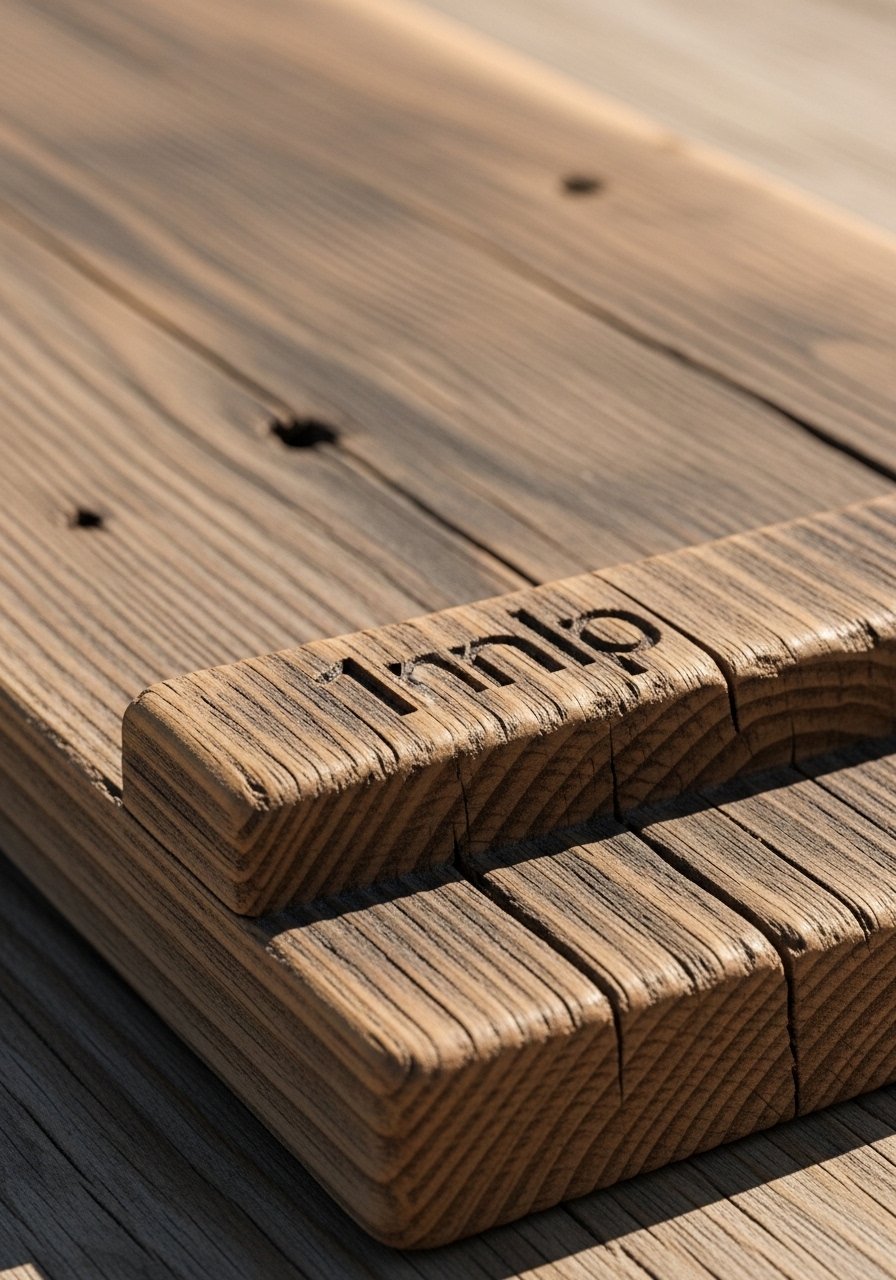
I cut a shallow 1-inch lip into a scrap board and mounted it so bag straps catch under the ledge. It keeps heavy backpacks from slipping off and looks charming in a kid's room. Sand the lip smooth to avoid snagging fabric. Use pilot holes and longer screws into studs because backpacks can be heavy. Most of these builds run about 30 minutes and under $20 if you already have scraps. The photo-ready trick people miss is staining only the lip for contrast.
Mixed Material Hooks For A Modern Eclectic Hall
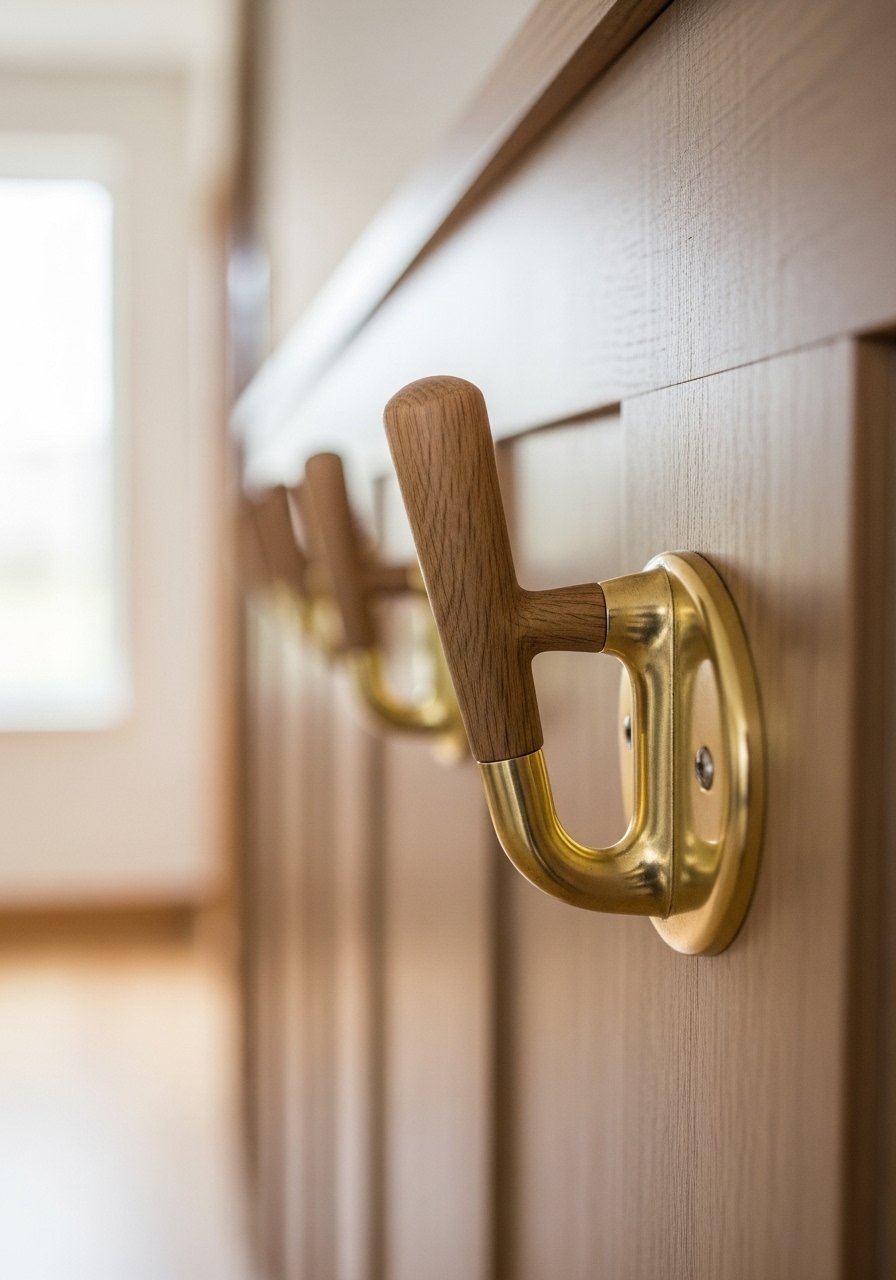
I mixed wood pegs and a few brass hooks on one plank and it stopped the wall from feeling matchy. The idea is to repeat a single accent metal once or twice so it reads cohesive, not cluttered. Mix heights by 1 to 2 inches to create rhythm. Use double-ended screws into the wood block and drill pilot holes every time to prevent splitting. This is great for transitional spaces and keeps the wall interesting without too many materials.
Floating Shelf With Hidden Pegs For Keys And Small Items

I made a skinny floating shelf with hidden pegs underneath for keys, sunglasses, and lightweight bags. The shelf hides the hardware and gives you a place to drop mail without clutter. Cut 2-inch dowels and space them 6 inches apart under the shelf. Use a French cleat to hang the shelf level and make sure the cleat hits studs or strong anchors. Budget around $25. A common mistake is shallow depth, so aim for at least 4 inches of shelf depth so the hidden pegs do not feel cramped.
Ceramic Tile Hooks For A Retro Bathroom Nook
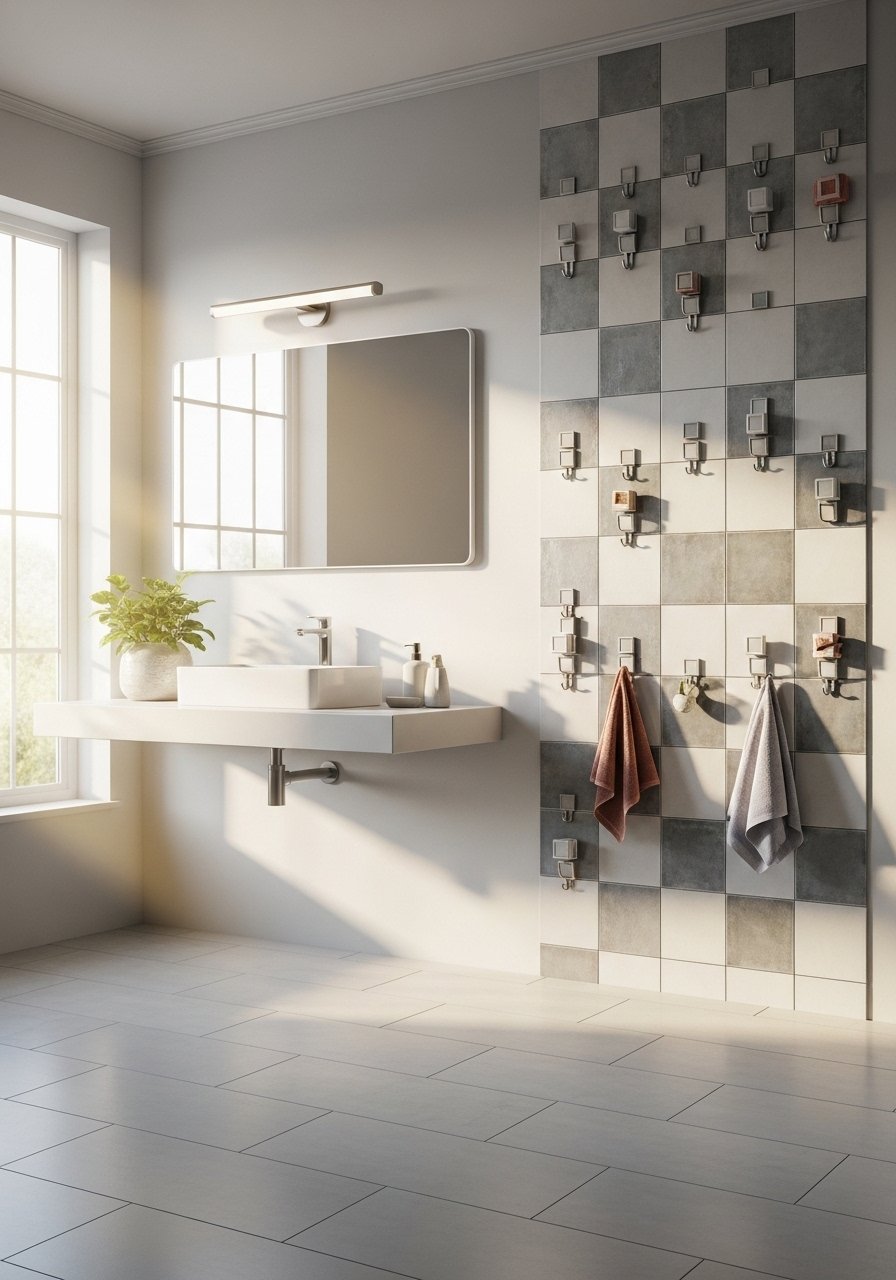
I salvaged vintage ceramic tiles and screwed small hooks through grout holes to make a retro towel area. Tiles add color and pattern and stand up to moisture better than raw wood. Make sure to use tiled anchors and a bit of epoxy on the screw to lock it if the tile is thin. These run inexpensive if you source secondhand pieces. The detail most people skip is sealing the tile edges so water does not get behind them and ruin the wall.
Your Decor Shopping List
2×4 pine board, 6-foot length. Cut to size for boards and batten bases.
Wood dowel rods, 3/8-inch diameter, pack of 12 in natural finish, cut to 3-5 inches. Honestly the best $10 I have spent for hooks.
Toggle bolts, 3/16-inch, pack of 6 for renters who need studs without luck.
Polymer clay, off-white block if you want speckled J-hooks, bakes at home.
96-inch linen curtain panels, set of 2 ($30-50 per panel). Use for nearby windows so hooks and textiles read cohesive.$12). Use this for floating shelves and boards so they hang true.
Brass cabinet knobs, set of 6 in aged brass for small robe and jewelry hooks. Found these while looking for something else.
Black iron pipe fittings, assorted pack for industrial pegs on a board.
French cleat hanger set, heavy duty (
Sandpaper assorted pack, 80-220 grit for smoothing lips and dowel ends. Similar at HomeGoods if you want to shop locally.
Small power drill with countersink bit (~$40-75). Worth it for pilot holes and clean work.
Shopping Tips
White oak beats dark wood in 2026. Design feeds have shifted completely. These white oak floating shelves look current, not dated.
Grab wood dowel rods, 3/8-inch diameter, pack of 12 for $8. Cut them to 3 or 4 inches depending on bag size and you will rarely go back to buying hooks.
For renters who cannot drill big holes use toggles only where necessary and rely on command-style strips for light items. Toggle bolts, 3/16-inch, pack of 6 are the middle ground when you need strength.
Curtains should puddle or kiss the floor, never hang halfway up. These 96-inch linen panels are right for standard 9-foot ceilings.
One larger plant is better than five small succulents if you want impact. Artificial fiddle leaf fig, 6-foot gives height without maintenance.
Frequently Asked Questions
Q: How long should dowel hooks be for coats and bags?
A: Aim for 3 to 5 inches. Three inches is the minimum that keeps a bag from tipping, and four to five inches is better for heavy straps and coats.
Q: Can I use clay hooks in a rental apartment?
A: Yes, if you mount the clay to a small wood block first and use toggle bolts or anchors. Renters hunt no-drill hangs more than ever now, so offer lighter alternatives like command strips for lighter items.
Q: Will toggle bolts damage my drywall when I remove them?
A: They leave a hole that needs patching, but it is small and easy to fix. If you need a no-patch option, use heavy-duty removable hooks for very light items.
Q: How do I stop wooden blocks from splitting when I screw pegs in?
A: Drill a pilot hole halfway into the block before you add the double-ended screw. Pilot holes save the piece from splitting and keep the peg solid.
Q: Are raw wood hooks better than painted ones?
A: For daily use, raw wood over painted finishes better with daily wear. Raw grain hides small dings and ages nicely. Most folks grab wood scraps over metal every time for that warm feel.
Q: What is a quick renter-friendly hook idea that looks custom?
A: A floating shelf with hidden pegs attached to a French cleat looks built-in but can be removed cleanly. Use anchors that match the load and patch the small pilot holes when you move.