

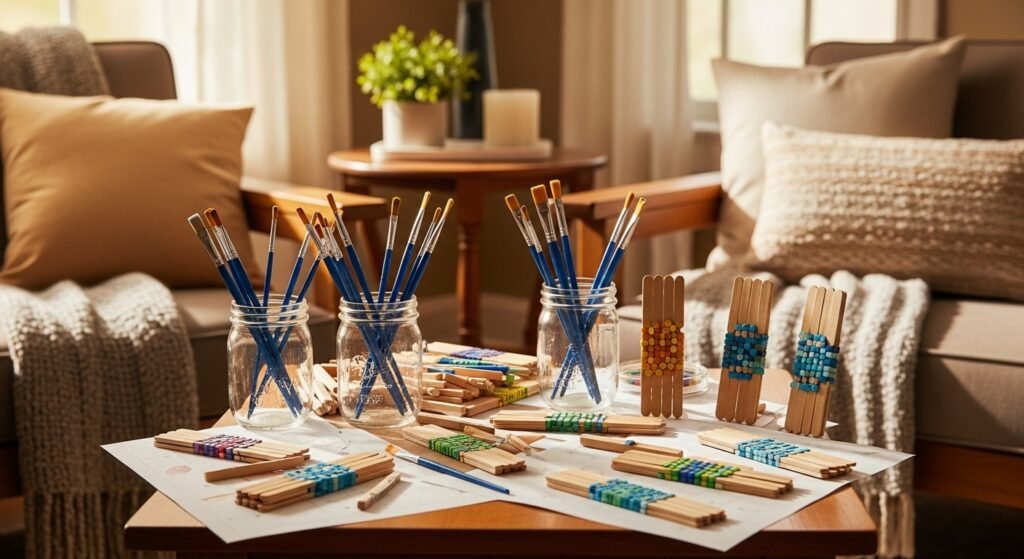
My first attempt at paint stick projects was a chaotic Saturday that somehow fixed my bland hallway. I glued sticks together, sanded too much, and learned that thin varnish makes grain pop. By the end of the day I had a tiny shelf, a wooden wreath, and the satisfaction of using something cheap to make my place feel lived in.
These ideas lean crafty-rustic with a playful modern edge. Most projects are under $30 in materials, with one or two that might hit $50 if you buy nicer finishes. They work for entryways, kitchens, kids rooms, and those corners that always feel undecorated.
Mini Floating Shelf for Entryway or Bathroom, Cozy Rustic
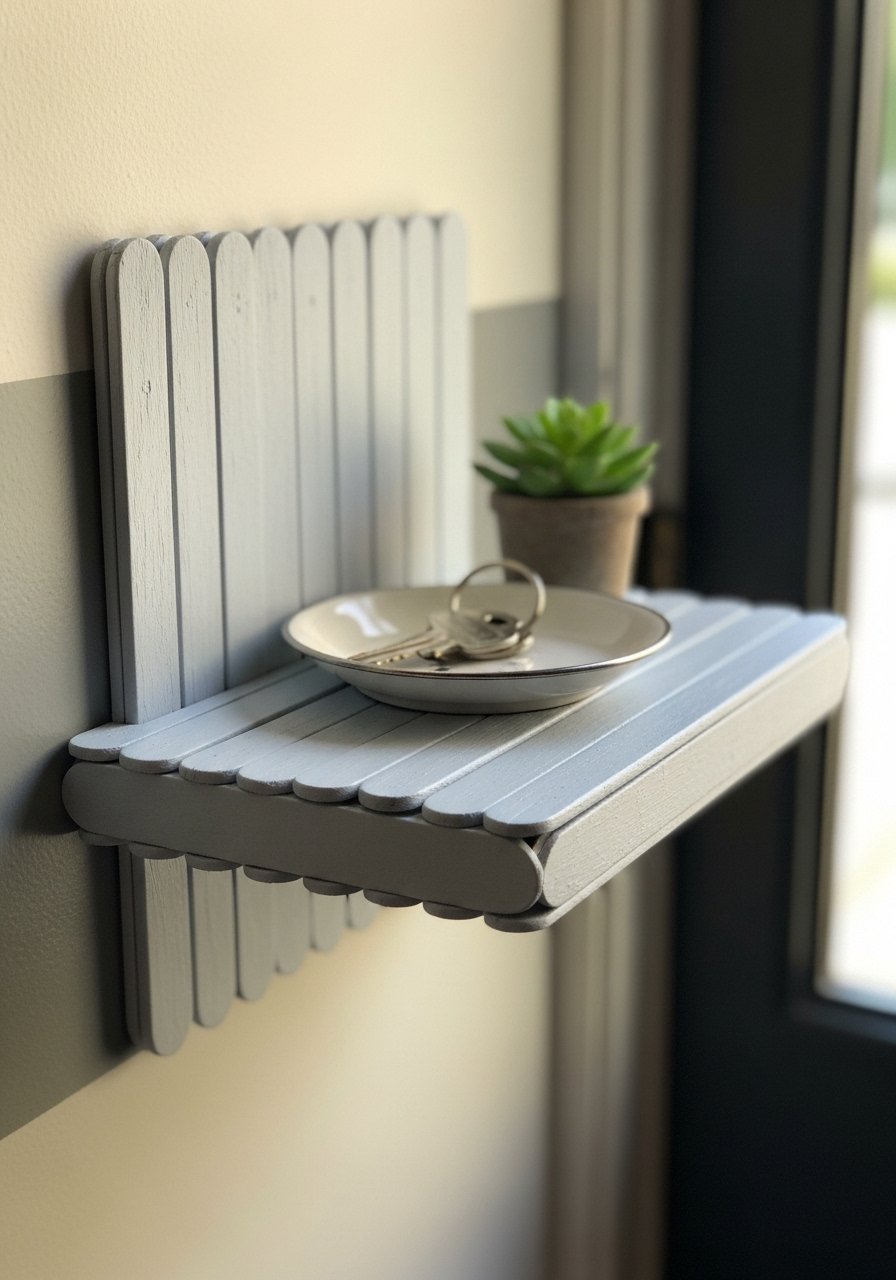
I made this when I needed somewhere to drop keys that didn't look like a junk catch-all. Paint sticks create a thin, uniform face so the shelf reads delicate even when holding a bowl. Use two 12-inch paint sticks glued side by side for a 2.25-inch depth shelf face. Screw a 1×3 scrap across the back for strength and mount with two small brackets. Budget: $10-20 if you already have screws and brackets. I used a matte clear coat to avoid glare and found standard paint sticks sold in packs that made building several shelves cheap. Common mistake is skipping reinforcement. Without that thin cross brace the shelf sags after a week.
Geometric Wall Art, Modern Minimal for Living Rooms
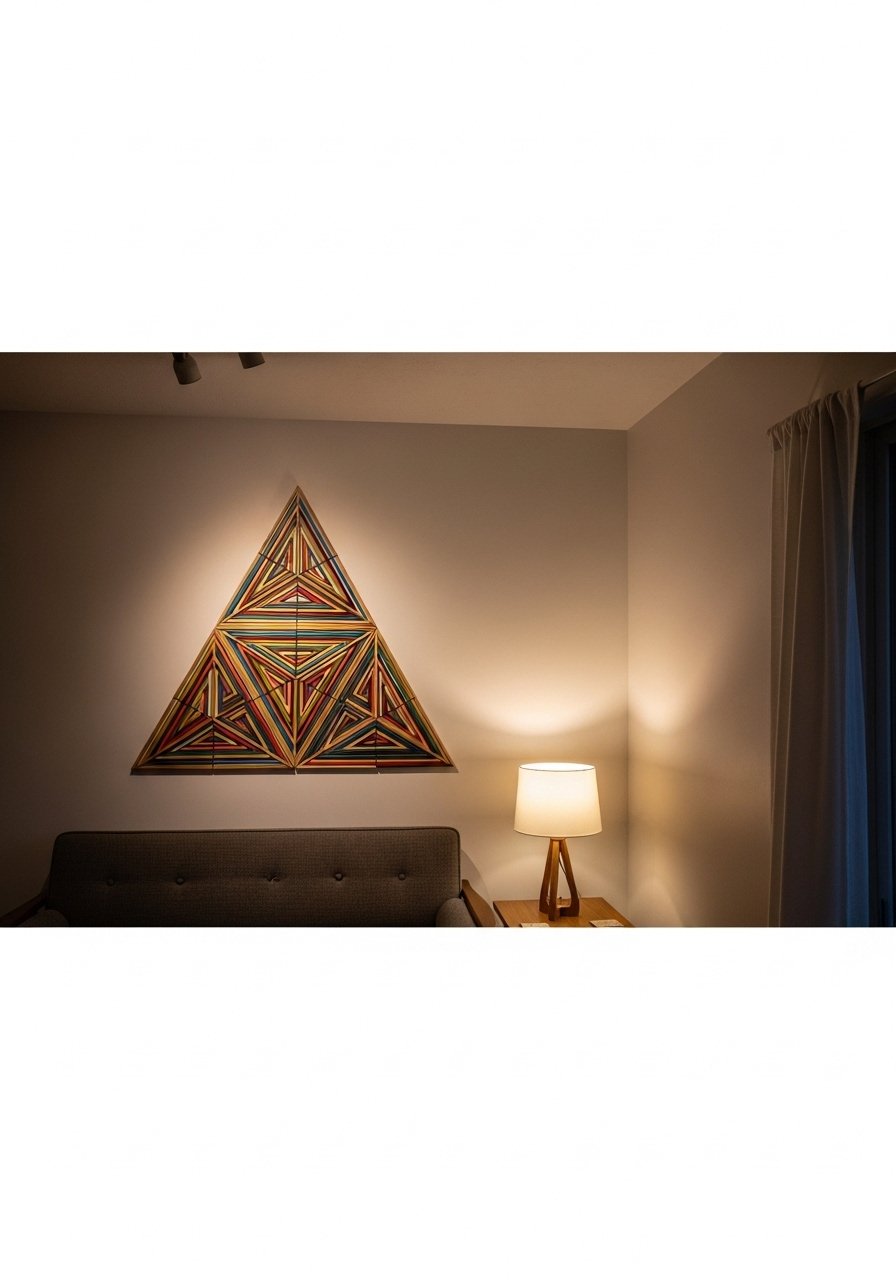
I wanted a bold focal point that cost less than a print. Cut paint sticks at angles and arrange them in repeating triangles. Stain half one shade and paint the others a contrasting matte. The visual trick is keeping a 2:1 ratio of stained to painted pieces, which keeps it warm and avoids looking too busy. This works well above a sofa in a modern living room. I glued pieces to a thin plywood backing and hung it with a sawtooth hanger. For finishes I used wood stain sampler packs so I could test color without committing. People often paint every stick the same color. That makes the pattern read flat. A mix of stain and paint creates depth.
Simple Herb Planter Box, Farmhouse Kitchen Charm

My windowsill was empty and felt too clean. This narrow planter fits three 2.5-inch pots and brings green into cooking zones. Line the interior with plastic or use small removable pots so water does not touch the paint stick joints. Use four paint sticks per side stacked, that yields about a 3-inch tall box which is perfect for shallow herbs. I bought a set of mini terracotta pots to drop inside. Budget under $20 if you use leftover sticks. A common mistake is not waterproofing the bottom. Even a thin plastic liner saves the wood from warping and keeps soil mess off the sill.
Kids Room Name Plaque, Playful Personal Touch
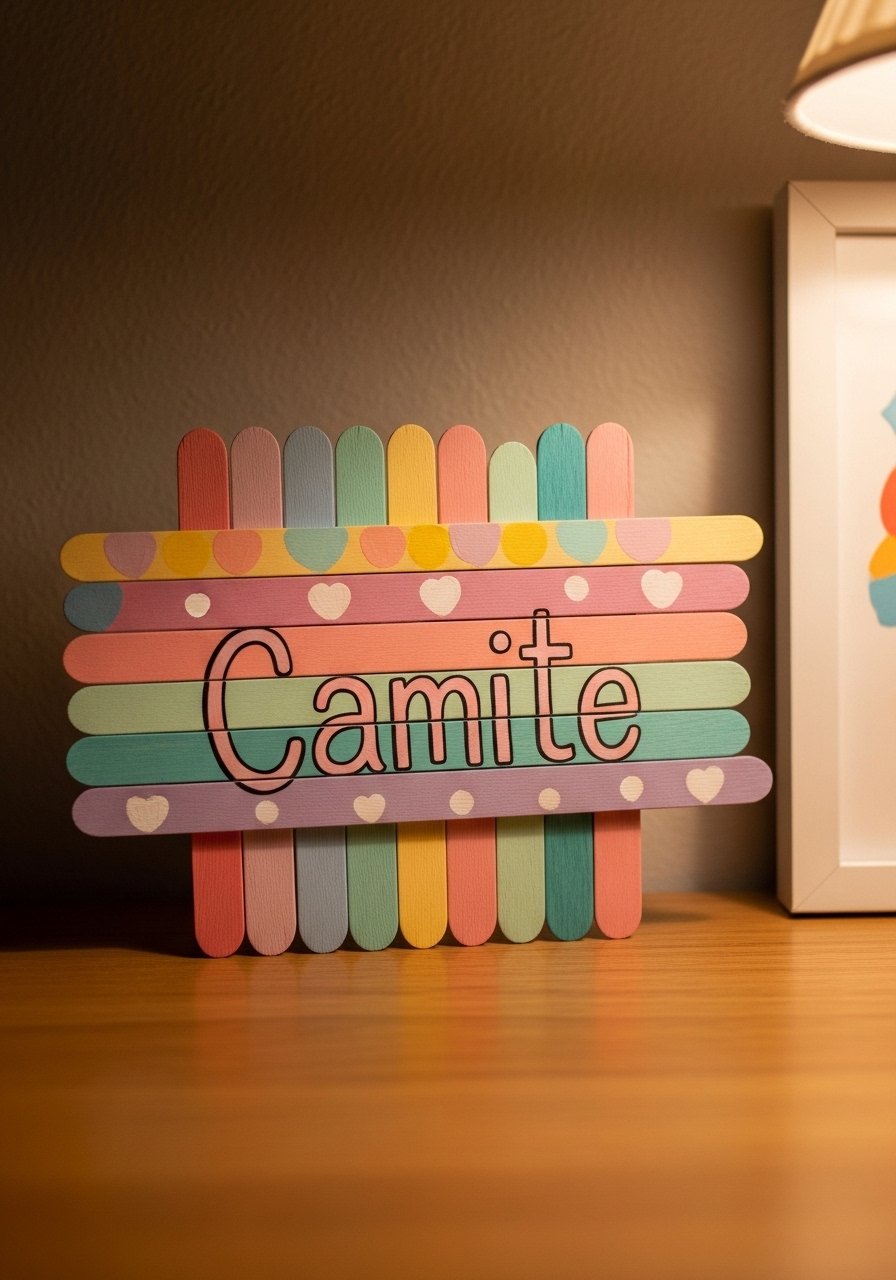
I made three of these for sleepover guests the year my daughter turned seven. Paint sticks are perfect for letter spacing because they’re uniform in width. For a 14-inch name plaque, glue five sticks side by side, sand the seams, and trace letters with a pencil before painting. Use 1-inch high letters for names under eight characters, and 0.75-inch high letters for longer names so spacing stays balanced. I used acrylic craft paints in kid-friendly colors and a clear coat for durability. Mistake people make is using too many colors. Pick two main tones and a neutral to keep it calm and readable.
Decorative Ladder Shelf for Blank Corners, Cozy Boho

I built this out of boredom and a single 1×2 board. Short paint sticks act as the rungs, spaced 10-12 inches apart for blankets or small baskets. Keep the ladder no wider than 18 inches so it tucks into tight corners. I recommend staining the rungs slightly darker than the side rails for contrast. For hardware-free look place the ladder at a gentle 10-degree angle against the wall so it leans securely. I picked up a set of battery fairy lights to weave through the rungs for soft evening light. People often try to make the rungs too close. That defeats the visual airiness and makes it hard to drape throws.
Rustic Picture Frame Cluster, Vintage Inspired for Hallways

I got tired of gallery walls that felt permanent. These frames are lightweight so you can rearrange without patching a dozen holes. Cut sticks to create 5×7 frames and use bead glue for the corners. Back with craft board and a single hanging wire. For a balanced cluster, use the rule of three: one larger frame and two smaller ones, spaced about 3 inches apart. I used brass picture hangers that take the weight without fuss. Common mistake is using heavy glass. Opt for acrylic glazing to keep frames light and safe in high-traffic areas. Pair this with the geometric wall art idea for textural contrast.
Woven Paint Stick Coasters, Casual Entertaining

Coasters were my first practical paint stick project. Thin sticks trim down to create a slotted weave that drains condensation. Use sticks cut to 3.5 inches and weave with 1/4-inch ribbon or thin leather strips. Keep the weave tight so the coaster is stable and add a felt pad underneath to protect surfaces. I used a set of clear coat spray to make them spill-resistant. Budget: about $8 for materials to make six coasters. People often make them too big. Keep coasters under 4 inches across so they fit cup rims and don't slide.
Hanging Macramé Planter with Paint Stick Ring, Boho Balcony
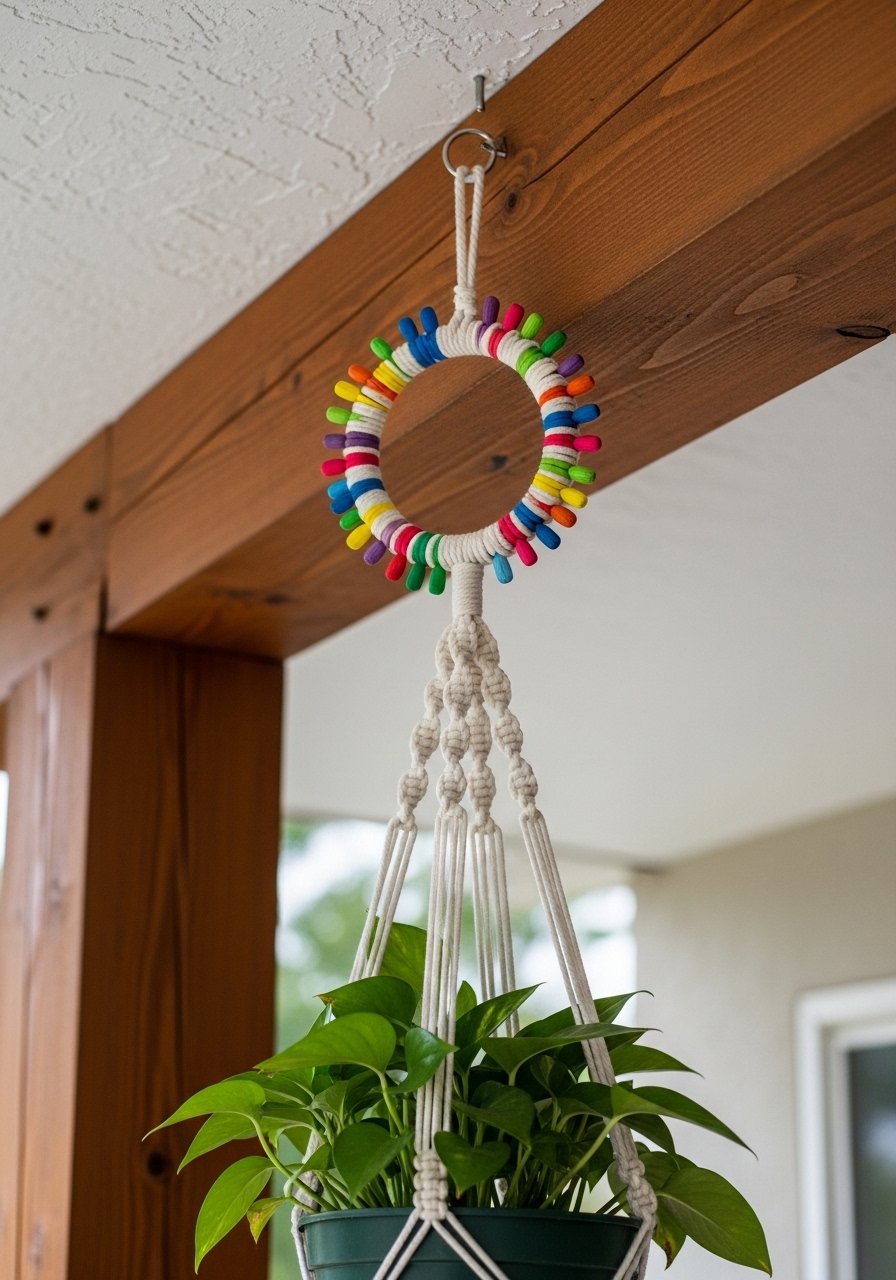
I liked the idea of a circle of paint sticks as the crown for macramé. Glue and clamp sticks into a ring, sand smooth, and then macramé cords knot around it to form a plant hanger. A 12-inch ring holds medium pots and reads nicely on a balcony. Stain the ring in a light oak tone so it blends with rattan or wicker. I used hemp macramé cord that holds knots well under humidity. People mistake small rings for large ones. Bigger rings need extra reinforcement or they flex when a heavy plant is added.
Rustic Clock Face from Paint Sticks, Functional Wall Accent
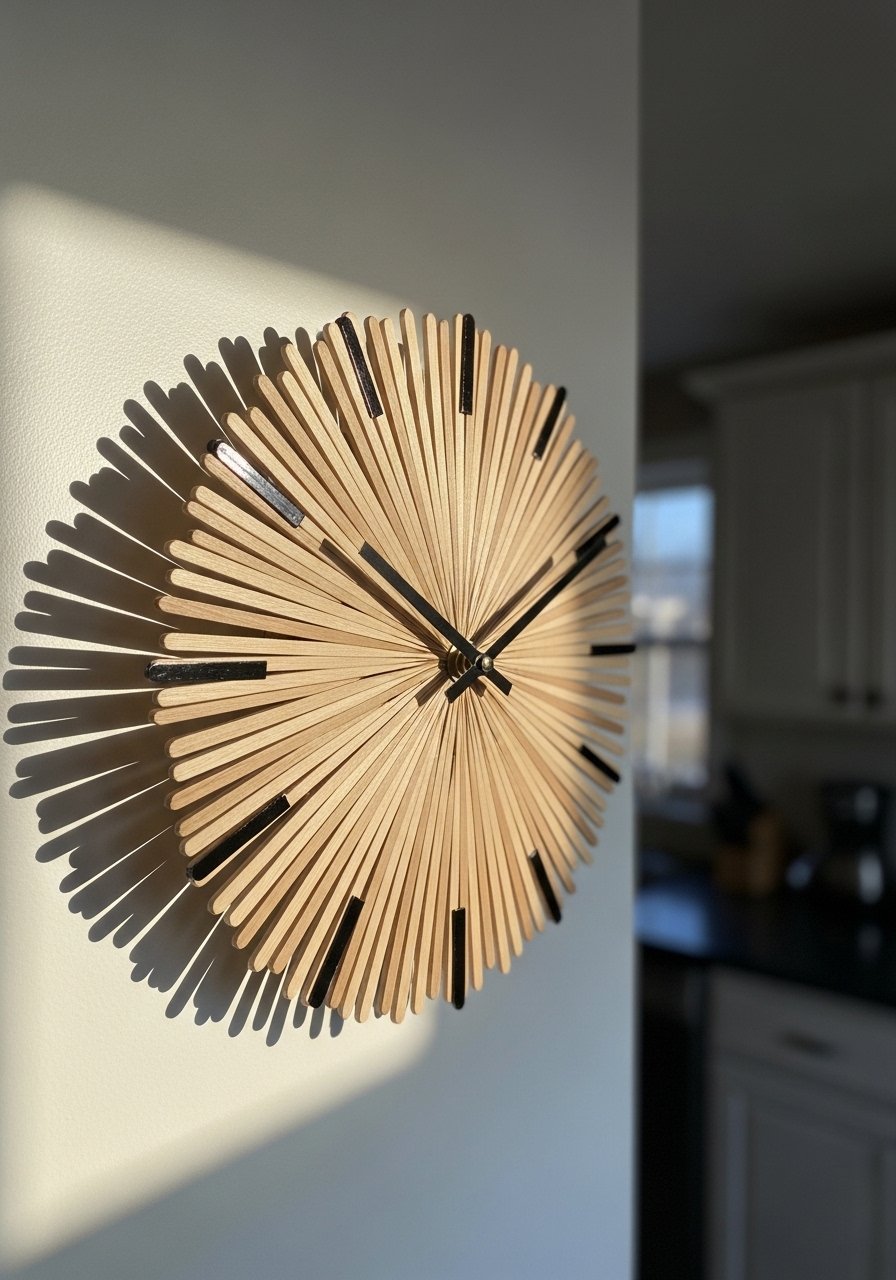
I smashed this together after a thrift store clock gave me just the movement. Arrange 16 paint sticks radially, cut them to equal lengths for a 16-inch diameter circle. Glue to a plywood backing and install a clock mechanism. Keep the hands minimalist so they read against the wood grain. I bought a compact clock kit and a set of small Roman numeral decals if you want numbers. Budget around $25 including the mechanism. Mistake people make is uneven stick lengths. Use a jig or stop block when cutting so your clock stays perfectly round.
Seasonal Wreath with Painted Tips, Front Door Friendly

I needed an inexpensive front door wreath that I could switch with seasons. Cut paint sticks into thirds and bind them in a circular pattern using floral wire. Paint the tips in an ombre that matches seasonal tones. For a standard door, aim for a 16-18 inch finished wreath so it feels proportionate. I swapped spring pastels for autumn rust and it made the entry feel intentional. I used all-weather spray paint so the colors held through rain. A common mistake is making the wreath too dense. Leave a little negative space so the door shows and the wreath reads as styled rather than heavy.
Your Decor Shopping List
Textiles
- Honestly the best $35 I have spent. Chunky knit throw in cream in a 50×60 size to drape over ladder-style shelves
- For cushions on the entry bench, 22-inch down-filled linen pillow covers, neutral tones
Wall Decor
- Found these and used them everywhere. Brass picture ledges 24-inch length for rotating frames
- Clock mechanism kit to make your own rustic clock
Craft Supplies
- Paint sticks, pack of 100 for projects across the article, mix of lengths
- Acrylic craft paint set basic colors for painting plaques and wreath tips
- Wood-stain-sample-pack so you can test without buying full cans
Planters and Plants
- Mini terracotta pots, set of 6 for the herb planter
- Hemp macrame cord for hanging planters
Tools & Finishes
- Clear-coat-spray-matte to protect coasters and frames
- All-weather-spray-paint for outdoor wreath tips
Similar at Target or HomeGoods for throws, pillows, and cheap plant pots.
Shopping Tips
White oak beats dark wood in 2026. Design feeds have shifted completely. White oak floating shelves pair well with paint stick accents.
Grab paint sticks, pack of 100 early. Buying in bulk saves time. Use extras to prototype before committing to a final color or size.
Curtains should puddle or kiss the floor, never hang halfway up. 96-inch linen panels are right for standard 9-foot ceilings and make small spaces feel taller.
Lead with a neutral base in your finishes, then add one painted accent tone. Acrylic craft paint set lets you tweak shades across projects without buying single tubes.
Everyone buys five small succulents. One single 6-foot fiddle leaf fig has ten times the visual impact.
Frequently Asked Questions
Q: Can paint sticks hold weight for shelves or ladders?
A: They can, when reinforced. Use cross braces or a plywood backer and keep shelf depth shallow, around 2.25 inches for small items. For anything heavier, back the sticks with a 1×3 strip.
Q: What paint or finish avoids warping for projects near water?
A: Use a clear-coat spray or marine-grade varnish on joints. A thin plastic liner inside planters also saves the wood from constant moisture.
Q: How do I avoid a craft project looking kiddie or cheap?
A: Stick to two main colors and one neutral, follow simple proportions like the rule of three, and pick quality finishes. Testing stain samples first makes a big difference.
Q: Can beginners cut sticks accurately at home?
A: Yes. A small miter box or a stop-block on a handsaw keeps lengths consistent. Uneven cuts are the number one reason clocks and frames look off.
Q: What size wreath looks best on a standard front door?
A: Aim for 16 to 18 inches. Smaller wreaths can look lost, and larger ones can overpower the door hardware.
Q: Are faux plants okay for these projects?
A: Absolutely. Use faux where light is low or maintenance is a pain. A tall faux plant placed next to a small shelf reads more intentional than several tiny succulents.