

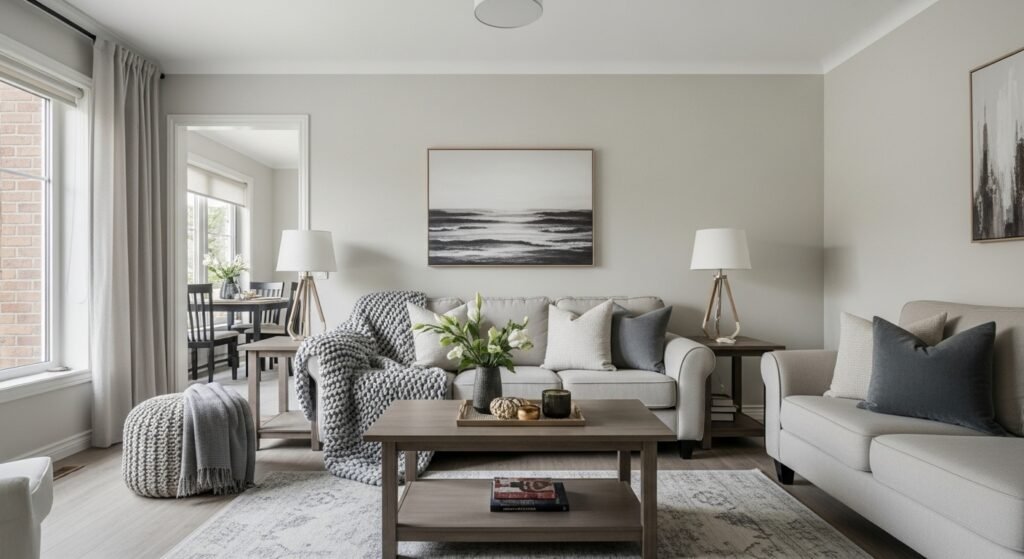
My living room once felt flat. The sofa looked fine, but the corners were empty and the shelves read as cluttered. I kept moving things around and nothing landed.
It took a few small, deliberate edits to get the room to read like a single space. The change was mostly about placement and balance, not more things.
This method is what I use when a room feels unfinished. It works for modern, organic modern, and quiet luxury nods. You can do it with things you already own and a couple of inexpensive swaps.
What You'll Need
- Chunky knit throw in oatmeal, 50×60 ($40 to 65). I keep one folded over an arm to add pause and texture.
- Linen pillow covers, 20×20, neutral set of 2 ($25 to 45). Swap covers, not pillows.
- Set of 3 ceramic vases, matte white ($25 to 40). Group them in odd numbers.
- Brass picture ledges, 24-inch ($18 to 30). Great for rotating art without nails everywhere.
- Jute area rug, 8×10 ($90 to 160). Grounding texture that reads neutral.
- Floor lamp with a fabric shade, 60-inch height. Pick warm bulb and dimmer if possible. ($60 to 150). A lamp fixes awkward lighting quickly.
- Decorative basket for throws, medium, natural fiber. ($30 to 60). Keeps things tidy and intentional.
- A stack of hardcover books, 2 to 4 good covers. Not for reading, for making levels on tables. ($10 to 50 each). I use them as risers.
Step 1: Clear the Surface, Then Edit What Returns
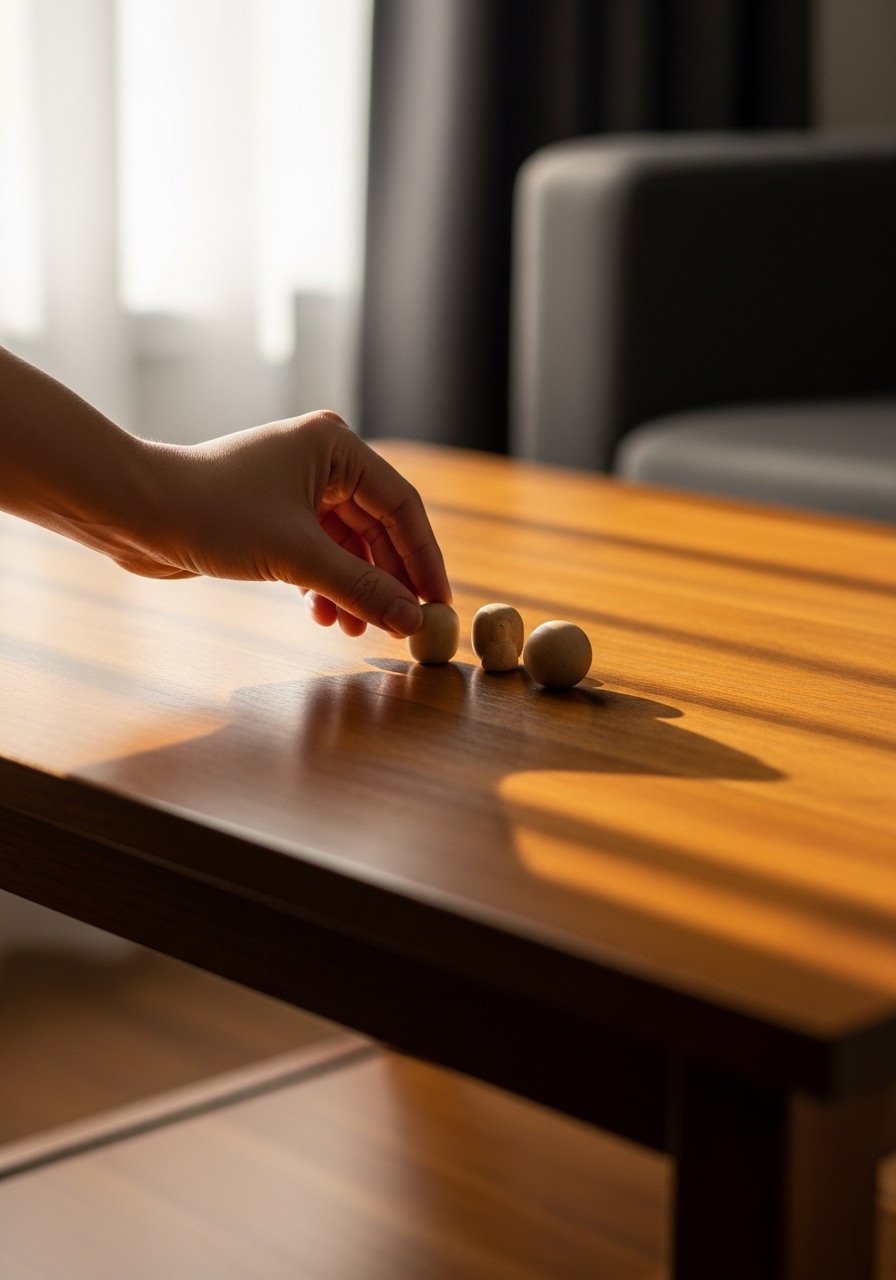
Pull everything off the major surfaces. I mean everything. You need a blank visual field to see balance. Walking away for five minutes helps.
Bring back only things that earn their place. One tray, one small stack of books, and a single vase work better than five scattered objects. Visually you will see negative space where things can breathe. The room reads calmer instantly.
Most people add more instead of editing. Avoid the temptation to keep small knickknacks. If an item does not add scale, texture, or color contrast, it can wait in storage.
Step 2: Anchor with the Rug and Furniture Placement
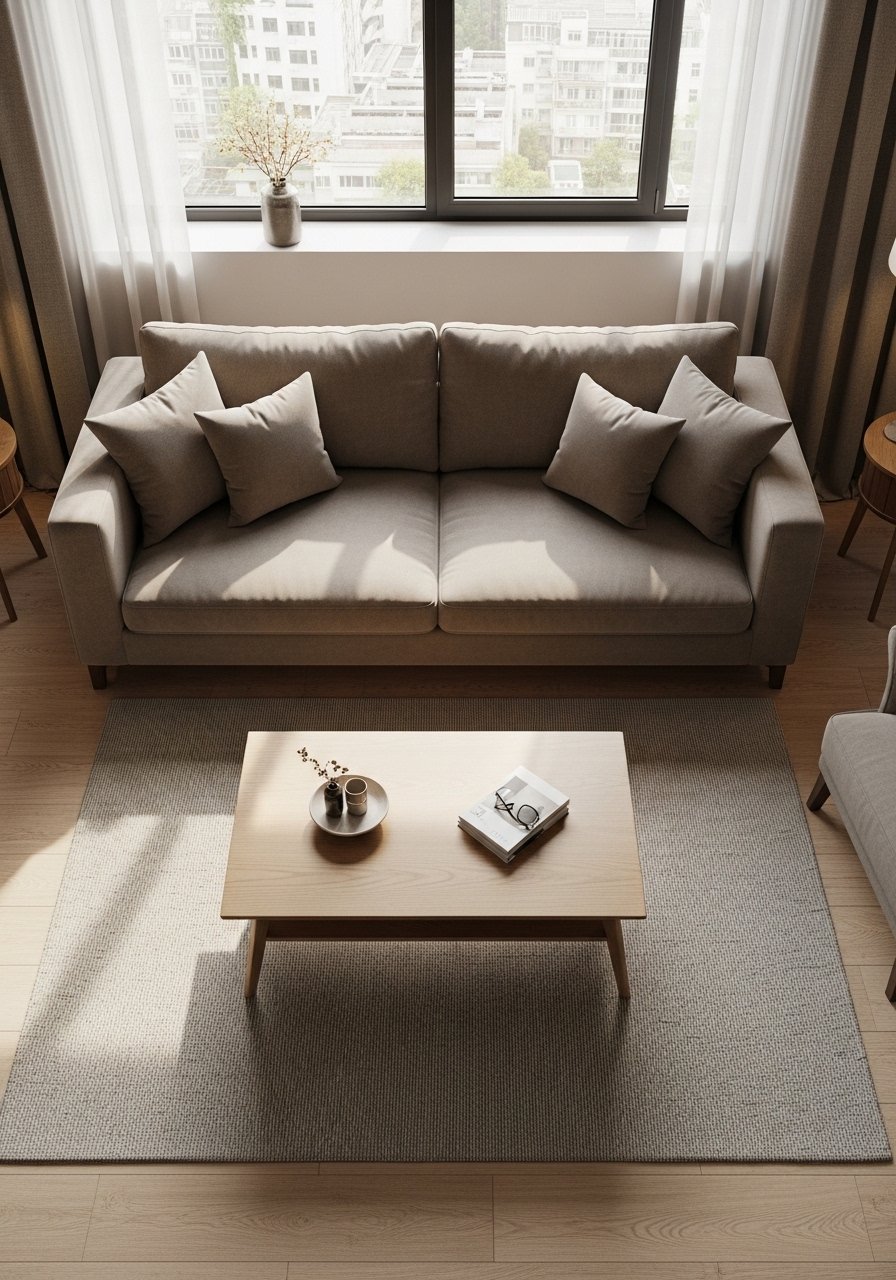
Move the rug so front legs of the sofa sit on it. I used to float rugs too small and the seating drifted apart. Anchoring creates an instant conversation area.
Leave 6 to 12 inches of rug beyond the coffee table on each side when possible. In small rooms, at least the front legs on the rug will read intentional. The visual change is immediate, the room feels more put together.
People pick rugs by pattern first. Pick size first. A rug too small looks like an afterthought. If you have a jute rug, use it to mute bright floors and add texture.
Step 3: Group Objects in Odd Numbers and Vary Heights
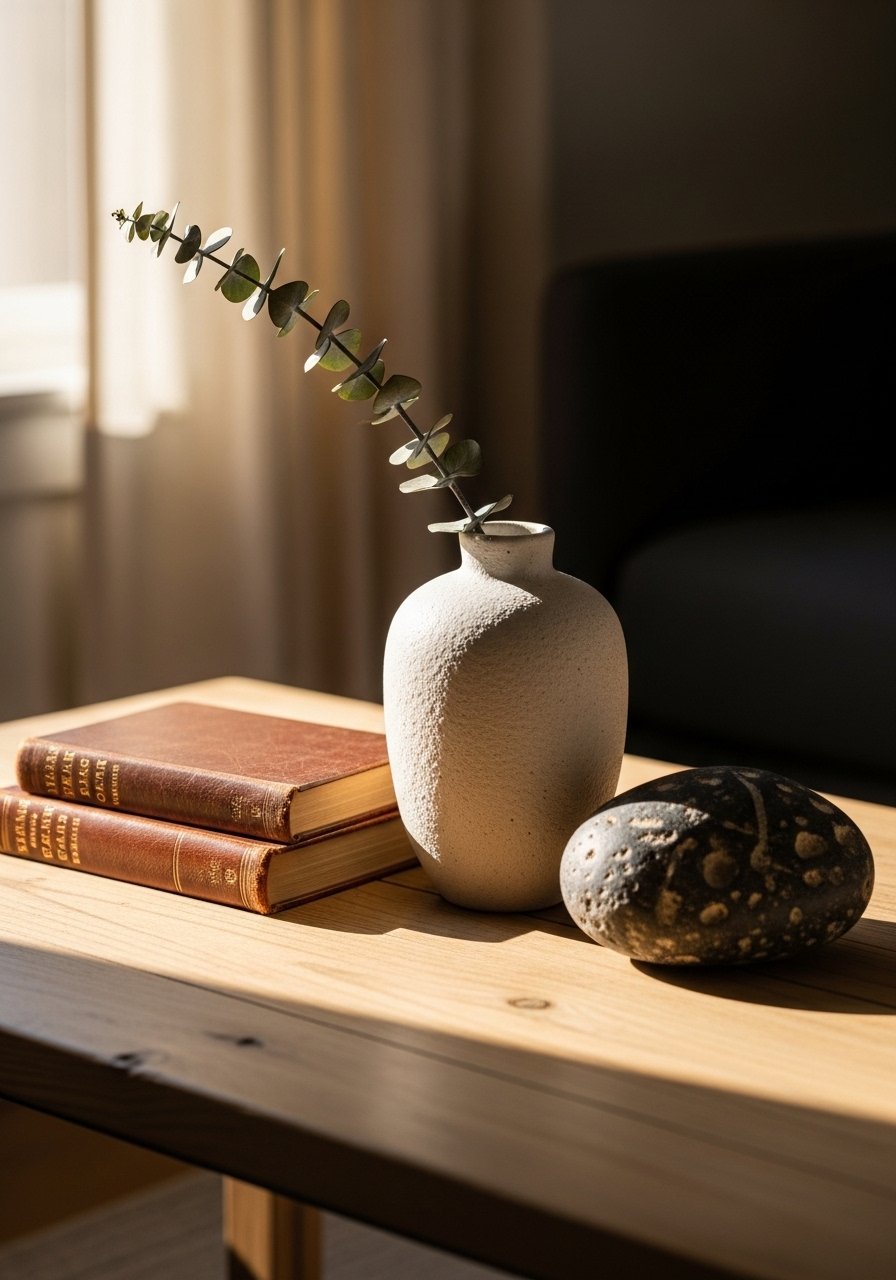
This is the step where the table starts to look styled instead of cluttered. I always group in threes. A small tray plus a book plus a vase makes a simple, composed cluster.
Leave 2 to 3 inches between each grouped item. Too tight reads staged. Too far apart looks random. Vary heights by stacking one or two hardcover books under a lower object. Use a taller vase to anchor the back of the group.
A common mistake is lining items up in a row. That flattens the scene. Instead, form a triangle of objects for depth and movement.
Step 4: Balance the Room with Soft Layers and Lighting
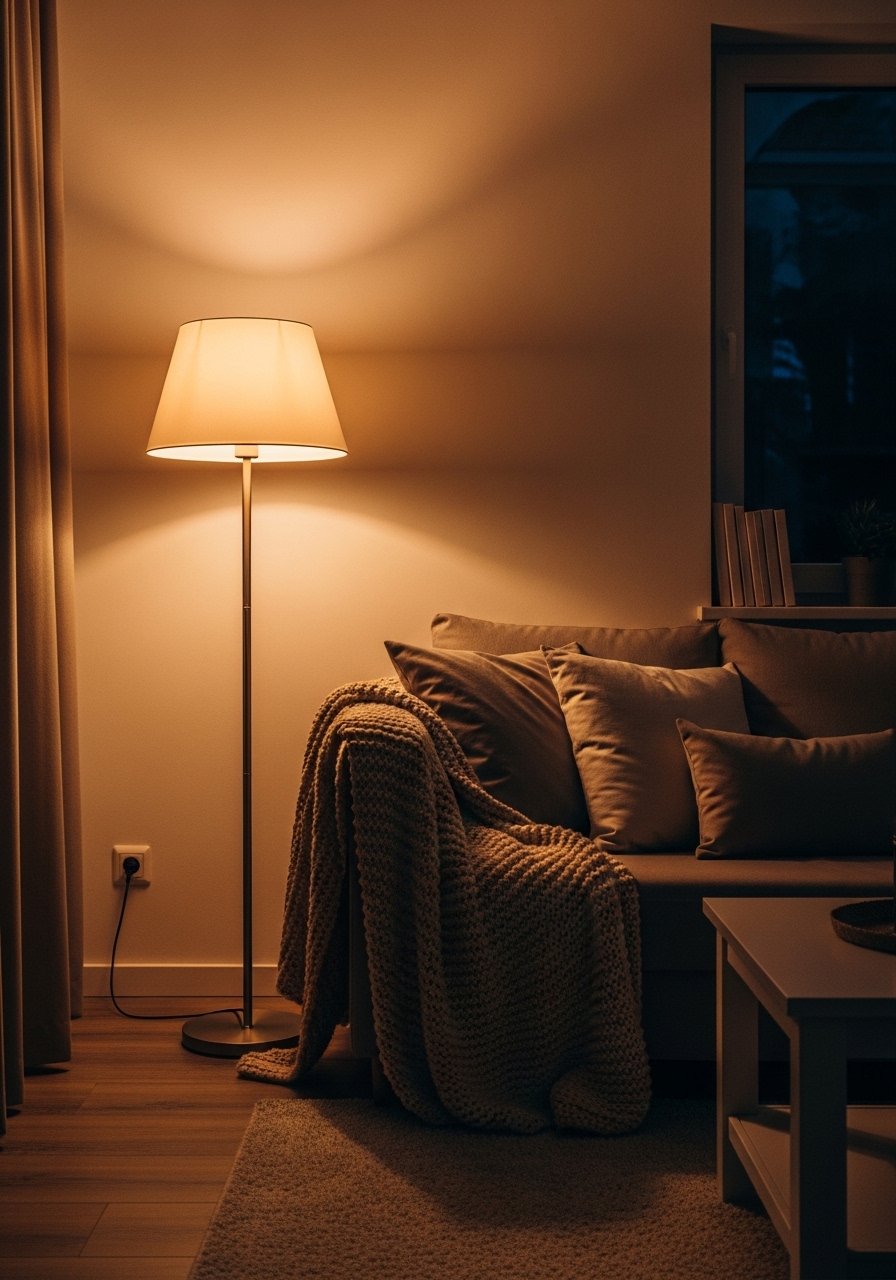
Add the chunky throw and switch pillow covers to neutral textures. I switched to linen covers and the sofa felt lighter without buying a new couch. The throw folds over an arm, not bunched up on the seat.
Introduce a floor lamp at least 60 inches tall near a seating cluster. Layered lighting creates depth and invites people to linger. Swap in warm bulbs for a softer glow.
People assume ceiling light is enough. It rarely is. Low light makes everything feel flat. Avoid tiny table lamps that compete with the main light. One well-placed floor lamp gives a focal point and balance.
Step 5: Commit to One Wall and Build a Rotating Display
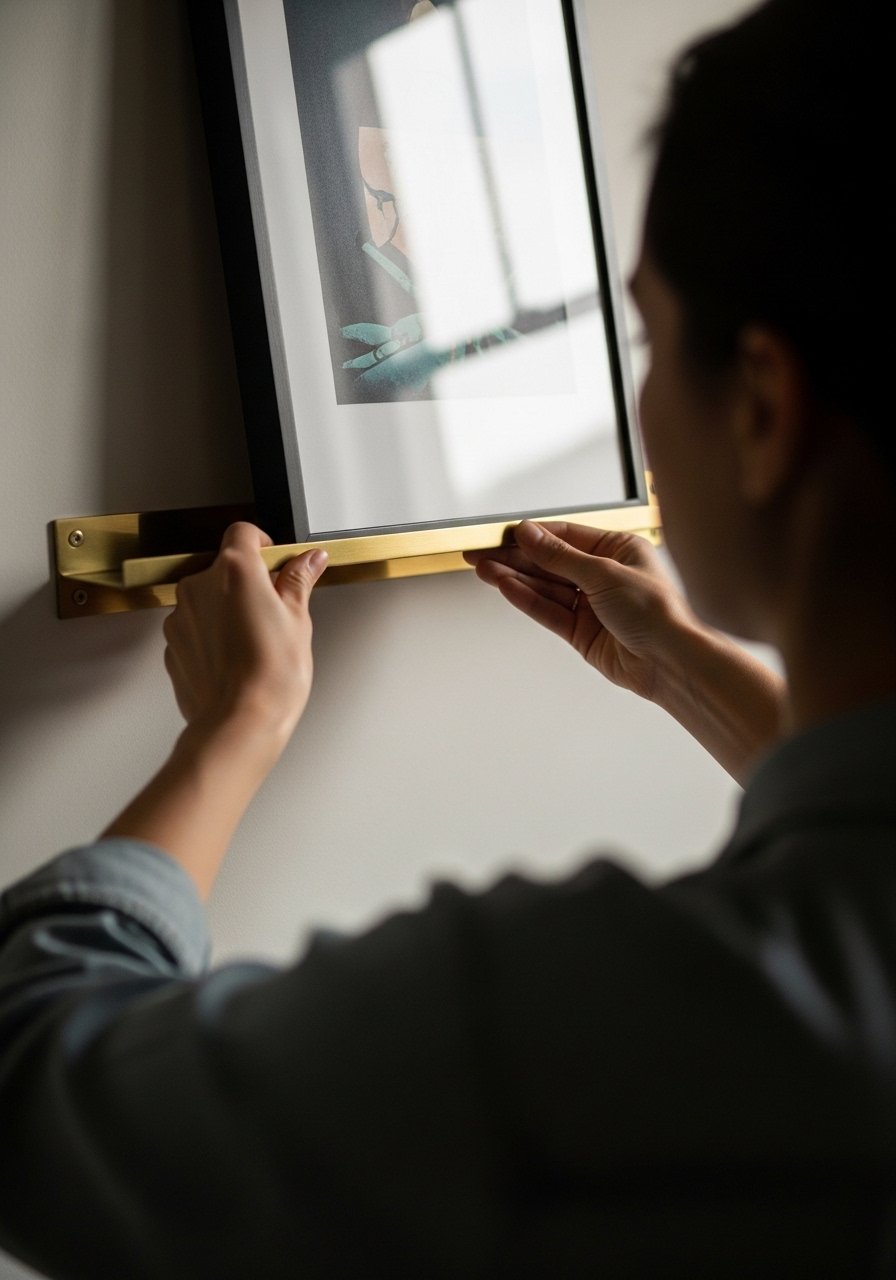
Pick one wall to work on, a mantle, or ledged gallery. I use brass picture ledges and rotate prints and small objects every few months. It keeps the room fresh without upheaval.
Arrange art at eye level, roughly 56 to 60 inches from the floor to the center of the main piece. When using ledges, lean art and overlap slightly. Add a small ceramic vase and a framed photo to break the line.
A common temptation is to fill every wall. That makes a room noisy. One intentionally styled wall reads curated and calm. The change feels like a design decision, not decoration by accident.
Why Your Shelves Still Look Cluttered After Styling
I've noticed the same mistakes in three rooms I recently styled. People think symmetry equals balance. It does not. Symmetry can read boring.
Try these adjustments:
- Edit ruthlessly. Keep odd numbers and three main focal items per shelf.
- Add at least one object with a different material, like a woven basket or ceramic vase.
- Build levels. Use 2 to 3 books to create height under a small object.
- Leave negative space. One empty horizontal shelf is a visual breath.
When done right, shelves look like thoughtful pauses, not a garage sale display.
Making This Work in a Small Living Room
Everywhere I look this year I see small rooms leaning into multiuse furniture. A few rules that helped me.
- Float narrow furniture to open traffic paths, but keep the rug anchoring the seating.
- Use a jute rug to visually expand the floor plane. Natural fibers read lighter than dark patterns.
- Pick a slimline floor lamp, 60-inch height, instead of multiple table lamps.
- Choose two pillows per seat and one throw basket. Less clutter, more impact.
Scaling the groupings down keeps the decor intentional, not cramped.
Mixing What You Own with a Fresh DIY Touch
I keep a small kit for quick updates. A stack of neutral pillow covers, the chunky throw, a set of white vases, and a basket. When a room feels off, I swap one item from the kit in.
Example: I swapped a patterned pillow for a linen cover and moved a brass ledge print from another room. The room gained calm and a hint of cohesion. The cost was under $60 most times.
If you want a seasonal update, change the vase filler or the throw color. Small swaps make the room feel renewed without heavy lifting.
Start with One Corner
Start with the corner that bothers you most. Move the rug, add the lamp, and tuck a basket for throws. It is enough to shift how the whole room feels.
Commit to these three small actions in that corner. You will see the balance fall into place. Once one corner behaves, the rest of the room follows.