

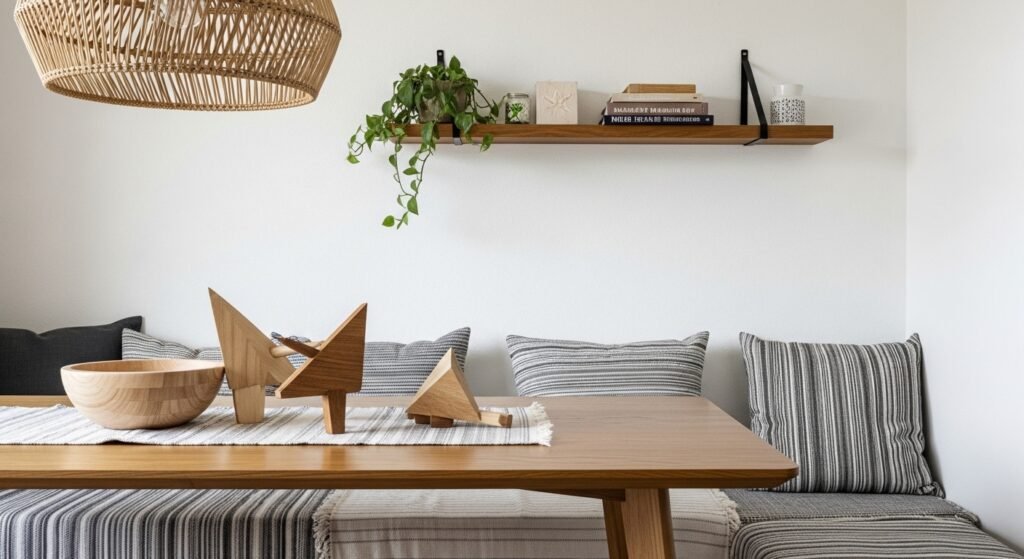
I used to stand in a room and feel like something was missing. Surfaces were tidy but cold. Shelves held things, not purpose.
I started making small wood pieces—coasters, a live-edge board, a simple clock—to add warmth and calm. They make rooms feel intentional quickly, without a remodel.
How to Make DIY Wood Crafts at Home
This shows how I use a few small wood pieces to change a room’s feel. You’ll learn which pieces to place, how to balance them, and what to edit away. The result reads warm minimalism or organic modern, depending on what you already own.
What You'll Need
- Live edge serving board, large (~$100–250)
- Thick solid wood floating shelf, 36-inch (~$80–200)
- Wooden wall clock, 12-inch engraved look (~$40–80)
- Rustic wood coasters set, 6-piece (~$15–40)
- Minimalist wooden jewelry holder, oak finish (~$20–50)
- Wall-mounted wooden spice rack, small (~$50–120)
- Textural quilted wood wall hanging, neutral (~$60–150)
Step 1: Choose the right scale and spot
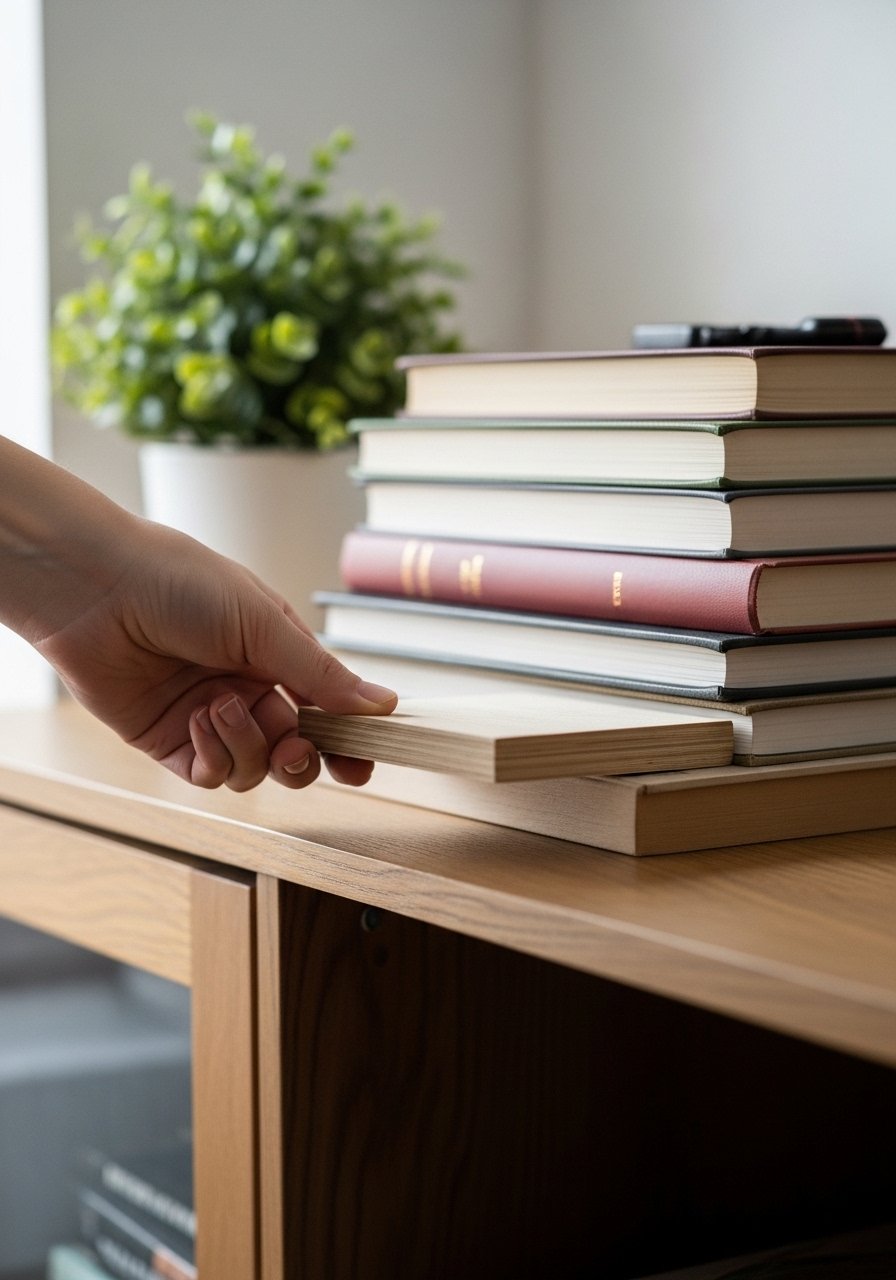
Start by sizing the piece to the place. A live-edge board needs a table or wide mantel to read as intentional. Coasters or a small jewelry holder belong on a nightstand or entry shelf. I look at the sightline first—what you see when you walk in—and place the wood where it interrupts empty geometry.
Insight people miss: a small, heavy-looking piece reads larger than it is if it’s placed off-center. Mistake to avoid: choosing a wood piece that competes with a large art piece or TV. Scale should feel like a quiet pause, not a shout.
Step 2: Edit and curate the cluster
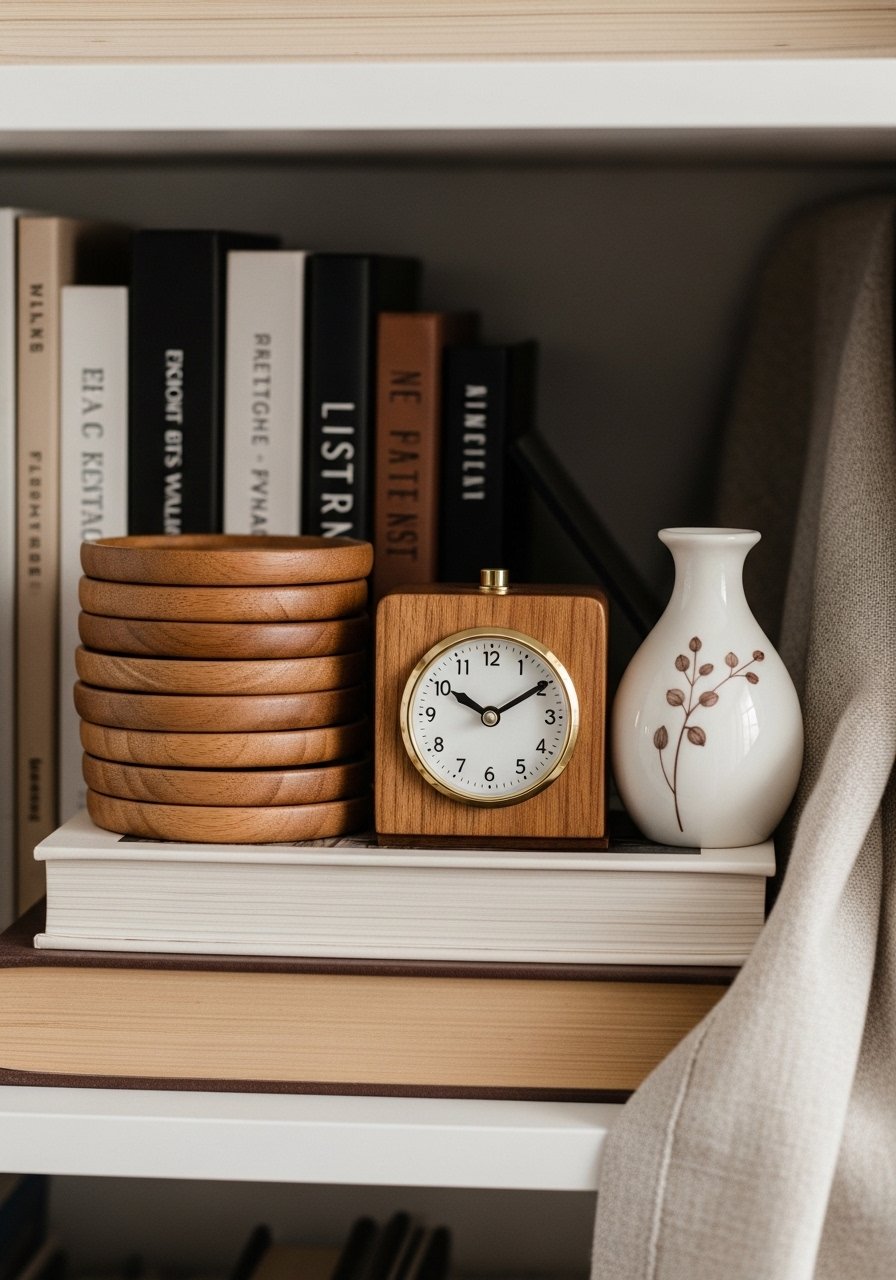
I group wood pieces in odd numbers—three items is my go-to. One anchors, one adds height, one adds texture. On a floating shelf I might put a clock against the wall, a book stack next to it, and a small live-edge board leaning in front. The repetition of wood tone ties the display together.
Insight people miss: leave breathing room around each object; clutter hides quality. Mistake to avoid: filling every shelf with wood. A mix of ceramic, textile, and metal keeps the look warm and simple.
Step 3: Layer textures for warmth
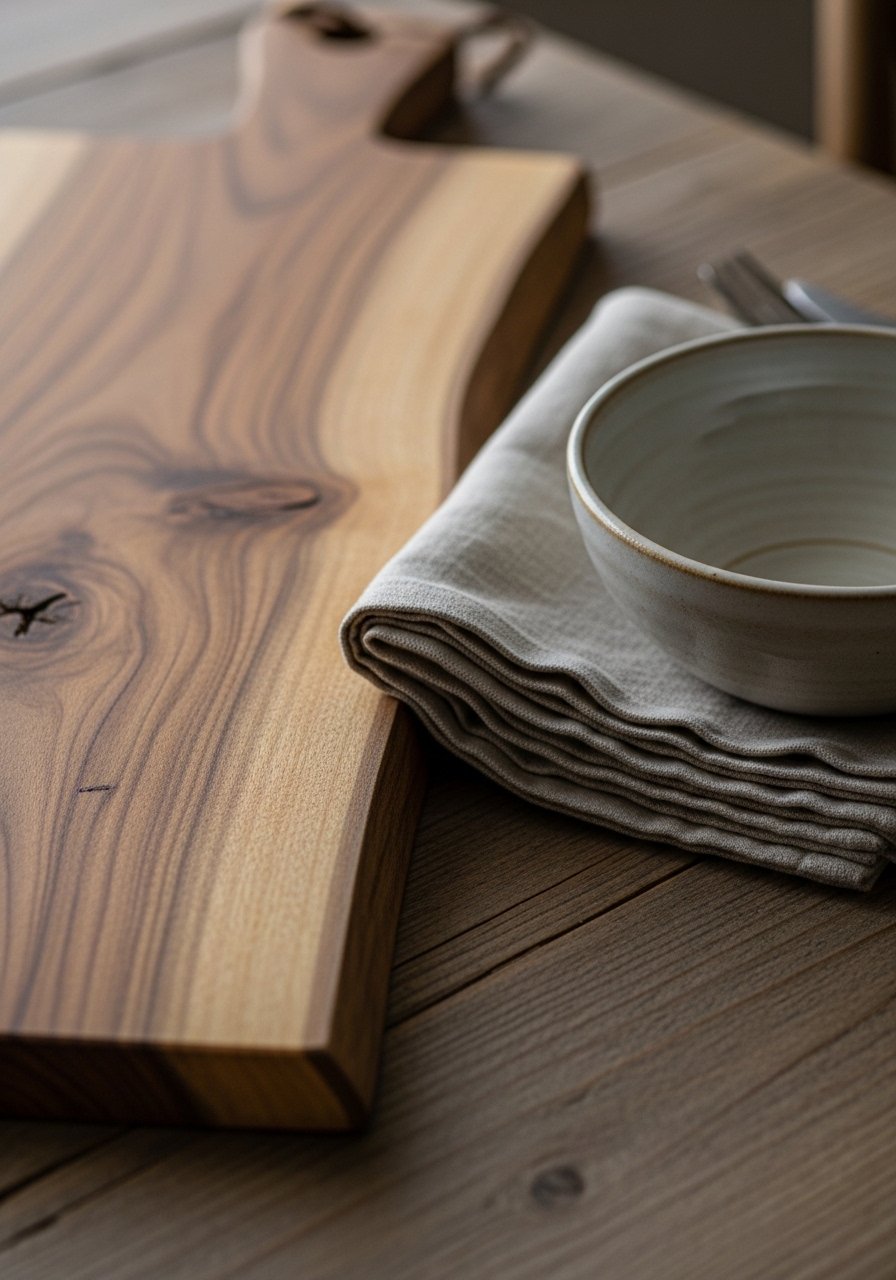
After I place the wood, I add soft or matte textures nearby. A linen runner under a live-edge board or a felt pad under coasters softens edges and prevents the wood from feeling stark. I like pairing raw edges with smooth ceramics or a woven basket so the wood feels intentional, not unfinished.
Insight people miss: contrast is what makes wood feel deliberate. Mistake to avoid: matching finishes too exactly across everything—varying grain and texture is more interesting.
Step 4: Repeat and anchor the room
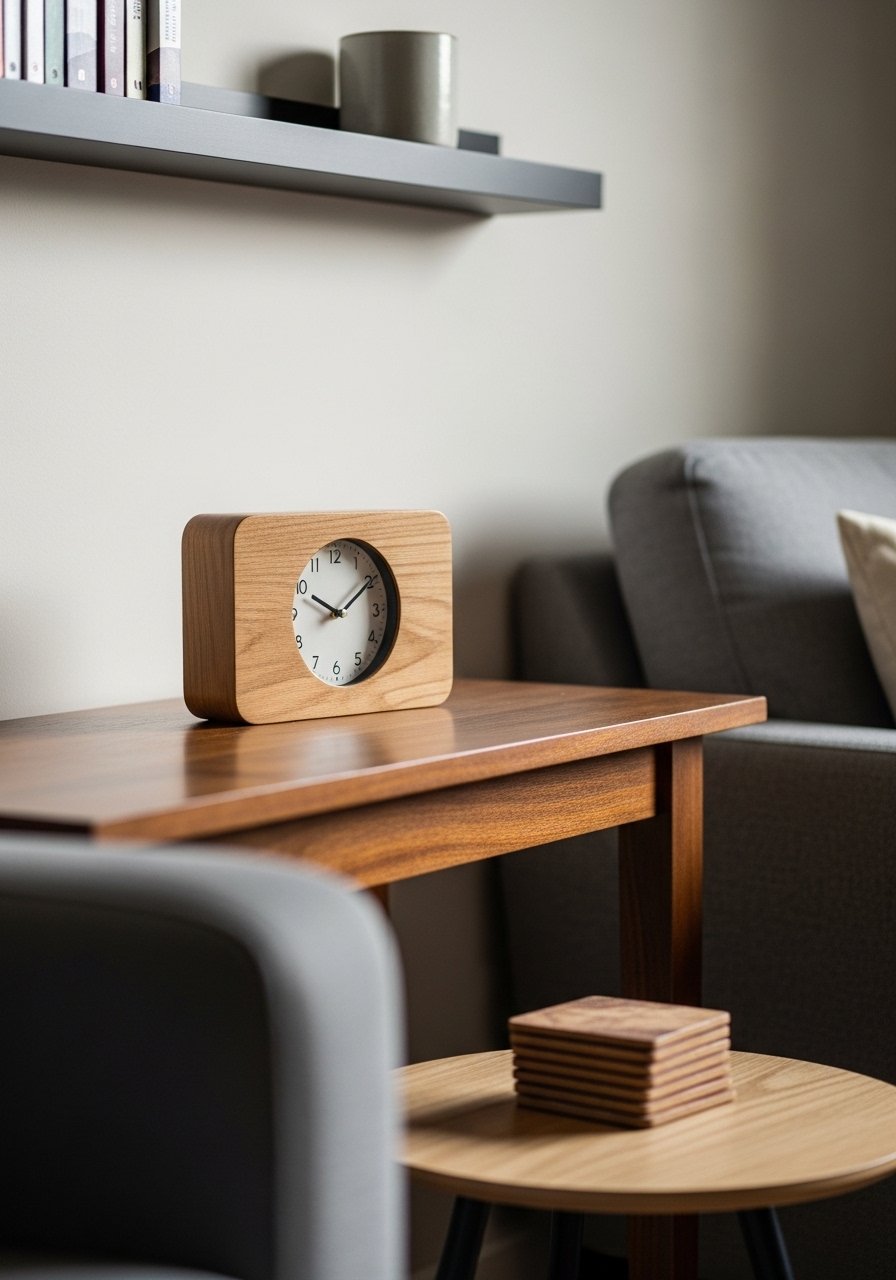
One wood piece looks nice. Two scattered pieces start to read like a plan. I repeat a tone or shape in two or three places to anchor the room—coasters on the coffee table, a wooden clock on the console, and a small board on a shelf. Repetition makes the wood feel intentional and pulls different zones together.
Insight people miss: repetition doesn’t mean sameness—vary scale and function. Mistake to avoid: using too many different wood tones. Aim for harmony, not an exact match.
Step 5: Start small and rotate seasonally
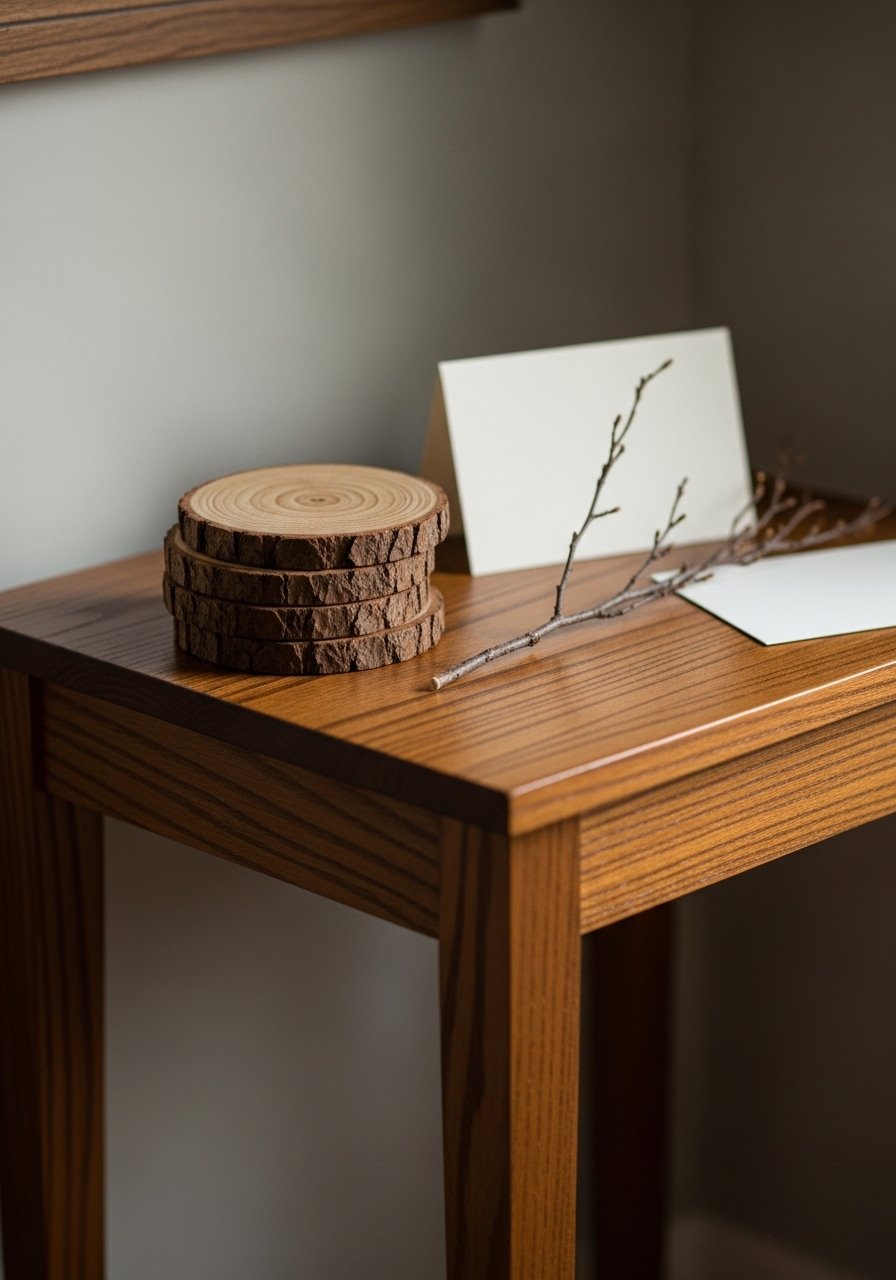
I begin with one small piece so I can learn how it changes the room. Coasters or a jewelry holder are low-commitment and movable. Each season I swap a small board or hanging—heirloom-style pieces read better over time than trendy, disposable crafts. The rotation keeps the room feeling fresh without overcommitting.
Insight people miss: small pieces teach you what bigger pieces will do in the space. Mistake to avoid: buying large custom items before you’ve tested placement.
Common mistakes and how I fix them
I see two repeat problems: too many competing finishes, and placing wood where it can’t be seen. Both make pieces feel like extras, not part of the room.
Quick fixes I use:
- Limit wood finishes to two tones maximum.
- Put a small object at eye level to read immediately when you enter.
- Edit often—less is more with handcrafted wood.
These small shifts keep the look calm and balanced.
Adapting the look for small spaces and budgets
You don’t need a mantel or a big slab to get the warmth effect. In apartments I use tiny boards, a single floating shelf, and coasters. Budget choices like a small wall clock or a rustic coaster set add texture for under $40.
Practical tips:
- Use one substantial piece and several tiny accents.
- Swap seasonal textile runners rather than large furniture.
- Choose pieces that double as function—spice racks or trays do both.
This keeps the style intentional without a big spend.
Mixing handmade wood with what you already own
I never replace everything. Wood crafts should sit with what you already have—books, ceramics, metal lamps. The goal is to make the room feel curated, not staged.
How I mix:
- Pair a wooden piece with a neutral textile beneath it.
- Match one warm metal (brass or black) with the wood tone.
- Keep negative space around the grouped items.
These small edits make handmade wood feel like it belongs.
Final Thoughts
Start with one small piece—a coaster set or a simple wooden clock—and learn how it changes the room. I find that small, heirloom-style wood items make spaces feel lived-in and intentional without fuss.
Be patient. Rotate and edit. It’s how the room slowly comes together and keeps feeling comfortable.